
लांबवेल हनुमान मंदिर
लांबवेल, ता./जि. आनंद
Lambhvel Hanuman Temple
Lambhvel, Tal./Dist. Anand
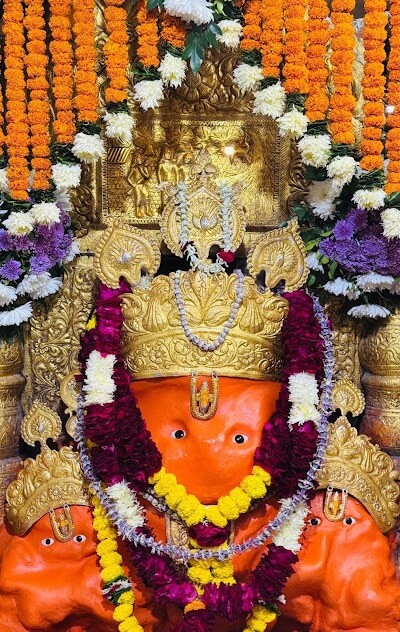 The Anand district of the Charotar region, renowned as a pre-eminent hub of the White Revolution and the dairy industry, is graced with an exceptionally ancient and opulent spiritual heritage. Situated upon the Anand-Kanjari road on the periphery of Anand city lies the village of Lambhvel, home to the profoundly ‘Jagrut’ (awakened) and ‘Swayambhu’ (self-manifested) Lambhvel Hanuman Temple. Lord Hanuman, revered as an ocean of strength and wisdom, stands as the supreme archetype of devotion. Thousands of pilgrims from local vicinities as well as distant cities such as Ahmedabad, Vadodara, Nadiad and even Mumbai journey here to seek the ‘Darshan’ (sacred viewing) of Maruti Raya, who is considered a direct incarnation of Lord Shiva. It is the firm conviction of the populace that the Hanuman enshrined here fulfils every cherished desire of his devotees.
According to references within the Shiva Purana, Hanuman is regarded as the eleventh ‘Rudravatara’ (incarnation of Rudra) of Lord Shiva. In the tenets of the Vaishnava and other sects, he is the son of Vayu Dev (the Wind God) and Mata Anjani. The ‘Parashar Samhita’ explores the life of Hanuman prior to the Ramayana and during the ‘Dvapara Yuga’. The Mahabharata recounts the meeting between Bhima and Hanuman during the Pandavas’ exile and provides explicit references to Hanuman protecting Arjuna’s chariot upon the battlefield of Kurukshetra. The philosophy propounded by Hanuman himself, in response to the enquiries of sages, is found within the ‘Ram Rahasya Upanishad’. Furthermore, the Brahmanda Purana, Bhagavata Purana and Vishnu Purana extol the virtues of his matchless devotion and immense prowess.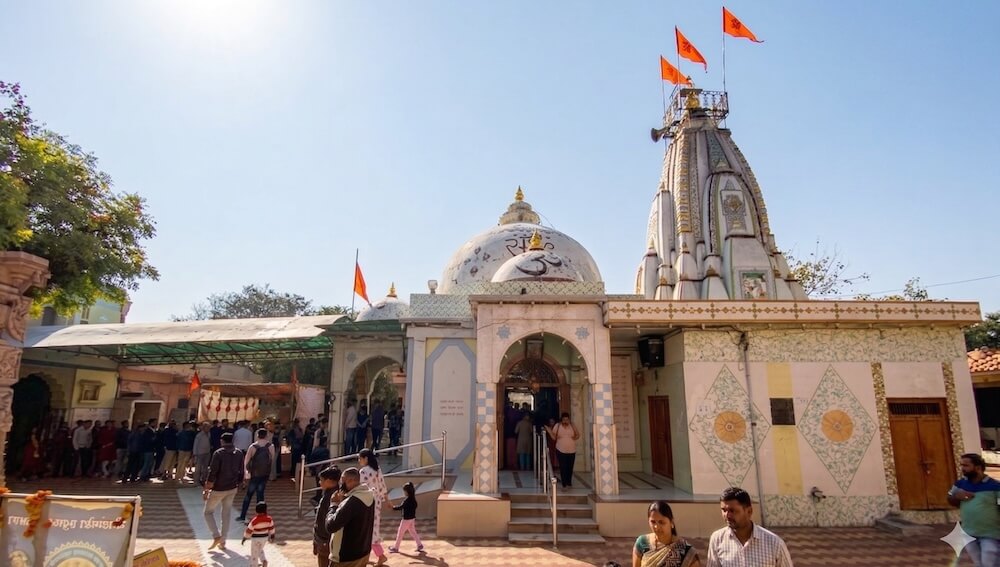
The Lambhvel Hanuman Devasthan boasts an antiquity of over five hundred years. Historical chronicles record that the ‘Swayambhu’ idol of Hanuman was formally consecrated here in 1523 AD, specifically on the auspicious occasion of ‘Shravan Shud Ashtami’ in the year 1579 of the ‘Vikram Samvat’ (Hindu calendar). The origin of this temple is steeped in a 16th-century folk tale involving a cowherd named ‘Lambhu’. This simple and pious soul would daily lead his cattle to graze in the surrounding forests. Whilst the cows grazed peacefully, he would sit beneath a tree,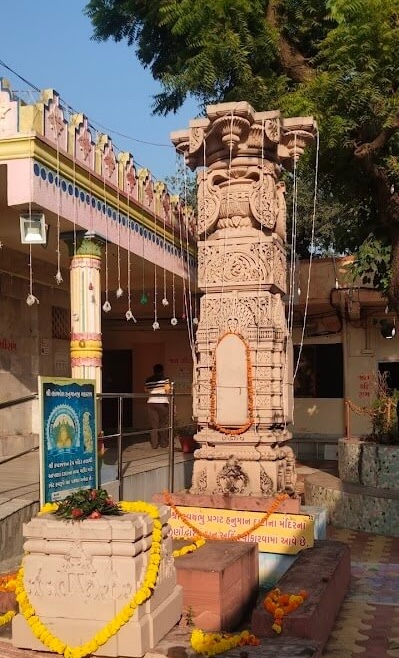 immersed in the melodies of his flute. He observed that one particular cow would daily stand near a specific ‘Rui’ (milkweed or Calotropis) bush, where, a stream of milk would spontaneously flow from her udders onto the plant. When Lambhu attempted to milk this cow himself, he found her udders entirely dry. Seeking the truth behind this mystery, Lambhu prevented the cow from going to the forest one day, causing her to become restless and flee the cowshed under the cover of night. Lambhu followed her stealthily and witnessed the cow performing the ‘Abhishek’ (ritual pouring) of milk at the same bush. That night, he received a vivid ‘Drishtant’ (divine vision) wherein a celestial power commanded him to excavate that specific spot. The following morning, as Lambhu began digging, his spade struck a hard object with a reddish hue. Upon clearing the earth with his hands, he discovered a red-coloured ‘Swayambhu’ idol of Hanuman. Due to Lambhu’s unalloyed devotion and bearing his name, the village subsequently came to be known as Lambhvel.
The temple is located on the Anand-Nadiad highway, along the path identified as the historic ‘Dandi Yatra’ route. The sanctuary spans approximately three acres and is encircled by massive, centuries-old banyan trees. The precincts also house a ‘Yajnashala’ (hall for fire rituals), a charitable hospital administered by the temple committee, a ‘Dharmashala’ (pilgrims’ rest house) and an assembly hall. For the protection of devotees against the elements, a continuous sheltered walkway has been erected from the roadside portal to the main entrance of the temple.
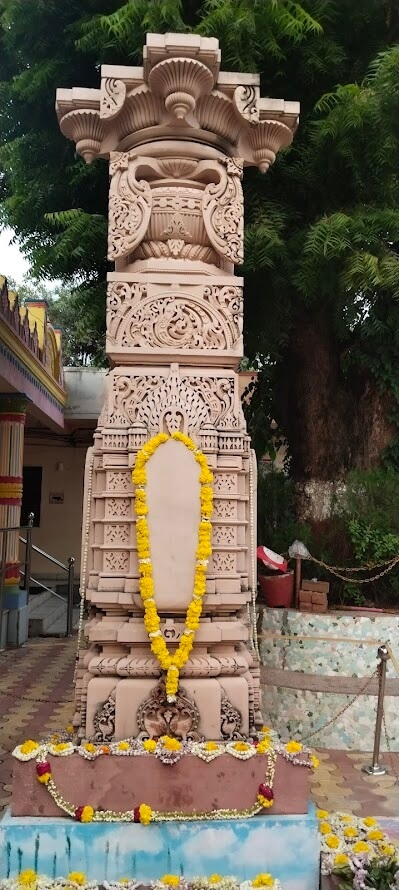
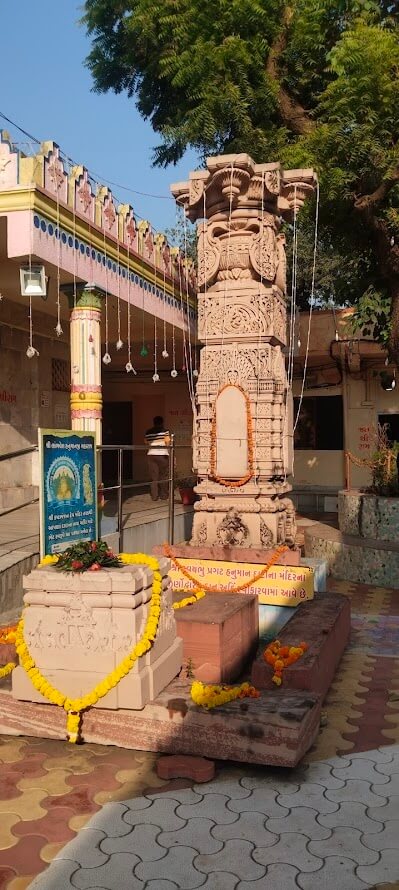
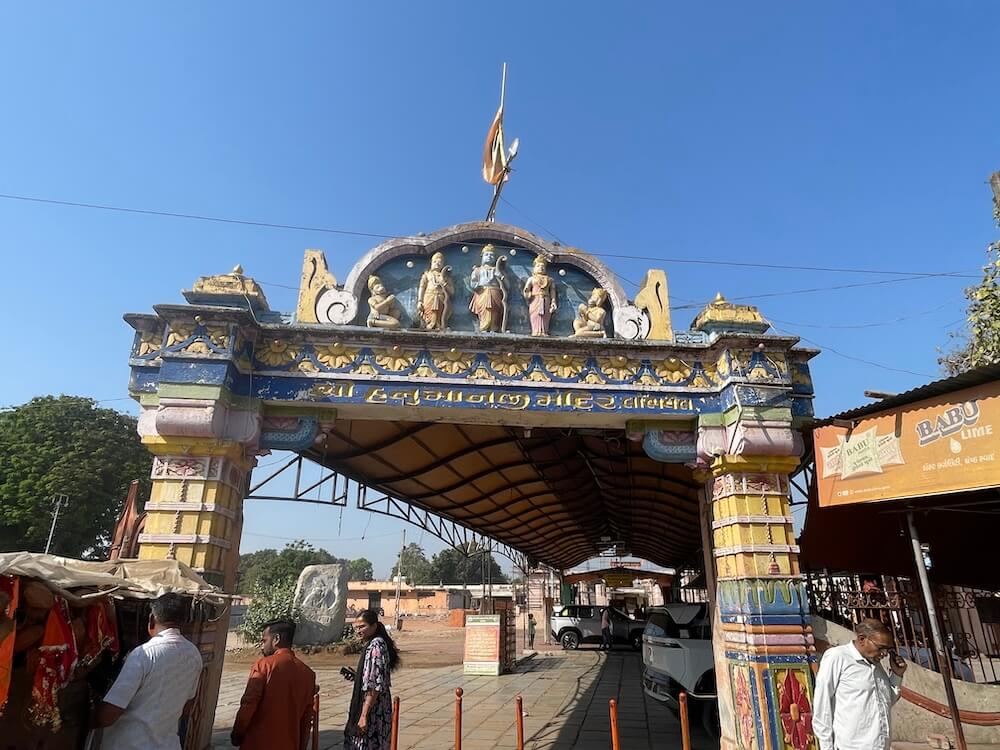 The archway of the temple entrance features sculpted images of Shri Ram, Sita, Lakshman and Hanuman. Passing through this portal, one enters the courtyard and ascends four steps to the ‘Darshanmandap’ (viewing hall), situated upon a high plinth. The architectural structure comprises the viewing hall, a ‘Sabhamandap’ (assembly hall), an ‘Antarala’ (vestibule) and the ‘Garbhagriha’ (sanctum sanctorum). Both the viewing and assembly halls feature intricately carved pillars. Within the assembly hall, the interior dome and walls are encased in ornate silver plating, with a magnificent chandelier suspended from the centre of the ceiling. Beyond this lies the sanctum, where the red ‘Swayambhu’ idol of Hanuman, in its unsculpted, natural stone form, is enshrined upon a golden ‘Vajrapitha’ (stone pedestal). The backdrop is adorned with silver engravings.
 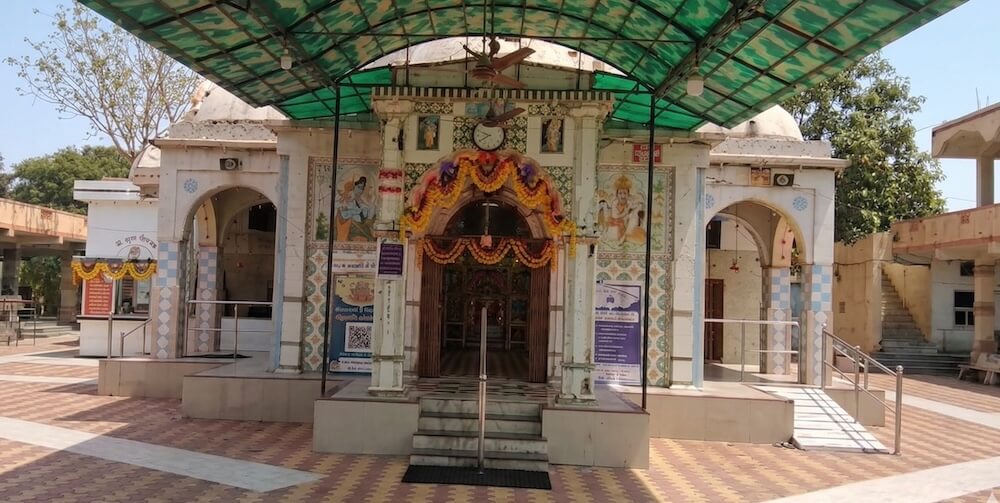 Flanking the central deity are the idols of Shri Ram and Lakshman, all three of whom are adorned with silver crowns and garlands. Above the sanctum rises a tall, tapering ‘Shikhara’ (spire) designed in the traditional Nagara style.
A variety of religious festivals and cultural programmes are celebrated here with great fervour throughout the year. Tuesdays and Saturdays witness a vast concourse of devotees who offer oil, Sindoor (vermilion) and coconuts to Hanuman. Significant celebrations are held on Ram Navami, 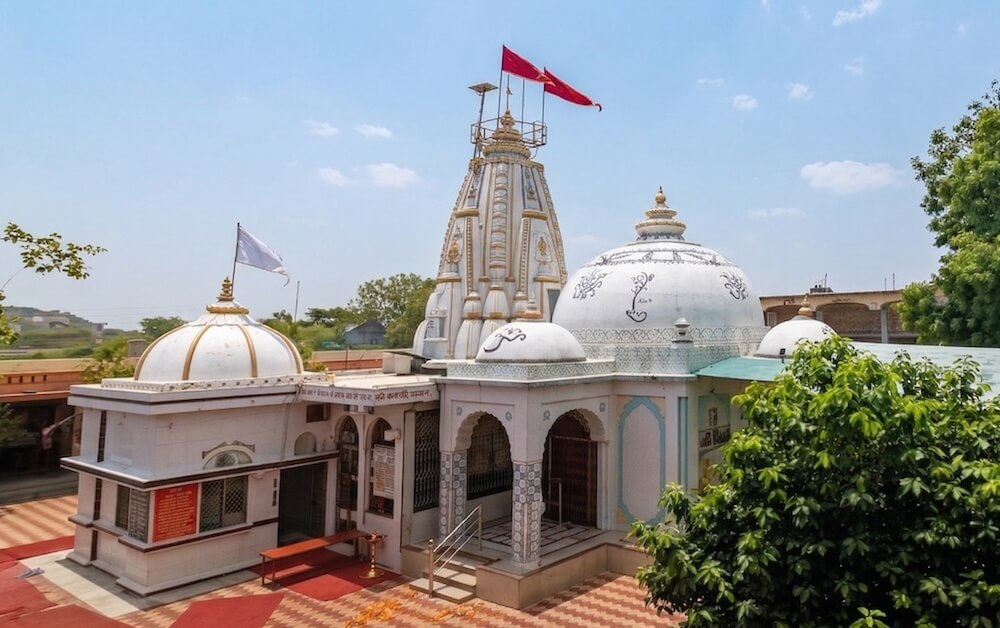 Hanuman Jayanti and Krishna Janmashtami. On the final Saturday of the month of Shravan, a grand fair is held, featuring continuous Bhajans, Kirtans and a Maha-Aarti. The temple grounds host numerous stalls selling handicrafts, toys and traditional delicacies. Another major fair occurs on ‘Naraka Chaturdashi’, the day preceding Diwali, where special nocturnal prayers are conducted to dispel malevolent forces. The premier festival remains Hanuman Jayanti, celebrated on the full moon of Chaitra, when the entire temple is festooned with flowers and illuminated with lamps. In the assembly halls, communal recitations of the ‘Hanuman Chalisa’ and ‘Sundarkand’ take place, followed by a grand ‘Bhandara’ (communal feast). The Aarti is performed from Sunday to Friday at 6 am and 7:15 pm, while on Saturdays it is conducted at 5:30 am and 7:15 pm.
Useful Information
- Located at 3 km from Anand city.
- State Transport (GSRTC) bus facilities available to Anand from various cities in the district.
- Private vehicles can reach the temple’s designated parking area.
- Numerous options for accommodation and breakfast are available in the vicinity.
- Contact – Temple Office, Mob: 8238251558
लांभवेल हनुमान मंदिर
लम्भवेल, ताल./जिला. आनंद
मंदिरे
Temples
मंदिर
-
भीमनाथ महादेव मंदिर लिंबळी, ता. सोजित्रा, जि. आनंद
अधिक माहितीBhimnath Mahadev Temple Limbali, Tal. Sojitra, Dist. Anand
View Detailsभीमनाथ महादेव मंदिर लिम्बाली, ताल. सोजित्रा, जिला. आनंद
विवरण देखें -
मेलडी माता मंदिर मालताज, ता. सोजित्रा, जि. आनंद
अधिक माहितीMeldi Mata Temple Malataj, Tal. Sojitra, Dist. Anand
View Detailsमेलडी माता मंदिर मालताज, ताल. सोजित्रा, जिला. आनंद
विवरण देखें -
चंद्रमौलेश्वर महादेव मंदिर उमरेठ, ता. उमरेठ, जि. आनंद
अधिक माहितीChandramouleshwar Mahadev Temple Umreth, Tal. Umreth, Dist. Anand
View Detailsचंद्रमौलेश्वर महादेव मंदिर उमरेठ, तहसील उमरेठ, जिला आनंद
विवरण देखें