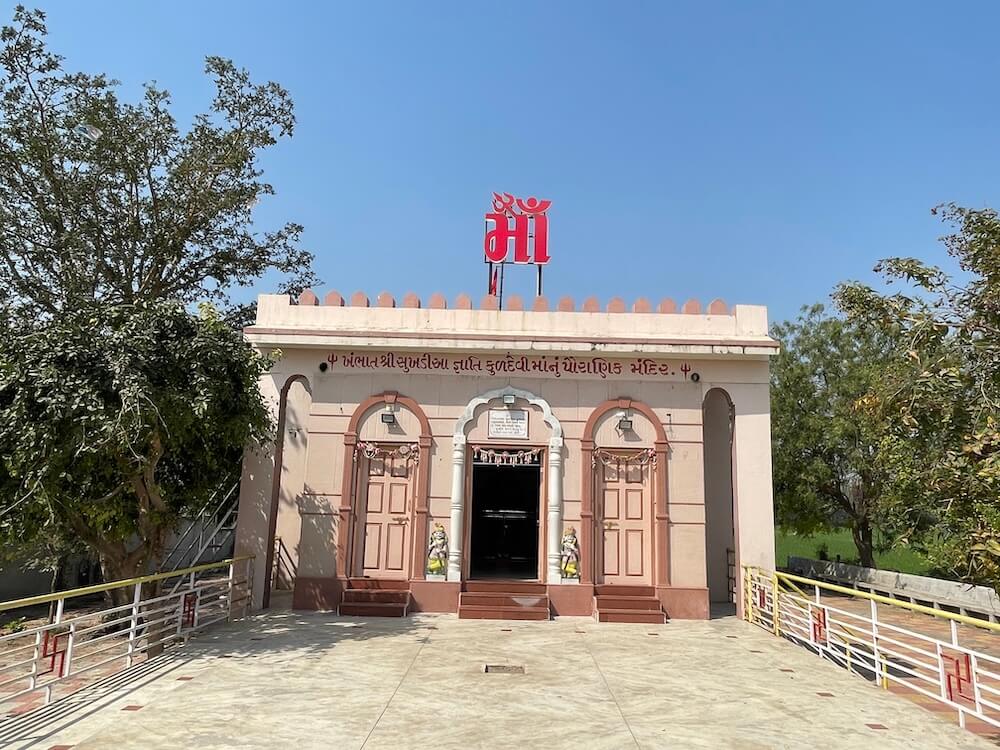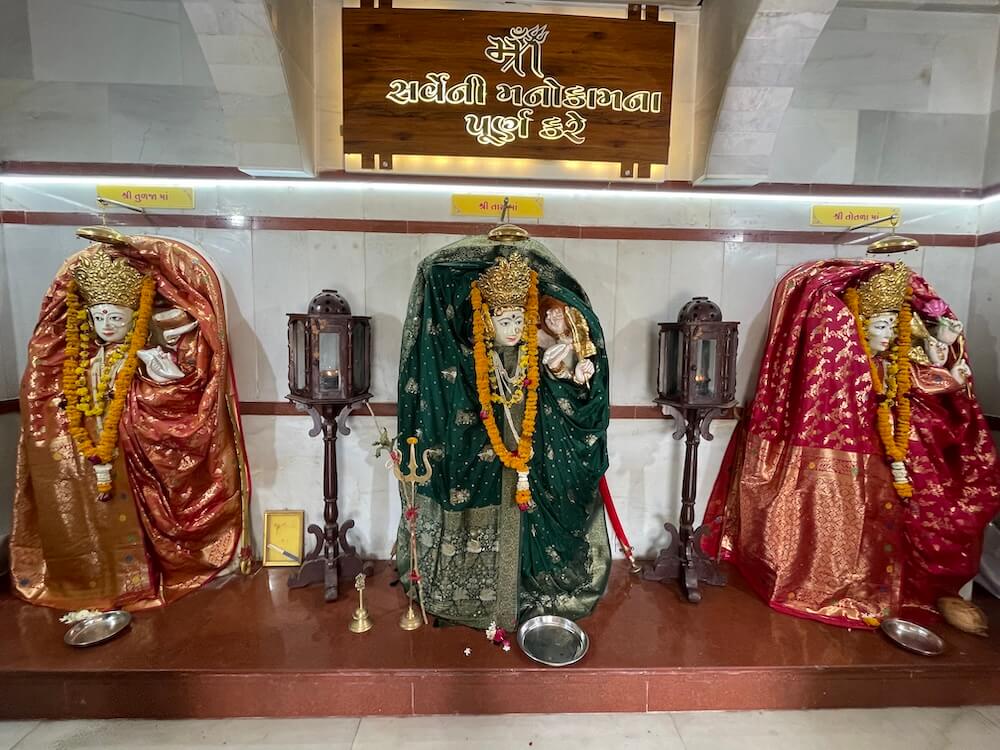
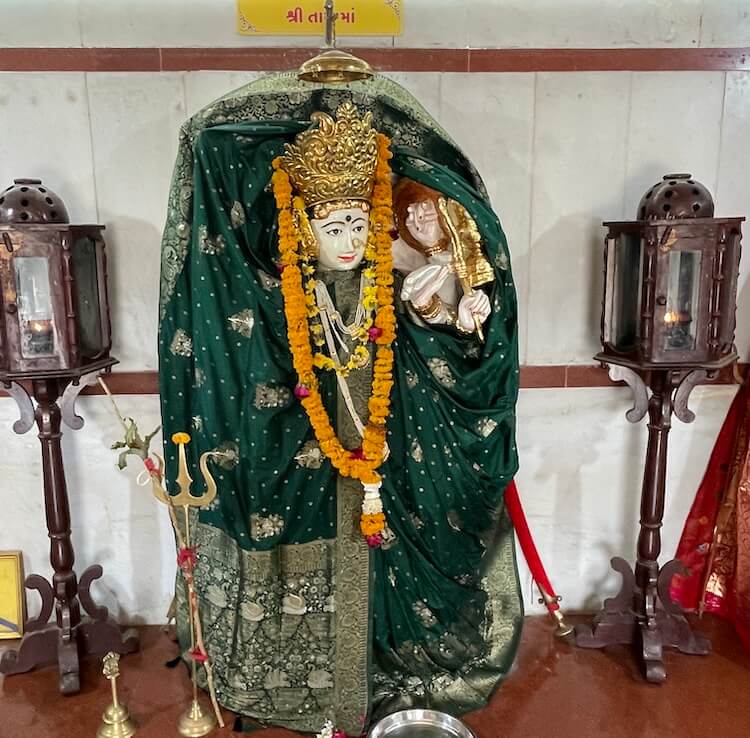
 In the village of Neja in Khambhat taluka stands the temple of Tulja Bhavani Mata, the revered kuldevi (ancestral tutelary deity) of the Sukhadiya community. Established nearly two hundred years ago, this shrine is regarded as an extremely important place of devotion for the faithful. Within this temple, along with Tulja Bhavani Mata, the idols of Tara Mata, Totaramata and Veer Bhairav have also been installed. The goddess is particularly renowned as a deity who fulfils vows made in faith and who is believed to cure devotees of bodily ailments. Surrounded by natural beauty, this sacred place attracts thousands of devotees every year who arrive to seek darshan.
The original roots of the Sukhadiya community are believed to lie in the state of Rajasthan. Many scholars hold that this community was originally of Rajput origin. Over the course of time, the community migrated and gradually spread across different parts of India. At present, a large number of them reside in Gujarat. For many generations, 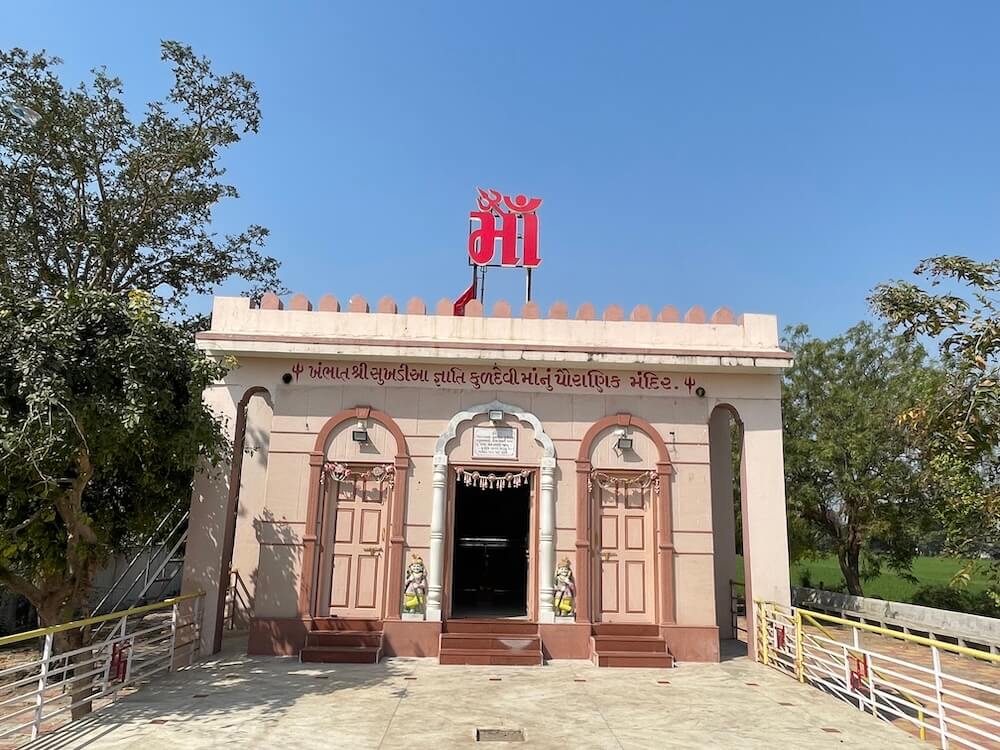 the Sukhadiya community has been primarily associated with the trade of farsan (traditional savoury snacks) and mithai (sweets). The community has also made a notable contribution in the political sphere. Mohanlal Sukhadia, the former Chief Minister of Rajasthan, led the state for 17 consecutive years between 1954 and 1971. Alongside their influence in social and political life, the members of this community have carefully preserved their religious traditions. The village of Neja, situated in the Gulf region of Khambhat, is regarded as the principal seat of their kuldevi and the temple here has been the focus of devotion for many generations of the community.
It is said that the idols enshrined in this temple are nearly one thousand years old. 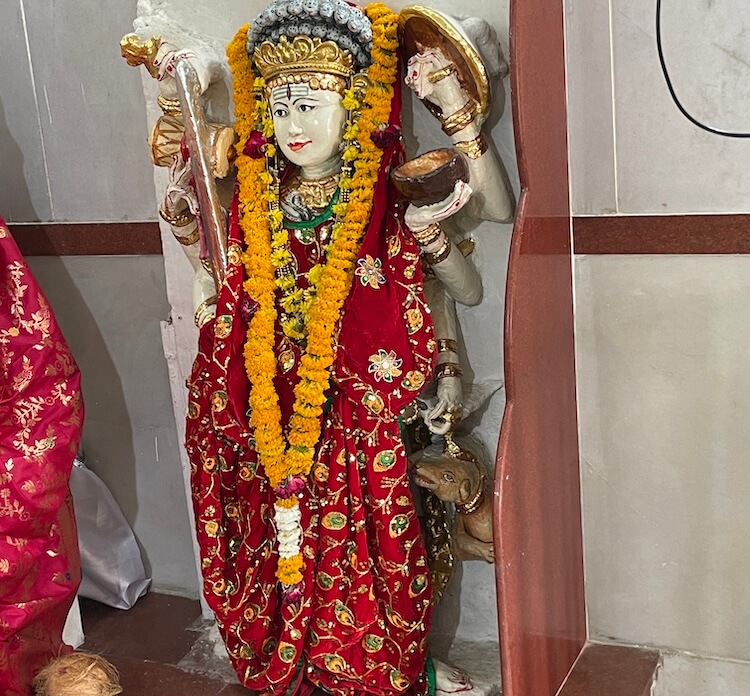 A popular legend connected with the temple narrates that a devotee belonging to the Sukhadiya community received a divine vision in a dream in which the goddess revealed that she lay buried beneath the soil in a field in the village of Neja. Following the command of the goddess, the devotee began digging at the indicated spot. After excavating to a depth of nearly six feet, idols of Tulja Bhavani, Tara Mata, Totaramata and Veer Bhairav were discovered at that place. The field where these idols were found belonged to a person named Patel from Khambhat. When he learned about this miraculous discovery, he willingly donated the land for the construction of a temple. Devotees firmly believe that those who suffer from stammering attain clear speech after visiting this shrine and that even those who are mute may be blessed with the gift of voice. It is also said that an ancient tree standing within the temple courtyard has remained in the same condition for the past two hundred years, neither withering nor growing further.
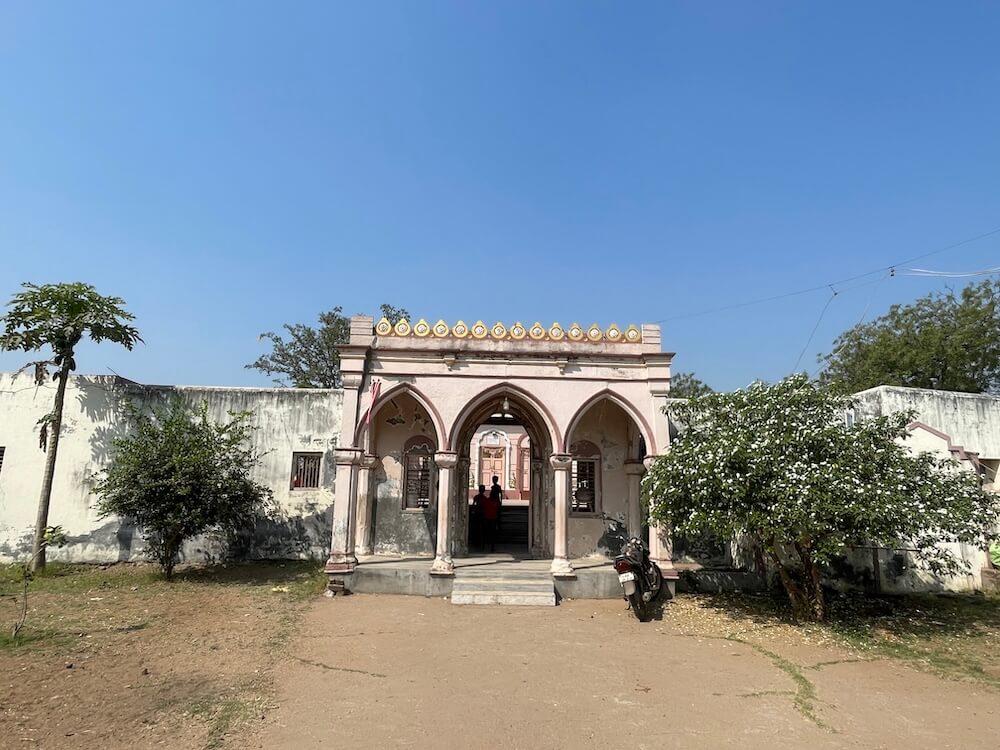 Because the village of Neja lies amid picturesque natural surroundings, this region is sometimes referred to as ‘the Goa of Gujarat’. A spacious parking area is available in front of the temple. The entire temple complex is enclosed by a boundary wall and entry is provided through a gateway. Within the gateway, circular pillars are joined to one another by gracefully ornamental curved arches. Passing through the gateway, one enters the temple courtyard. The courtyard contains several large, shady trees and seating arrangements have been provided for devotees. On one side of the courtyard stands the residence of the temple priests. Behind the temple, there is a small shrine dedicated to a local deity. At the site in the field where the idols of the goddess had emerged from the earth, there are several ancient samadhi shrines.
 Within the temple courtyard, a nest belonging to an owl has existed for nearly two hundred years and devotees regard this bird as a manifestation of the goddess. Above the idols in the sanctum, carvings of this bird have also been made.
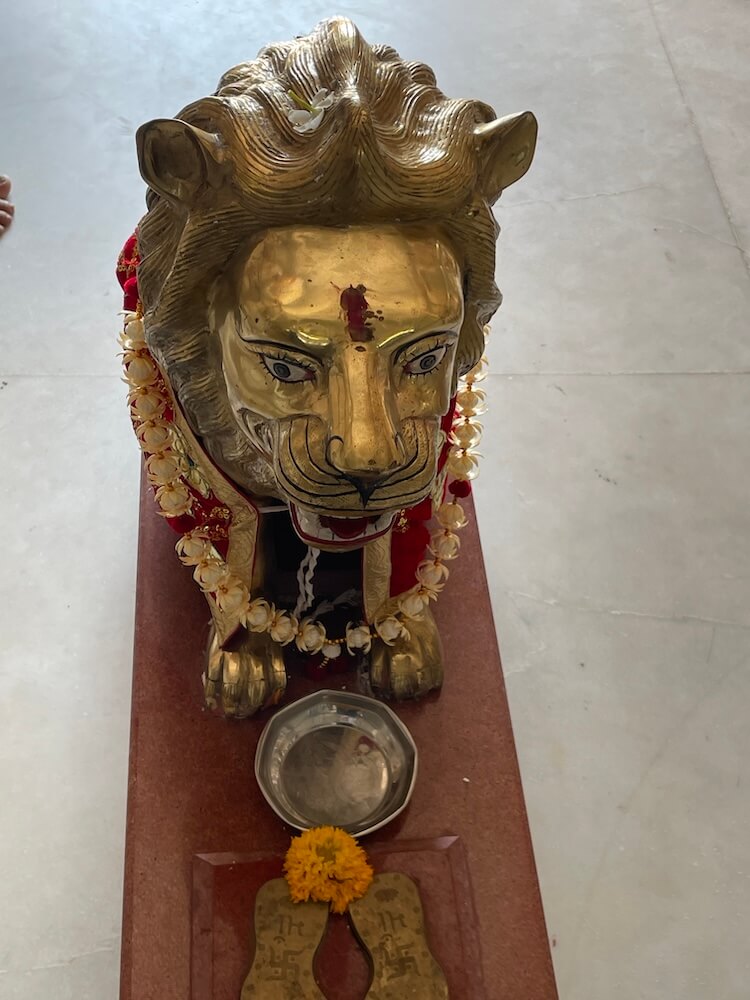
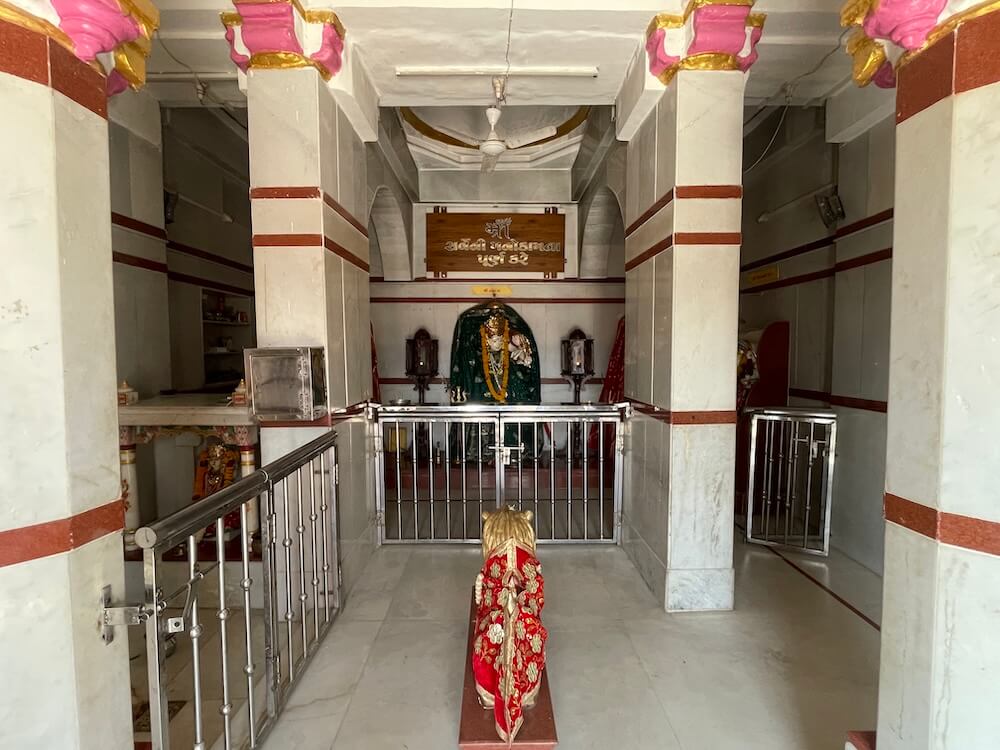
The architectural style of the temple follows a traditional pattern consisting of a sabhamandap (assembly hall) and a garbhagriha (sanctum). At the entrance to the sabhamandap stand two sculpted dwarpals (guardian sentinels). The sabhamandap may be entered through three doorways situated on the front side. These are considered symbolic of the spiritual ‘trigunas’ (the three fundamental qualities of existence). In order to manage the flow of crowds, stainless steel safety railings have been installed inside the sabhamandap. 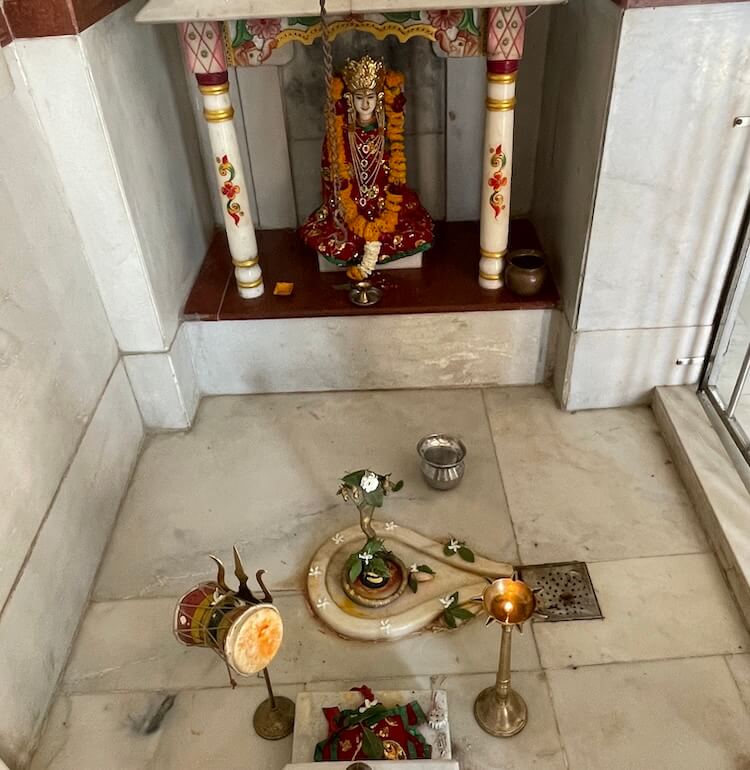 At the centre of the hall, upon a raised platform, stands a brass idol of a lion, which is the vahana (sacred vehicle) of the goddess and in front of it are placed metal padukas (sacred footprints representing divine presence). In the devkoshtaks (wall niches) along the left and right walls are the idols of Ganapati and Hanuman. To the left of the lion image stands a Shivpind (symbolic form of Lord Shiva). In front of this pinda is the image of Nandi. Behind it, within a marble makhar (ornamental shrine frame), is the idol of Mata Parvati. In the principal garbhagriha, upon a large vajrapith (sacred pedestal), are installed the idols of Tulja Bhavani, Totaramata and Tara Mata. To the right stands the image of Veer Bhairav. On the stone slab behind the three goddesses, carvings of owls have been sculpted. Adorned with colourful garments and ornaments, these idols present a graceful and striking appearance.
Throughout the year, numerous religious festivals and celebrations are observed in the temple with devotion and enthusiasm. Makar Sankranti is regarded as the principal annual festival of the temple.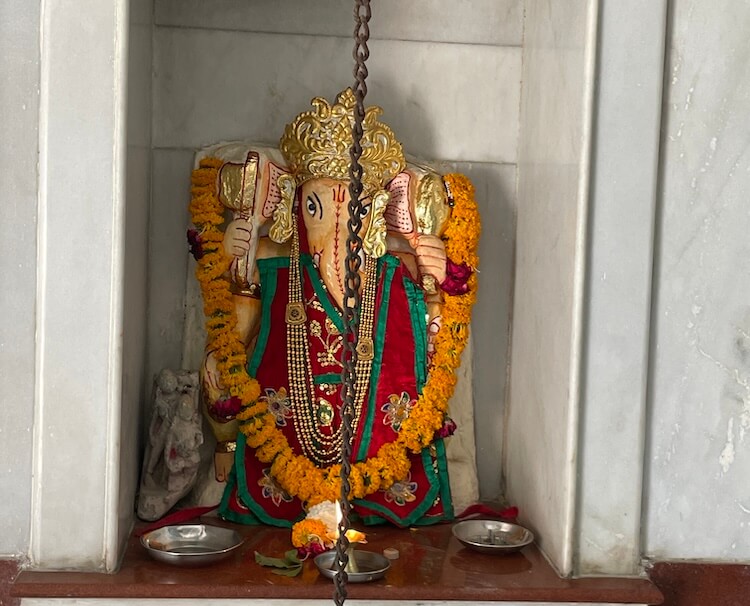 On that day, a large fair is held and thousands of devotees arrive in Neja village from various cities across the country to have darshan. During the nine days of Chaitra Navratra and Sharadiya Navratra, special worship is conducted in the temple.
Festivals are also celebrated here during the month of Shravan and on the occasion of Kalabhairav Jayanti. On the day of Dev Diwali, the entire temple glows with the radiance of countless lamps. Tuesdays, Fridays, as well as the days of Purnima and Amavasya, witness particularly large gatherings of devotees in the temple.
Those who come for darshan offer a sari, chunari (ceremonial veil offered to the goddess), saubhagya ornaments and coconuts to the deity. Various kinds of sweets are offered to the goddess as ‘Naivedya’ (sacred food offering). The temple remains open for devotees from 6 am to 7 pm every day.