
वडुची माता मंदिर
लोणेज, तालुका खंभात, जिल्हा आनंद
Vaduchi Mata Temple
Lonej, Taluka Khambhat, District Anand
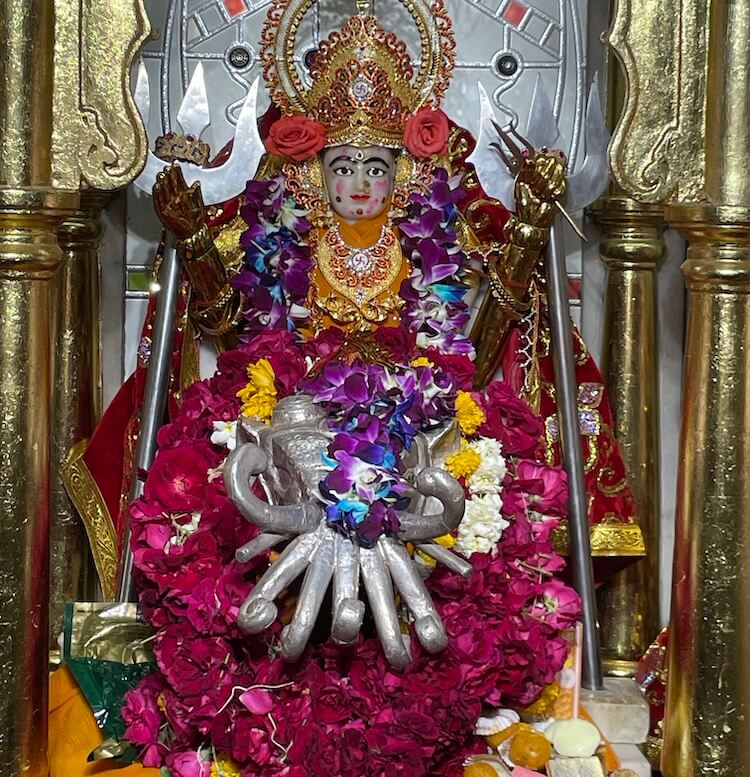 In Indian culture, the element of water is regarded as the very foundation of life. For this reason, deities associated with water have been accorded exceptional reverence. From Varun, Indra, Ganga and the Saptamatrikas (seven divine mother goddesses) to the sacred waters of seas, rivers, wells and lakes, there exists an ancient tradition of worshipping these divine powers. In earlier times, water deities were often installed near reservoirs and wells in order to safeguard these vital sources of life. In the village of Lonej, situated in Khambhat taluka, there exists such a distinctive shrine dedicated to Vaduchi Devi. A firm belief prevails among devotees that this water goddess fulfils every heartfelt wish. Set amidst a picturesque landscape, the shrine of the goddess is regarded as a highly awakened and spiritually potent place of worship.
The port of Khambhat, which in ancient times was known as ‘Stambhatirth’, was recognised from the first century CE until the fifteenth century as one of the busiest and most significant international ports in the world. 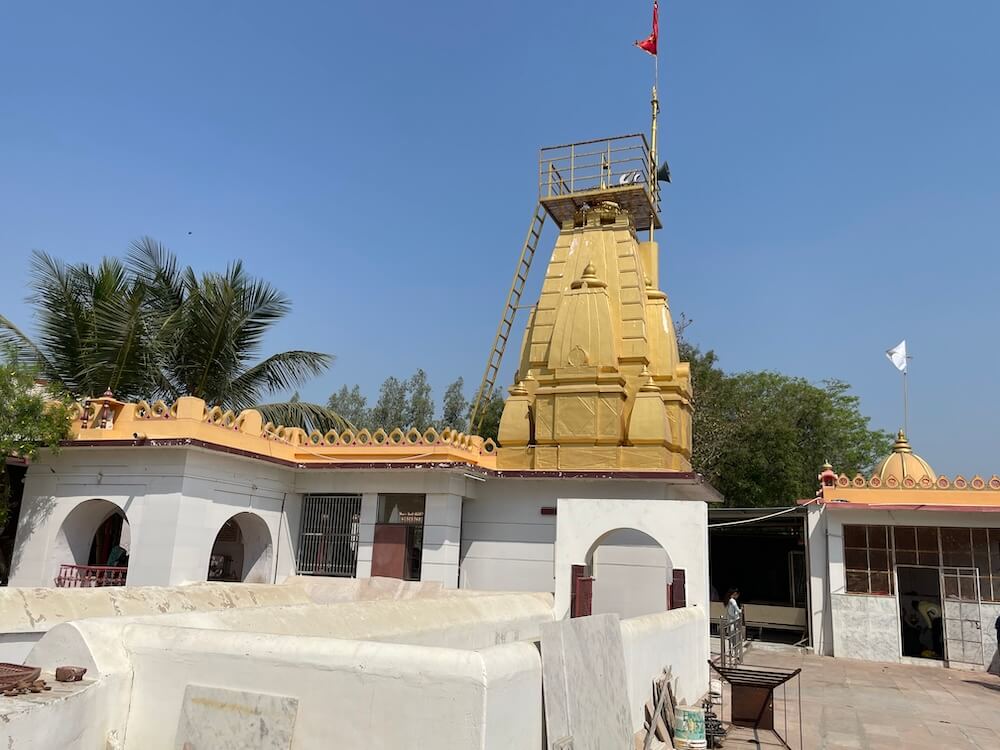 ‘The Periplus of the Erythraean Sea’, a Greek historical resource on navigation written between the first and third centuries CE, refers to this region with the following description: ‘It is a fertile country yielding wheat and rice and sesame oil and clarified butter, cotton and the Indian cloths made therefrom of the coarser sorts. Very many cattle are pastured there and the men are of great stature and dark in colour.’ Until the latter part of the fifteenth century, Khambhat flourished as a prosperous port under Muslim rule. However, the silt carried by the Mahi river gradually accumulated in the gulf, causing the water to become shallow and the movement of ships to decline. In the year 1700, General Goddard established the East India Company’s authority over the city. Later, in 1783, this important region came under the control of the Marathas. In 1803, the British again took possession of the territory.
  Thus, Khambhat has witnessed many shifts of political power. From the dominance of the Gaekwads of Baroda to the period of British influence, each phase left its imprint upon the social fabric of the region. Within this historically significant land of Khambhat, the sacred shrine of Vaduchi Devi near the village of Lonej gradually emerged as a centre of deep devotion. Experts believe that the idol of the goddess enshrined in this temple dates back to the thirteenth century.
In earlier times, the idol of Vaduchi Mata was located within a well. That ancient well remained perpetually filled with water. Because the idol lay constantly submerged, devotees were unable to behold the goddess. 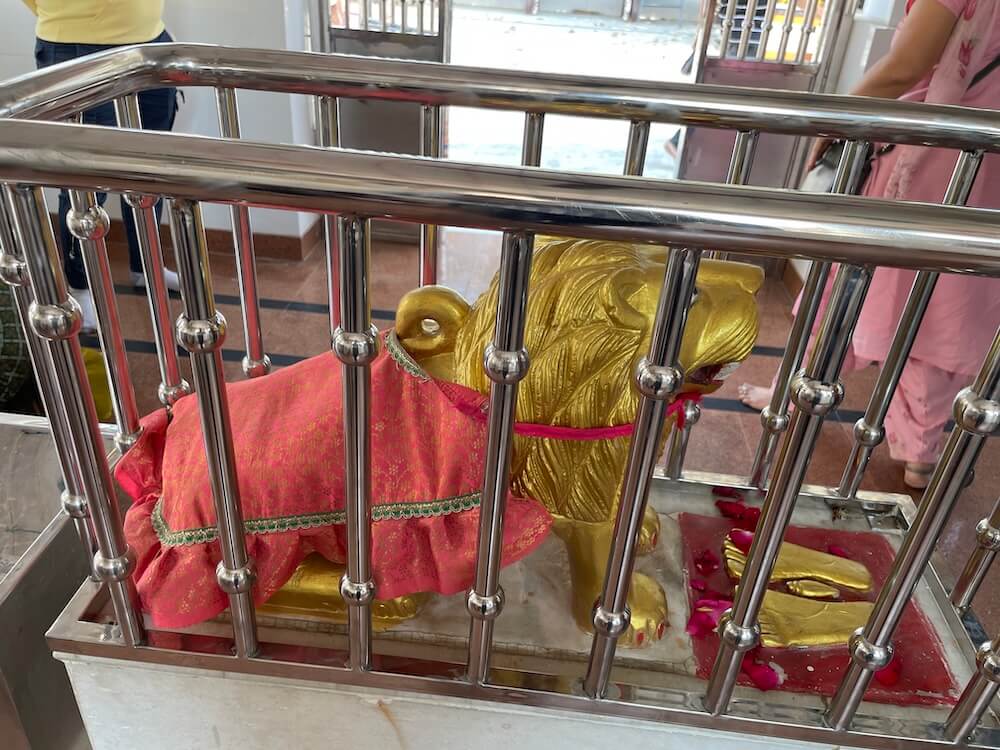 A legend connected with this shrine recounts that nearly four hundred years ago, the goddess appeared in a devotee’s dream and instructed him to remove her idol from the well and build a temple. Following this divine command, the devotee, along with his entire family, began drawing out the water from the well until it became completely dry and the ancient idol within was retrieved. Remarkably, the moment the idol was brought out, the well was filled once again with water of its own accord. Witnessing this miracle, the villagers constructed a temple beside the well and installed the goddess there.
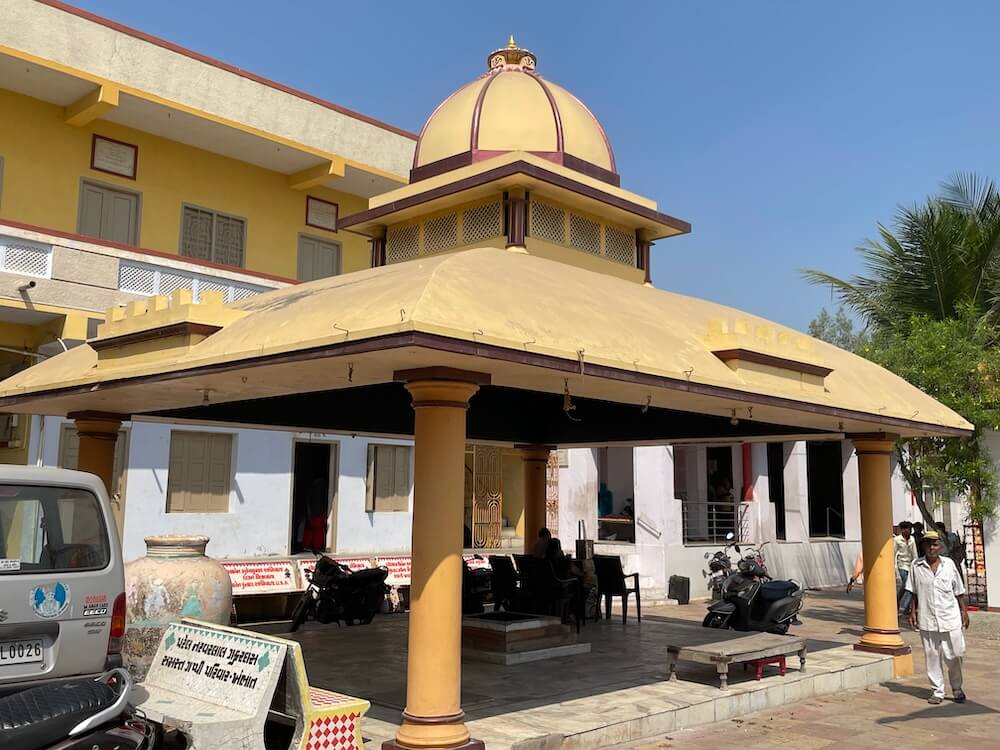
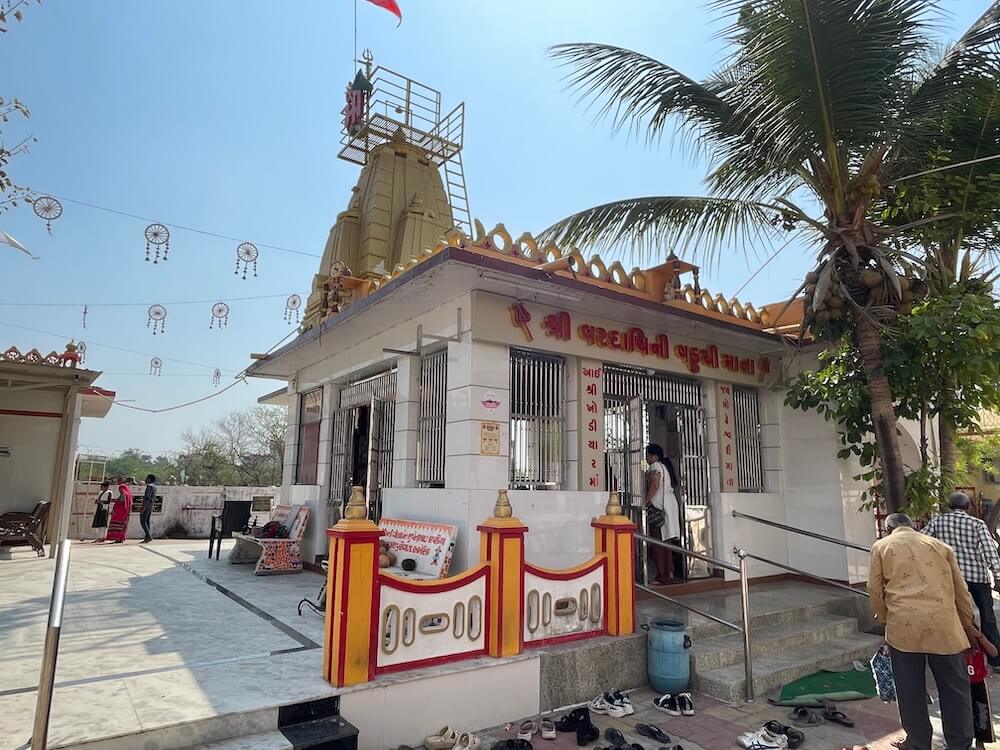
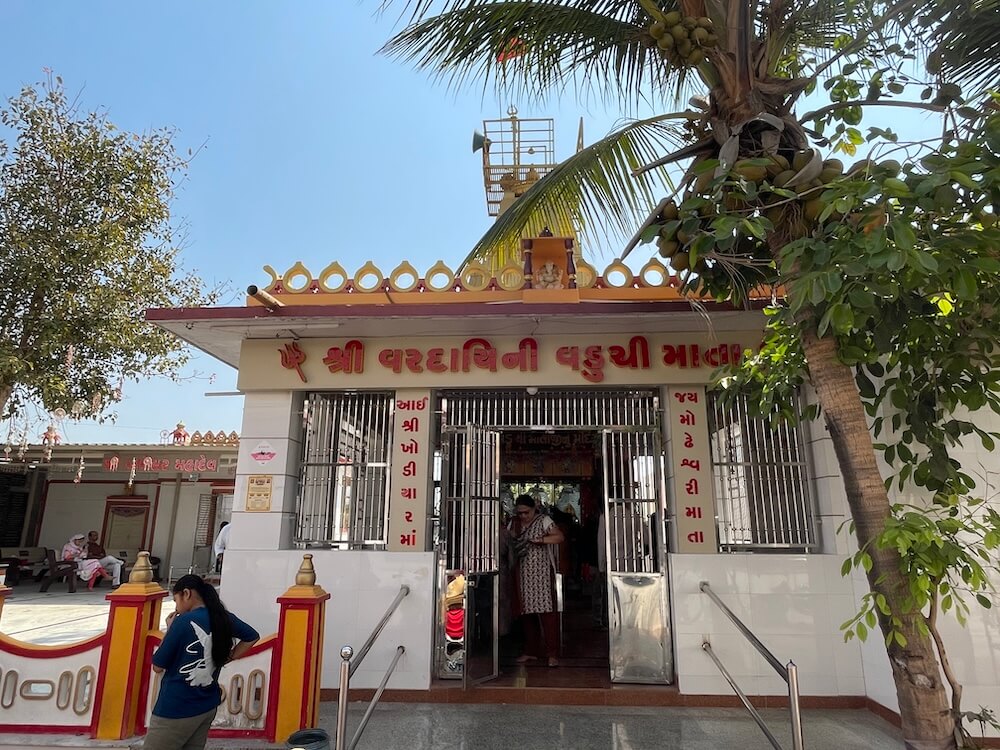
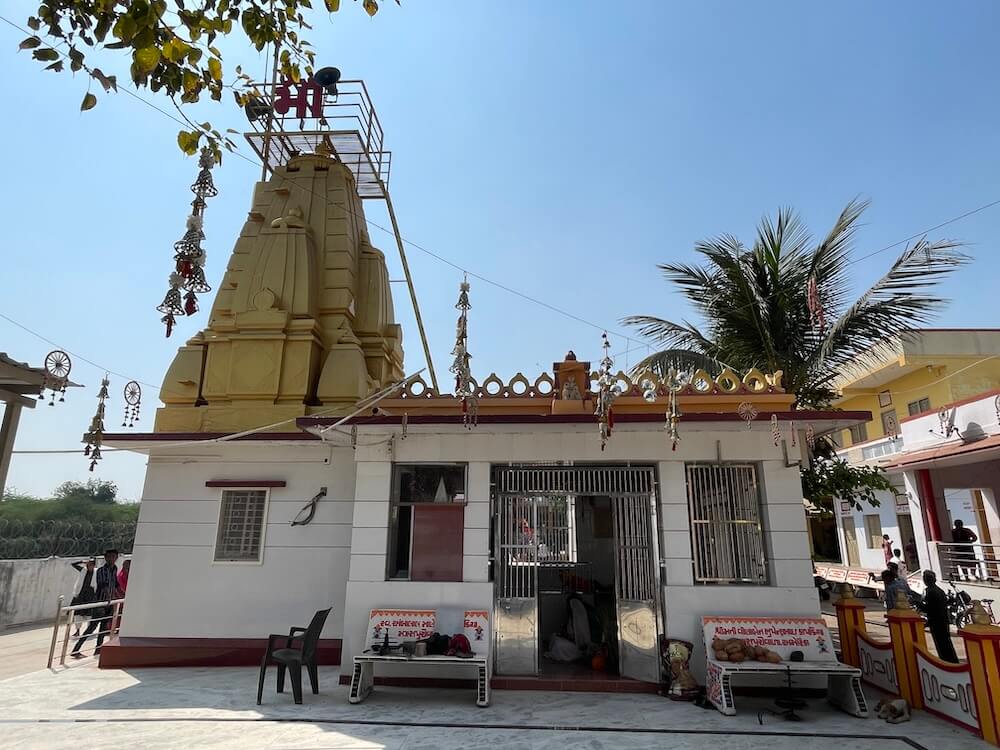
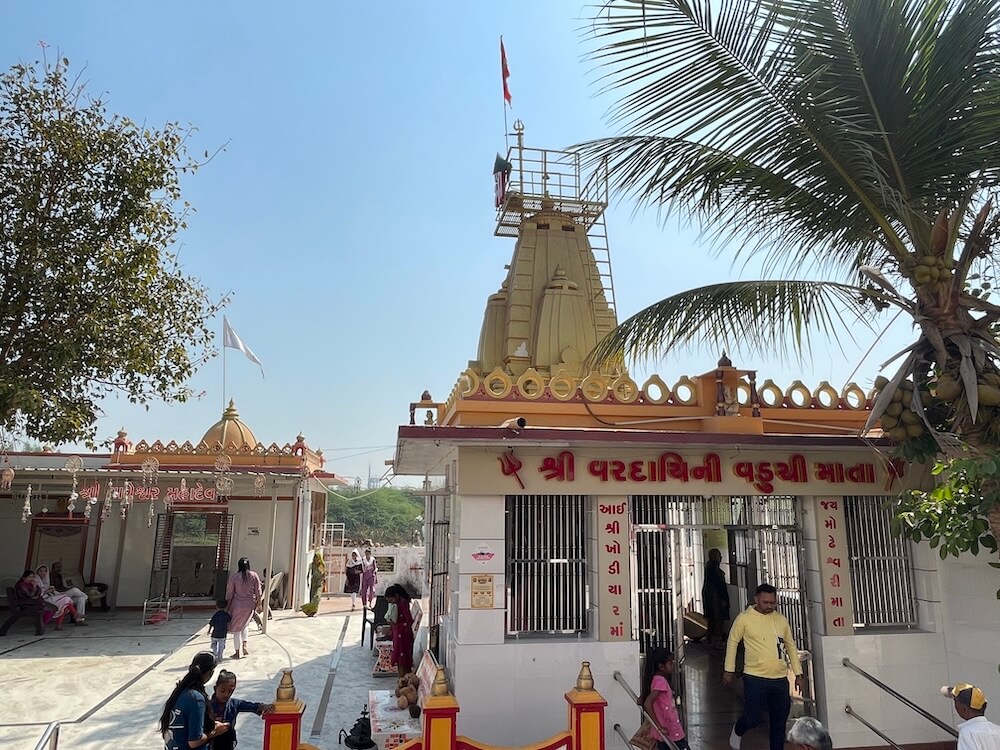
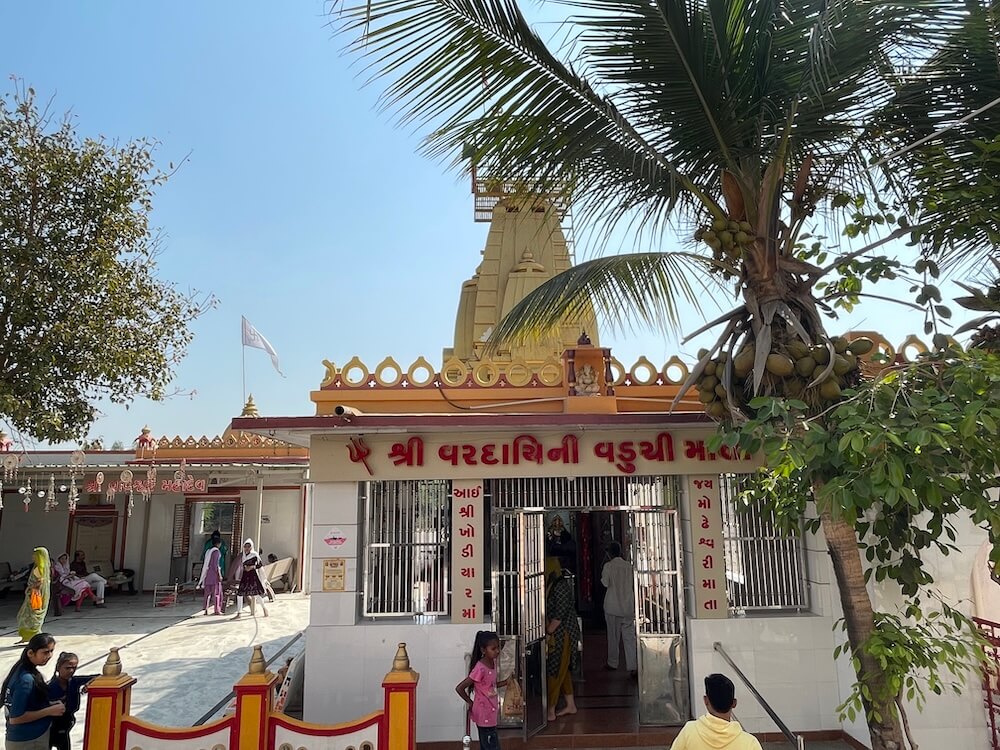
Situated at the entrance of the village, the temple has a parking area in front of it. The surroundings are enriched with trees and on one side lies an expansive lake.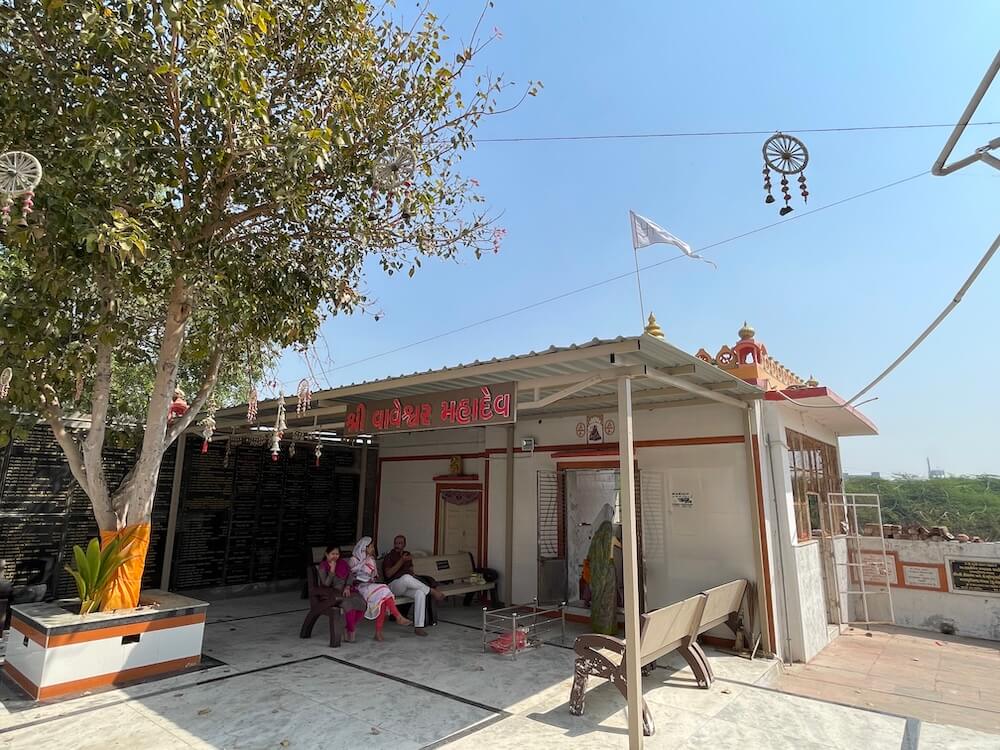 The entrance gateway, set within the enclosure wall of the temple, bears sculpted figures of dwarpals (guardian sentinels) upon its flanking walls. In front of these guardians, upon raised platforms, stand sculpted tigers, the vahana (sacred vehicle) of the goddess. The gateway itself is adorned with intricately carved doorframes and large ornamental doors. Within the paved courtyard of the temple, several seats have been arranged for the comfort of devotees. A well stands within the courtyard and for safety, it has been enclosed with an iron grill. In addition, there is a yajnamandap (pavilion for sacrificial rituals) supported by four pillars and covered by a roof divided into two sections. Around this pavilion, separate seating arrangements have been provided for devotees. The complex also includes facilities such as a Bhakta-Nivas (pilgrim lodging), Annachhatra (community dining hall for free meals) and a kitchen.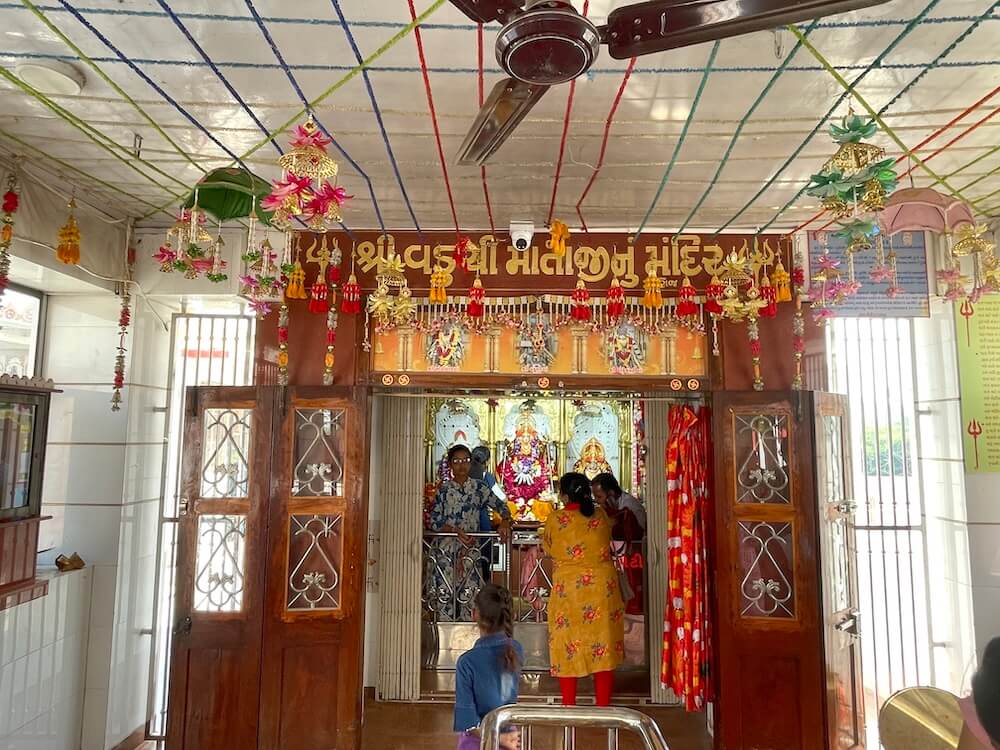
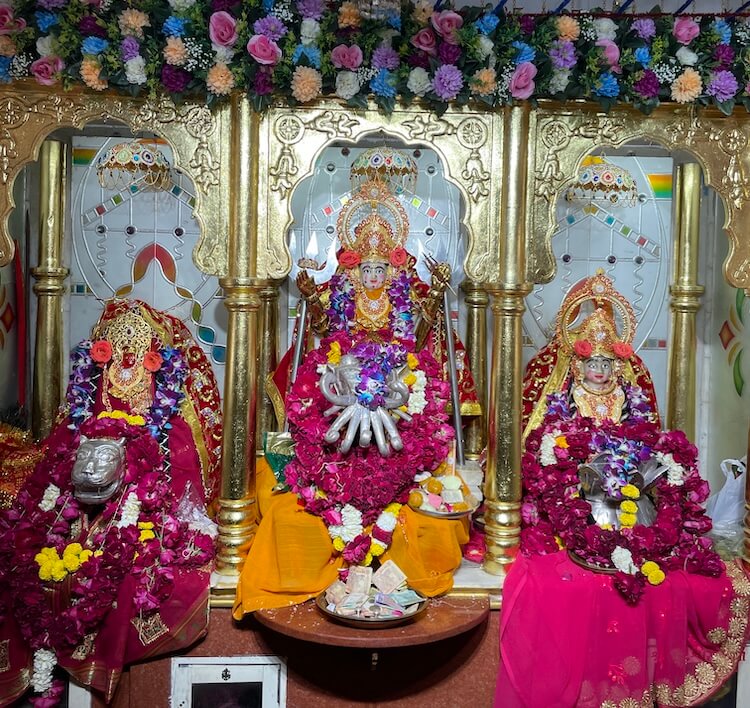
Raised upon an adhisthan (plinth) approximately two feet high, the temple structure consists of a sabhamandap (assembly hall) and a garbhagriha (sanctum). Apart from the main entrance, the sabhamandap also has two additional doorways on the left and right sides. At the centre of the hall, upon a platform, stands a sculpted tiger representing the vehicle of the goddess. In the devkoshtaks (wall niches) along the walls of the sabhamandap are the idols of Ganesha and Hanuman. Within the garbhagriha, upon a vajrapith (sacred pedestal) and set within an ornate makhar (decorative shrine frame), resides the idol of Vaduchi Mata. To the right of the principal idol stands the image of Khodiyar Mata, while to the left is the idol of Modeshwari Devi. Adorned with colourful garments and ornaments, 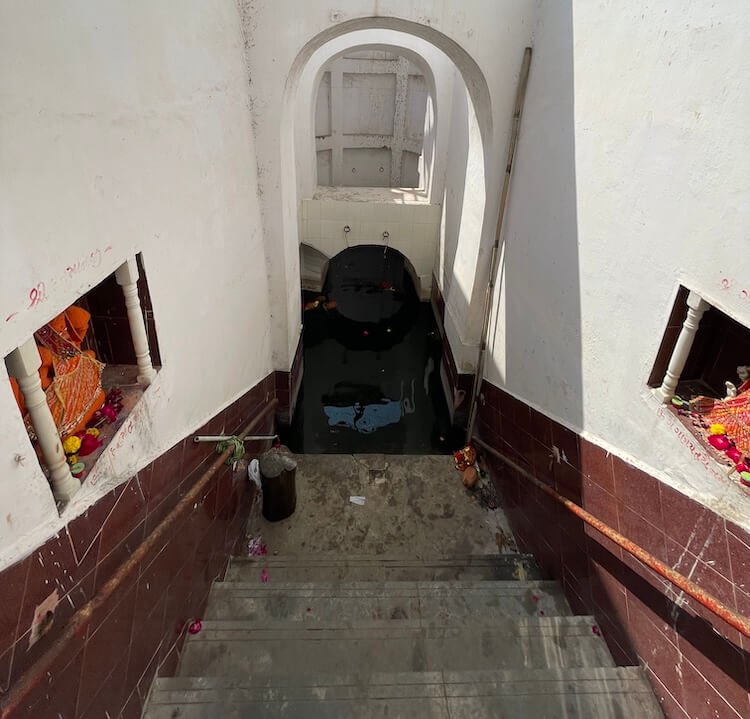 these images are crowned with elegant headpieces. Above the temple rises a tapering shikhara (spire) shaped in a square form with intricate carvings. This shikhara is accompanied by smaller ‘urushringa’ type subsidiary spires and is crowned at its summit by an amalaka (ribbed stone disc) and a kalasha (sacred finial).
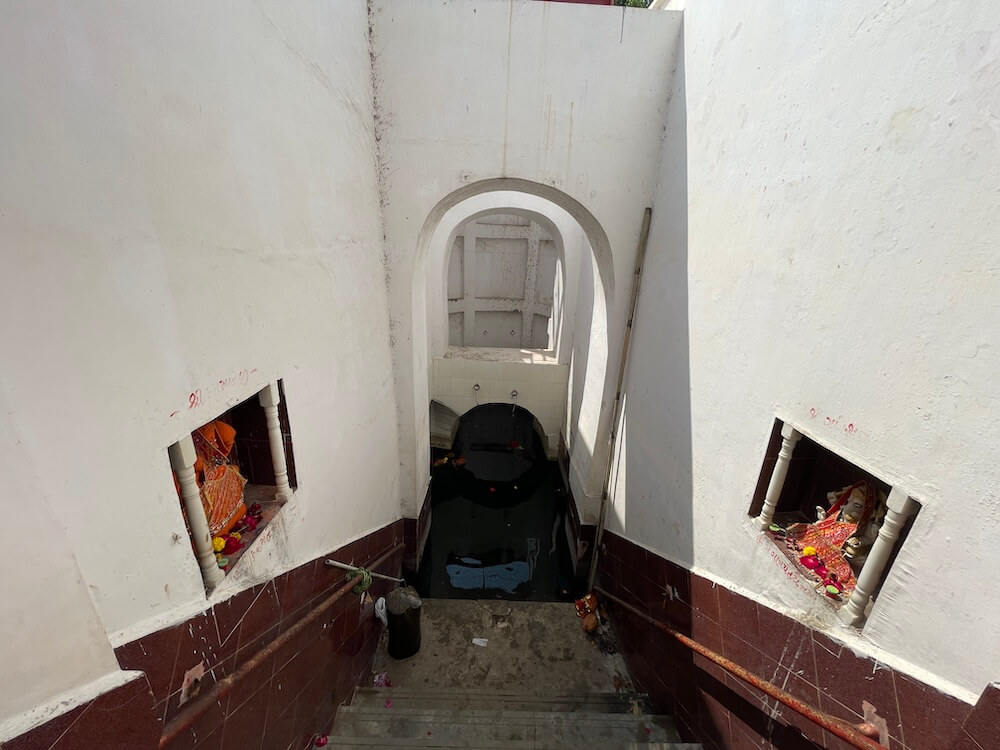
To the right of the temple, there is an ancient ‘barav’ (stepped well) reached by about twenty to thirty steps. Within the niches of the stepped passage leading down to the water are idols of Ganesha and Hanuman. It is believed that the idol of Vaduchi Devi originally manifested from this very barav. To the left of the main temple stands the shrine of Vaveshwar Mahadev. In this temple, a Shivalinga is installed at the centre of the floor. From the ceiling above hangs a copper abhishekpatra (vessel for ritual libation) from which a steady stream of water is offered upon the linga. In front of the pinda (the symbolic form of Shiva) upon a raised platform is the idol of Nandi. In the wall niches of the shrine are images of Hanuman and Ganesha.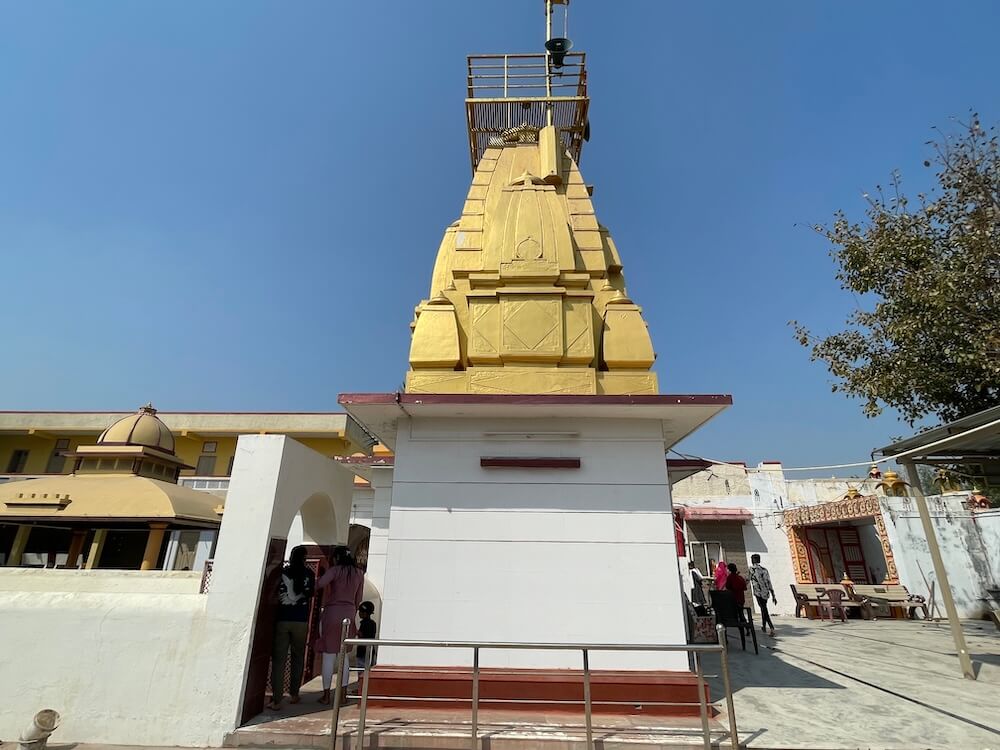
The principal annual festivals celebrated in this temple are the Chaitra and Sharadiya Navratri. During the nine days of Navratri, numerous religious ceremonies, including the Navchandi Yajna, are conducted in the temple. On this occasion, thousands of devotees arrive to have darshan of the goddess and to fulfil the vows they have made in her name. On every full moon day, Mahaprasad (sacred communal meal) is distributed to devotees within the temple.
The most remarkable ceremony associated with this shrine is the ritual known as ‘Barav Upsaavvu’, meaning the drawing out of water from the stepped well beside the temple. It is believed that once in a year or sometimes after two years, 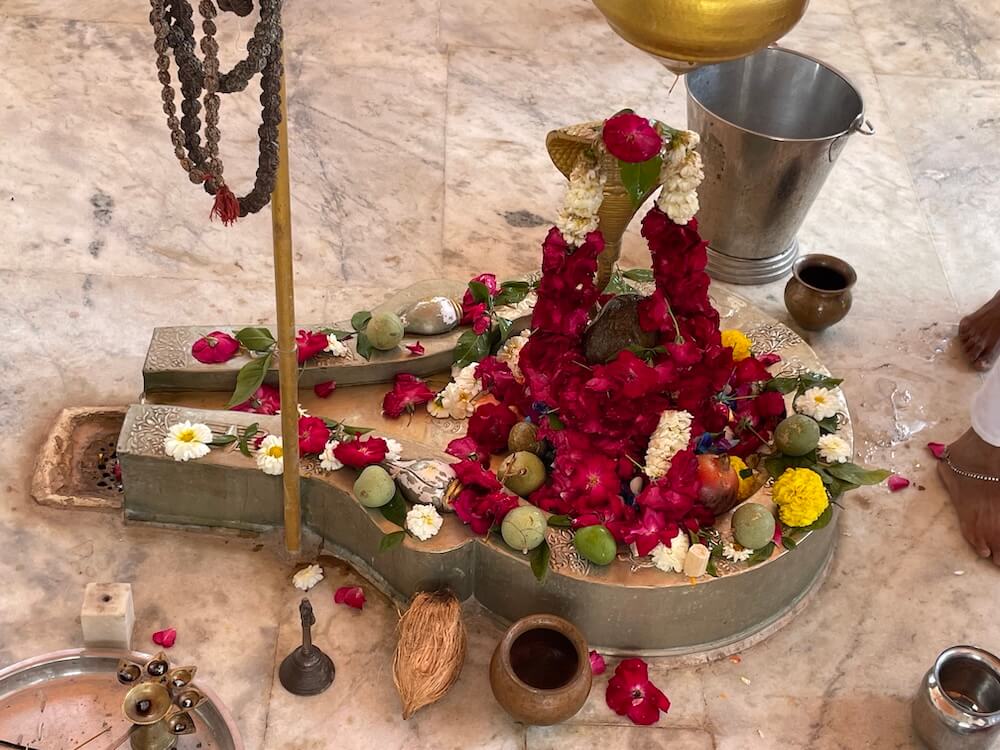 the goddess appears in a devotee’s dream and commands that the Barav be emptied and only then is the ceremony organised. The devotee who receives this vision alone descends into the well and draws out the water while hundreds of people gather to assist and witness the ritual. Once the well becomes completely empty, a sari and chunari (ceremonial veil offered to the goddess) are placed there and raw mangoes are offered as prasad. After the ritual is completed, the well astonishingly fills again with water within merely two hours. Devotees firmly believe that those who partake of the mango prasad with a desire for progeny are blessed with children. Special worship is also conducted here on Mahashivratri during the month of Shravan, in the month of Margashirsha on the days of Purnima and Amavasya and on Tuesdays and Fridays. Devotees may have darshan of Vaduchi Mata here every day from six in the morning until eight at night.
Useful Information
- Located at O km from Khambhat and 59 km from Anand.
- State Transport bus service available from Khambhat city.
- Private vehicles can reach directly up to the temple parking area.
- Accommodation and breakfast facilities are available in the vicinity.
- Contact: Temple Office – Mobile: 99742 16501
वडुची माता मंदिर
लोनज, तालुका खंभात, जिला आनंद
मंदिरे
Temples
मंदिर
-
भीमनाथ महादेव मंदिर लिंबळी, ता. सोजित्रा, जि. आनंद
अधिक माहितीBhimnath Mahadev Temple Limbali, Tal. Sojitra, Dist. Anand
View Detailsभीमनाथ महादेव मंदिर लिम्बाली, ताल. सोजित्रा, जिला. आनंद
विवरण देखें -
मेलडी माता मंदिर मालताज, ता. सोजित्रा, जि. आनंद
अधिक माहितीMeldi Mata Temple Malataj, Tal. Sojitra, Dist. Anand
View Detailsमेलडी माता मंदिर मालताज, ताल. सोजित्रा, जिला. आनंद
विवरण देखें -
चंद्रमौलेश्वर महादेव मंदिर उमरेठ, ता. उमरेठ, जि. आनंद
अधिक माहितीChandramouleshwar Mahadev Temple Umreth, Tal. Umreth, Dist. Anand
View Detailsचंद्रमौलेश्वर महादेव मंदिर उमरेठ, तहसील उमरेठ, जिला आनंद
विवरण देखें