 Sahajanand Swami, revered as an incarnation of Lord Krishna, founded the Swaminarayan Sampradaya (spiritual sect) in the eighteenth century upon the philosophical foundation of Vishishtadvaita (qualified non-dualism). In order to propagate the ideals of this tradition, the Swami established several temples. During his lifetime, temples were constructed at Ahmedabad, Bhuj, Muli, Vadtal, Junagadh, Dholera, Dholka and Gadhada. The number of such temples has continued to grow steadily and among them, the well-known Swaminarayan Gokuldham Temple situated at Nar in Petlad taluka occupies a prominent place. For devotees, it stands as an immensely significant centre of faith and reverence.
Swaminarayan, the founder of the Swaminarayan Sampradaya, was born on 3 April 1781, the auspicious day of Ram Navami, in the village of Chhapaiya near Ayodhya. The child born to the priest Hariprasad Pandey and Premvati Pandey was named Ghanshyam Pandey. 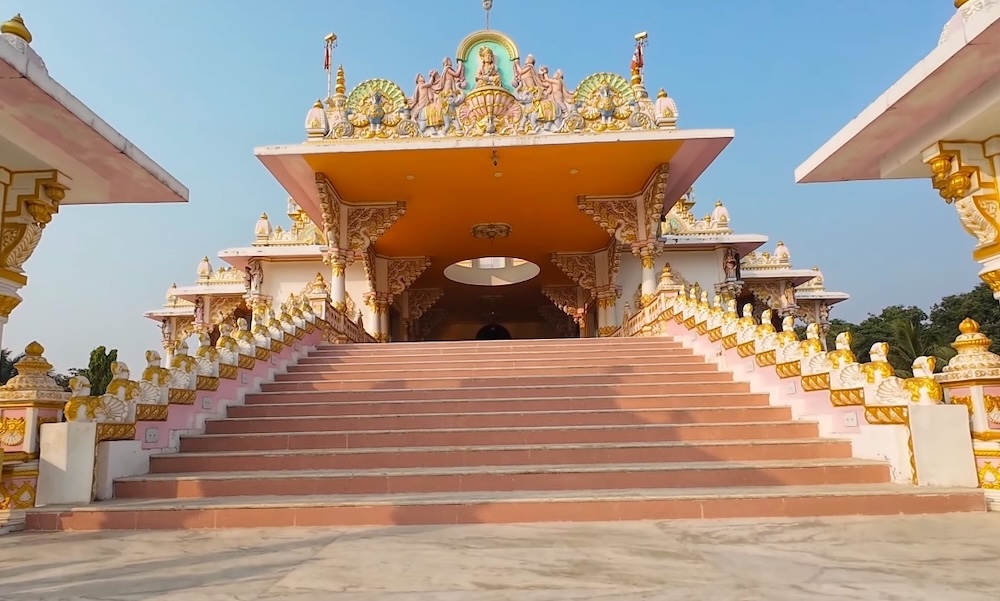 From a very early age, Ghanshyam had mastered the Vedas and Upanishads. In the year 1799, he arrived at the village of Loj near Junagadh, where he met Muktanand Swami. There, he accepted discipleship under the Swami. Later, on 20 October 1800, upon receiving the initiation of renunciation (Sannyasa Diksha), he assumed the name Narayan Muni. After the passing of Ramanand Swami, the entire responsibility of the Uddhav Sampradaya fell upon his shoulders and thereafter, this tradition came to be known across the world as the Swaminarayan Sampradaya.
 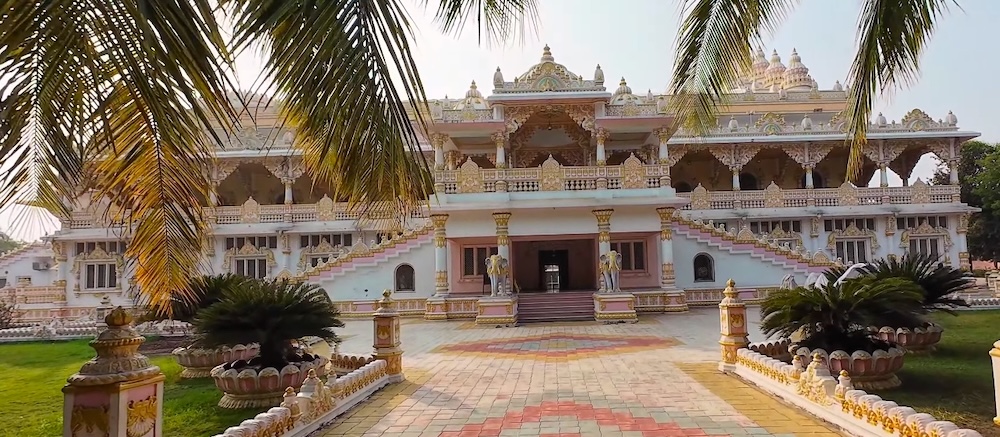 Continuing this sacred lineage, Swami Sukhdev Prasad and Swami Harikeshav Das laid the foundation of the Gokuldham Temple at Nar in the year 2004 under the authority of the Swaminarayan institution.
According to traditional belief, Swaminarayan is regarded as a direct incarnation of the Divine and he devoted his entire life to his Guru and to Lord Krishna, establishing numerous temples. Within this tradition, founded for the spiritual welfare of humanity and the propagation of pure devotion, 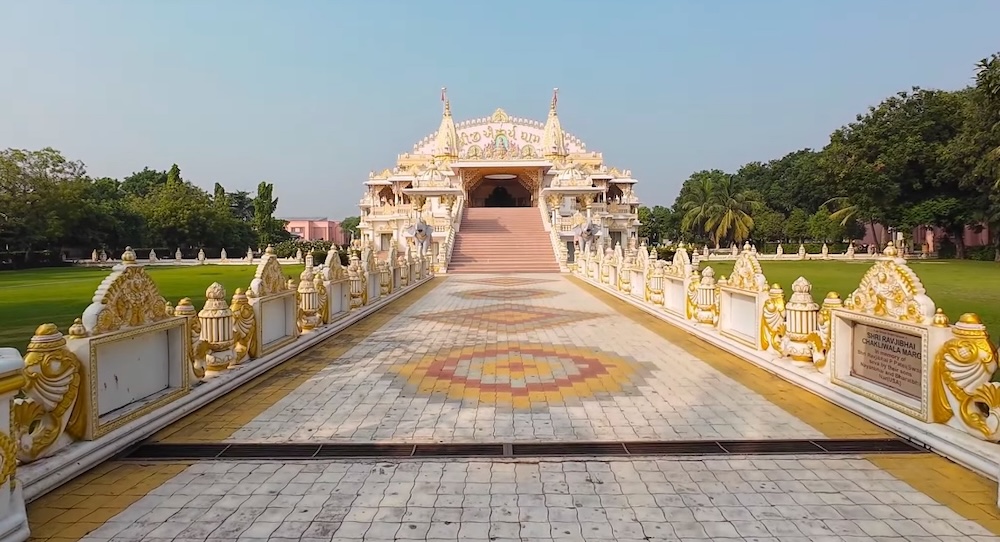 the philosophy of Vishishtadvaita occupies a place of great importance. The spiritual radiance he attained through the austerities performed during his stay in Loj village near Junagadh is believed by devotees to be experienced even today through these temples. Through his teachings, he emphasised that selfless service to humanity is the highest form of religion and this very legacy continues to be preserved uninterruptedly through the temple at Gokuldham.
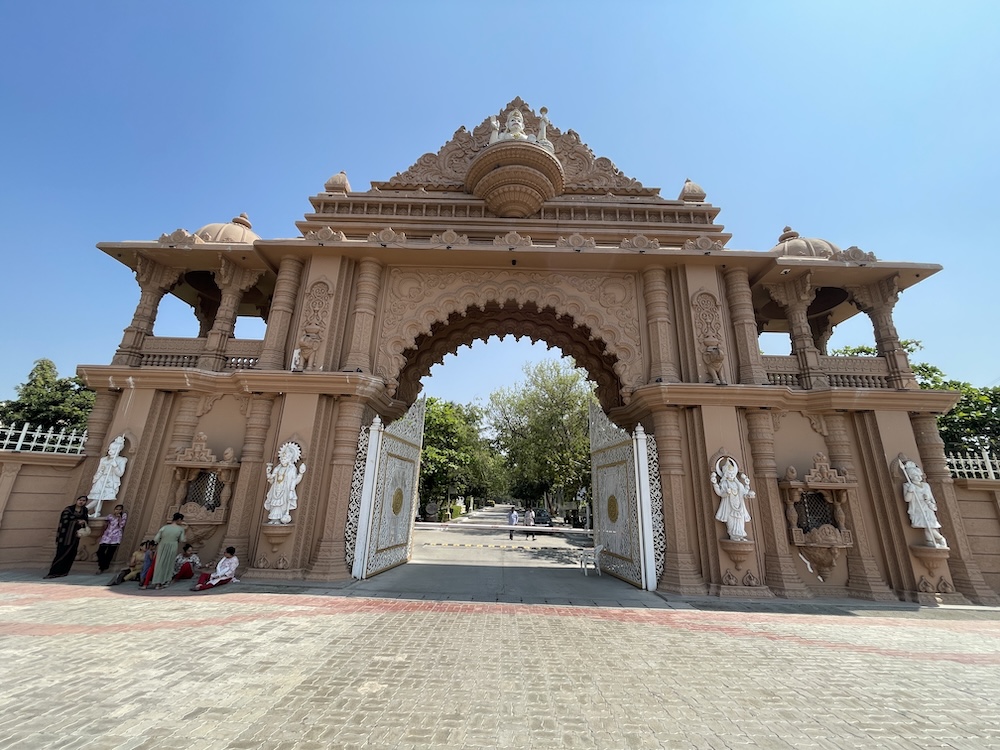
 The temple at Nar spreads across an expansive area of nearly forty-two acres and the entire complex is situated along the highway. It is protected by a strong fortified boundary. Within this fortification stands a magnificent main gateway rising nearly fifty feet in height. On either side of the gateway are beautifully carved sculptures of the traditional guardians of the entrance (Dwarapalas). Directly in front of the entrance stands an imposing flagstaff about 108 feet high, upon which the national flag, the Tricolour, flutters proudly.
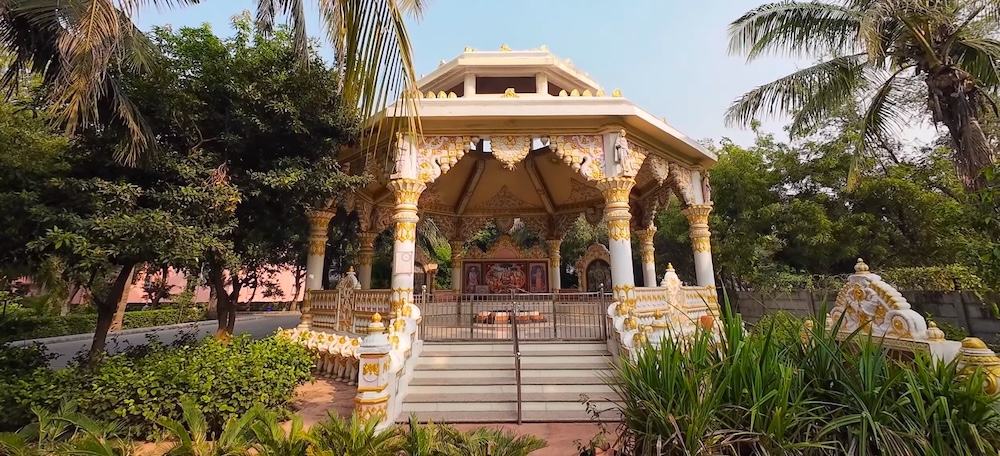
 Within the spacious temple precincts are well-planned gardens, internal roads, parking facilities, administrative centres, a Gurukul (traditional residential school), a formal school, student hostels, an Annachhatra (community dining hall offering food to devotees), a large kitchen, offices, devotees’ accommodation, a Gaushala (cow sanctuary), a health centre and a shelter facility. In the forecourt of the temple, a Yajna Mandap (sacrificial pavilion) has been constructed, where a sacred yajna (Vedic fire ritual) is performed with due rites every day.
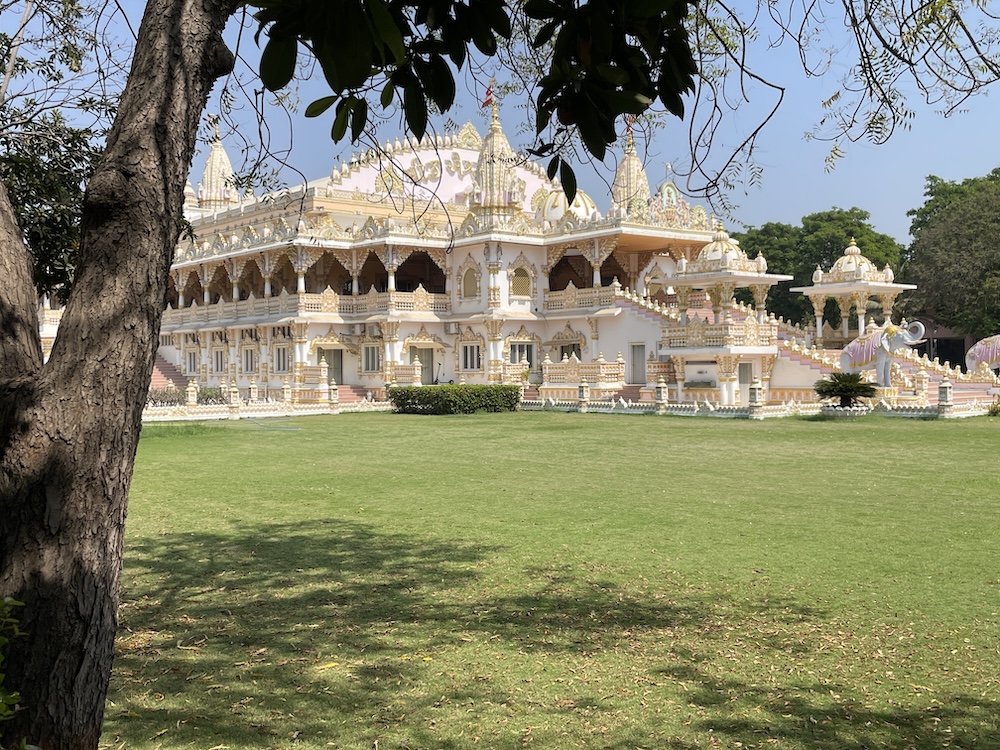
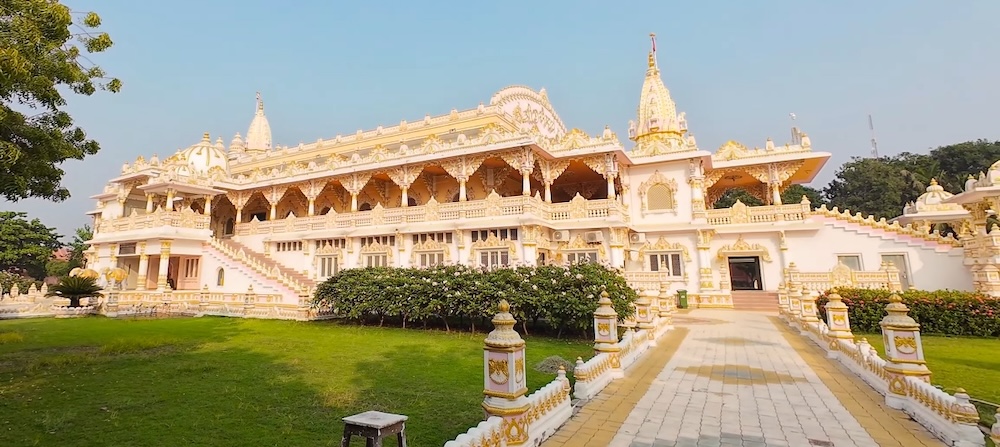
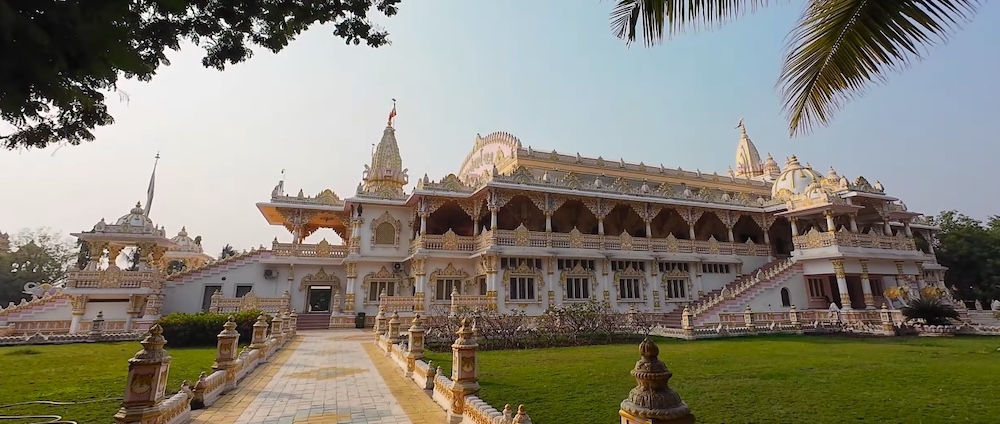
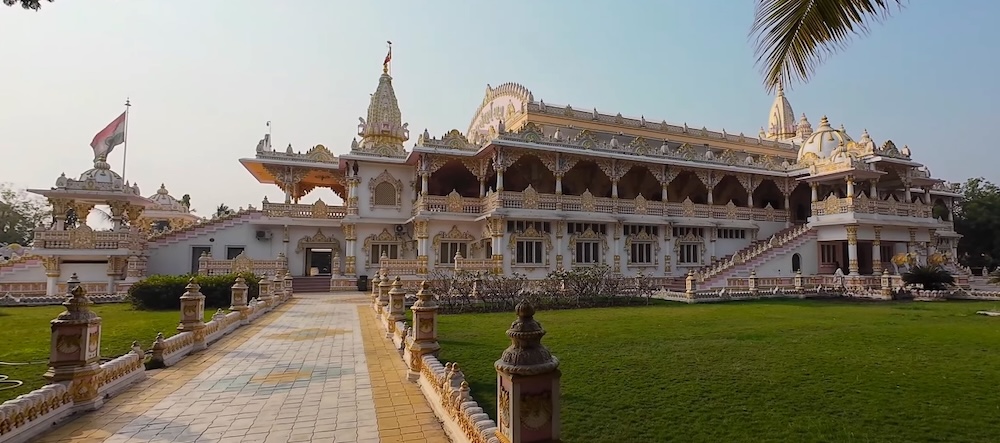
The principal temple structure is an imposing two-storeyed edifice. The broad pathway leading to the temple is paved with elegant stone flooring and is flanked on both sides by protective railings and landscaped gardens. 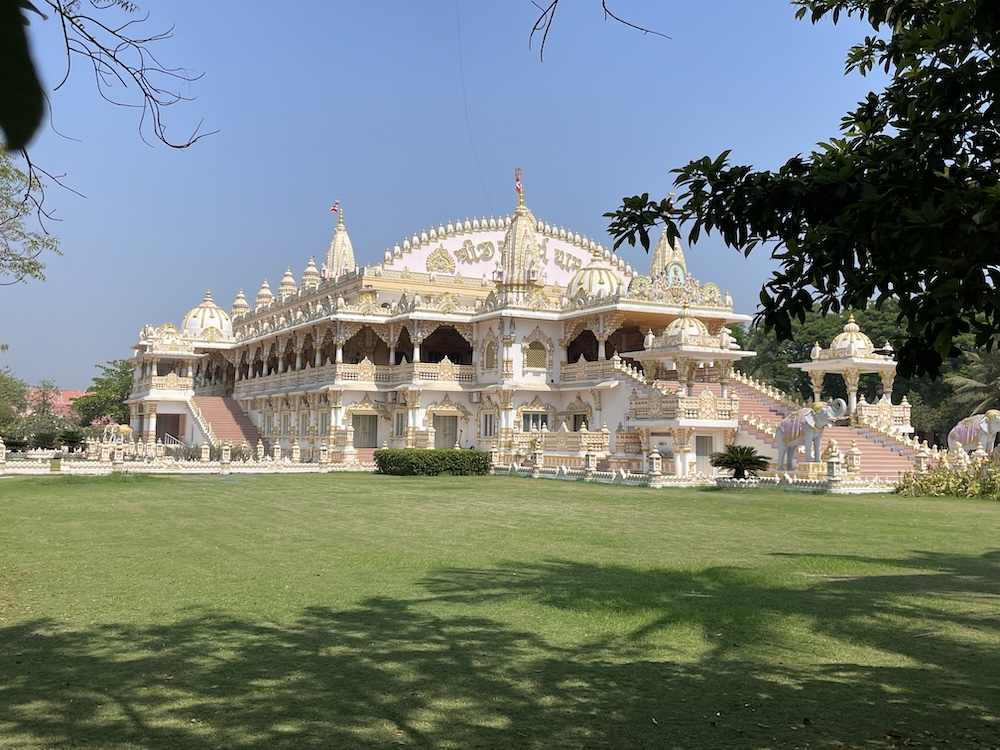 On the ground floor are located a meditation centre, administrative offices and storage chambers, while the main temple itself stands on the first floor.
At the base of the temple steps, on both sides, are grand sculpted figures of Gajaraj (royal elephants) and beyond them are finely crafted sculptures of musicians blowing ceremonial trumpets. The stairway is bordered by ornate safety railings supported by decorative pillars painted in a golden hue and the graceful sculptures of swans adorning them, lend a distinctive beauty to the ascent.
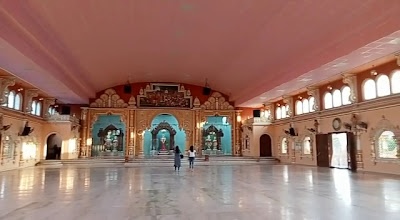
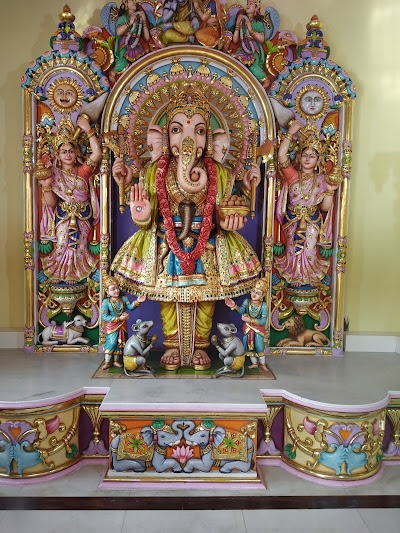
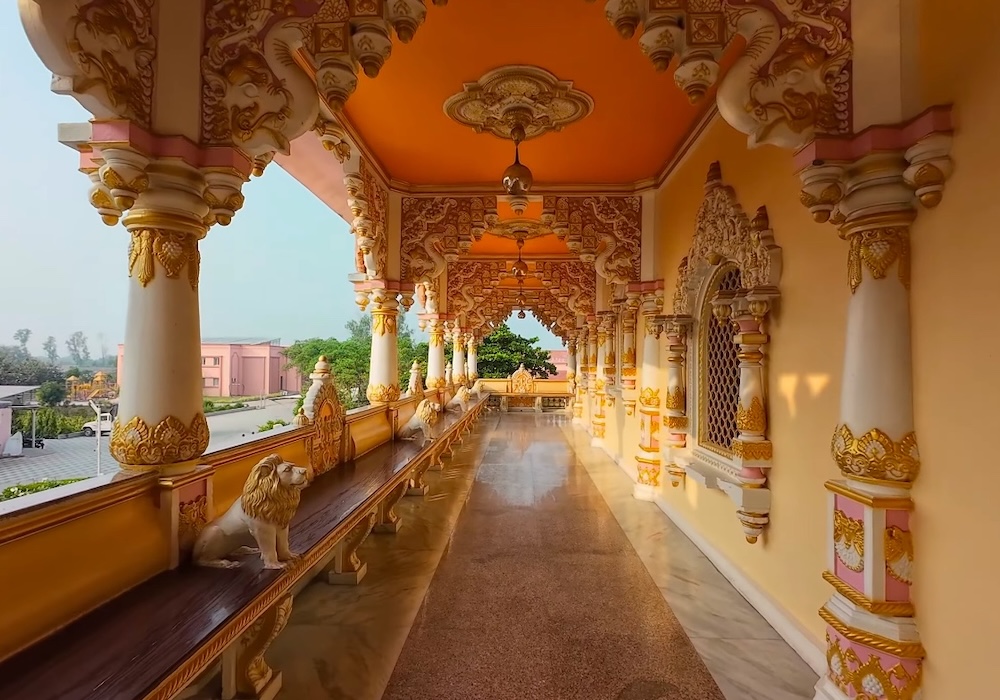
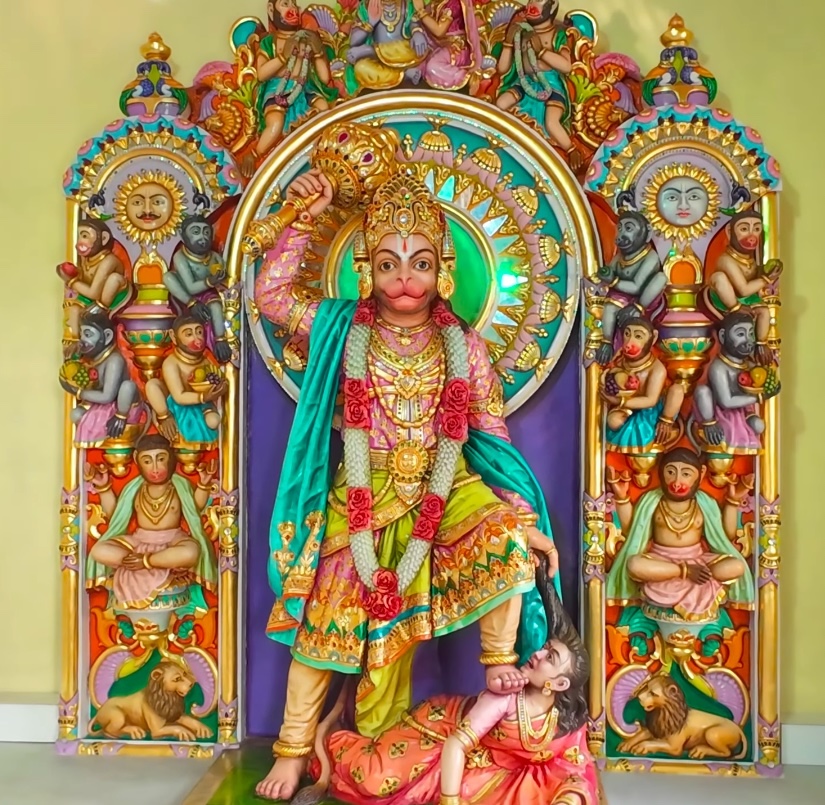
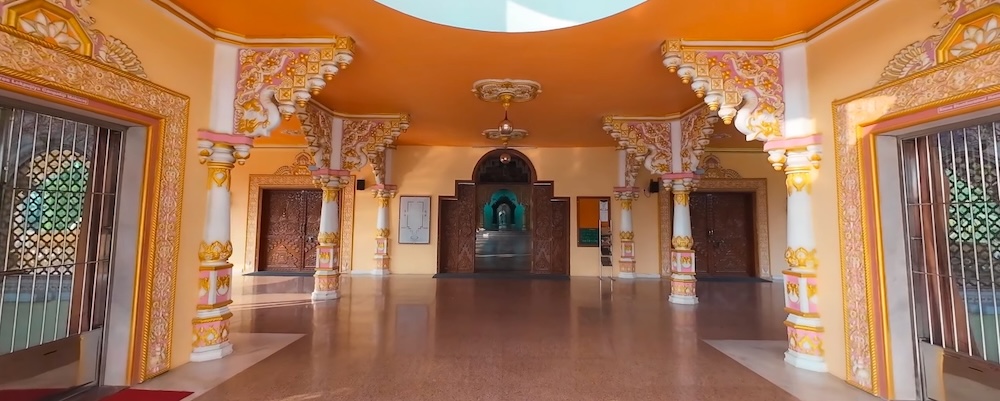
From the entrance pavilions (Mukhamandapas) situated on three sides of the temple, one enters the spacious Sabhamandap (assembly hall). In front of the main entrance of this hall stand two smaller shrines containing marble idols of Hanuman and Ganesha. 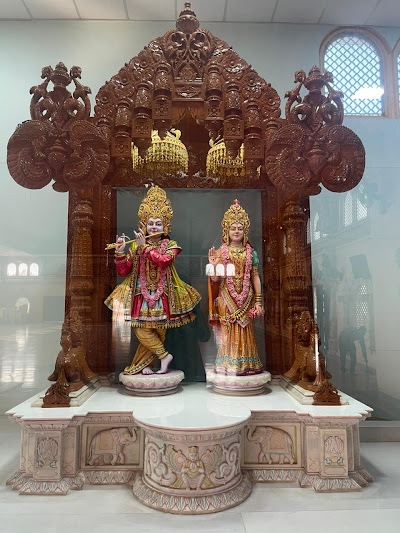 Seats adorned with lion sculptures have been provided here for devotees to sit. Within the expansive assembly hall, intricately carved pillars display sculptural representations of various deities and of revered saints and ascetics. The ceiling panels portray scenes from diverse mythological narratives.
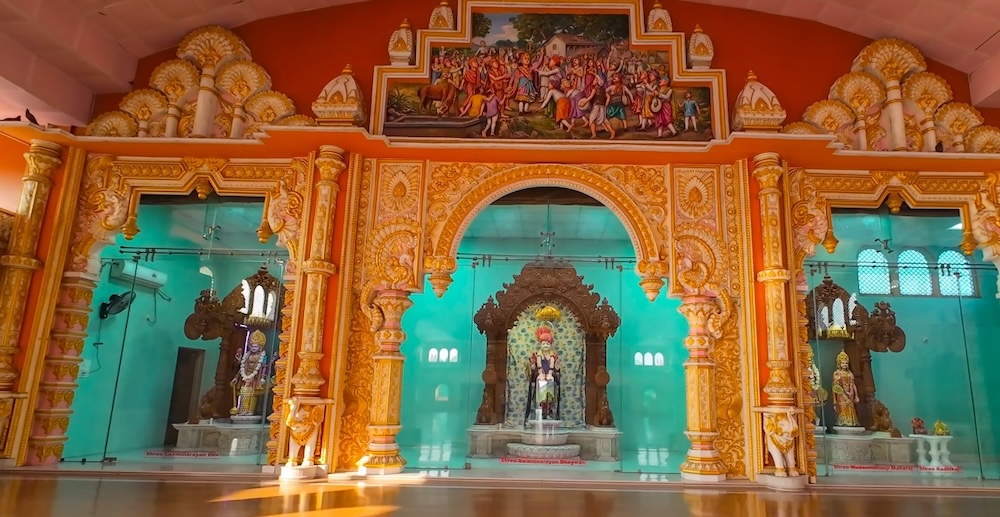
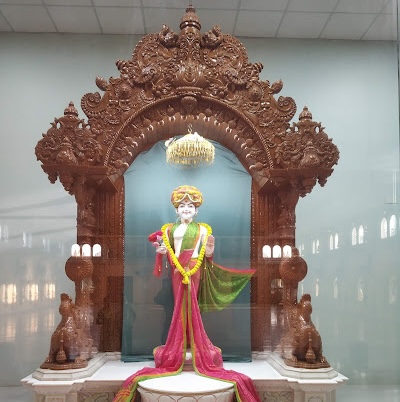
Beyond a two-foot-high Antaral (vestibule space preceding the sanctum) lie three Garbhagrihas (sanctum chambers). In the central sanctum, which forms the principal shrine, stands the four-armed idol of Narayan Vishnu. To the right is the idol of Swaminarayan and to the left are the idols of Radha and Krishna. The temple is adorned with numerous spires built in the Nagara style of temple architecture. Above the main sanctum rises the tallest of these spires, crowned with an Amalaka (a ribbed circular stone element) and a golden Kalasha (finial).
Chaitra Shuddha Navami, the sacred day of Ram Navami, is celebrated as the principal annual festival of the temple. On this very day, the Swaminarayan Jayanti is also celebrated with great splendour. During the festivities, the festival idols of Swaminarayan Maharaj and Lord Rama are placed in a cradle and devotional cradle songs are sung, accompanied by programmes of Bhajan (devotional singing), Kirtan (religious musical recitations) and Katha (scriptural narration).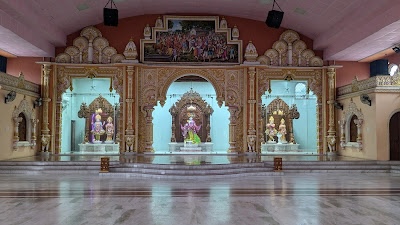
During the festival of Diwali, the temple organises the grand Annakut offering, when thousands of devotees receive Mahaprasad (sanctified food) and the deity is ceremonially offered ‘Chhappan Bhog’ (a traditional array of fifty-six sacred food preparations). On Guru Purnima, the Guru–disciple tradition is honoured through the ceremonial worship of all saints and spiritual teachers. The festival of Holi is celebrated with great enthusiasm in the form of Rangotsav (a festival of colours) amid the resounding beats of drums and traditional instruments.
In addition to these, festivals such as the ‘Radha-Krishna Jhula Utsav’ (swing festival) on Shravan Purnima, Ganesh Chaturthi, Narasimha Jayanti, Vaman Jayanti and Dussehra are celebrated here in accordance with tradition. The temple is open for Darshan daily from 7:30 am to 12 pm and from 4 pm to 8:15 pm.