
Nilkanth Mahadev Temple
Sunak, Tal. Unjha, Dist. Mehsana
 The Nilkanth Mahadev Temple, situated in the village of Sunak within the Unjha Taluka of Mehsana district, is revered as a paramount treasury of Gujarat’s ancient architecture and religious heritage. This sacred edifice is considered a superlative exemplar of the Maru-Gurjara architectural style, which flourished during the golden age of the Solanki (Chaulukya) dynasty between the tenth and twelfth centuries. Local tradition attributes the temple’s construction to the valiant King Siddharaj Jaysinh. However, several researchers argue that the structure is even older. It is estimated to have been built in the latter half of the 10th century, approximately a century prior to the creation of the world-renowned Sun Temple at Modhera.
Located about 8 km from Unjha city on the Unjha-Patan road, the temple has been designated as a protected monument of national importance by the Archaeological Survey of India. It is notably one of the select temples in Gujarat chosen for transformation under the central government’s ‘PRASHAD’ scheme.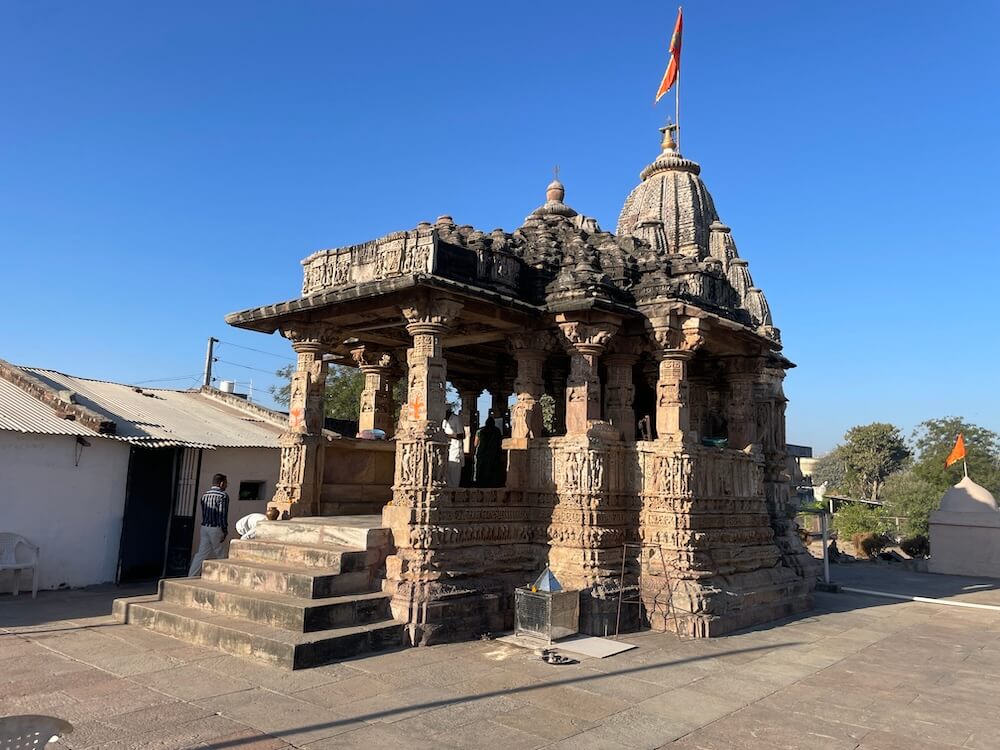 Launched by the Ministry of Tourism in 2014-15, the primary objective of this scheme is the integrated development and beautification of significant pilgrimage sites across the country. The central government provides 100 per cent of the funding for these endeavours.
Clear references to this temple and its adjacent historical reservoir are found in ancient inscriptions and copper plates dating back to the eleventh century. In the 1880s, the renowned archaeologist Henry Cousens conducted an extensive survey and documentation of this shrine. In the book ‘The Architectural Antiquities of North-Western Gujarat’ (Jas Burgess and Henry Cousens, Archaeological Survey of Western India, Vol. IX, 1903), he remarked : ‘The Nilakantha temple contains the usual Saiva Linga; 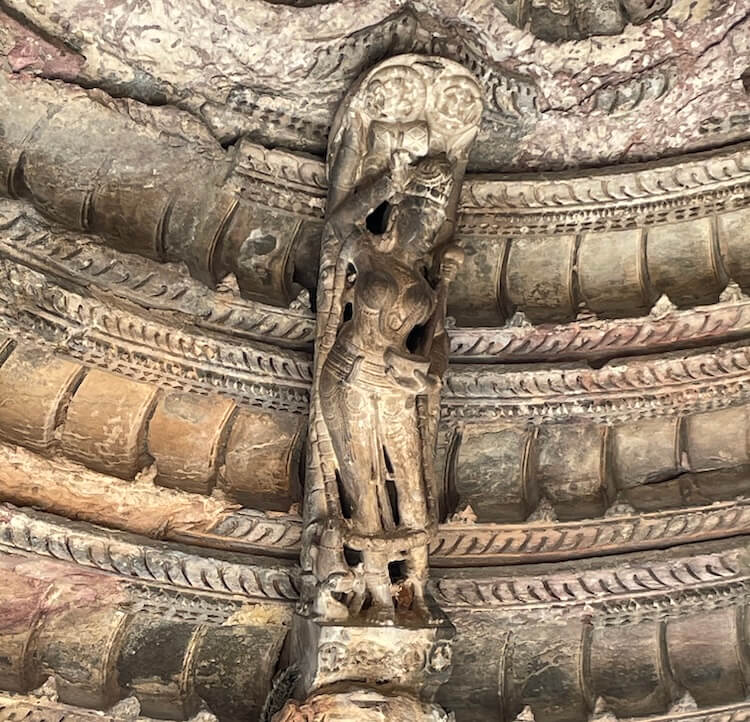 but whether this is the original, it is impossible to say. The doorway of the shrine, on the lintel of which the dedicatory symbol is carved, has been reconstructed and intact, much of the temple appears to have been rebuilt. As it now stands, it consists of the shrine and an open hall or mandapa with an entrance porch before it, facing the east. There is an inscription in nine short lines on one of the pillars dated in Sam. 1356 and another on the base of an image, but very defective, dated Sam. 1596, Sravana vadi 13, Monday. The shikara is fortunately complete to the finial and the roof of the mandapa together with the porch are also intact. It is thus a fairly complete example of this style.’ Cousens also notes that, ‘This temple may possibly belong to the century previous to the date of the last.’
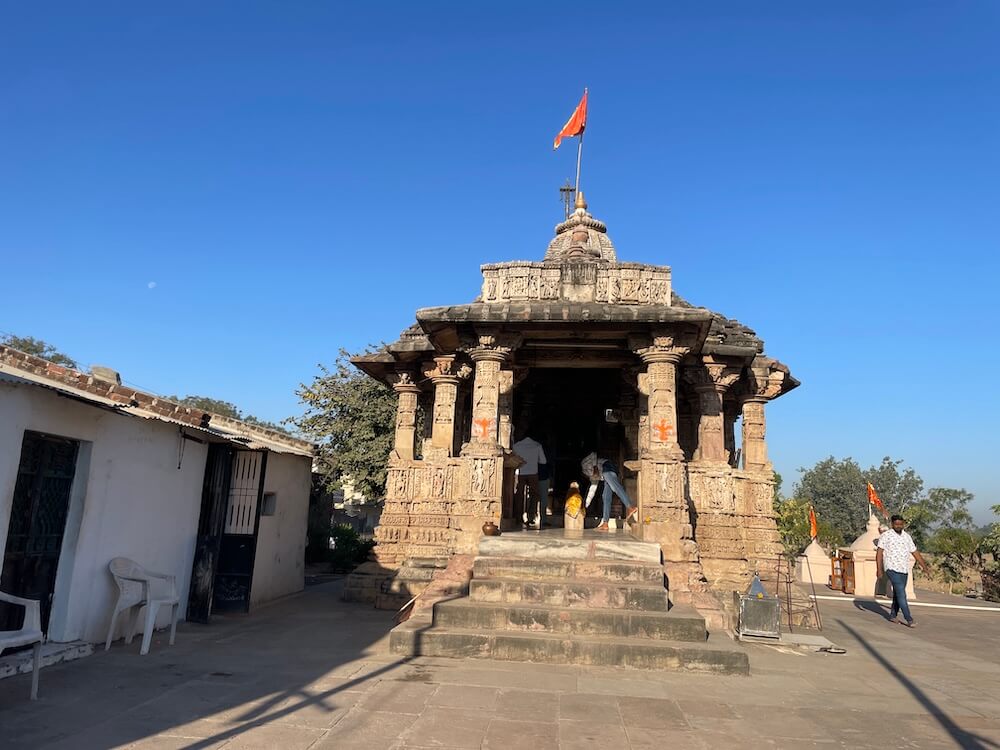
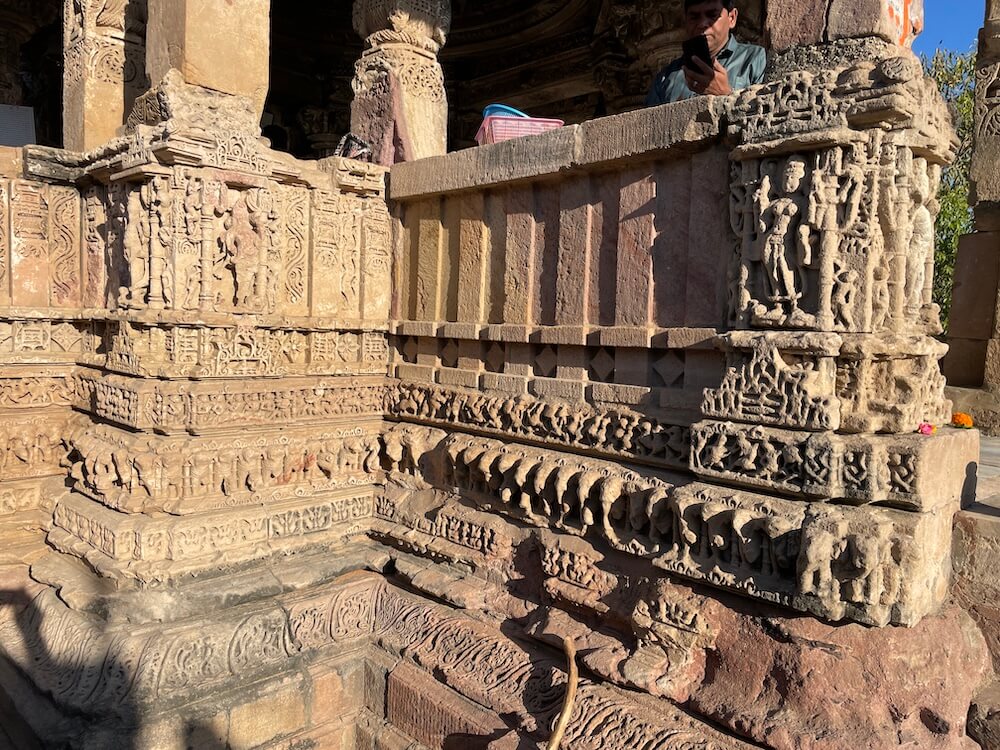
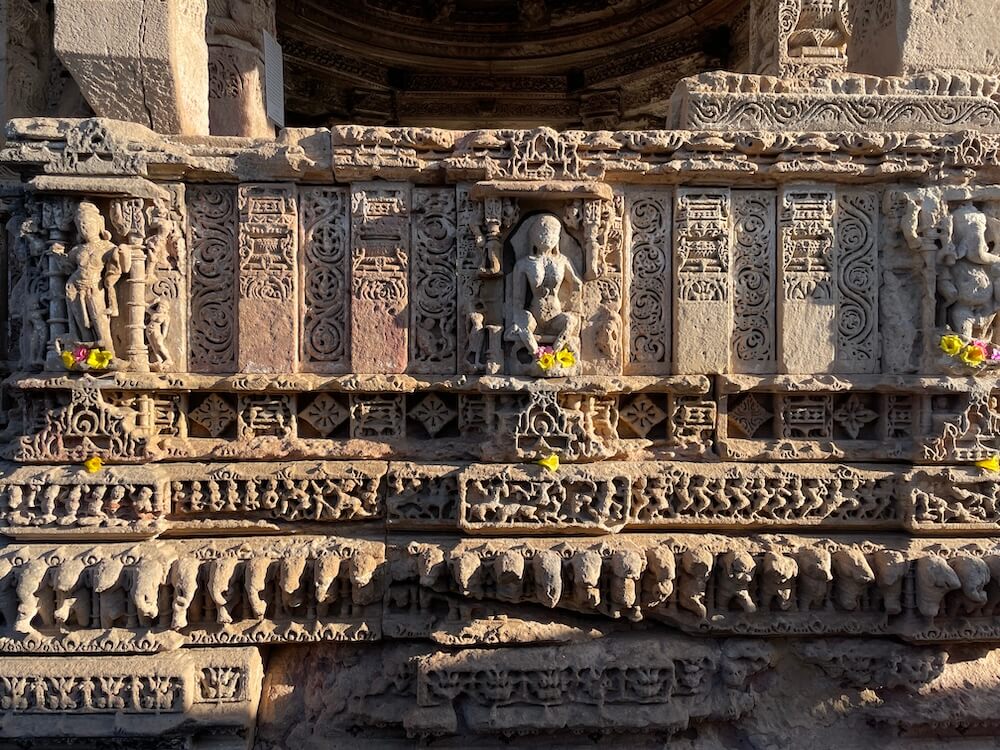
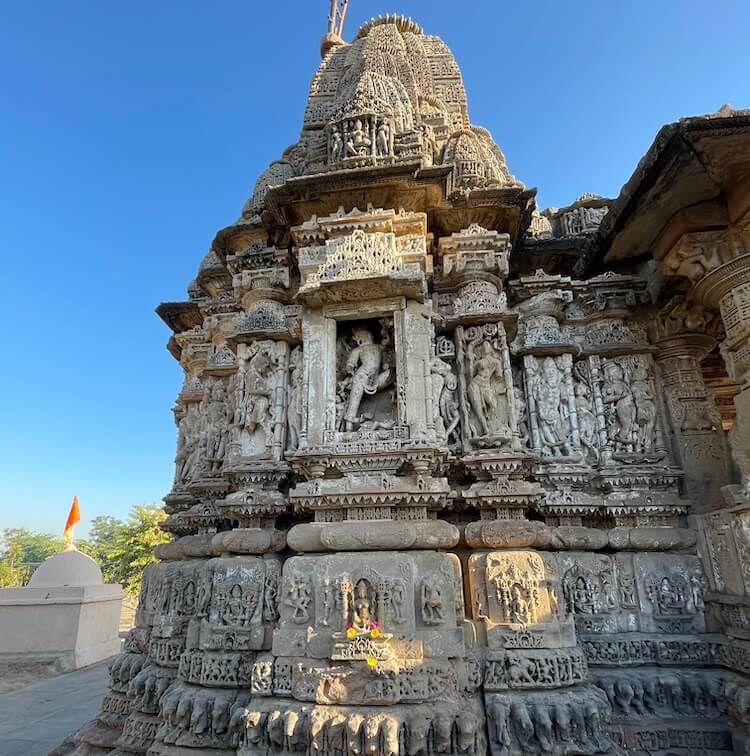
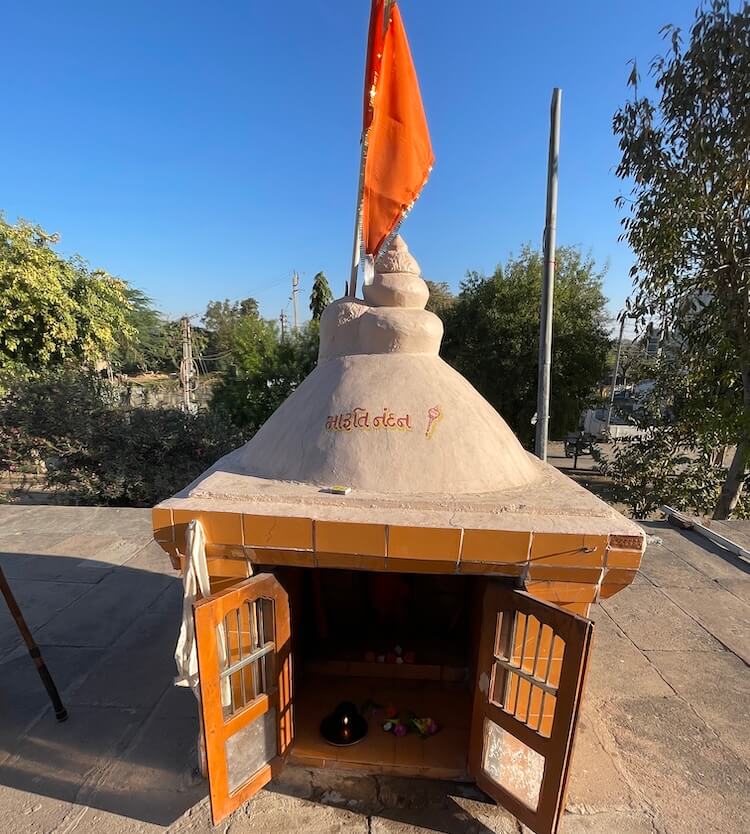
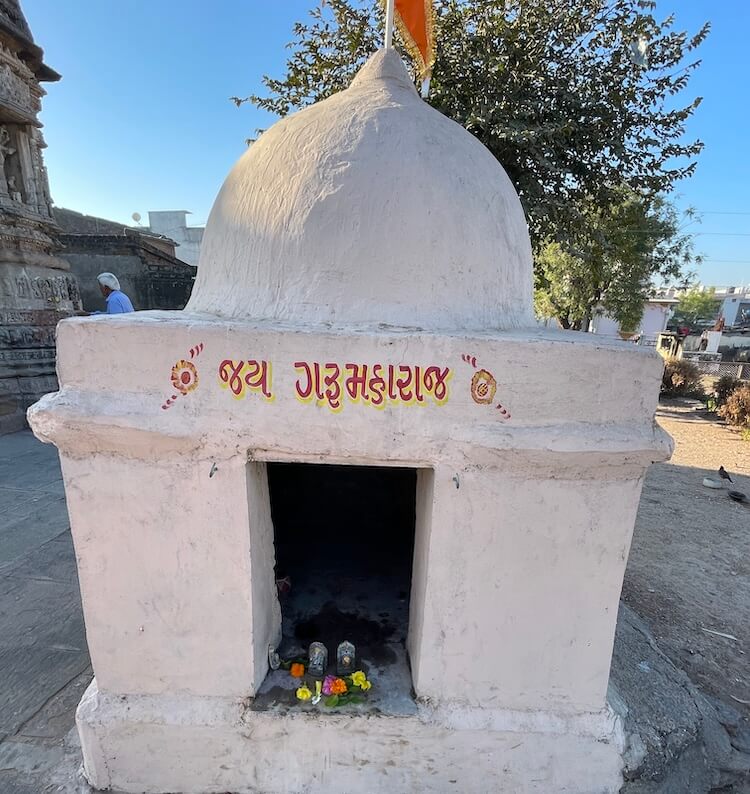
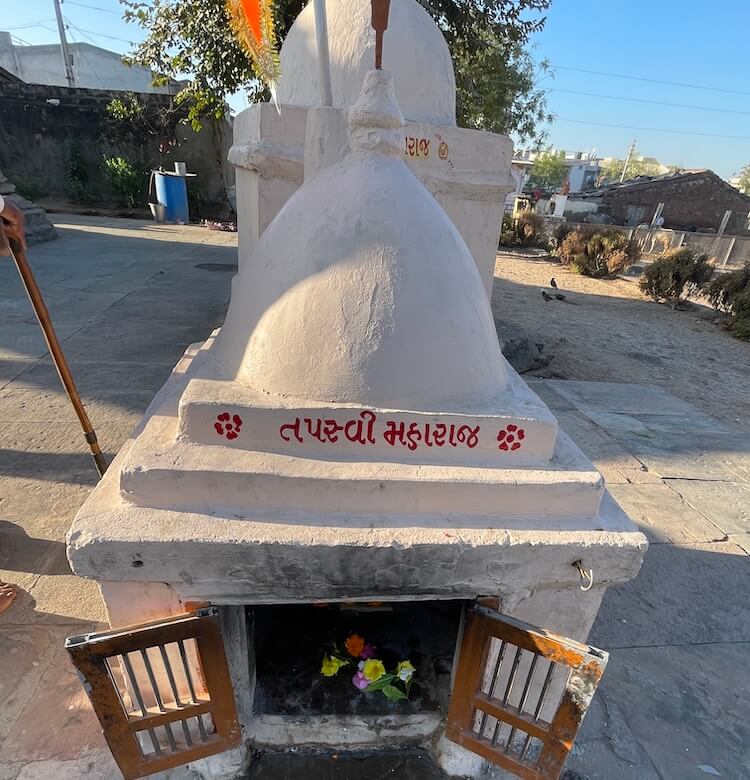
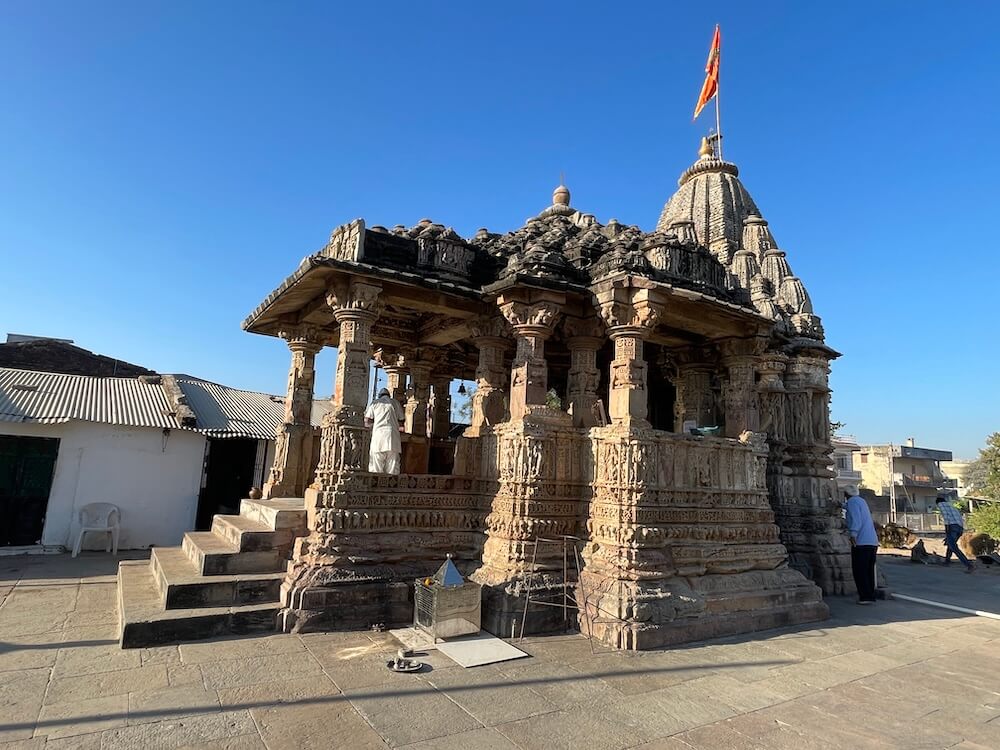
This east-facing rectangular temple is erected upon a high plinth and the courtyard is accessed via a flight of stone steps. Upon entry, the grandeur of this ancient Nagara-style temple immediately meets the eye. 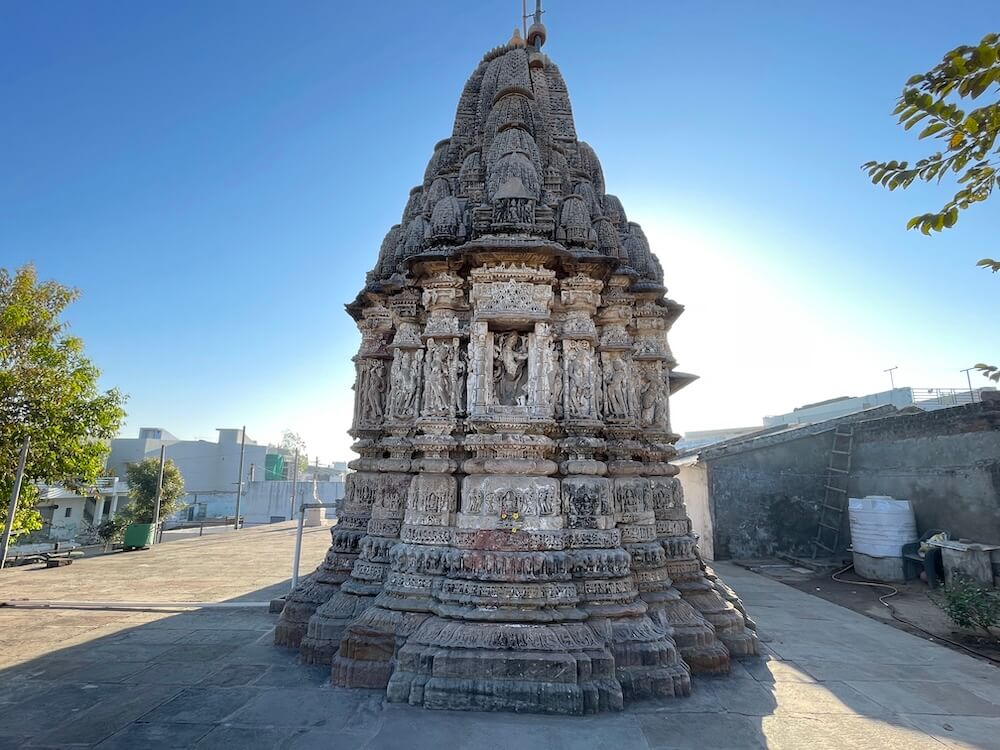 The exterior is adorned with exquisite carvings, including base layers of elephants (‘Gajastara’) and lotuses (‘Kamalastara’). The niches and outer surfaces of the walls feature sculptures of various deities, as well as depictions of contemporary human life and battle scenes. The sanctum sanctorum (Garbhagriha) is surmounted by a soaring Nagara spire, intricately carved with numerous miniature replicas of the spire known as ‘Urushringas’. At the apex sits the ‘Amalaka’ and the sacred finial (‘Kalash’). Although the temple suffered damage from historical invasions, the local villagers and the Archaeological Department have successfully restored its original form by painstakingly reassembling the scattered stones. The presence of the ancient temple of Mother Harsiddhi within the same precincts further underscores the site’s historical and religious eminence. A sacrificial pit (‘Yagnakunda’) stands before the temple, where holy fires are lit on various ceremonial occasions.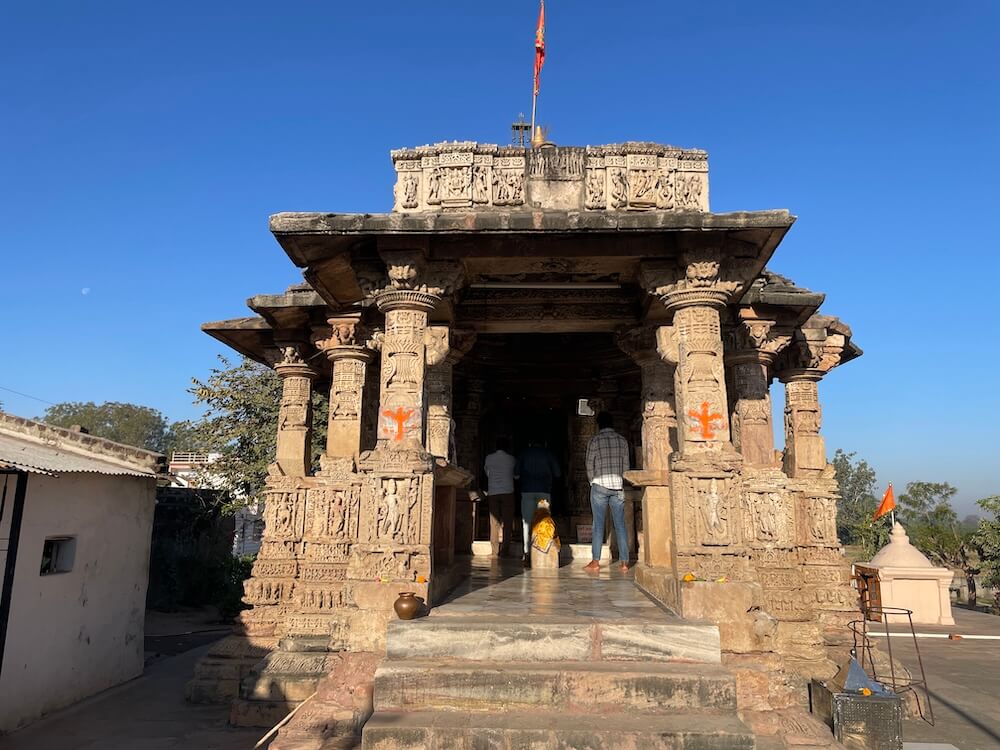
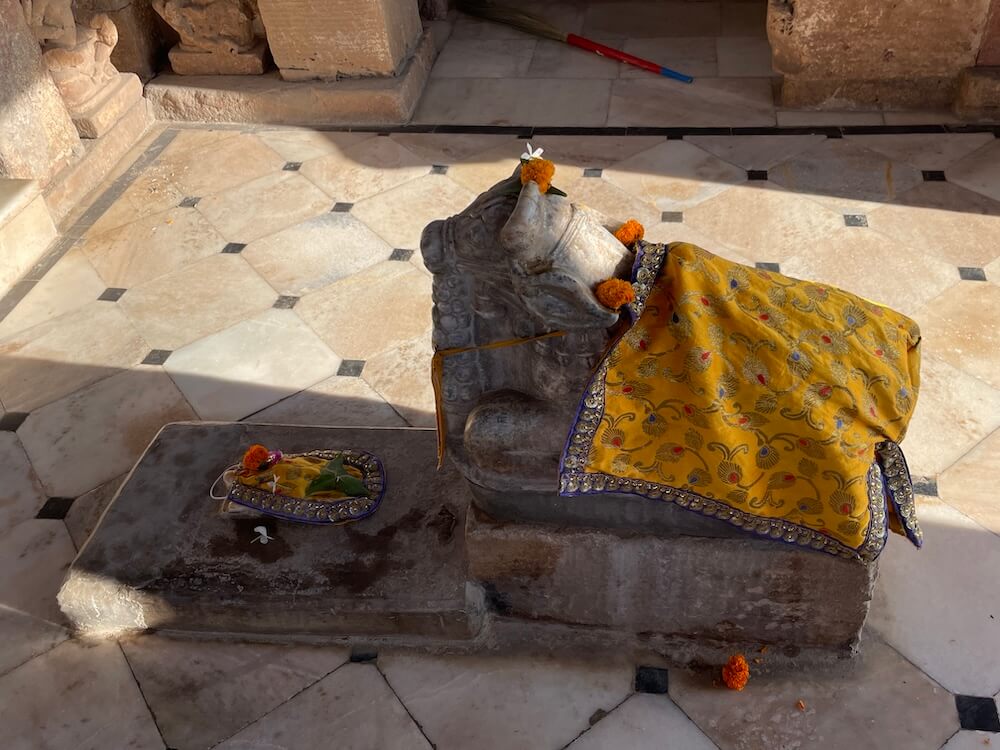
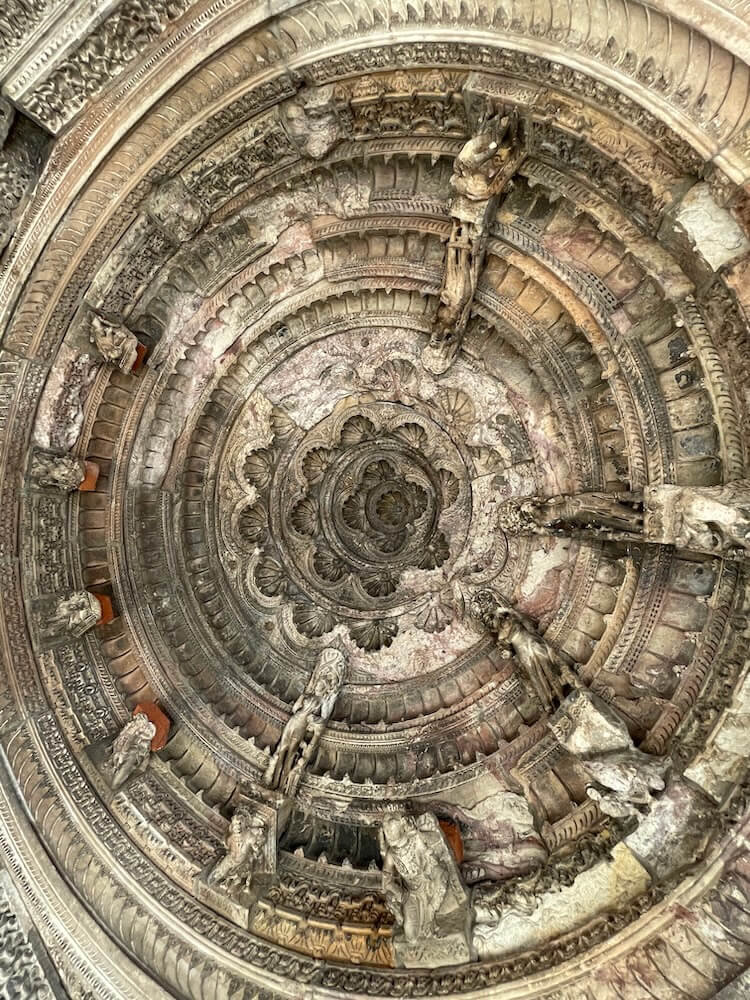
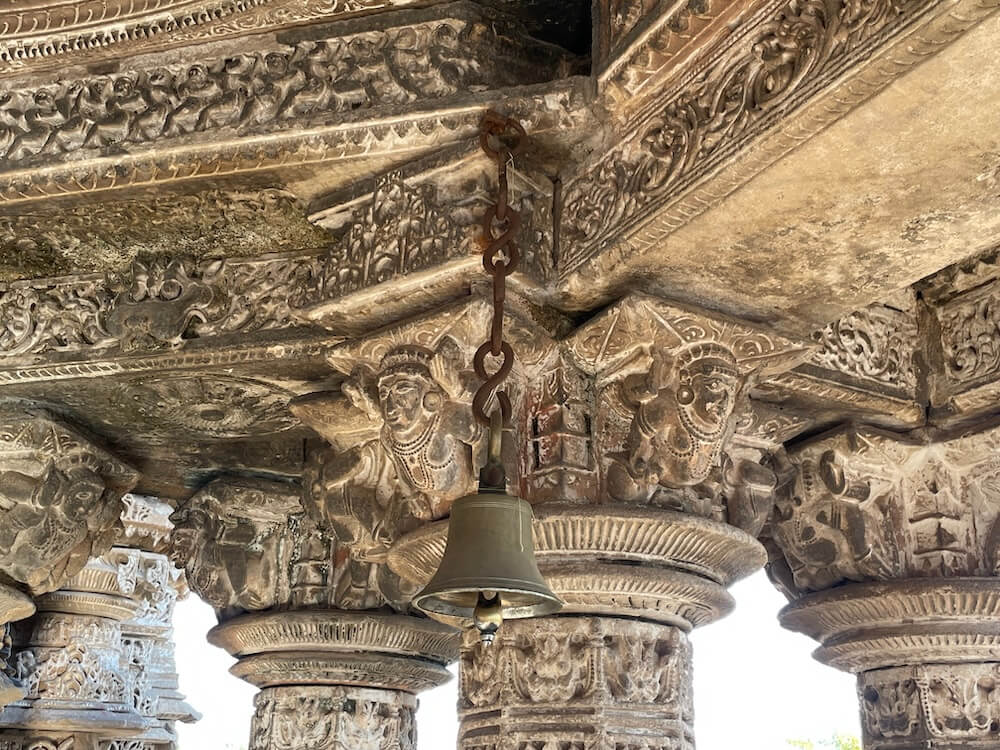
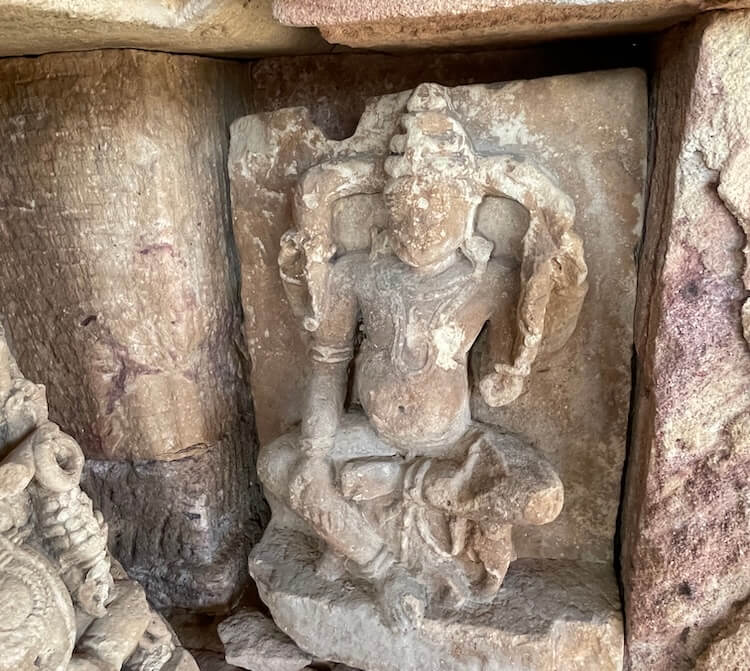
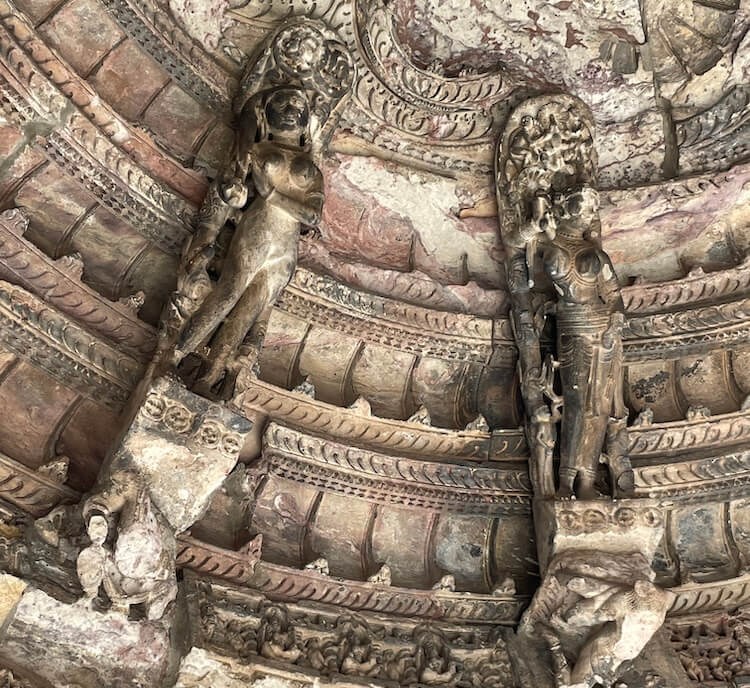
Ascending five steps from the courtyard leads to the ‘Mukhmandap’ (entrance porch), situated on an elevated foundation. The temple’s structural composition follows the traditional sequence of a Mukhmandap, a ‘Sabhamandap’ (assembly hall), an ‘Antarala’ (vestibule) and the Garbhagriha. On the frontal pillars of the entrance porch, intricately carved doorkeepers (‘Dwarpalas’) on either side welcome the devotees. Both the entrance porch and the assembly hall are designed in an open-pavilion style. The assembly hall stands upon sixteen exquisitely crafted stone pillars, each topped with sculptures of ‘Yakshas’ appearing to bear the weight of the structure. The interior of the dome (‘Vitana’) above the assembly hall is artistically complex, featuring intricate patterns and sculptures of celestial dancers. 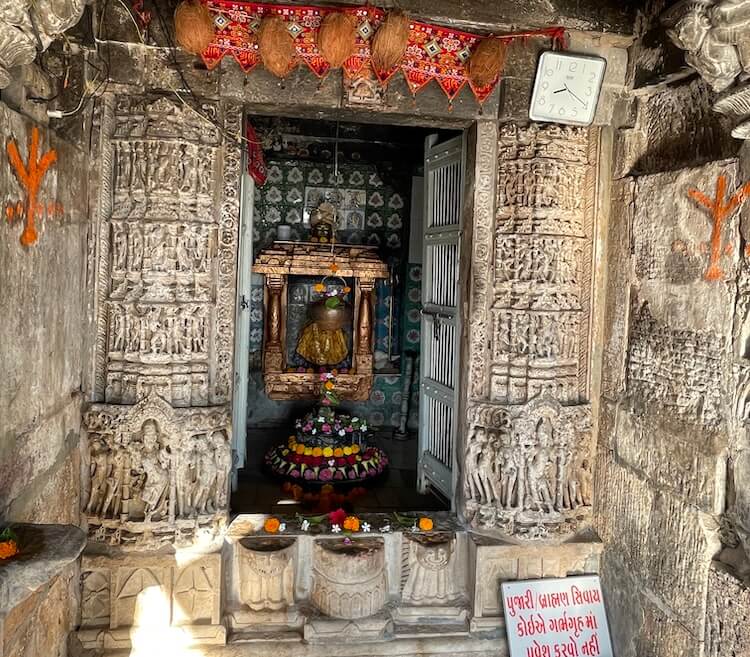 Originally, these figures numbered twelve. Today, six Shaivite deities remain, including Kali, Nataraja and Bhairava. Within the assembly hall, a statue of Nandi sits in eternal devotion facing the sanctum. Before entering the vestibule, two ancient idols are visible on either side. The central lintel (‘Lalatabimba’) above the sanctum door features an image of Lord Ganesha, while the doorposts are embellished with beautiful motifs and figurines.
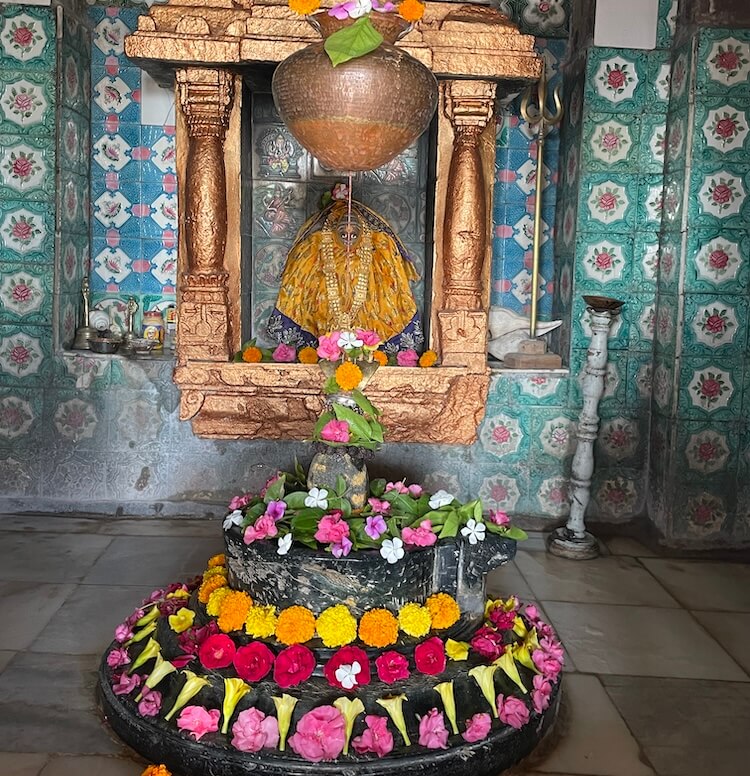
Within the square sanctum sanctorum, one beholds the Shivalinga of Nilkanth Mahadev, often decorated with fresh flowers. According to mythological lore, the temple is dedicated to the ‘Nilkanth’ (blue-throated) manifestation of Lord Shiva, who protected the universe by consuming the ‘Halahala’ poison that emerged during the churning of the ocean.
In a niche behind the Shivalinga sits an idol of Mother Parvati. Various religious festivals and programmes are organised at the Nilkanth Mahadev Temple throughout the year. 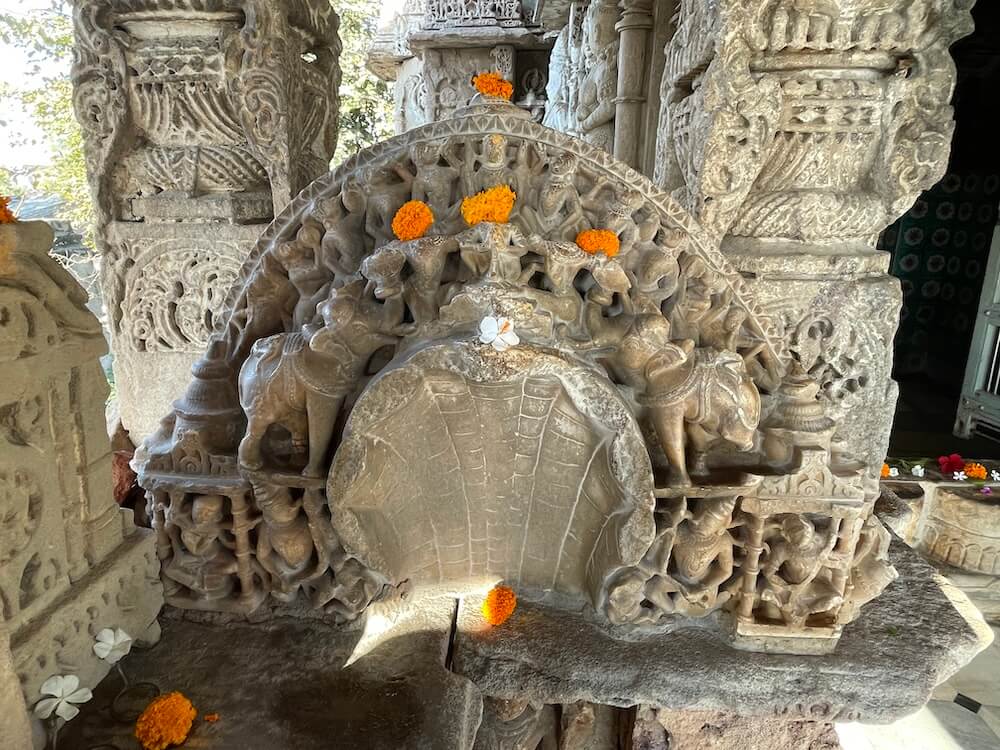 Mahashivratri is the grandest annual celebration, marked by a local fair and special rituals such as ‘Abhisheka’ and ‘Laghurudra/Rudrabhisheka’. During the holy month of Shravan, special daily rites are performed.
Every Monday, vast numbers of devotees arrive to offer ‘Bel’ leaves and perform ritual anointings with water or milk.
Furthermore, traditions such as the festival of lights (‘Dipotsav’) on Kartik Purnima, ‘Annakut’ during Diwali and a palanquin procession on the final Monday of Shravan are widely observed.
On festive occasions, the temple is bathed in attractive illumination. The temple remains open for devotees daily from 6:00 AM to 7:00 PM.
Useful Information
- Located at 8 km from Unjha city and 34 km from Mehsana.
- GSRTC bus services are available from Unjha.
- Private vehicles can access the temple premises directly.
- Accommodation and breakfast facilities are available in the vicinity.
नीलकंठ महादेव मंदिर
सुनक, ताल. उंझा, जिला. मेहसाणा
मंदिरे
Temples
मंदिर
-
वैजनाथ महादेव मंदिर महादेवपुरा (गावडा), ता. विजापूर, जि. मेहसाणा
अधिक माहितीVaijnath Mahadev Temple Mahadevpura (Gavada), Tal. Vijapur, Dist. Mehsana
View Detailsवैजनाथ महादेव मंदिर महादेवपुरा (गावड़ा), ताल. विजापुर, जिला. मेहसाणा
विवरण देखें -
वैजनाथ महादेव मंदिर सोखडा, तालुका विजापूर, जिल्हा मेहसाणा
अधिक माहितीVaijanath Mahadev Temple Sokhada, Taluka Vijapur, District Mehsana
View Detailsवैजनाथ महादेव मंदिर सोखाडा, तालुका विजापुर, जिला मेहसाणा
विवरण देखें -
काशी विश्वनाथ महादेव मंदिर मेहसाणा, जि. मेहसाणा
अधिक माहितीKashi Vishwanath Mahadev Temple Mehsana, Dist. Mehsana
View Detailsकाशी विश्वनाथ महादेव मंदिर मेहसाणा, जिला. मेहसाणा
विवरण देखें