
Yavteshwar Mahadev Temple
Manipur Mohalla, Kadi, Tal. Kadi, Dist. Mehsana
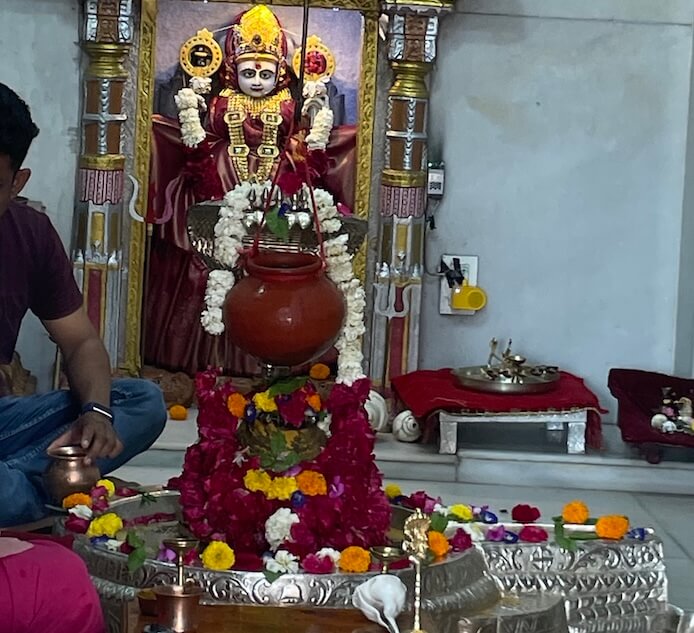 Nestled within the historic Manipur Mohalla of the venerable town of Kadi, the Yavteshwar Mahadev Temple stands as an ancient and ‘Jagrut’ (spiritually awakened) sanctuary dedicated to Lord Shiva. Boasting a legacy that spans over a century and a half, this temple in the Mehsana district remains an immutable centre of faith for thousands of devotees. Local lore suggests that the temple derived its distinctive title, ‘Yavteshwar’, from the miraculous discovery of its ‘Shivling’ (an aniconic representation of Shiva) within a field of ‘Yav’ (barley). Owing to the profound devotion of the local populace and the burgeoning number of pilgrims, the ‘Pavitra Yatradham Vikas Board’ of the Government of Gujarat has approved substantial grants for its preservation and enhancement.
The town of Kadi is steeped in antiquity, formerly known as ‘Katipur’. 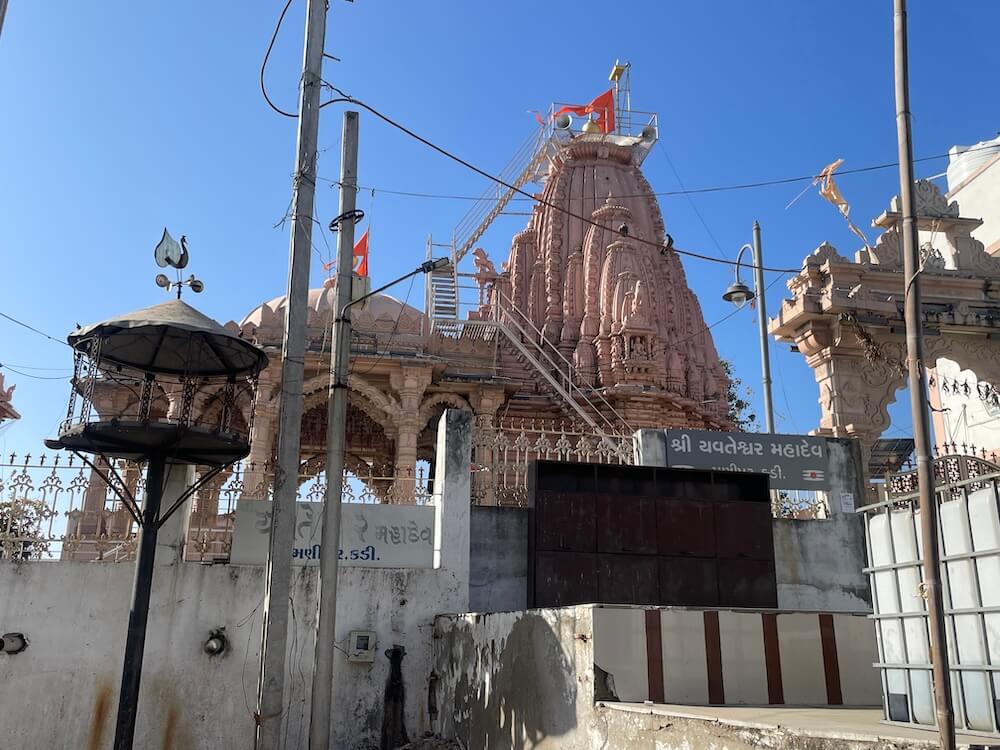 While the term ‘Kadi’ itself signifies a formidable fortress, some historians posit that it evolved from the Sanskrit word ‘Krudi’, denoting a settlement established beside a water body. For generations, this region flourished under the majestic aegis of the Gaekwad State of Baroda (Vadodara) and the local fort remains a silent witness to the valour of that bygone era.
The origin of this temple is closely tied to the extraordinary piety of Maharaja Khanderao Gaekwad. He was a sovereign of the Gaekwad dynasty and a staunch ‘Shivbhakt’ (devotee of Shiva). According to legend, Lord Shiva appeared to the Maharaja in a ‘Drishtant’ (divine vision). The deity indicated that a ‘Shivling’ would be revealed to the east of the Dudheshwar Mahadev Temple in Mehsana. Acting on this divine guidance, the Maharaja’s sentries excavated the designated site.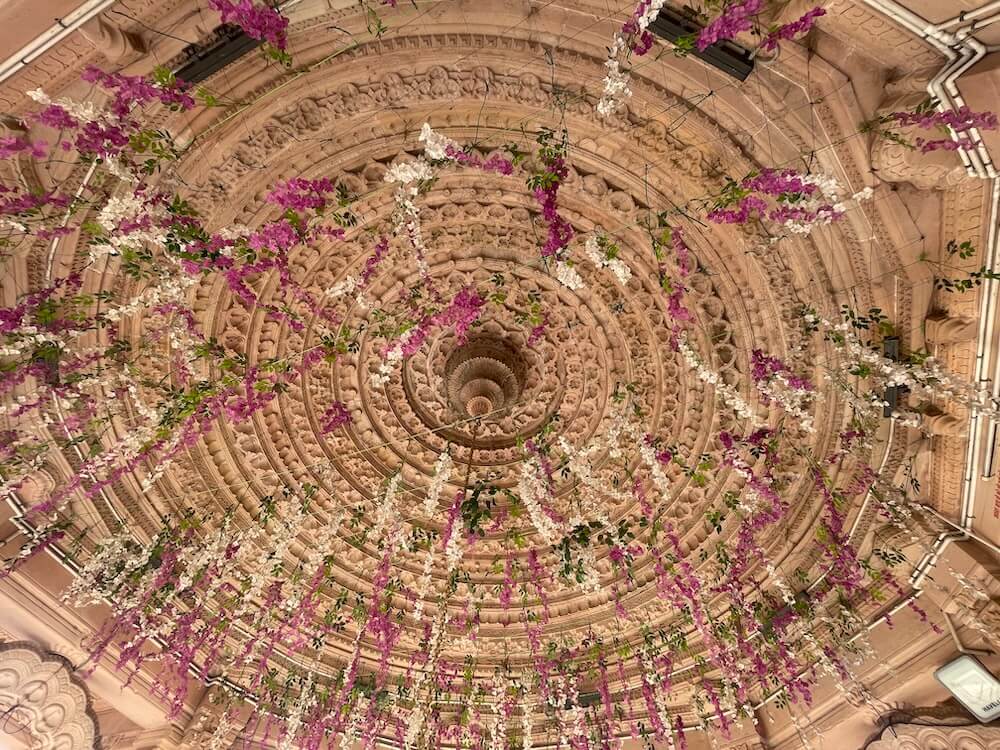 They eventually unearthed a ‘Shivling’ from a field of ‘Yav’ (Barley). In Sanskrit, ‘Yav’ refers to Barley, a grain held as sacred since the Vedic epoch. The Vedas extol Barley as ‘Pratham Dhanya’ (the first grain). It continues to be offered in the sacred fires of ‘Yagna’. The ‘Vidyeshvara Samhita’ of the ‘Shiva Purana’ describes the merit of offering grains in Shiva’s worship. It specifically notes that offering Barley secures entry to heaven and grants ‘Mukti’ (liberation) from all transgressions. Because this form of Shiva emerged from a field of ‘Yav’, the deity became known as ‘Yavteshwar Mahadev’.
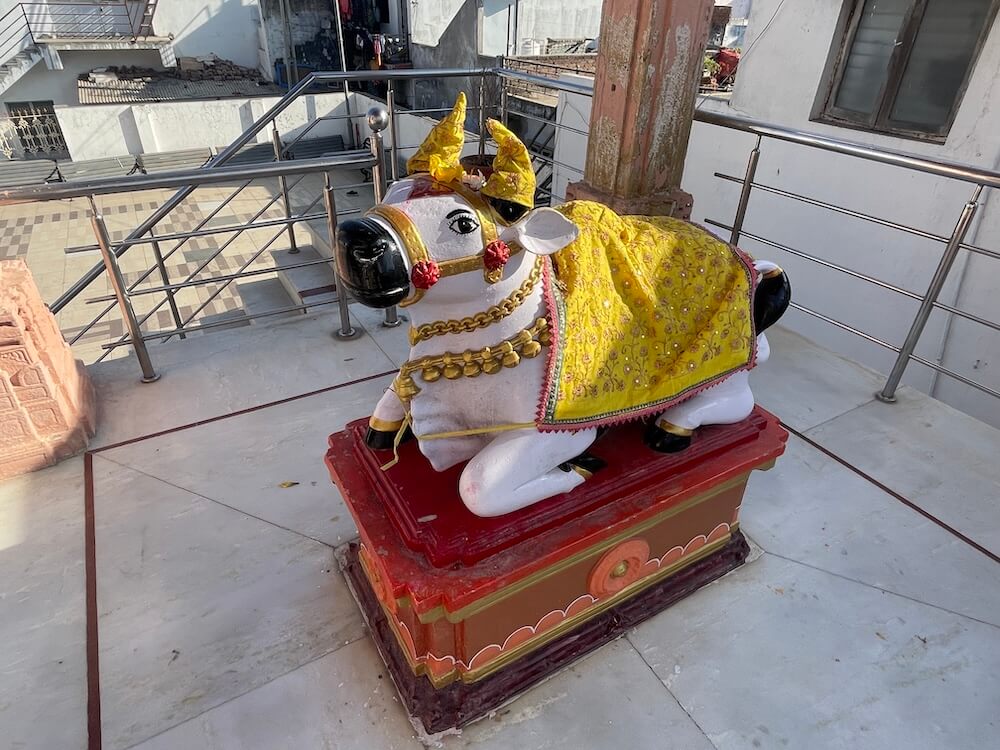
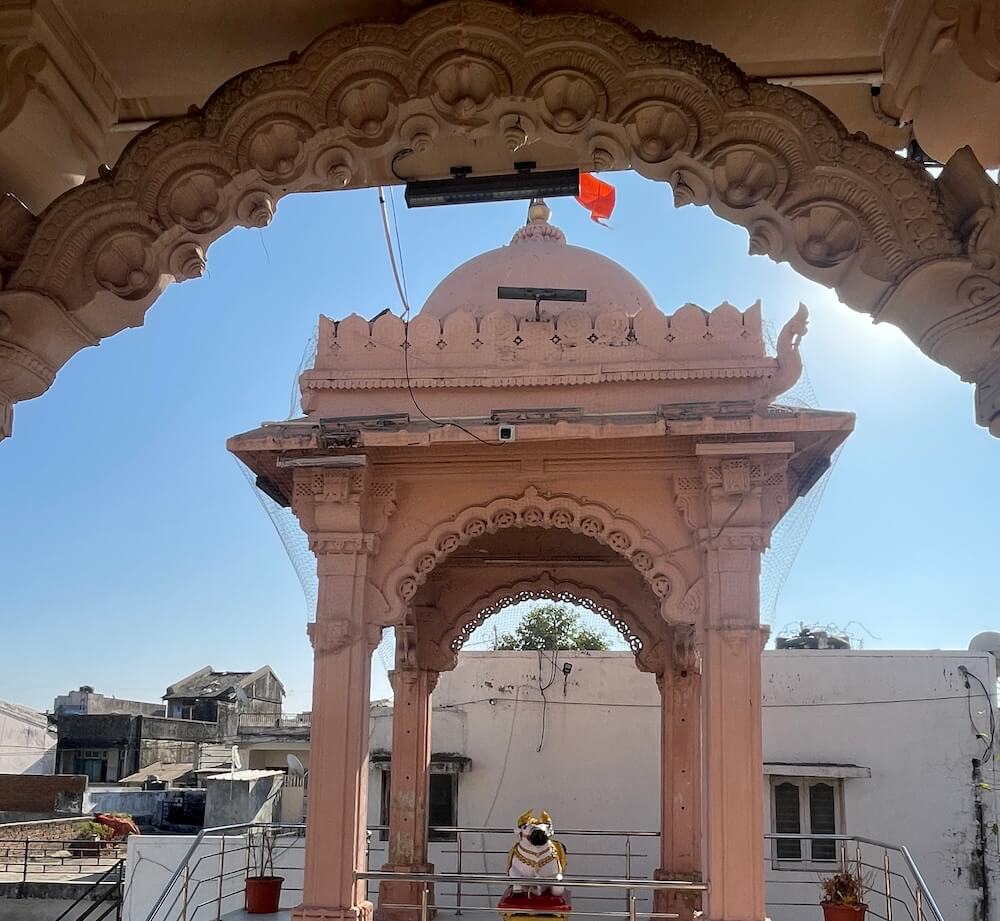
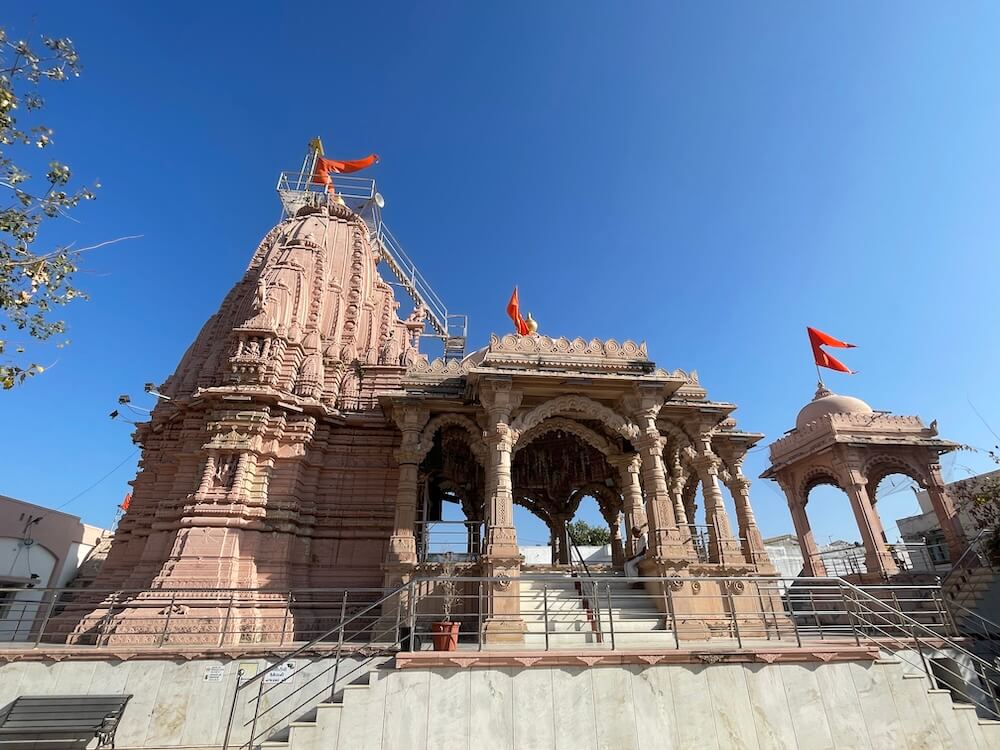
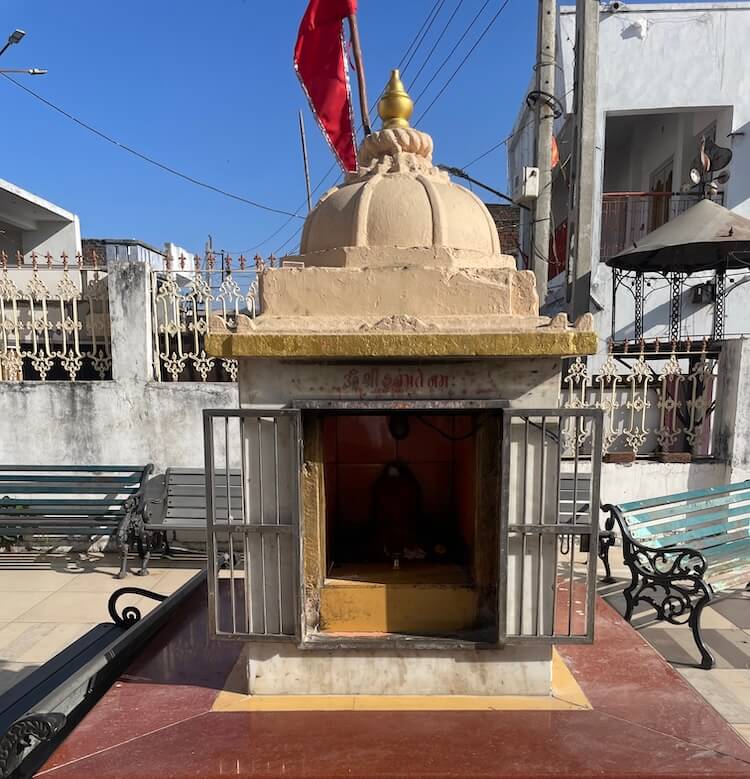
As the fame of this awakened ‘Shivling’ spread, the temple began drawing vast multitudes of seekers. In 1969, a ceremonial flagstaff was hoisted atop the temple’s lofty ‘Shikhara’ (spire). 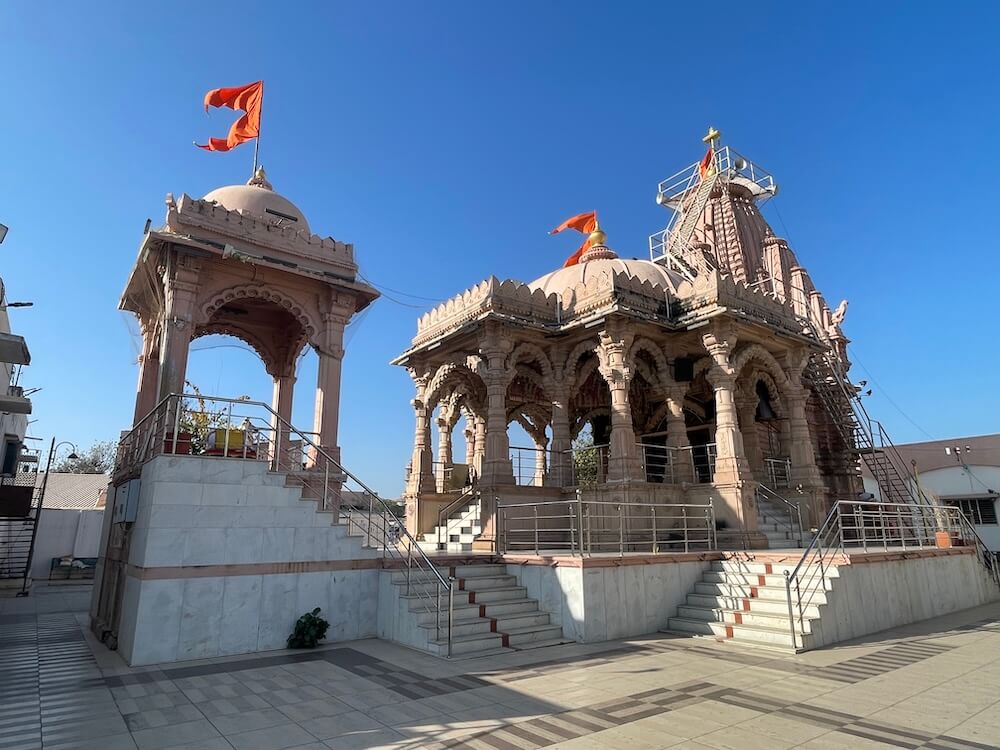 Over the decades, the structure saw several restorations, most notably after the catastrophic 2001 earthquake, which caused significant damage. Undeterred, devotees resolved to restore the temple’s glory through public contributions. Their efforts gained momentum between 2017 and 2018 when the Government of Gujarat’s ‘Pavitra Yatradham Vikas Board’ granted approximately 12 crore rupees. After this restoration, the temple assumed its current magnificent form. Pilgrims ascend steps to reach the elevated courtyard, where a ‘Nandimandap’ (pavilion for the sacred bull) stands level with the main sanctum. Fourteen steps lead to this pavilion, which has four pillars supporting a domed roof and houses a distinctive idol of Nandi on a stone pedestal.
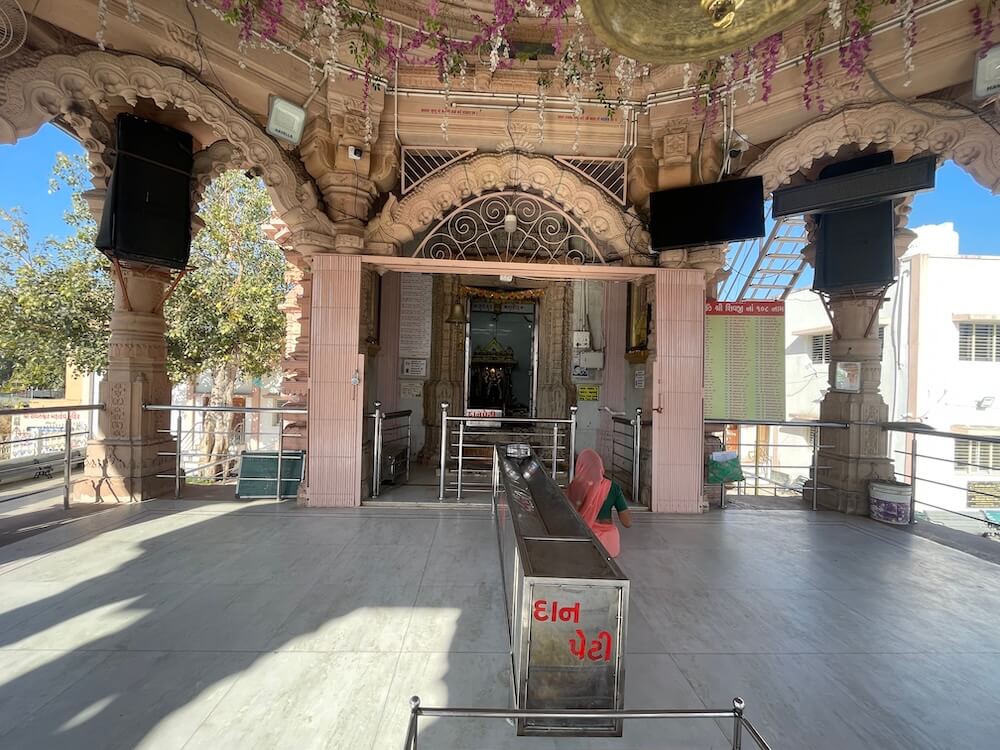
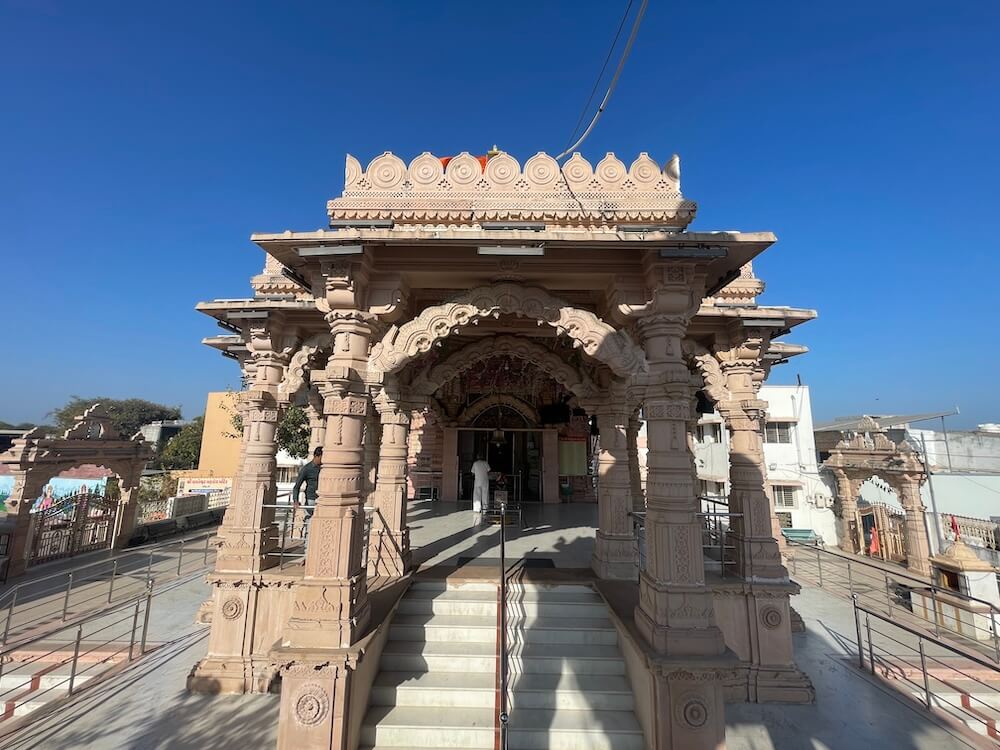 Descending from the ‘Nandimandap’ and ascending another eight steps, one enters the ‘Mukhamandap’ (entrance porch) of the temple, which rests upon a high ‘Jagati’ (plinth). The architectural composition follows a traditional plan of three entrance porches, a ‘Sabhamandap’ (assembly hall), an ‘Antaral’ (vestibule) and the ‘Garbhagriha’ (sanctum sanctorum). The assembly hall and porches are of an open design, with each pillar connected by elegant ‘Mahirapi’ (cusped) arches. The octagonal assembly hall features exquisite craftsmanship upon its pillars and ‘Vitan’ (ceiling). Within the ‘Antaral’, niches house the idols of Lord Ganesha and Lord Hanuman. The base of the sanctum entrance is adorned with carved ‘Kirtimukhas’ (glory-masks), while the doorframes exhibit intricate sculptures. The ‘Lalatabimba’ (central lintel) features Ganesha and the ‘Torana’ (archway) above depicts a host of celestial deities.
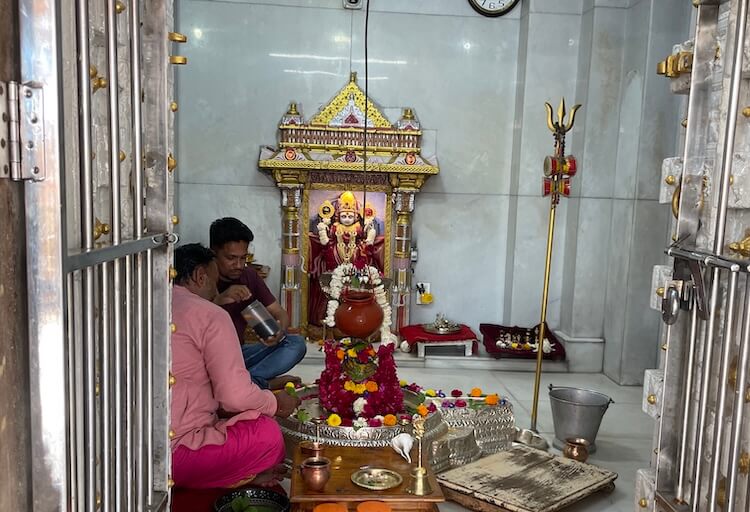
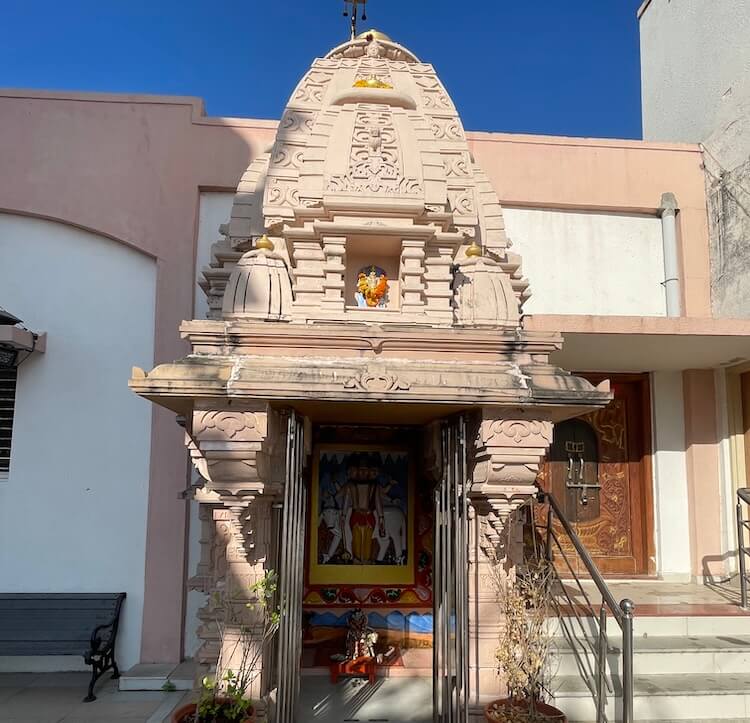
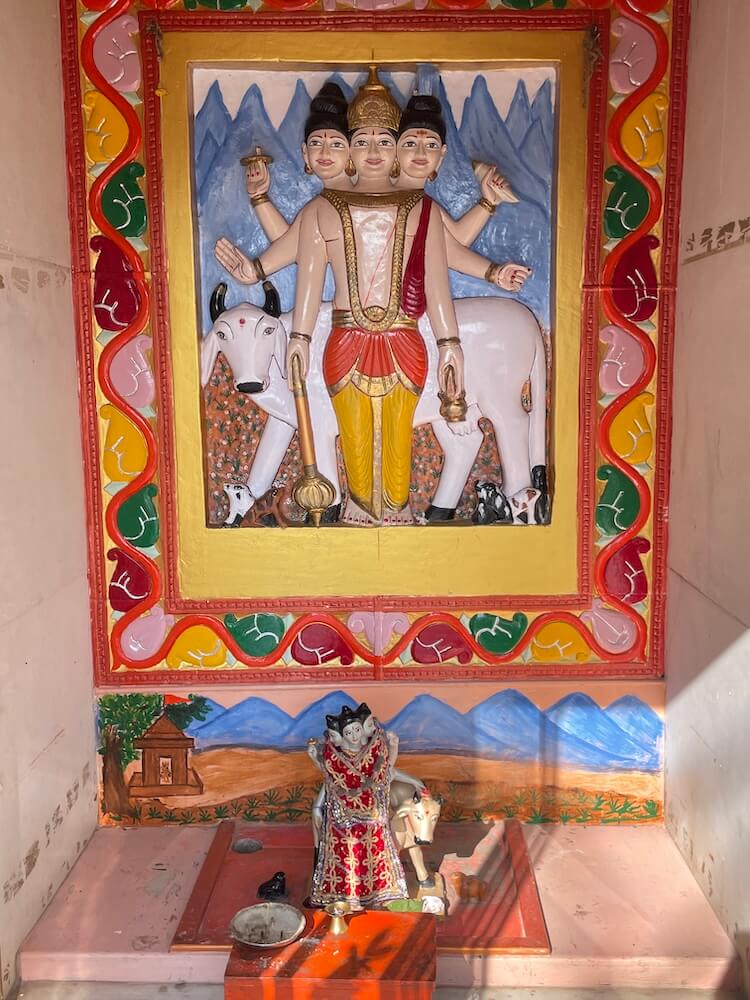
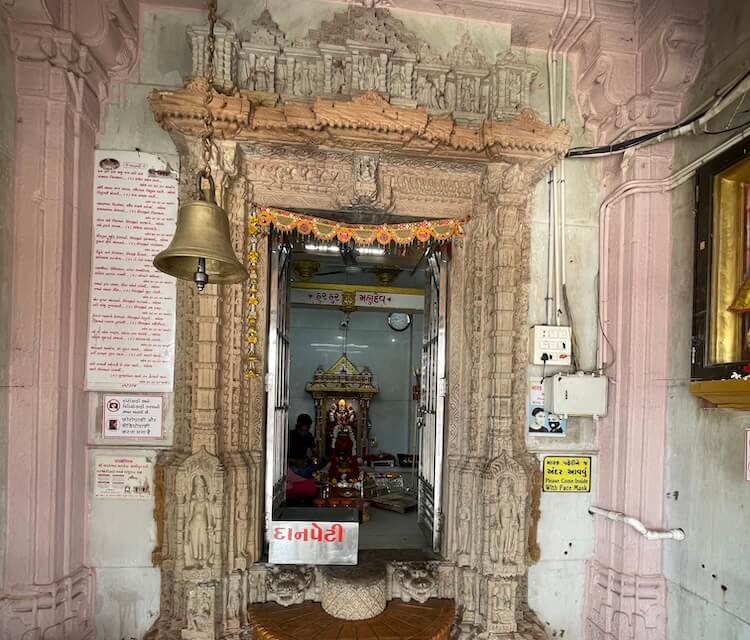 At the heart of the sanctum floor lies the grand ‘Pinda’ of Yavteshwar Mahadev, its ‘Shalunka’ (base) encased in finely engraved silver sheets. An ‘Abhishek-patra’ (vessel for ritual pouring) hangs from the ceiling above the ‘Shivpind’ and a niche in the rear wall enshrines a serene idol of Mata Parvati. The sanctum is crowned by a soaring ‘Urushringa’ style spire, culminating in a double-tiered ‘Amalaka’ (fluted disc) and a ‘Kalasha’ (finial). A smaller shrine dedicated to Lord Dattatreya and a ‘Yagnashala’ (hall for fire rituals) also grace the temple precincts.
The Yavteshwar Mahadev Temple serves as a vibrant venue for religious observances throughout the year. Mahashivratra is celebrated with unparalleled enthusiasm. The festivities begin at dawn with the ‘Laghurudra’ and special ‘Abhishek’ (ritual bathing) ceremonies. In the evening, a grand ‘Palki’ (palanquin) and ‘Shobhayatra’ (ceremonial procession) traverse the town of Kadi. Bearing a mask of Shiva, the deity is taken for a ‘Nagar Parikrama’ (city circumambulation). Residents of all ages participate in this joyous procession, which travels through several quarters of the town and ends at the temple. The Mondays of the holy month of ‘Shravan’ also witness a significant influx of the faithful. The temple remains open for devotees daily from 6:00 AM to 12:00 PM and from 4:00 PM to 8:30 PM.
Useful Information
- Located at 600 metres from Kadi Bus Station and 41 km from Mehsana.
- State Transport (GSRTC) bus services are available to Kadi from several cities in the district.
- Private vehicles can access the temple directly.
- Numerous options for accommodation and breakfast are available in the vicinity.
यवतेश्वर महादेव मंदिर
मणिपुर मोहल्ला, कड़ी, ताल. कड़ी, जिला. मेहसाणा
मंदिरे
Temples
मंदिर
-
वैजनाथ महादेव मंदिर महादेवपुरा (गावडा), ता. विजापूर, जि. मेहसाणा
अधिक माहितीVaijnath Mahadev Temple Mahadevpura (Gavada), Tal. Vijapur, Dist. Mehsana
View Detailsवैजनाथ महादेव मंदिर महादेवपुरा (गावड़ा), ताल. विजापुर, जिला. मेहसाणा
विवरण देखें -
वैजनाथ महादेव मंदिर सोखडा, तालुका विजापूर, जिल्हा मेहसाणा
अधिक माहितीVaijanath Mahadev Temple Sokhada, Taluka Vijapur, District Mehsana
View Detailsवैजनाथ महादेव मंदिर सोखाडा, तालुका विजापुर, जिला मेहसाणा
विवरण देखें -
काशी विश्वनाथ महादेव मंदिर मेहसाणा, जि. मेहसाणा
अधिक माहितीKashi Vishwanath Mahadev Temple Mehsana, Dist. Mehsana
View Detailsकाशी विश्वनाथ महादेव मंदिर मेहसाणा, जिला. मेहसाणा
विवरण देखें