
BAPS Swaminarayan Temple
Anand City, Tal. and Dist. Anand
 During the eighteenth century, when Indian society was deeply entangled in rigid structures of caste and social discrimination, several saints initiated spiritual movements aimed at restoring human values. It was in this very era that the Akshardham Swaminarayan tradition emerged, boldly affirming that men and women of all castes and communities possess an equal right to attain moksha (liberation). Established with the purpose of bringing peace and happiness into human life, this spiritual path was initially known as the Uddhav Sampradaya and gradually evolved into the Swaminarayan Sampradaya. By opening the path of spiritual advancement to all, this tradition inspired the construction of numerous temples across the world. Among this vast network of temples, the magnificent shrine located in the city of Anand occupies a distinguished place. Today, it stands as a revered centre of faith for thousands of devotees across the district.
The history of this tradition traces back nearly two centuries to the work undertaken in Gujarat by Bhagwan Swaminarayan. 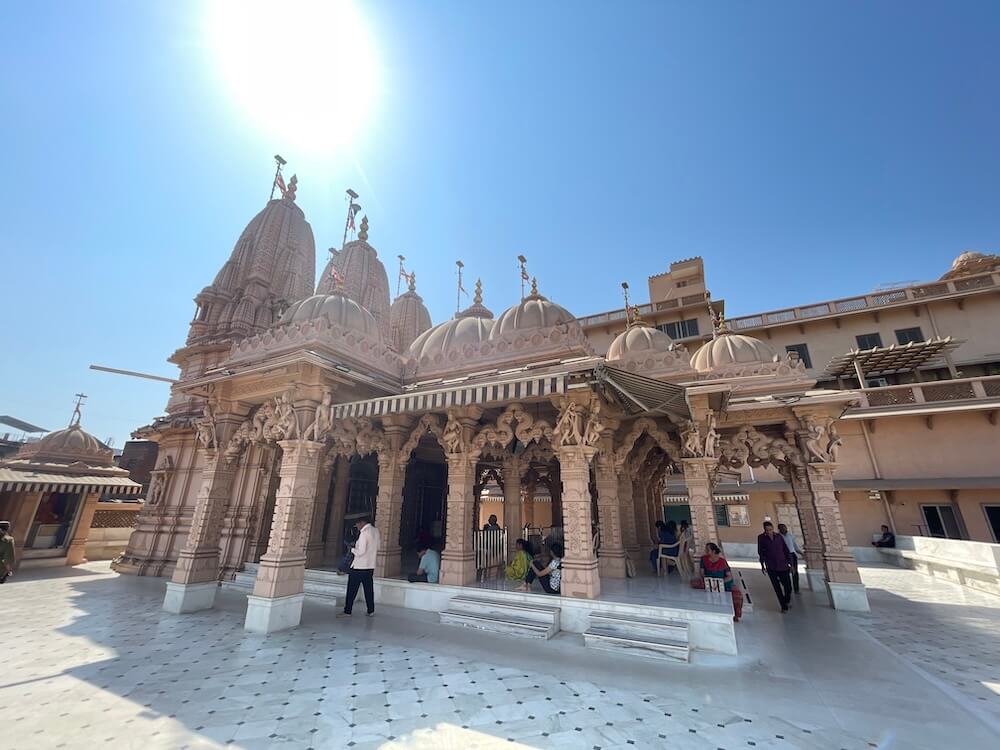 He was born on 3 April 1781 in the village of Chhapaiya in present-day Uttar Pradesh, as Ghanshyam Pandey. From a very young age, he engaged in intensive study of the Vedas and other sacred scriptures. At the tender age of seven, he embarked upon a pilgrimage across India, travelling barefoot throughout the subcontinent. Owing to his mastery of Ashtanga Yoga, he became known as Nilkanth Varni. After a seven-year pilgrimage, on 21 August 1799, he met Muktanand Swami at Loj. Subsequently, on 18 June 1800, he encountered Ramanand Swami at Piplana. Ramanand Swami formally initiated him into the spiritual order, bestowing upon him the name Sahajanand Swami and, in time, he came to be widely known as Swaminarayan.
 As the Sampradaya expanded, nearly a century later, the responsibility of furthering its work was assumed by Brahmaswarup Shastriji Maharaj. On 5 June 1907, he established the first ‘shikharbaddha’ temple at Bochasan in Anand district and formally announced the foundation of the ‘Bochasanwasi Akshar Purushottam Swaminarayan Sanstha’ (BAPS). At present, the organisation operates more than 3,850 centres and over 1,550 temples worldwide. The vision for this particular temple in Anand had long existed in the hearts of devotees and that aspiration was finally realised on 3 December 2000 when Brahmaswarup Pramukh Swami Maharaj consecrated the temple.
It is traditionally believed that during his pilgrimage journeys, Bhagwan Swaminarayan sanctified the land of Charotar with his divine footsteps. 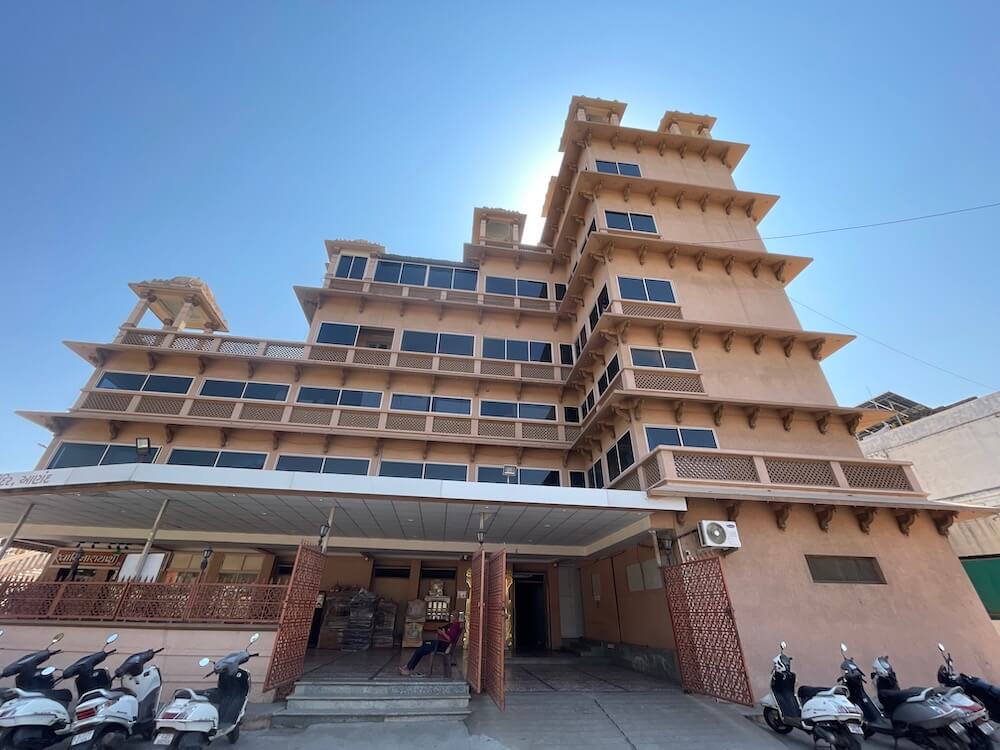 Local traditions recount that he often sat in meditation upon the banks of Goya Talav (now known as Gaya Talav) in Anand city. This region is frequently mentioned in the principal scriptures of the Sampradaya, namely the ‘Vachanamrut’ and the ‘Shikshapatri’. The ‘Vachanamrut’ is a compilation of the discourses delivered by Bhagwan Swaminarayan, within which he emphasised the significance of temples in spiritual life. Similarly, the work ‘Bhaktachintamani’, composed by Nishkulanand Swami, describes the devotion, love and sacrifices of the Haribhaktas (devotees) of this region.
The waters of Gaya Talav are considered sacred for religious rites, much like the Ganga. Situated in t|_his very vicinity, along the main road in a busy part of the city,
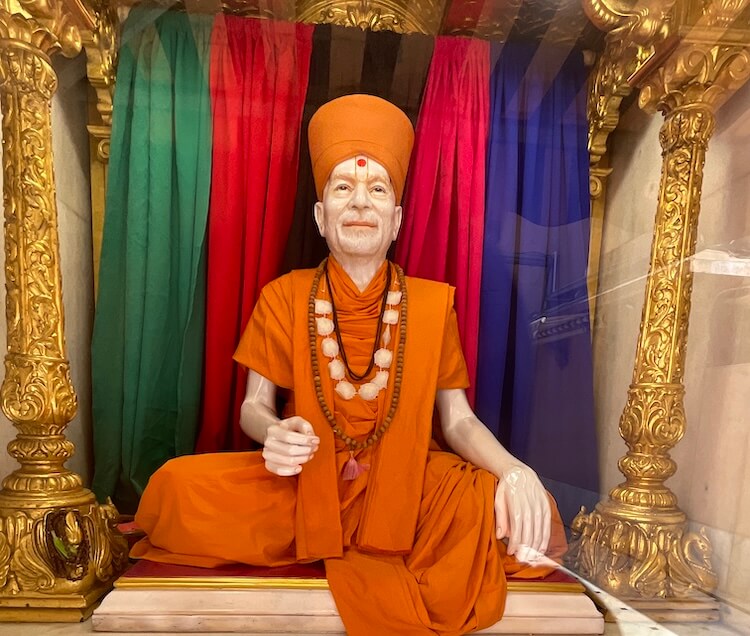
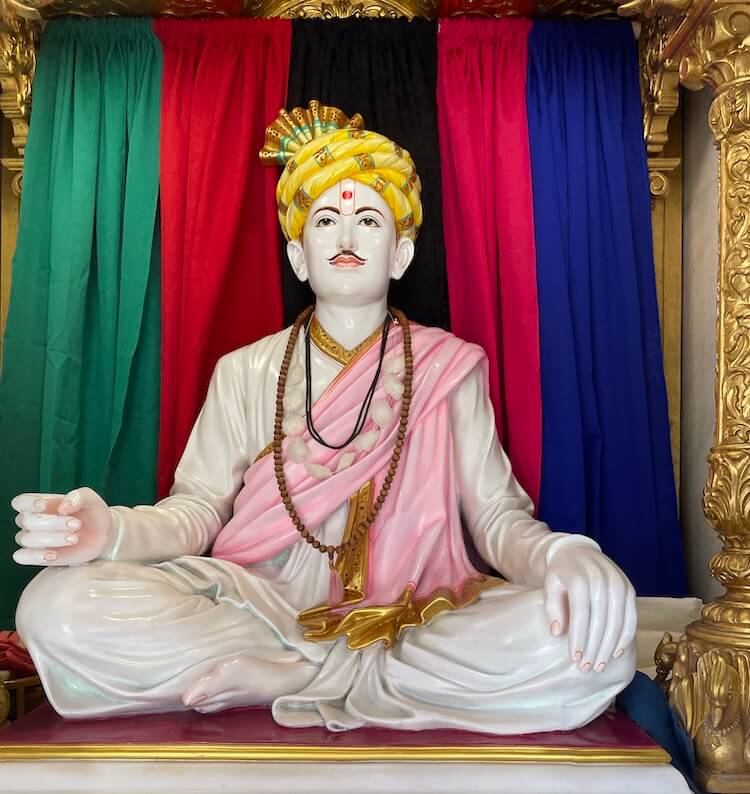
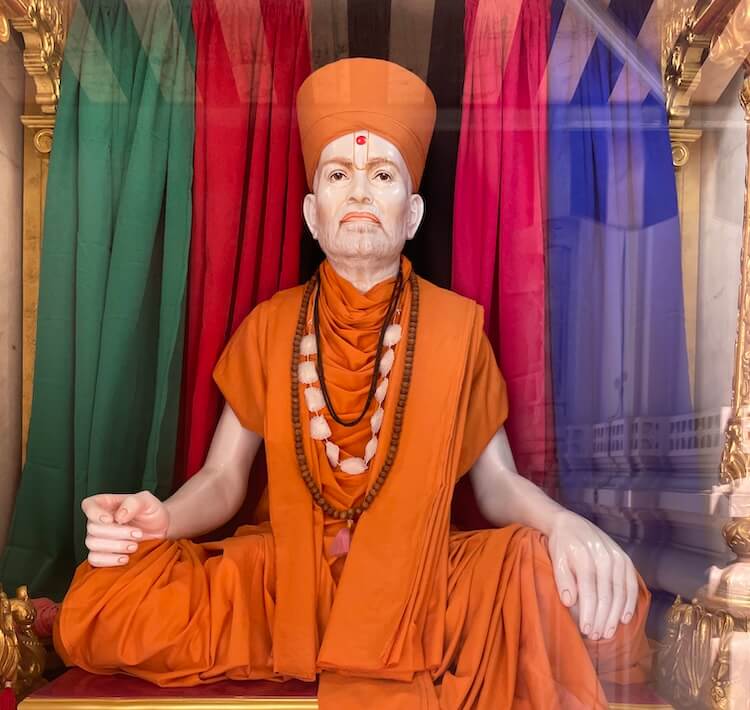
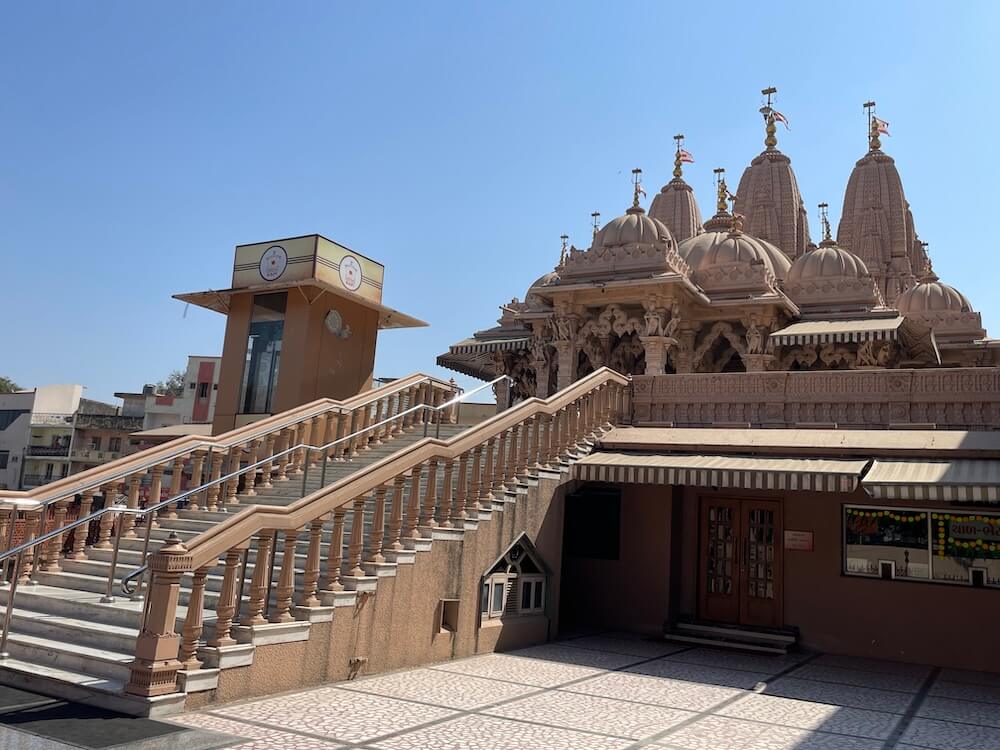 the temple stands as a living embodiment of the Akshar-Purushottam philosophical doctrine. The temple complex is surrounded by a boundary wall with an entrance gateway. Within the spacious courtyard, on the left, stands a five-storey building that provides accommodation for devotees. This structure can house hundreds of visitors at a time. Adjacent to the Bhaktanivas and facing the main temple are smaller shrines containing the idols of Brahmaswarup Bhagatji Maharaj, Yogiji Maharaj and Pramukh Swami Maharaj. These shrines, adorned with decorative walls and elegant entrances, are crowned with domed shikharas.
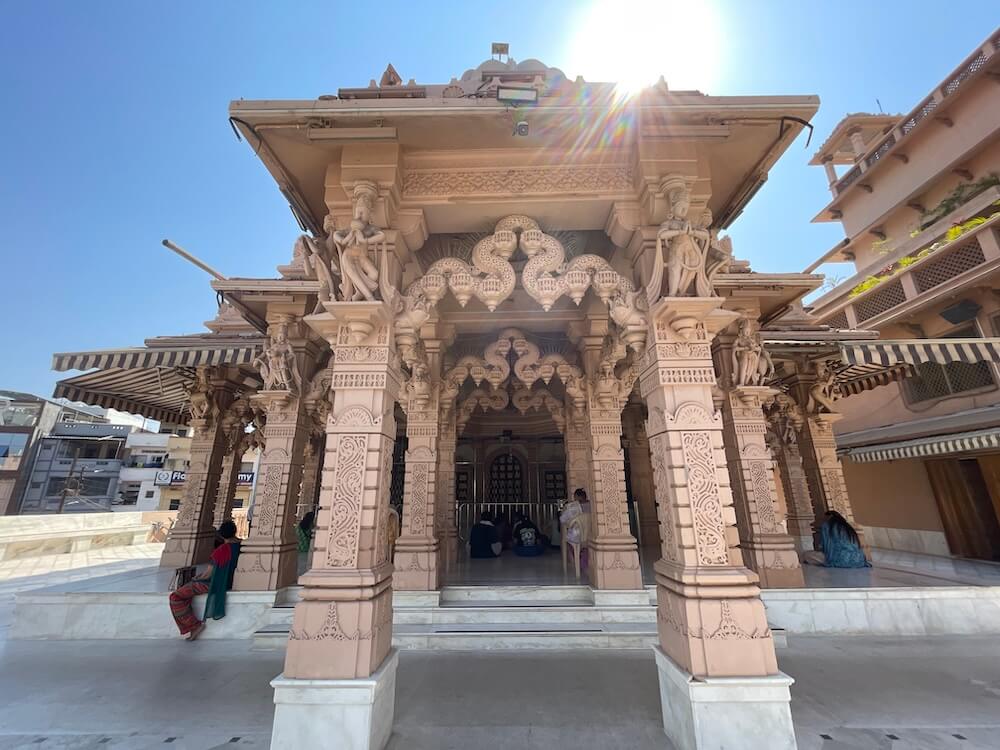
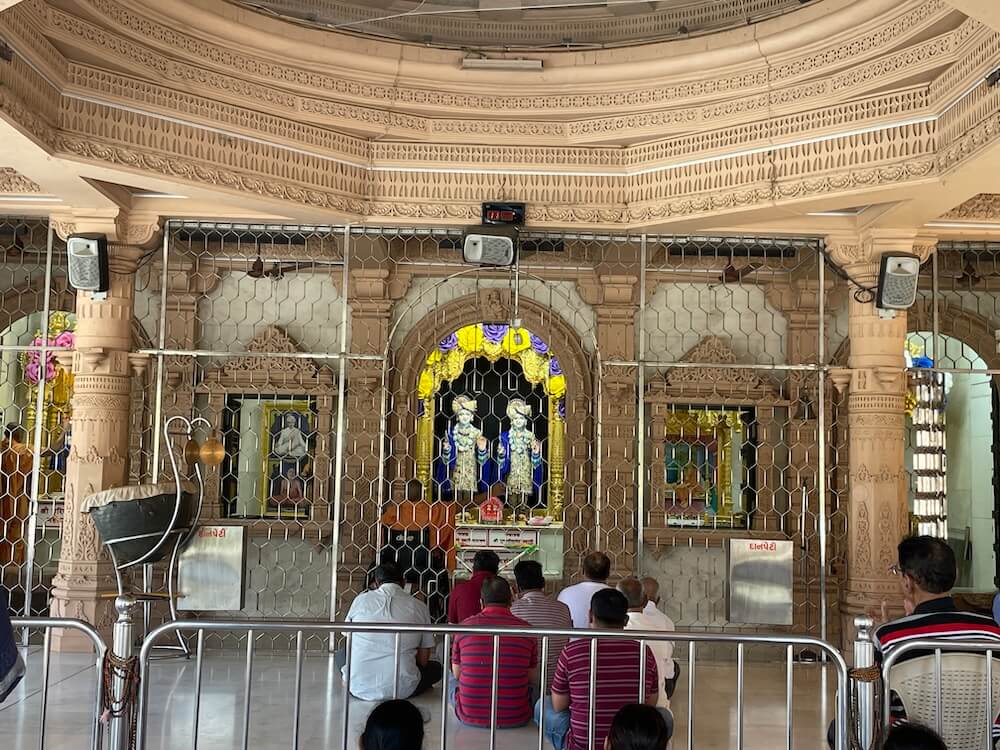
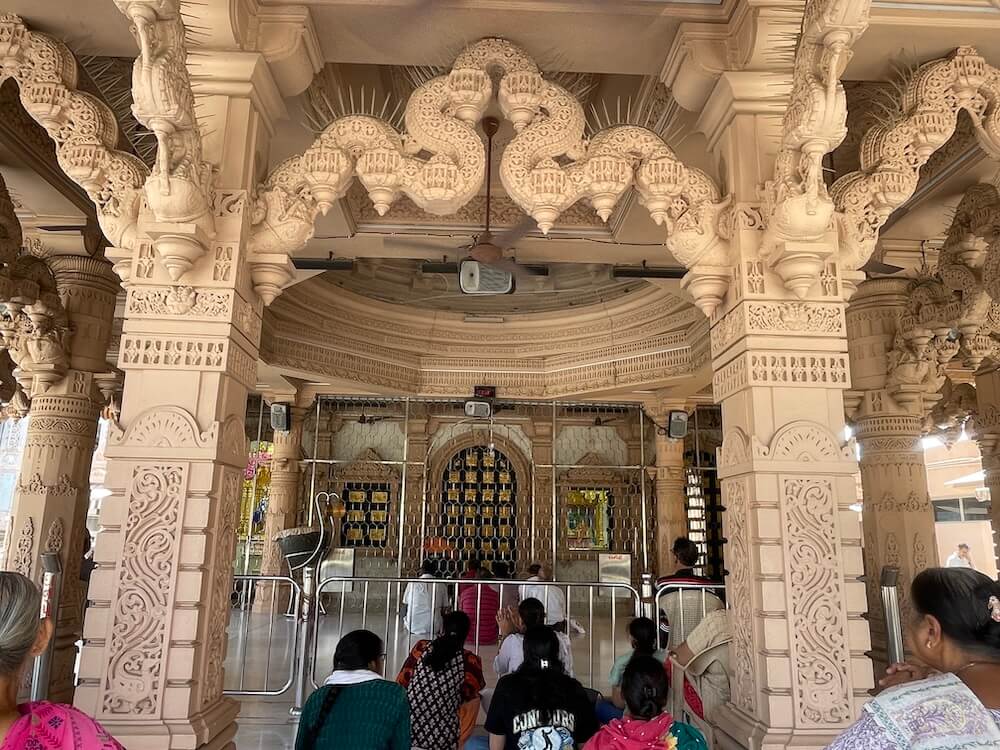
Following the characteristic architectural layout of Swaminarayan temples, the temple itself is a grand two-storeyed structure. The ground floor houses a cultural activities hall, administrative rooms and the temple office. Approximately thirty steps lead to the upper floor where the main temple is located. The layout consists of Mukhamandaps (entrance pavilions) on three sides, a Sabhamandap (assembly hall) and three Garbhagrihas (sanctums). Intricately carved pillars stand in all three Mukhamandaps and the Sabhamandap. These pillars rise from decorative bases and are connected by graceful arches. The shafts of the pillars bear combined ornamental carvings and their capitals are crowned with brackets that support the ceiling beams. Upon these brackets are sculpted figures of deities, saints and various birds and animals. The beams and ceiling panels supported by these brackets are richly decorated with elaborate carvings. The entire temple has been constructed from the distinctive pink sandstone quarried at Bansi Paharpur in Rajasthan.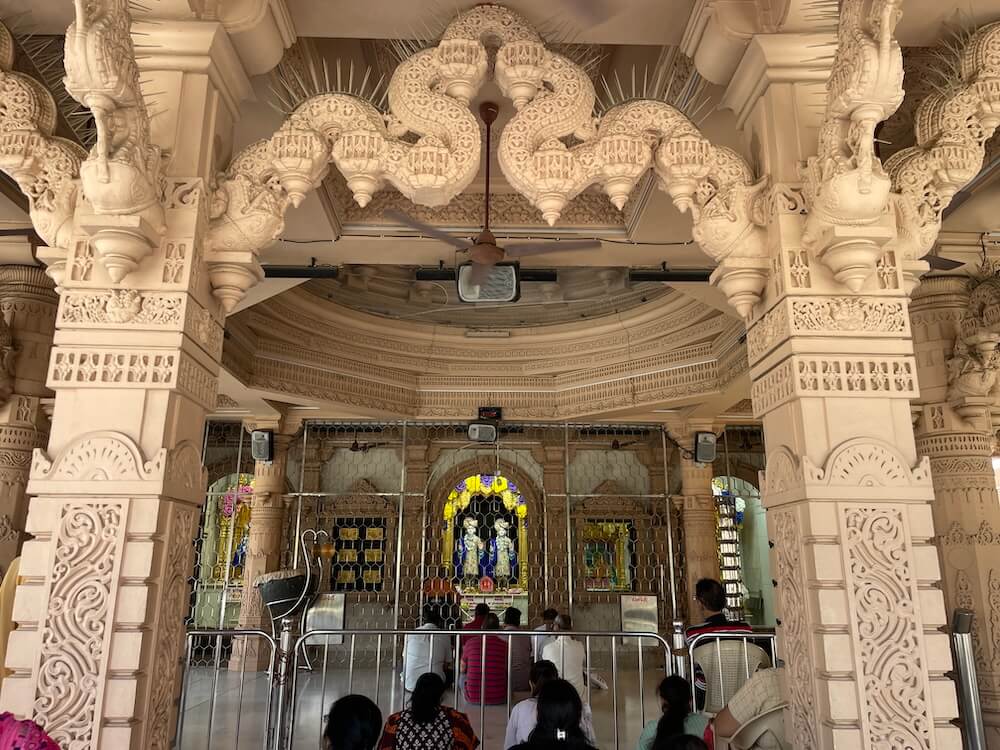
In front of the semi-open Sabhamandap lie the three sanctums. The doorframes of the Garbhagrihas are adorned with exquisite carvings. The Lalata Bimba above the entrances bears the sculpted image of Ganesha, while the Mandaraka features the Chandrashila and Kirtimukha motifs.
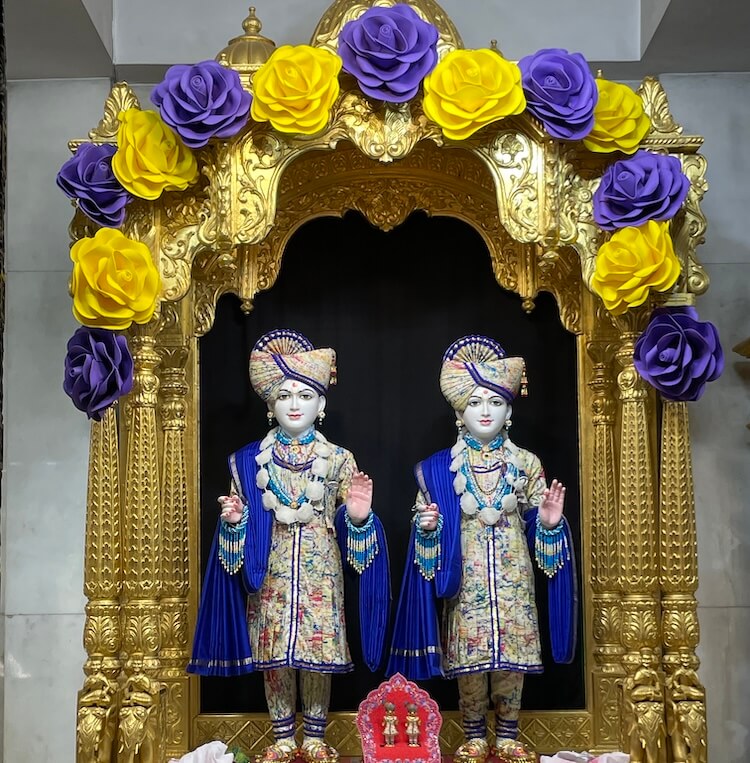
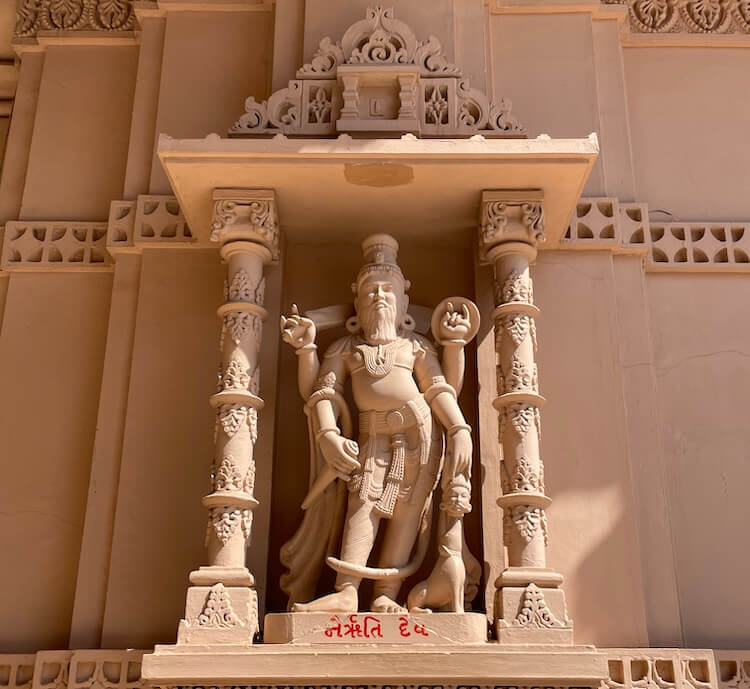
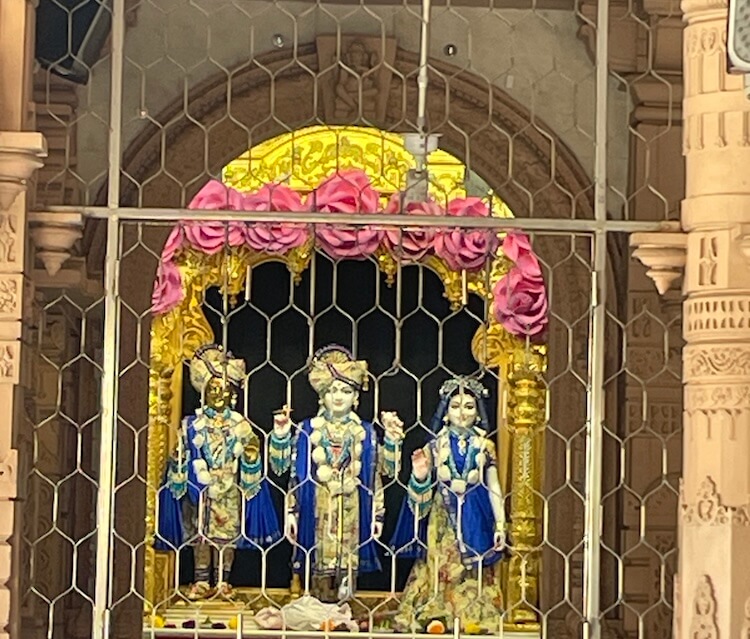
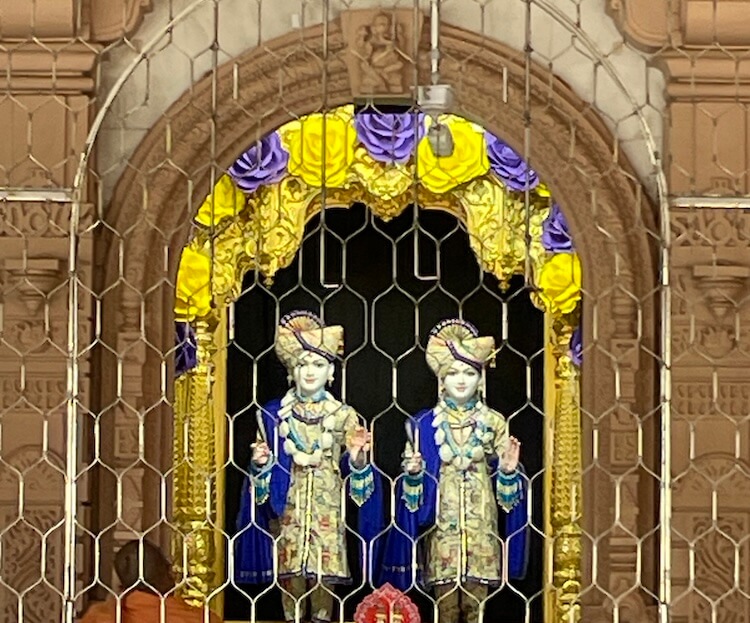
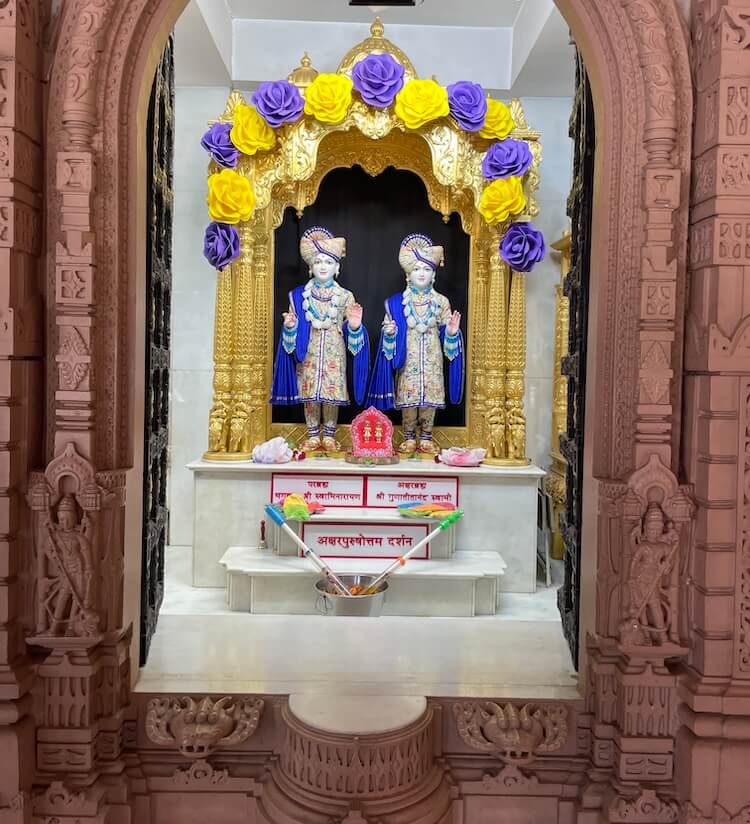
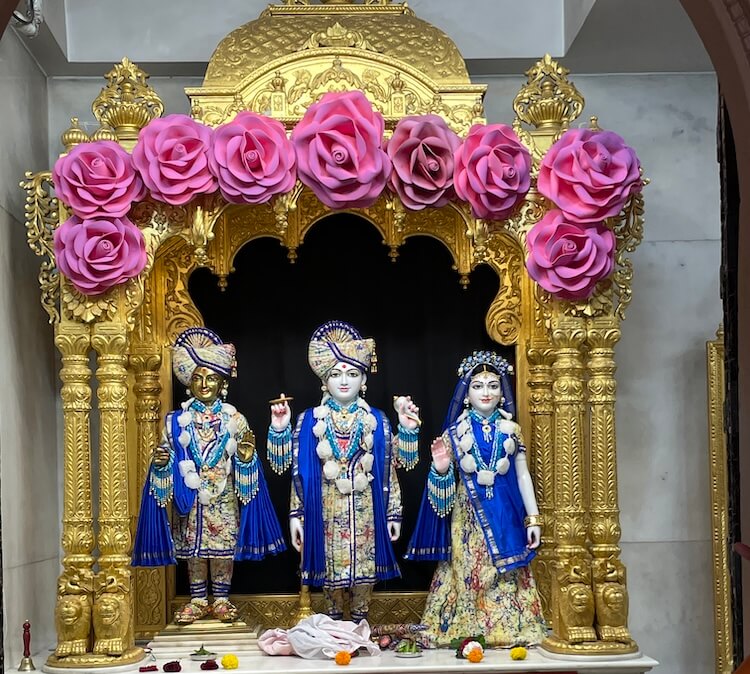
Within the main sanctum, upon a beautifully ornamented Makhar placed on a Vajrapitha, are installed the idols of Bhagwan Swaminarayan and Gunatitanand Swami. Within the sanctums to the right and left are the Makhar shrines housing the idols of Lakshminarayan, Harikrishna Maharaj and Ghanshyam Maharaj. 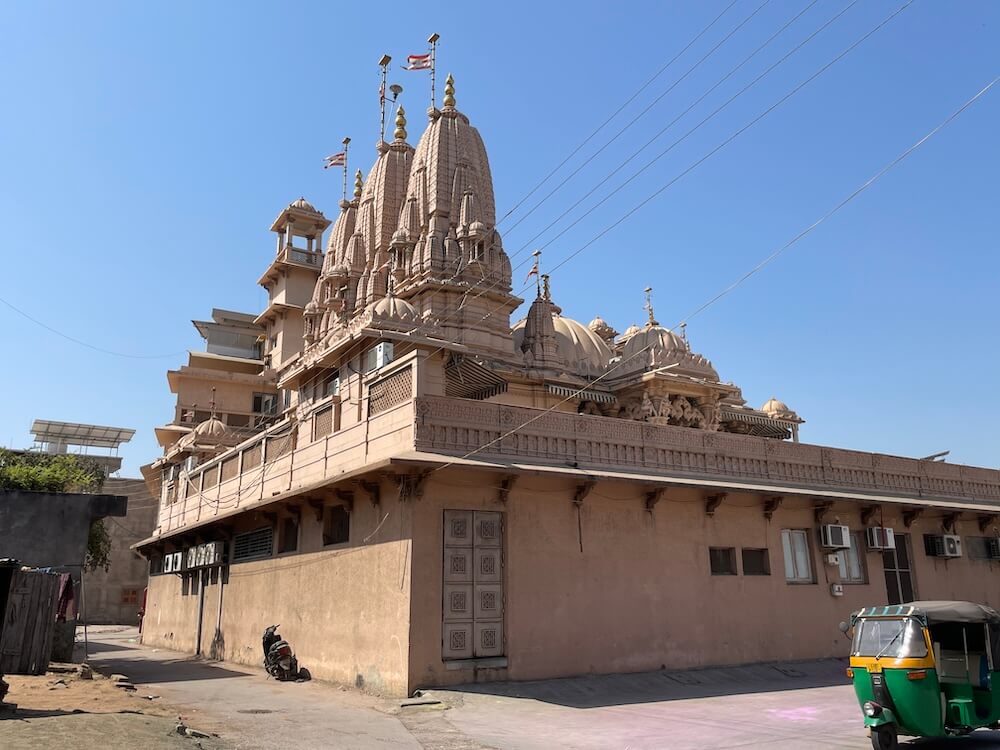 The external facade walls of the temple contain niches housing sculpted figures of Vayu, Kuber, Ishana, Indra, Agni, Yama and Nairriti. The roofs above the Mukhamandaps and the Sabhamandap bear domed shikharas crowned with Amalakas and Kalash finials. The roofs above the three sanctums rise into square shikharas tapering upwards, each topped with an Amalaka, Kalasha and fluttering flag.
Throughout the year, the temple celebrates various festivals and religious observances in a highly organised manner. The principal annual celebration occurs on Chaitra Shuddha Navami, when Ram Navami and Swaminarayan Jayanti are observed together. On this occasion, both the birth of Shri Ram and the birth of Bhagwan Swaminarayan are celebrated with great enthusiasm. During the festival of Diwali,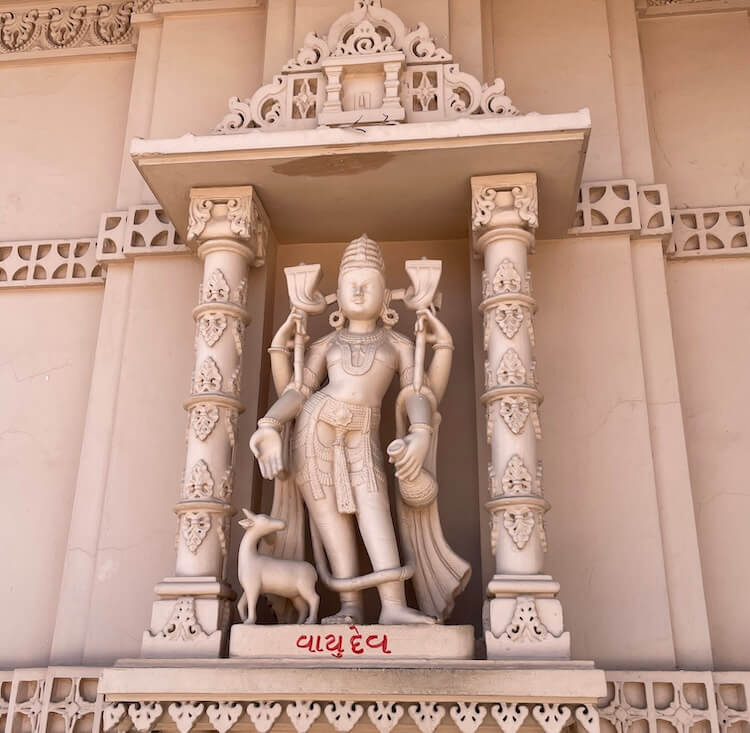
the Annakut Mahotsav becomes a major attraction for devotees. On that day, more than 500 varieties of pure vegetarian dishes are arranged before the deities in the form of a mountain-like offering.
During the month of Shravan, the ‘Hindola’ festival is celebrated, in which the deity is gently swung each day in beautifully decorated artistic cradles. On Bhadrapada Shuddha Ekadashi, known as Jal Jhilani Ekadashi, a ceremonial boat procession of the idols takes place upon the waters of Gaya Talav, followed by ritual immersion rites. In addition, festivals such as Janmashtami, Mahashivaratra and Vasant Panchami are marked with special decorations within the temple. During all these occasions, programmes of bhajan, kirtan, scriptural recitation and mantra chanting are organised. The temple also undertakes social initiatives, including blood donation camps, cleanliness drives and disaster management activities.
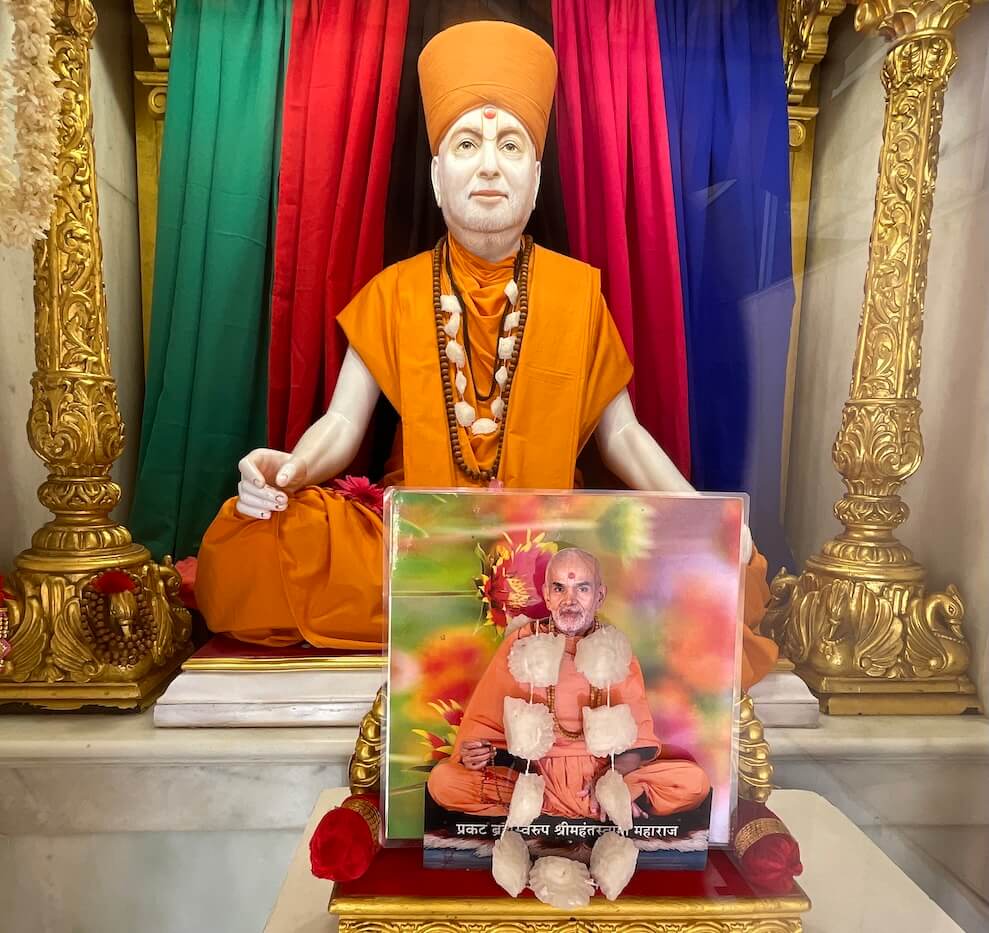 The temple’s daily rituals commence with the Mangala Aarti at 6 a.m. This is followed by the Shringar Aarti at 7.30 a.m., the Rajbhog Aarti at 11.15 a.m., the Sandhya Aarti at 7 p.m. and the Shayan Aarti at 8.30 p.m. In addition, as part of the weekly satsang assemblies organised for the spiritual upliftment of various social groups, a joint congregation is held every Sunday at 6 p.m. A special programme conducted by the youth group takes place every Saturday night from 8.30 to 10 p.m.
For the holistic development of children, Balmandal assemblies are held every Sunday at 9 a.m. and again at 6 p.m. For women devotees, Mahila Mandal gatherings are conducted every Monday and Friday at 3 p.m. The Yuvati Mandal meeting takes place every Sunday at 11 a.m., while Balika Mandal assemblies are organised on Sundays at 9 a.m. and 5 p.m. Devotees may obtain darshan during two morning sessions from 7.30 to 10.20 a.m. and from 11.15 a.m. to 12 noon and again in the evening from 4 p.m. until the Shayan Aarti at night.
Useful Information
- Located at 1 km from Anand Bus Station.
- State Transport bus services to Anand are available from many cities across the state.
- Private vehicles can reach the temple parking area.
- Numerous accommodation and breakfast facilities are available in the surrounding area.
- Contact – Temple Office – Mobile: 9998990100
बीएपीएस स्वामीनारायण मंदिर
आनंद शहर, तहसील एवं जिला आनंद
मंदिरे
Temples
मंदिर
-
भीमनाथ महादेव मंदिर लिंबळी, ता. सोजित्रा, जि. आनंद
अधिक माहितीBhimnath Mahadev Temple Limbali, Tal. Sojitra, Dist. Anand
View Detailsभीमनाथ महादेव मंदिर लिम्बाली, ताल. सोजित्रा, जिला. आनंद
विवरण देखें -
मेलडी माता मंदिर मालताज, ता. सोजित्रा, जि. आनंद
अधिक माहितीMeldi Mata Temple Malataj, Tal. Sojitra, Dist. Anand
View Detailsमेलडी माता मंदिर मालताज, ताल. सोजित्रा, जिला. आनंद
विवरण देखें -
चंद्रमौलेश्वर महादेव मंदिर उमरेठ, ता. उमरेठ, जि. आनंद
अधिक माहितीChandramouleshwar Mahadev Temple Umreth, Tal. Umreth, Dist. Anand
View Detailsचंद्रमौलेश्वर महादेव मंदिर उमरेठ, तहसील उमरेठ, जिला आनंद
विवरण देखें