
दशामाता मंदिर
कडी-ठोळ रोड, कडी, ता. कडी, जि. मेहसाणा
Dashama Mata Temple
Kadi-Thol Road, Kadi, Tal. Kadi, Dist. Mehsana
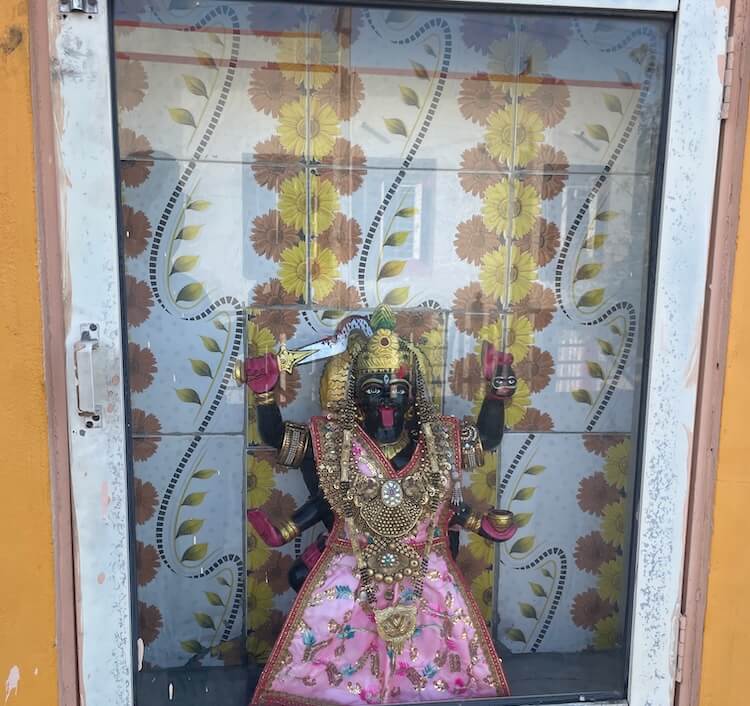
 The Dashama Mata Temple, situated on the Kadi-Thol road in the town of Kadi within Mehsana district, stands as a paramount sanctuary of faith for countless devotees. Revered as an emanation of Goddess Parvati, the Mother is worshipped as the harbinger of prosperity, well-being and bliss. Known across the nation as ‘Dasha Mata’ or ‘Momai Mata’, her worship is observed in diverse locales. Mounted upon a camel, the Goddess wields a sword, a trident, a lotus and a shield. It is the firm conviction of the faithful that her adoration dispels poverty, ushers in domestic harmony, pacifies the malevolent influence of planetary transitions (Dasha) and transforms days of adversity into an era of fortune.
 Historical chronicles recount that in antiquity, the town of Kadi was addressed by various sobriquets such as ‘Kille Kadi’, ‘Kasbe Kadi’ and ‘Kadi Sona ni Dandi’. Etymologically, the name ‘Kadi’ is derived from the Sanskrit word ‘Kada’, referring to a water current or a riverbed. Over the centuries, several dynasties, including the Solankis, Vaghelas, Sultans, Mughals, Marathas, British and Gaekwads, established their dominion over Kadi. The town later garnered a distinct industrial identity through its cotton-seed processing units and textile production.
The genesis of the present Dashama Temple is intertwined with relatively contemporary events. Seven decades ago, a daughter named Hiraba was born to the couple Somabhai Sukhabhai Rawat and Maniba in Kadi. 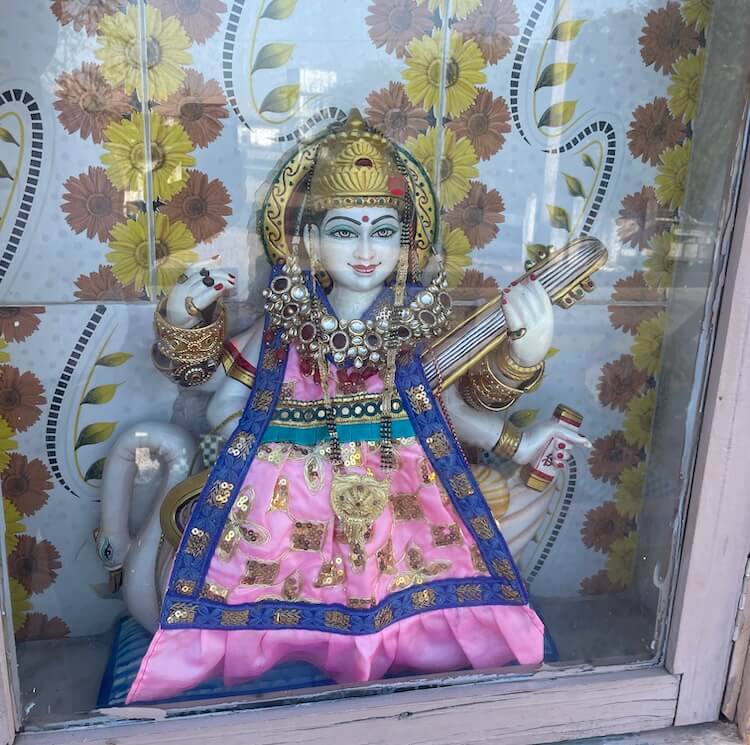 Devout from her childhood, Hiraba, at the age of fifteen, was graced with a divine vision of the Goddess within a coconut. Subsequently, throngs of devotees from the surrounding five villages began to congregate at her residence for Darshan (holy viewing). In 1994, the collective efforts of local devotees culminated in the construction of this temple on Thol Road, where the Goddess’s idol was formally consecrated on the full moon day (Purnima) of the month of Ashwin.
According to scriptural descriptions, the primary vahana (mount) of Goddess Dashama is the camel. In her upper right hand, she wields a sword signifying prowess and in her upper left, a trident representing sovereign power. Her lower right hand holds a lotus, the emblem of purity, while her lower left hand carries a shield, a symbol of protection. Devotees observe a vrat (solemn vow) to the Goddess to alleviate poverty and bring an end to troubled times.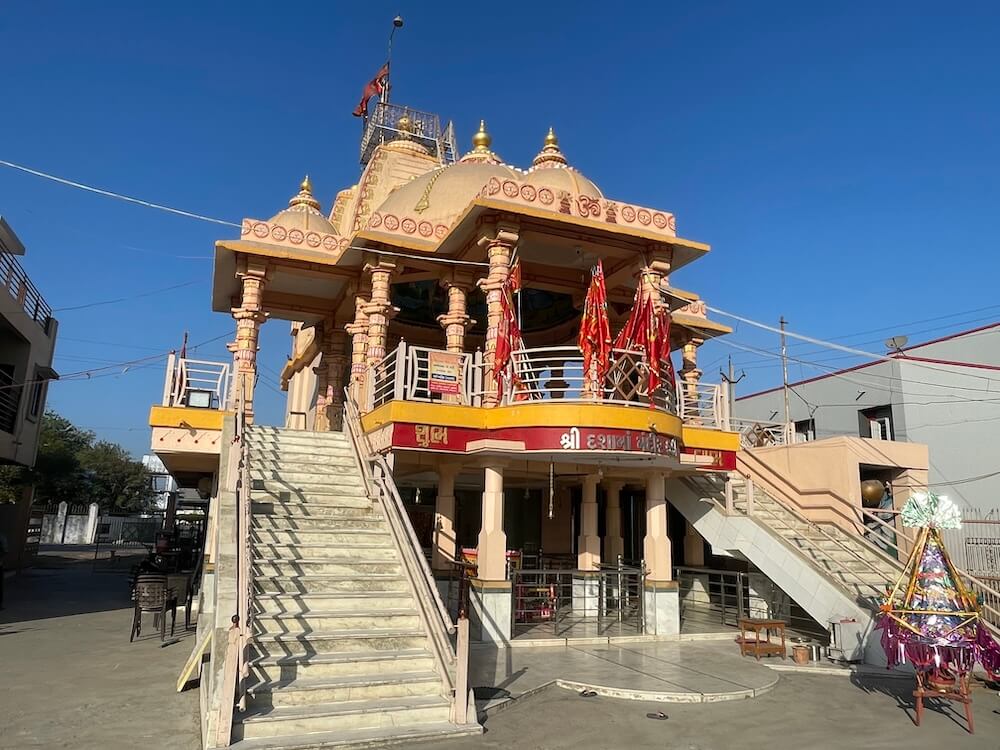 A legend narrates that in ancient times, a Brahmin lady advised Queen Damayanti to tie a yellow thread of Dashama Mata around her neck for the kingdom’s prosperity. However, in his arrogance of wealth, King Nala snapped the thread and cast it away. That very night, the Goddess appeared in the King’s dream in the guise of an elderly woman, forewarning him of the end of his golden era. Soon after, the King lost all his glory. Forced to wander in search of sustenance, King Nala and Queen Damayanti faced immense hardships. The Queen served as a maid in another’s household, while the King was reduced to selling oil. After years of destitution, Queen Damayanti once again observed the vrat of Dashama Mata with absolute devotion. Pleased, the Goddess restored their former kingdom and wealth. Since then, the faithful have worshipped the Goddess to reclaim lost glory.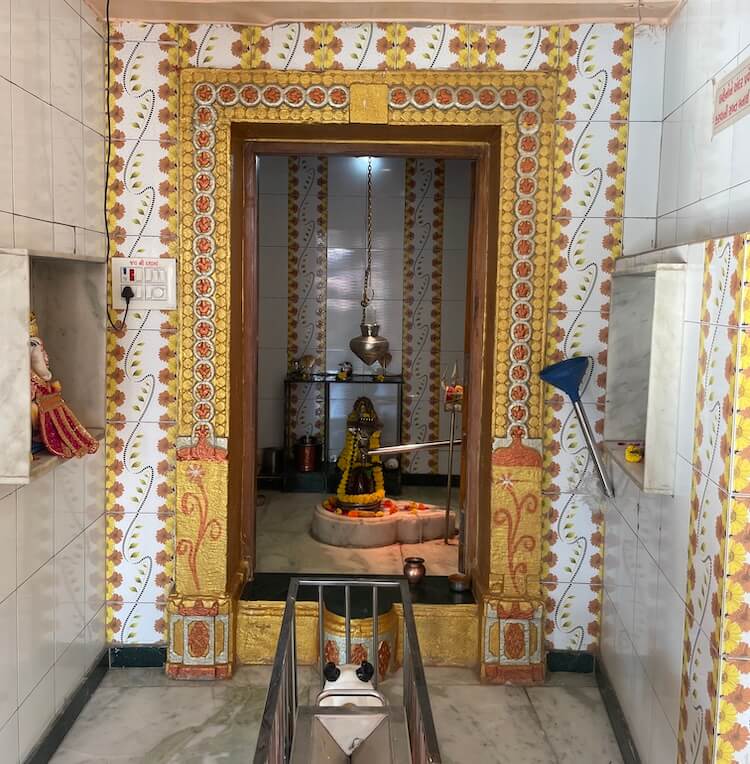
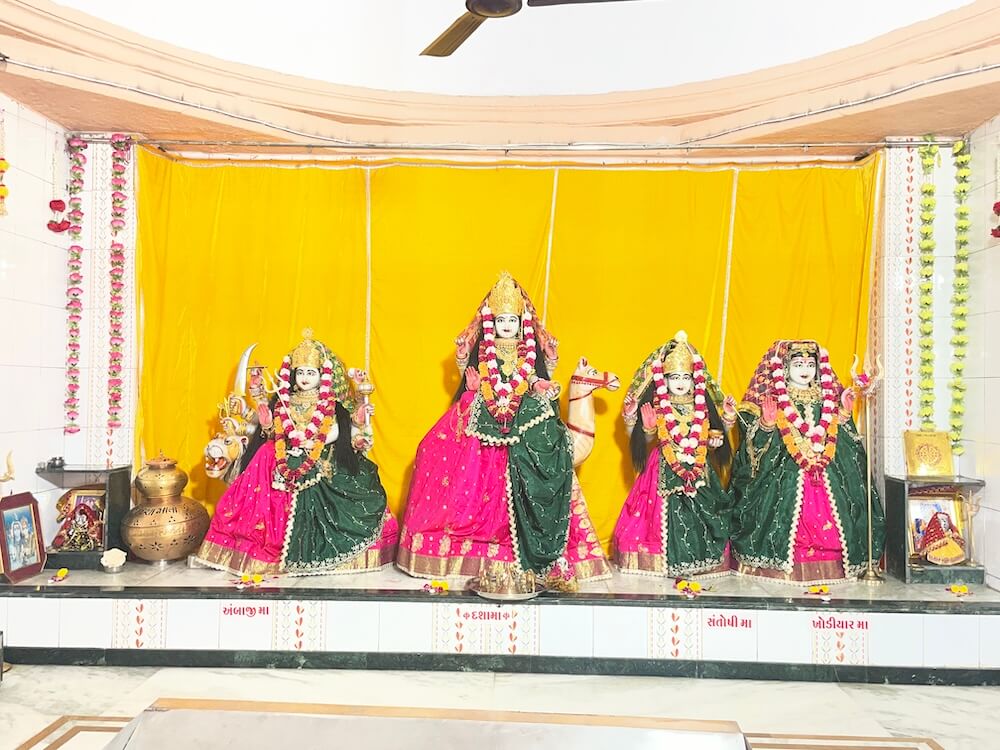
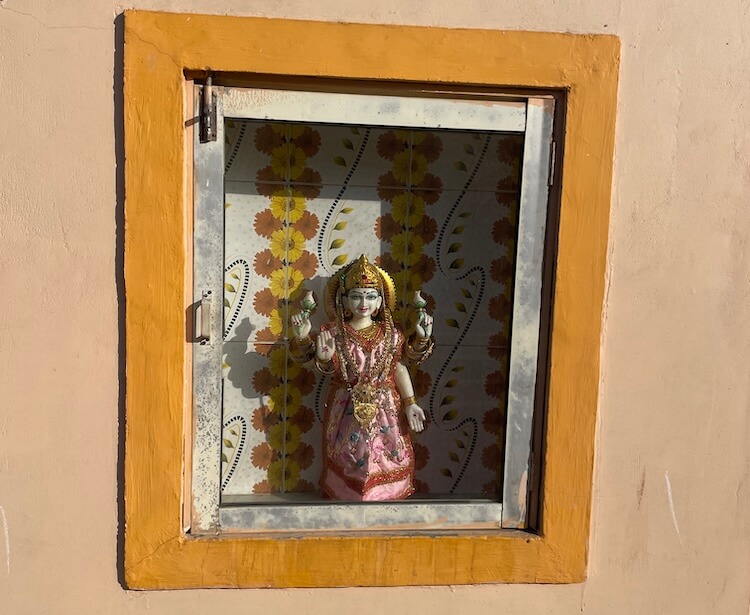
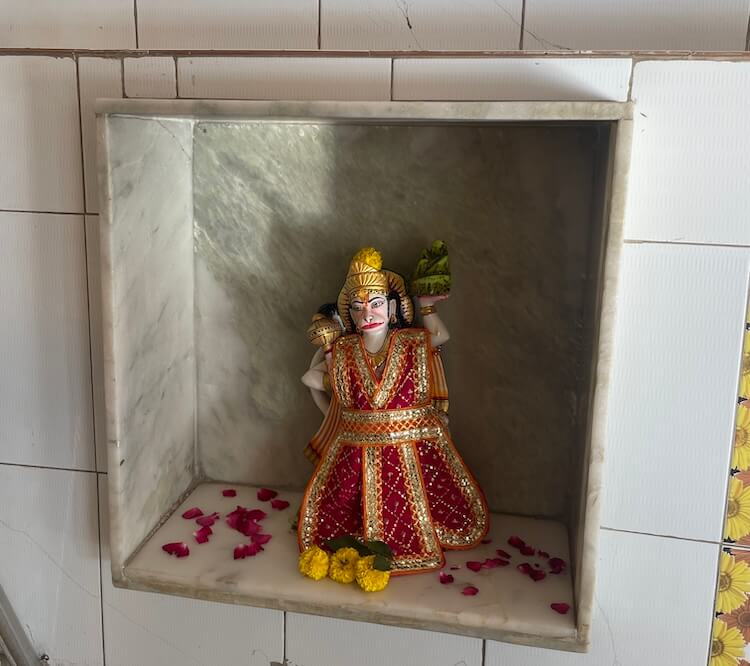
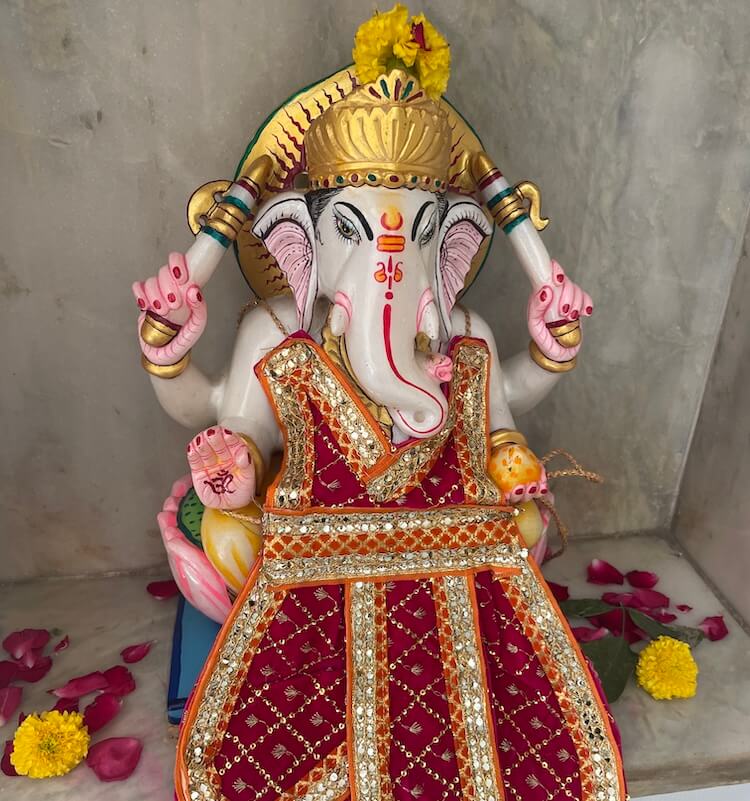
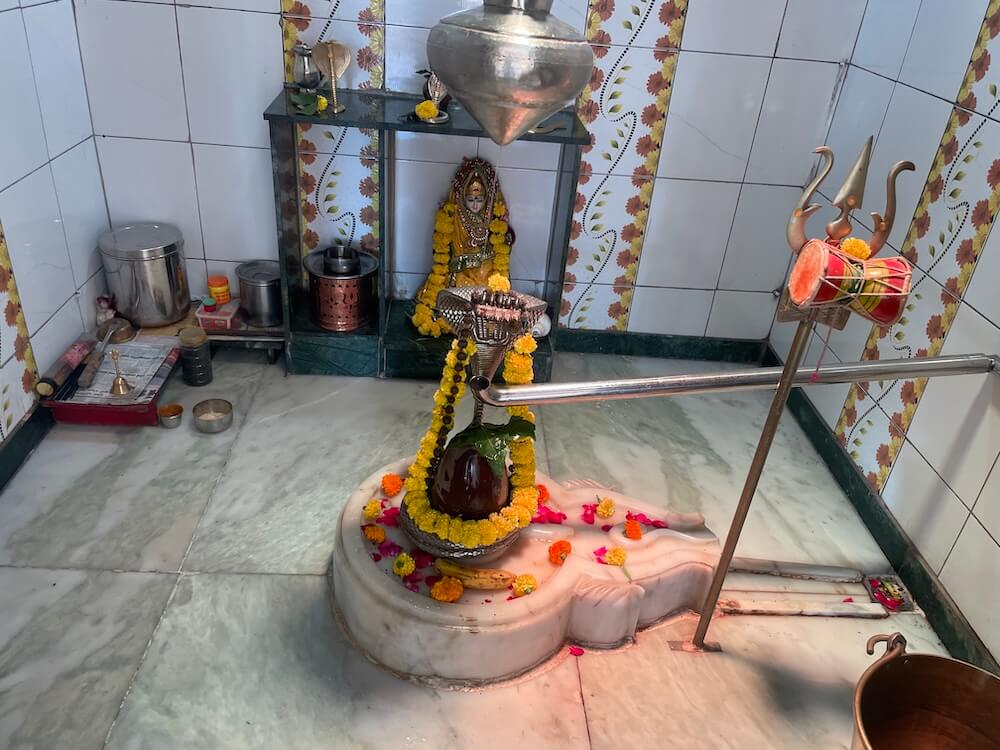
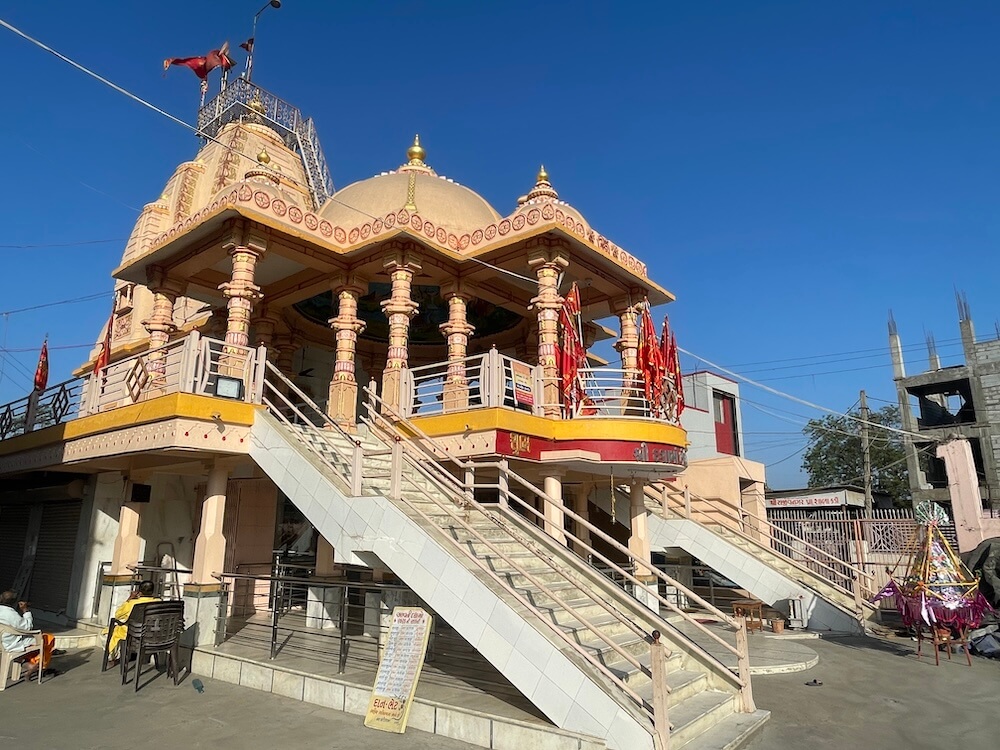
The Dashama Mata Temple is a two-storeyed edifice adjacent to Thol Road. As you enter the gateway, you’ll find several stalls selling ritual offerings. In the open expanse before the shrine lies a small ‘Vav’ (stepwell). The temple itself is a vision of beauty. On the ground floor, a small niche contains an idol of a Goddess. Within the central Garbhagriha (sanctum sanctorum), the idol of Dashama Mata is enthroned upon a pedestal, flanked by Amba Mata on the left and Santoshi Mata and Khodiyar Mata on the right. A smaller idol resides at the base of the pedestal. To the right of the sanctum lies the shrine of Hireshwar Mahadev, with niches on its exterior housing idols of Ganesha and Hanuman. The sanctum contains a Shivling (aniconic representation of Shiva), with a niche in the rear wall enshrining Goddess Parvati. Exquisite paintings of Shiva and Parvati adorn the outer walls.
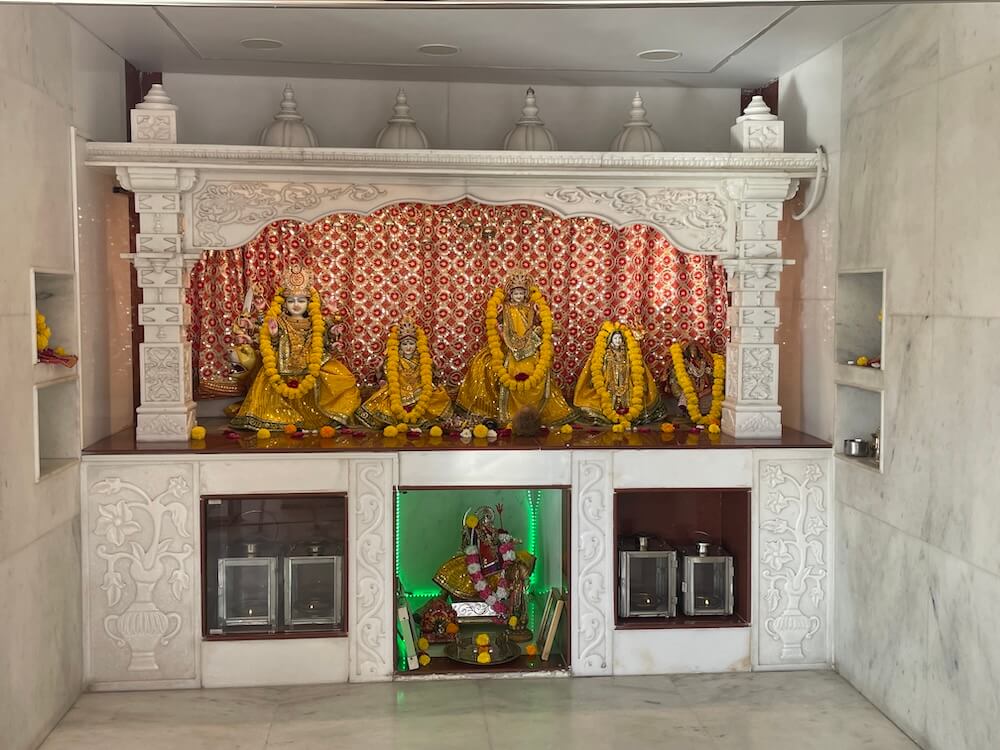
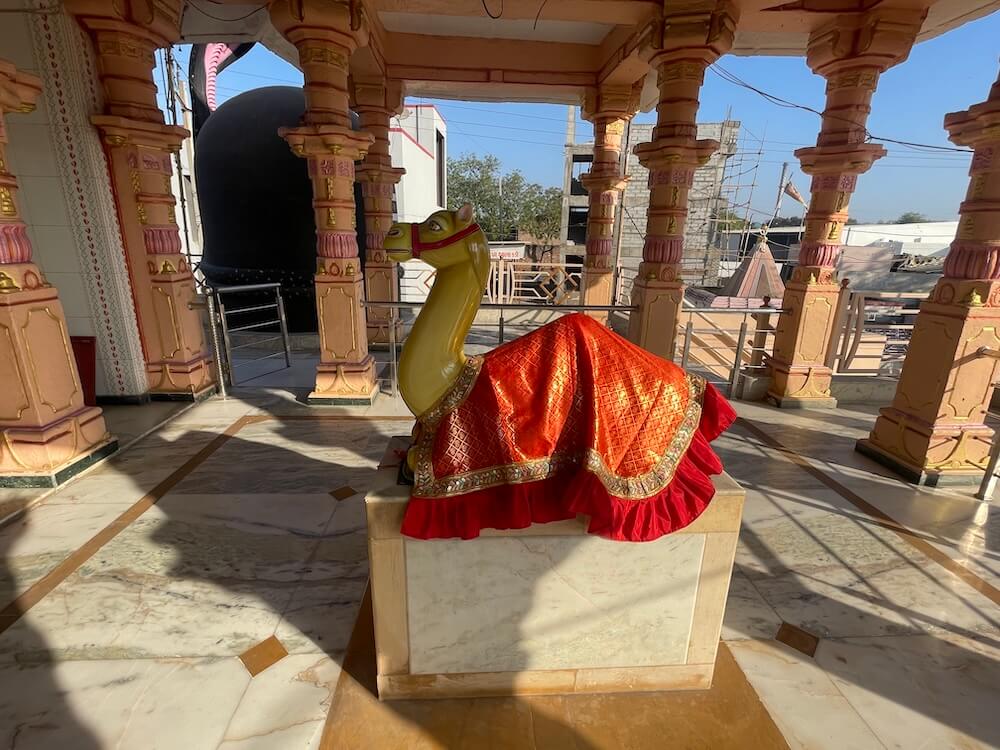
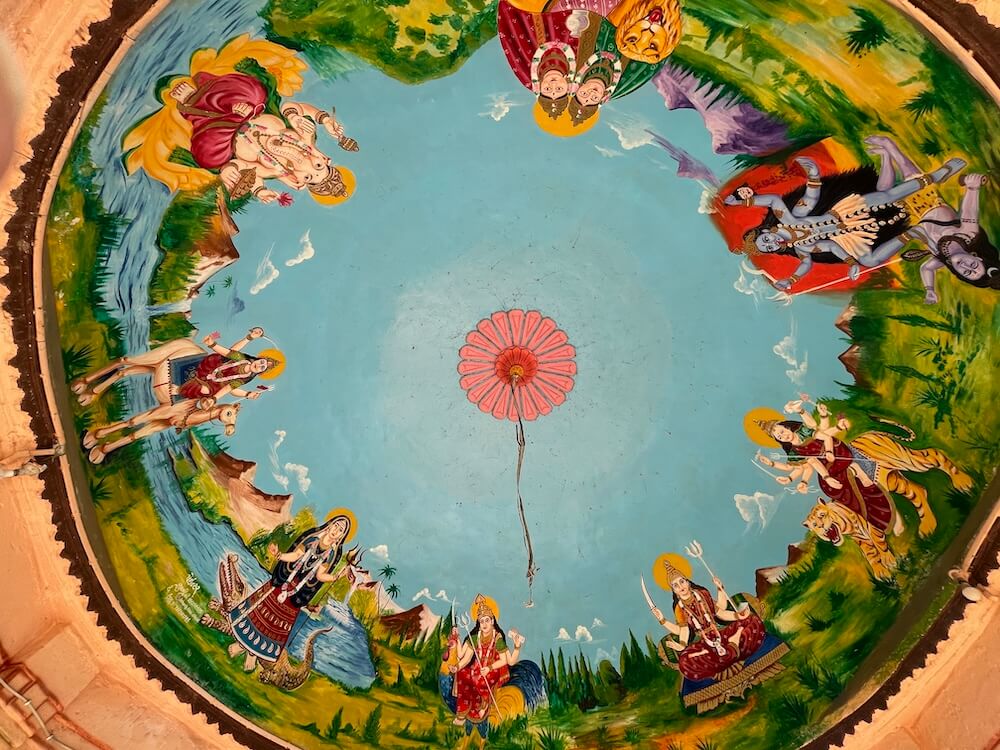
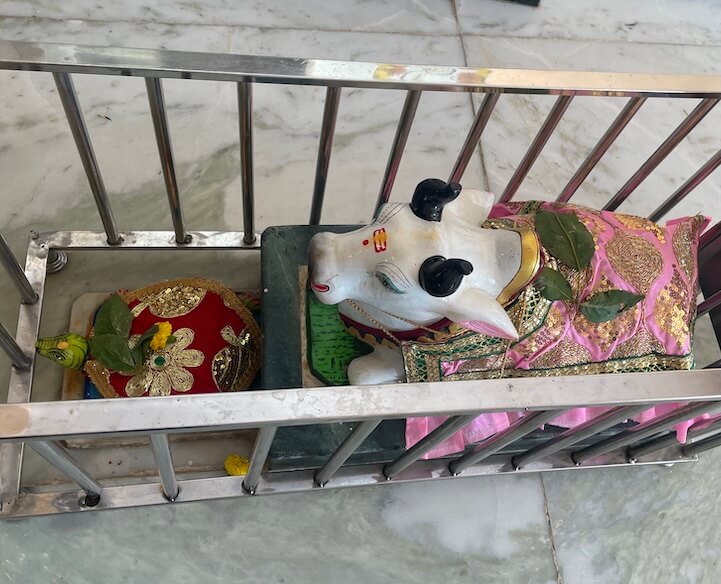
The upper floor houses another sanctum, accessible via staircases on either side. The open Sabhamandap (assembly hall) features pillars decorated with striking colour schemes.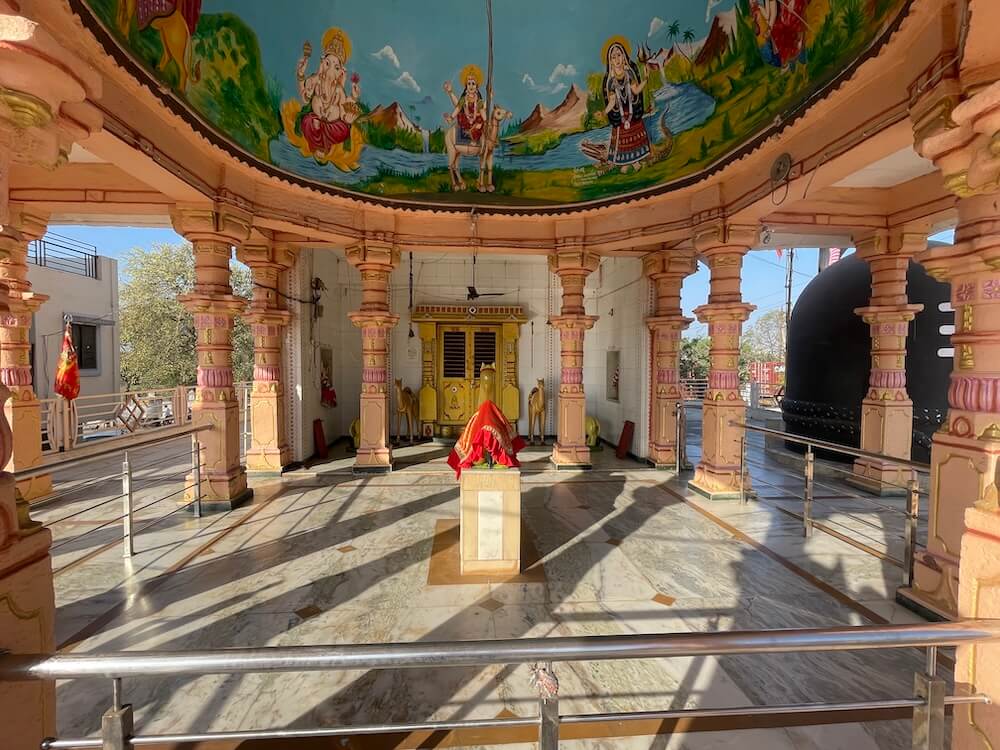 Facing the sanctum is a sculpture of a camel, the Goddess’s mount. To the left of the sanctum, a niche houses the idol of ‘Chundadiwala Mataji’, the Guru of Hiraba, while the right niche is occupied by Batuk Bhairav. The main pedestal enshrines marble idols of Dashama Mata, Amba Mata, Santoshi Mata and Khodiyar Mata. The hall’s ceiling is embellished with celestial paintings of the Goddesses and a large replica of a Shivling stands to the right. The temple’s exterior niches are filled with various divine idols. The sanctum is topped by a towering Shikhara (spire) adorned with numerous Urushringa (subsidiary) spires, while the assembly halls feature domed roofs.
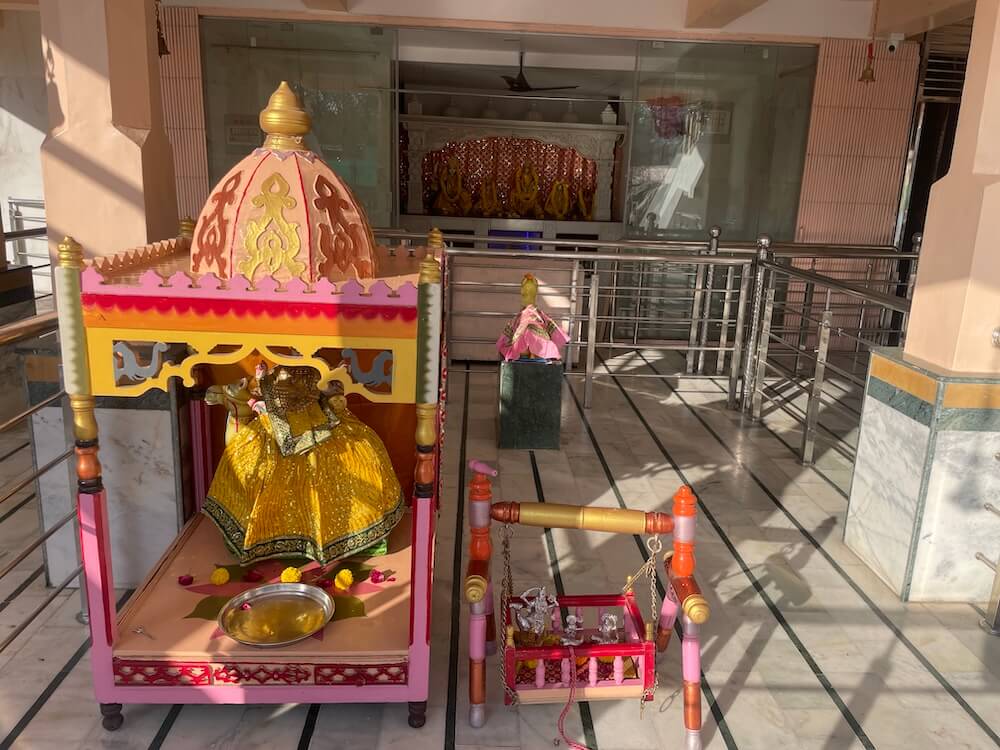
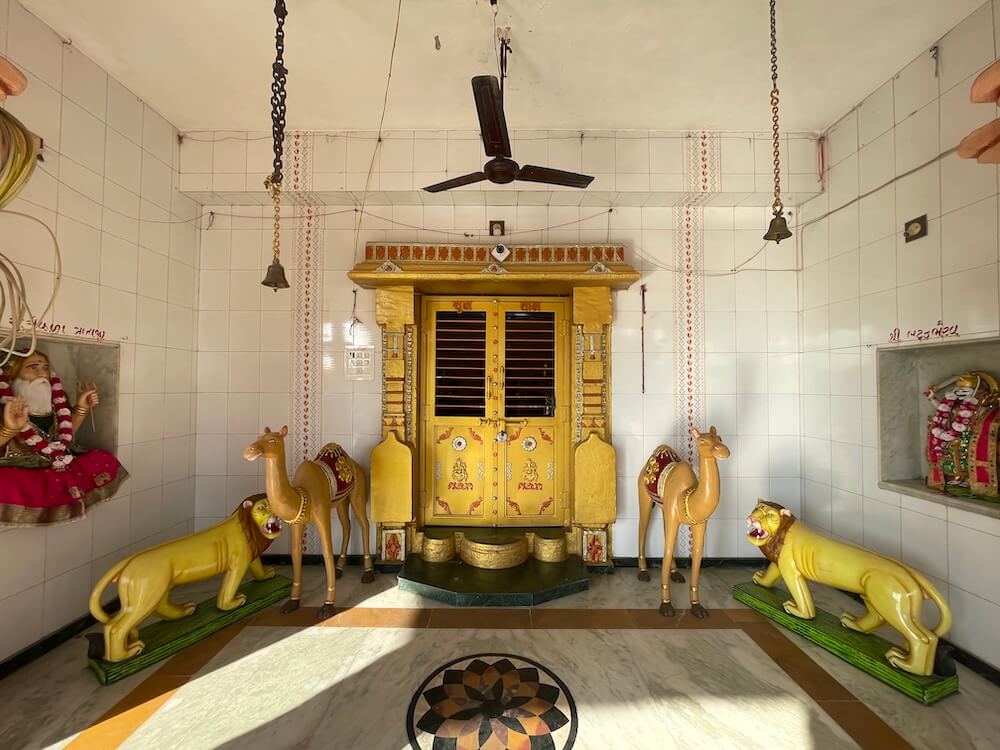
To the left of the temple stands an open pavilion with a corrugated roof, where a portrait of the Goddess is placed within a wooden shrine, flanked by camel sculptures.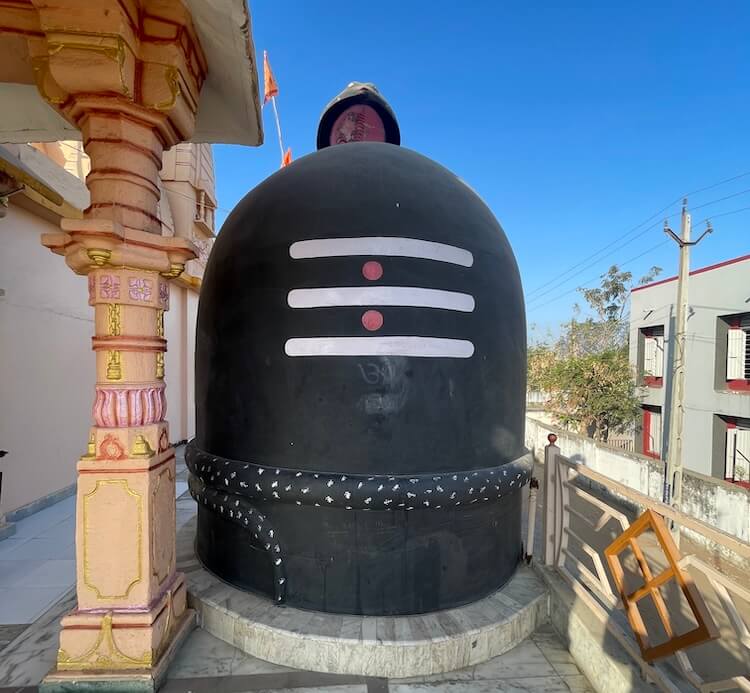 A smaller portrait is also kept nearby in a tiny cradle.
The festival of Dashama Vrat is celebrated here with immense fervour. The vow is observed from the first day of the bright fortnight of the month of Shravan until the tenth day (Dashami). During this period, various Anusthanas (religious ceremonies) are performed. On the inaugural day, women ceremonially place a clay camel idol on a wooden pedestal. Adorned with red cloth, the pedestal also hosts idols of Ganesha, a Kalasha (sacred pot), a coconut and mango leaves. Offerings of Abir, Gulal and Kumkum are used in the worship. Observing women tie a red thread with ten knots, known as ‘Kautuka’, around their right wrists. Over the ten days, they eat only once a day. Daily Aarti, prayers and recitations of the Dashama legend take place, followed by the distribution of Prasad (blessed food). Offerings of wheat and betel leaves are made to the Goddess. The festival culminates in a night-long vigil on the tenth day and at the break of dawn, the clay idols are immersed in a nearby river or reservoir. After completing the Vrat for five consecutive years, devotees traditionally donate a silver camel to a Brahmin. Devotees can visit for Darshan here every day from 6 AM to 9 PM.
Useful Information
- Located at 2.5 km from Kadi Bus Station and 42 km from Mehsana.
- State Transport (GSRTC) bus services operate from several cities in the district to Kadi.
- Private vehicles can reach the temple directly.
- Accommodation and breakfast facilities are available in the vicinity.
दशमा माता मंदिर
कड़ी-थोल रोड, कड़ी, ताल। कड़ी, जिला. मेहसाणा
मंदिरे
Temples
मंदिर
-
वैजनाथ महादेव मंदिर महादेवपुरा (गावडा), ता. विजापूर, जि. मेहसाणा
अधिक माहितीVaijnath Mahadev Temple Mahadevpura (Gavada), Tal. Vijapur, Dist. Mehsana
View Detailsवैजनाथ महादेव मंदिर महादेवपुरा (गावड़ा), ताल. विजापुर, जिला. मेहसाणा
विवरण देखें -
वैजनाथ महादेव मंदिर सोखडा, तालुका विजापूर, जिल्हा मेहसाणा
अधिक माहितीVaijanath Mahadev Temple Sokhada, Taluka Vijapur, District Mehsana
View Detailsवैजनाथ महादेव मंदिर सोखाडा, तालुका विजापुर, जिला मेहसाणा
विवरण देखें -
काशी विश्वनाथ महादेव मंदिर मेहसाणा, जि. मेहसाणा
अधिक माहितीKashi Vishwanath Mahadev Temple Mehsana, Dist. Mehsana
View Detailsकाशी विश्वनाथ महादेव मंदिर मेहसाणा, जिला. मेहसाणा
विवरण देखें