
रुपेश्वर महादेव मंदिर
नाणार, ता. जंबुसर, जि. भरुच
Rupeshwar Mahadev Temple
Nahar, Tal. Jambusar, Dist. Bharuch
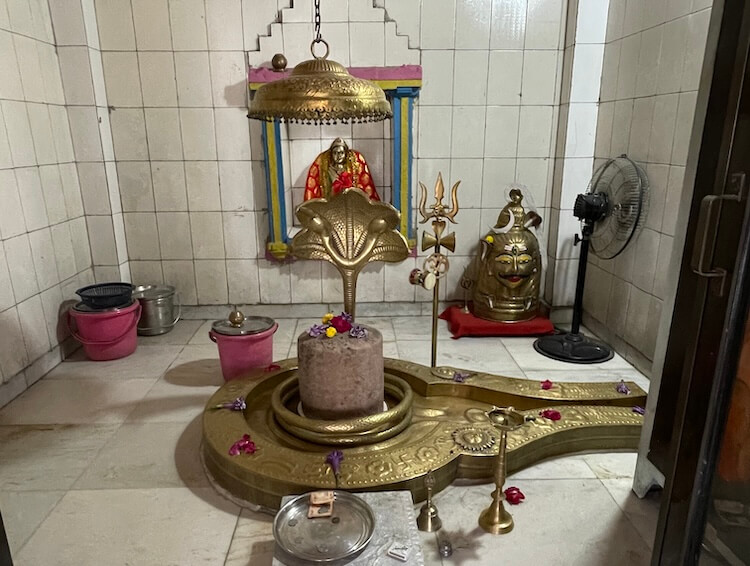 According to sacred mythology, at the very place where Kartikeya, the son of Lord Shiva, took a solemn vow to slay the demon Tarakasura, he established a Shivalinga. This Shivalinga is known as ‘Rupeshwar’ or ‘Pratikeshwar Mahadev’. The ancient temple of this Mahadev stands at Nahar upon an elevated site beside the seashore. The narrative associated with this sacred place is mentioned in the ‘Skanda Purana’ and in the ‘Shiv Purana’ as well. For this reason, the temple is regarded as spiritually significant. Devotees hold the faith that the Shivalinga here is ‘jagrut’ (awake and responsive) and therefore worshippers from various parts of Gujarat continue to come here for darshan.
 In the 33rd chapter of the ‘Kumarika Khanda’ of the ‘Skanda Purana’ and also in the first part of the ‘Rudra Samhita’ of the ‘Shiv Mahapurana’, the story of Kartikeya’s slaying of Tarakasur is narrated. It is as follows : Tarakasur was the grandson of Kashyap Muni and the son of the mighty king Vajrang. His mother commanded him to reclaim Indra’s kingdom. Thereupon Tarakasur performed rigorous penance. Pleased by this, Brahmadev appeared before him. Tarakasur sought from Brahmadev the boon of immortality. However, when Brahmadev said that such a boon could not be granted to anyone Tarakasur declared, ‘Let my death come only from a child born of Bhagwan Shankar’s virya (divine seed). No one else should be able to kill me. Grant me such a boon.’
After obtaining this boon from Brahmadev, Tarakasur conquered the three worlds. He began oppressing the gods and goddesses. 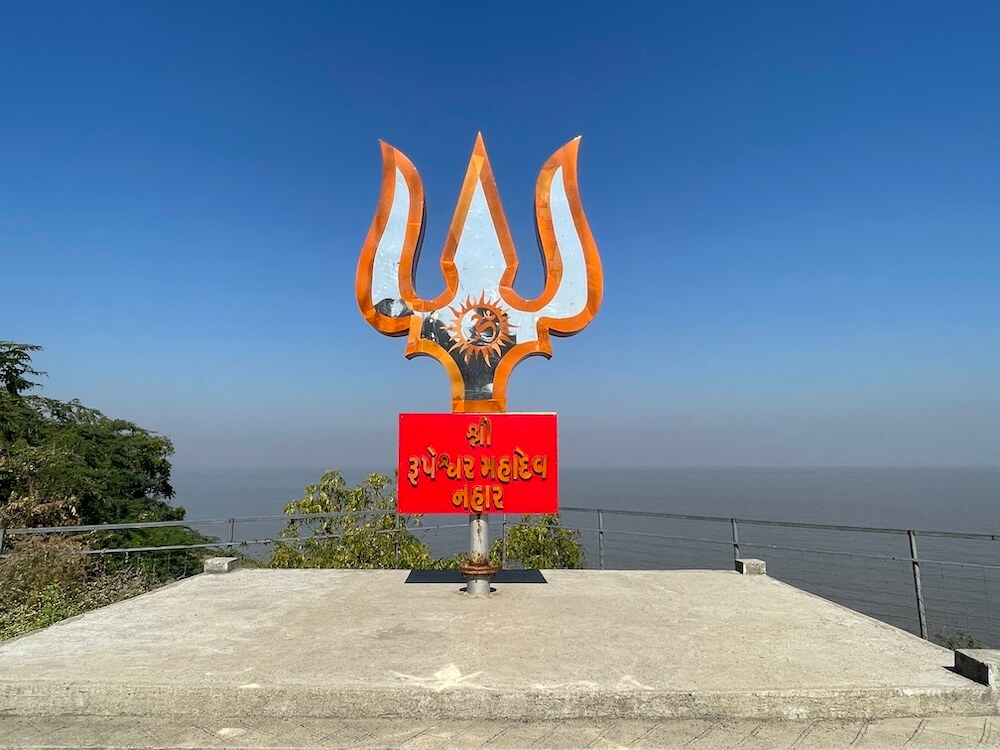 In response to the deities’ plight, Vishvakarma, the divine architect, prayed to Kartikeya, the son of Lord Shiva and Parvati, urging him to save the gods and leading him to take a vow to destroy Tarakasura. Local tradition maintains that Kartikeya took this solemn oath at this very location in Gujarat. It is also said that at that time he fashioned a Shivalinga of sand here and worshipped it. It is said that, since the vow to slay Tarakasur was made at this place the Shivalinga here came to be called ‘Pratidneshwar’. It is also known as ‘Pratikeshwar’.
The ‘Kumarika Khanda’ further relates that following the victory over Tarakasura, the gods sang praises of Kartikeya. However, the young warrior was himself crestfallen by his actions. 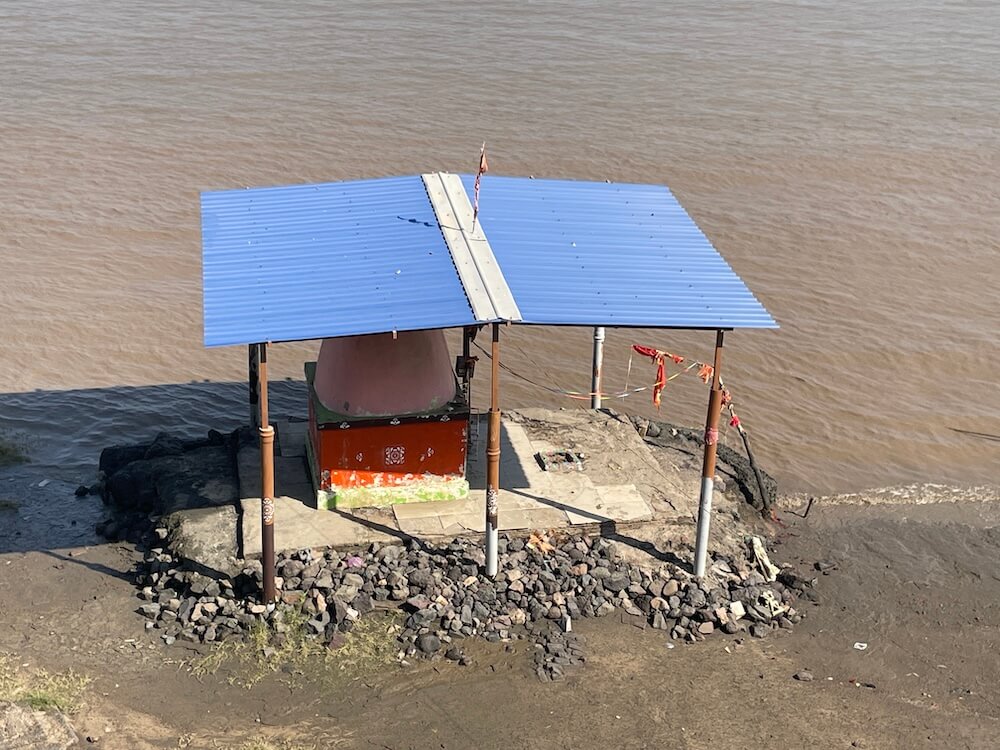 He lamented to the gods that despite being a demon, Tarakasura was a devoted follower of Shiva, thus his slaying had incurred a ‘mahapapa’ (great sin). Seeking atonement, he followed the advice of Lord Vishnu to install and worship ‘shivalingas’ with profound devotion. Kartikeya then requested Vishvakarma to create three sacred icons, which were consecrated at three different sites in the presence of Goddess Parvati and other deities. These became known as ‘Pratidneshwar’ (or Pratikeshwar), ‘Kapaleshwar’ and ‘Kumareshwar Mahadev’. The Pratikeshwar Mahadev is the one situated at Nahar.
A local legend is also told here as to how Pratikeshwar Mahadev acquired the name Rupeshwar. It is said that many years ago, caravans of ‘Vanjaras’ used to arrive near this temple of Mahadev on the shore of Mahisagar. One such caravan undertook the restoration of the ancient shrine. 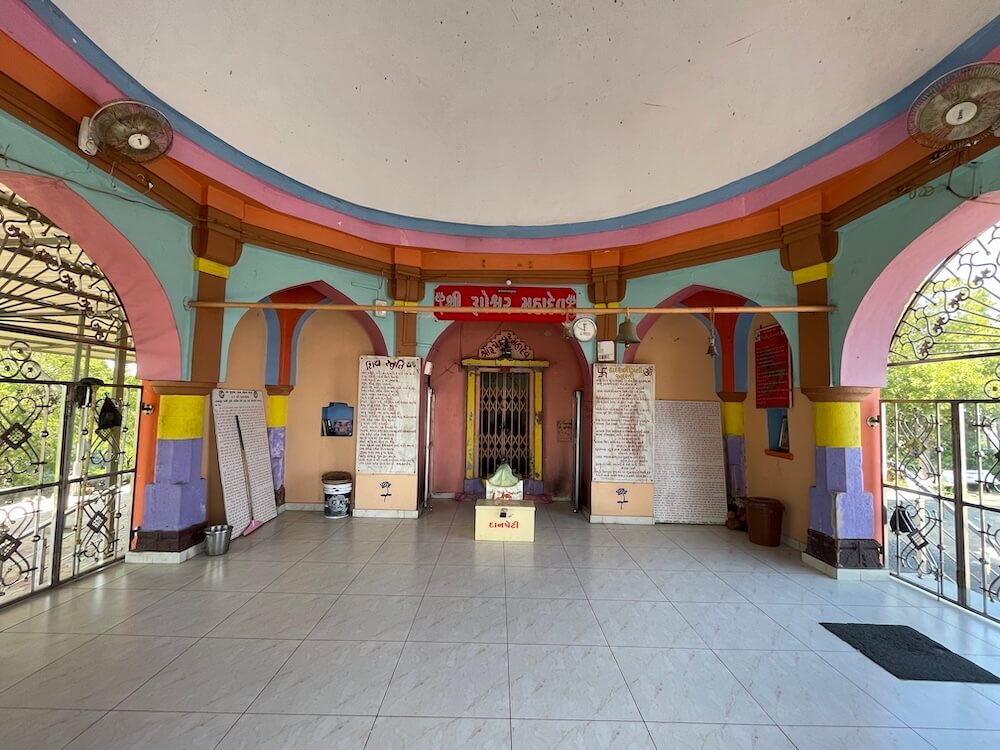 The leader of that caravan had a daughter named Rupa and it is after her name that the temple came to be known as Rupeshwar Mahadev Temple.
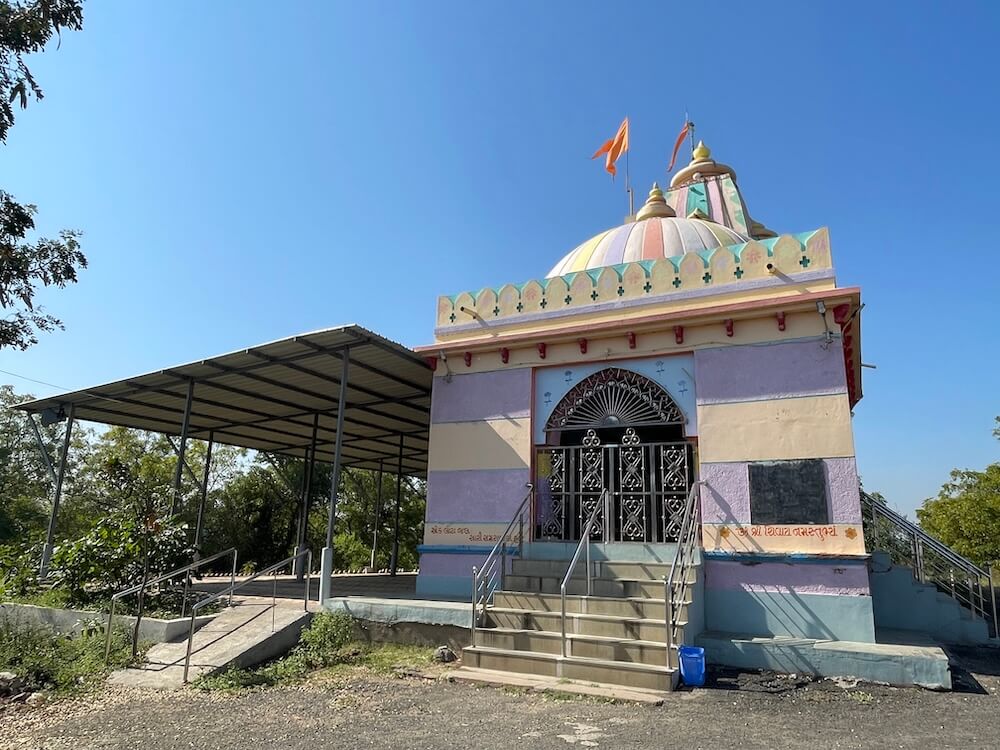
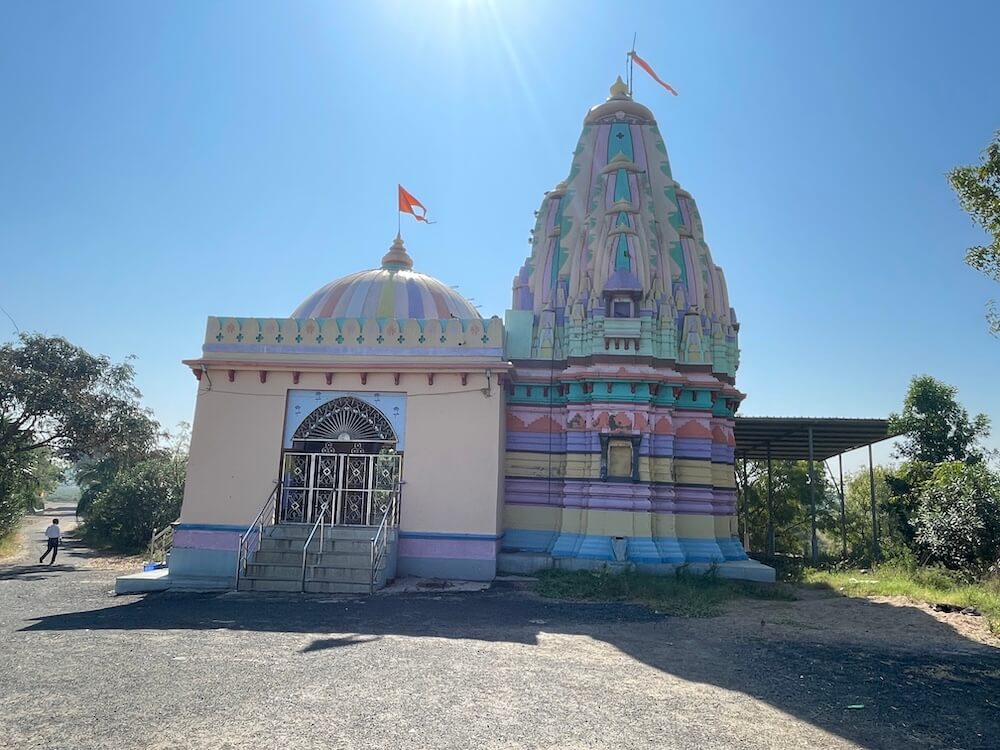
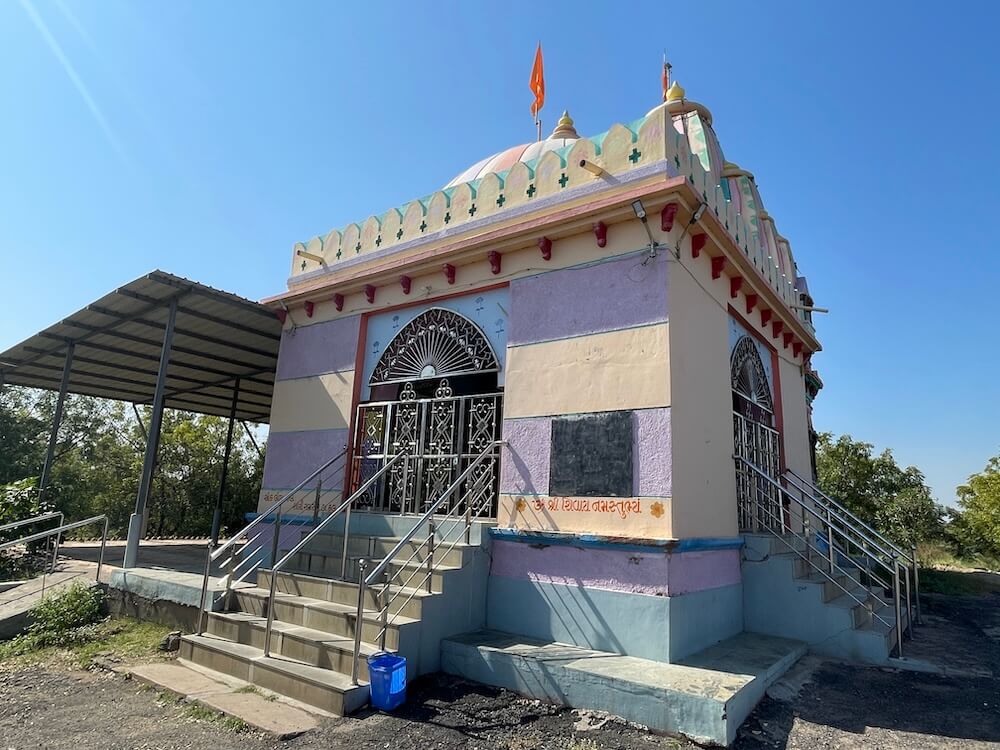
This temple lies within forest land about two and a half kilometres from Nahar village. Beautiful birds such as the Deshi Nilkanth (Indian Roller Bird, Coracias benghalensis) are found in this forest region. The temple stands upon a high hillock along the seashore. The exact history of its establishment is not available. Yet, from its architectural character, scholars infer that it belongs to the historical period. The temple is built in the Nagar architectural style. It comprises a ‘sabhamandap’ (assembly hall), ‘antaral’ (vestibule) and ‘garbhagriha’ (sanctum sanctorum). The construction of the sabhamandap is modern in style. The sabhamandap is built upon a raised platform.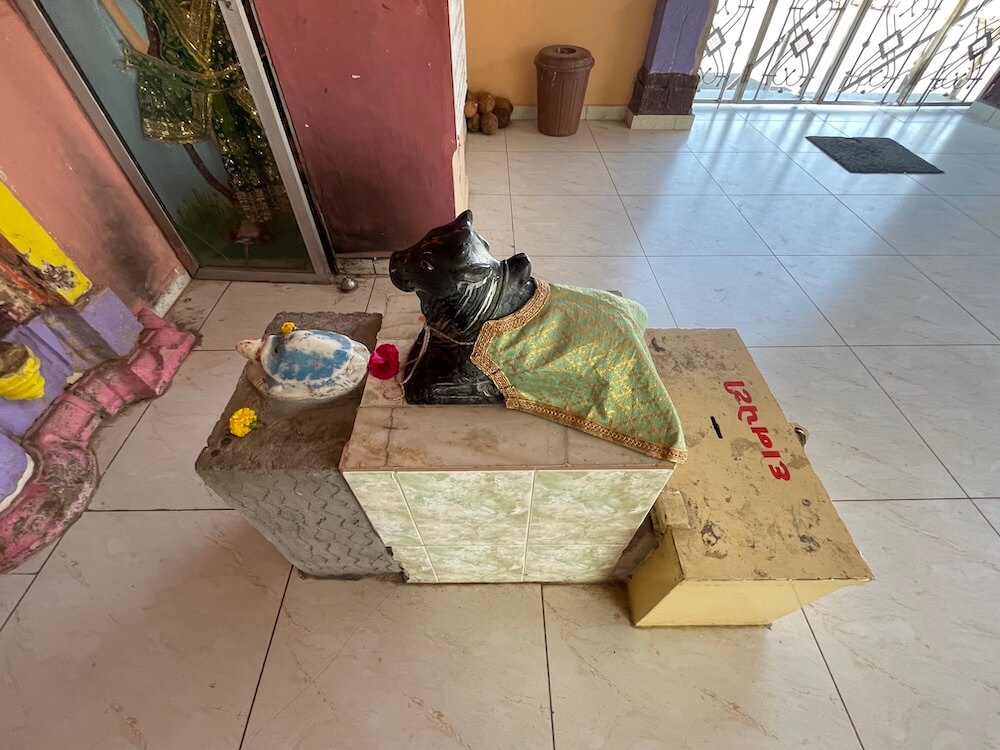 Entry is gained by ascending seven steps. The sabhamandap has entrances on three sides. Above the sabhamandap rises a domed shikhara.
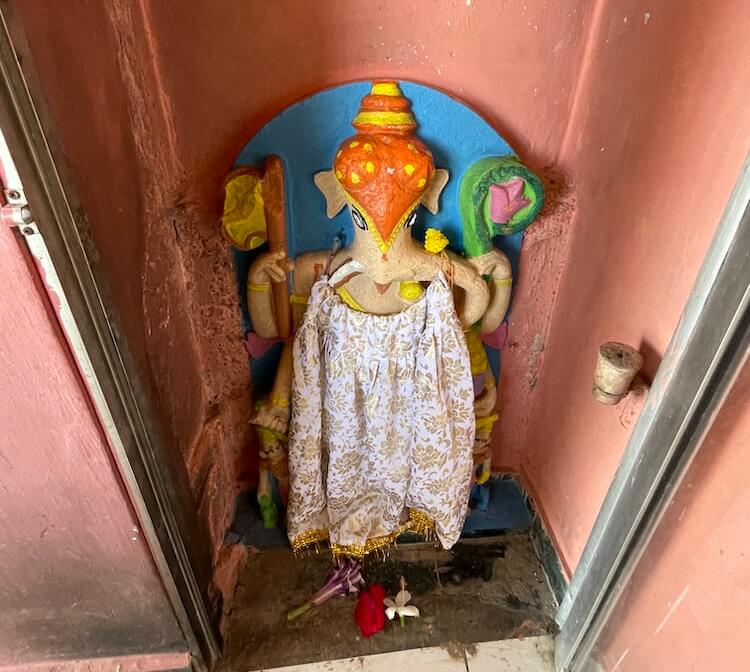
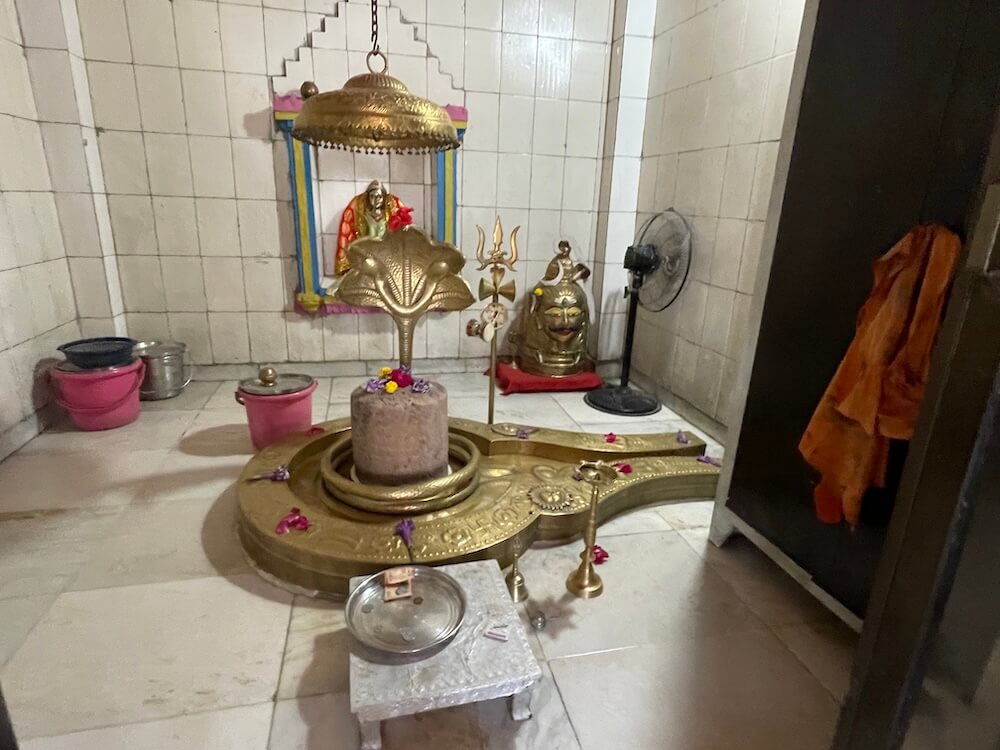
Inside, facing the garbhagriha, sits a black stone Nandi upon a pedestal, with a traditional tortoise sculpture placed before it. Within the vestibule, a niche on the right houses a unique stone idol of Hanuman. This particular representation is known as ‘Chapetdan Hanuman’, featuring a remarkably human-like face and an arm raised as if to deliver a slap to evil. In the antaral on the left side there is an upright stone idol of Ganesh. On the lower part of the garbhagriha entrance doorway there is a kirtimukh (decorative lion-faced motif). Upon the ‘lalatbimb’ (central forehead panel) in the middle of the doorway lintel is the place of Ganesh. 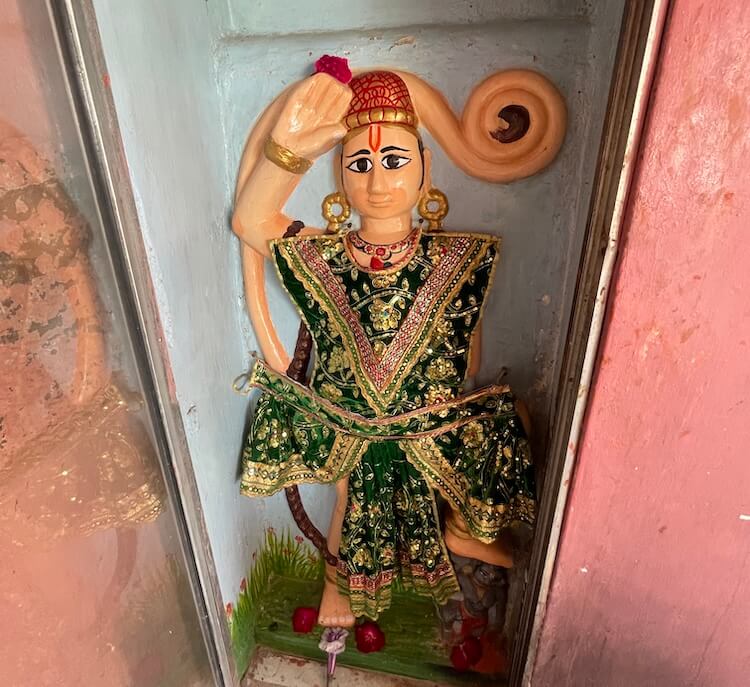 Within the garbhagriha, at ground level, in a large shalunka fitted with a panchadhatu sheet, stands the Shivalinga of Rupeshwar Mahadev. Upon the shalunka, swastik, flowers and other auspicious symbols are carved. A panchadhatu naga holds a canopy above the Shivalinga and over it is a brass chhatra. Beside it stands a metal trishul. In a niche on the wall behind the Shivalinga, Parvatimata is enthroned. Above the garbhagriha rises a shikhara in the ‘urushrung’ style and upon it are a two-tiered amalak and kalash. Near the temple, upon a large platform, a great trishul has been erected.
Behind the temple there is a small shrine-like temple of Sikotar Mata, also known as Samudramata. Further below on the seashore there is also a temple of Mahisagar Mata with a tin-roofed mandap. Devotees who come to Rupeshwar temple take darshan of these shrines as well.
At the temple of Rupeshwar Mahadev, devotees may take darshan from 5 a.m. until 7 p.m. Regular daily puja-archa is performed here. Devotees from various parts of Gujarat come to this temple for darshan. In the month of Shravan too, many devotees offer belpatra and perform jalabhishek upon the Shivalinga of Rupeshwar Mahadev.
Useful Information
- 24 km away from Jambusar
- 74 km away from Bharuch
- ST (State Transport) bus facility available from Jambusar
- Private vehicles can reach up to the temple
- Accommodation and breakfast facilities are available in the vicinity
रूपेश्वर महादेव मंदिर
नाहर, ताल. जंबुसर, जिला. भरूच
मंदिरे
Temples
मंदिर
-
कोटेश्वर महादेव मंदिर कदोद, ता. भरुच, जि. भरुच
अधिक माहितीKoteshwar Mahadev Temple Kadod, Tal. Bharuch, Dist. Bharuch
View Detailsकोटेश्वर महादेव मंदिर कडोद, ताल. भरूच, जिला. भरूच
विवरण देखें -
धर्मेश्वर महादेव मंदिर धर्मशाळा-झानोर, ता. भरुच, जि. भरुच
अधिक माहितीDharmeshwar Mahadev Temple Dharmashala-Jhanor, Tal. Bharuch, Dist. Bharuch
View Detailsधर्मेश्वर महादेव मंदिर धर्मशाला-झानोर, ताल. भरूच, जिला. भरूच
विवरण देखें -
साईबाबा मंदिर रामवाटिका सोसायटी, झाडेश्वर, ता./जि. भरुच
अधिक माहितीSai Baba Temple Ramvatika Society, Zadeshwar, Tal./Dist. Bharuch
View Detailsसाईं बाबा मंदिर रामवाटिका सोसायटी, जादेश्वर, ताल./जिला. भरूच
विवरण देखें