
मोक्षनाथ महादेव मंदिर
भालोद, ता. झगडिया, जि. भरुच
Mokshnath Mahadev Temple
Bhalod, Tal. Jhagadia, Dist. Bharuch
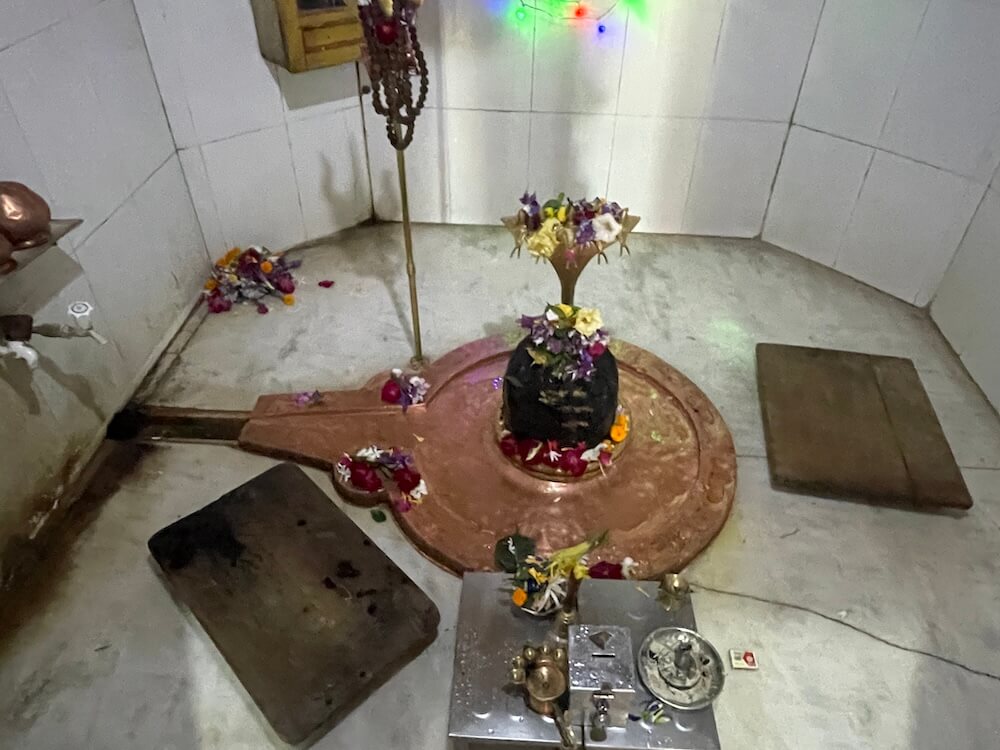 In the ancient settlement of Bhalod, which was known in antiquity as Vishnupur, sixteen sacred shivalingas are enshrined. Among these, the shivalinga at the Mokshnath Mahadev Temple is regarded as a pre-eminent site of worship. Devotees hold a profound belief that the Mahadev of this temple is jagrut (spiritually ever-awakened and responsive). According to puranic legend, it was at this very spot that Svayambhuva Manu performed rigorous penance and attained moksha. Consistent with the story of Manu, ancient lore recounts how numerous rishis (sages) and munis (ascetics) also undertook austerities here to secure their salvation. Along with local devotees, hundreds of Narmada parikramavasi also visit this shrine for sacred darshan.
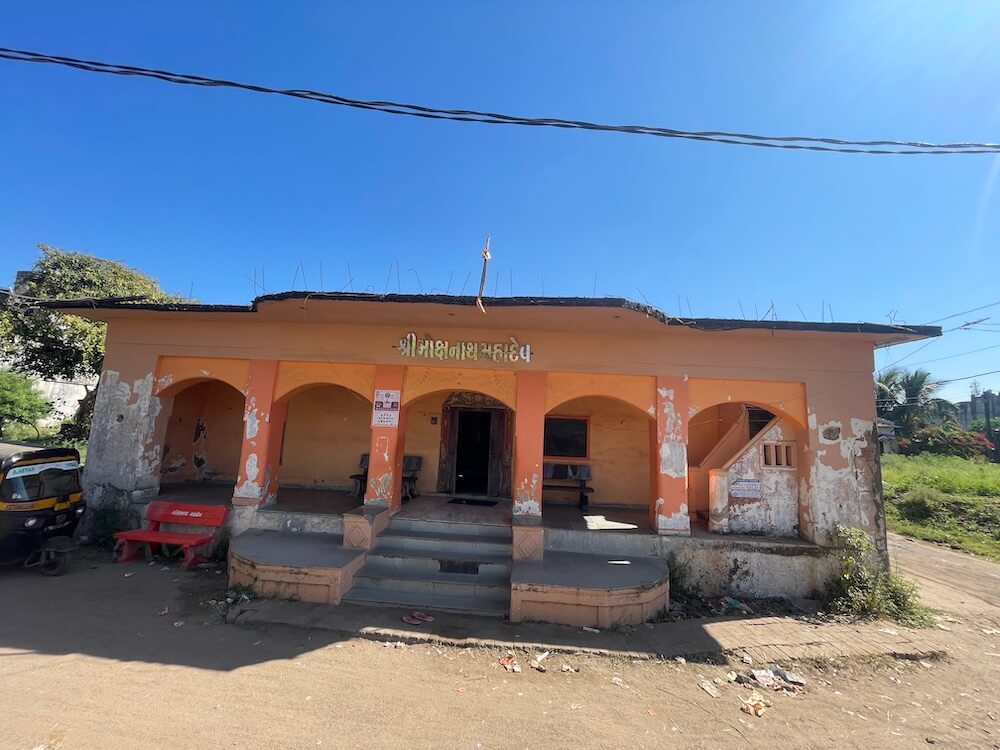 Bhalod, situated on the bank of the River Narmada, carries a rich Puranic heritage. The legend of the Mokshanath Temple unfolds thus : Sage Markandeya, belonging to the lineage of Sage Bhrigu, was the son of Sage Mrukand and his wife Manaswini. Through intense worship of Shiva and by attaining mastery over the Mahamrityunjaya Mantra, Sage Markandeya was granted a long and blessed life. He is believed to be the very originator of the sacred practice of undertaking the circumambulation of Narmada Mata. The ‘Markandeya Puran’, consisting of 137 chapters and 6,900 verses narrated by him, is counted among the eighteen great Puranas. Local tradition holds that it was in the vicinity of Bhalod—then Vishnupur—that the narration of the ‘Reva Khanda’ (a section of the ‘Skanda Puran’ dedicated to the Narmada) took place.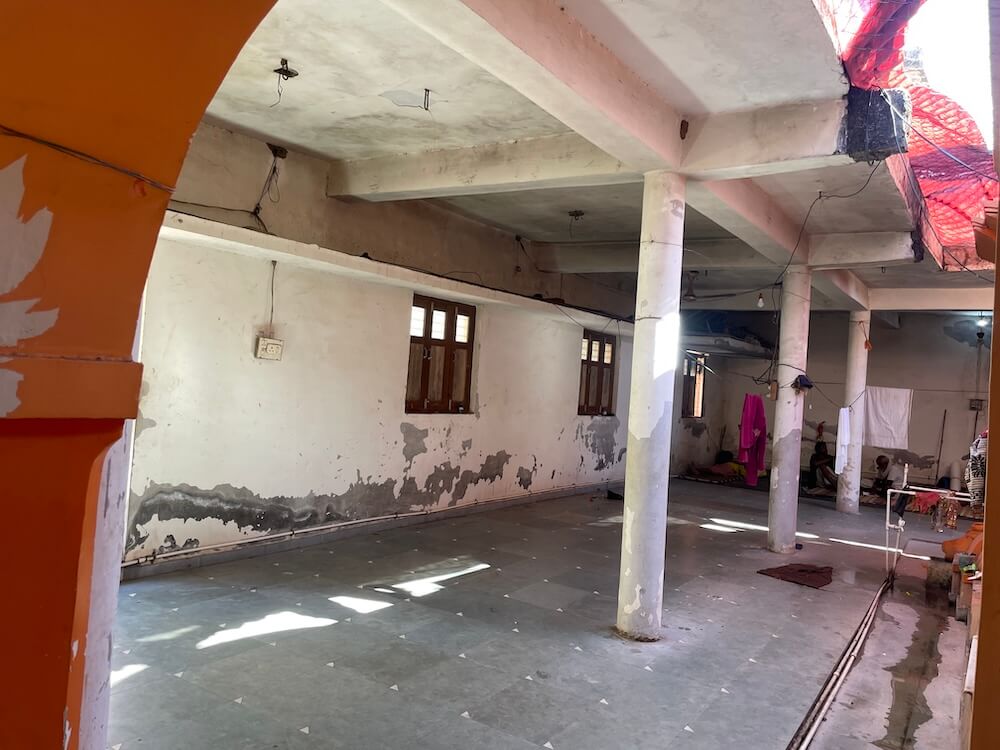
The tale as told at the commencement of the Reva Khanda is thus: after reaping the fruits of all other pilgrimages, Markandeya Rishi came to reside by the Narmada. Once, numerous sages and great seers came to this place for his darshan. Among them were Pulastya, Vashishtha, Pulaha, Ritu, Bhrigu, Atri, Marichi, Bharadwaj, Kashyap, Manu, Parashar, Vyasa, Rishyashringa and many others. At the same time, the Pandavas — Yudhishthir, Arjun, Bhim, Nakul, Sahadev — along with Draupadi, came to the Ashram of Markandeya on the bank of the Narmada. Yudhishthira inquired of the sage why he had chosen to dwell on the banks of the mighty river Narmada, forsaking other holy waters such as the Ganga, Yamuna and Saraswati. 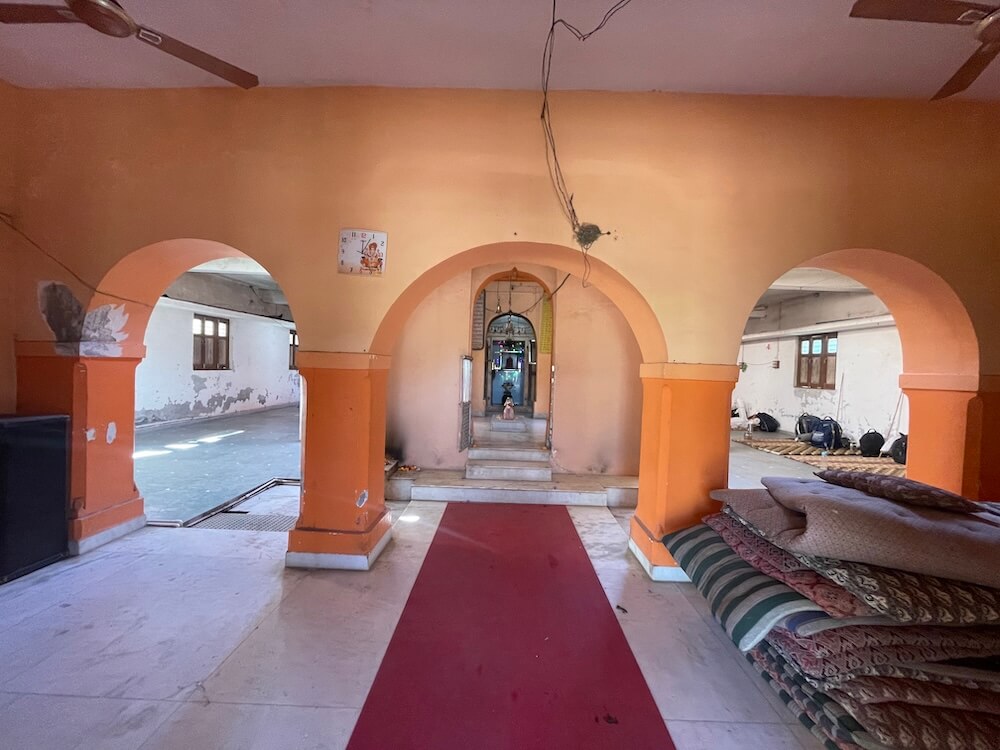 In response, Sage Markandeya narrated to Yudhishthir the glory of the River Narmada, the sanctity of the holy places along its course, their stories and their spiritual significance. This very account is recorded in the Revakhanda. Local tradition holds that this sacred incident took place at Vishnupur, now Bhalod and that the Shivalinga of Mahadev here was installed by Sage Markandeya himself. Worshipping this linga is believed to bestow moksha and thus it came to be known as Mokshanath.
There is also an enduring legend concerning the temple itself. The Shivalinga established by Sage Markandeya originally stood near the cremation ground. Over time it faded from memory and, due to certain natural circumstances, became buried beneath the earth. Nearly two hundred years ago, when some excavation work was going on in the cremation ground, blood is said to have begun oozing unexpectedly from the soil. 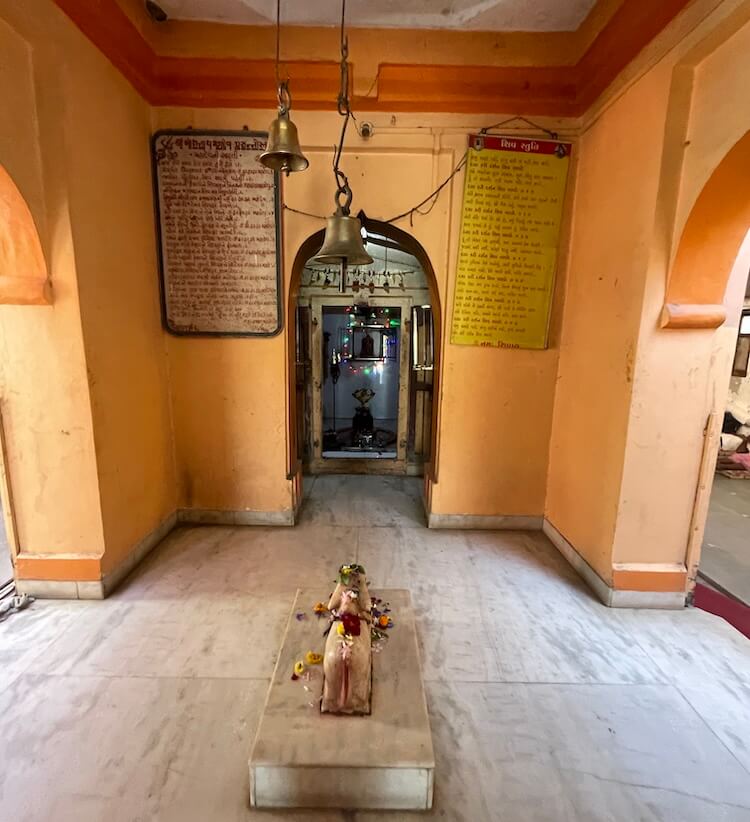 Astonished and fearful, the people stepped back. Meanwhile, the elders of the village gathered courage and resolved to investigate the source of this mysterious occurrence. As the digging continued, the sacred Shivalinga was discovered.
  Thereafter, it was worshipped with due ritual and was brought to its present site, where it was ceremonially consecrated.
Bhalod was once renowned as a village predominantly inhabited by Brahmins. Earlier, more than five hundred Brahmin families lived here, although, with the passage of time and occupational migration, many settled elsewhere. The narrow lanes of the village still retain several grand, mansion-like double-storeyed houses.
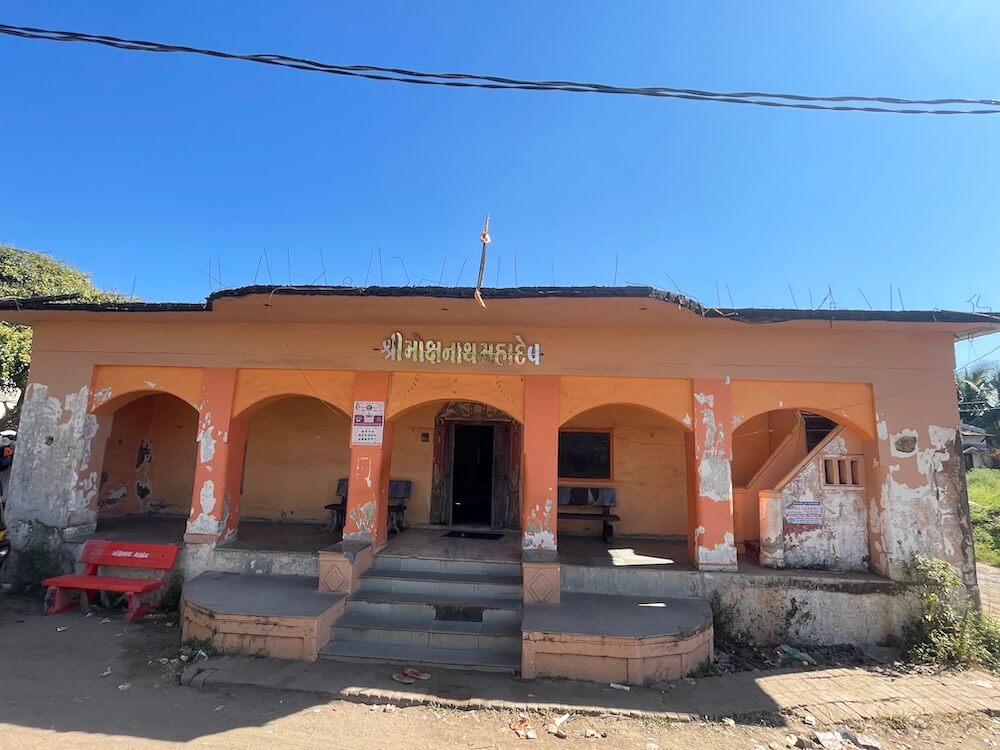
The local Datta Temple, for instance, is located in such a structure. From there, within merely two minutes walking distance, stands the Mokshanath Mahadev Temple. The facade of the temple building features five arched entrances. Entering through the wooden doorway a few steps within, one reaches an open hall-like pavilion. Descending from this pavilion, the modest yet spiritually resonant shrine of Mokshanath Mahadev comes into view. Preserving its ancient form, the temple has recently undergone careful restoration.
The architectural layout comprises an open sabhamandap (assembly hall), an antarala (vestibule) and the garbhagriha (sanctum sanctorum). Within the assembly hall, a Nandi sits enthroned on a pedestal facing the sanctum, with a sculpture of a tortoise placed before it. In the vestibule, niches on the left and right house vermilion-coated idols of Hanuman and Ganesha respectively.
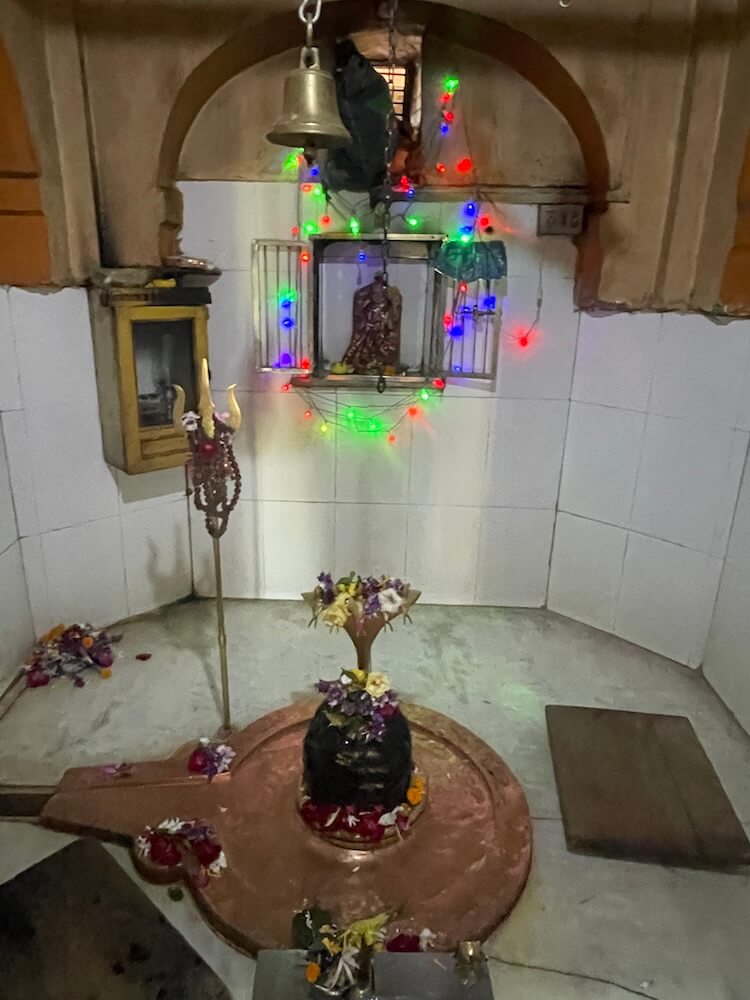
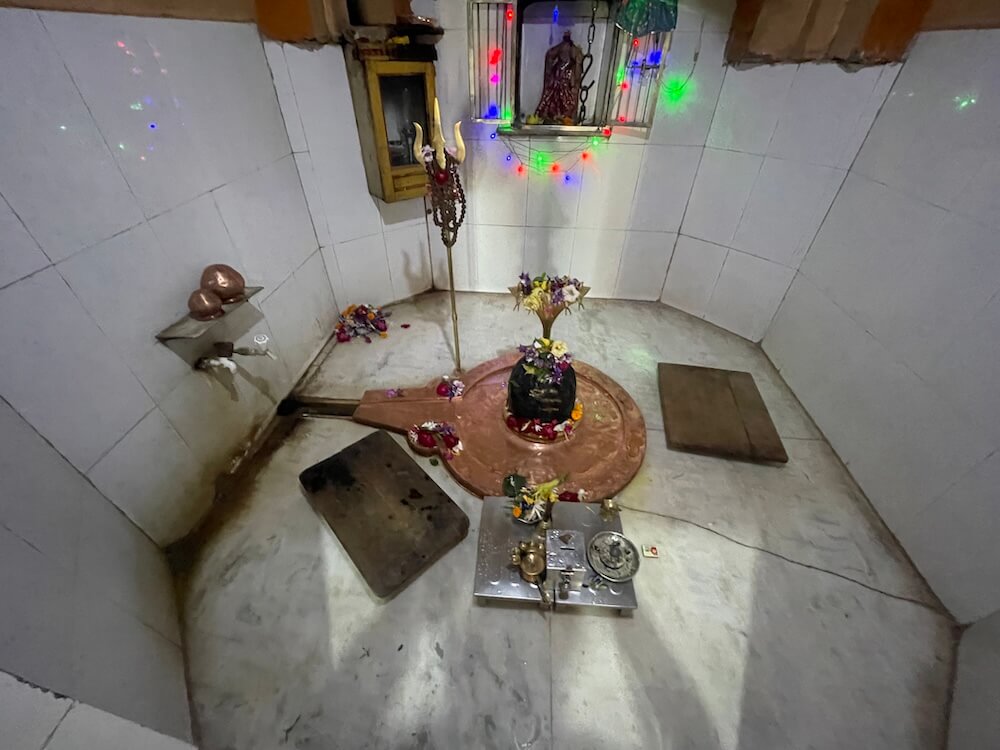
An arched doorway leads into the sanctum, where the oblong shivalinga is enshrined within a large panchadhatu (five-metal alloy) base. A serpent’s hood provides a canopy over the linga, while a galantika (suspended pot) continuously drips water upon it in a ritual abhishek. The rear wall of the sanctum features a shrine for Mother Parvati. Upon exiting the main temple, a smaller shivalinga can be found in an open area to the left and a nearby sanctum houses a beautiful idol of Wagheshwari Mata. The temple complex is flanked by ovaris (cloisters) reminiscent of old-world mansions, where lodging and boarding are provided free of charge for Narmada parikramavasis. The temple remains a bustling hub for pilgrims throughout the year, with festivals such as Shravani Somvar and Mahashivratri celebrated with great religious fervour.
Main Features :
- Located 18 km from Jhagadia, 41 km from Bharuch.
- State Transport facility available from Jhagadia.
- Private vehicles can reach up to the temple.
- No accommodation or breakfast facility in the premises.
मोक्षनाथ महादेव मंदिर
भालोद, ताल. झगड़िया, जिला. भरूच
मंदिरे
Temples
मंदिर
-
कोटेश्वर महादेव मंदिर कदोद, ता. भरुच, जि. भरुच
अधिक माहितीKoteshwar Mahadev Temple Kadod, Tal. Bharuch, Dist. Bharuch
View Detailsकोटेश्वर महादेव मंदिर कडोद, ताल. भरूच, जिला. भरूच
विवरण देखें -
धर्मेश्वर महादेव मंदिर धर्मशाळा-झानोर, ता. भरुच, जि. भरुच
अधिक माहितीDharmeshwar Mahadev Temple Dharmashala-Jhanor, Tal. Bharuch, Dist. Bharuch
View Detailsधर्मेश्वर महादेव मंदिर धर्मशाला-झानोर, ताल. भरूच, जिला. भरूच
विवरण देखें -
साईबाबा मंदिर रामवाटिका सोसायटी, झाडेश्वर, ता./जि. भरुच
अधिक माहितीSai Baba Temple Ramvatika Society, Zadeshwar, Tal./Dist. Bharuch
View Detailsसाईं बाबा मंदिर रामवाटिका सोसायटी, जादेश्वर, ताल./जिला. भरूच
विवरण देखें