
नागतीर्थ रोकडिया हनुमान मंदिर
मांडवा रोड, नौगामा, ता. अंकलेश्वर, जि. भरुच
Nagteerth Rokadiya Hanuman Temple
Mandva Road, Naugama, Tal. Ankleshwar, Dist. Bharuch
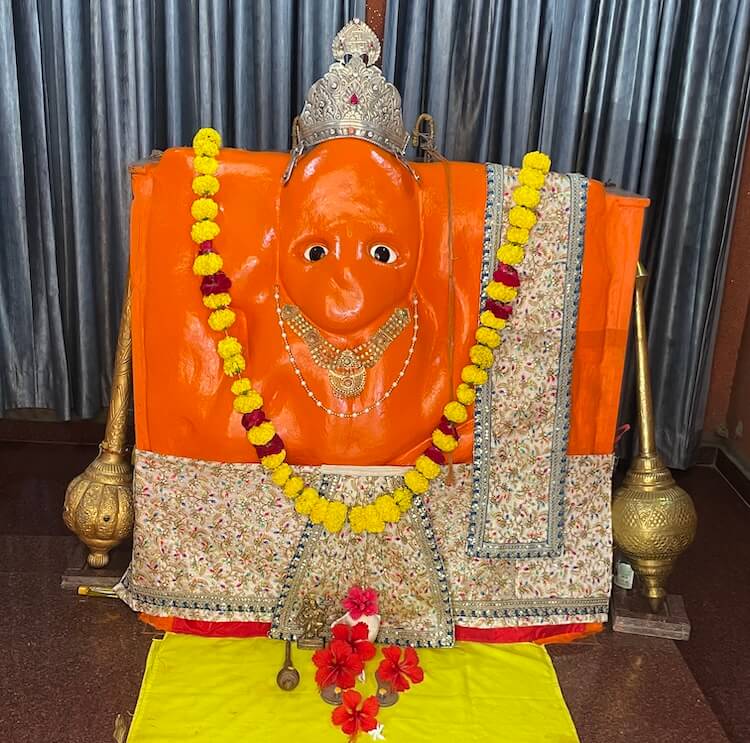 The Gujarati word Rokadiya means ‘cashier’. In Gujarat, where trade has always held a place of significance, certain deities are associated with matters of finance, while at some places they are even linked with journeys abroad. Thus, the Ganesha in a temple at Gandhinagar is renowned as ‘Dolariya Ganesha’ (the Ganesha of dollars), while the Hanuman at a temple in Ahmedabad is celebrated as ‘Visa Hanuman’. Likewise, there are several temples of ‘Rokadiya Hanuman’ across the state and at Naugama too stands a famed shrine. Due to the sacred presence of serpents at this site, it is referred to as ‘Nagteerth Rokadia Hanuman’ (The Serpent Pilgrimage of Rokadia Hanuman).
A sacred legend is narrated about the Nagteerth Rokadiya Hanuman Temple. In ancient times, a serpent-king named Dhundhumbar was a supreme devotee of Lord Shankar. In his yearning for progeny, he performed severe penance at this very spot near Ankleshwar. At that very period, certain ascetics on earth performed a great yajna (sacrificial rite) with the intent that all venomous serpents be destroyed. 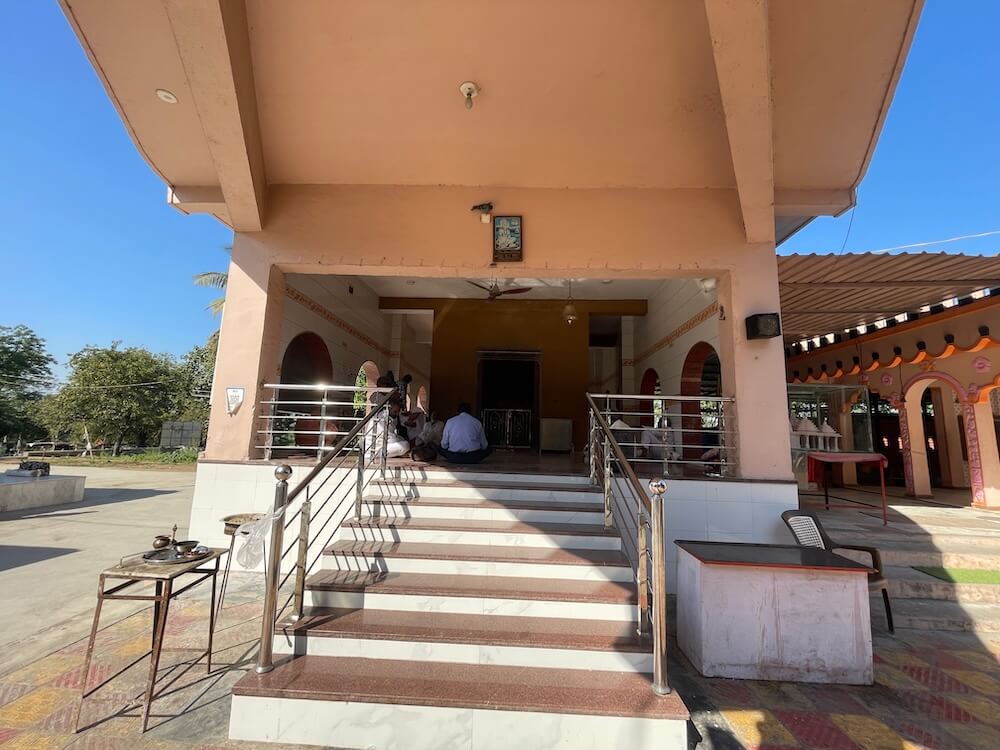 Lord Shankar realised that fierce ritual could endanger the life of Dhundhumbar, his beloved devotee engaged in penance. To protect him, Shankar immediately sent Hanuman to this place. From that time onwards, devotees believe that Hanuman has His divine presence here. It is also their faith that the Hanuman of this shrine alleviates the financial difficulties of devotees. Hence He is known as Rokadiya Hanuman and as this is revered as the penance-site of the serpent-king Dhundhumbar, it is honoured by the name Nagteerth (holy serpent pilgrimage site).
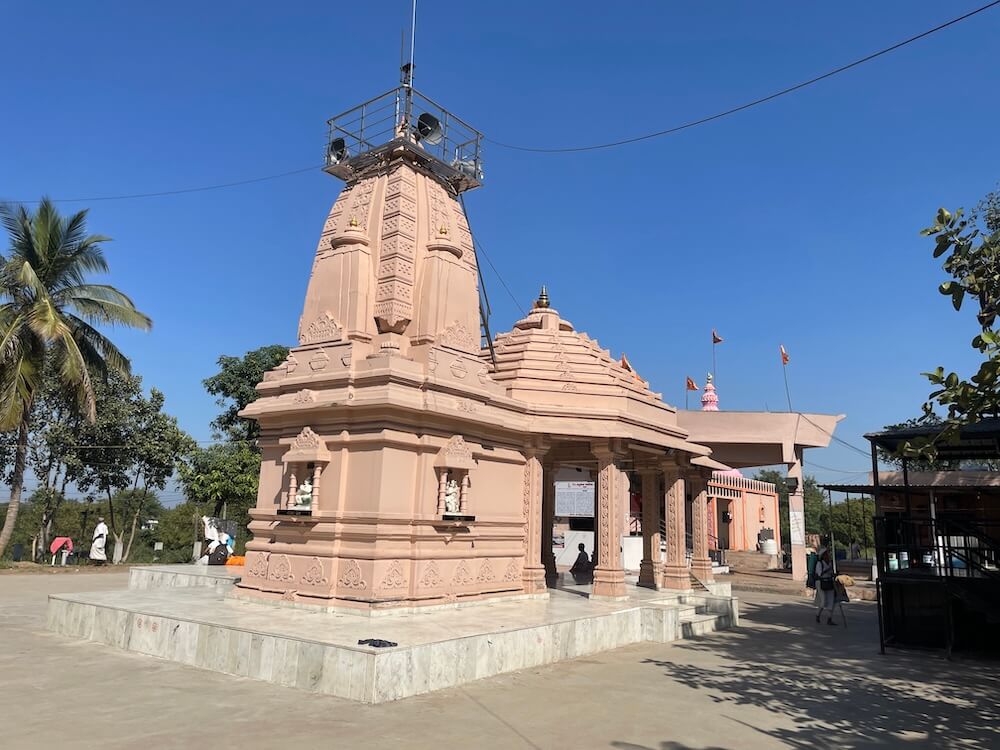
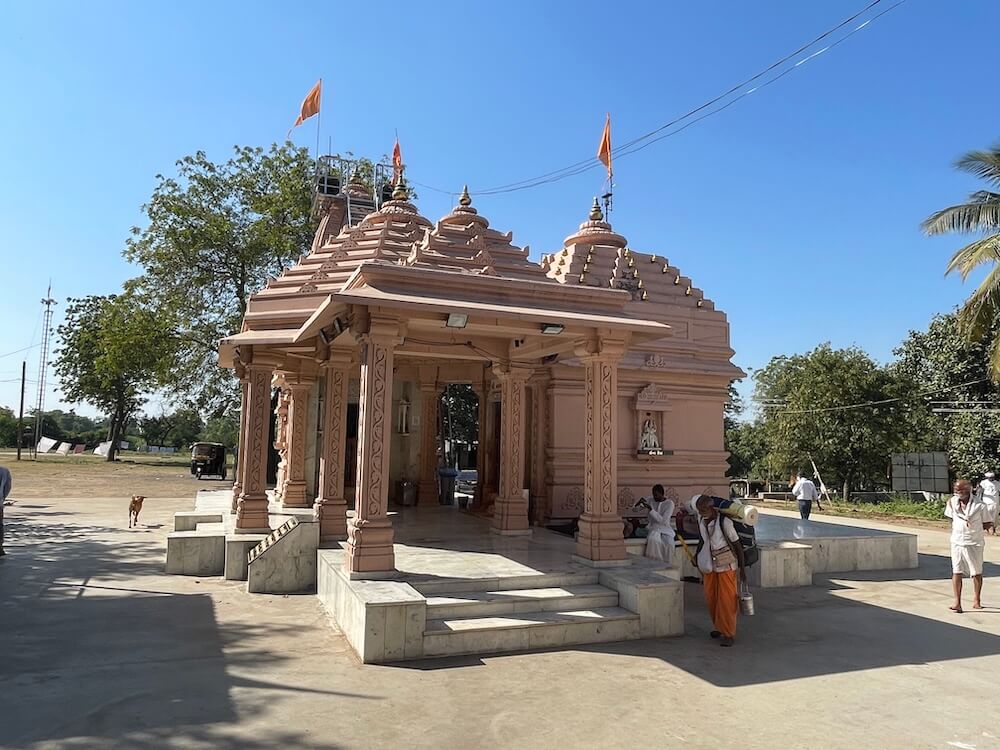
Situated on the Narmada Parikrama route, this temple of Hanuman at Naugama was established nearly one hundred and fifty years ago. The temple attained its current form following a recent jirnoddhara (restoration/renovation). The temple stands in a spacious precinct.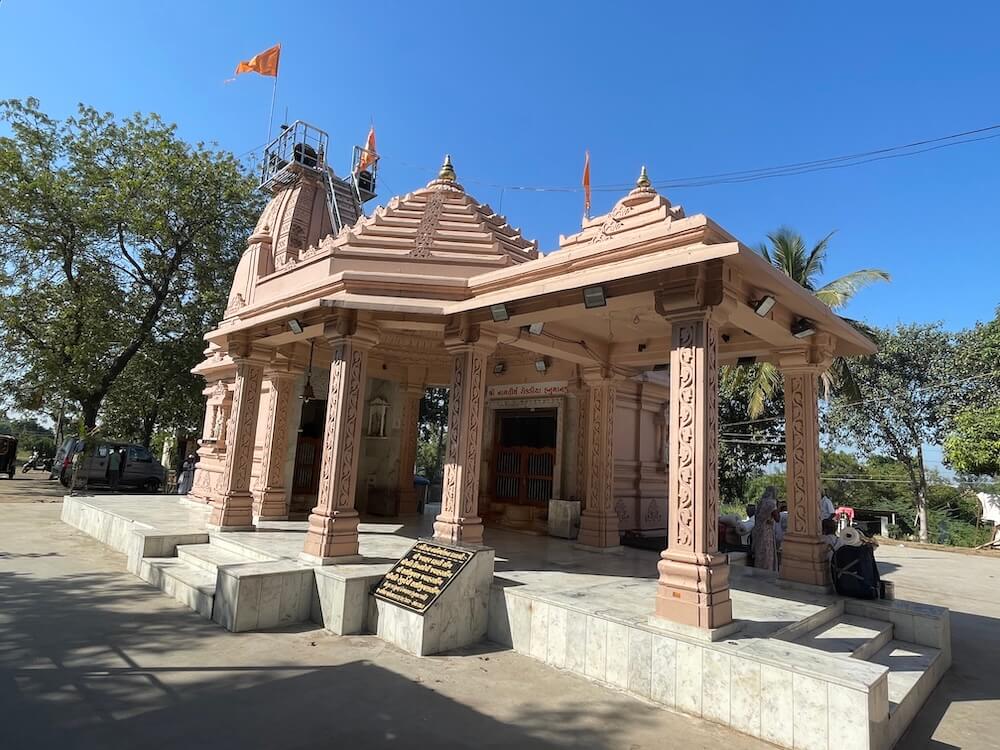 It is constructed in the Nagar style of architecture, built of red sandstone upon a lofty jagati (platform). The structure comprises the Mukhamandap (entrance hall), the open Sabhamandap (assembly hall), the Antaral (vestibule) and the Garbhagriha (sanctum). Over the sanctum rises a shikhar (spire) of the Urushringa style. It is crowned with a two-tiered amalak and a kalash (auspicious finial). Smaller pyramid-shaped spires adorn the Mukhamandap and Sabhamandap. On the outer walls of the Garbhagriha are sculpted devkoshtakas (niches) housing images of Indra, Varuna, Yama and the wealth deity Kubera. The pillars of the Sabhamandap and Mukhamandap bear exquisite carved ornamentation.
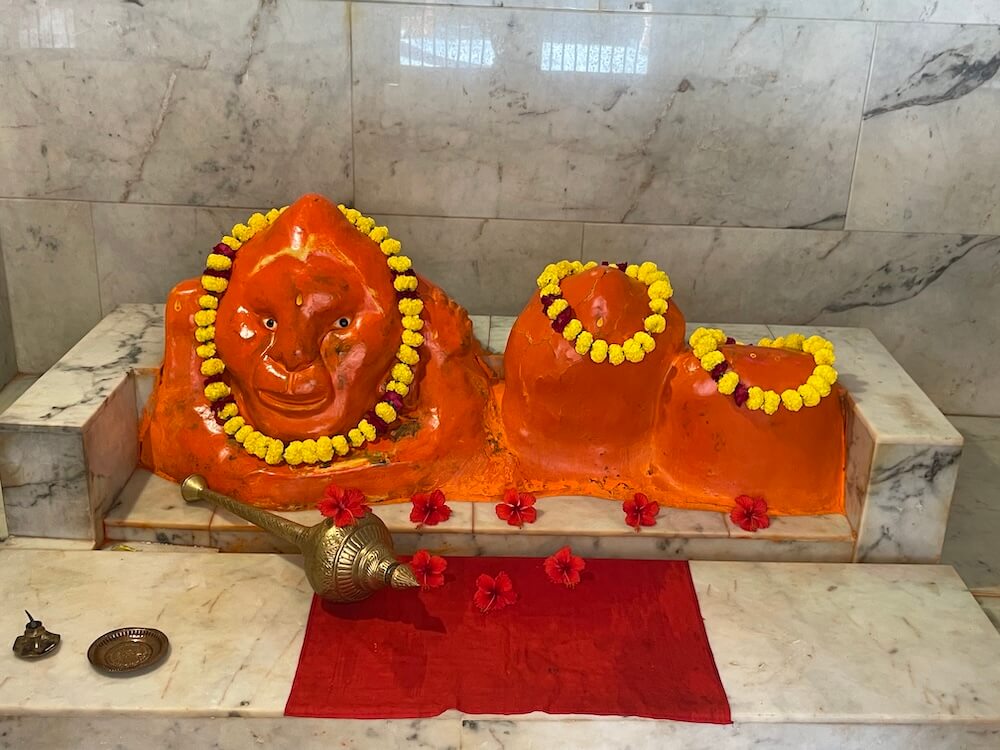
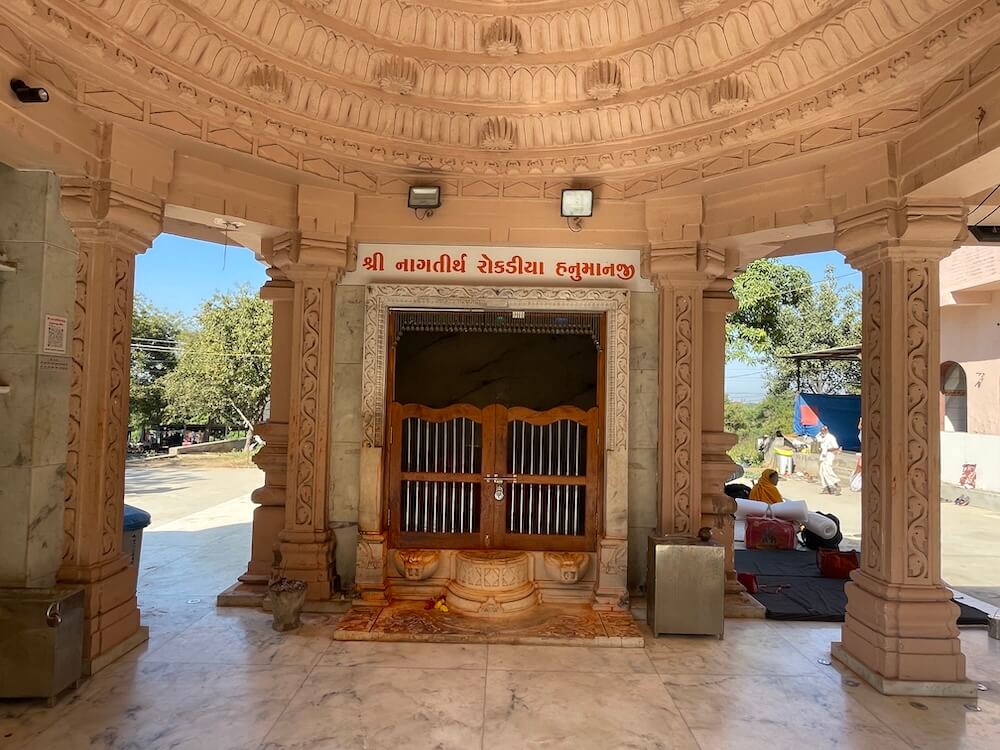
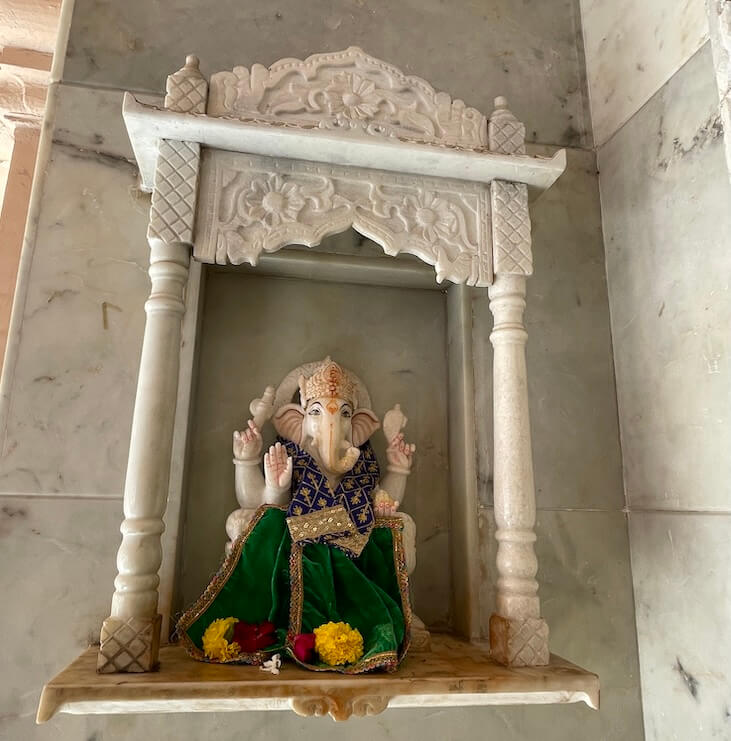
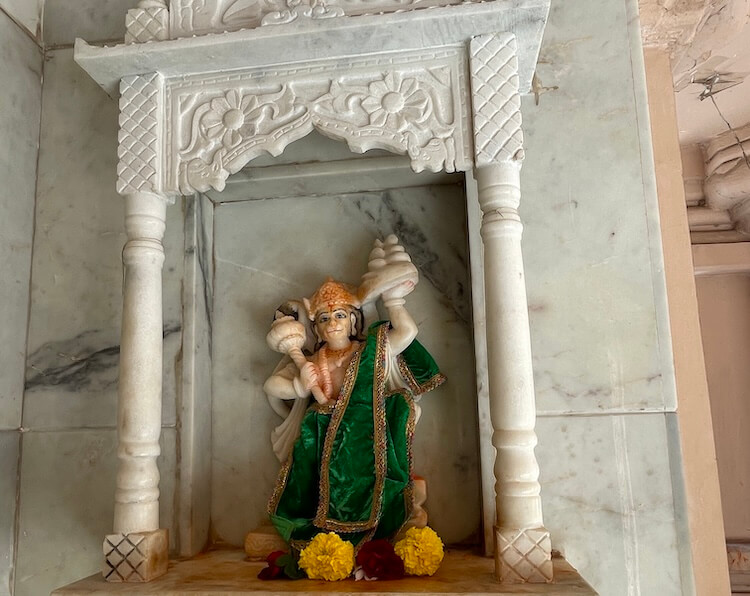
Entering through the Mukhamandap, one directly beholds the Garbhagriha of Shri Ram. 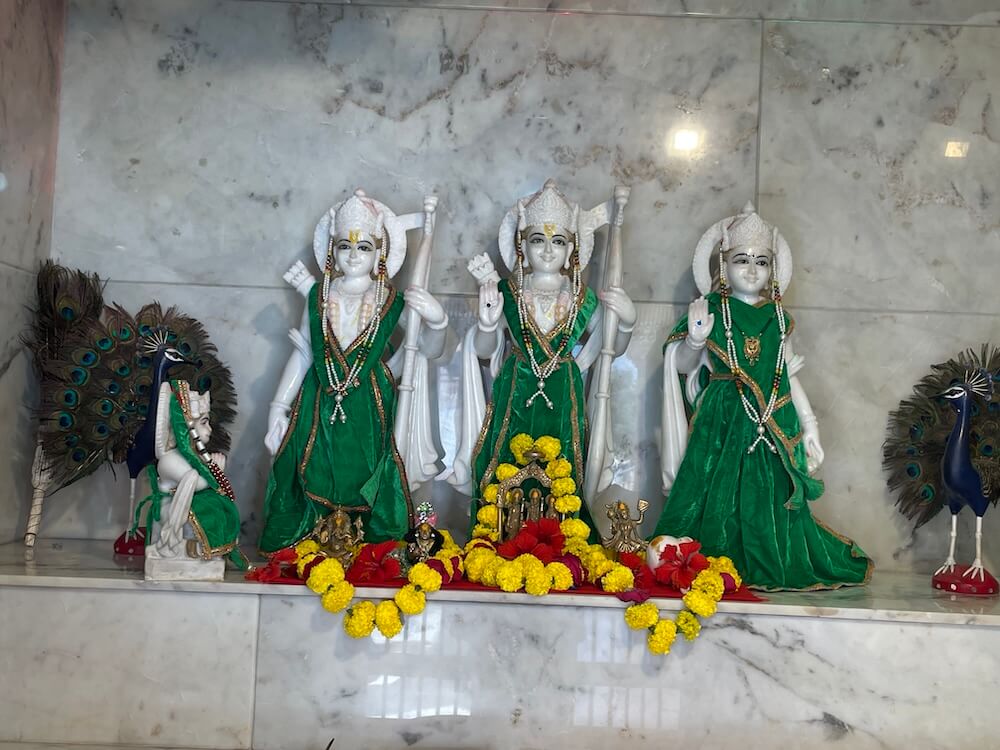 In the Antaral, within a marble shrine to the left is the image of Ganesha, while to the right stands the image of Hanuman. On a raised marble pedestal within are seated finely fashioned marble idols of Shri Ram, Sita, Lakshman and Hanuman, beautifully adorned with garments and ornaments. Before them are placed metal idols of Shri Rama-Lakshmana-Sita, Hanuman and Ganesha. To the left of the Shri Rama sanctum lies the garbhagriha of Nagteerth Hanuman. The sanctum features a doorway crafted from marble, with a large ardhachandrashila (half-moon stone) at its threshold. Kirtimukhas (gargoyle-like decorative faces) flank both sides and the doorframe is embellished with intricate carvings. Within the sanctum, the shilarupi (stone-form) murti of Rokadia Hanuman rests upon a marble seat. These consist of three stones, with the face of Hanuman carved upon the largest stone. A large brass gada (mace) is placed before these stone icons.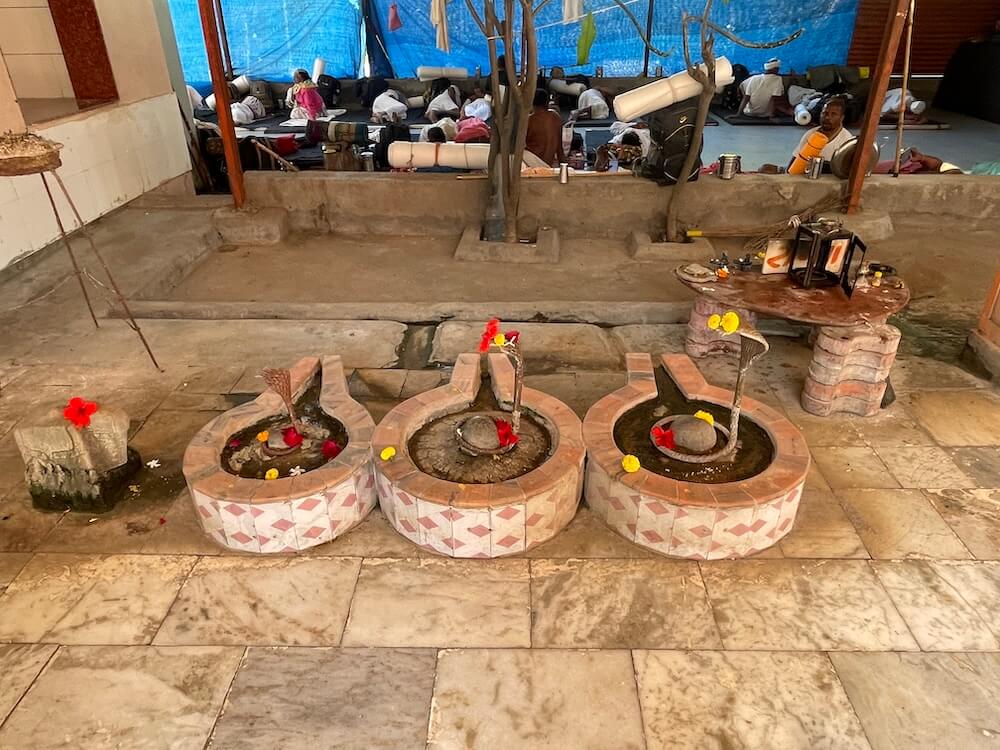
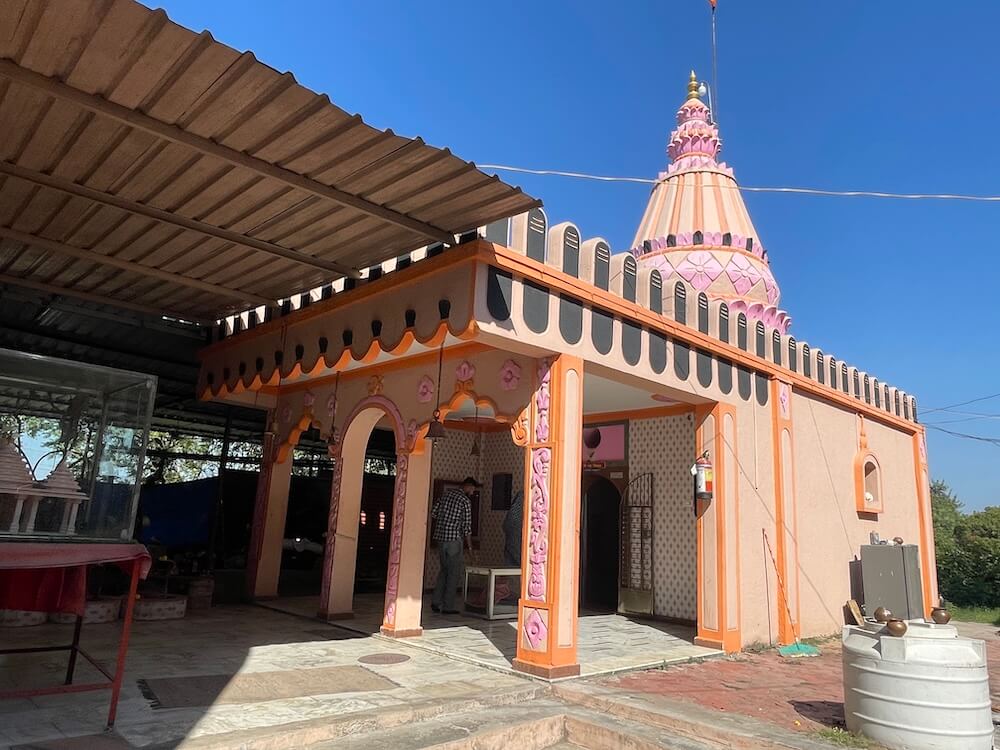
A few steps from the temple, in an open space, three Shivalingas are enshrined in a row, sheltered by a serpent’s hood. Directly opposite stands a Shiva temple. In the assembly hall of this temple, stone murtis of Nandi and the tortoise are housed within a glass case. Icons of Hanuman and Ganesha reside in the niches of the antarala. The garbhagriha contains a cylindrical shivlinga set within a black marble shalunka(base), sheltered by a brass serpent’s hood. This shivlinga has been fashioned from a stone sourced from the bed of the Narmada River. Here, one may receive the darshan (sacred viewing) of Mahadeva in His Chandramauleshwar form. In a niche behind the pindi (sacred stone), Mother Parvati is seated. Another Hanuman temple is located just a few steps away from this shrine.
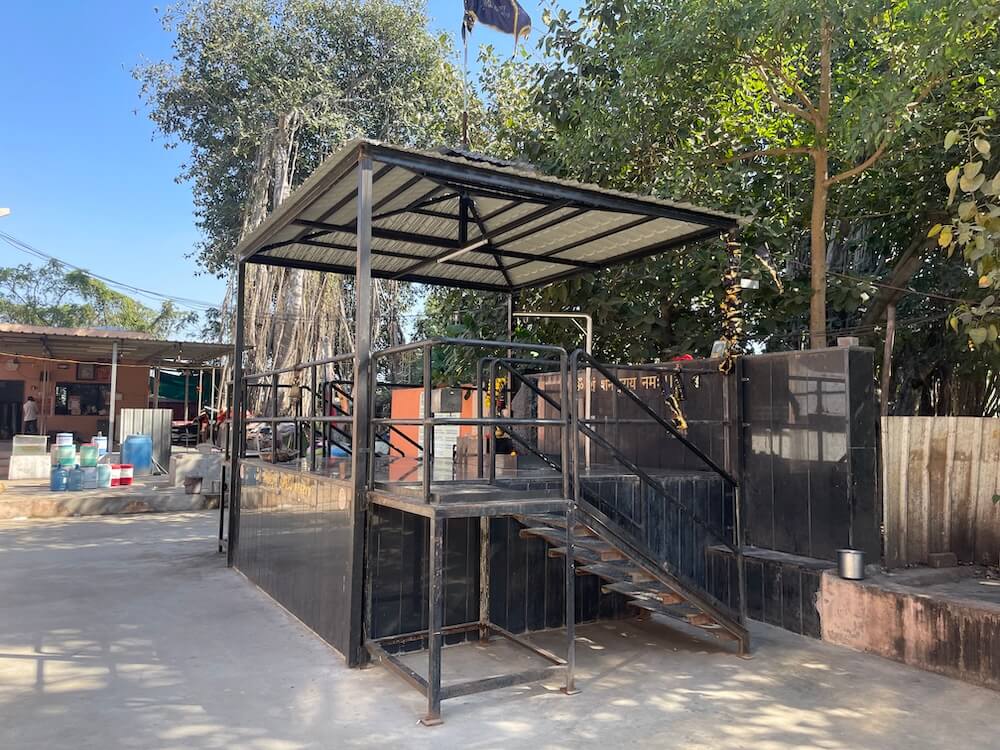 Where there is a temple of Hanuman, it is a religious custom to establish a temple for Shani (Saturn). The theological reasoning provided is that there are many similarities between Shani and Maruti (Hanuman). Both possess the rudransha (an essence of Shiva). They share the same birth day of the week and the same day for worship. Shani is the son of the Sun, while Maruti is the disciple of the Sun. There is also a bond of friendship between these two deities. The legend tells that once, Shani’s vakradrishti (baleful gaze) turned towards Hanuman and he ascended onto Hanuman’s head. To humble the pride of Shani Deva, Bhagwan Hanuman began His divine vanar-cheshta (simian antics). He commenced lifting massive mountains and crashing them upon Shani, who was then positioned on His head.
 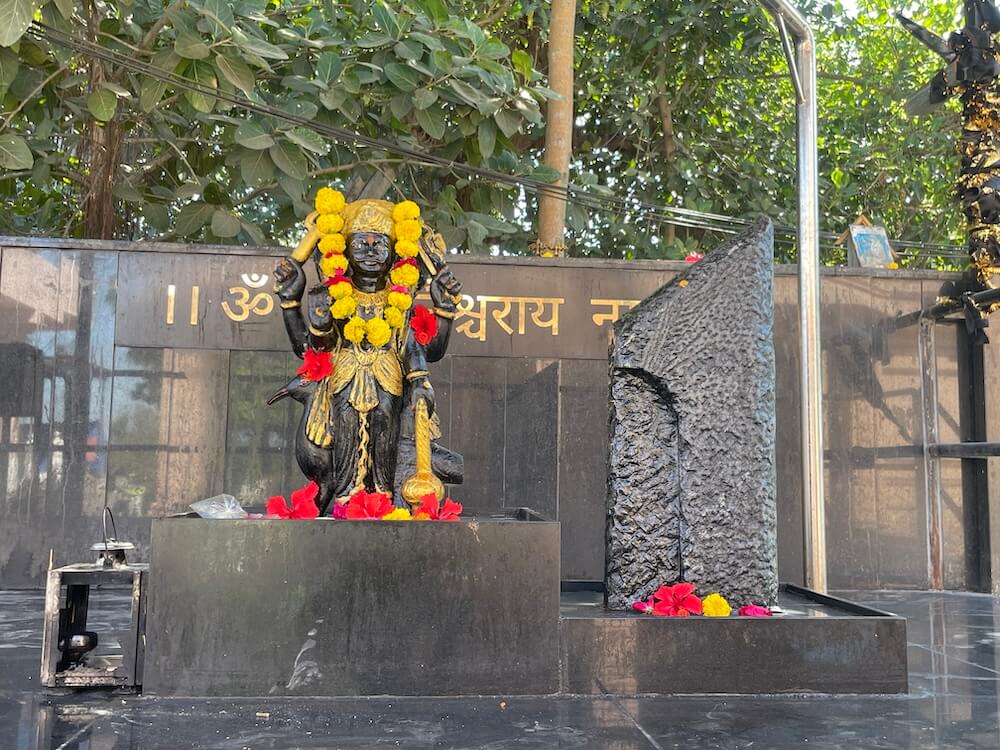 Overwhelmed by this display of divine power, Shani sought the forgiveness of Bhagwan Hanuman. Hanuman released him on the sacred condition that he would henceforth never afflict His devotees or the faithful. At that time, Shani offered his own favourite items—Saturday, oil, black gram and rui (calotropis) leaves—to Hanuman as well. Following this religious tradition, a shrine to Shani has been established in front of the Hanuman temple here. Beneath the shade of an ancient banyan tree facing the temple, a murti and a sacred stone of Shani are consecrated upon a high marble pedestal. The icon of Shani is crafted from black stone and is depicted riding a crow. Three of the deity’s hands hold weapons, while one hand is in the abhayamudra (gesture of fearlessness). Every Saturday, numerous devotees visit to offer oil upon the icon.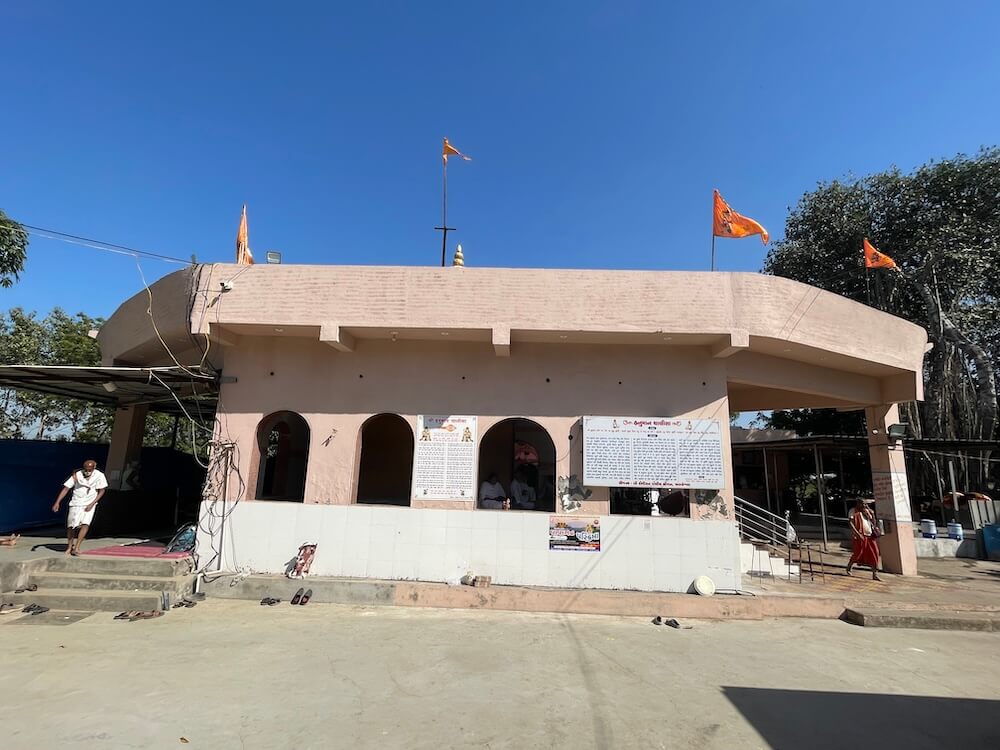
Regular worship and rituals are performed at the temples of Nagteerth Rokadia Hanuman, Shri Rama and Lord Shiva. Hundreds of devotees visit every Tuesday and Saturday for the darshan of Hanuman.
A grand festival is celebrated on the occasion of Hanuman Jayanti, featuring various religious programmes. In the evening, mahabhandara (a grand community feast) is distributed to the devotees.
It is said that during this festival, the precinct blossoms with a crowd exceeding twenty-five thousand devotees Within the temple complex stands the Narmada Parikrama Seva Ashram building. Here, free meals are arranged for Narmada parikramavasis (pilgrims undertaking the circumambulation) between 12:00 pm to 1:30 pm and after 7:30 pm.
Main Features :
- Located 5 km from Ankleshwar, 17 km from Bharuch.
- State transport and private vehicles available from Ankleshwar.
- Private vehicles can reach up to the temple.
- Several options for accommodation and refreshments in the vicinity.
नागतीर्थ रोकड़िया हनुमान मंदिर
मांडवा रोड, नौगामा, ताल। अंकलेश्वर, जिला. भरूच
मंदिरे
Temples
मंदिर
-
कोटेश्वर महादेव मंदिर कदोद, ता. भरुच, जि. भरुच
अधिक माहितीKoteshwar Mahadev Temple Kadod, Tal. Bharuch, Dist. Bharuch
View Detailsकोटेश्वर महादेव मंदिर कडोद, ताल. भरूच, जिला. भरूच
विवरण देखें -
धर्मेश्वर महादेव मंदिर धर्मशाळा-झानोर, ता. भरुच, जि. भरुच
अधिक माहितीDharmeshwar Mahadev Temple Dharmashala-Jhanor, Tal. Bharuch, Dist. Bharuch
View Detailsधर्मेश्वर महादेव मंदिर धर्मशाला-झानोर, ताल. भरूच, जिला. भरूच
विवरण देखें -
साईबाबा मंदिर रामवाटिका सोसायटी, झाडेश्वर, ता./जि. भरुच
अधिक माहितीSai Baba Temple Ramvatika Society, Zadeshwar, Tal./Dist. Bharuch
View Detailsसाईं बाबा मंदिर रामवाटिका सोसायटी, जादेश्वर, ताल./जिला. भरूच
विवरण देखें