
Gopal Mandir
Near Old Rajwada, Indore City, District Indore
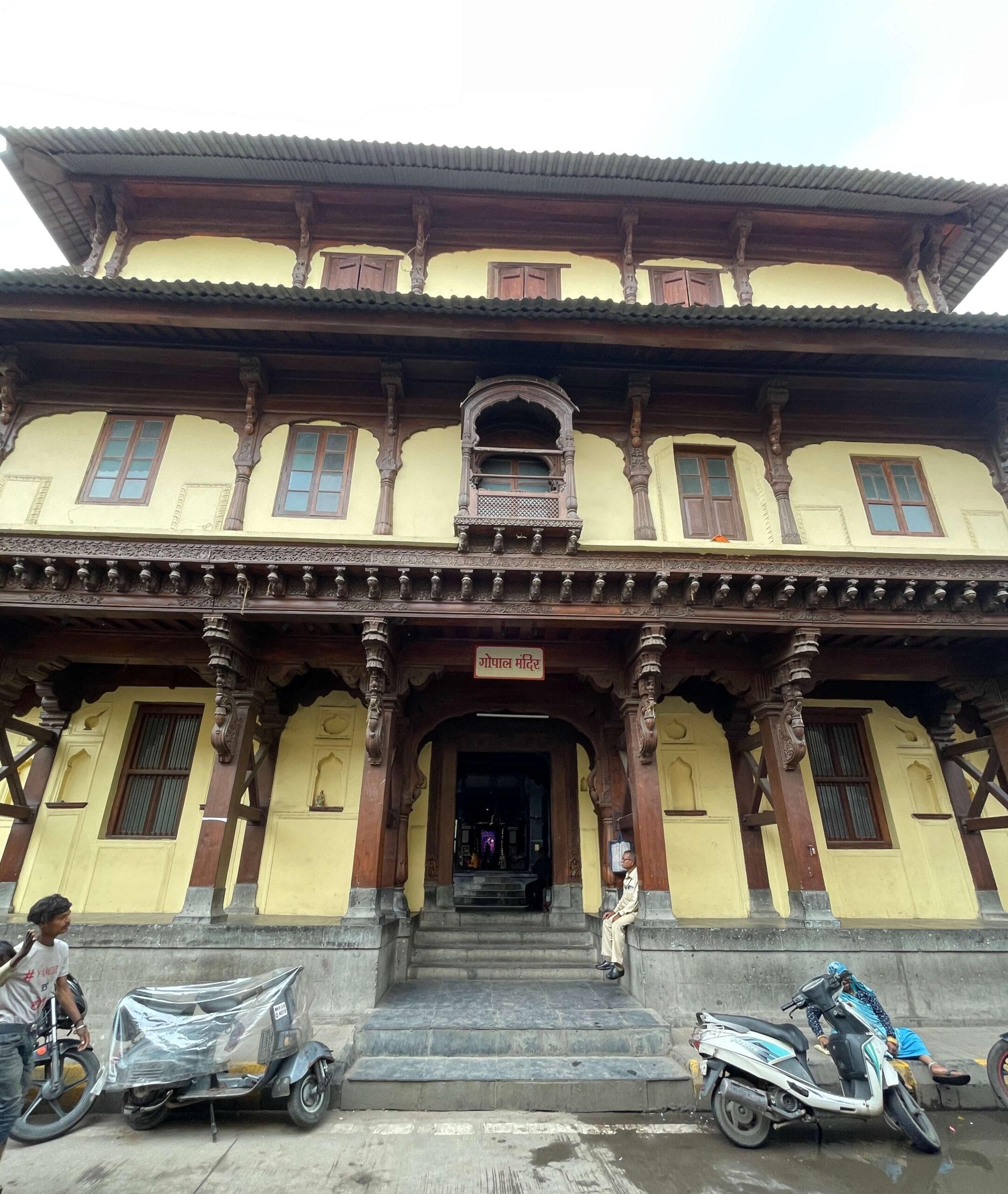
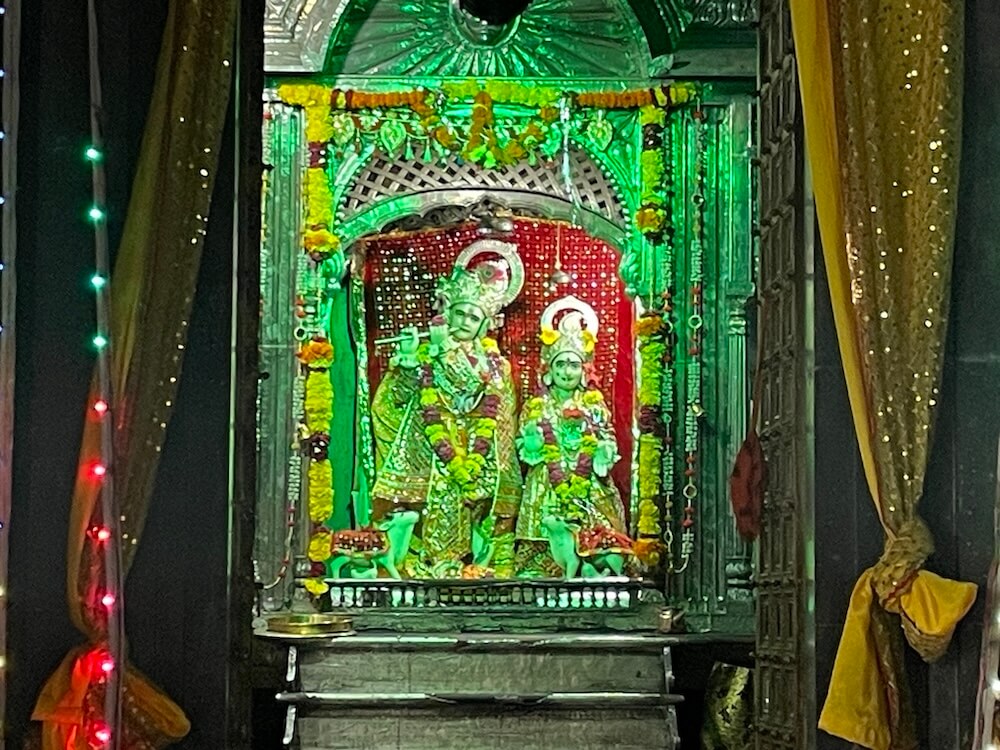 Among the temples established during the reign of the Holkars, the Gopal Mandir is recognized as one of the most significant. Dedicated to Radha and Krishna, it is not only a place of deep devotion for worshippers but also a site of great attraction for tourists visiting the historic city of Indore. With a history of nearly 190 years, this temple stands as an exquisite specimen of Maratha architecture. Kesarbai, also known as Krishnabai Holkar, remembered in history as a skilled administrator after the renowned Ahilyabai Holkar, was deeply religious in temperament. It was she who established this magnificent temple.
The history of this temple, as well as that of Indore city itself, is closely tied to the Holkar royal family. Once a small village known as Indrapur, Indore was at that time a part of the Kampel Mahal during the Mughal period.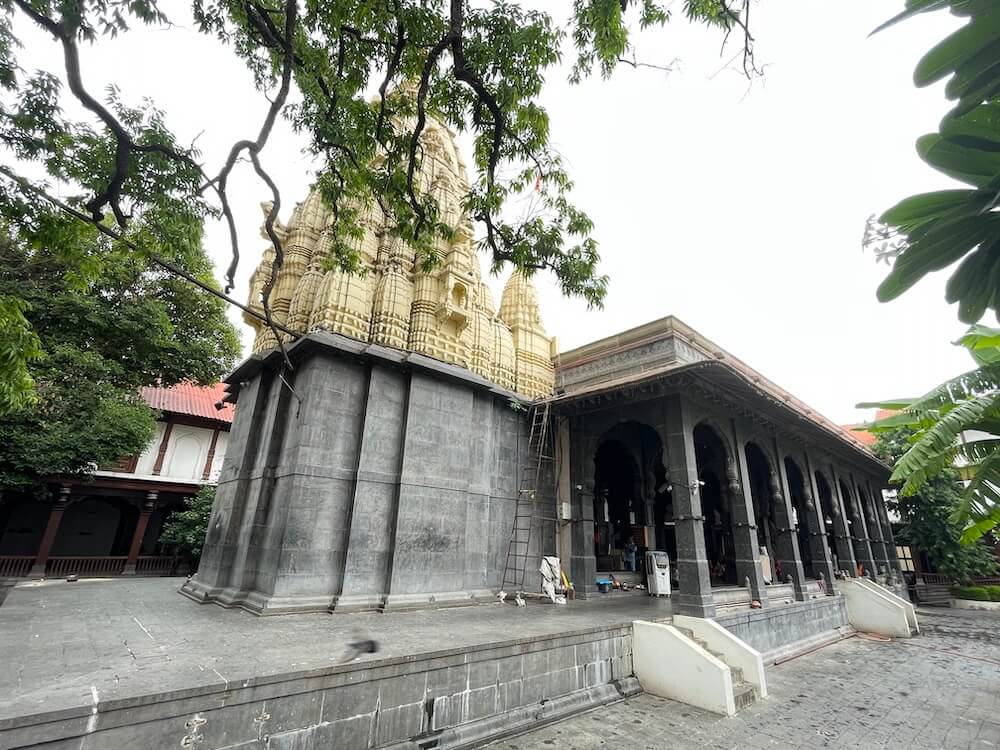 In the early eighteenth century, during the northern campaigns of the Maratha army, their camps were often set up in this village, leading to its growth. Recognizing its military importance, Malharrao Holkar, commander of the Peshwas, established his base here. The village was then named Malharnagari. Later, Malharrao’s daughter-in-law, the revered Ahilyabai Holkar, elevated Indore to the status of a district headquarters.
After Ahilyabai, her commander Tukoji Rao Holkar took charge of the state. In the unstable times that followed, it was Yashwantrao Holkar (the first) who preserved and safeguarded the Holkar kingdom, remembered as the last ‘Swatantrya Veer’ of the Maratha era and often honoured as a second Shivaji. 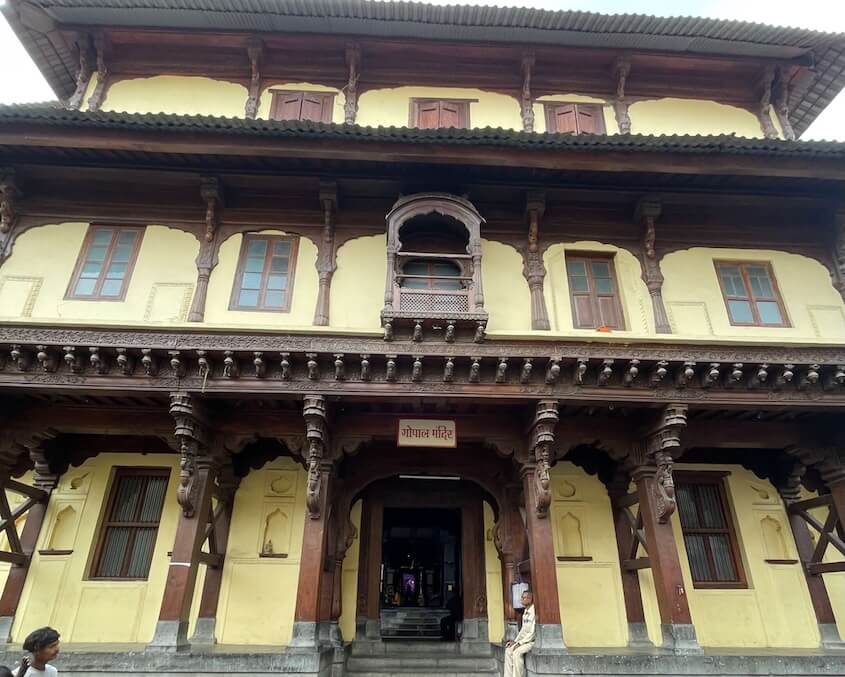 Krishnabai Holkar, also known as Kesarbai, was his consort. She was a devout devotee of Lord Krishna. After Yashwantrao’s death, his son Malharrao Holkar II ascended the throne. Being young, the regency fell into the hands of Krishnabai, who oversaw state affairs. It was during this period, in 1833, that she built this temple in honour of her chosen deity.
At that time, the construction cost was about 80,000 rupees. It is said that once the temple was completed, its strength was tested by leading elephants onto its roof and making them walk there for a considerable period. A ramp of earth was raised up to the roof to allow the elephants to climb. Only after this rigorous test was the temple opened to devotees. 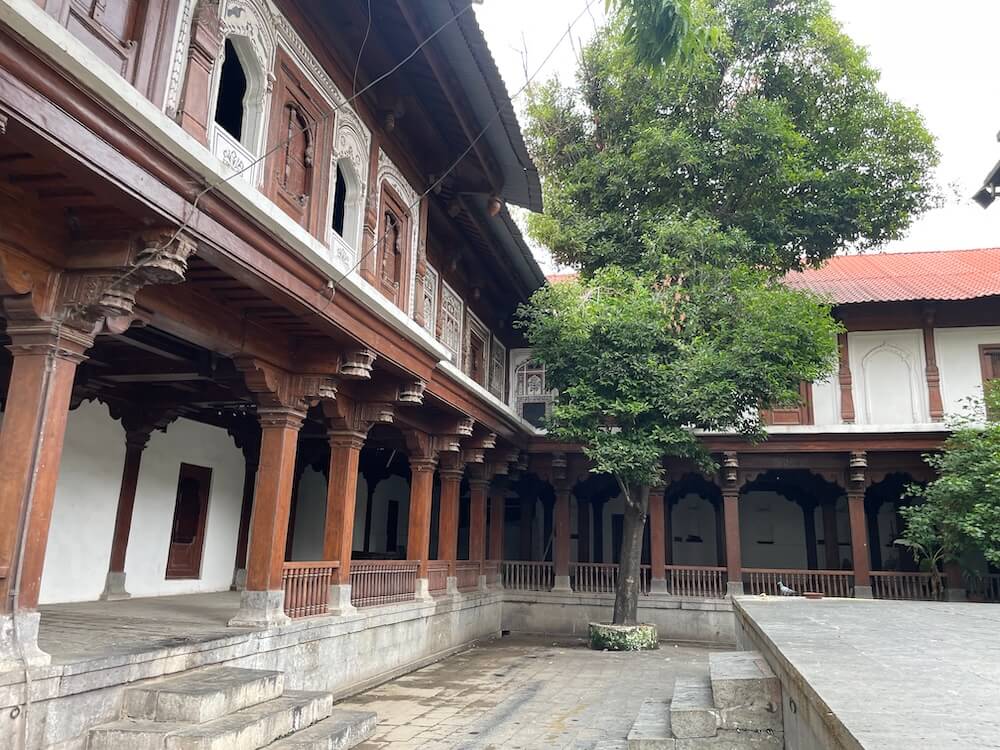 In recent times, under the Indore Smart City project, the temple underwent restoration in 2022, with about 20 crores spent on the work. Great care was taken to preserve its ancient authenticity. The roof and walls were repaired using a mixture of lime, brick powder, jaggery and fenugreek seeds; while artisans from Rajasthan, Punjab and Saharanpur were brought in for the intricate woodwork on the temple’s wooden pillars. The restoration took five years to complete.
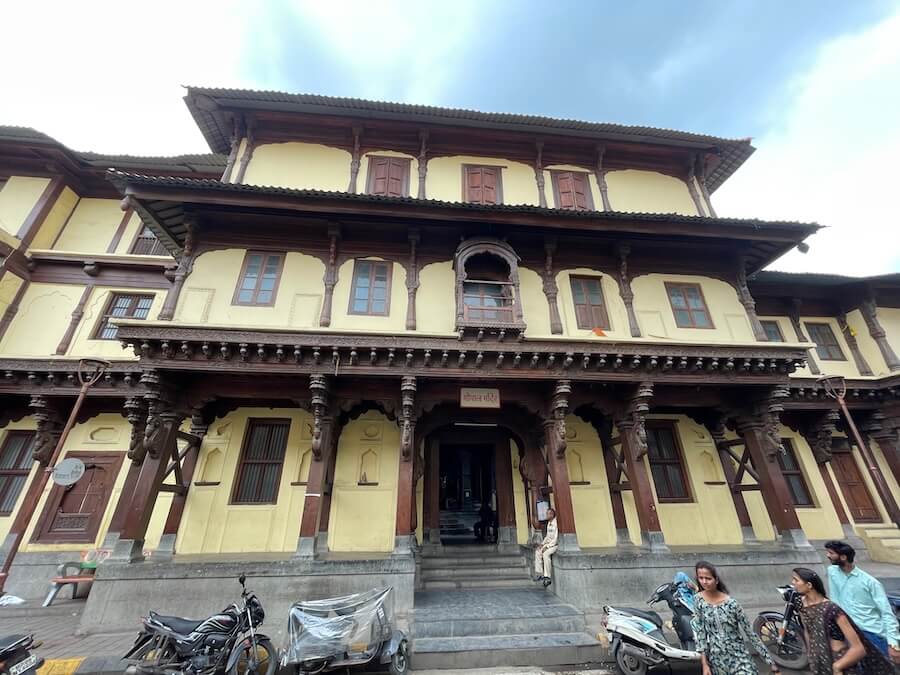
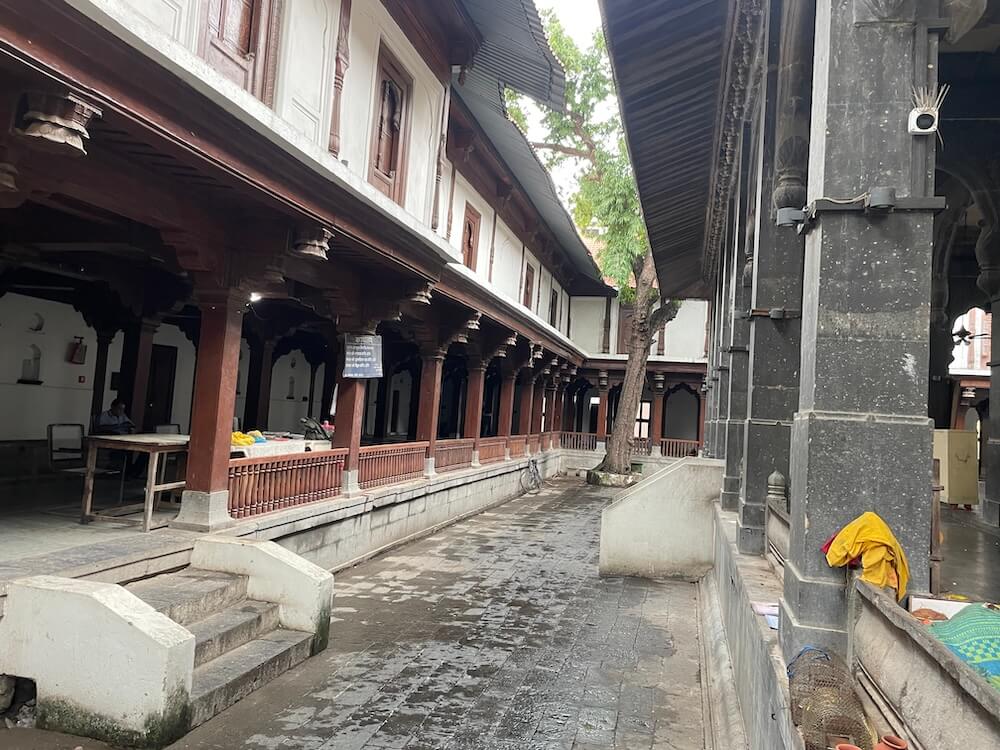
The temple, spread across about one acre near the Old Rajwada, has been restored to glory. Its facade resembles a grand three-storied Peshwa mansion. A wooden entrance with stone steps leads into the temple courtyard. Facing the entrance is the three-storied building, while the other three sides are flanked by two-storied structures. Teak pillars with smooth square shafts, ornate arches between them. Carved wooden railings, wooden windows and stone-paved 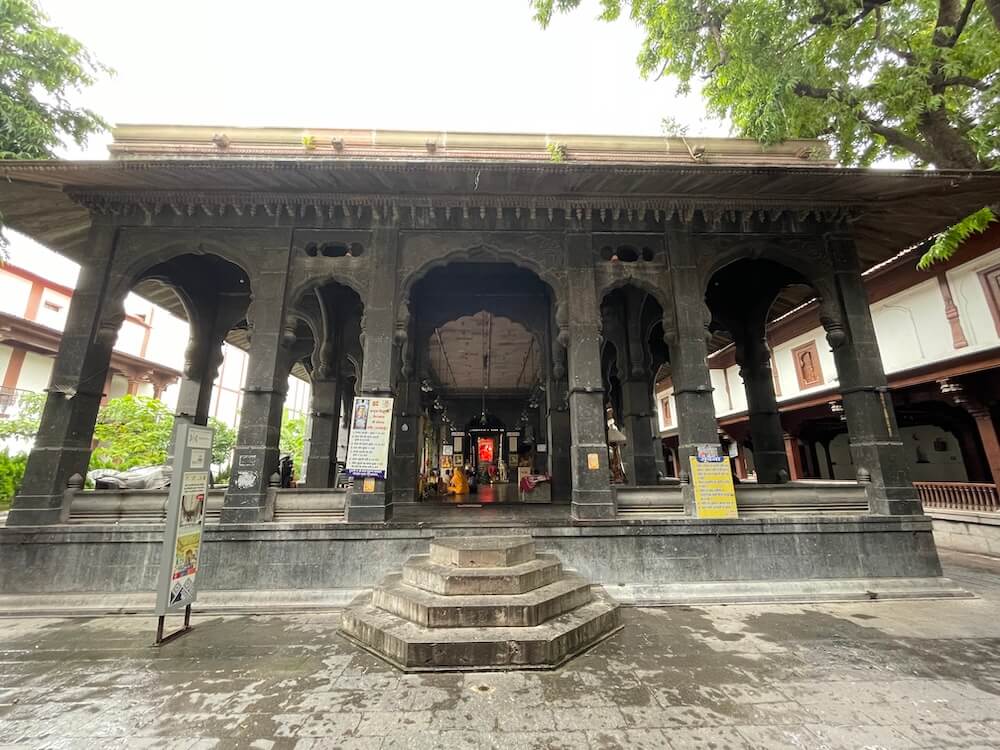 corridors all add to the grandeur. In the spacious central courtyard stands the Gopal Mandir itself.
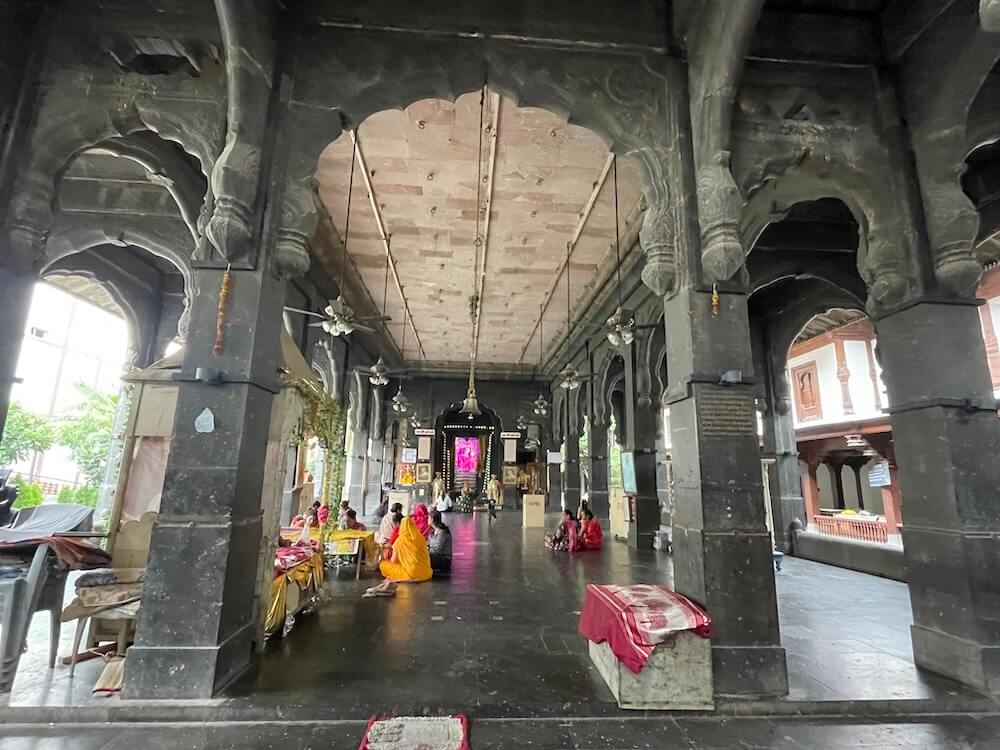
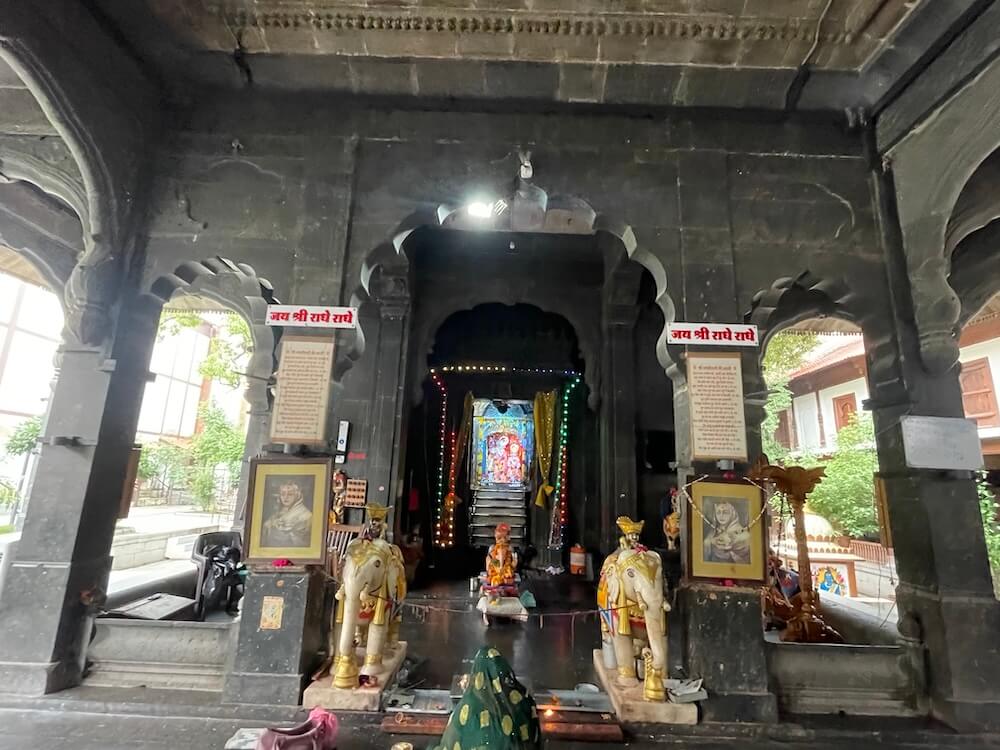
Built entirely of stone in the Maratha architectural style, the temple rises upon a tall platform. Its layout comprises a spacious and open sabha Mandap (assembly hall), antarala (an antechamber) and the garbhagriha (sanctum). The exterior walls of the sanctum are plain, crowned by a lofty tower in the urushringa style, influenced by civic architecture. The temple is approached by four distinct pentagonal steps. Inside the assembly hall, multiple square pillars connected with arched beams, a flat stone ceiling and stone paving create an impression of openness and grandeur. In the sub-assembly hall, near the front pillars, are marble statues of elephants, with gatekeepers clad in distinctive turbans and holding maces seated atop them.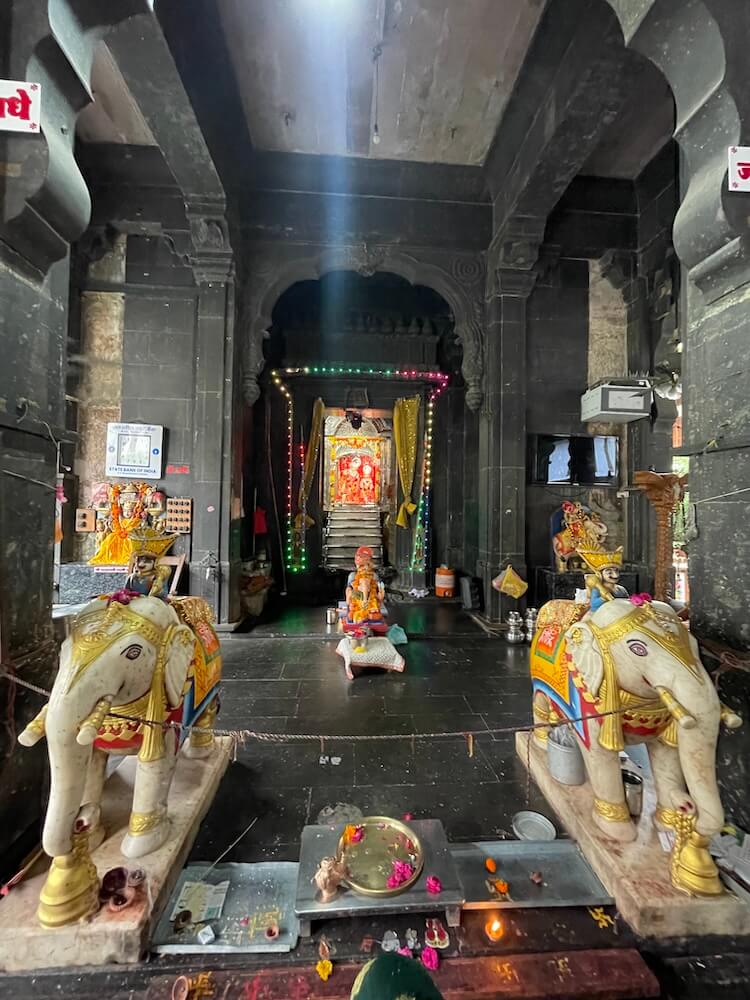 On these pillars hang portraits of the revered Ahilyabai Holkar.
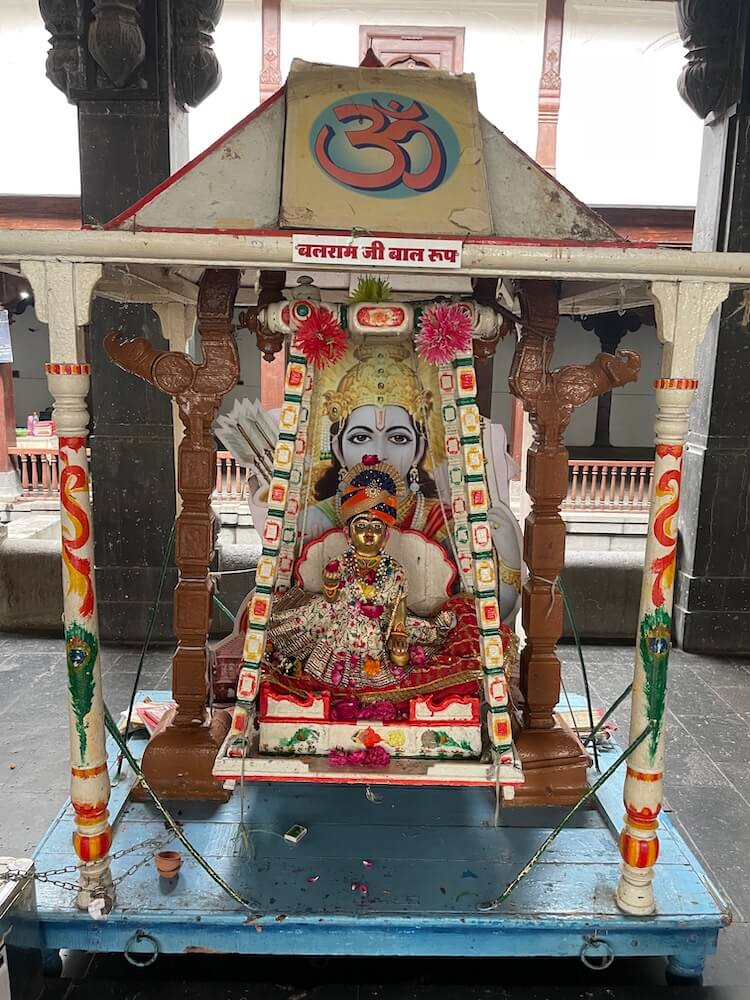
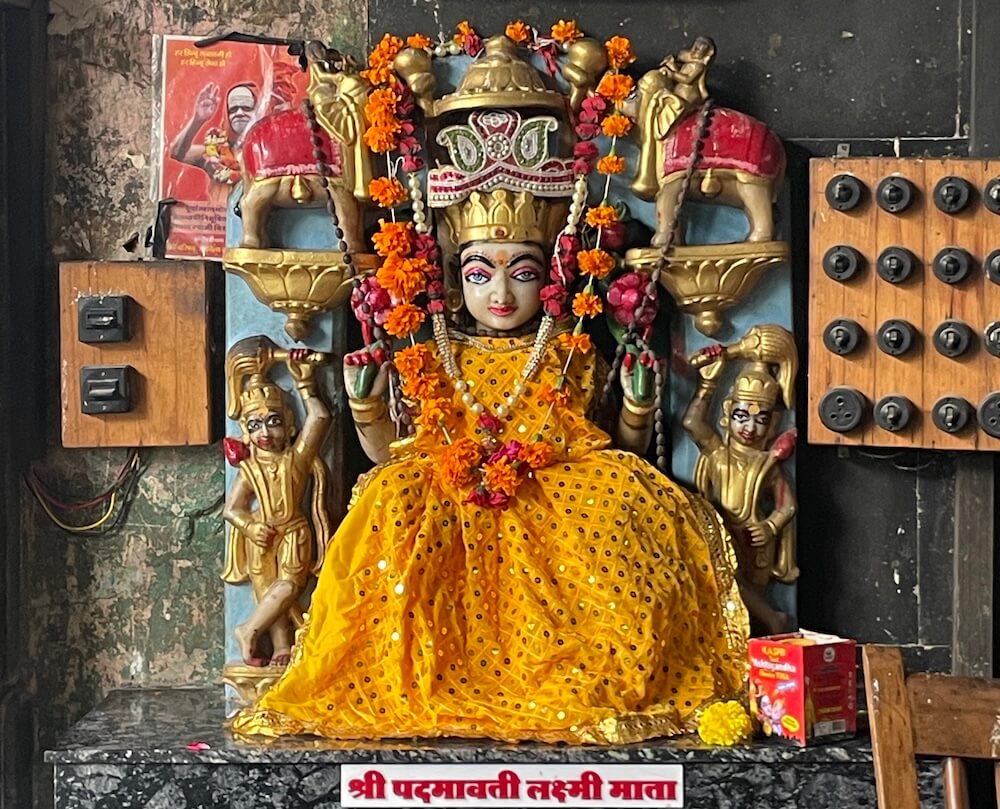
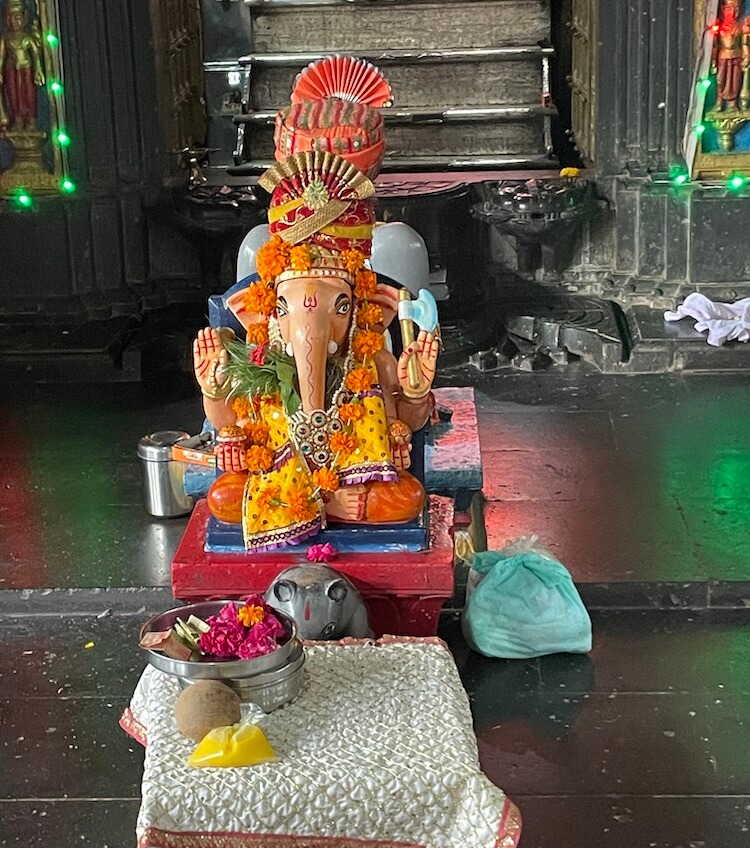
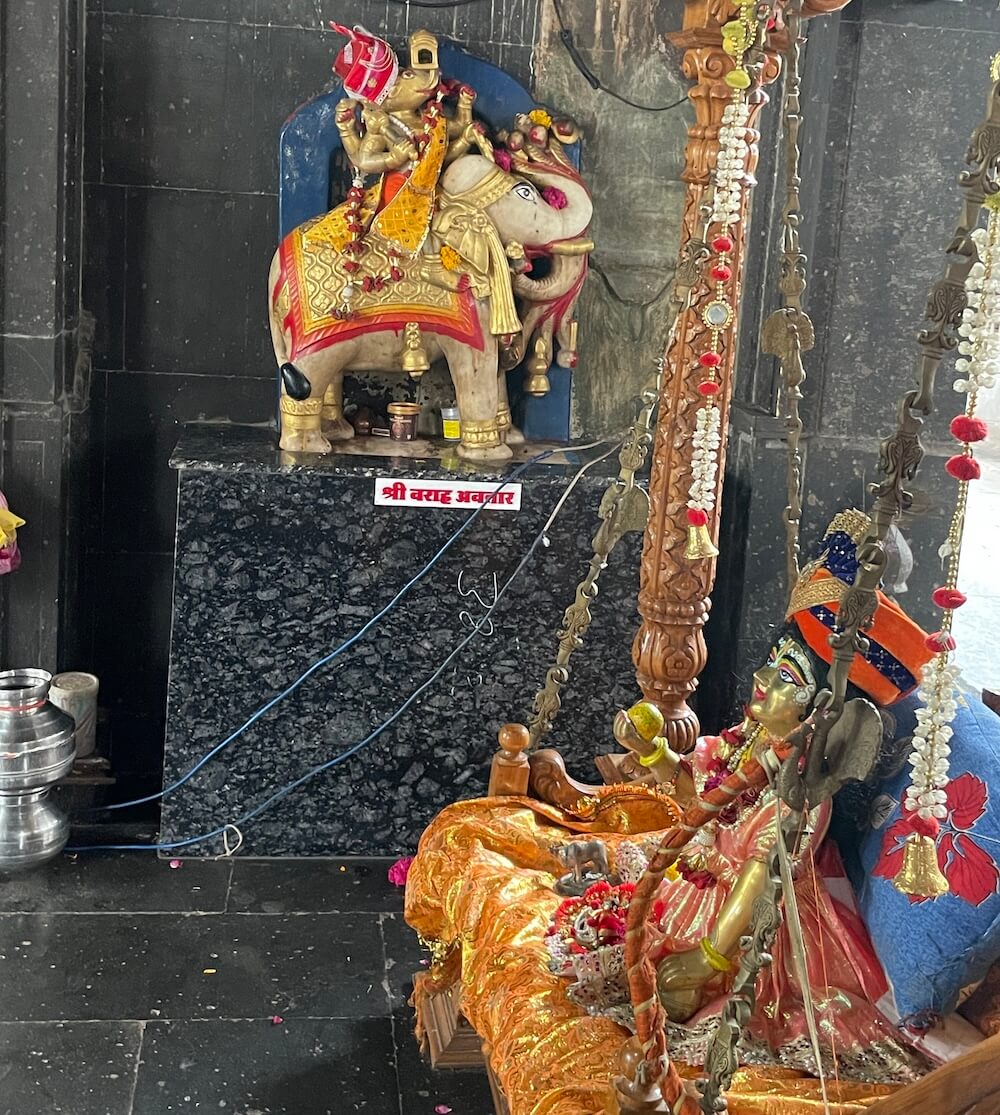
At the entrance of the antechamber stands an idol of Lord Ganesha. On the left of the antechamber’s facade wall is the idol of Goddess Padmavati Lakshmi, adorned in opulent garments, jewelry and a crown, with a canopy above her head and flowers in both hands. Her backdrop depicts attendants holding fans below and elephants above. On the right side is the idol of Lord Vishnu in his Varaha incarnation, shown seated upon an elephant. Facing this is a beautifully carved wooden cradle with a brass idol of Bal (child) Krishna resting upon it. The sanctum itself has an ornate doorway made of finely cut stone, with five-branch pillars bearing carvings of doorkeepers. Inside, upon a high platform with six wooden steps, rests the finely decorated teak shrine. Within it are marble idols of Radha and Krishna. Adorned with garments and ornaments, crowned with resplendent headpieces, the idols radiate divinity. Krishna is depicted as Bansidhar, playing the flute; while Radha holds one hand in blessing and the other in granting gesture. At their feet are placed two small idols of the sacred cow, Gomata.
This temple, the spiritual center of the Holkar royal family, remains open for devotees from 7 in the morning until 9 at night. Every day, rituals are performed with devotion : the morning Mangala Aarti at 7:30, followed by Balbhog and Shringar Aarti at 9:30 and satsang and stories at 10:30. At 11, the Rajbhog ritual is offered, followed by the evening Sandhya Aarti at 7:30 and the Shayan Aarti at 8:45 at night. The grandest festival celebrated here is Krishna Janmashtami, when the temple is decorated throughout and thousands of devotees gather to celebrate with great fervor. The administration of the temple is overseen by the Indore Municipal Corporation.
Useful Information –
- Located about 2 km from Indore Bus Stand and Railway Station and about 6.5 km from the Airport
- Regular bus and train service to Indore from many cities in the state
- Private vehicles can reach directly up to the temple
- Contact : Pt. Balamukund Parashar, Priest, Mobile: 9981208860
- Temple Location : https://maps.app.goo.gl/Tobak4fQBaswPxb39
मंदिरे
Temples
मंदिर
-
गुरु दत्त मंदिर कृष्णपुरा, इंदूर शहर, जिल्हा इंदूर
अधिक माहितीGuru Datt Mandir Krishnapura, Indore City, District Indore
View Detailsविवरण देखें -
शनी नवग्रह मंदिर बाई ग्राम, तहसील इंदूर, जिल्हा इंदूर
अधिक माहितीShani Navagraha Mandir Bai Gram, Tehsil Indore, District Indore
View Detailsविवरण देखें -
गुटकेश्वर महादेव नेमावर रोड, देवगुराडिया, इंदूर, जिल्हा इंदूर
अधिक माहितीGutkeshwar Mahadev Nemawar Road, Devguradia, Indore, District Indore
View Detailsविवरण देखें