
अन्नपूर्णा मंदिर,
अन्नपूर्णा रोड, क्रांती किरपलानी नगर, इंदूर, जिल्हा इंदूर
Annapurna Temple
Annapurna Road, Kranti Kirplani Nagar, Indore, District Indore
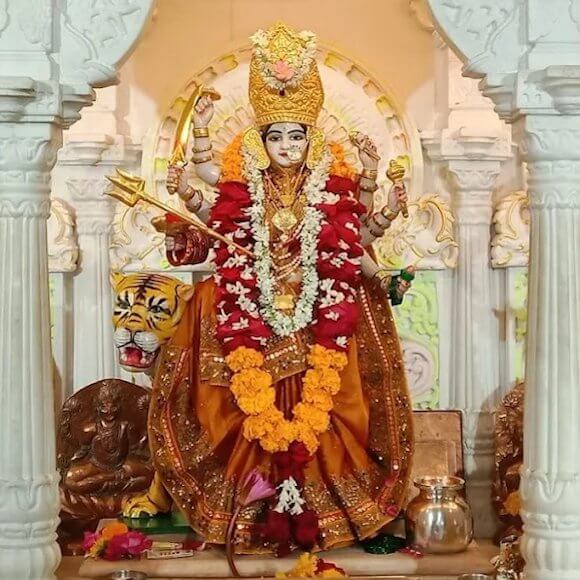 Annapurna Devi, regarded as the goddess who bestows food, wealth and familial happiness upon her devotees, is considered an incarnation of Gauri. In the Markandeya Purana Goddess Parvati is addressed as Annapurna. Also known as Annada, Annapurneshwari and Shakambhari, she is worshipped as the nourisher of the entire creation. Temples dedicated to her various forms exist across India, amongst which the Annapurna Temple in Indore holds a special place of reverence. This temple, considered a spiritual abode by countless devotees, is also a prominent tourist attraction of the city.
According to a well-known legend, once a debate arose between Lord Shiva and Parvati regarding the supremacy of Prakruti (nature) and the superiority of the Purush (male principle). 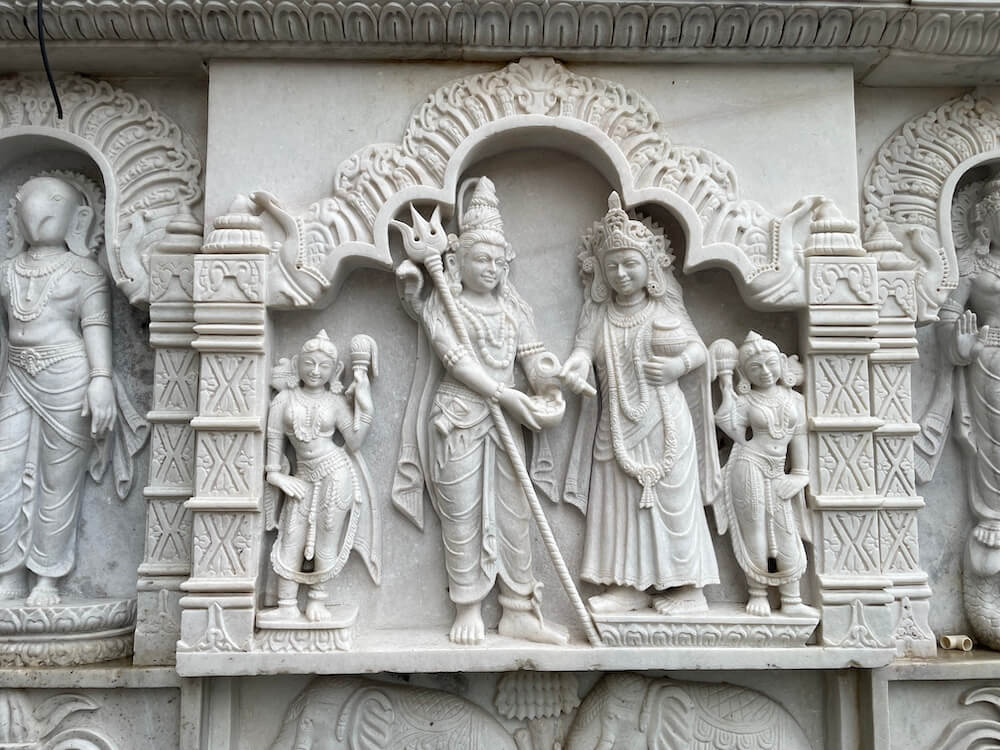 Shiva declared that worldly existence was an illusion and that everything, including food, was nothing but maya. As Parvati was the goddess of food grains, these words enraged her. She challenged Shiva, declaring that if she was an illusion, then she would withdraw herself and see how the world could sustain itself without her. Saying this, Parvati vanished. Her disappearance created chaos in the universe; time stood still, seasons halted and famine spread across the earth. To feed his followers, Lord Shiva began begging for alms, but not a grain of food could be found anywhere. It was then that Shiva heard of a woman in Kashi who was distributing food freely to the people. On reaching Kashi, he discovered that the woman was none other than Parvati herself, seated on a throne and offering food to both gods and humans. From that time onward, she came to be regarded as the presiding deity of Varanasi and was called the Queen of Kashi. Even today, a famous Annapurna temple stands in Varanasi, where Shiva is believed to come as a beggar to receive alms from the goddess.
 The history of Indore’s Annapurna Temple dates back to 20th century. In 1956, Swami Prabhananda Giri, a devout follower of Annapurna Mata, arrived here and laid the foundation of the temple in 1957. After nearly two years of construction, the goddess’s idol was formally consecrated on 21 February 1959. Over the years, the temple has undergone multiple renovations. In 1975, the grand entrance gate was constructed and in February 2023, the temple was magnificently restored at a cost of approximately 20 crore rupees.
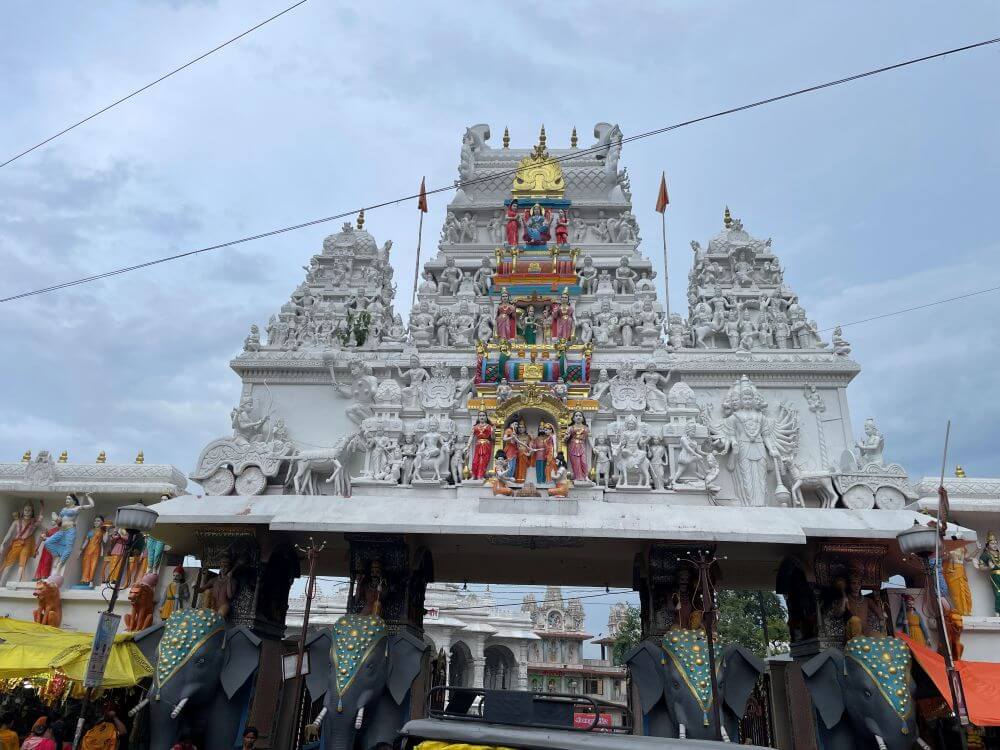
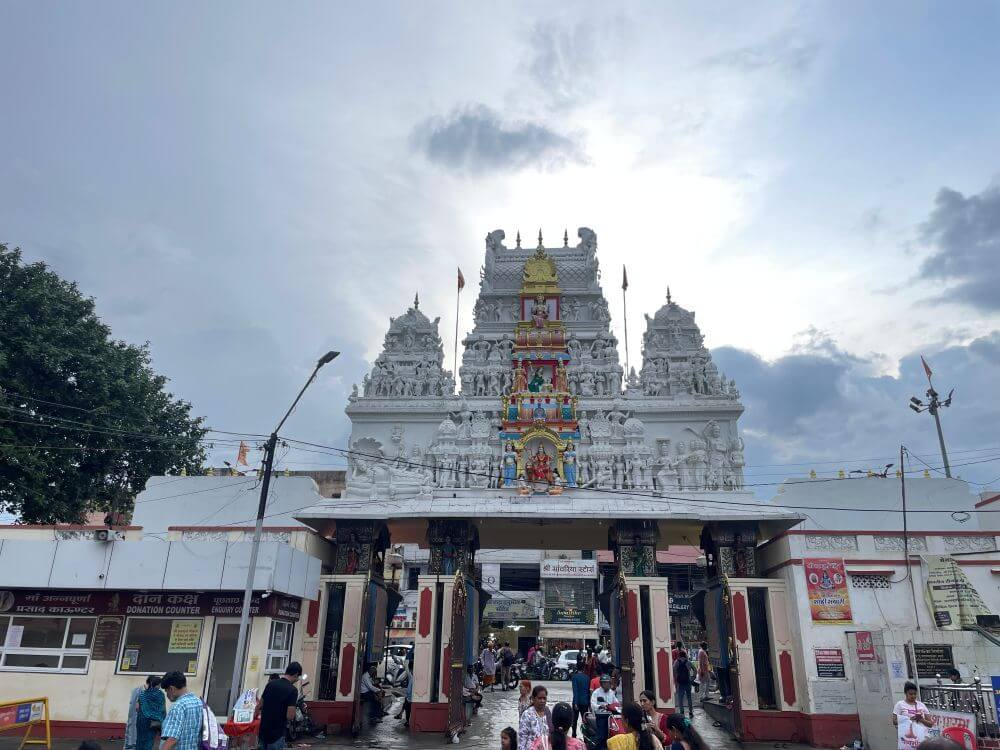
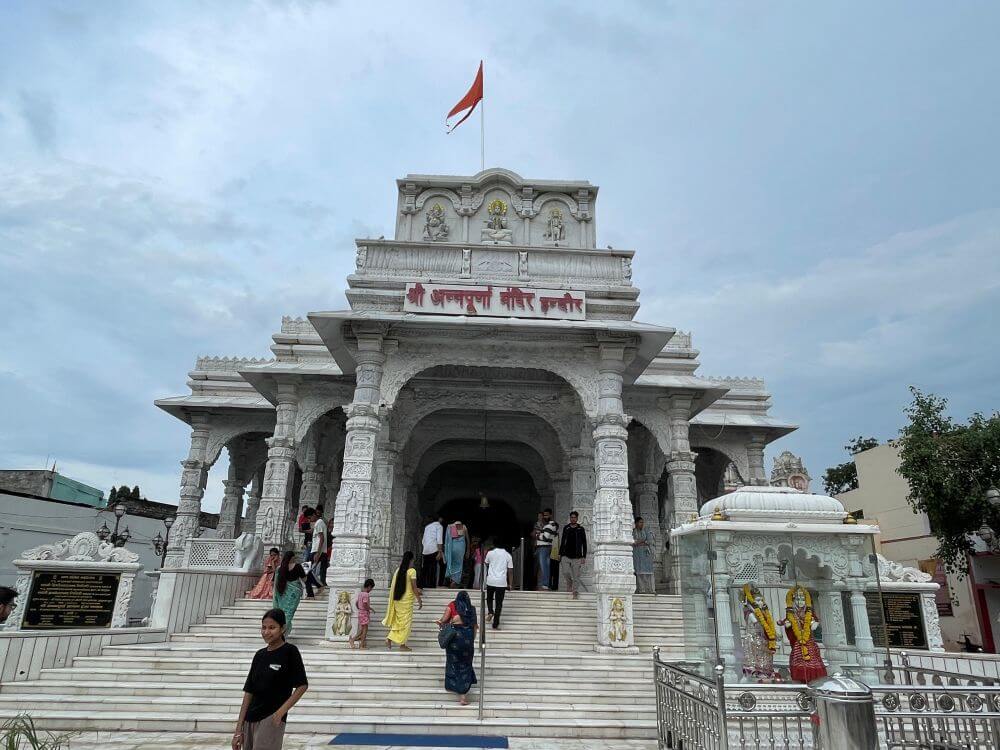
 Spread over nearly two acres in a bustling part of the city, the temple complex features a majestic gateway. Resting on the backs of four colossal elephants, this gateway is modeled after the gopuram of the Meenakshi Temple of Madurai in South India. The gopuram is adorned with intricate carvings depicting deities and mythological scenes. Facing it stands the temple of Annapurna Devi.
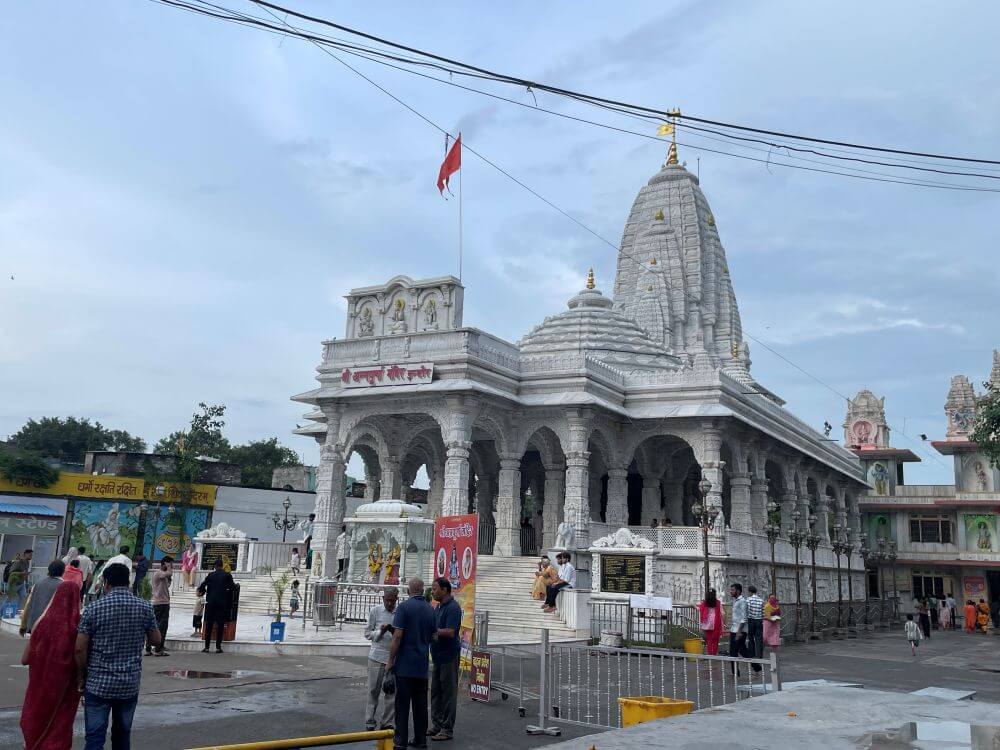
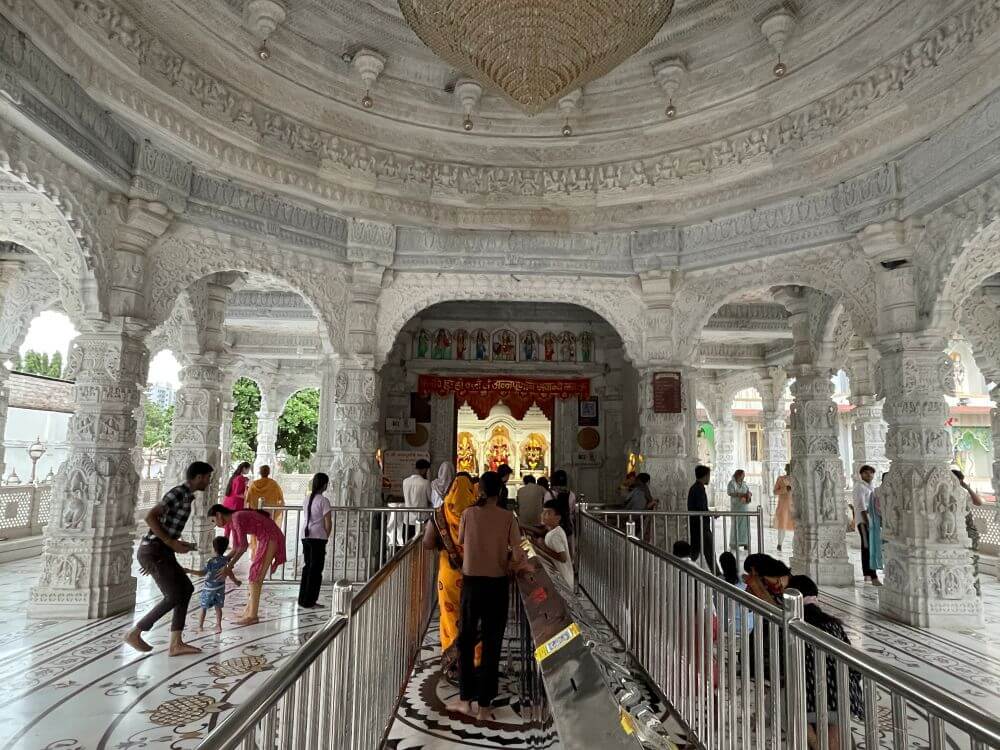
Built in a blend of Indo-Aryan and Dravidian architectural styles, the temple is made of Makrana marble from Rajasthan. It is believed that the same artisans who constructed the Annapurna Temple at Trimbakeshwar in Maharashtra also built this shrine. Elevated on a high plinth, the temple covers 6,600 square feet and rises nearly 100 feet. The structure consists of a mukha mandapa, a sabha mandapa and a sanctum sanctorum. The sabha mandapa has a dome-shaped roof, while the sanctum is crowned by a urushringa-style spire that soars to 81 feet. Thirteen marble steps lead to the temple, beside which stand idols of 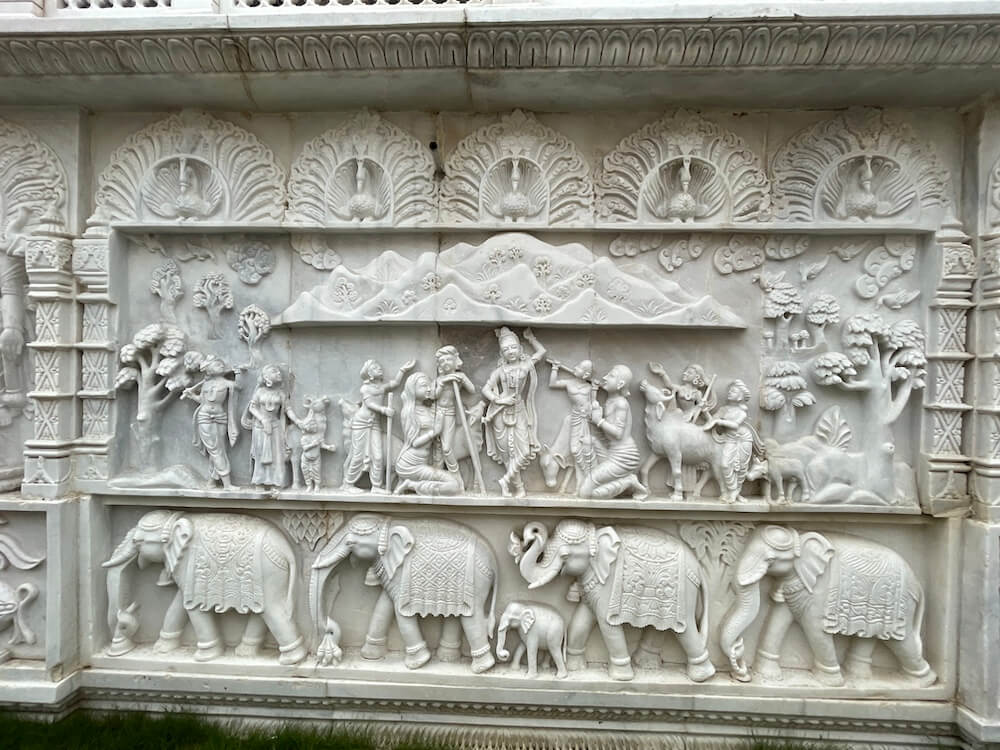 Shiva and Annapurna in a marble pavilion, depicting the goddess offering alms to Shiva.
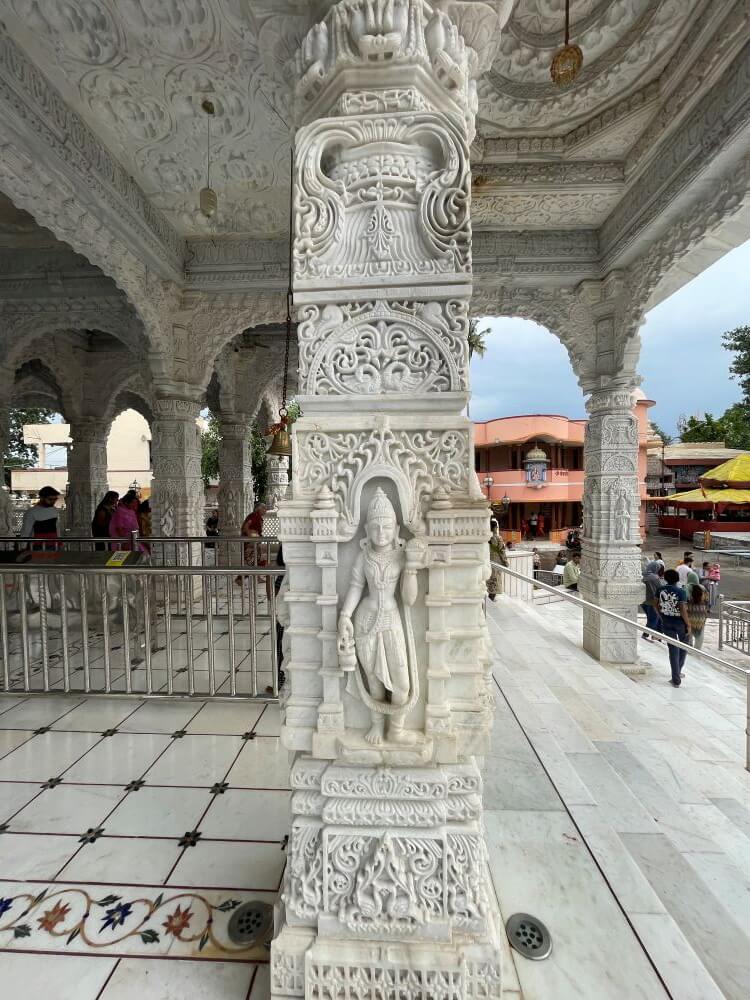
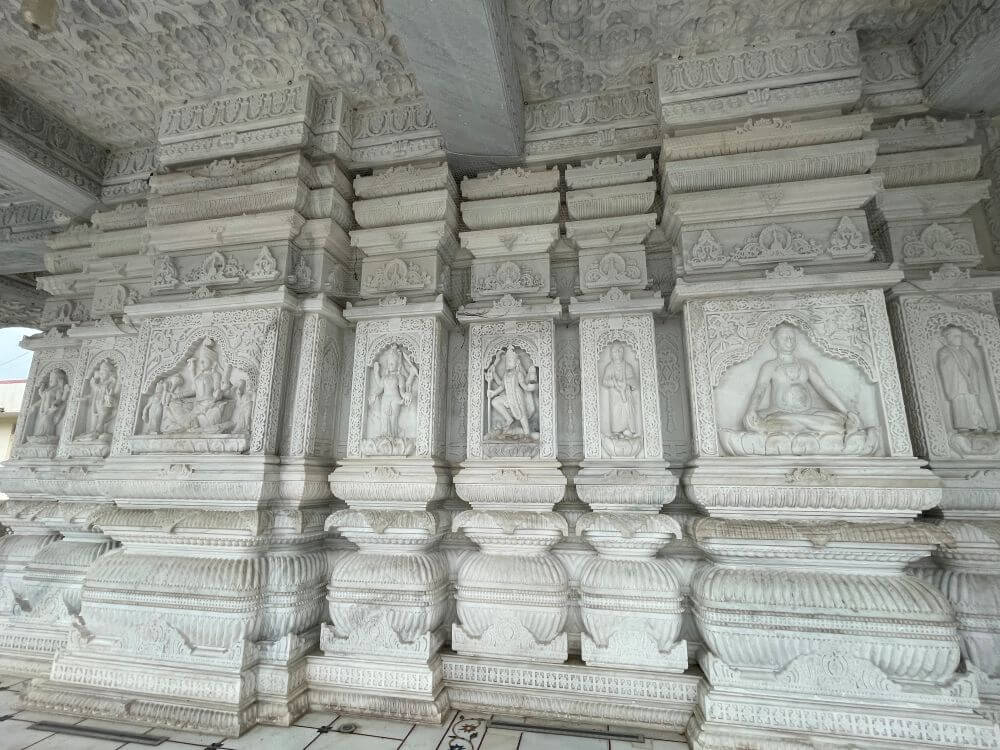
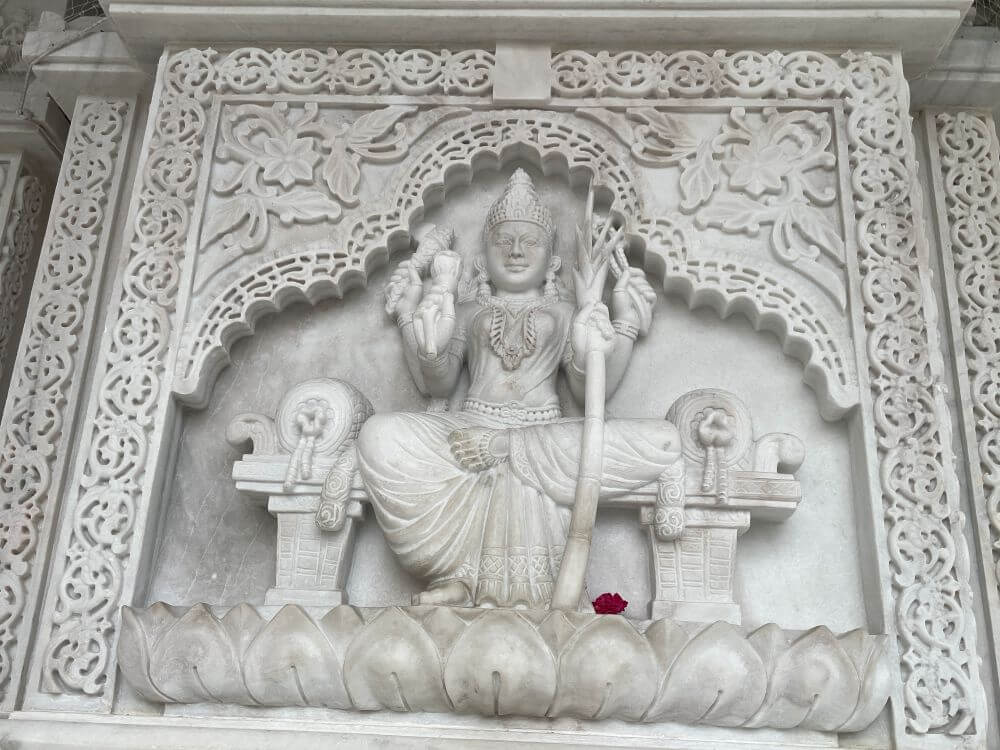
The temple’s pillars, arches, ceilings, foundation and spires are richly decorated with intricate carvings of gods, goddesses, yakshas and celestial maidens. Among the figures carved here are idols of Ganesha with Riddhi-Siddhi, Shubh-Labh, Ashtalakshmi, the ten Mahavidyas and the 27 nakshatras. The lowest level of the temple’s foundation is adorned with sculptures of elephants symbolizing prosperity, while the higher levels depict episodes from the Puranas and the life of Krishna. Figures of Saraswati, Sheshashayi Vishnu, Mahishasuramardini and many others are also carved here. The temple’s columns also feature sculptures of 64 Yoginis and on one of the rear pillars is a carving of Chhatrapati Shivaji Maharaj.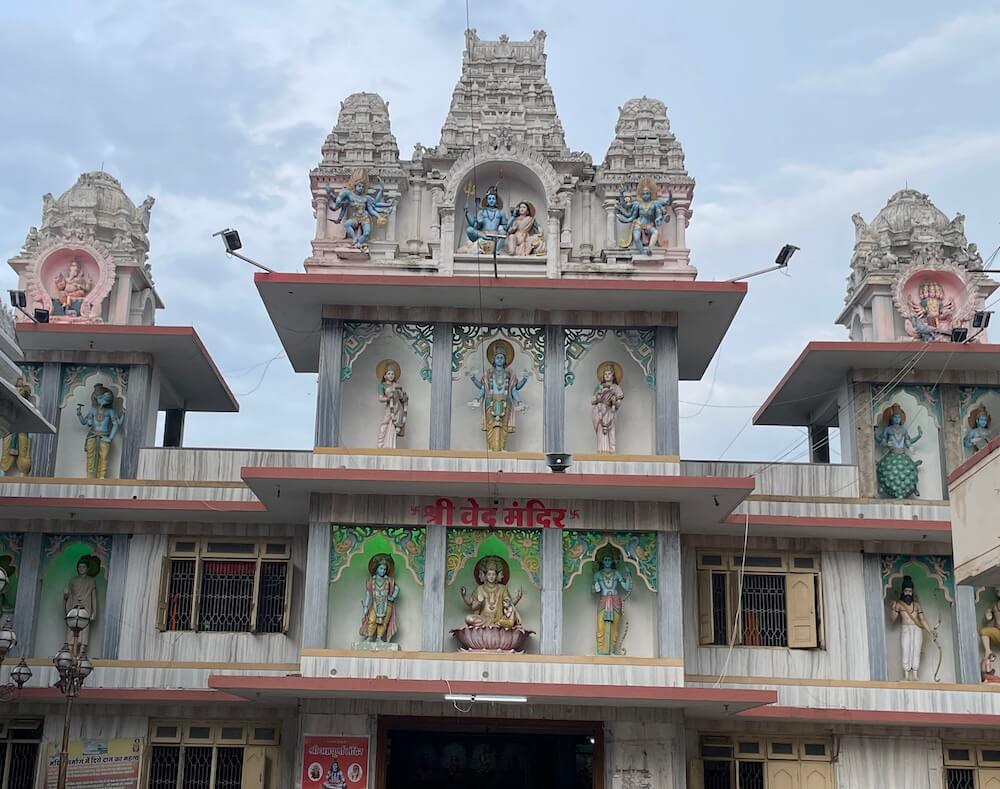
The sanctum is surrounded by a circumambulatory path, while its outer walls and pillars bear elaborate carvings. Beautiful relief sculptures of various deities embellish these walls. Above the sanctum’s entrance are images of the goddess in her eight forms alongside an idol of Shiva. Inside, on a high marble pedestal within a grand shrine, stand the idols of Annapurna Mata, Kali Mata and Saraswati Mata, all adorned with ornaments and garments.
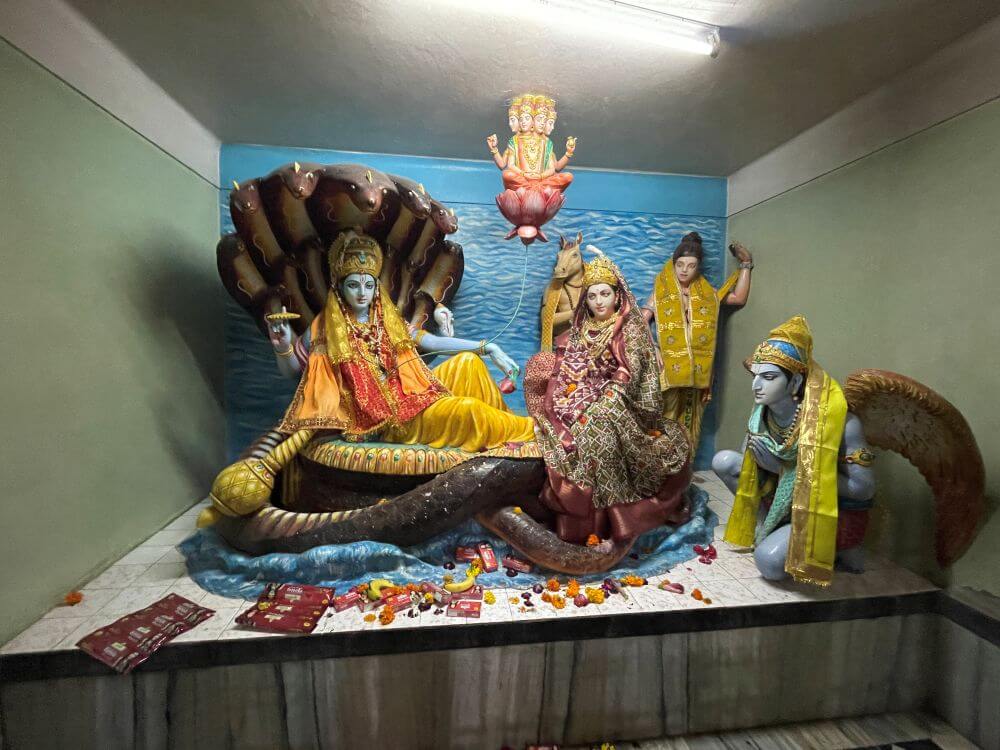
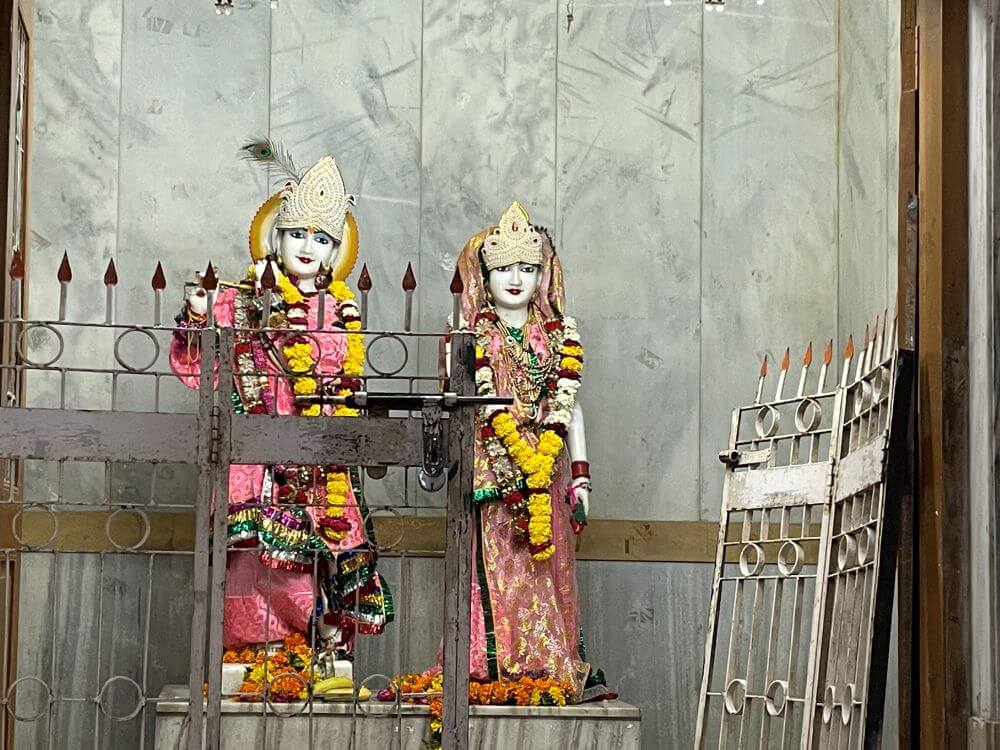
Within the temple complex are the Ved Mandir, Bhairav Temple and Kashi Vishwanath Temple. The Ved Mandir is a three-storied structure: the first floor houses idols of Rama, Krishna and Brahma; the second floor enshrines Chakrapani Vishnu; and the top level features a replica of a Dravidian temple with Shiva and Parvati. Its spacious hall contains shrines dedicated to the four Vedas – Atharvaveda (depicted as monkey-faced),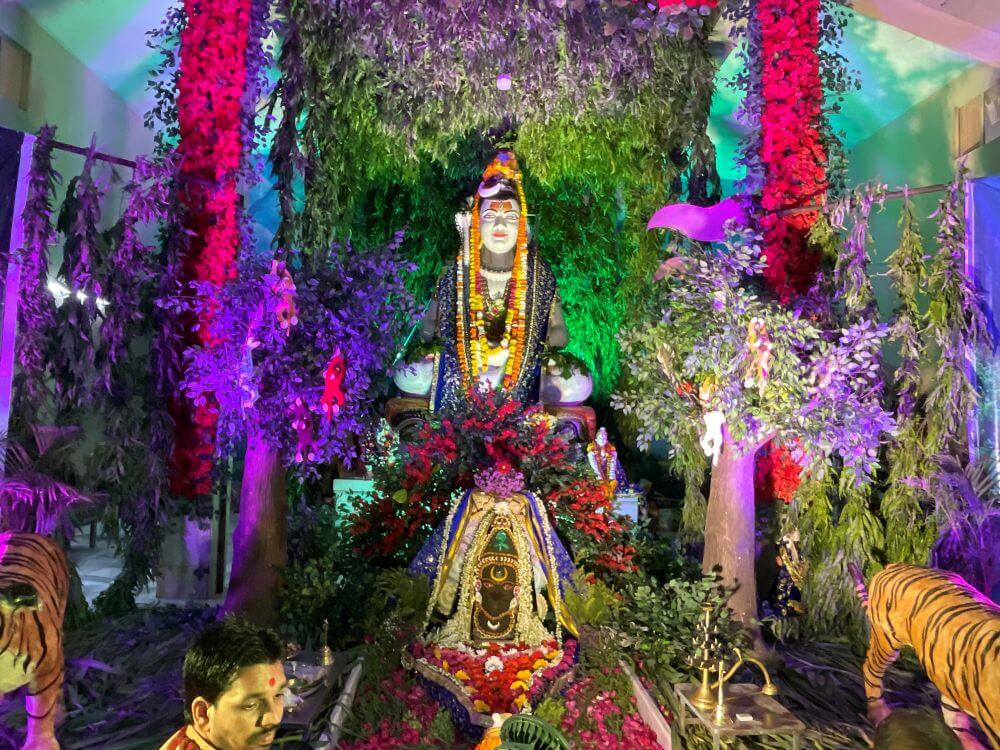 Samaveda (horse-faced), Yajurveda (goat-faced) and Rigveda (donkey-faced). Above these shrines, a grand mural depicts Krishna’s Vishwaroop Darshan. Other idols in the temple include Ram-Lakshman-Sita with Hanuman, Radha-Krishna, Sheshashayi Vishnu and Krishna washing Sudama’s feet.
Beside the Ved Mandir stands a two-story Sant Nivas and the Samadhi Temple of Swami Prabhananda Giri, with his seated idol installed inside. Nearby is the Kashi Vishwanath Mahadev Temple, housing a 14-foot idol of Shiva along with a massive Shiva Linga.
Devotees can visit the temple from 5:00 AM to 12:00 PM and from 2:00 PM to 10:00 PM. The temple is always crowded with both devotees and tourists. Annapurna Jayanti, celebrated on the full moon of the Margashirsha month, is observed here with great enthusiasm, drawing thousands of worshippers. The festivals of Navratri and Mahashivratri are also celebrated with grandeur. During Navratri, Annapurna Mata is offered different fruits each day, which are later distributed among the poor.
Useful Information
- About 5 km from Indore Bus Stand and Railway Station
- About 8 km from Indore Airport
- City buses, rickshaws and taxis available from various parts of Indore
- Private vehicles can reach up to the temple
- Accommodation and food facilities available in the temple premises
- Contact: Temple Office, Mob. 07312482483
अन्नपूर्णा मंदिर,
अन्नपूर्णा रोड, क्रांति कृपलानी नगर, जिला इंदौर
मंदिरे
Temples
मंदिर
-
गुरु दत्त मंदिर कृष्णपुरा, इंदूर शहर, जिल्हा इंदूर
अधिक माहितीGuru Datt Mandir Krishnapura, Indore City, District Indore
View Detailsविवरण देखें -
शनी नवग्रह मंदिर बाई ग्राम, तहसील इंदूर, जिल्हा इंदूर
अधिक माहितीShani Navagraha Mandir Bai Gram, Tehsil Indore, District Indore
View Detailsविवरण देखें -
गुटकेश्वर महादेव नेमावर रोड, देवगुराडिया, इंदूर, जिल्हा इंदूर
अधिक माहितीGutkeshwar Mahadev Nemawar Road, Devguradia, Indore, District Indore
View Detailsविवरण देखें