
Kashtabhanjan Hanuman Temple
Parikha, Tal. Dabhoi, Vadodara
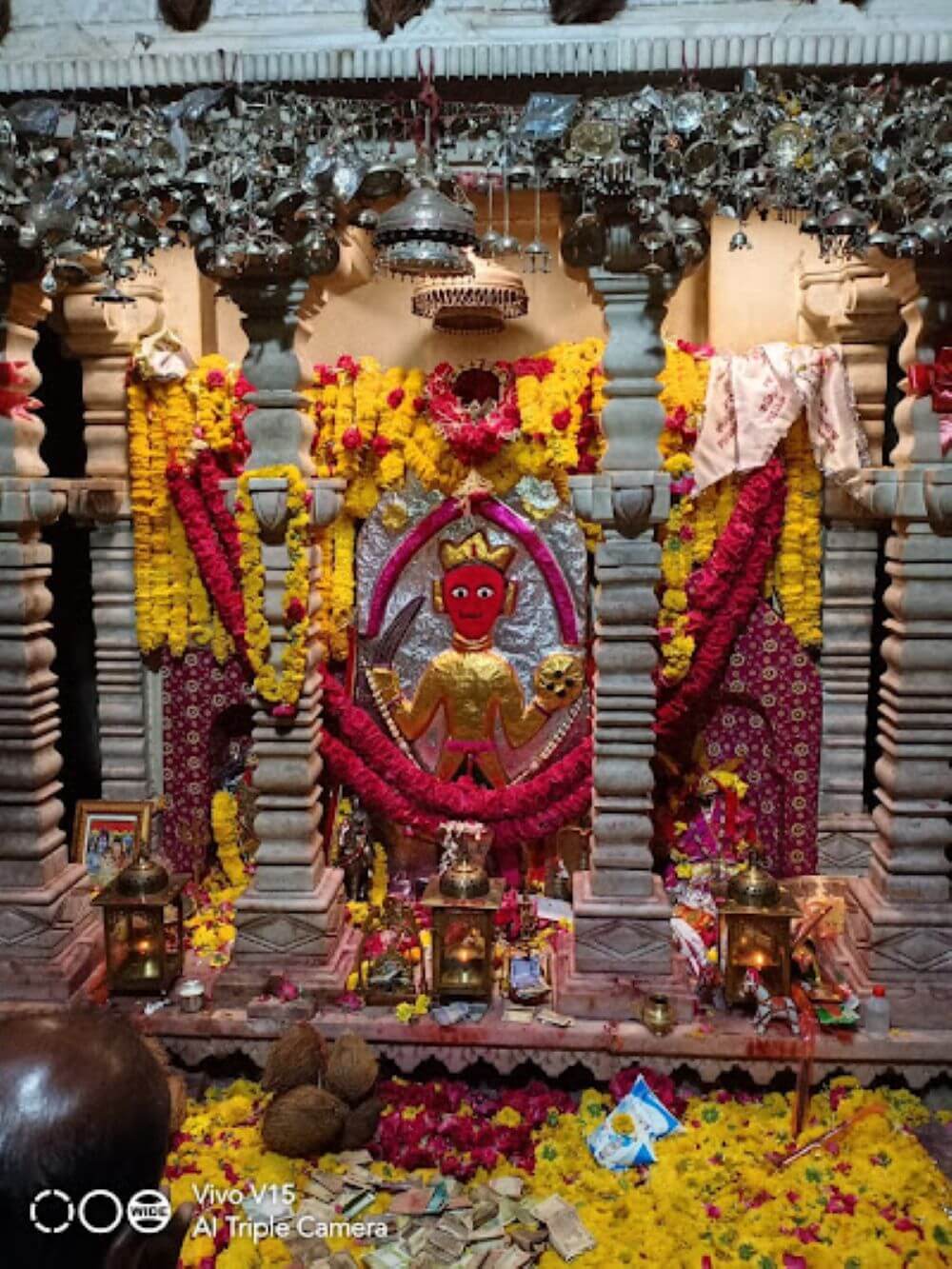
In every Swaminarayan temple, the main revered deity is Lord Krishna. However, one Swaminarayan temple is an exception to this. In Sarangpur, there is a Swaminarayan temple where the principal deity is Hanuman. A replica of the famous idol of Kashtabhanjan Hanuman from the renowned Sarangpur temple is installed at the Kashtabhanjan Hanuman Temple in Parikha. Many devotees, unable to travel to Sarangpur, come here instead. People also pray here for the recovery of mute animals. Those aspiring to travel abroad often place their passports at the feet of Hanuman and make vows.
This temple has a history of more than 165 years. In 1857, the independence war was underway in India. At Kanpur, freedom fighter Tatya Tope was fighting valiantly against the British forces. Around the same time, on 22nd November 1857 (Margashirsha Shukla Shashti), the idol of Kashtabhanjan Hanuman was consecrated at the temple in Parikha. A legend says that this idol was originally made for a temple in Vadodara under the guidance of Gopalanand Swami, a spiritual successor of Swaminarayan. The idol was sculpted by Kanabhai Botadwala, who also made the idol at Sarangpur. However, due to the idol’s smaller size compared to the temple structure, devotees requested a new one. Gopalanand Swami agreed and this idol remained in Vadodara for some time.
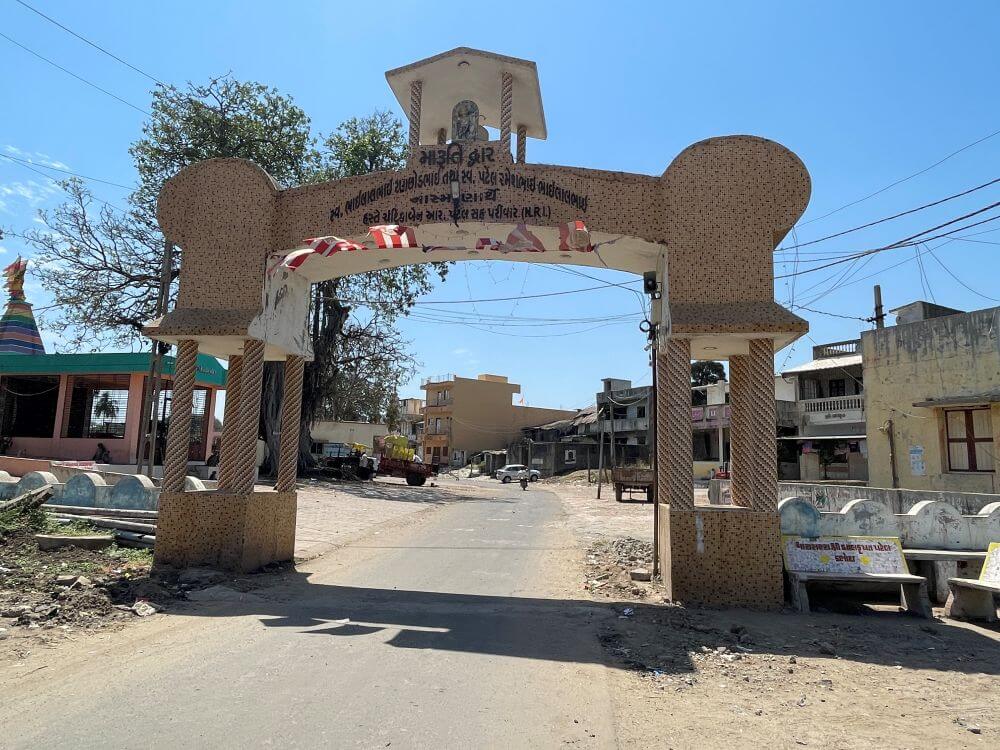 Meanwhile, Upendranand Swami, a disciple of Gopalanand Swami, visited Parikha for religious discourse. There, a devotee named Ishwarbhai Patel shared his troubles with him. Patel had substantial property but lamented having no heir to inherit it. He also mentioned that many cattle in the village had died due to an epidemic and requested blessings to prevent future outbreaks or to overcome them if they occurred. That night, Upendranand Swami remembered his guru Gopalanand Swami, who appeared before him. When Upendranand Swami told Gopalanand Swami about Patel’s sorrows, Gopalanand Swami suggested bringing the idol from Vadodara to the village. The next day, Upendranand Swami called Patel and told him, “If you install the idol from Vadodara in the village, you will be blessed with a son.” Accordingly, Patel brought the idol from Vadodara.
  Upendranand Swami and Aksharanand Swami, the Mahant from Vadtal, built the temple and installed the Kashtabhanjan Hanuman idol on the auspicious day of Margashirsha Shudha Shashthi in 1857. Like the temple in Sarangpur, this temple is also managed by the ‘Vadtal Gadi-Lakshmi Narayan Devasthan Trust’ of the Swaminarayan sect.
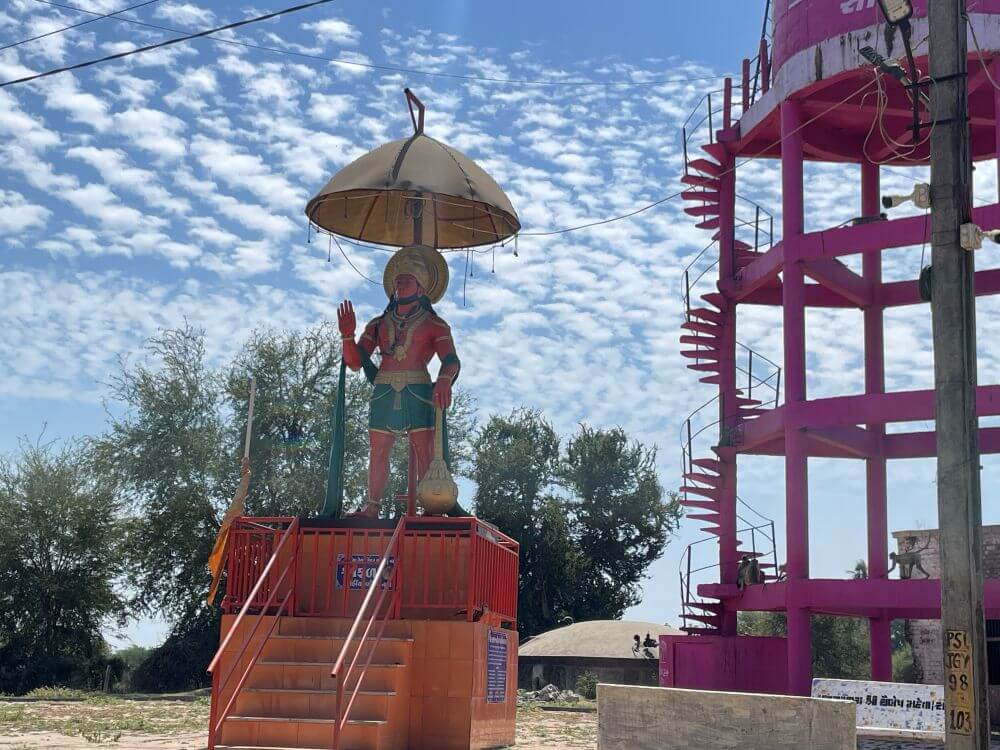
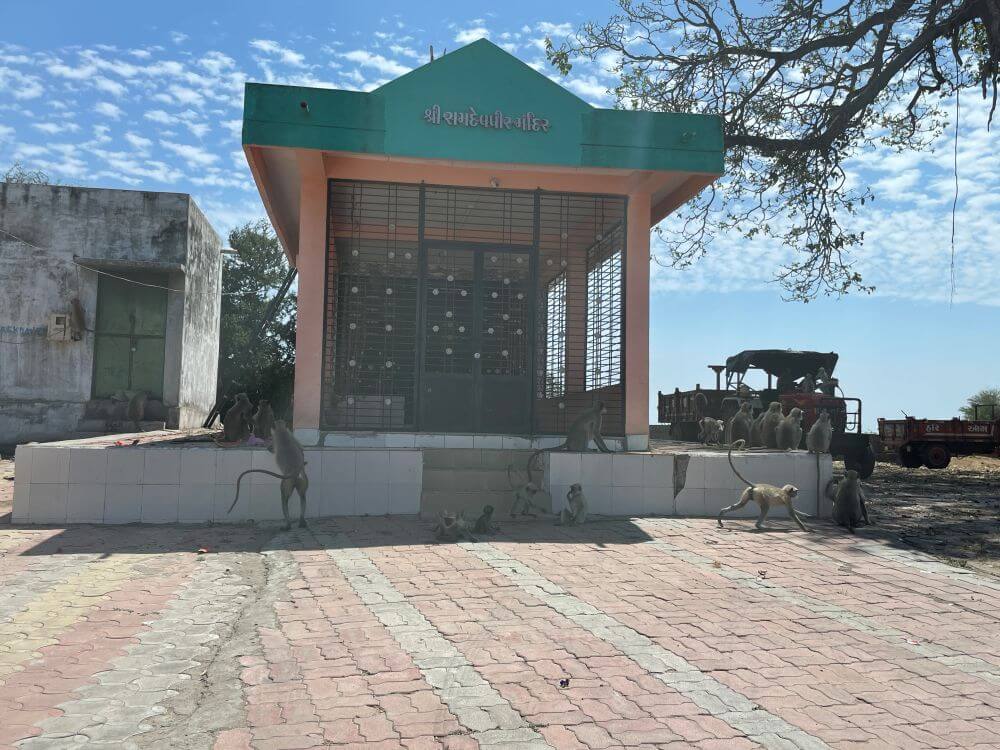
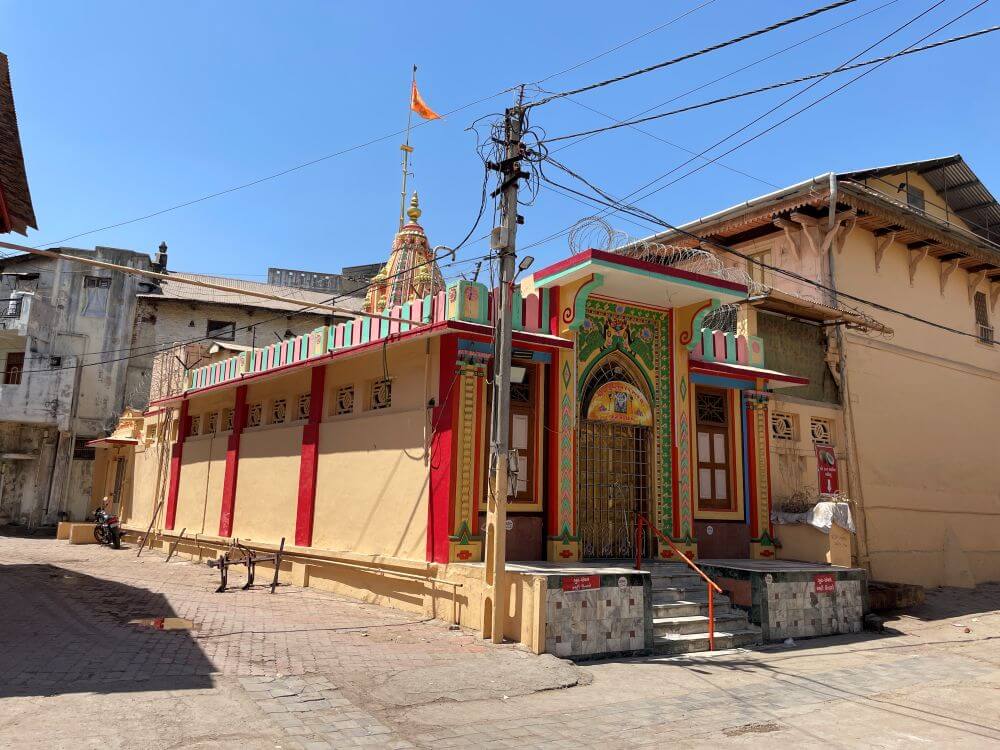
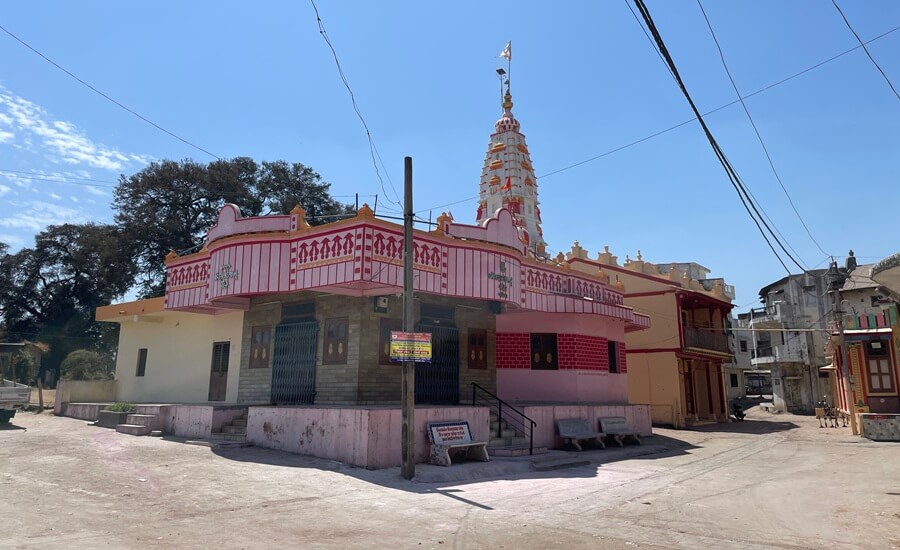
As one approaches the Parikha temple, a grand statue of Hanuman is installed on a high platform near a roadside water tank. Further ahead is the newly built Ramdevpir temple, beside which is a large banyan tree, home to many monkeys. Nearby, there is a newly constructed temple of Goddess Verai and the ancient Kashtabhanjan Hanuman temple.
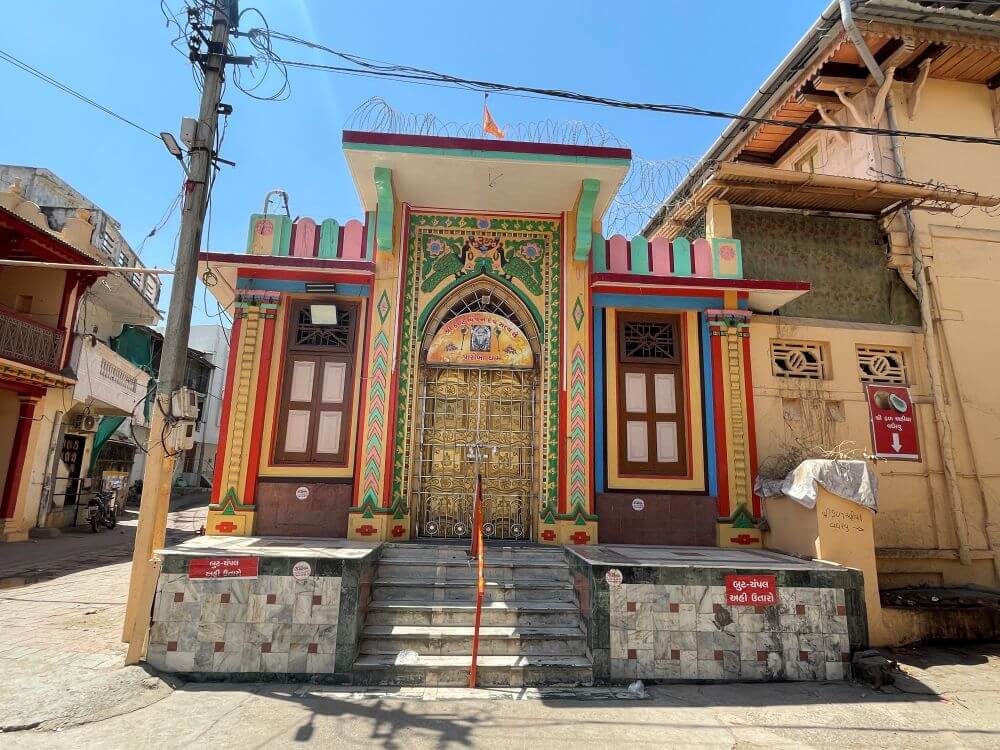 The temple has a Sabhamandap (assembly hall) and a Garbhagriha (sanctum sanctorum). The entrance pillars feature intricate carvings and above the doorway is an artwork of peacocks. Most of the interior construction is wooden. The sanctum door is gold-plated with elegant carvings. On either side of the doorway are gatekeepers (Dwarpal), with carvings above them. At the base of the entrance are two Kirtimukhas (mythical faces).
Inside the sanctum, in a golden throne, sits the idol of Kashtabhanjan Hanuman. Below the throne are two elephants. A mace (gada) is placed to the left of the idol and another large mace is placed in front. 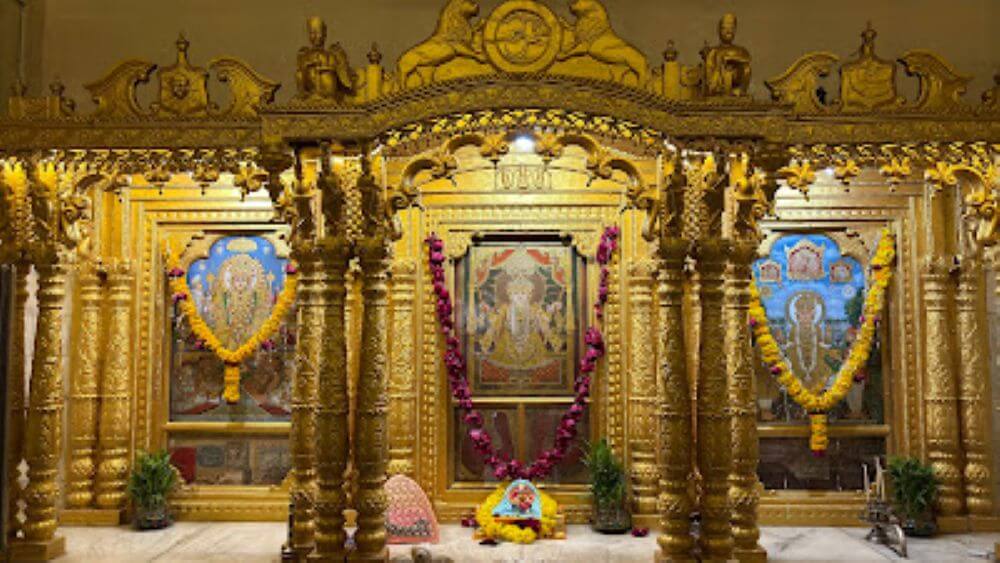 At Hanuman’s feet is Shani Dev in female form and to the left is an upright idol of Panchamukhi Hanuman (five-faced Hanuman).
Devotees believe that this temple is graced by the presence of Hanuman himself. Like Visa Hanuman of Khadia (Ahmedabad), Camp Hanuman of Shahibaug and Jalebi Hanuman of Mangrol (Surat), the Kashtabhanjan Hanuman of Parikha is believed to remove obstacles in obtaining foreign visas. Many also pray here for the healing of cattle and other pets. Devotees who make vows are given a thread, a chit and a fruit. On Saturdays and Tuesdays, the temple sees large crowds. The Hanuman Chalisa is recited daily. During the Shravan month, devotees form long queues every Saturday and a large fair is held on the last Saturday.
Key Features
- Located 15 km from Dabhoi and 36 km from Vadodara
- ST (State Transport) bus services available from Dabhoi and Vadodara
- Private vehicles can reach the temple premises
- Snacks available nearby, but no accommodation
- Temple Location: https://maps.app.goo.gl/nF7X6eFEGTEDtAmKA
मंदिरे
Temples
मंदिर
-
रोकडीनाथ हनुमान मंदिर नवा बाजार, वडोदरा, ता./जि. वडोदरा
अधिक माहितीRokadnath Hanuman Temple Nava Bazaar, Vadodara, Tal./Dist. Vadodara
View Detailsरोकड़ीनाथ हनुमान मंदिर नवा बाज़ार, वडोदरा, ताल./जिला. वडोदरा
विवरण देखें -
मंगलनाथ महादेव मंदिर दरबार चोकडी, मांजलपूर, वडोदरा, ता./जि. वडोदरा
अधिक माहितीMangalnath Mahadev Temple Darbar Chowkdi, Manjalpur, Vadodara, Tal./Dist. Vadodara
View Detailsमंगलनाथ महादेव मंदिर दरबार चौकड़ी, मांजलपुर, वडोदरा, ताल./जिला. वडोदरा
विवरण देखें -
अमरुकंटेश्वर महादेव / नवग्रह मंदिर प्रतापुरा, ता. वडोदरा, डिश. वडोदरा
अधिक माहितीAmarkanteshwar Mahadev / Navgrah Mandir Pratappura, Tal. Vadodara, Dist. Vadodara
View Detailsमरकण्टेश्वर महादेव/ नवग्रह मंदिर प्रतापपुरा, ताल. वडोदरा, जिला. वडोदरा
विवरण देखें