
कालभैरव महादेव मंदिर भैरव गाम, ता. कामरेज, जि. सुरत
Kalbhairav Mahadev Temple
Bhairav Gam, Tal. Kamrej, Dist. Surat
 The Kalbhairav Mahadev Temple, located in Bhairav Gam on the banks of the Tapi River, holds immense ancient and mythological significance. A popular legend tells of Goddess Bhairavi entering the body of Lord Mahadev (Shiva) and using his form to destroy the demon Tripurasur. The Shivalinga here is believed to have been formed naturally from soil particles, and devotees believe that worshipping it brings relief from sorrow, fulfillment of desires, and ultimate happiness. Thousands of devotees visit this temple for darshan.
The story related to this temple is found in the Tapi Purana. Before the birth of Kartikeya (Lord Shiva’s son), the demon Tripurasur performed intense penance and pleased Lord Shiva, gaining a boon that made him invincible. With this power, he began ruling over the demons. His chief adviser once suggested, ‘Use Lord Shiva’s boon to conquer the gods.’ Acting on this advice, Tripurasur attacked Yampuri (the abode of Yama, the god of death) and also conquered Indra’s kingdom, looted Indra’s elephant named Airavat, establishing dominance over the gods.
To escape his tyranny, the gods turned to Lord Brahma, who, being bound by Tripurasur’s devotion to Mahadev, refused to help and directed them to Lord Vishnu. Vishnu then led the gods to Mount Kailash, where they appealed to Lord Shiva to free them from Tripurasur’s oppression. 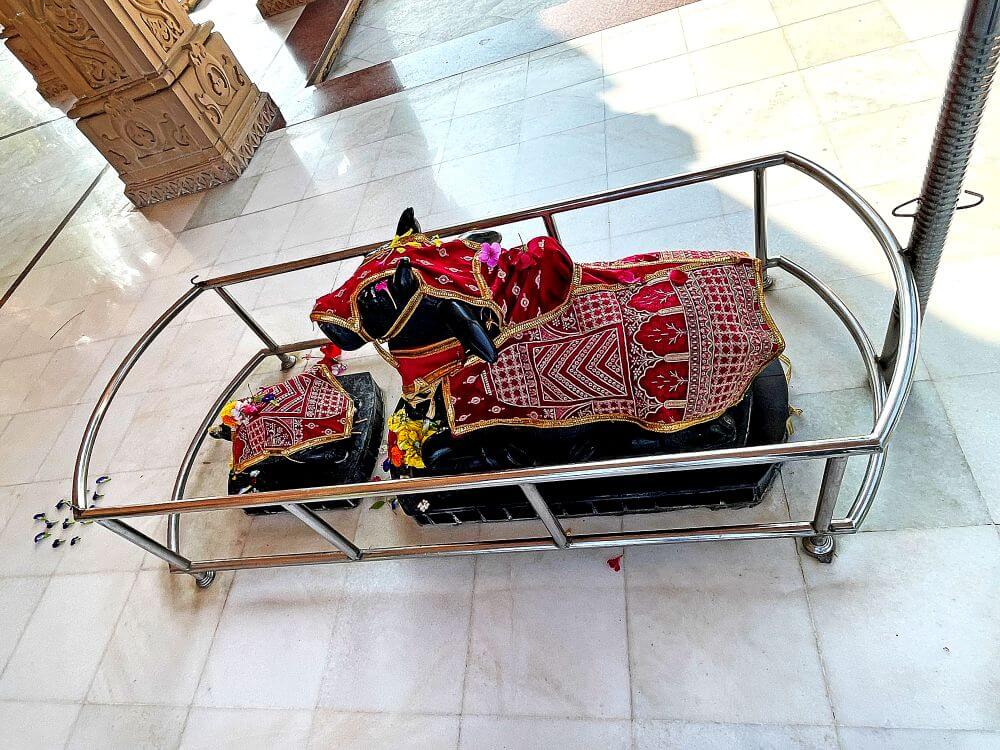 While pondering a solution, Lord Shiva realized that the goddess Bhairavi, who resided near the Tapi River, held the power to defeat the demon.
Through intense penance, Lord Shiva invoked Goddess Bhairavi, who entered his body and used his form to destroy Tripurasur. After the demon’s destruction, Goddess Bhairavi requested Lord Shiva to reside at this sacred site and bless devotees by relieving their sorrows. As the story goes, the particles of earth at this site gathered together to form the sacred Shivalinga, marking Lord Shiva’s eternal presence here.
The temple underwent renovations by the local villagers in recent years, giving it its present form. Located just 2 km from Kamrej, Bhairav is a small, serene village with a population of around 2,000.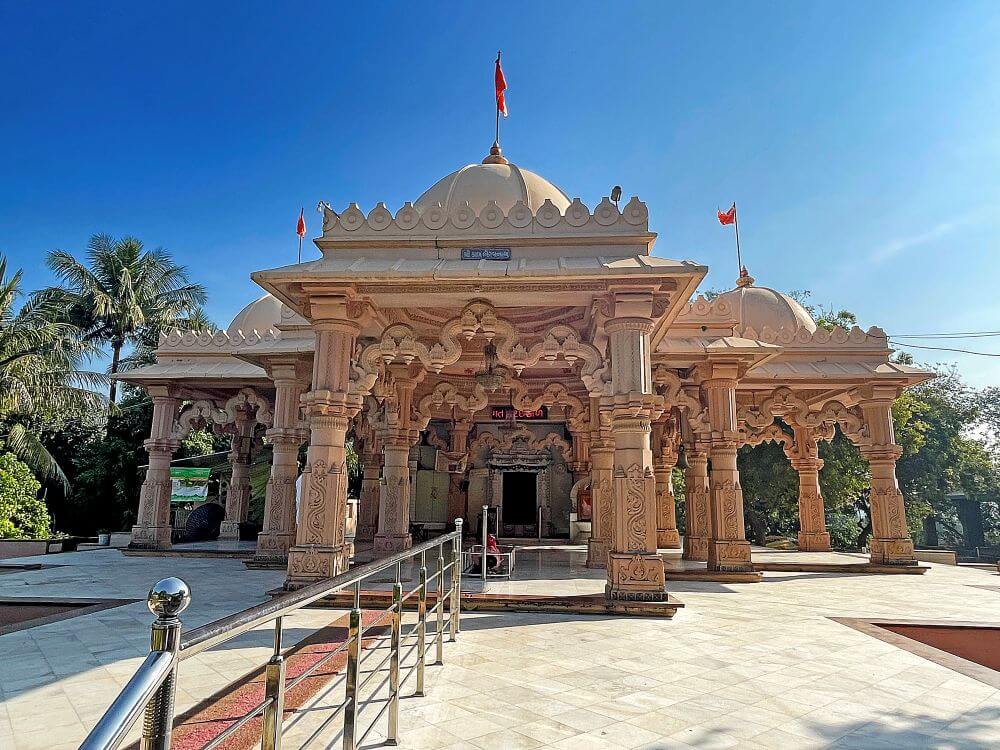
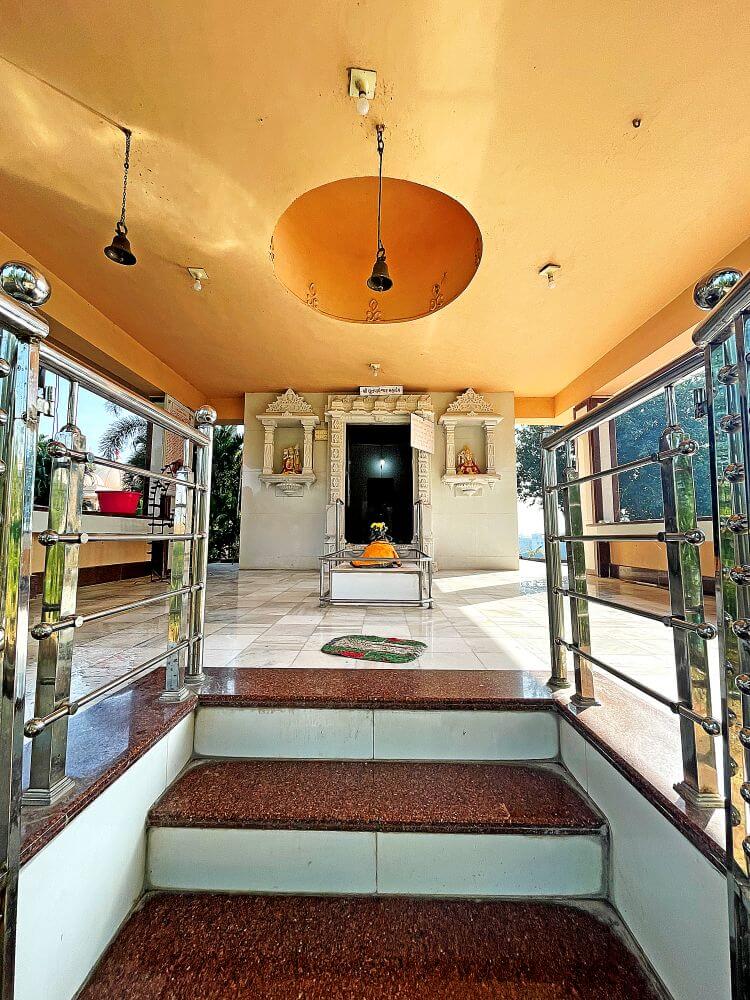
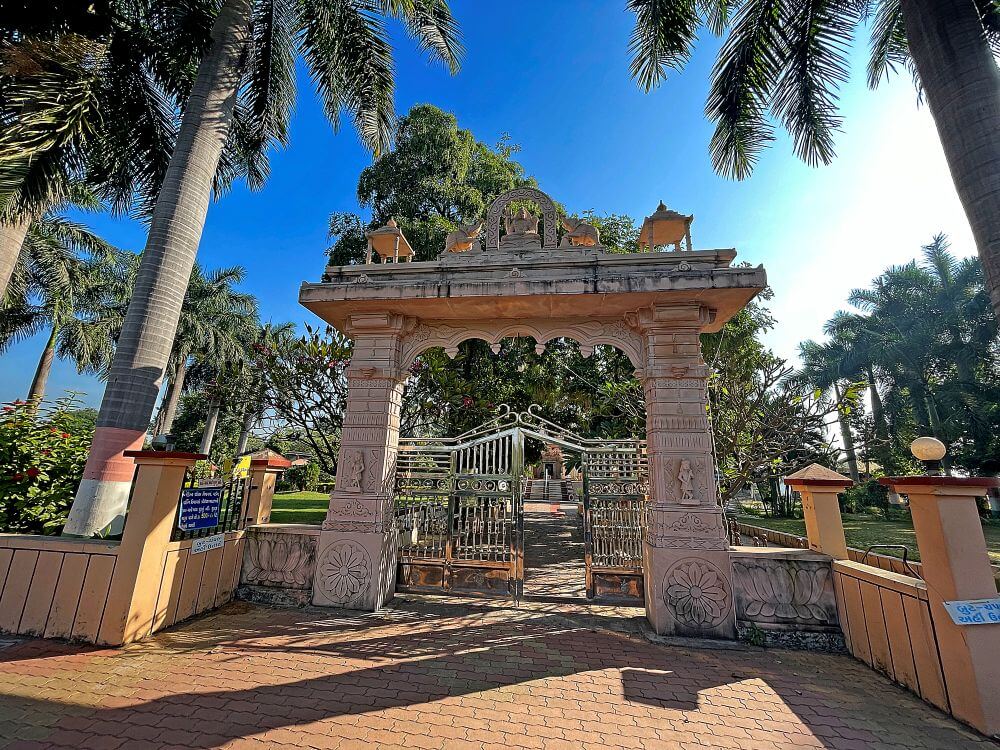
Upon entering the village, one could see the entrance gate of the temple complex. This intricately carved gateway features square pillars, arches, and statues of Lord Shiva and elephants on its roof, with small domes on both ends. Outside this gate lies the Dhootpapeshwar Mahadev Temple. This smaller temple has two domed towers, an open assembly hall (Sabhamandap), and a sanctum (Garbha Griha) with a Shivalinga. The sanctum also features statues of Ganesha and Hanuman on either side, and a statue of Goddess Parvati on the rear wall.
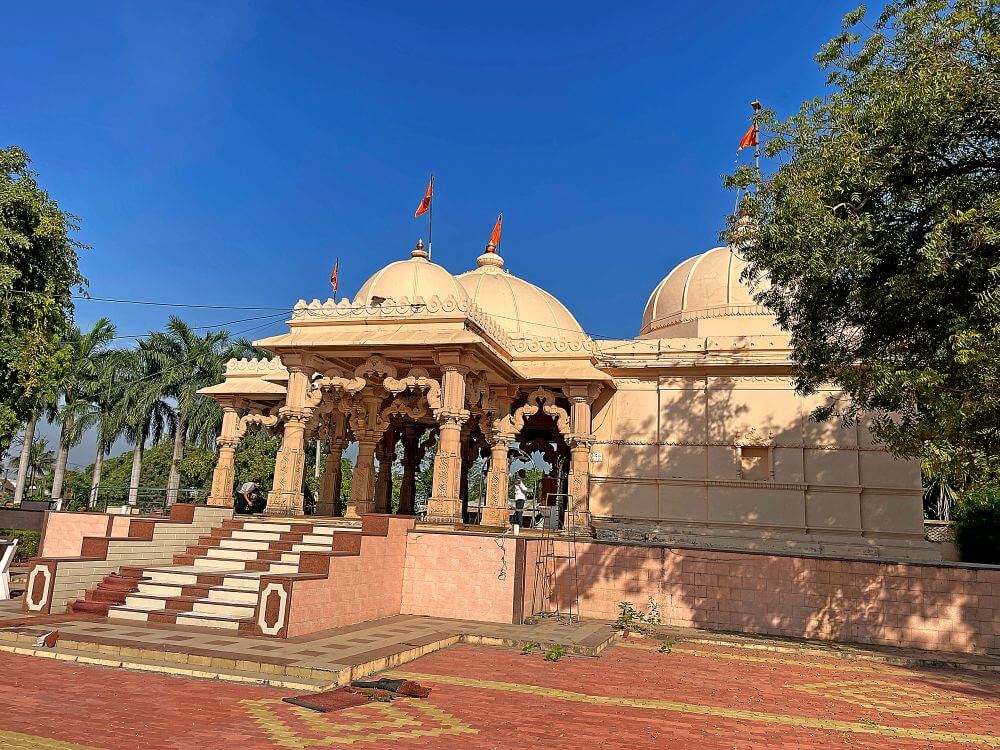
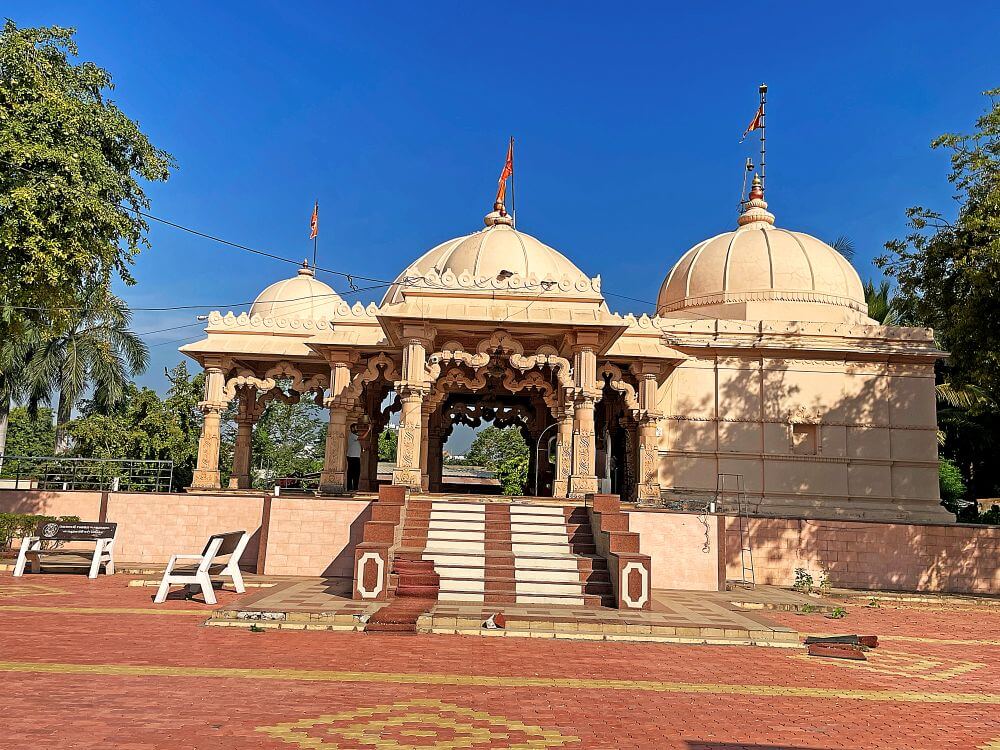
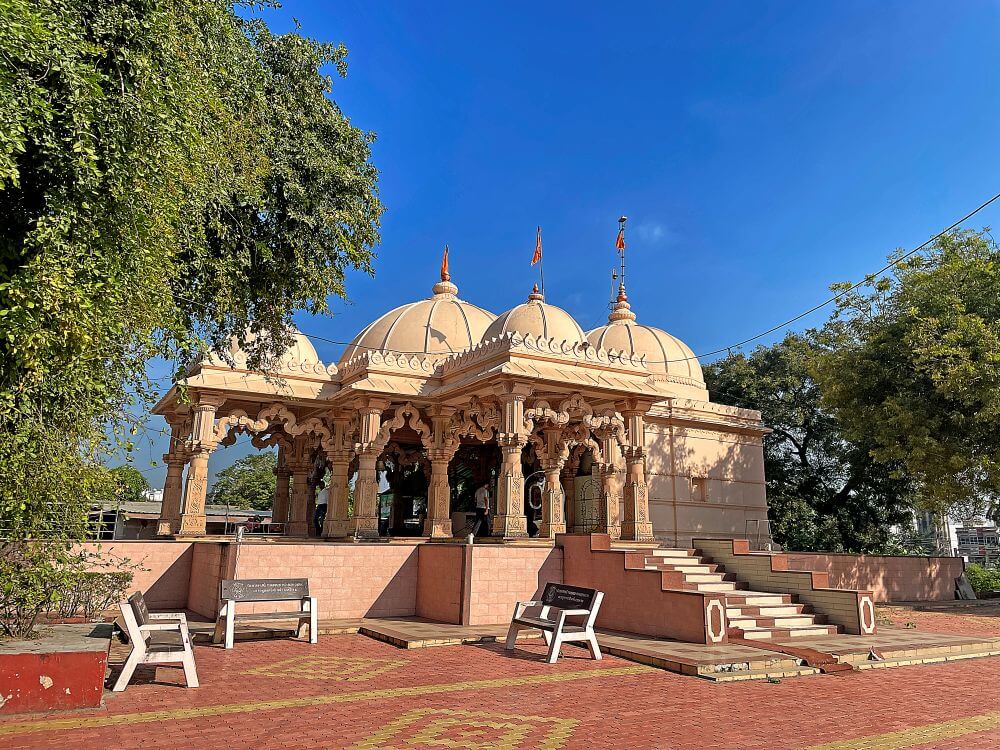
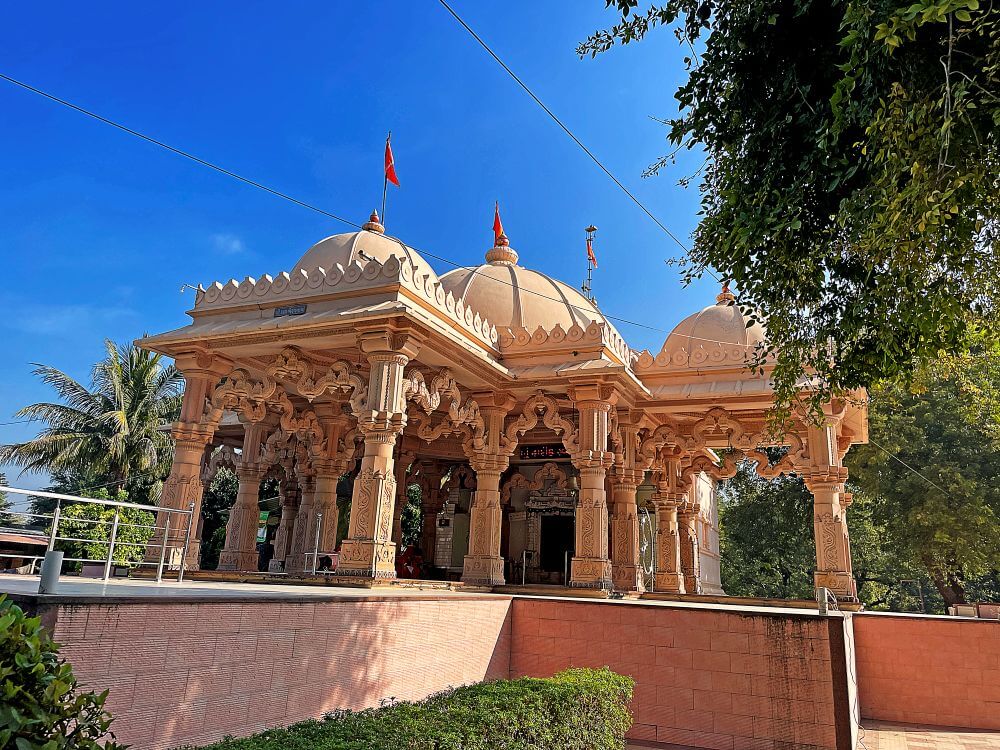
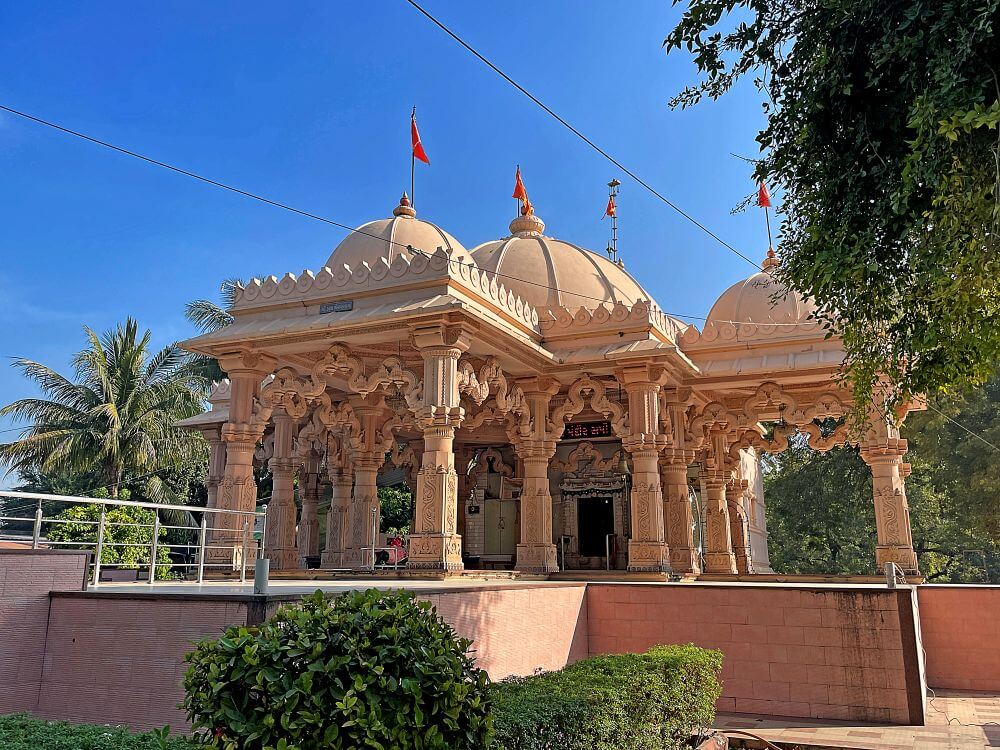
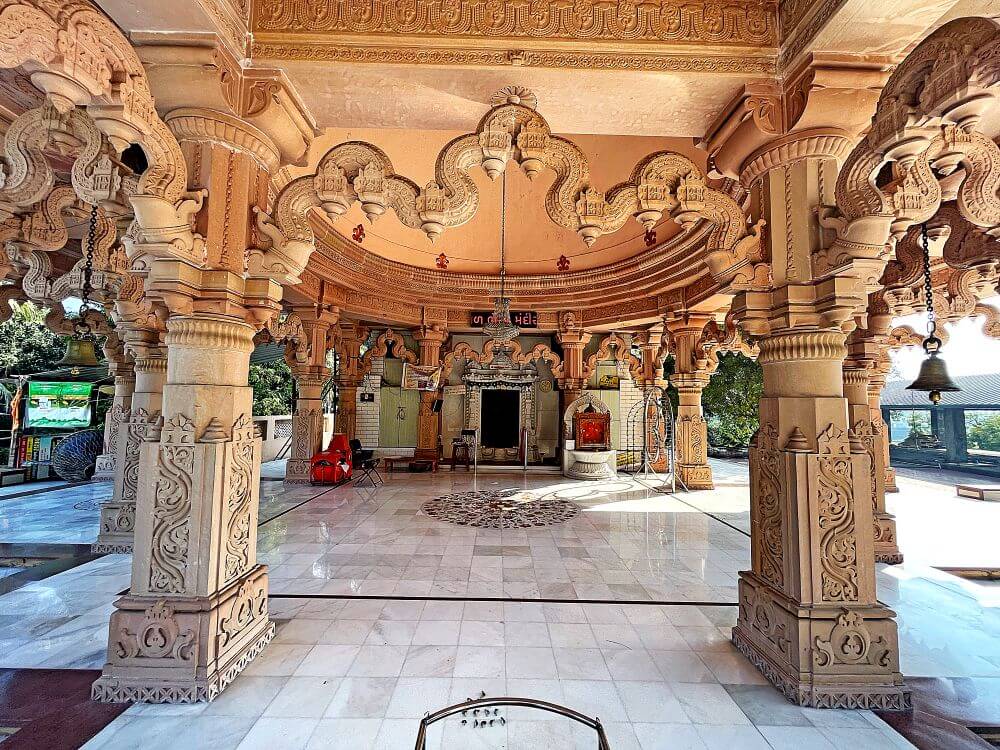
The main Kalbhairav Temple complex is vast, with paved grounds and landscaped gardens. The temple structure comprises a Mukhamandap (porch), 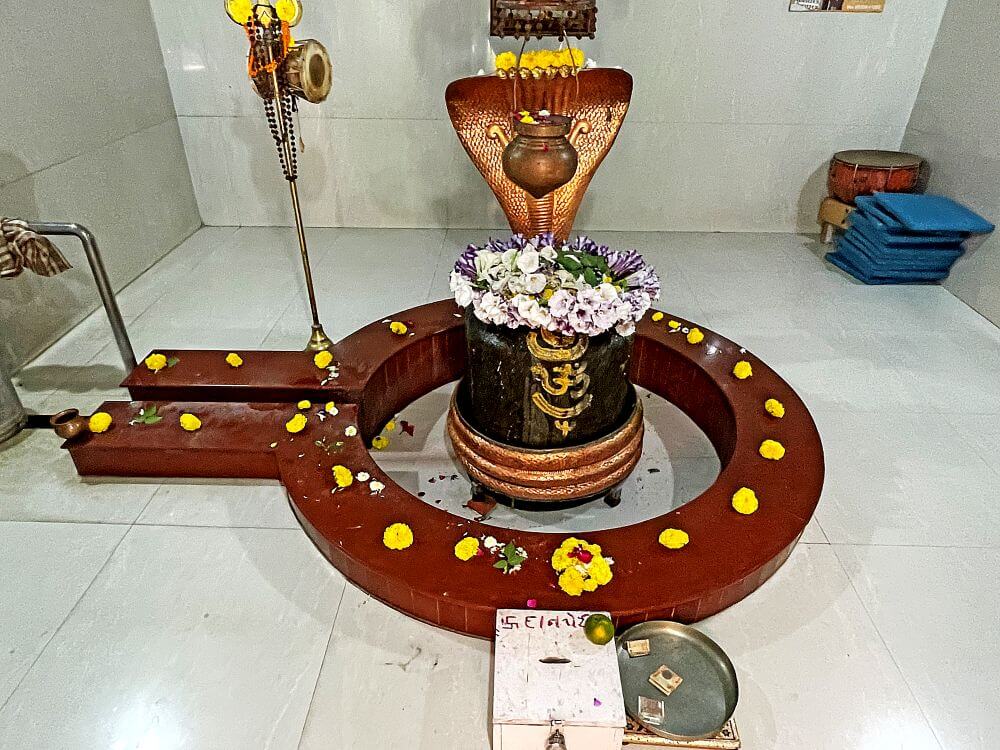 an assembly hall, and the sanctum, flanked by smaller porches. The temple’s architectural style reflects the influence of the Akshardham Swaminarayan Temple, featuring square-to-round columns adorned with intricate carvings, ornamental arches (Makara Torana), and dome-like spires.
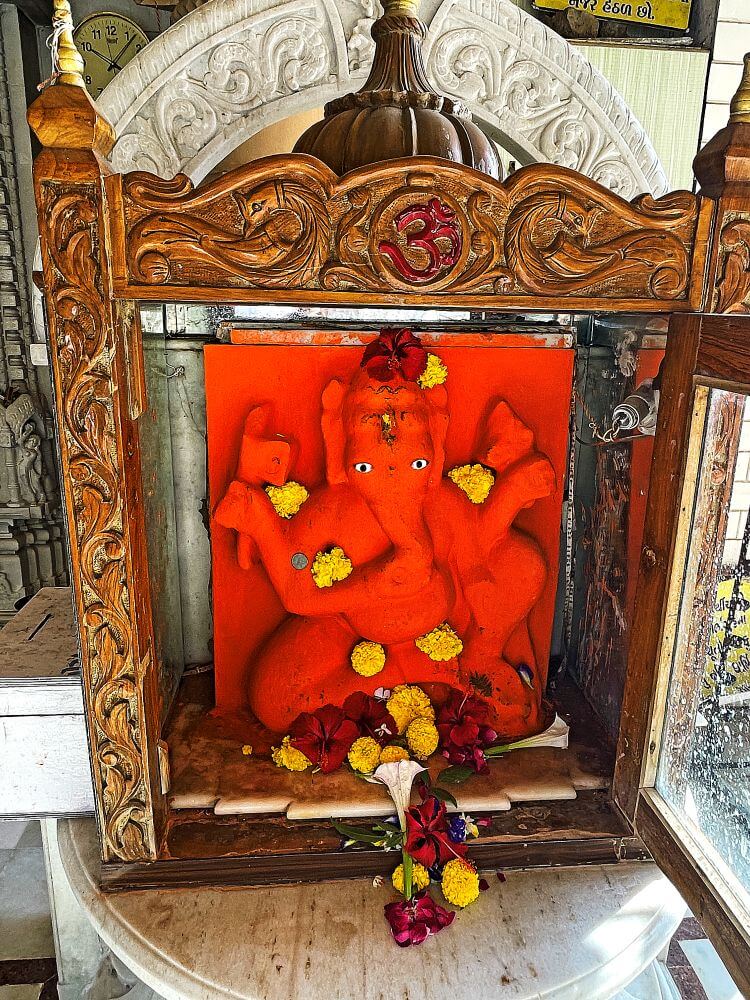
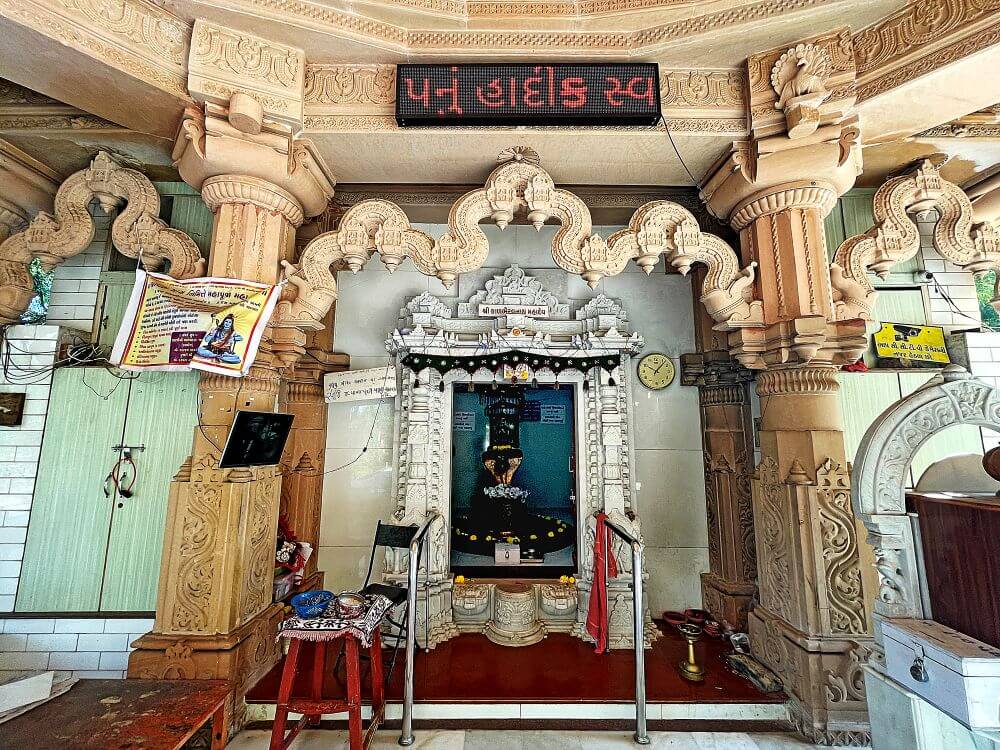
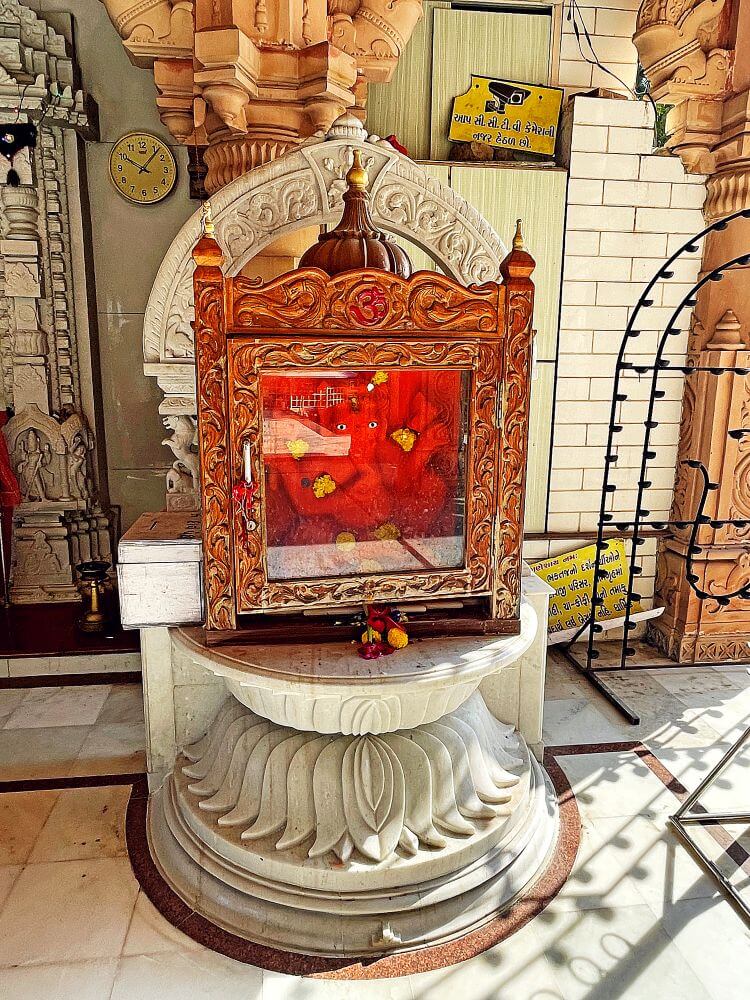
The temple sits on a raised platform accessed by nine steps. Inside the Mukhamandap is a beautifully carved black stone statue of Nandi (Lord Shiva’s bull), facing the Shivalinga . In the Sabhamandap , a raised lotus-shaped platform houses an ancient, vermilion-smeared statue of Lord Ganesha. The doorway to the sanctum is made of stone, with exquisite carvings, including depictions of Shaiva doorkeepers (Dwarpalas), ornamental motifs (Kirti Mukha), and a Ganesh statue on the lintel. At the center of the sanctum is the main Shivalinga, with a brass snake canopy overhead.
Devotees worship here regularly with great reverence. The temple hosts daily worship and rituals. Major Hindu festivals like Mahashivratri and Kalbhairav Jayanti are celebrated with great enthusiasm. Devotees gather in large numbers, particularly on weekends, and the temple sees a significant increase in visitors during the holy month of Shravan, when various religious programmes are organised.
The temple complex includes a Yajna Shala (sacrificial hall) for conducting rituals. To the right of the parking area stands an ancient Peepal tree , under which lies the Bhootnath Mahadev Temple . The temple’s sanctum houses a Shivalinga with a snake canopy, along with a statue of Goddess Parvati. Worshipping here is believed to fulfill all wishes, attracting a steady stream of devotees.
Key Highlights
- Located 4 km from Kamrej, 27 km from Surat
- State transport (ST) buses and private vehicles can reach the temple’s parking area
- The surrounding area offers food and lodging options
- Contact Details: Temple Priest, Mobile: 063528 89285
मंदिरे
Temples
मंदिर
-
सप्तशृंगी मंदिर सलाबतपुरा, सुरत, जि. सुरत
अधिक माहितीSaptashrungi Temple Salabatpura, Surat, Dist. Surat
View Detailsविवरण देखें -
रामेश्वर महादेव मंदिर वरठ पाटिया, मांडवी, जि. सुरत
अधिक माहितीRameshwar Mahadev Temple Vareth Patiya, Mandvi, Dist. Surat
View Detailsविवरण देखें -
जुना हनुमानजी मंदिर भीमपोर, सुरत, जिल्हा सुरत
अधिक माहितीJuna Hanumanji Temple Bhimpor, Surat, District Surat
View Detailsविवरण देखें