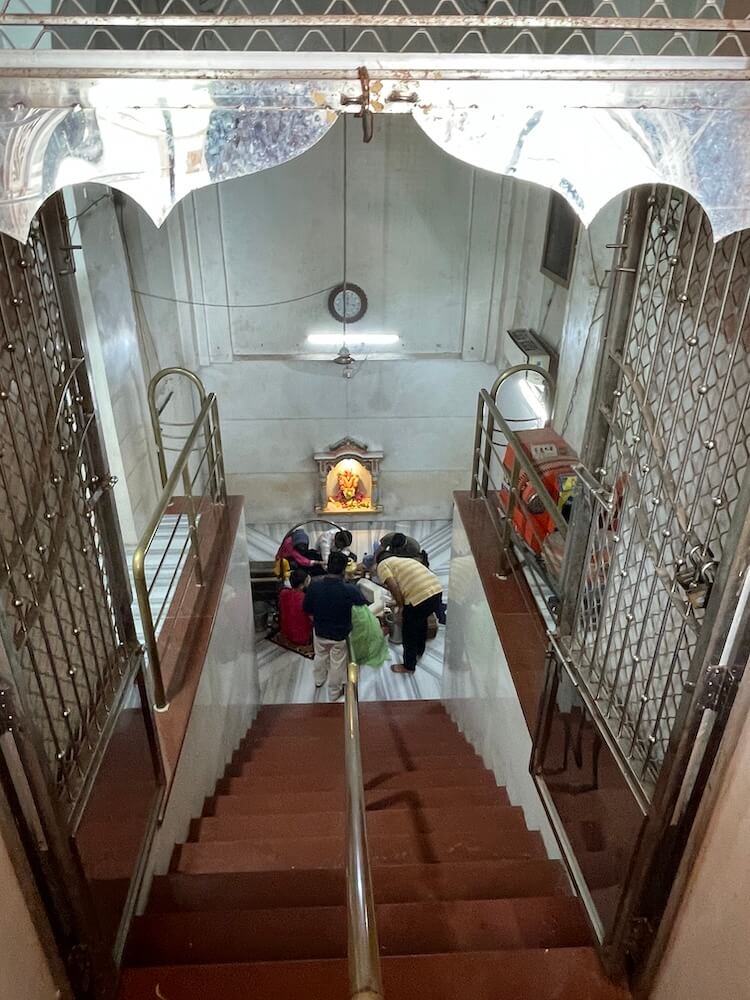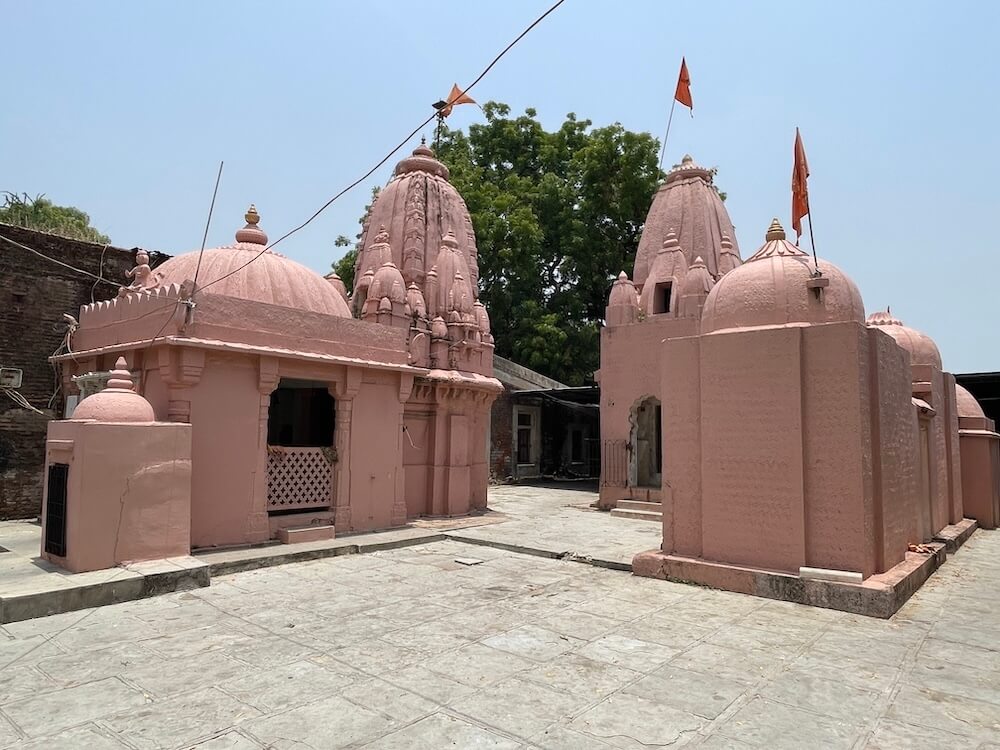
 In the village of Dena – made sacred by the stay of the great sage and author of the Mahabharata, Maharshi Ved Vyas – stands a temple dedicated to Lord Mahadev, bearing the sage’s own name. Local lore holds that this shrine of Vyaseshwar Mahadev, nestled along the banks of the Vishwamitri River, is even older than the epic era of the Mahabharata itself. It is said that many sages and even the righteous king Harishchandra of Ayodhya worshipped the self-manifested Shiva Lingam found here. One of the unique features of this temple is its sanctum sanctorum, which is located below ground level. To witness the sacred Shivling, devotees must descend 24 steps underground.
A captivating tale from the Mahabharata connects this place to the story of Sage Parashar, who once set out to cross the Yamuna River.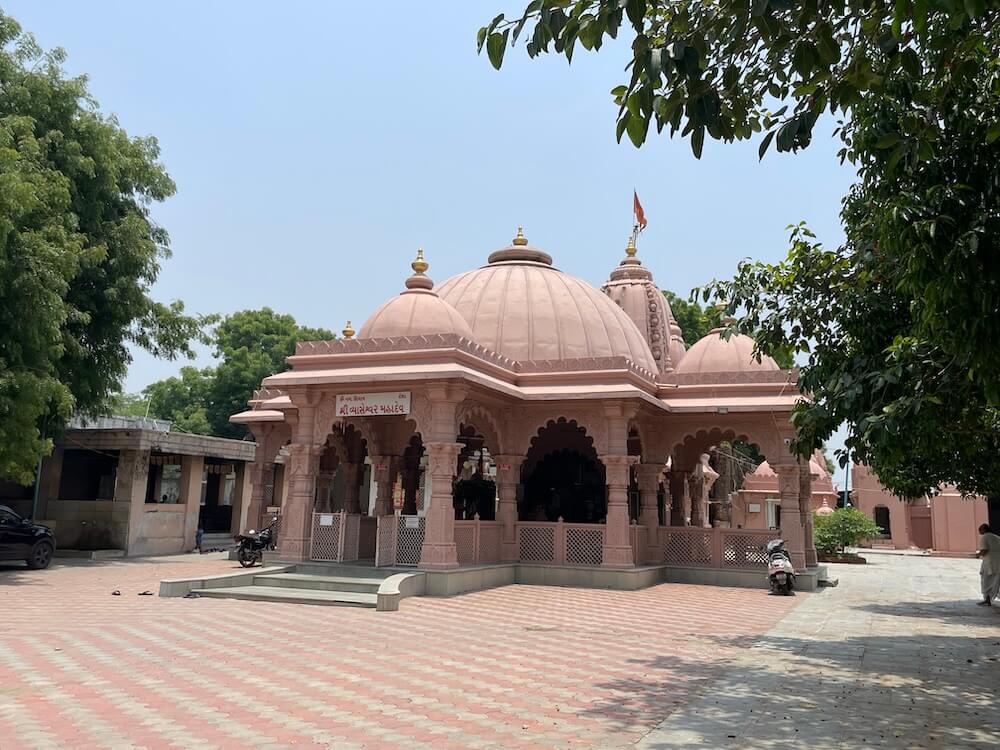 The boat was rowed by a fisherwoman named Satyavati, known as Matsyagandha due to the fishy odor she carried. Enchanted by her beauty, the sage was drawn to her, but Satyavati, firm in her virtue, insisted her purity not be compromised. Parashar then removed the odor from her body and enveloped them in a thick mist. From their union, Krishna Dvaipayana Vyasa was born. Later revered as Ved Vyas, the composer of the 24,000-verse Mahabharata, he also authored other profound works like the Brahmasutras, 18 Maha Puranas, Vyasa Bhashya and Vyasa Shiksha, some of which are believed to have been written in the vicinity of Dena.
According to another legend surrounding the Shivling at this site, it has existed for thousands of years. Once hidden deep within a dense forest, the Lingam lay buried under the earth for ages.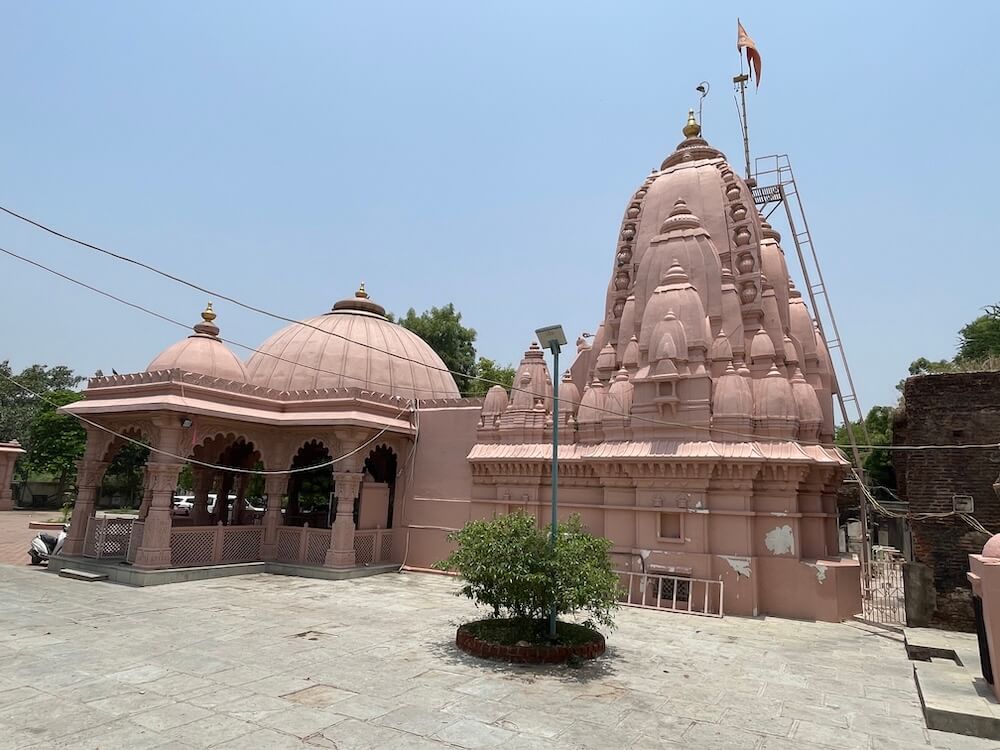 Herdsmen would frequently bring their cattle here to graze. One day, they noticed a cow consistently releasing milk at a particular spot in the forest. However, the same cow would not give milk once home. Suspicious, the owner questioned the herder, who confirmed the strange behavior. Determined to see for himself, the farmer followed the cow and witnessed the phenomenon. That very night, Lord Shiva appeared to the farmer in a dream, revealing that a sacred Lingam lay beneath the spot and urging him to excavate it. The next day, the farmer enlisted laborers to dig the site, but despite considerable effort, they found nothing and gave up. That night, Shiva again appeared in the farmer’s dream, this time instructing him to dig personally. When the farmer did, he uncovered a naturally formed (Swayambhu) Shiva Lingam.
  As he dug, the blow of his tool struck the Lingam, leaving marks that are said to be still visible today. With help from villagers, he built a small temple around it, which has since undergone several restorations over the centuries. The temple’s current structure is the result of recent renovations.
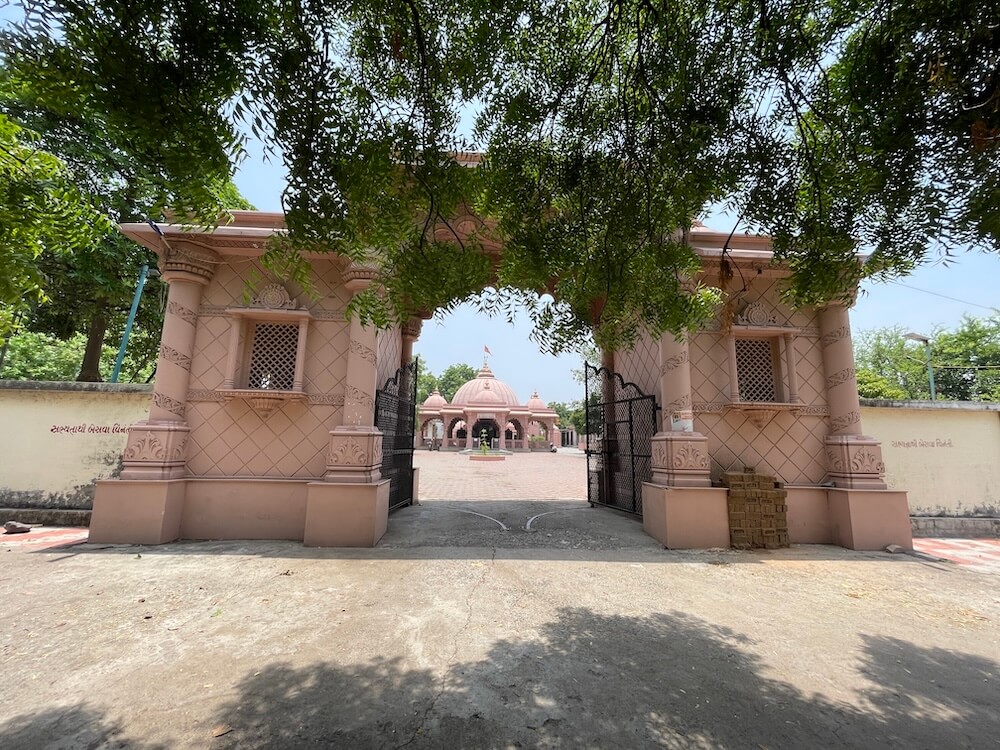
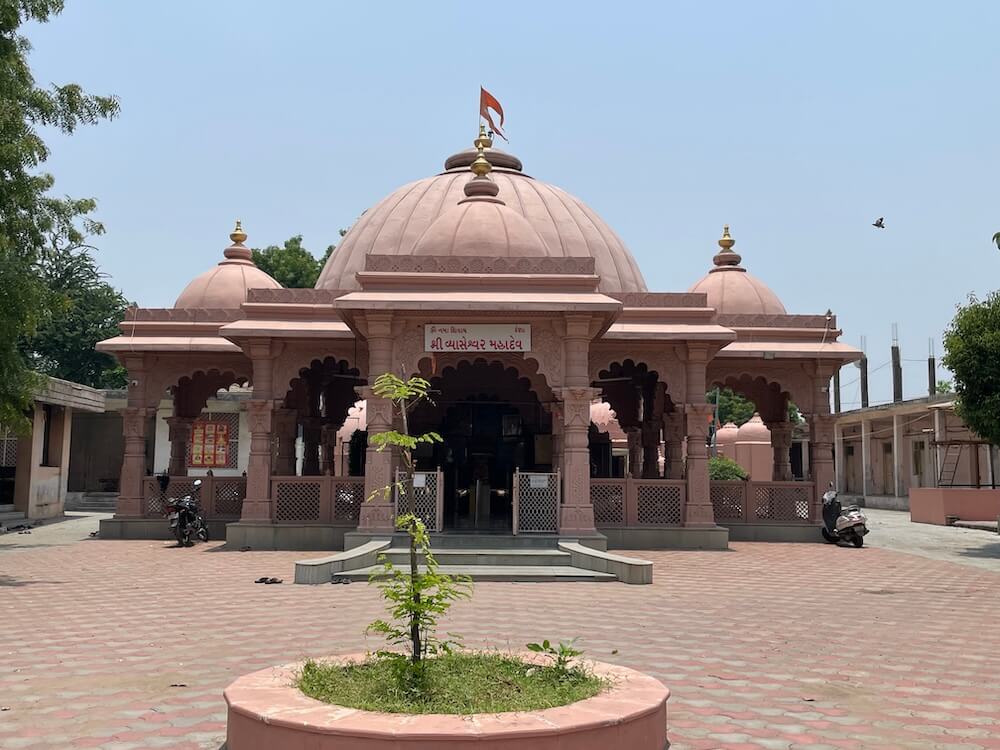
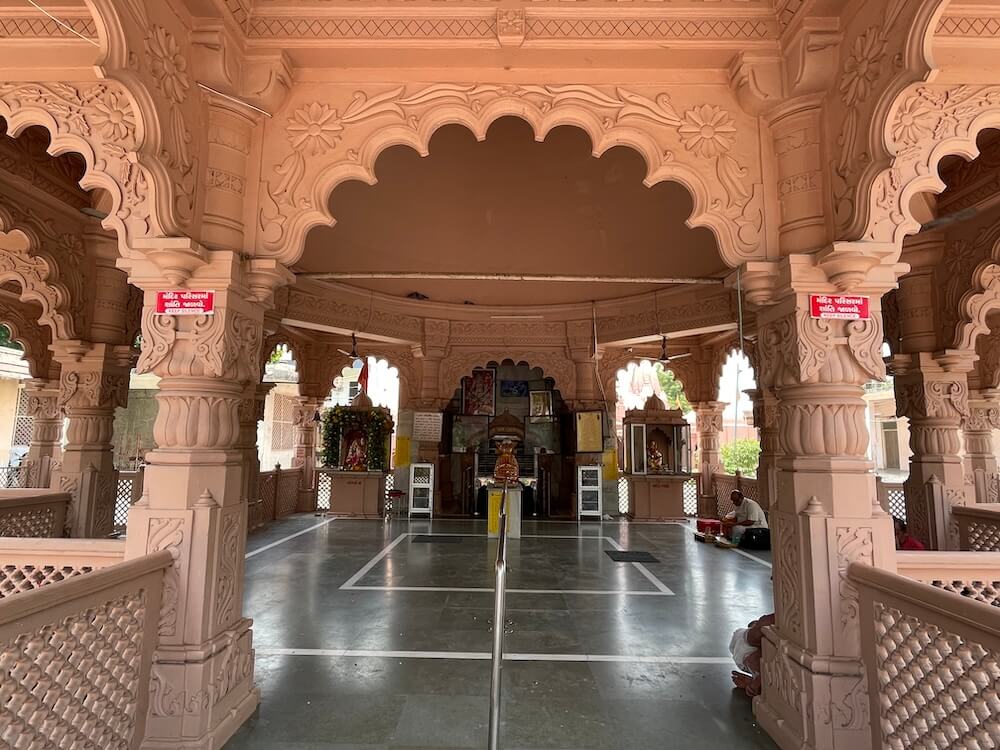
Situated in a sprawling campus between the villages of Dena and Dumad, to the west of the Vishwamitri riverbed, this ancient temple complex features a striking pink sandstone gateway. This entrance, adorned with ornately carved columns and archways, leads to a courtyard where the tombs of past temple priests are said to reside. Beyond the gate rises the main temple, constructed from red Rajasthani stone. Its layout includes a central assembly hall (sabhamandap), flanked on three sides by viewing mandaps, 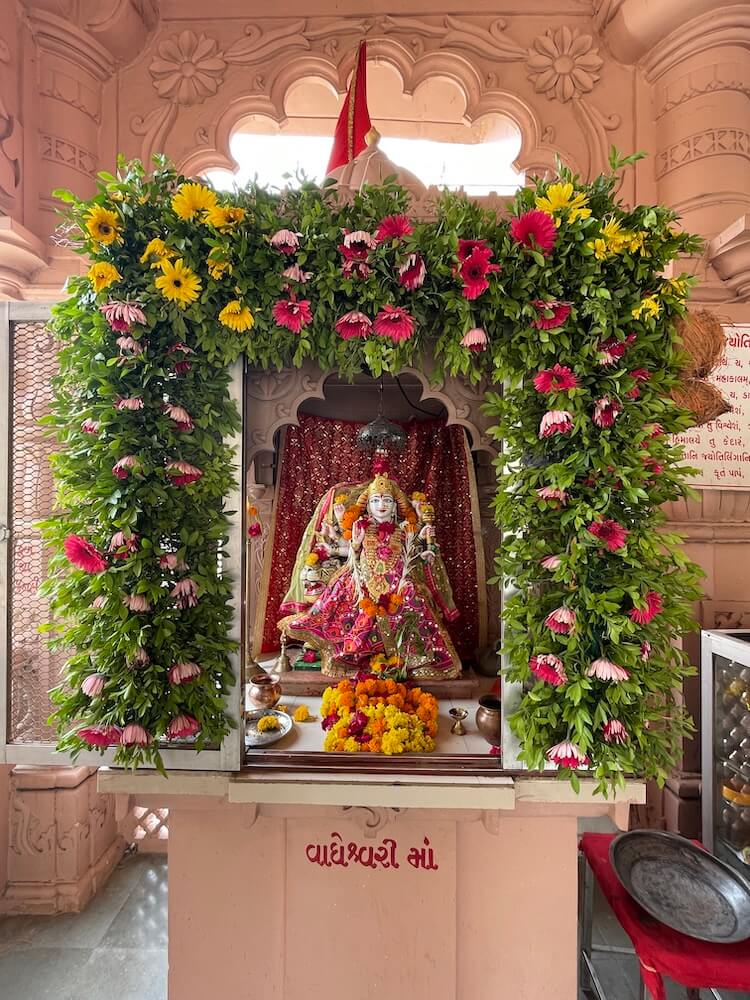 an antechamber (antaral) and a sanctum (garbhagriha). The mandaps and assembly hall are capped with dome-like spires, while the sanctum features a towering Nagara-style spire topped with a double-layered amalaka and a majestic kalasha.
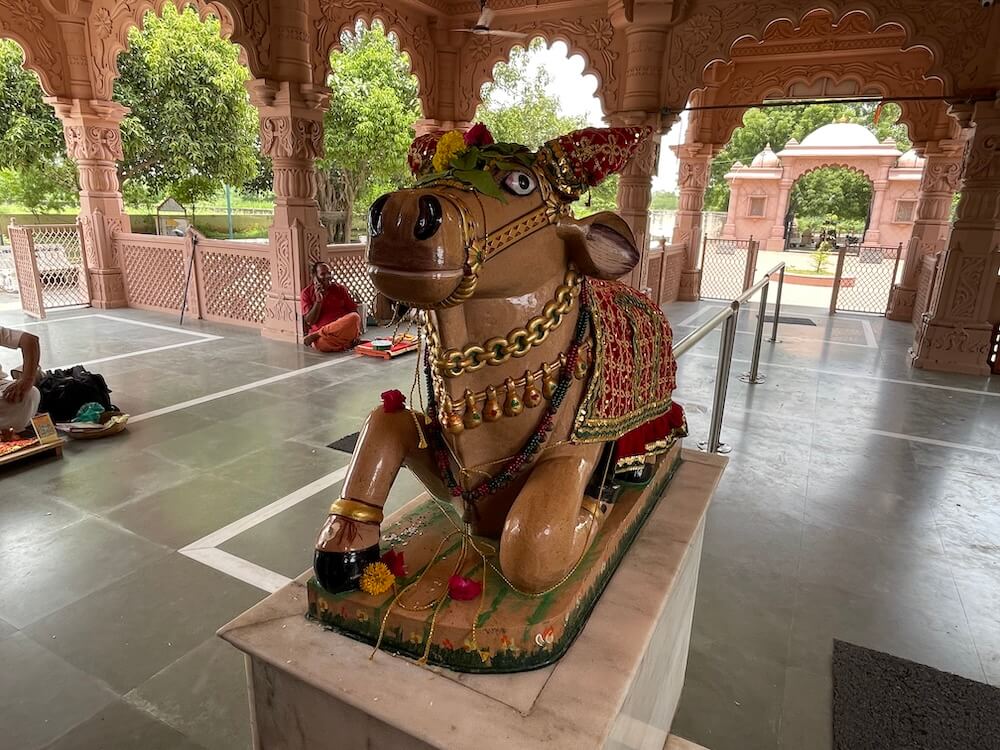
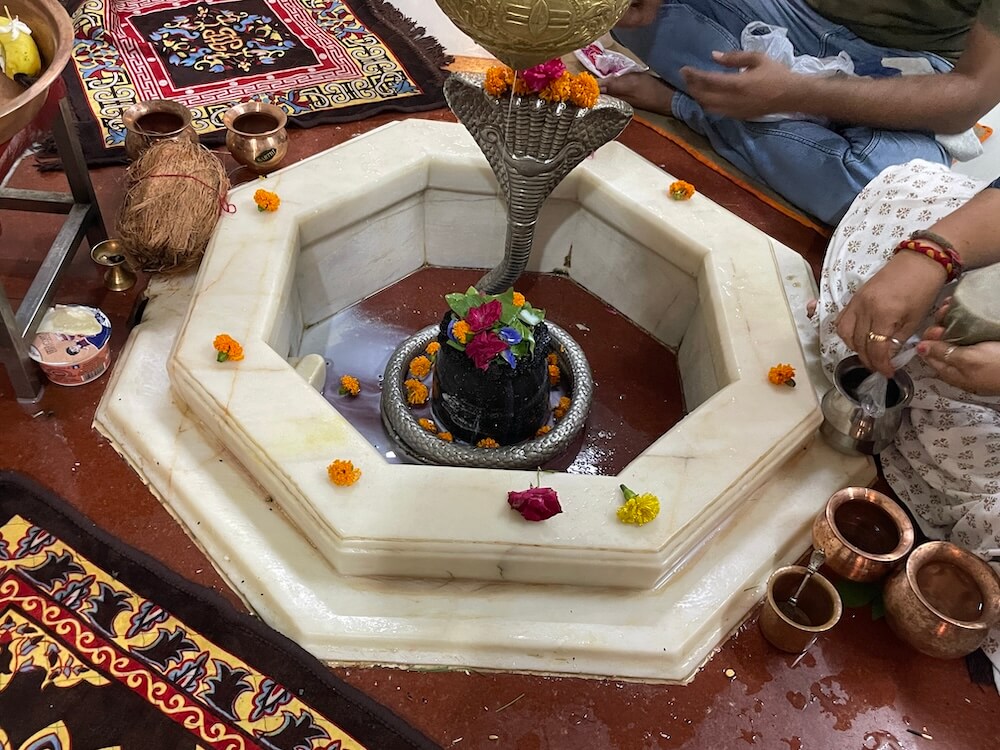
The sabhamandap is open and richly decorated with intricately carved columns and ceiling work. At its center stands a beautifully sculpted statue of Nandi on a marble platform, with a tortoise figure in front. To the left, on a raised platform, is the idol of Ashtabhuja Vagheswari Devi riding a tiger. On the right side rests a statue of Kartikeya astride a peacock. Within the antechamber, there is a shrine to Hanuman on the left and to Ganesha seated on a lotus on the right. The entrance to the sanctum features delicate carvings, with an image of Ganesha engraved on the lintel. Symbolic motifs and guardian deities are sculpted at the base of the door pillars. Descending 24 steps, devotees enter the sanctum to behold the self-manifested, elongated Shivling enshrined in an octagonal marble pedestal (shalunka), adorned with a silver serpent holding a parasol. Above it, water continuously drips for ritual bathing (abhishek). On the wall behind the Lingam, in a separate shrine, sits the idol of Goddess Parvati.
Behind the main temple lie several smaller shrines dedicated to Shiva, along with the priest’s residence and a modest dharamshala. Daily aartis are performed in the morning and evening, drawing devotees from nearby and far-off places. Every Monday, devotees offer bel leaves and flowers and perform rituals with milk and water on the sacred Shivling. During the holy month of Shravan, the temple sees large crowds and hosts numerous religious events.