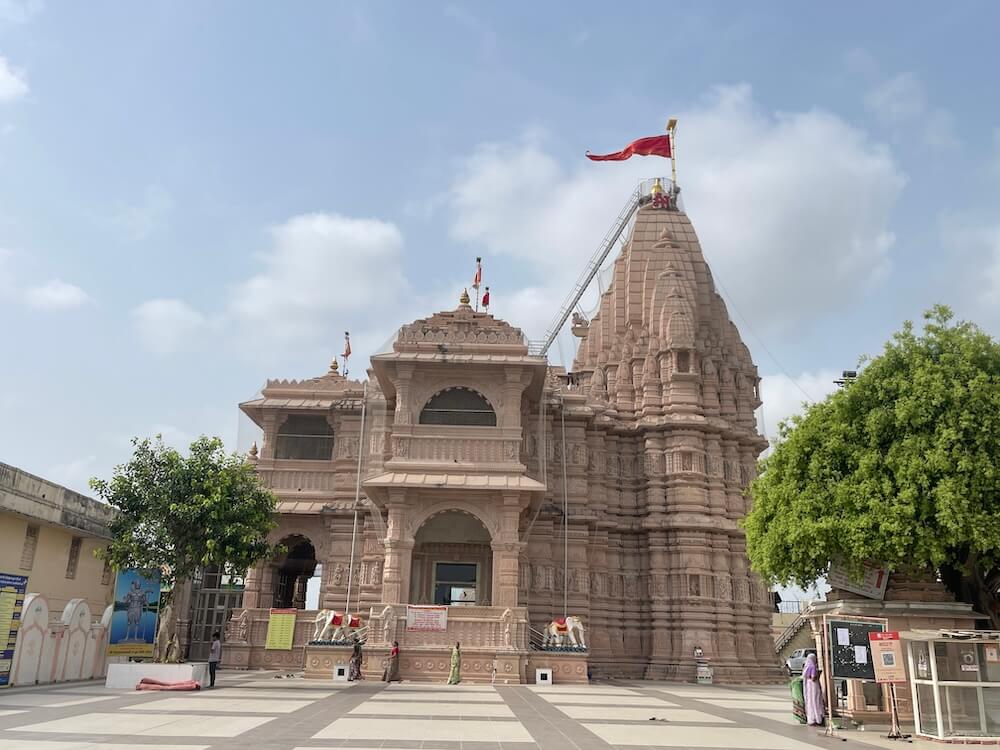
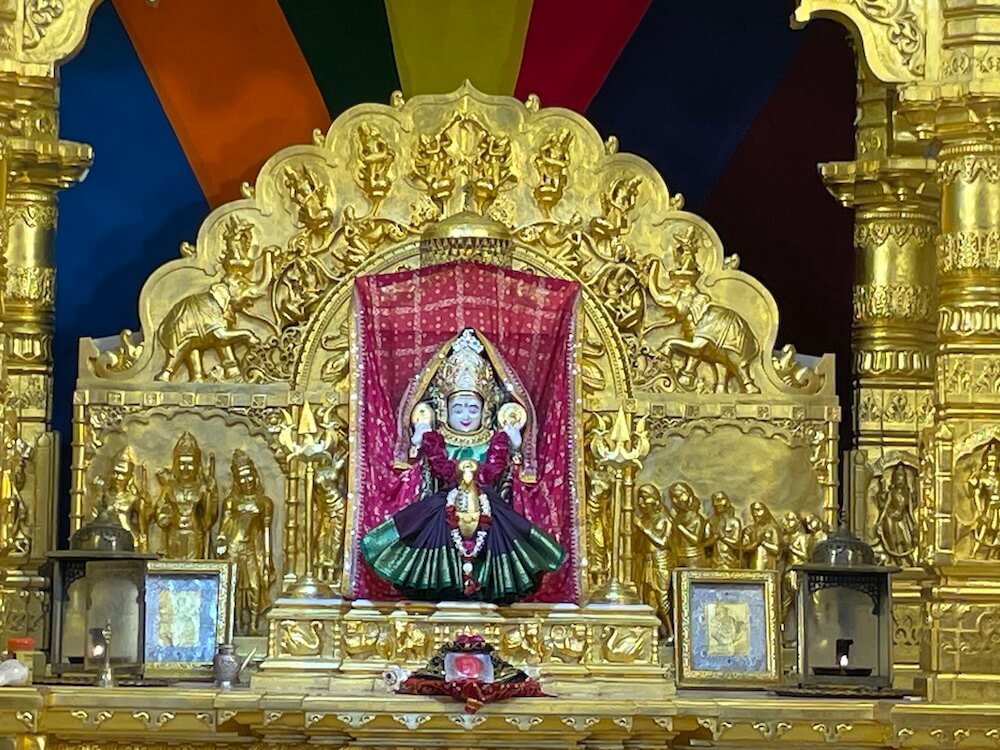
 The ancient temple of Goddess Varadayini, considered a powerful Shakti Peeth in Gujarat, is situated in the historic village of Rupal. The Varadayini Devi here is revered as the Adi Maya. In this grand, fully air-conditioned temple, she is enshrined in the form of Brahmacharini, the second form of Navadurga. The temple is especially famous for the ‘Palli no Utsav’ (Palli Festival). It is believed that the Pandavas themselves initiated this tradition. During this festival, thousands of quintals of pure ghee are poured as an offering over the Palli, the sacred chariot of the goddess. Devotees from all corners of Gujarat flock here for the event.
There are many legends about the origins of the Varadayini shrine.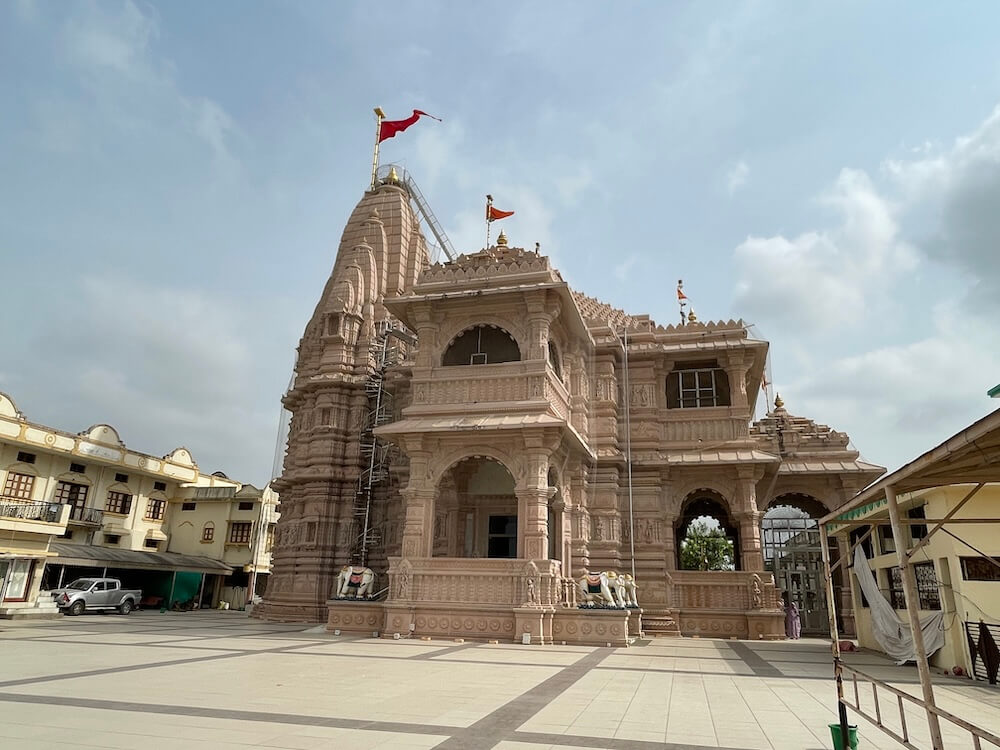 One such tale from the second volume of the ‘Devikosha’ says that once, a demon named Durdama was born from the sweat of Lord Vishnu. This demon began tormenting the gods. Vishnu then declared that only Adi Maya could slay the demon. To invoke her, he instructed everyone to chant the mantra : ‘Om Hrim Klim Shreem Bhagavati Varadayinyai Namah’. After years of penance, Adi Maya manifested, granted boons to the gods and killed the demon. Hence, Vishnu named her Varadayini, the granter of boons. Since she was established in Rupal, she is also known as Rupavati.
Another legend states that during his exile, Lord Rama met Rishi Shringa, who advised him to visit this shrine. Pleased by Rama’s devotion, the goddess gifted him an invincible arrow, which he later used to kill Ravana.
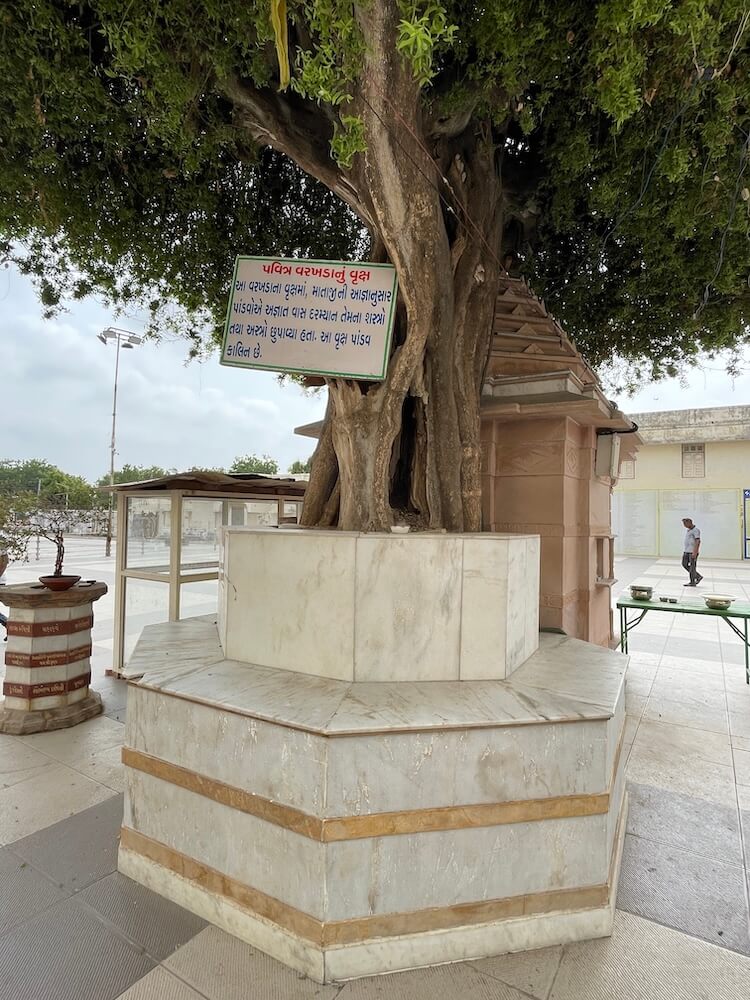 It is also believed that the Pandavas stayed in Rupal during their exile. They prayed to the goddess and vowed to perform a sacred fire offering with a golden ladle if their incognito exile passed without trouble. Before leaving, they hid their weapons and armor inside a Khijda (Prosopis cineraria) tree here, on the goddess’s advice and went to Matsyadesh (present-day Bairat in Rajasthan). This sacred tree, known as Shami, still stands in the temple premises and is associated with this legend. After winning the war, the Pandavas returned, constructed the Palli (sacred chariot) and built five sacred ponds. The ‘Devikosha’ also mentions a large lake once existed in front of the temple, which is now a spacious courtyard.
Rupal was known in ancient times as Raupyapuri or Rupavati. According to ancient texts, Mularaj Solanki, founder of the Chalukya (Solanki) dynasty of Gujarat, donated the village of Rupal and four horses to four Brahmins on Kartik Purnima, in the year Shalivahana Shaka 934.
The temple, believed to have been originally established by the Pandavas, lacks a definitive construction date. In the 12th century, Chalukya Emperor Siddharaj Jaysinh (r. 1094-1143 CE), son of King Karansingh (who founded Karnavati – modern-day Ahmedabad), restored the temple. During his childhood,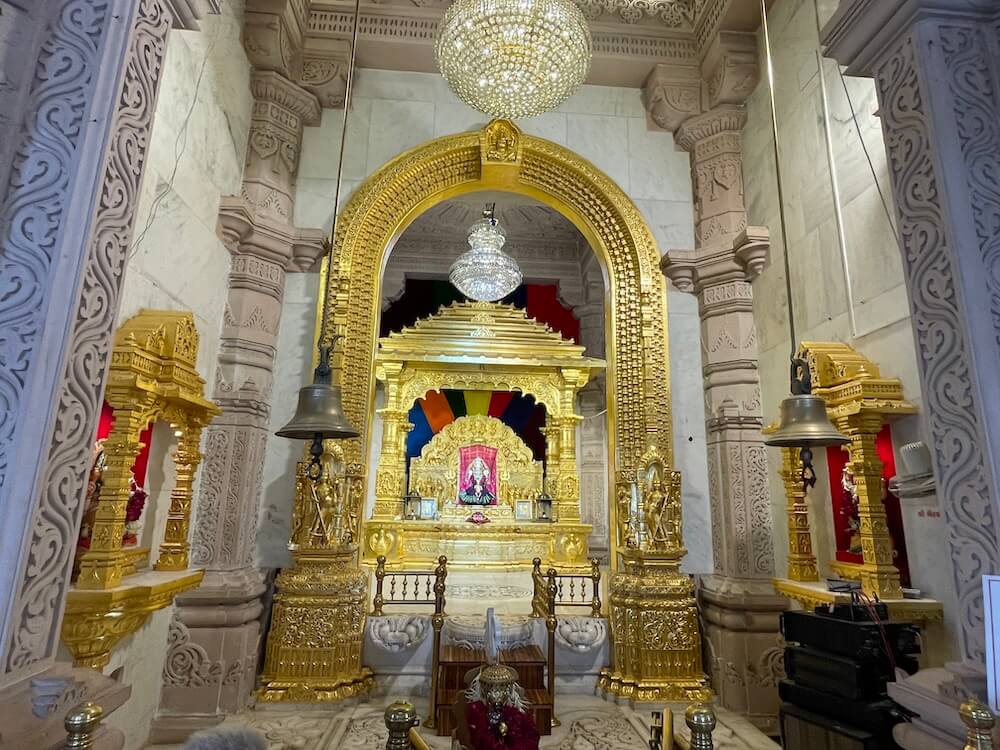 after his father’s death, his mother Mayanalladevi ruled with three ministers. When King Yashovarma of Dhar attacked Patan, Mayanalladevi fled to the Varadayini temple. With the goddess’s blessings, Siddharaj avenged the attack and later spent a fortune restoring the temple. Over time, several restorations occurred, including a major renovation in 2018 that gave the temple its current majestic form.
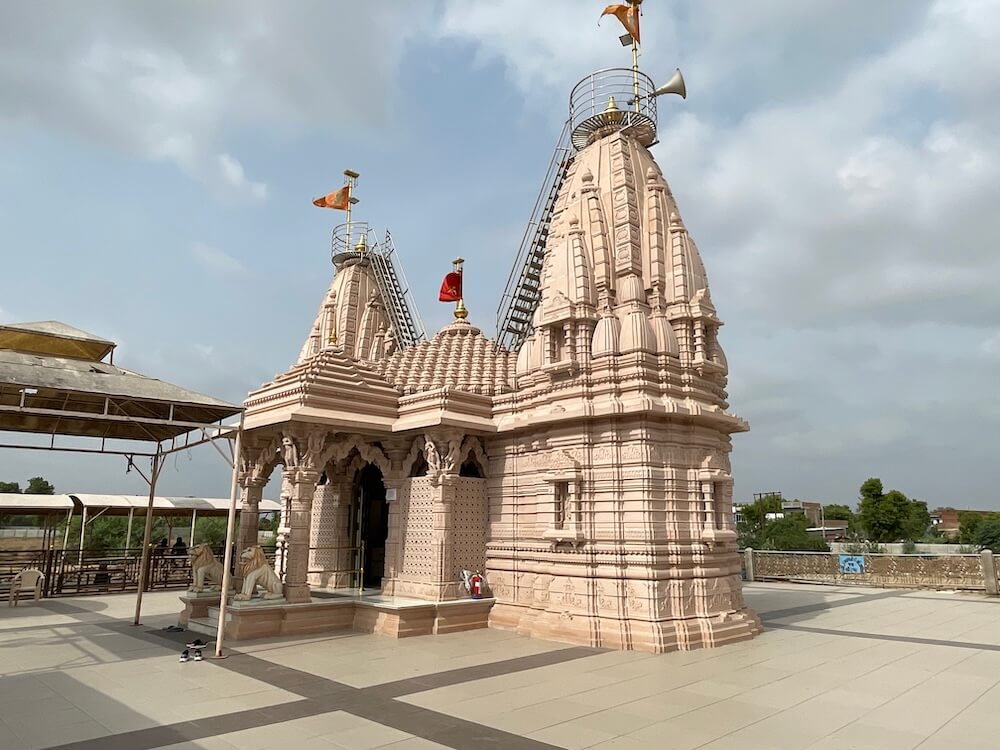
Situated along a main highway, the temple lies within a vast complex. To the right of the courtyard is a two-story building housing the Prasadgriha (temple kitchen) and trust office. On the left stands the ancient Khijda tree, under which is a small shrine with idols of Arjuna and Draupadi. Nearby is a donation box whose collections are used for public welfare.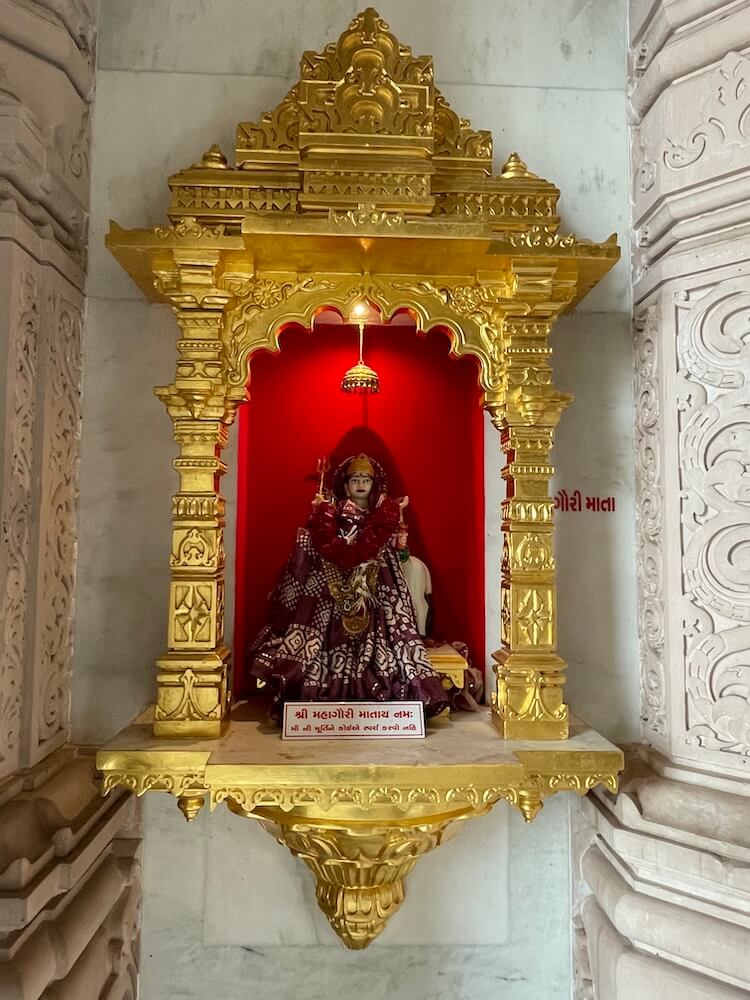 The complex also includes small temples of Khodiyar Mata, Ganesha and Hanuman.
The main temple, constructed in the Sompura architectural style which is a part of the Nagara tradition, is built with pink Bansi Paharpur stone. The main hall and mandapa resemble Rajasthani palaces. The sanctum tower (shikhara) follows the Bhumija style with Urushringa (mini-spire clusters) and features a circular amalaka and kalash (finial). The outer walls and pillars are richly carved with divine sculptures and images of celestial maidens. The wooden Palli is kept near the main hall.
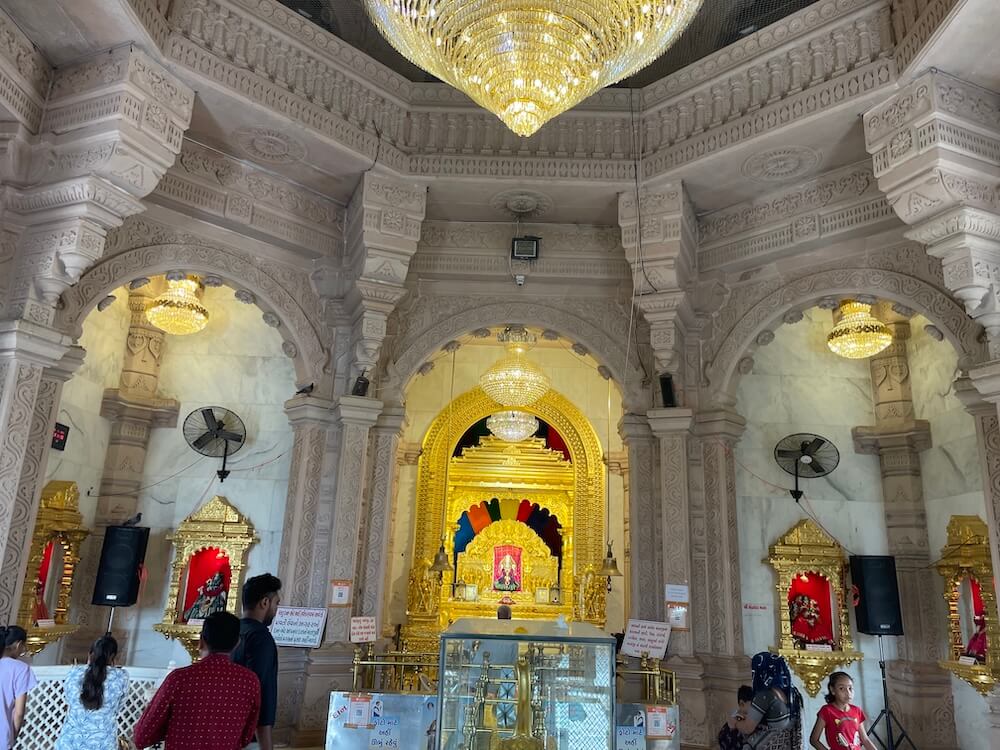
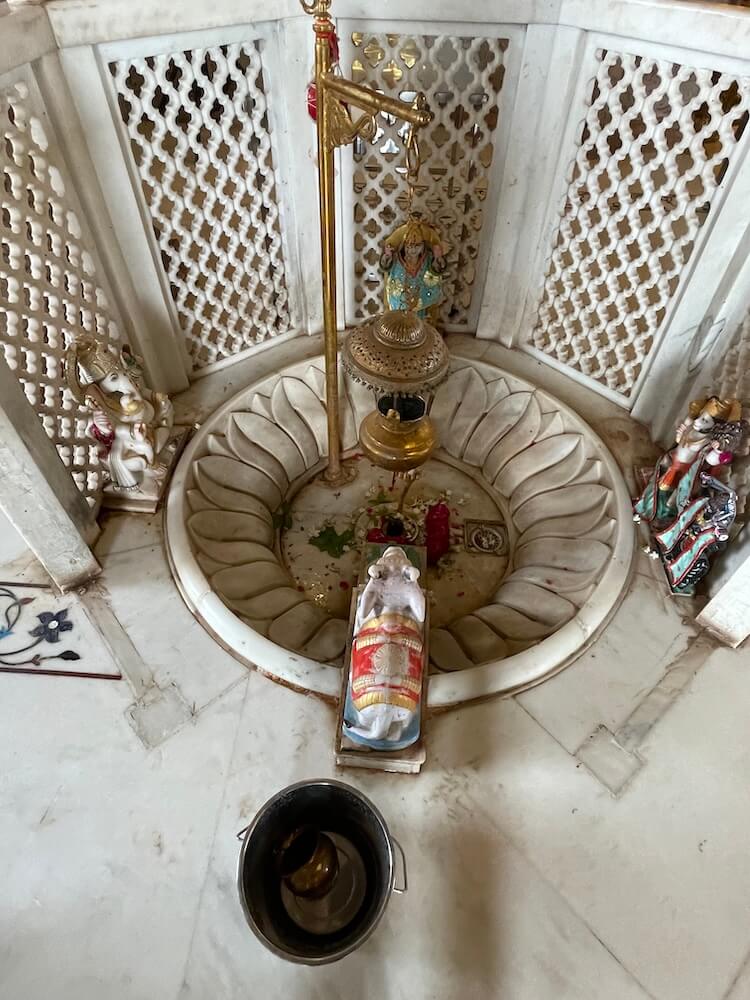
Seven steps lead to the elevated temple platform. Marble elephants flank the steps. The entire temple is air-conditioned. Inside, the halls are adorned with intricate carvings, including a large central chandelier. The sanctum features Navadurga idols, a golden statue of a swan (the goddess’s mount) and a Shiva lingam on the right.
Near the sanctum are idols of Hanuman and Ganesha. The arched doorway of the sanctum is intricately carved with doorkeeper goddess figures on its pillars. Inside, the deity is represented by a silver-masked marble idol of the goddess seated on a swan, adorned with golden ornaments and a majestic crown.
Managed by the Shree Varadayini Mata Devsthan Sansthan Trust, the temple conducts daily rituals and Chandi Path. Various Hindu festivals are celebrated here with great enthusiasm. During Sharadiya Navratri, all nine forms of Durga are worshipped. The Palli Yatra on Navami midnight is the highlight. Palli is a nine-foot-high wooden chariot made from Khijda wood. It is mounted on a stand and adorned with five eternal lamps. At midnight, the Palli is carried in a procession through 27 stops in the village, where it is bathed in pure ghee. Thousands of devotees contribute ghee and participate in the celebration. The temple is beautifully illuminated for the occasion and Mahaprasad is distributed by the temple trust.