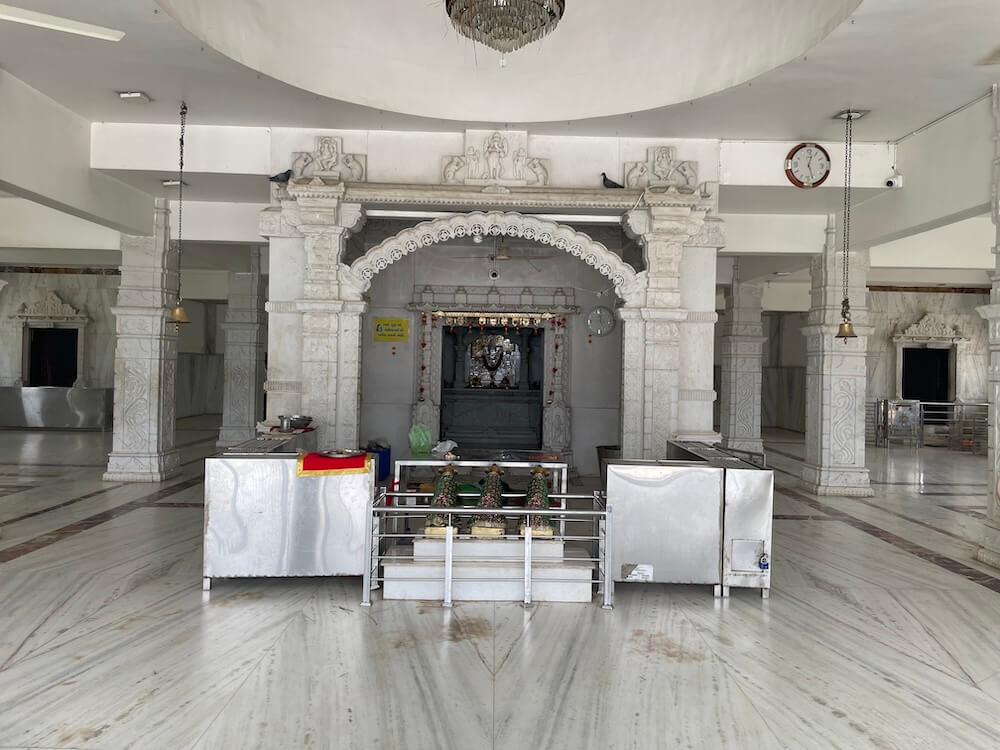
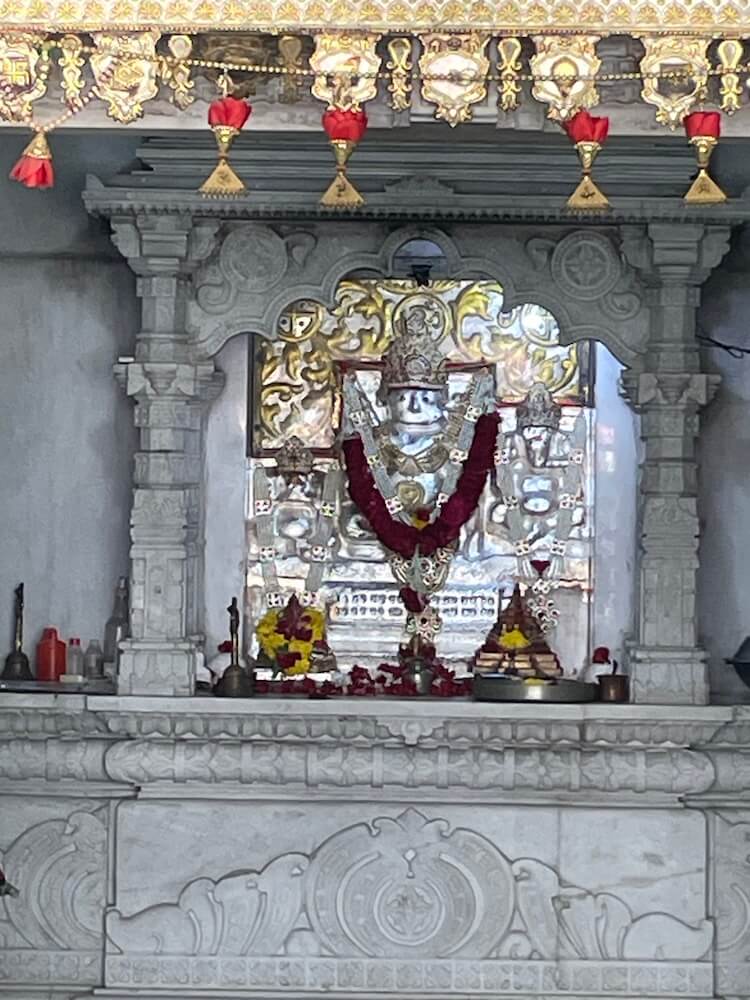
 Across the world, Lord Ganesha, which is the master of 14 branches of knowledge and 64 arts, is worshipped in many forms. When we think of Ganesha, we typically imagine an idol with a trunk. However, at Vadsariya Ganesh Temple in Vadsar, there is a unique self-manifested (Swayambhu) idol of child-form Ganesha without a trunk. The idol has a nose but no trunk. On either side of this central idol are Riddivinayak and Siddhivinayak, both with trunks. These three idols are believed to have emerged from a single stone around 1,200 years ago. The central form is also known as Adi Ganesh or Bal Ganesh and is deeply revered by countless devotees.
Devotees believe that prayers to Vadsariya Ganesh can even help expedite visa approval for going abroad, which is why the deity is affectionately referred to as ‘Dollariya Ganesh’ (Dollar Ganesh).
Kalol taluka, known as the gateway to South Gujarat, houses many ancient temples such as Kapileshwar Mahadev (Kalol) and Asudev Mahadev (Jamla). Vadsariya Ganesh Temple is equally prominent and spiritually vibrant. According to legend, around 1,200 years ago, a landlord in Vadsar had a cow that regularly let down milk at a particular spot in his field but didn’t yield milk at home. Lord Ganesha appeared to the landlord in a dream and said, “I am in your field. Bring me out and install me.” 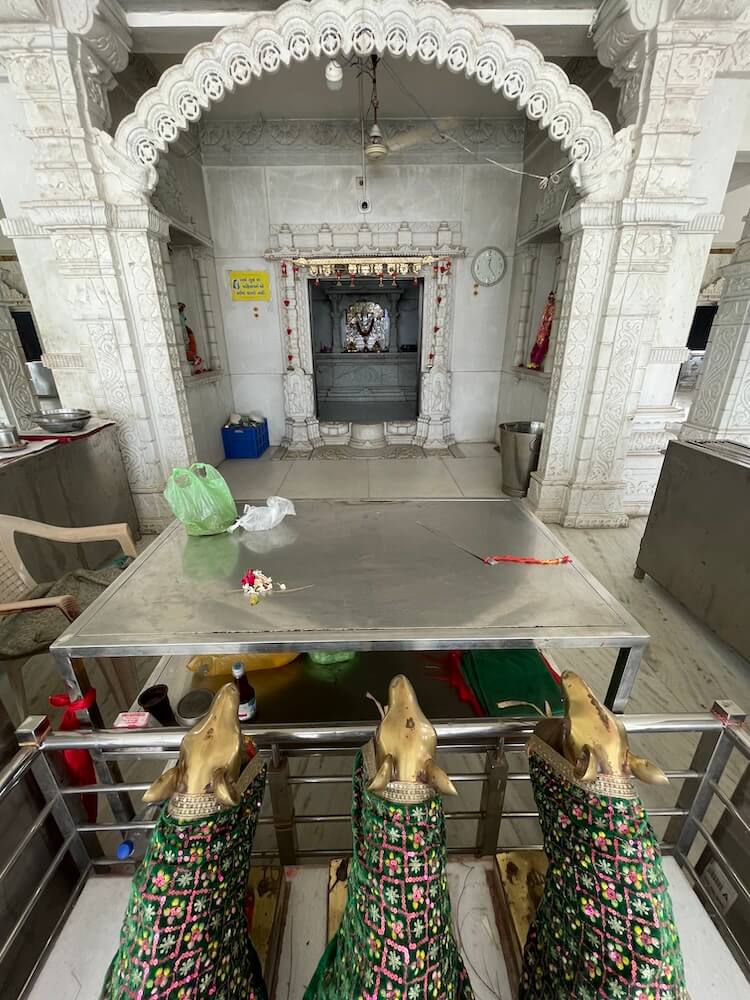 The landlord dug the spot and discovered a self-manifested idol. The idol was consecrated according to proper Vedic rituals. Over time, the temple underwent several renovations and most recently, a beautiful new structure made of marble stone was constructed.
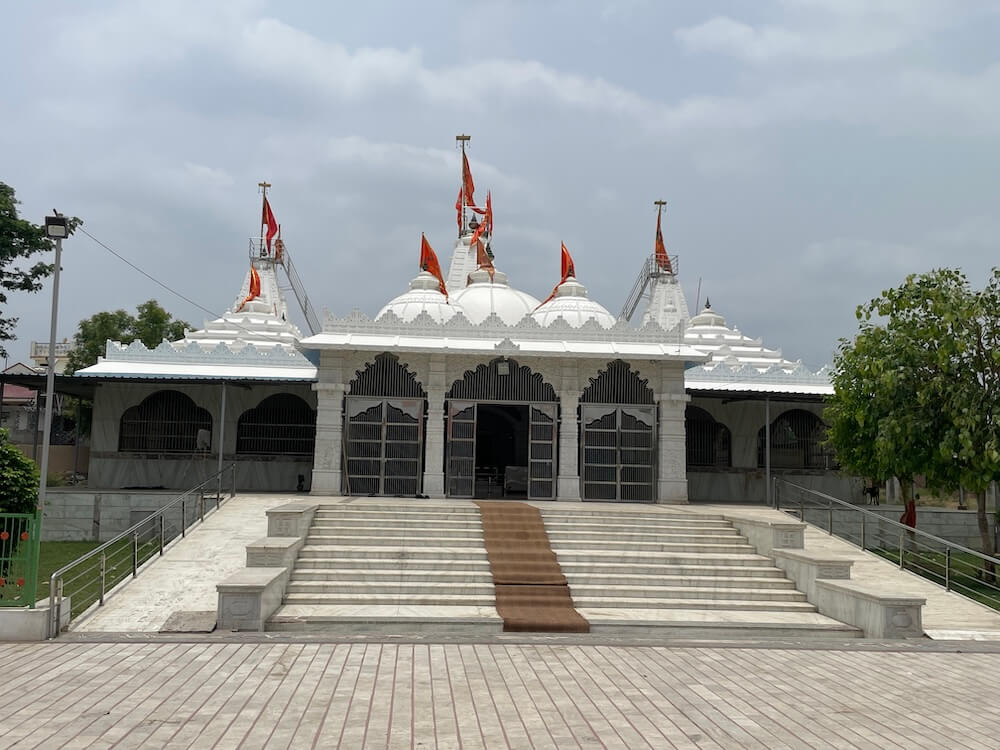
Located near the Vadsar Gram Panchayat office, this white marble temple stands in a spacious courtyard. A grand entrance gate leads into the complex, adorned with intricate carvings on its pillars and arch. The makara-style ceiling above features beautiful carvings, including raised sculptures of two elephants, symbols of prosperity.
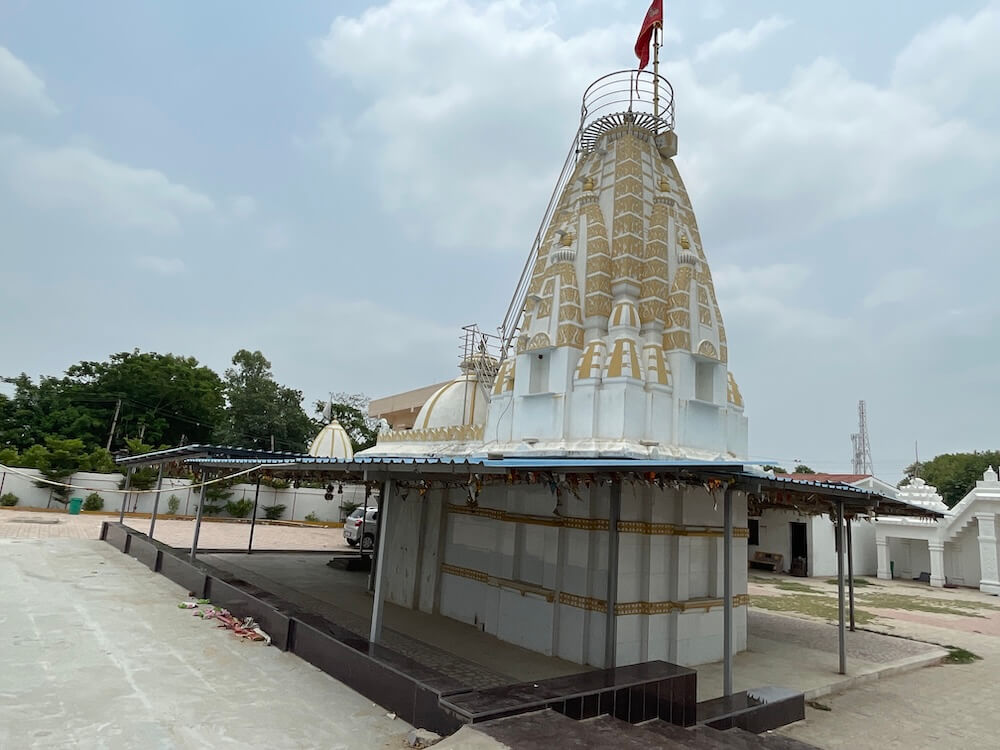
The courtyard has paved flooring and a landscaped garden. On the right side of the entrance is a large Yagnashala used for religious fire rituals and homas. Not far from it, on an elevated platform, is the magnificent temple of Bal Ganesh, structured with a sabhamandap (assembly hall), antaral (vestibule) and garbhagriha (sanctum). The assembly hall has three domed spires. While both sides have pyramidal spires, the sanctum’s spire is tall with a prominent amalaka and kalash. The hall has one main and two side entrances, reached by 11 steps.
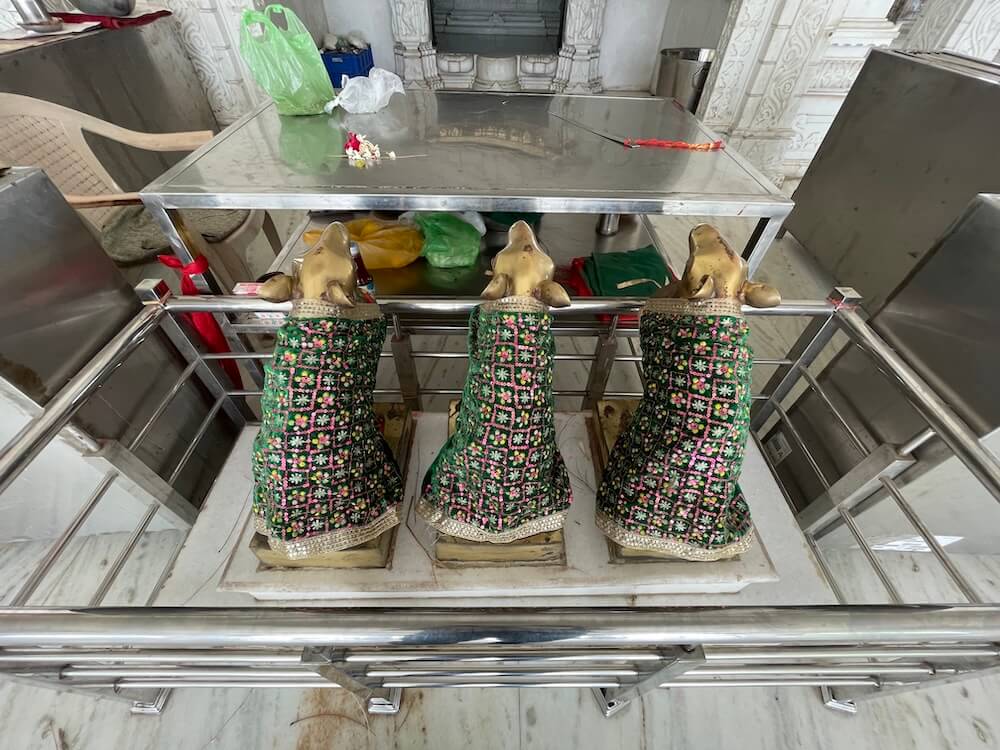
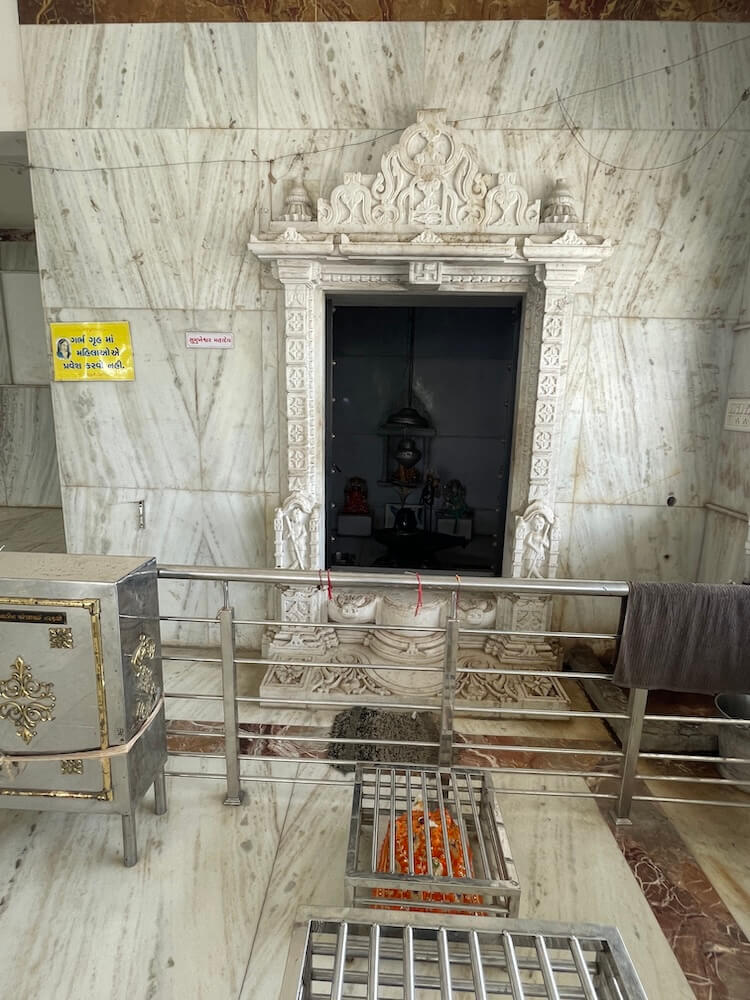
In front of the temple sit three large golden mice, symbolic vehicles of Ganesha. Devotees whisper their wishes into the ears of these mice. Inside the vestibule, to the right is a shrine to Batuk Bhairav and to the left, a shrine to Hanuman. 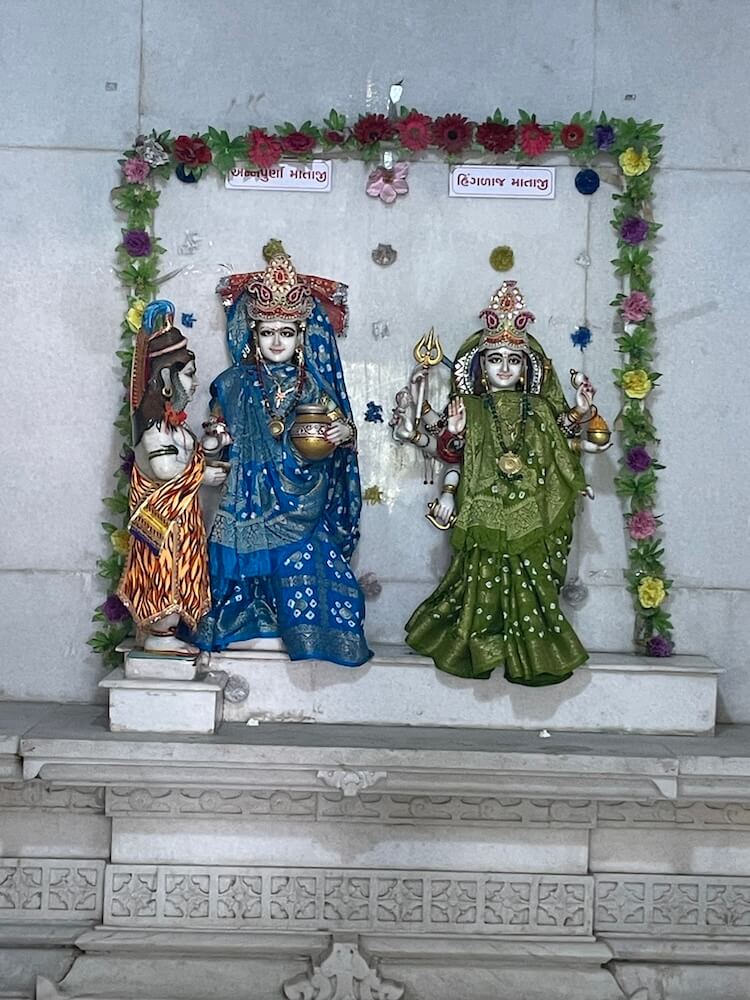 The pillars at the sanctum entrance are richly carved and depict guardians (dwarpals) at the base. The threshold has three semi-circular stones. Inside, seated on a raised golden platform, is the silver-plated idol of child-form Ganesha adorned with jewels and a crown. On either side are Riddivinayak and Siddhivinayak idols. Women are not permitted inside the sanctum.
On the outer walls of the sanctum are marble idols of Varuna, Indra and Kubera. To the right of the temple, within the same sabhamandap, is a shrine of Sumukeshwar Mahadev. A black stone Nandi idol stands outside and the Shiva family idols are installed inside.
There is also a small temple dedicated to Goddess Annapurna here. It is believed that, like Vadsariya Ganesh, the idol of Goddess Annapurna was also self-manifested (Swayambhu). As the original idol was damaged, a new idol was consecrated in its place. Devotees believe that sincere worship of Goddess Annapurna fulfills all desires.
Within the same temple complex, there is also an idol of Hinglaj Mata. In the courtyard, there is a temple of Amba Mata as well. This temple features a tall Urushringa-style spire over the sanctum and a domed spire over the assembly hall (sabhamandap).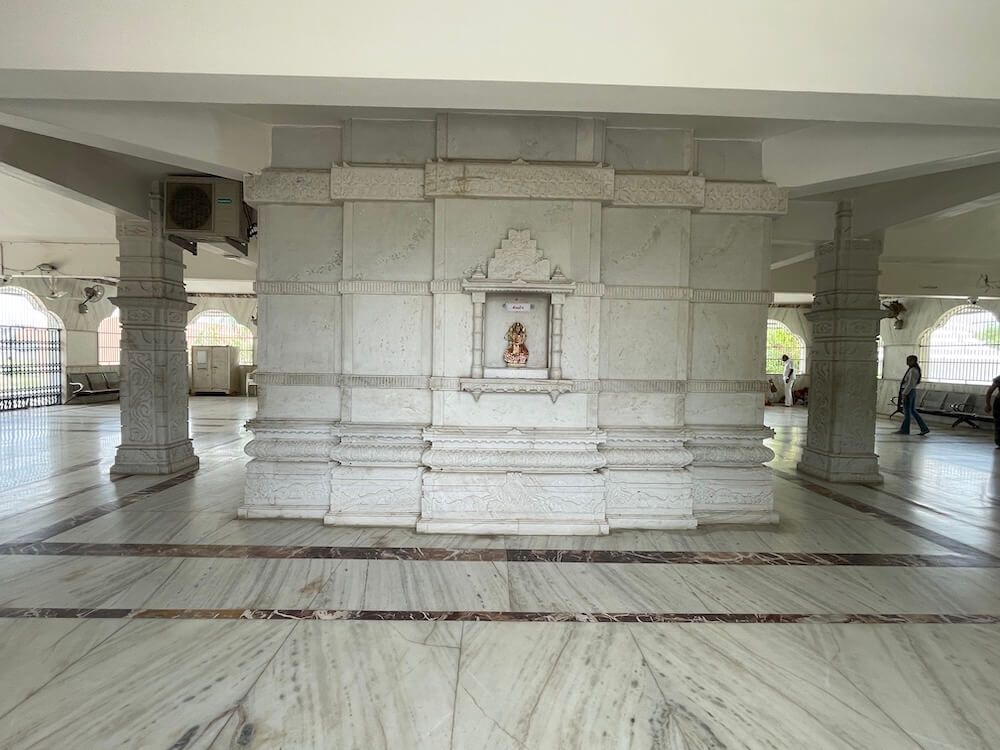 Inside the vestibule are idols of Ganesha and Hanuman and in the sanctum is a beautiful idol of Amba Mata.
Many saints and sages have meditated in the Vadsariya Ganesh temple complex. Some of their samadhis (memorial shrines) are still present here. The courtyard also houses temples dedicated to Goga Maharaj, Balidev and Sheetala Mata.
Daily rituals and worship are performed at Vadsariya Ganesh Temple. Morning aarti is held at 5:00 AM and evening aarti at 7:00 PM. On Tuesdays, hundreds of devotees come for darshan. On Vinayaki and Sankashti Chaturthi, there is a steady stream of visitors throughout the day. On Angarki Chaturthi, the temple becomes so crowded that there is barely space to stand. It is said that Lord Ganesha was established here on Vaishakh Shukla Chaturthi and hence large numbers of devotees visit on that day as well. Many devotees draw swastikas using grains like rice or wheat in front of the deity as part of their vows (navaas).