
वड्यार श्री एलमकवू देवी मंदिर
वडयार, थलयोलापरंबु, जि. कोट्टायम.
Vadayar Sree Elamkavu Devi Temple
Vadayar, Thalayolaparambu, Dist. Kottayam.
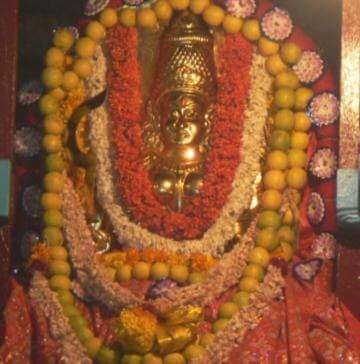 Vadayar Sree Elamkavu Devi Temple is a famous ancient temple located on the banks of the Vadayar River, a branch of the Muvattupuzha River, near Vaikom in Kottayam district, Kerala. The main deity is Bhadrakali in her fierce form, believed to embody the divine presence of Kodungallur Amma. Devotees believe that Elamkavilamma of Vadayar is the younger sister of Kodungallur Bhagavathy. The temple is best known for the world-famous Attuvela Festival, held during the Malayalam month of Meenam (March–April). Every year, thousands of devotees and visitors gather to take part in this festival, which is an important part of the region’s cultural and religious traditions.
The history of Vadayar Elamkavu Devi Temple is believed to date back to around AD 1100. From the 12th century until the conquest of the Vadakkumkoor Kingdom by Maharaja Marthanda Varma in the 1750s, the temple served as one of the official family deity temples of the Vadakkumkoor rulers, who governed central Kerala. 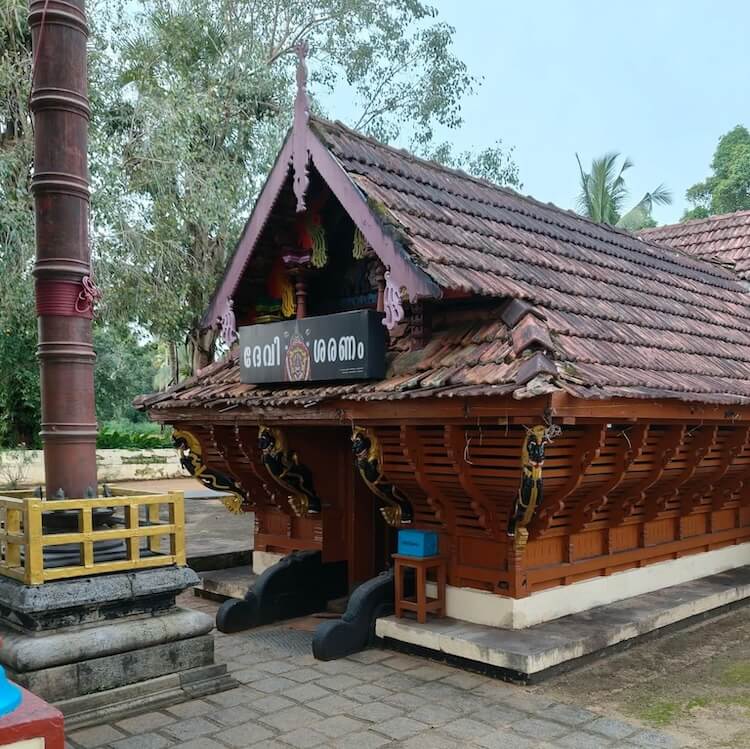 It remained under their direct protection and administration. During the period when Kaduthuruthy and Vaikom were important administrative centres, the temple, located on the banks of the Vadayar River, a major branch of the Muvattupuzha River, developed into an important centre for inland water transport as well as cultural and trade activities. Travellers using the waterway that connected Alappuzha, Kottayam and Ernakulam traditionally stopped to offer prayers to the Goddess before continuing their journey. Historical records also suggest that, during Tipu Sultan’s invasion of Malabar, some administrative activities from Kodungallur were temporarily shifted to Vadayar. After the Vadakkumkoor Kingdom was annexed to Travancore in the 1750s, the administration of the temple came under the Travancore Government. Today, Vadayar Elamkavu Devi Temple is one of the important Bhadrakali temples managed by the Travancore Devaswom Board.
The main legend associated with the temple says that, during the rule of the Vadakkumkoor Kingdom, a severe outbreak of smallpox spread across the region. 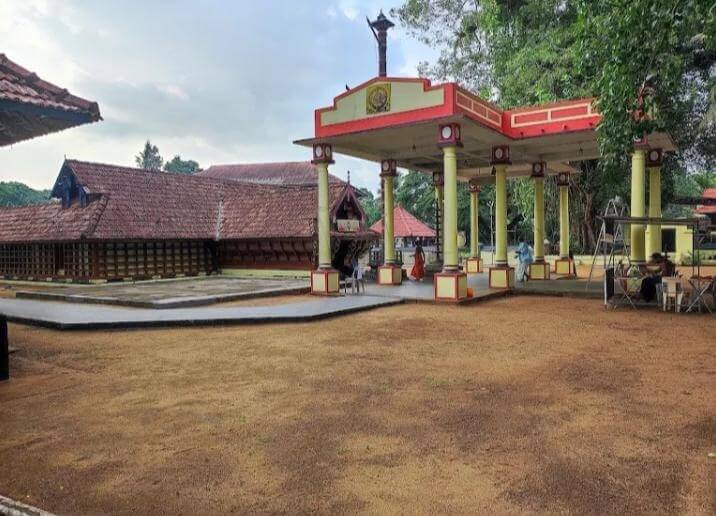 After consulting astrologers, the king was advised that the calamity would end if the divine presence of Kodungallur Bhagavathy was invoked and consecrated here. According to the legend, once the Goddess was consecrated at the temple, the smallpox epidemic and other hardships came to an end. Although the deity is believed to embody the divine presence of Kodungallur Amma, devotees worship Vadayar Elamkavilamma as the younger sister of Kodungallur Bhagavathy. It is believed that, on the Ashwathi day of the Malayalam month of Meenam, Kodungallur Bhagavathy travels by water to visit her younger sister. Elamkavilamma then goes in a small boat to the Attuvela landing place to receive her elder sister and both deities return together to the temple on the decorated Attuvela raft.
  This belief forms the basis of the famous Attuvela Festival. As a mark of respect to her elder sister, Elamkavilamma is believed to leave her sanctum and stay in a temporary structure known as the Pallisrampu during the festival, returning to the sanctum only after Kodungallur Bhagavathy departs. Another local belief says that the divine presence of the Goddess was first established at the Attuvela landing place, about 3 km from the temple, before being moved to the present temple.
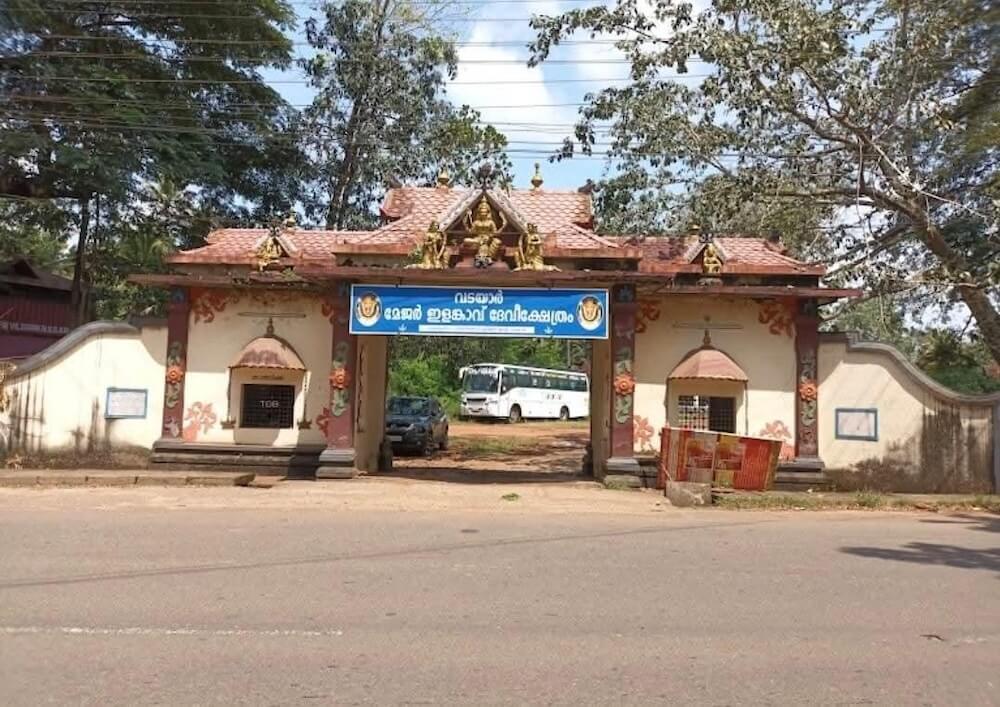
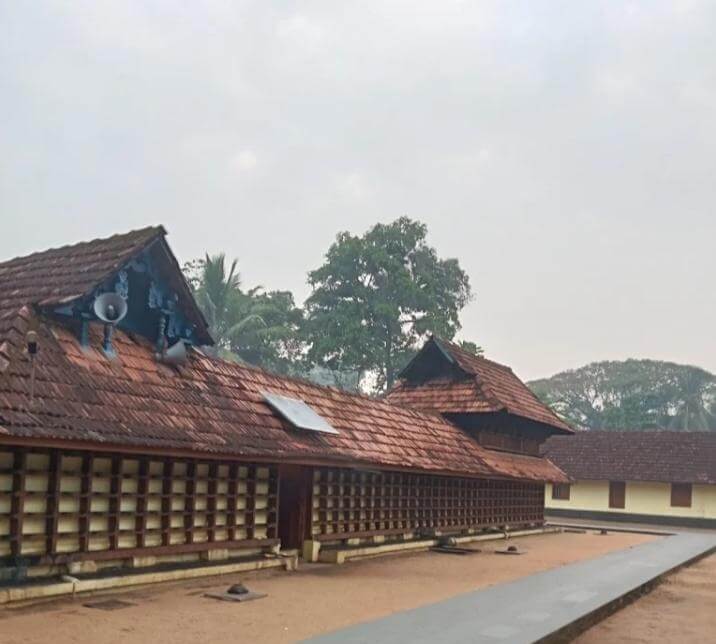
From the roadside, visitors first enter the temple through a large entrance gateway. Inside the gateway are the elephant shelter (Aanappanthal) and the temple flagstaff (Dwaja Stambha). Beyond these is a spacious sand courtyard and the traditional Kerala-style Nalambalam with a tiled roof surrounding the central shrine. Rows of traditional oil lamp holders are fixed along the inner walls of the Nalambalam. In front of the sanctum is the Namaskara Mandapam, a prayer hall with wooden pillars and a tiled roof. The Vadayar River, a branch of the Muvattupuzha River, flows beside the temple. The Attuvela landing place (Attuvela Kadavu), where the main rituals of the famous Attuvela Festival take place, is also part of the temple premises.
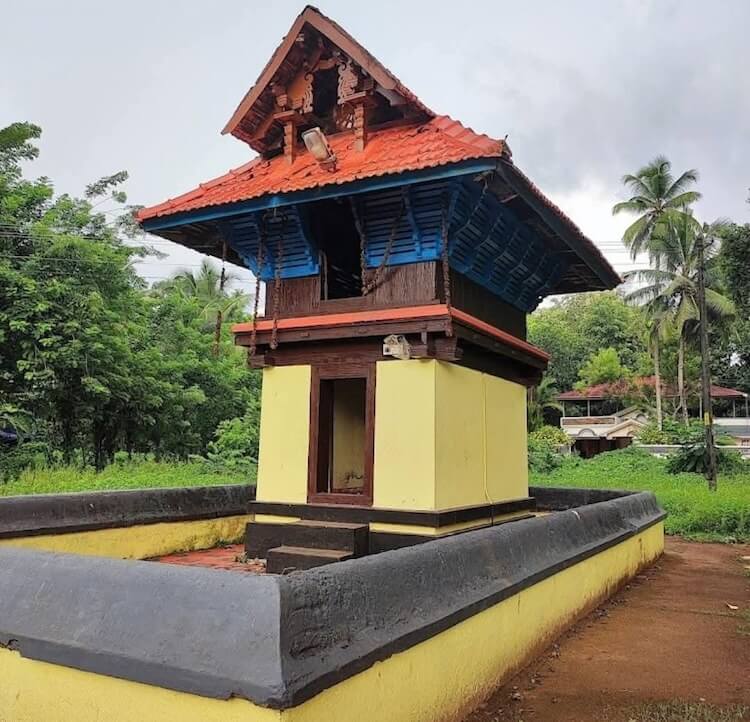
The Sreekovil (sanctum) is built in the traditional Kerala temple architectural style. It has a square plan, which is considered the most sacred form in Kerala temple architecture. The Garbhagriha (inner sanctum) is constructed of granite, while the outer walls are built of laterite stone and decorated with intricate wooden carvings. The tiled pyramidal roof slopes on all four sides and is crowned with a bronze Sthoopika (finial). The stone steps (Sopanam) leading to the sanctum are flanked by sculptures of Dwarapalakas (guardian deities).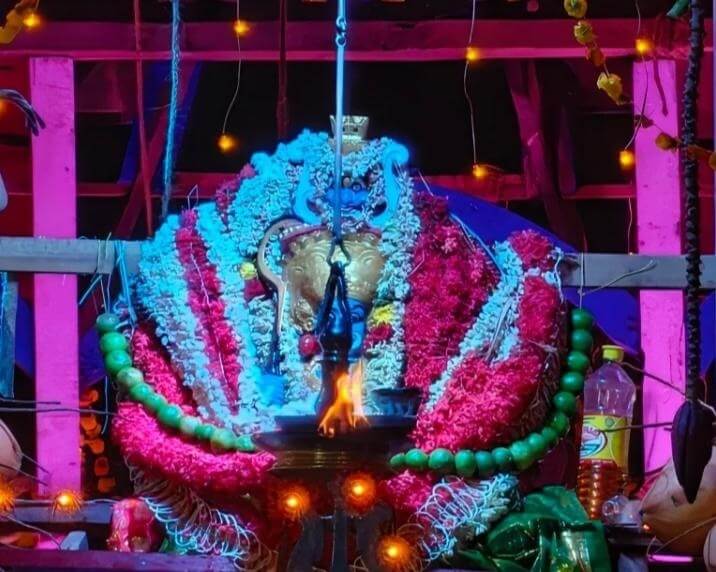 The main deity is worshipped as Rudra Mahakali in her fierce form after slaying the Asura Darika and the deity faces north, a feature traditionally associated with Bhadrakali temples. Daily worship is performed with a golden Thirumukham (sacred face mask) adorning the main idol. The deity is installed on a raised pedestal, allowing devotees to have a clear view of the Goddess when the sanctum doors are opened.
Apart from the main deity, the temple has several other deities. Lord Ganesha is enshrined inside the Nalambalam, to the south-west of the main Sreekovil, facing east. A shrine dedicated to Khandakarnan, worshipped as the guardian deity of Bhadrakali, is located on the northern side within the temple compound. The temple also has a Nagathara, dedicated to Nagaraja and Nagayakshi, beneath a sacred tree within the temple premises. Outside the temple compound, beneath an ancient palm tree, is the shrine of Yakshi Amma. 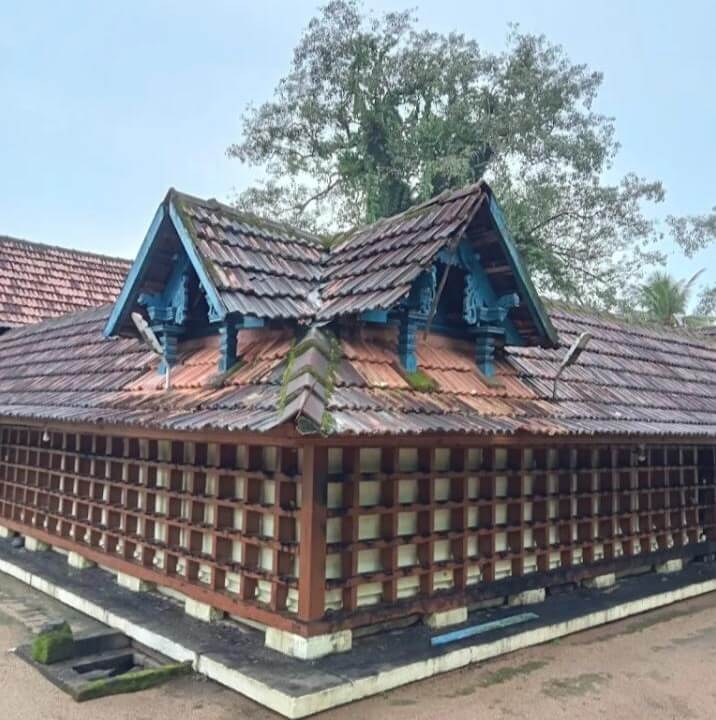 A shrine dedicated to Brahmarakshas, regarded as one of the temple’s protective deities, is situated in the south-western part of the temple compound.
The most important festival of the temple is the world-famous Vadayar Attuvela Festival, held on the Ashwathi and Bharani days of the Malayalam month of Meenam (March–April). The festival is based on the belief that Kodungallur Amma travels by water to visit her younger sister, Elamkavilamma. During the celebrations, large country boats are tied together to create the Attuvela Chad, a three-tiered, illuminated structure designed like a temple. Accompanied by traditional percussion music, it is ceremonially taken along the river. Another major celebration is the eight-day annual festival, which begins with the ceremonial flag hoisting during the Malayalam month of Kumbham (February–March). Special rituals, Thalappoli, Garudan Thookkam, Peeli Thookkam and various cultural programmes are held during the festival. 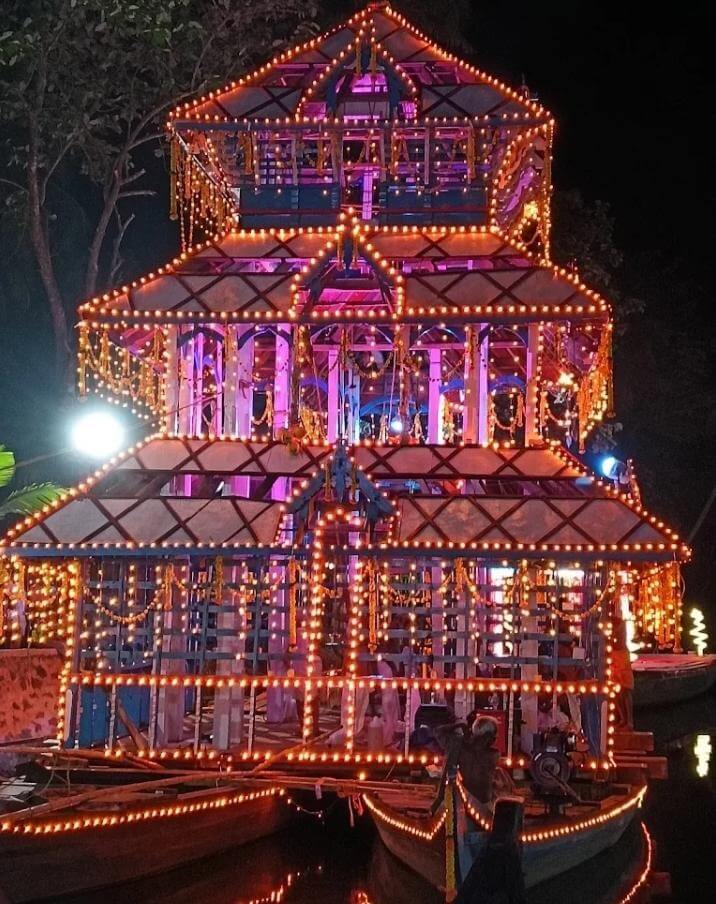 Tuesdays and Fridays are considered especially important for the Goddess and large numbers of devotees visit the temple on these days to participate in the special rituals and offerings. Other important annual observances include the Navaratri festival in the Malayalam month of Kanni (September–October), with special rituals on Durga Ashtami, Mahanavami and Vijayadashami, including the Vidyarambham ceremony, as well as the Thrikkarthika festival in the Malayalam month of Vrischikam, when thousands of oil lamps are lit throughout the temple premises.
The main offerings at the temple include Neypayasam, Aranazhi Payasam, Chuttuvilakku, Niramala, Shatru Samhara Pushpanjali, Kaivattaka Guruthi and Purakkalathil Guruthi. Devotees offer these prayers for family prosperity, good health, the removal of obstacles, protection from negative influences and the fulfilment of their wishes. On Tuesdays and Fridays, it is considered especially auspicious to have darshan of the Goddess adorned with the golden Thirumukham (sacred face mask). Another important ritual is Kalamezhuthu and Pattu (Theeyattu), in which a colourful image of the Goddess is drawn on the floor using five-coloured powders and worshipped with traditional devotional songs. During the annual festival, devotees also offer Garudan Thookkam and Peeli Thookkam as acts of thanksgiving and prayers for good health and the fulfilment of their vows.
The temple opens daily at 05:00 AM with Nirmalya Darshan, Abhishekam and the offering of Malar Nivedyam. Usha Pooja is performed at 06:30 AM, followed by Ucha Pooja at 10:30 AM. The temple closes at 11:00 AM. It reopens at 05:00 PM, with Deeparadhana at 06:30 PM and Athazha Pooja at 07:30 PM, before closing for the day at 08:00 PM. On Tuesdays, Fridays and Sundays, the morning closing time may be extended until around 11:30 AM due to the larger number of devotees. During major festivals and special occasions, including the Attuvela Festival, the Kumbham Annual Festival, Navaratri and the Mandala season, special rituals and ceremonies are conducted from early morning until midnight.
Key highlight :-
- Located 4 km from Thalayolaparambu, 9 km from Vaikom and 11 km from Kaduthuruthy.
- The nearest railway station is Vaikom Road Railway Station, located about 5 km from the temple.
- KSRTC and local bus services are available to the temple from Vaikom and Thalayolaparambu.
- Private vehicles can be parked in the temple’s designated parking area.
- Accommodation and food facilities are available in the nearby towns.
वडयार श्री एलमकवु देवी मंदिर
वडयार, थालायोलापाराम्बु, जिला। कोट्टायम.
मंदिरे
Temples
मंदिर
-
वैकयिल श्री धर्मस्थ मंदिर वडयार, थलयोलापरंबु, जि. कोट्टायम.
अधिक माहितीVackayil Sree Dharmasastha Temple Vadayar, Thalayolaparambu, Dist. Kottayam.
View Detailsवैकायिल श्री धर्मशास्त्र मंदिर वडयार, थालायोलापाराम्बु, जिला। कोट्टायम.
विवरण देखें -
पुंडरीकापुरम श्री महाविष्णू मंदिर मिदायिकुनम, थालयोलापरंबू, जि. कोट्टायम.
अधिक माहितीPundareekapuram Sri Mahavishnu Temple Midayikunnam, Thalayolaparambu, Dist. Kottayam.
View Detailsपुंडरीकपुरम श्री महाविष्णु मंदिर मिदायिकुन्नम, थालायोलापाराम्बु, जिला। कोट्टायम.
विवरण देखें -
तिरुवायमकुडी महादेव मंदिर अयमकुडी, कडूथुरुथी, जि. कोट्टायम.
अधिक माहितीThiruvayamkudy Mahadeva Temple Ayamkudy, Kaduthuruthy, Dist. Kottayam.
View Detailsतिरुवायमकुडी महादेव मंदिर अयमकुडी, कडुथुरुथी, जिला। कोट्टायम.
विवरण देखें