
तिरुवायमकुडी महादेव मंदिर
अयमकुडी, कडूथुरुथी, जि. कोट्टायम.
Thiruvayamkudy Mahadeva Temple
Ayamkudy, Kaduthuruthy, Dist. Kottayam.
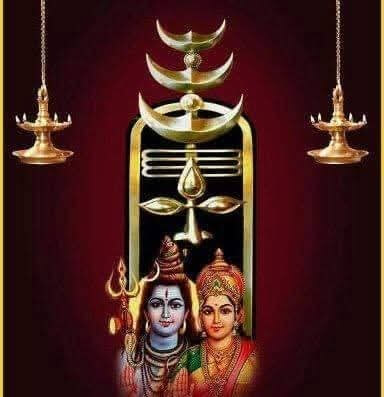 Thiruvayamkudy Mahadeva Temple is a historic ancient Shiva temple located in Ayamkudy village, near Kaduthuruthy in Kottayam district, Kerala. The main deity of the temple is Lord Shiva in a peaceful form. The temple shares a close legendary association with Vaikom Mahadeva Temple and is situated on the same latitude as the Vaikom temple, which is one of its most distinctive features. Rich in history and traditional beliefs, the temple continues to be an important centre of Shiva worship, attracting devotees from different places.
Based on historical records and the temple’s architectural features, Thiruvayamkudy Mahadeva Temple is estimated to be around 1,000 to 1,200 years old, dating back to about AD 1000. The region, including Kaduthuruthy and Vaikom, was once part of the Vadakkumkoor Kingdom. Between AD 1100 and 1750, during the rule of the Vadakkumkoor dynasty, the temple was expanded into its present form. During the 15th, 16th and 17th centuries, when many temples in Kerala were renovated and developed,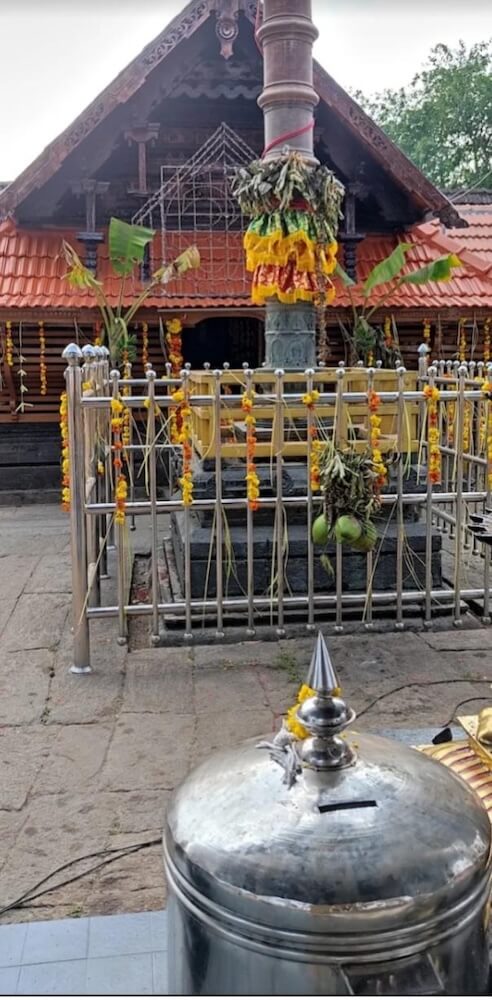 the temple’s unique stone and timber structures and several important architectural features were built under royal patronage. From ancient times, the temple was jointly owned and managed by seven prominent Namboothiri illams (Ooraymakkars) of the region. In AD 1750, Maharaja Anizham Thirunal Marthanda Varma annexed the Vadakkumkoor Kingdom to Travancore, bringing Vadakkumkoor rule to an end. However, the temple continues to be managed under the traditional Oorayma system, with the active participation of devotees.
According to legend, a Namboothiri who was a devoted worshipper of Vaikkathappan (Lord Shiva of Vaikom) lived in this region. As he grew old, he was no longer able to visit Vaikom Mahadeva Temple for worship. Pleased with his unwavering devotion, Lord Shiva is believed to have appeared as a self-manifested (Swayambhu) Shiva Linga in the homa kund (sacrificial fire pit) at the Namboothiri’s house. One day, while cleaning the homa kund, the lady of the house accidentally struck the hidden Shiva Linga with a ladle. It is believed that the Linga immediately began to bleed. Seeing this, the Namboothiri applied sandalwood paste to the top of the Linga, lit a ghee lamp and prayed. According to the legend, the bleeding stopped immediately. In memory of this event, offering sandalwood paste and lighting a ghee lamp remain two of the temple’s most important offerings. The mark left by the ladle can still be seen on the Shiva Linga. Devotees also believe that the same divine presence worshipped at Vaikom Mahadeva Temple resides here. Another long-held belief is that the noon puja at this temple is performed only after the noon puja at Vaikom Mahadeva Temple and that Vaikkathappan comes here for His midday meal.
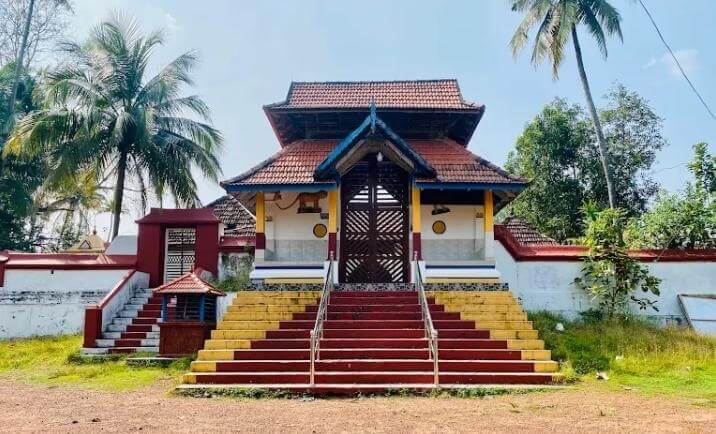
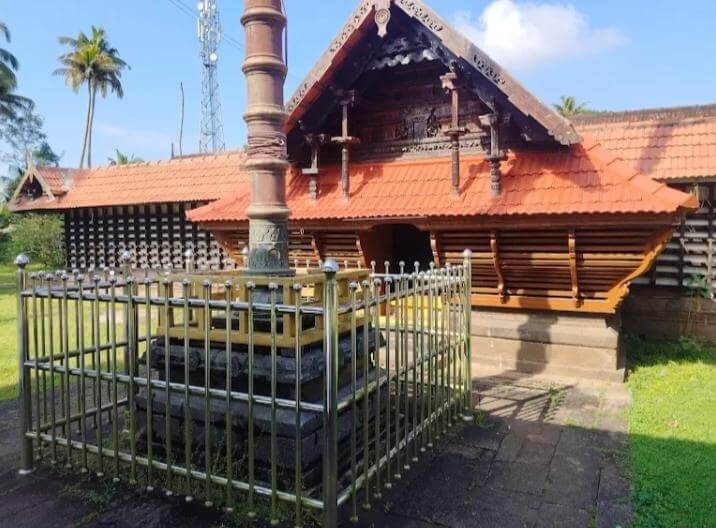
As you enter the temple, the first features you see are the traditional Kerala-style entrance gateway (Padippura) and the large tiled elephant shelter standing in front of it. The temple is enclosed by a tall outer wall built of granite and laterite stone, reflecting its ancient character. Passing through the Padippura, you will see the tall flagstaff rising towards the sky. 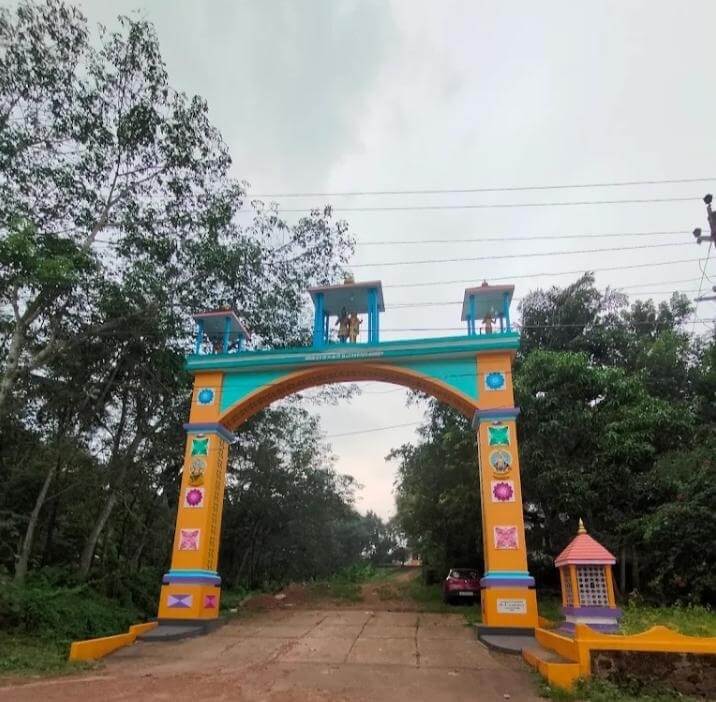 Walking through the inner entrance and past the Bali stone, you enter the Nalambalam (inner courtyard), where beautifully crafted wooden lamp galleries and an open central courtyard allow plenty of natural light and fresh air to enter. These features reflect the traditional style and rich heritage of Kerala temple architecture.
As you enter the Nalambalam (inner courtyard), the first structure that draws your attention is the square sanctum of the main deity, Lord Shiva. Built on a granite base with wooden walls and a pyramid-shaped tiled roof, the sanctum is a fine example of traditional Kerala temple architecture. The main deity is a peaceful-form Swayambhu (self-manifested) Shiva Linga. The mark mentioned in the temple legend, said to have been made by a ladle, can still be seen on the top of the Shiva Linga. Nearby stands the circular sanctum of Lord Subrahmanya, one of the temple’s most remarkable architectural features. Circular sanctums are very rare in Kerala and this beautifully built shrine, with its circular tiled roof and golden finial, is a fine example of traditional temple craftsmanship. 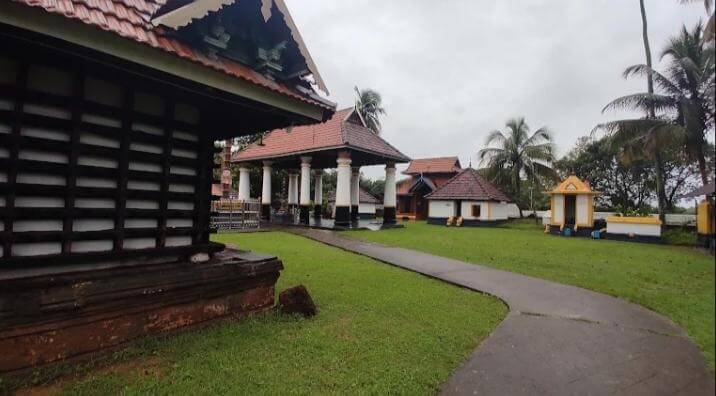 The Nalambalam also houses separate square sanctums dedicated to Lord Mahavishnu and Lord Krishna, both enshrined in the traditional four-armed form.
As you continue the clockwise circumambulation after leaving the Nalambalam, you will first come to the shrine of Lord Ganesha, located in the south-west corner and facing east. The Dakshinamurthy aspect of Lord Shiva is worshipped at the southern entrance of the main sanctum. Continuing around the temple, you will find a separate shrine dedicated to Lord Dharma Sastha in the south-west section within the temple walls, 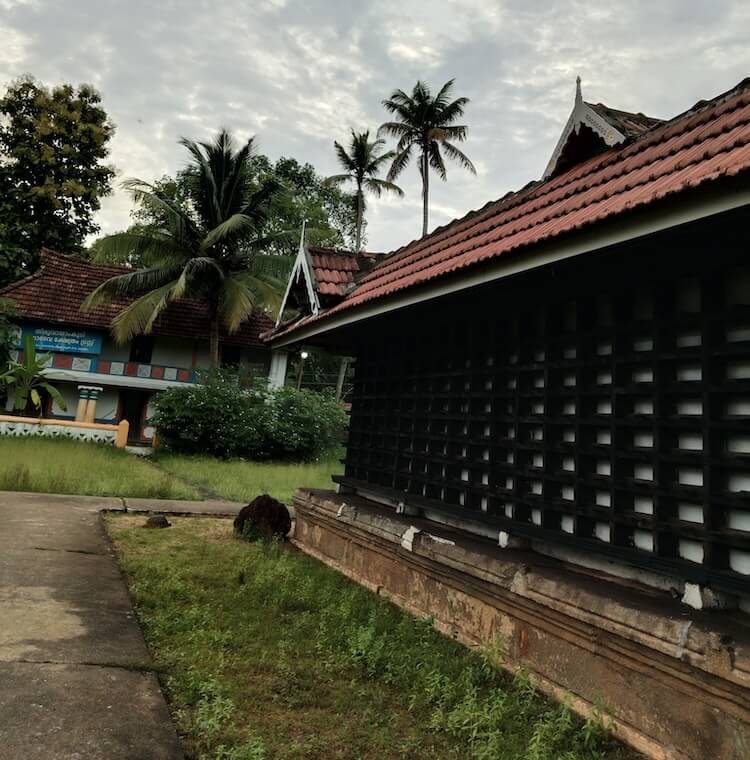 while the shrine of Goddess Bhadrakali is situated in the north-west corner. Nearby is the shrine of Veerabhadra, the commander of Lord Shiva’s divine attendants. Pedestals dedicated to Yakshi and Rakshass are also located in the south-east and north-west sections of the temple grounds. Outside the temple walls, in a grove-like setting, is the sacred Naga shrine dedicated to Nagaraja and Nagayakshi.
The temple’s main annual festival is the six-day Thiruvutsavam, held during the Malayalam month of Kumbham (February–March). The festival concludes with the Arattu ceremony on the day of Kumbham Amavasya (new moon). One of the unique features of the temple is that Maha Shivaratri falls during the festival period. On Shivaratri, special Yama Pujas and Abhishekams are performed throughout the night and devotees offer ghee lamps and sandalwood paste to Lord Shiva. Vaikkathashtami, observed during the Malayalam month of Vrischikam (November–December),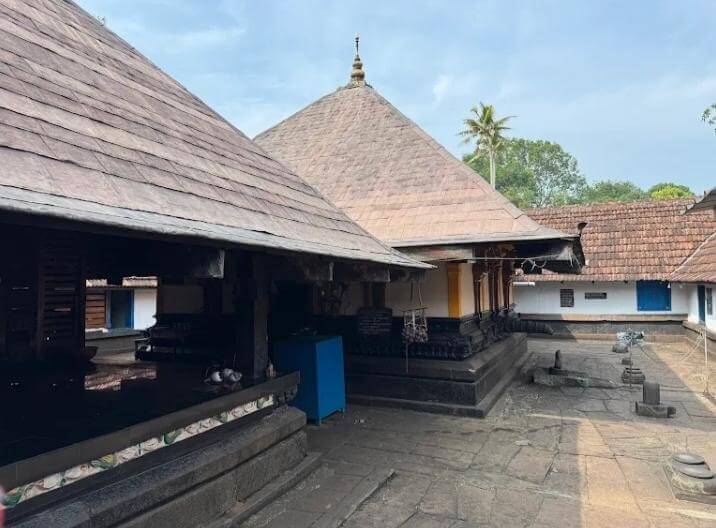 is also celebrated with special importance because of the temple’s close legendary association with Vaikom Mahadeva Temple. Special pujas are held on Thiruvathira day in the month of Dhanu (December–January), along with traditional observances for the well-being and long married life of women. In addition, special pujas are conducted for Lord Dharma Sastha during the Mandala season, while special rituals for the Naga deities are performed on Ayilyam days in the Malayalam months of Kanni and Thulam.
Among the temple’s offerings, the most important is the offering of sandalwood paste to Lord Shiva. According to the temple legend, this offering commemorates the event when sandalwood paste was applied to the Shiva Linga to stop the bleeding.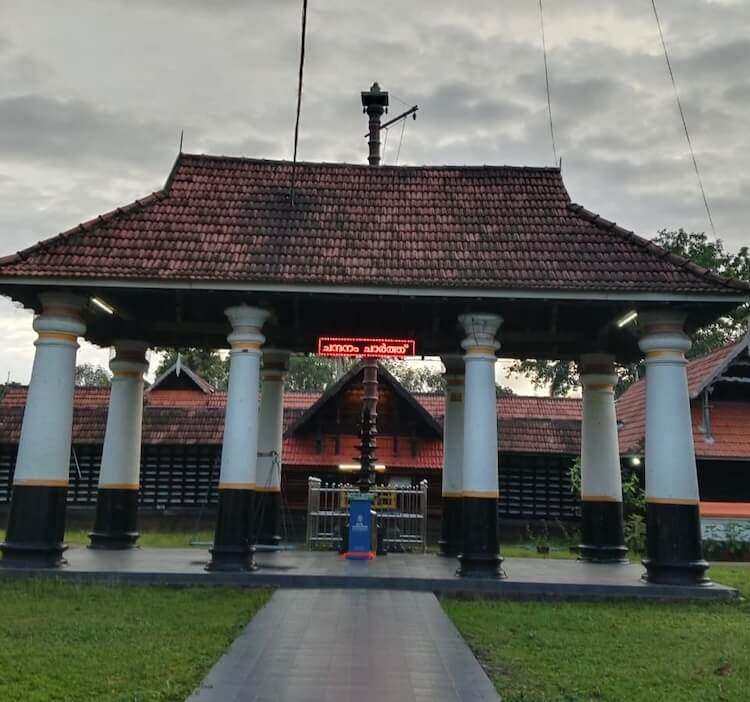 Other important offerings to Lord Shiva include Dhara, Ksheeradhara (milk offering), ghee lamps and Bilva leaf garlands. Offerings to Lord Subrahmanya include Panchamrutha Abhishekam, Milk Abhishekam and Bhasma Abhishekam. The main offerings to Lord Mahavishnu and Lord Krishna are Purusha Sukta Pushpanjali and Palpayasam (sweet milk pudding) respectively. Devotees also offer Appam Moodal to Lord Ganesha, Ellu Vilakku and Neeranjanam to Lord Dharma Sastha and Noorum Palum to the Naga deities.
The temple opens daily at 05:00 AM with Nirmalya Darshanam. This is followed by Abhishekam at 05:30 AM, Usha Puja at 06:00 AM, Ethirthu Puja at 07:00 AM, Pantheeradi Puja at 08:30 AM and Ucha Puja at 10:30 AM. A unique feature of the temple is that the Ucha Puja is performed only after the noon puja at Vaikom Mahadeva Temple. The temple closes at 11:00 AM. It reopens at 05:00 PM, followed by Deeparadhana at 06:30 PM and Athazha Puja at 07:30 PM, before closing for the day at 08:00 PM. The timings may vary on festival days and during special occasions such as Maha Shivaratri, the Mandala season and the Malayalam month of Ramayanam.
Key highlight :-
- Located about 11 km from Vaikom and 16 km from Ettumanoor.
- The nearest railway station is Ettumanoor Railway Station, located about 14 km away.
- KSRTC and local bus services are available to the temple from Ettumanoor and Vaikom.
- Private vehicles can be parked in the temple’s parking area.
- Accommodation and food facilities are available in the nearby towns.
- Men are required to remove their shirts and vests before entering the temple. A traditional towel or upper cloth may be draped over the shoulders to cover the upper body.
- Contact number + 91 9447320633
तिरुवायमकुडी महादेव मंदिर
अयमकुडी, कडुथुरुथी, जिला। कोट्टायम.
मंदिरे
Temples
मंदिर
-
उदयनपुरम श्री सुब्रह्मण्य स्वामी मंदिर उदयनापुरम, वैकोम, जि. कोट्टायम.
अधिक माहितीUdayanapuram Sree Subrahmanya Swamy Temple Udayanapuram, Vaikom, Dist. Kottayam.
View Detailsउदयनपुरम श्री सुब्रह्मण्य स्वामी मंदिर उदयनपुरम, वैकोम, जिला। कोट्टायम.
विवरण देखें -
मेथिरी श्री शत्रुघ्न स्वामी मंदिर मेथिरी, रामापुरम, जि. कोट्टायम.
अधिक माहितीMethiri Sree Sathrughna Swamy Temple Methiri, Ramapuram, Dist. Kottayam.
View Detailsमेथिरी श्री शत्रुघ्न स्वामी मंदिर मेथिरी, रामपुरम, जिला। कोट्टायम.
विवरण देखें -
कुडप्पुलम श्री लक्ष्मण स्वामी मंदिर वेल्लीलप्पल्ली, रामापुरम, जि. कोट्टायम.
अधिक माहितीKoodappulam Sree Lakshmana Swamy Temple Vellilappally, Ramapuram, Dist. Kottayam.
View Detailsकूडाप्पुलम श्री लक्ष्मण स्वामी मंदिर वेल्लीलापल्ली, रामपुरम, जिला। कोट्टायम.
विवरण देखें