
उदयनपुरम श्री सुब्रह्मण्य स्वामी मंदिर
उदयनापुरम, वैकोम, जि. कोट्टायम.
Udayanapuram Sree Subrahmanya Swamy Temple
Udayanapuram, Vaikom, Dist. Kottayam.
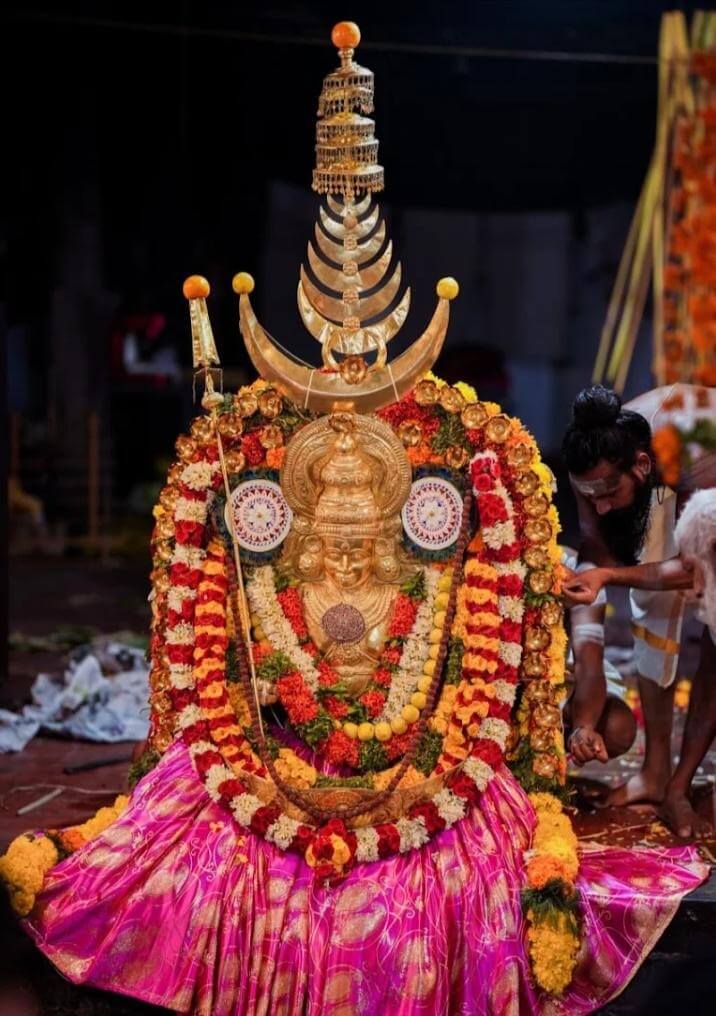 Udayanapuram Subrahmanya Swamy Temple, located near Vaikom in Kottayam district, is one of the most famous ancient Murugan temples in Kerala. The main deity is Lord Subrahmanya Swamy in his child form. Devotees believe that the temple is as sacred as the famous Palani Subrahmanya Temple in Tamil Nadu. Built in the traditional Kerala style of architecture, the temple has a close association with Vaikom Mahadeva Temple and Kumaranalloor Bhagavathy Temple. According to local belief, Lord Subrahmanya Swamy enshrined here is the son of Lord Mahadeva of Vaikom. Because of this, the temple is regarded as one of the important places of worship on the Vaikom–Kumaranalloor pilgrimage route.
Udayanapuram Subrahmanya Swamy Temple has a history of more than 1,000 years. The large granite walls surrounding the temple were built during the 9th–10th centuries AD. The temple was part of the ancient Vadakkumkoor Kingdom and its main construction works were carried out under the patronage of the Vadakkumkoor rulers and local chieftains. The present sanctum and halls were rebuilt in the traditional Kerala architectural style during or after the 14th century. The beautiful wooden carvings seen in the temple today were added as part of this rebuilding. In AD 1750, Maharaja Marthanda Varma annexed the Vadakkumkoor Kingdom to Travancore, bringing the temple under the rule and protection of the Travancore royal family. 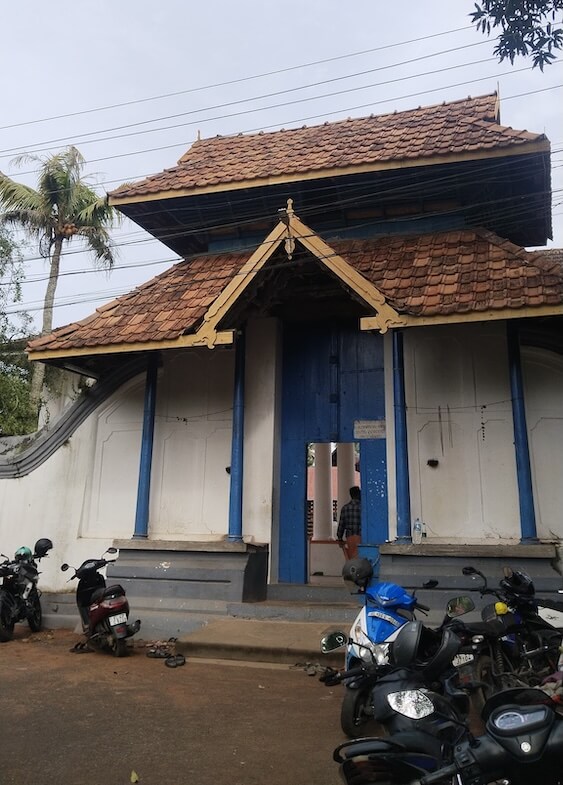 Following this, the old local chieftain administration was abolished and officials under the Travancore Diwan took direct charge of the temple administration and revenue collection. The temple, which was once administered under the same system as Vaikom Mahadeva Temple, is now managed by the Travancore Devaswom Board under the Government of Kerala.
The main legend of this temple is closely connected with Kumaranalloor Bhagavathy Temple in Kottayam. According to the legend, the original plan was to install Bhagavathy at Udayanapuram and Lord Subrahmanya Swamy at Kumaranalloor. However, during the consecration ceremony, it is believed that the idol of Goddess Karthyayani Bhagavathy miraculously appeared in place of the Subrahmanya idol that had been brought to Kumaranalloor. At that moment, a divine voice is believed to have declared, “Kumaran Alla Oor” (“This is not the place for Kumaran”). Accepting this as the divine will, the Goddess was consecrated at Kumaranalloor, while the Subrahmanya idol was brought to Udayanapuram and consecrated there. It is also believed that the name “Kumaranalloor” originated from this legend.
Another important belief associated with this temple is that Lord Subrahmanya Swamy enshrined here is the son of Lord Mahadeva of Vaikom Mahadeva Temple. According to the legend, after defeating Asura Surapadman, the young Lord returned tired and Vaikkathappan lovingly welcomed him and gave him a place to rest at Udayanapuram. For this reason, 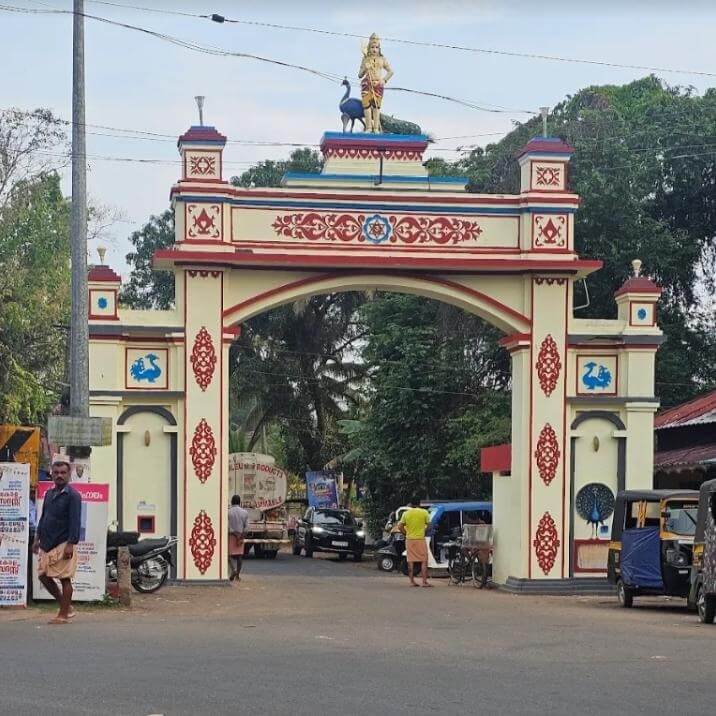 every year during the Vaikathashtami festival, Vaikkathappan ceremonially visits Udayanapuram to meet his son, after which the two deities take part together in the famous Kootti Ezhunnallippu (joint ceremonial procession). Historical records show that this place was once known as Udayanayakipuram. Over time, through changes in the local language, the name gradually became Udayanapuram.
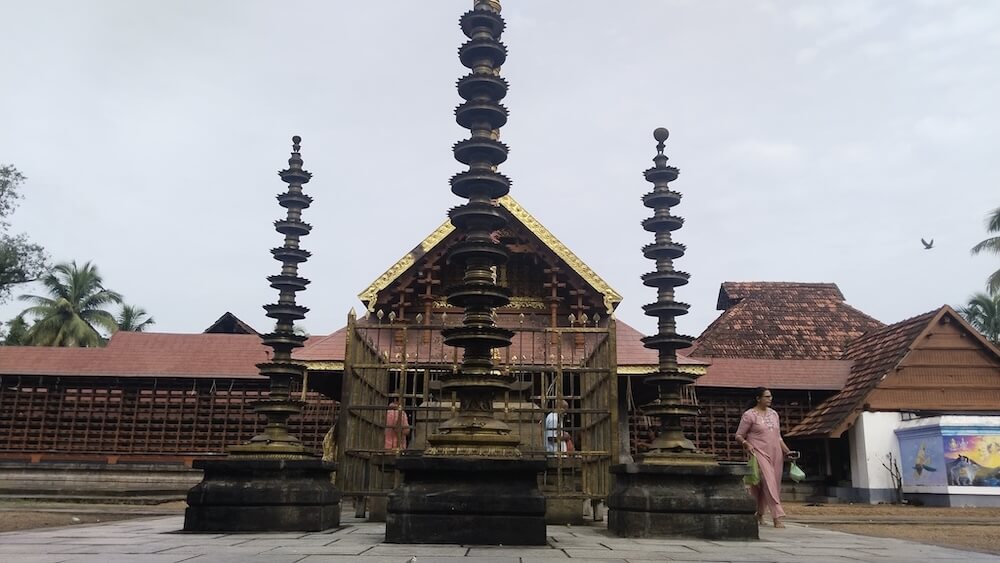
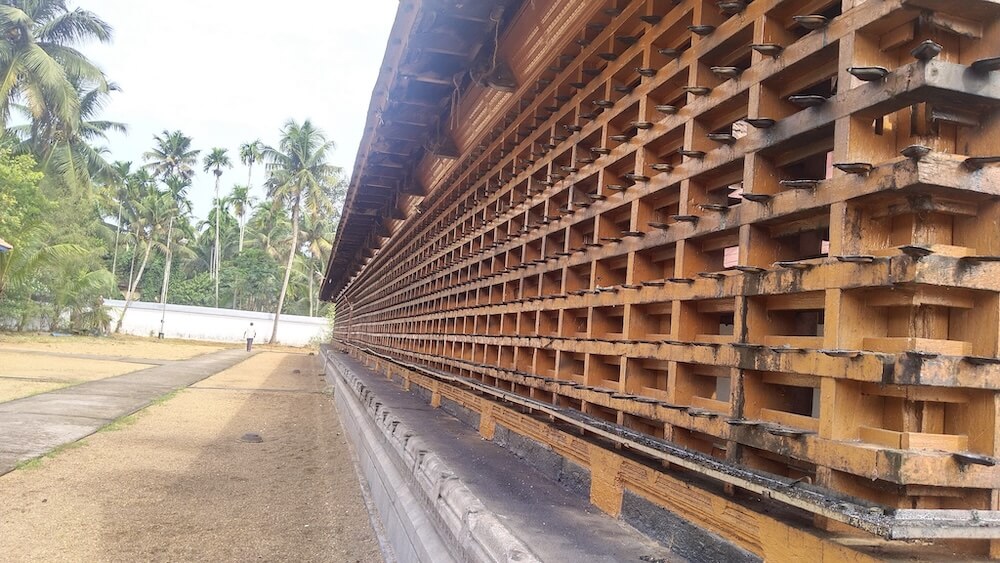
A large arch, built in the traditional Kerala style, marks the entrance to the road leading from the Vaikom–Ernakulam State Highway to the temple. Decorated with an image of Lord Subrahmanya Swamy and traditional temple motifs, the arch makes it easy for travellers to identify the way to the temple. Passing through this entrance leads to the temple grounds and parking area. Surrounding the temple is a massive granite Aanappalla Mathil (outer wall), shaped like the curved back of an elephant, reflecting the temple’s ancient heritage. In front of the main entrance is a spacious courtyard, where a magnificent gold-plated flagstaff stands, with large stone oil lamps placed in front of it.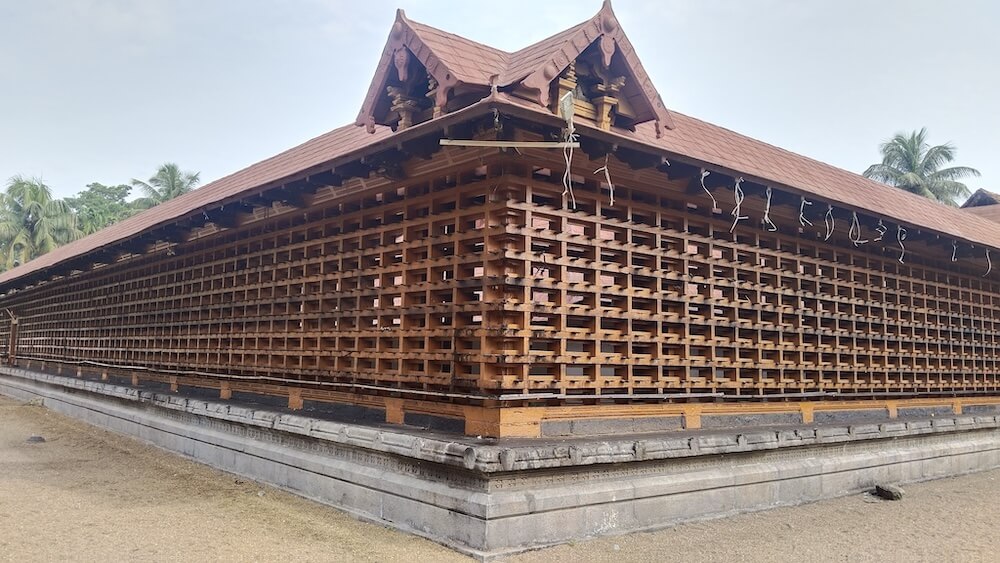 On the south-eastern side of the temple complex is the ancient Koothambalam, which once served as the main venue for traditional temple art performances.
Upon entering the temple, the first structure that catches the eye is the two-storeyed circular sanctum roofed with copper sheets. Directly in front of the sanctum is a square Namaskara Mandapam. The wooden carvings on the ceiling of the mandapam and the walls of the sanctum beautifully depict scenes from the Ramayana, Mahabharata and the Puranas. The finely carved granite pillars and decorative stone carvings further highlight the excellence of traditional Kerala temple craftsmanship.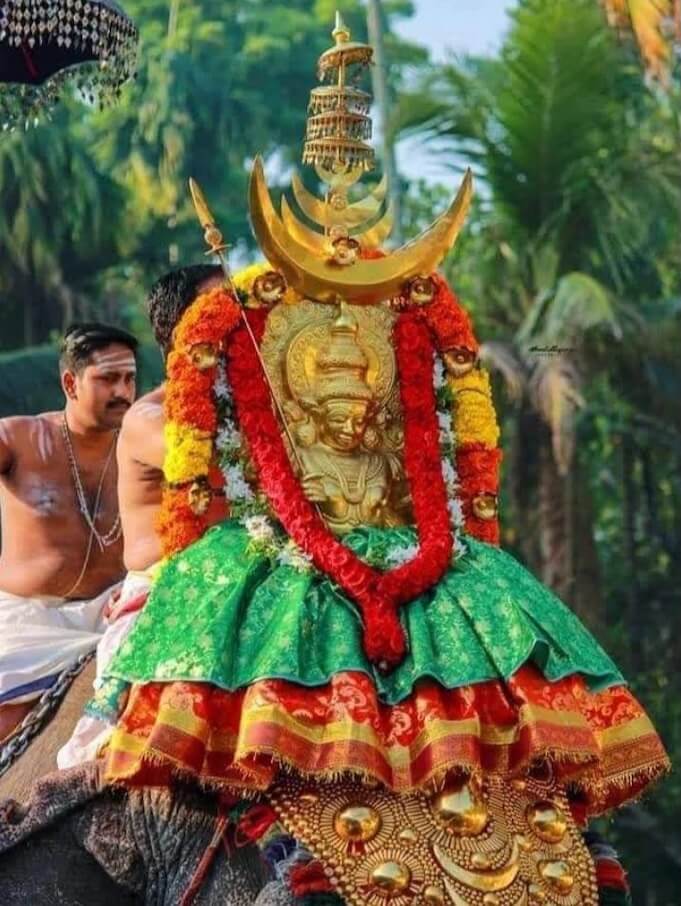 Inside the sanctum is the main deity, a peaceful four-armed idol of Bala Subrahmanya Swamy, about three and a half feet tall, carved from black granite and facing east. The front right hand is in Abhaya Mudra (gesture of protection), the front left hand is in Varada Mudra (gesture of blessing), while the rear right hand holds the Vel (spear) and the rear left hand holds the Vajrayudha.
Several other shrines are located around the main sanctum. In the south-eastern corner (Kannimoola), Lord Ganesha is enshrined facing east and devotees traditionally offer their prayers here before participating in the main worship and offerings. On the southern side of the sanctum is a shrine dedicated to Lord Shiva in the form of Dakshinamurthy, facing south, while on the northern side is a shrine dedicated to Goddess Bhagavathy, facing west. A separate shrine for Dharma Sastha is situated in the south-western corner of the temple complex. In the north-western section, amidst a grove with trees and sacred vegetation, are the shrines dedicated to Naga deities, including Nagaraja and Nagayakshi.
The main annual festival of the temple is held during the Malayalam month of Vrischikam (November–December) and lasts for ten days. The festival concludes with the Aarattu ceremony on the day of the Rohini star. 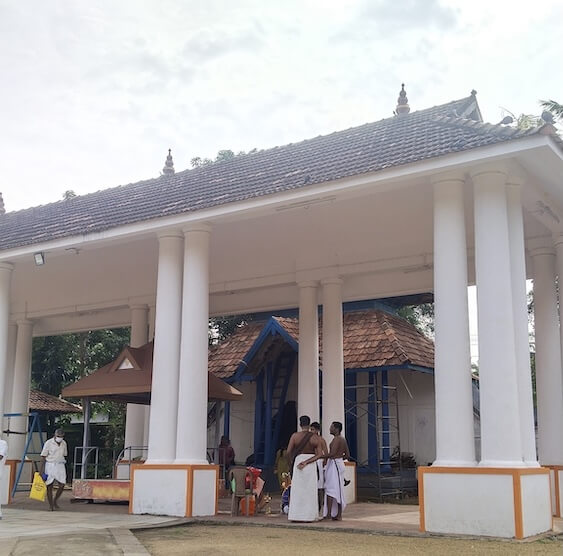 The ninth day, Thrikarthika, is celebrated with special poojas, lamp offerings, illuminations and ceremonial processions, attracting a large number of devotees. One of the most important events is the Vaikathashtami procession, during which Udayanapurathappan is ceremonially taken to Vaikom Mahadeva Temple. This is followed by the famous Kootti Ezhunnallippu (joint ceremonial procession) with Vaikkathappan, drawing thousands of devotees to both temples. Thaipooyam, celebrated during the Malayalam month of Makaram (January–February), is marked by Kavadiyattam, special abhishekams, poojas and processions. Skanda Sasthi, observed in Thulam (October–November), is another important festival for devotees of Lord Subrahmanya, with special poojas, abhishekams, bhajans and Sasthi vrata observances. In addition, special poojas, offerings and darshan are held on every Shukla Paksha Sasthi. The temple also observes special rituals and ceremonies on Karthika star days, Masa Sankramam, Vishu and during the Mandala season.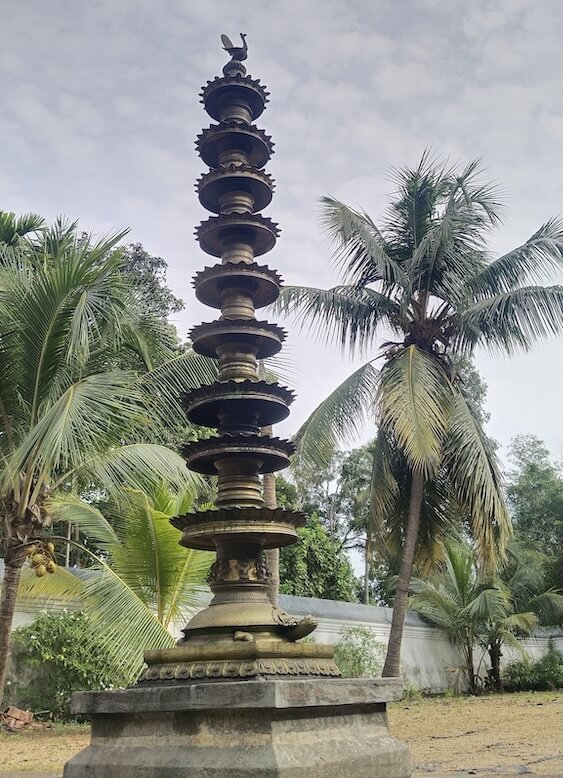
Olan Nivedyam is one of the most important offerings at the temple. Devotees mainly offer it while praying for relief from long-standing stomach and digestive ailments. Muzhukappu, in which the idol is completely covered and decorated with sandalwood paste, is another important offering. Ksheera Dhara (milk ablution) and Jala Dhara (water ablution) are regularly performed, with the Ksheera Dhara using about 45 litres of cow’s milk holding special significance. Prathal (an offering in which cooked rice and other food items are presented to the deity as the morning meal) is also one of the temple’s main offerings. Panchamritha Abhishekam, performed during the early morning Nirmalya Darshan, is another important ritual offering. In addition, Sasthi Pooja on every Sasthi day, Choroonu (first feeding ceremony for children), Thulabharam and Adima Samarpikkal are among the other offerings regularly performed by devotees.
The temple opens daily at 05:00 AM with Nirmalya Darshan and Abhishekam. This is followed by Usha Pooja at 05:30 AM, Ethruthu Pooja at 06:00 AM, Seeveli at 06:45 AM, Pantheeradi Pooja at 07:30 AM, Ucha Pooja at 10:15 AM and Ucha Seeveli at 10:45 AM. The temple closes for the morning at 11:00 AM. It reopens at 05:00 PM, followed by Deeparadhana at 06:30 PM, Athazha Pooja at 07:00 PM and Athazha Seeveli at 07:45 PM. The temple closes for the day at 08:00 PM. Pooja timings may vary on festival days such as Thaipooyam, Thrikarthika, Skanda Sasthi and Vaikathashtami, as well as during the annual festival.
Key highlight :-
- Located 24 km from Tripunithura, 32 km from Ernakulam and 33 km from Kottayam.
- The nearest railway stations are Vaikom Road Railway Station, about 12 km away and
- Ernakulam South Railway Station, about 32 km away.
- KSRTC and local bus services are available to the temple from Ernakulam and Kottayam.
- Private vehicles can be parked in the temple’s parking area.
- Accommodation and food facilities are available near the temple.
- Men are not permitted to wear shirts or vests while entering the Nalambalam.
- Contact number + 91 9249894439 ( president )
उदयनपुरम श्री सुब्रह्मण्य स्वामी मंदिर
उदयनपुरम, वैकोम, जिला। कोट्टायम.
मंदिरे
Temples
मंदिर
-
तिरुवायमकुडी महादेव मंदिर अयमकुडी, कडूथुरुथी, जि. कोट्टायम.
अधिक माहितीThiruvayamkudy Mahadeva Temple Ayamkudy, Kaduthuruthy, Dist. Kottayam.
View Detailsतिरुवायमकुडी महादेव मंदिर अयमकुडी, कडुथुरुथी, जिला। कोट्टायम.
विवरण देखें -
मेथिरी श्री शत्रुघ्न स्वामी मंदिर मेथिरी, रामापुरम, जि. कोट्टायम.
अधिक माहितीMethiri Sree Sathrughna Swamy Temple Methiri, Ramapuram, Dist. Kottayam.
View Detailsमेथिरी श्री शत्रुघ्न स्वामी मंदिर मेथिरी, रामपुरम, जिला। कोट्टायम.
विवरण देखें -
कुडप्पुलम श्री लक्ष्मण स्वामी मंदिर वेल्लीलप्पल्ली, रामापुरम, जि. कोट्टायम.
अधिक माहितीKoodappulam Sree Lakshmana Swamy Temple Vellilappally, Ramapuram, Dist. Kottayam.
View Detailsकूडाप्पुलम श्री लक्ष्मण स्वामी मंदिर वेल्लीलापल्ली, रामपुरम, जिला। कोट्टायम.
विवरण देखें