
उनाई माता मंदिर
उनाई, ता. वांसदा, जि. नवसारी
Unai Mata Temple
Unai, Tal. Vansda, Dist. Navsari
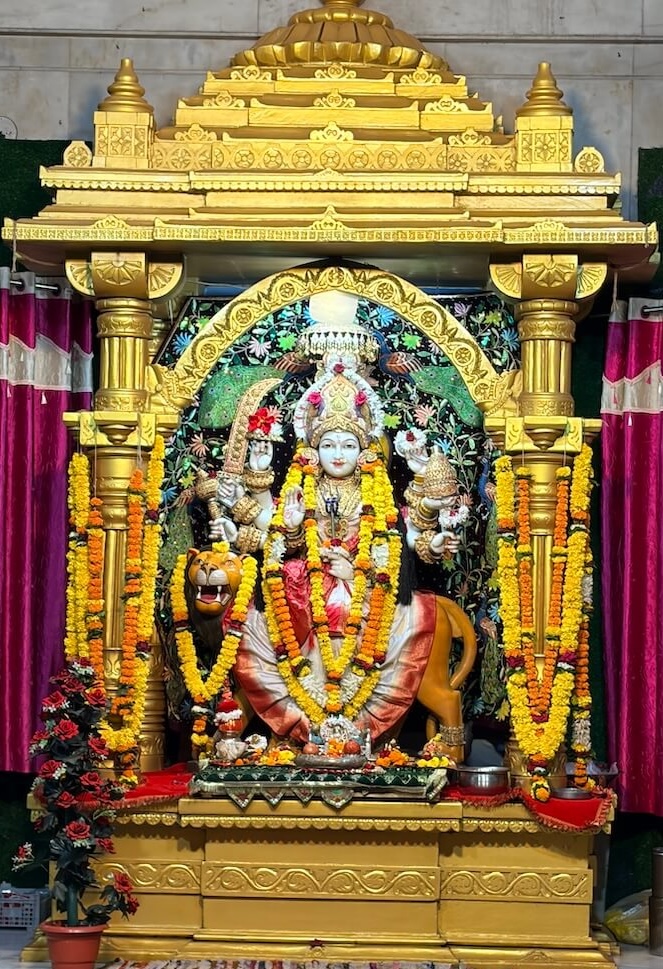 The village of Unai in Navsari district has inherited a rich historical, cultural, religious and commercial legacy. At its heart stands the Unai Mata Temple, which is especially known for its natural hot-water spring and the kund fed by it. Because of this spring, the goddess is also called Ushna Amba or Ushna Ambika. According to local folklore, the site dates back to the age of the ‘Ramayana’, when Lord Shri Ram created the kund. Special religious programmes take place here during Navratri, Makar Sankranti and on full-moon days, drawing devotees in large numbers from both Gujarat and Maharashtra.
Local tradition preserves two principal legends about the Unai Mata Temple. According to the ‘Valmiki Ramayana’, Shri Ram, Lakshman and Sita travelled during their exile through Ayodhya, Shringaverapura on the Ganga, Prayaga, Bharadwaja’s ashram, Chitrakuta, Dandakaranya, Agastya’s ashram, Panchavati on the Godavari, Pampa Sarovara, Rishyamuka Mountain in Kishkindha, Mahendra Mountain and Lanka. Shri Ram entered the dense, formidable Dandakaranya forest after visiting Maharshi Atri’s ashram. In ‘The Ramayana in Historical Perspective’, renowned archaeologist Dr H. D. Sankalia places the original Dandakaranya mainly across central and eastern India around the Vindhya ranges. ‘Encyclopaedia Britannica’ describes it as covering about 92,300 square kilometres across present-day Chhattisgarh, Odisha, 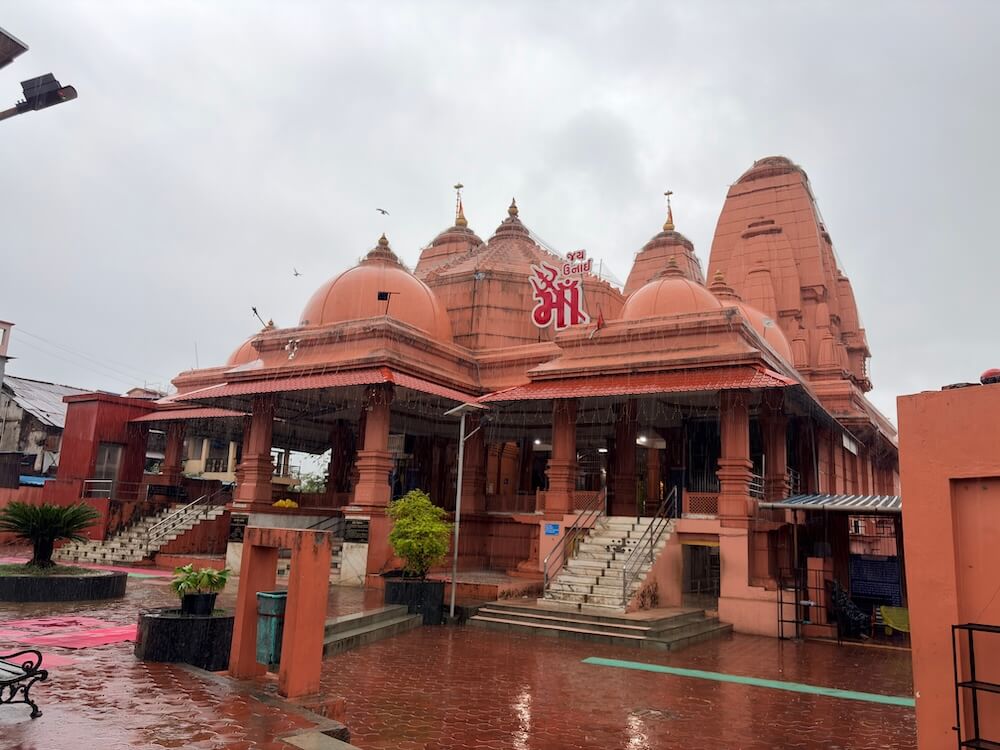 Telangana and Andhra Pradesh, while some scholars also include parts of Vidarbha in Maharashtra. Local Gujarati folklore, however, traditionally places a much larger territory within Dandakaranya.
According to the legend associated with the Unai temple, this region too belonged to Dandakaranya and Shri Ram, Sita and Lakshman came here during their exile. Sita wished to bathe in warm water, so Shri Ram struck the ground with an arrow and brought forth a hot-water spring. In a second legend, the trio visited the ashram of Sage Sharabhanga, who welcomed Shri Ram with due hospitality despite suffering from a severe skin ailment. Learning of his illness, Shri Ram shot an arrow into the earth, releasing a hot stream that cured the sage after he bathed in it.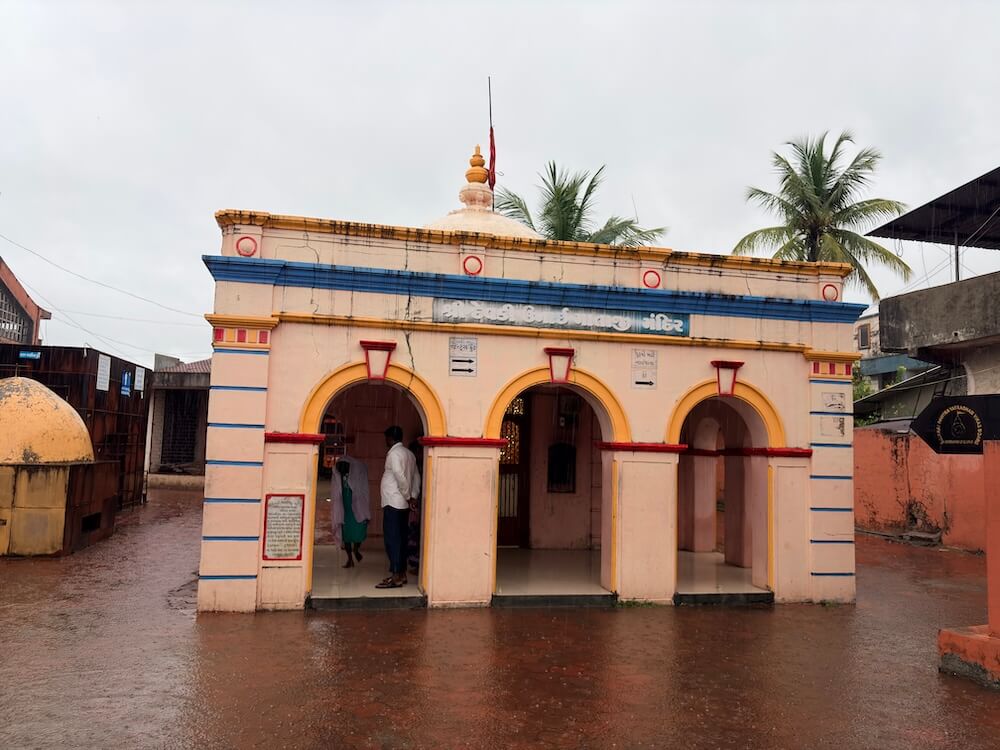 Shri Ram then invoked the manifestation of the goddess Ushna Amba, whom Sita is believed to have installed at the site. However, the Aranyakanda of the ‘Valmiki Ramayana’ locates Sharabhanga’s ashram near Chitrakuta, identified with present-day Sarbhanga village in Madhya Pradesh and mentions no skin ailment.
Local tradition also offers an explanation for the origin of the name Unai. According to a popular legend, when Shri Ram asked Sita whether she had bathed in the kund, she replied in a Gujarati dialect, Haan, hoon nahin (Yes, I have bathed). Over time, this expression gradually changed into Unai, which became the name of both the village and the goddess. Another explanation connects the name with the word oon, meaning hot or warm, which occurs in the names of several places known for hot-water springs. 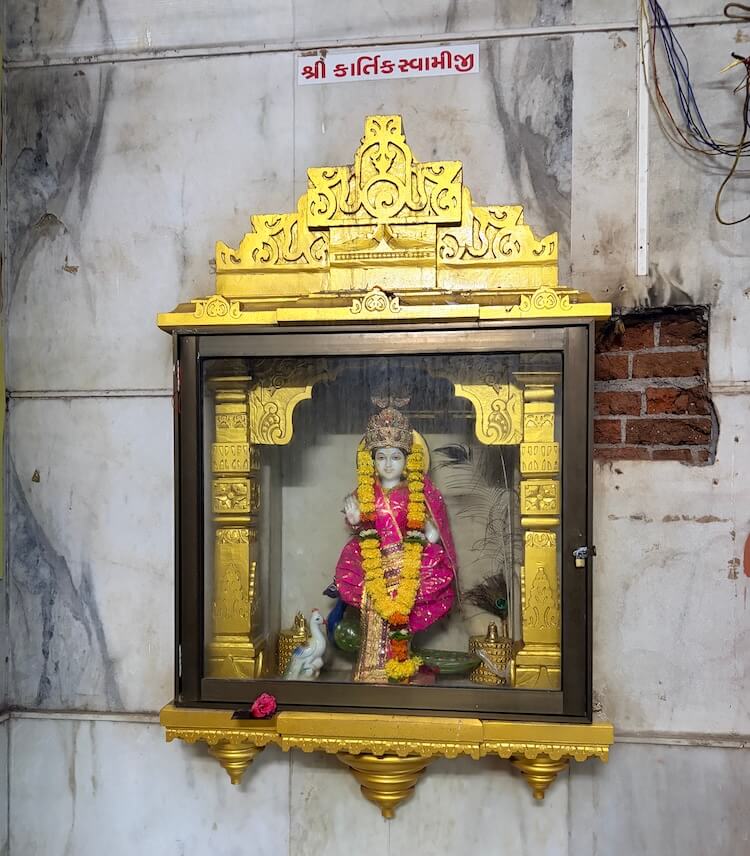 Among them are Unkeshwar in Kinwat taluka of Nanded district in Maharashtra, Unapdev at Adavad in Chopda taluka of Jalgaon district, Unhere in Raigad district and Unhavare near Rajapur in Ratnagiri district.
Such hot-water springs are a natural phenomenon found in many parts of the world, in regions known as geothermal areas. Deep within the earth lies molten material at extremely high temperatures. Rainwater seeps into the ground and travels downwards through the soil and fractures in the rock layers. As it meets rocks heated by the earth’s internal warmth, the water absorbs that heat and rises in temperature. Because heated water is less dense, it pushes upwards again through cracks and openings in the rocks, finally reaching the surface as a natural discharge to form a hot-water spring.
The hot springs of Unai also appear in old written records. In an account published in ‘The Indian Antiquary’, W. Ramsay described Unai as a small hamlet within the territory of the Raja of Bansda. A copious hot spring rose into a stone-built tank there and a temple dedicated to a local deity known as Unai Mata stood nearby. 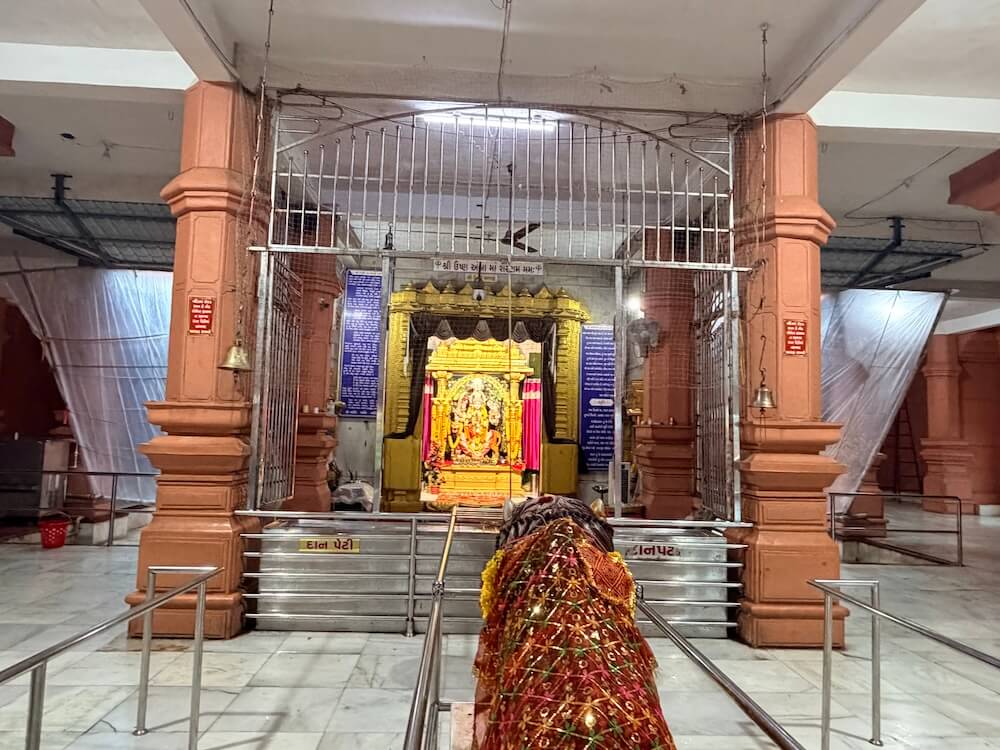 His report also records a large fair held at the site on the full moon of Chaitra. Ramsay’s 19th-century observation remains particularly valuable as an early documented reference to both the hot spring and the Unai Mata shrine.
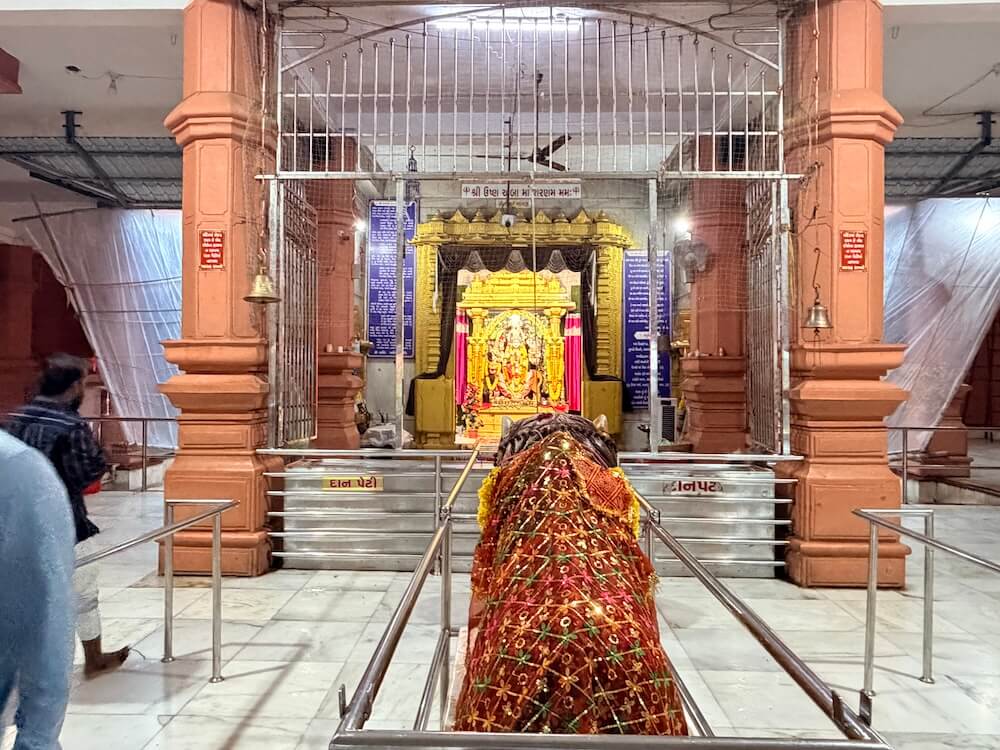
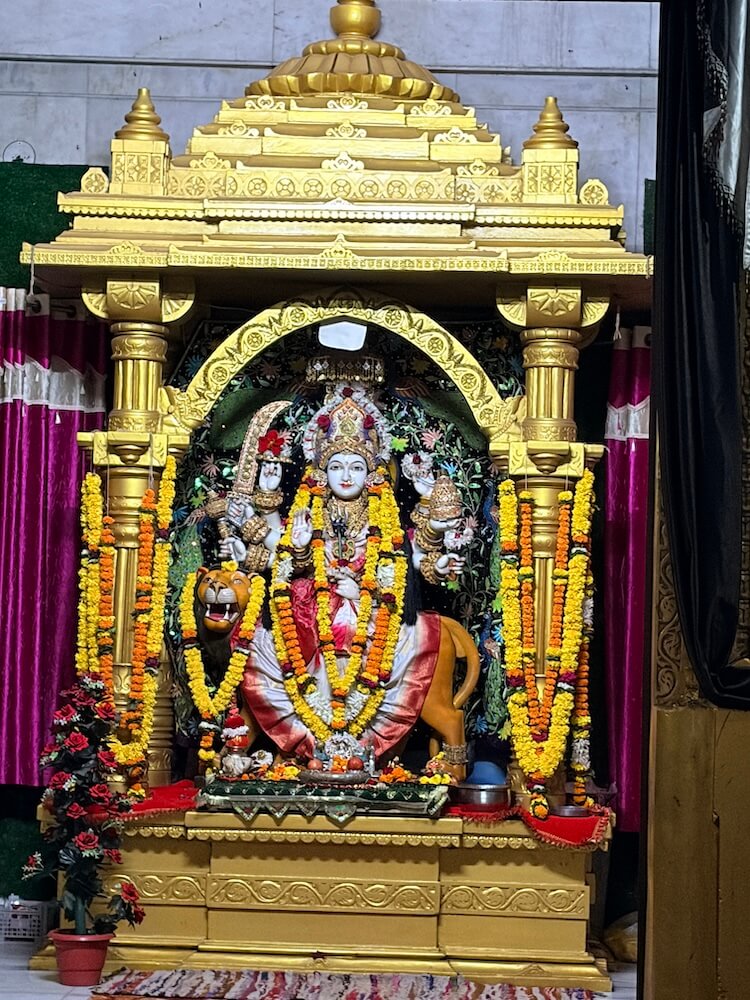
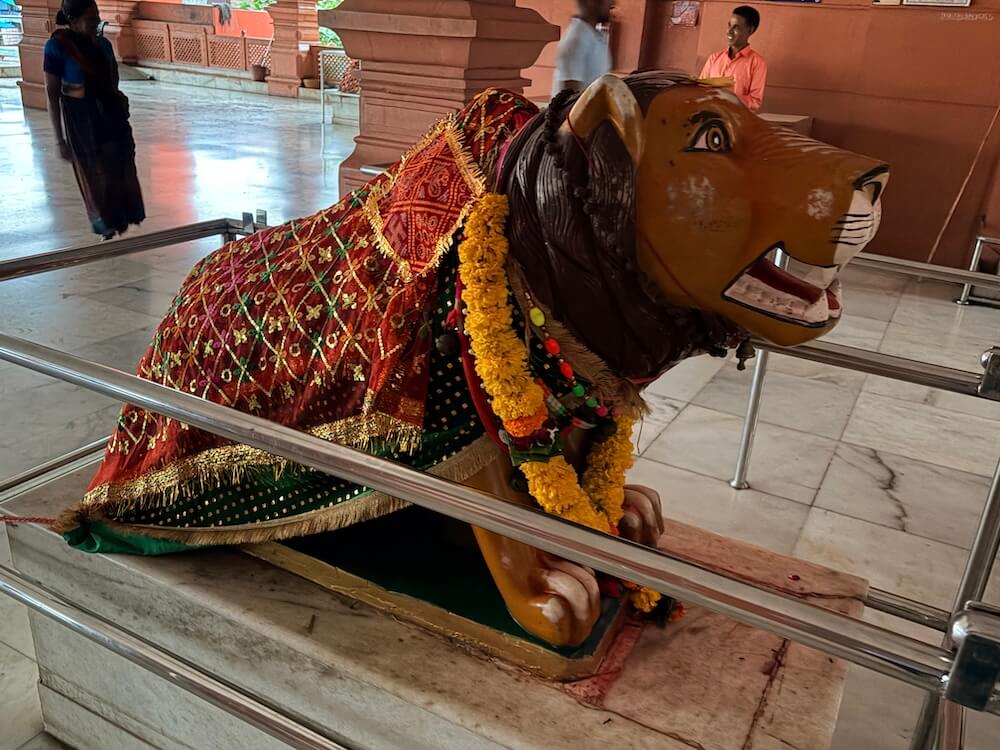
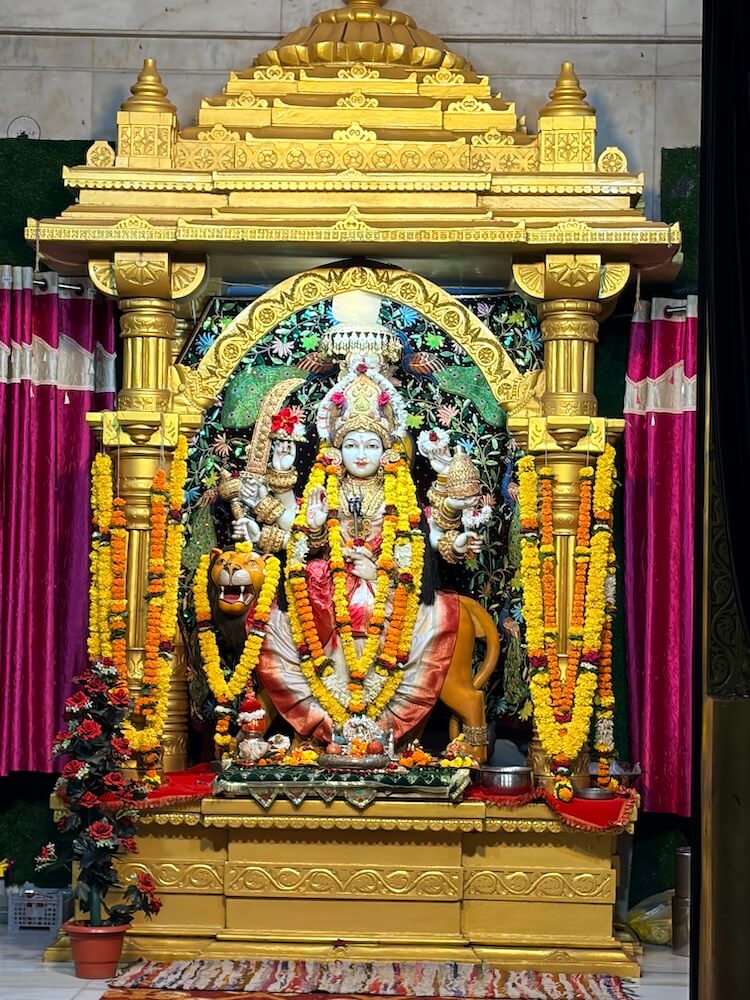
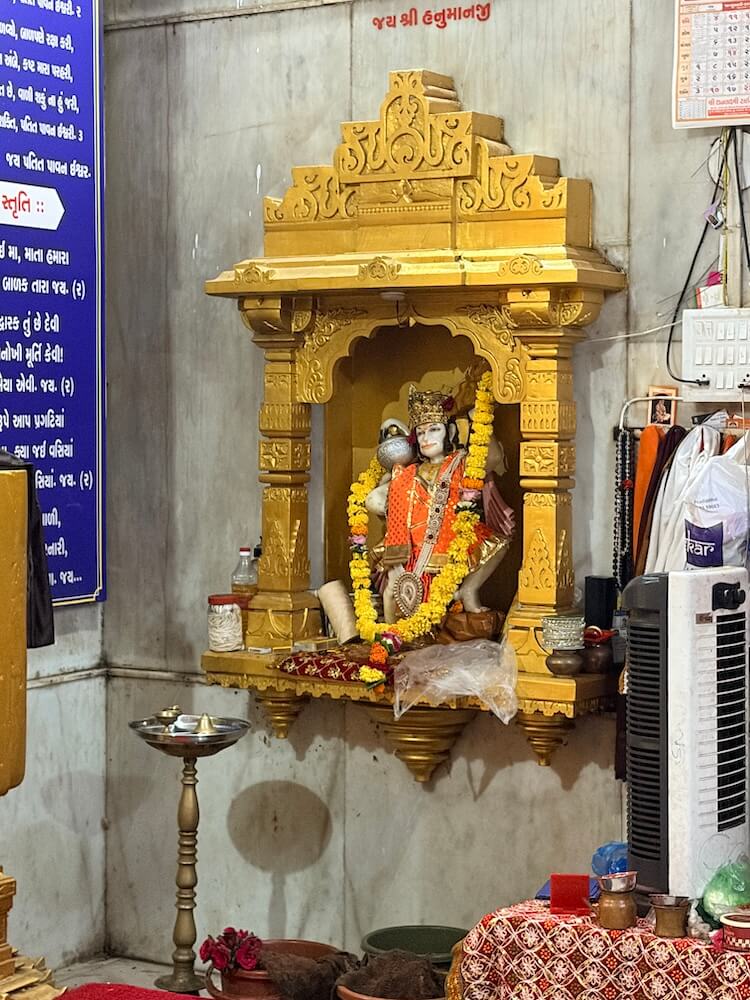
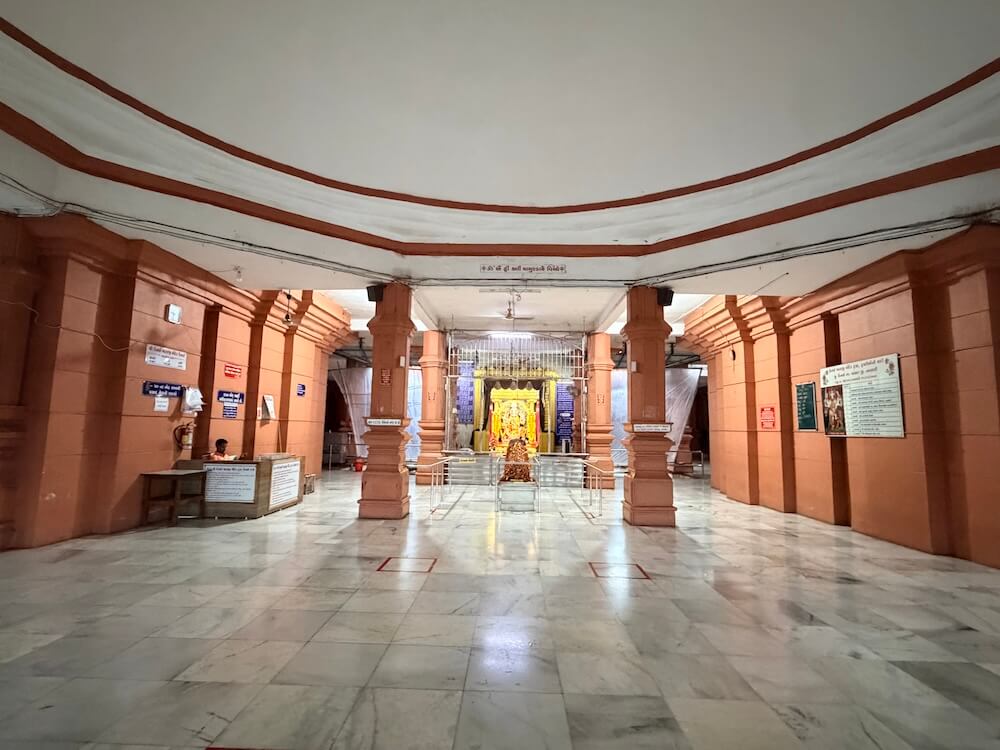
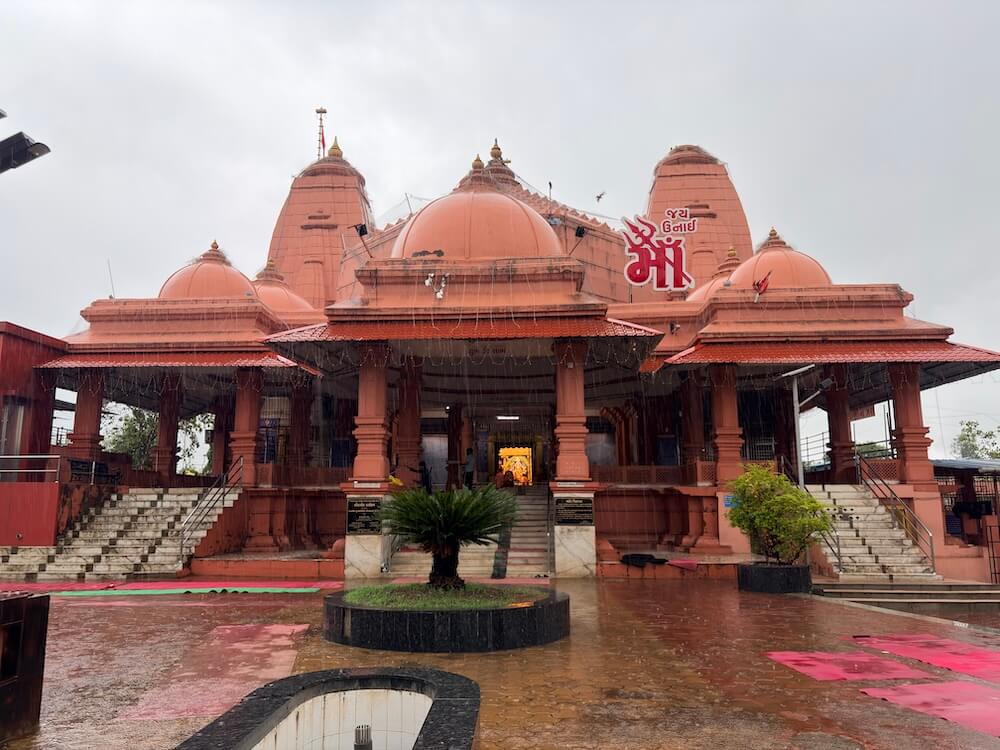
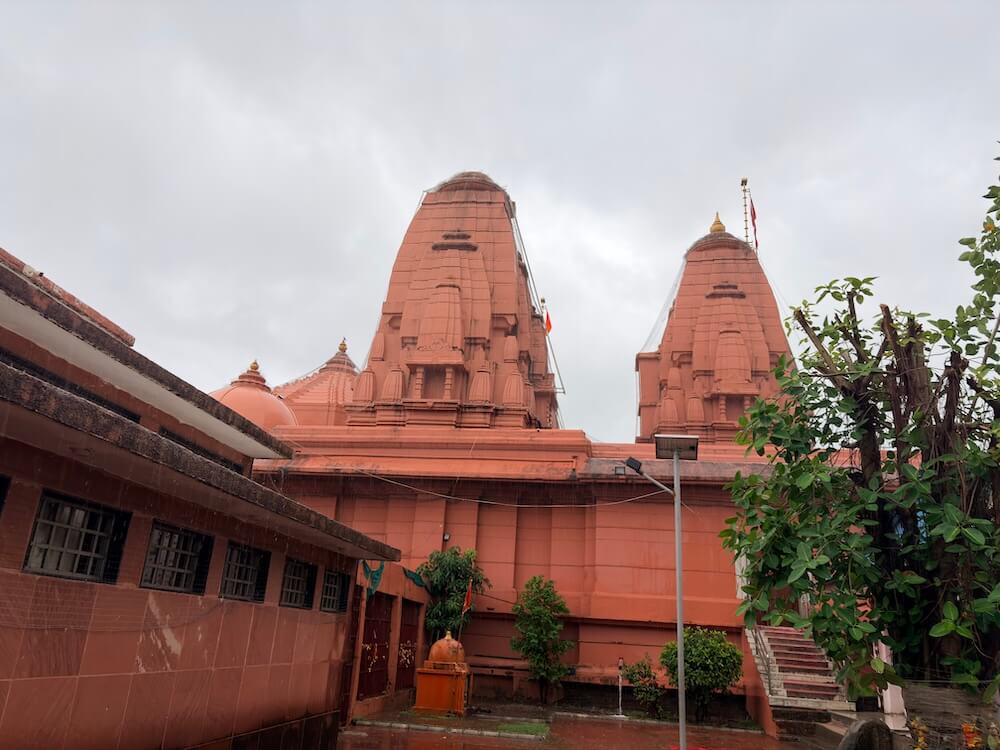
The Unai Mata Temple stands on a jagati (raised platform) and its architectural plan comprises a mukhamandap (entrance porch), sabhamandap, antaral (vestibule) and three sanctums. A flight of steps from the courtyard leads into the mukhamandap, while a sculpture of the lion, the vahan of the goddess, stands on a raised plinth in the sabhamandap directly facing the principal sanctum. Niche carvings in the antaral depict Hanuman and Sage Sharabhangeshwar. 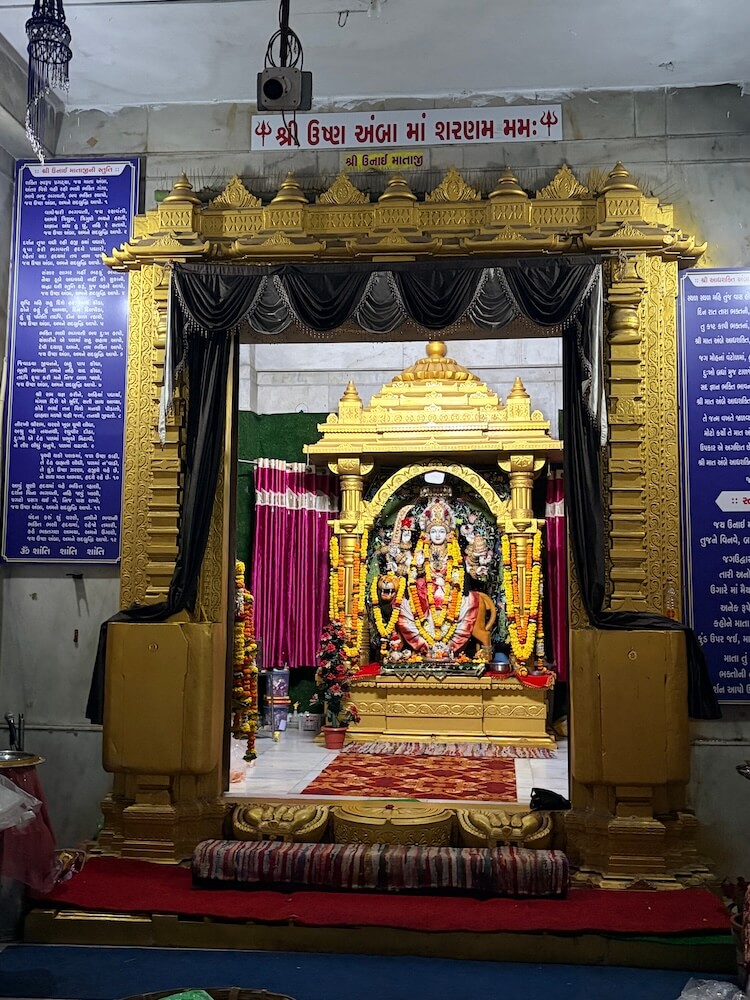 Inside the main sanctum, a finely carved makhar (decorative frame) enshrines the idol of Unai Mata on a vajrapith (raised stone pedestal). Riding a roaring lion, the goddess appears in an eight-armed form holding traditional weapons and auspicious emblems, including a sword, trishul, conch and lotus. A pearl-studded crown with delicate workmanship rests on her head and she wears gold necklaces, ornaments and armlets.
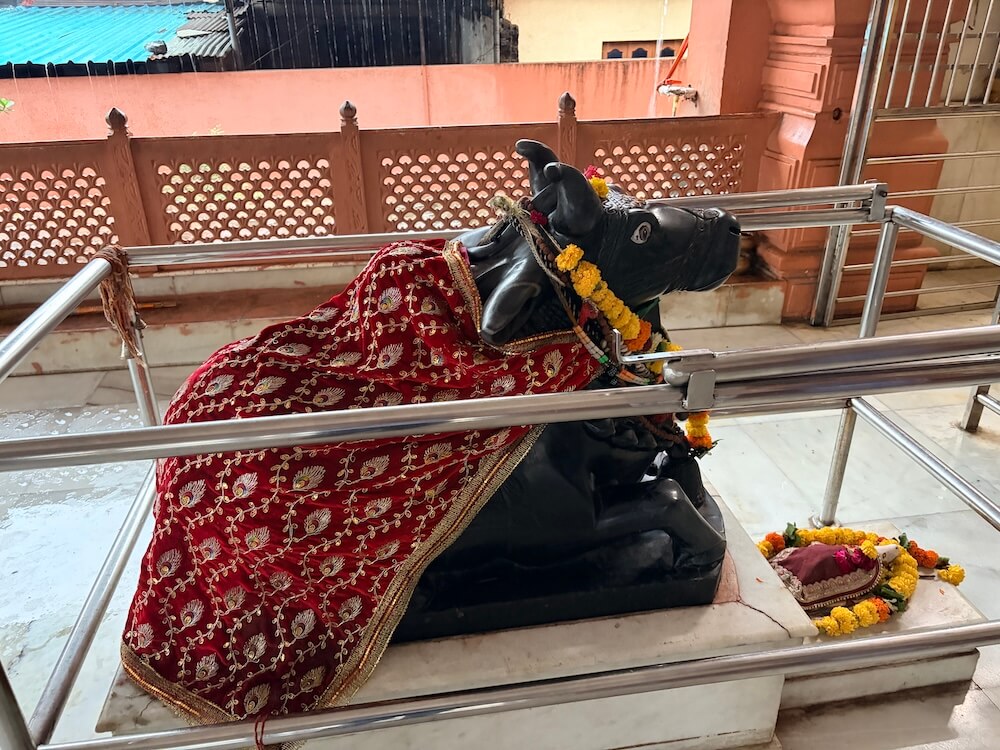
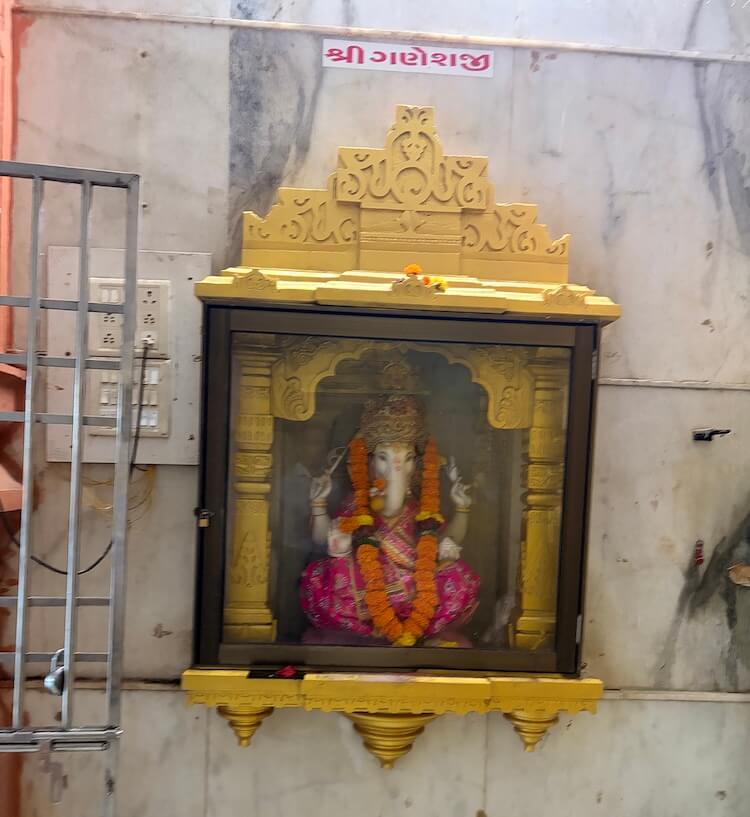
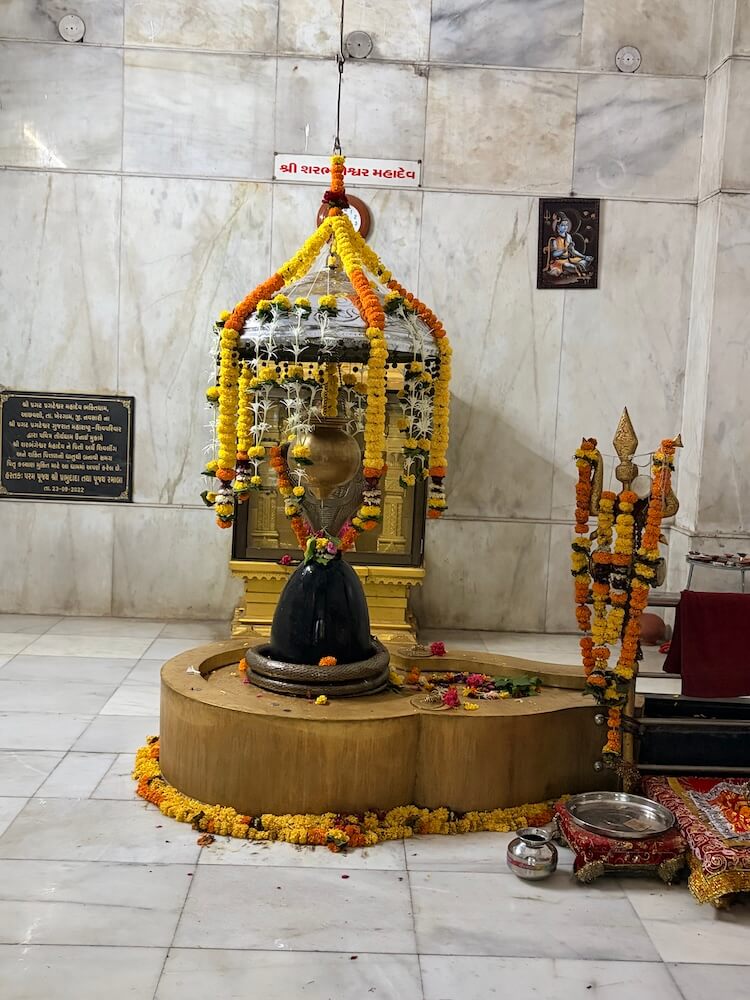
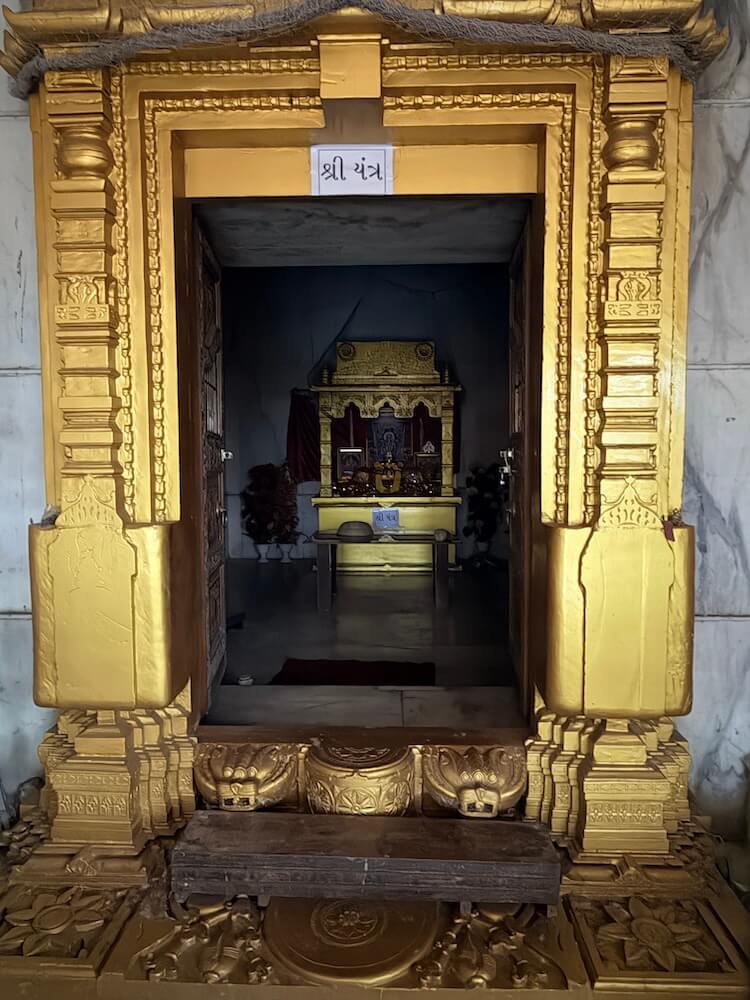
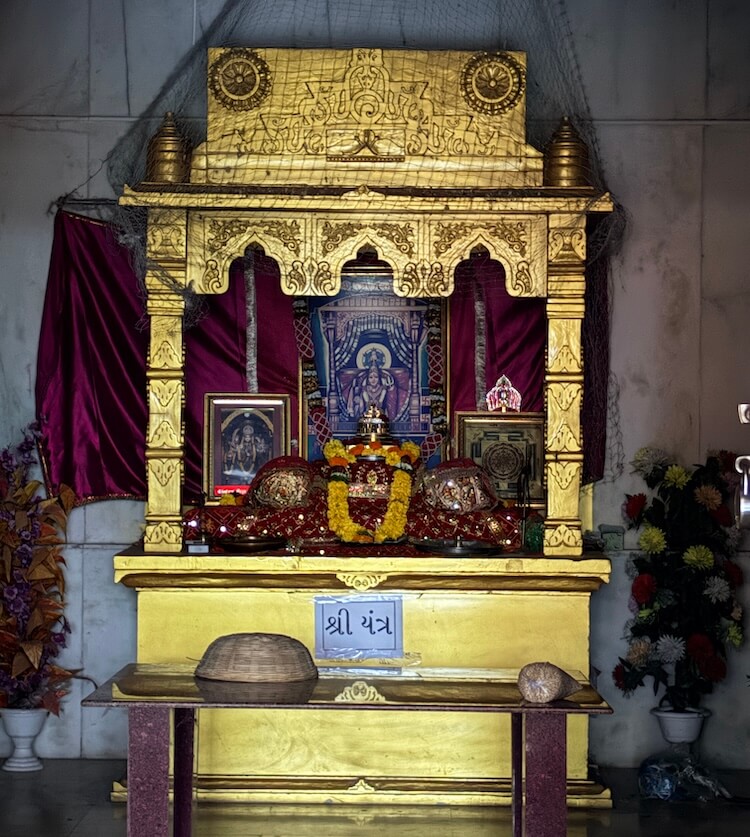
To the left of the principal sanctum lies the shrine of Darbhangeshwar Mahadev, fronted in the sabhamandap by a black-stone sculpture of Nandi. Its doorway base features a semi-circular chandrashila (moonstone threshold) and two kirtimukhs (protective mask motifs), while two exterior wall niches contain sculptures of Ganesh and Parvati Mata. A shivalinga stands at the centre of this sanctum beneath a hooded serpent and the sanctum on the right enshrines a Shri Yantra. An older Unai Mata shrine also stands in the complex beside the hot-water kund, the temple’s most distinctive feature. Devotees believe bathing in its waters cures skin ailments. Behind the main temple stands an old shrine of Shri Ram, Sita and Lakshman, where the idols of both Shri Ram and Lakshman distinctively sport moustaches.
Daily worship at the Unai Mata Temple follows the shodashopachar puja (16-step ritual worship), along with abhishek and regular aarti ceremonies. Priests serve the goddess through five daily aartis, comprising Mangala Aarti at dawn, Shringar Aarti in the morning, Rajbhog Thal at noon, 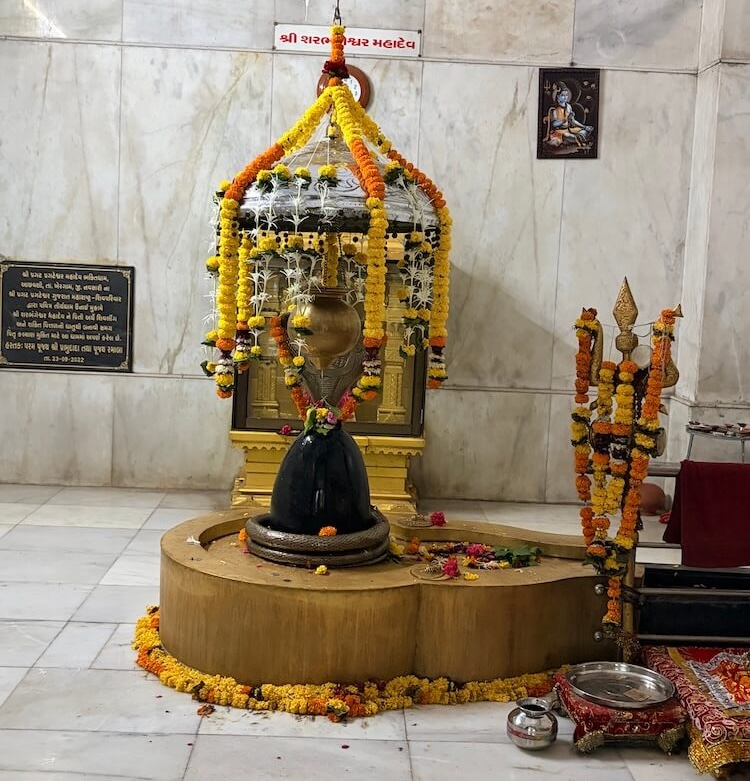 Sandhya Aarti in the evening and Shayan Aarti at night. Devotees arriving for darshan first purify themselves by bathing in the hot-water kund before entering the shrine. The Mahamela on Chaitra Purnima is the temple’s largest and most important annual festival, centred on the centuries-old tradition of Agni-Snan (fire-walking ritual). At midnight on Chaitra Purnima, burning logs are arranged in the front courtyard to form a blazing fire bed measuring about 20 to 30 feet. Thousands of devotees and local bhagats walk barefoot across the glowing embers without injury or distress while chanting the goddess’s praises, drawing pilgrims from Gujarat, Maharashtra, Rajasthan and Madhya Pradesh.
In addition to the annual Mahamela, special religious observances, Shatachandi havan (Vedic Chandi fire ritual), garba (traditional folk dance) and mahaprasad are organised at the temple during Sharadiya Navratri, Chaitra Navratri, Makar Sankranti and Diwali. The sanctum opens for devotees at 5.30 am every day. It closes briefly from 12.30 pm to 1.30 pm for the goddess’s naivedya offering and midday rest. Uninterrupted darshan then resumes from 1.30 pm to 9 pm. After the daily Shayan Aarti at 9 pm, the temple doors close for the night.
Useful Information :
- Located 12 km from Vansda and 58 km from Navsari city
- State Transport buses and private vehicles are available from Vansda
- Private vehicles can travel up to the temple’s parking area
- Accommodation and breakfast facilities are available nearby
- Contact : Temple Office, Mob. 9979602850; Telephone : 02630-236232
उनाई माता मंदिर
उनाई, ताल. वांसदा, जिला. नवसारी
मंदिरे
Temples
मंदिर
મંદિરો
கோவில்கள்
దేవాలయాలు
ക്ഷേത്രങ്ങൾ
ದೇವಾಲಯಗಳು
মন্দিরসমূহ
ਮੰਦਿਰ
-
गंगा माता मंदिर बंदर रोड, बिलीमोरा, ता. गाणदेवी, जि. नवसारी
अधिक माहितीGanga Mata Temple Bandar Road, Bilimora, Tal. Gandevi, Dist. Navsari
View Detailsगंगा माता मंदिर बंदर रोड, बिलिमोरा, ताल। गणदेवी, जिला. नवसारी
विवरण देखेंGanga Mata Temple Bandar Road, Bilimora, Tal. Gandevi, Dist. Navsari
વિગત જુઓGanga Mata Temple Bandar Road, Bilimora, Tal. Gandevi, Dist. Navsari
விவரங்களைக் காண்கGanga Mata Temple Bandar Road, Bilimora, Tal. Gandevi, Dist. Navsari
వివరాలను చూడండిGanga Mata Temple Bandar Road, Bilimora, Tal. Gandevi, Dist. Navsari
വിശദാംശങ്ങൾ കാണുകGanga Mata Temple Bandar Road, Bilimora, Tal. Gandevi, Dist. Navsari
ವಿವರಗಳನ್ನು ವೀಕ್ಷಿಸಿGanga Mata Temple Bandar Road, Bilimora, Tal. Gandevi, Dist. Navsari
বিস্তারিত দেখুনGanga Mata Temple Bandar Road, Bilimora, Tal. Gandevi, Dist. Navsari
ਵੇਰਵੇ ਦੇਖੋ -
रामजी मंदिर नवसारी, ता./जि. नवसारी
अधिक माहितीRamji Temple Navsari, Tal./Dist. Navsari
View Detailsरामजी मंदिर नवसारी, ताल./जिला. नवसारी
विवरण देखेंRamji Temple Navsari, Tal./Dist. Navsari
વિગત જુઓRamji Temple Navsari, Tal./Dist. Navsari
விவரங்களைக் காண்கRamji Temple Navsari, Tal./Dist. Navsari
వివరాలను చూడండిRamji Temple Navsari, Tal./Dist. Navsari
വിശദാംശങ്ങൾ കാണുകRamji Temple Navsari, Tal./Dist. Navsari
ವಿವರಗಳನ್ನು ವೀಕ್ಷಿಸಿRamji Temple Navsari, Tal./Dist. Navsari
বিস্তারিত দেখুনRamji Temple Navsari, Tal./Dist. Navsari
ਵੇਰਵੇ ਦੇਖੋ -
सोमनाथ महादेव मंदिर बिलीमोरा, ता. गाणदेवी, जि. नवसारी
अधिक माहितीSomnath Mahadev Temple Bilimora, Tal. Gandevi, Dist. Navsari
View Detailsसोमनाथ महादेव मंदिर बिलिमोरा, ताल. गणदेवी, जिला. नवसारी
विवरण देखेंSomnath Mahadev Temple Bilimora, Tal. Gandevi, Dist. Navsari
વિગત જુઓSomnath Mahadev Temple Bilimora, Tal. Gandevi, Dist. Navsari
விவரங்களைக் காண்கSomnath Mahadev Temple Bilimora, Tal. Gandevi, Dist. Navsari
వివరాలను చూడండిSomnath Mahadev Temple Bilimora, Tal. Gandevi, Dist. Navsari
വിശദാംശങ്ങൾ കാണുകSomnath Mahadev Temple Bilimora, Tal. Gandevi, Dist. Navsari
ವಿವರಗಳನ್ನು ವೀಕ್ಷಿಸಿSomnath Mahadev Temple Bilimora, Tal. Gandevi, Dist. Navsari
বিস্তারিত দেখুনSomnath Mahadev Temple Bilimora, Tal. Gandevi, Dist. Navsari
ਵੇਰਵੇ ਦੇਖੋ