 Tuljabhavani of Tuljapur is the family deity (Kulswamini) of the great Maratha king, Chhatrapati Shivaji Maharaj. Historical records recount that Shivaji Maharaj frequently sought the goddess’s blessings before embarking on important endeavors. Legend has it that it was Tuljabhavani herself who personally bestowed upon him the fabled Bhavani sword. In Gujarat, too, numerous temples stand in her honor, one of the most renowned being the Tuljabhavani Temple at Patankuwa. Here, she is said to have appeared in the form of a sacred stone idol. The deep devotion of the local villagers is evident in the custom that, when someone in the village secures a job, they offer their first-earned salary at the feet of the goddess.
The Sanskrit word ‘Bhav’ carries meanings including the Lord (Mahadev), the mind (Madan) and the world (Sansar); the deity who energizes all these aspects is thus called Bhavani, as elucidated by 18th-century scholar and commentator Bhaskarray in his treatises on Tantra. 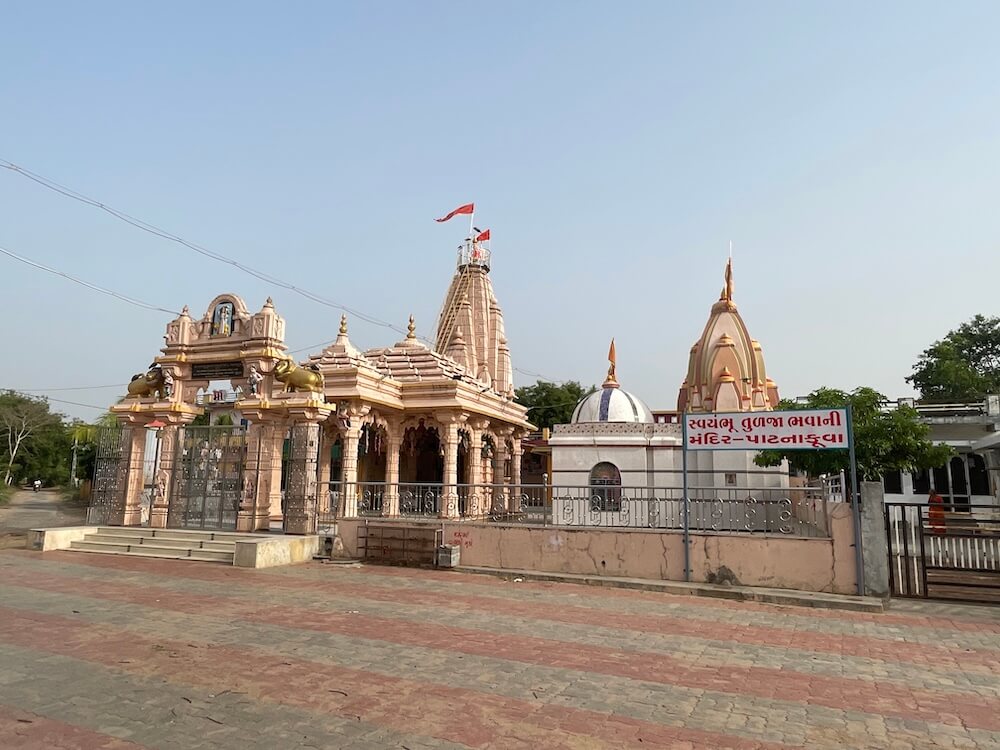 It is also explained that Bhavani derives her name from being the consort of Lord Shiva. According to entries in the Marathi encyclopedia, multiple tenets of Tantra are portrayed through the union of Shiva and Shakti; this multifaceted divine power manifests as the Goddess or Bhavani. Scriptures such as ‘Saundarya Lahari’, ‘Lalita Sahasranama’, ‘Devi Bhagavat’ and ‘Bhavani Bhujangam Stotra’ describe her various divine forms. Bhavani is revered as the presiding deity of the Shakti Peeth at Thanesar (Thaneshwar) in Punjab and the Tuljapur in Maharashtra’s Osmanabad (Dharashiv) district is also esteemed as one of her sacred peeths.
At Patankuwa, the locals regard Tuljabhavani as their guardian deity. The legend surrounding the temple’s origin narrates that around 315 years ago (circa 1595 CE), a man named Rangabhai Patel sought to build a large house. 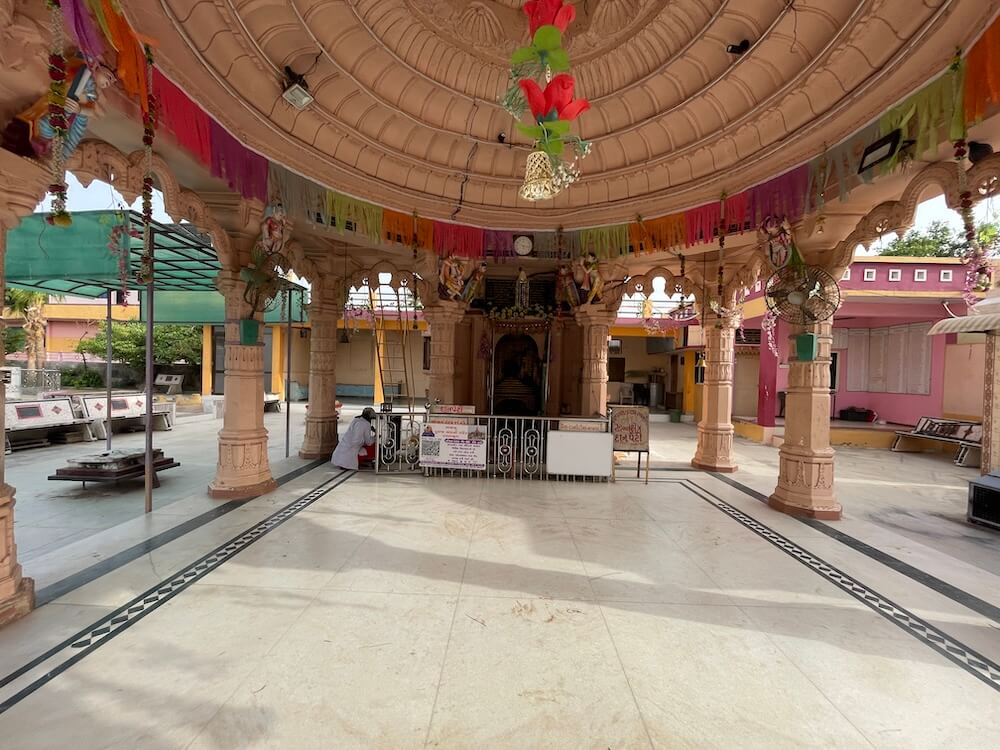 On a wood‑gathering expedition in the Aravalli forest, the loaded bullock cart became unbalanced. To steady it, he placed a large stone onto the wagon bed. Once his house was complete, he buried the stone along with other rocks beneath its foundation. Soon after, the walls started to shake and tragically, two of his daughters drowned in the village tank, driving the family into distress. In desperation, they prayed to the divine. One night, the divine spirit of the goddess possessed Patel’s eleven‑year‑old daughter, revealing, “I came here in stone from Tuljapur. Establish me under the banyan tree outside the village.” Following her instruction, they unearthed the stone and according to shastra (scriptural protocol), enshrined it beneath a banyan tree outside the village.
  It is said that this event took place around 1595 CE, at a time when Emperor Akbar’s authority was being established in the region. The original small shrine underwent periodic renovations and after the major restoration in 2013, the temple attained its present grandeur.
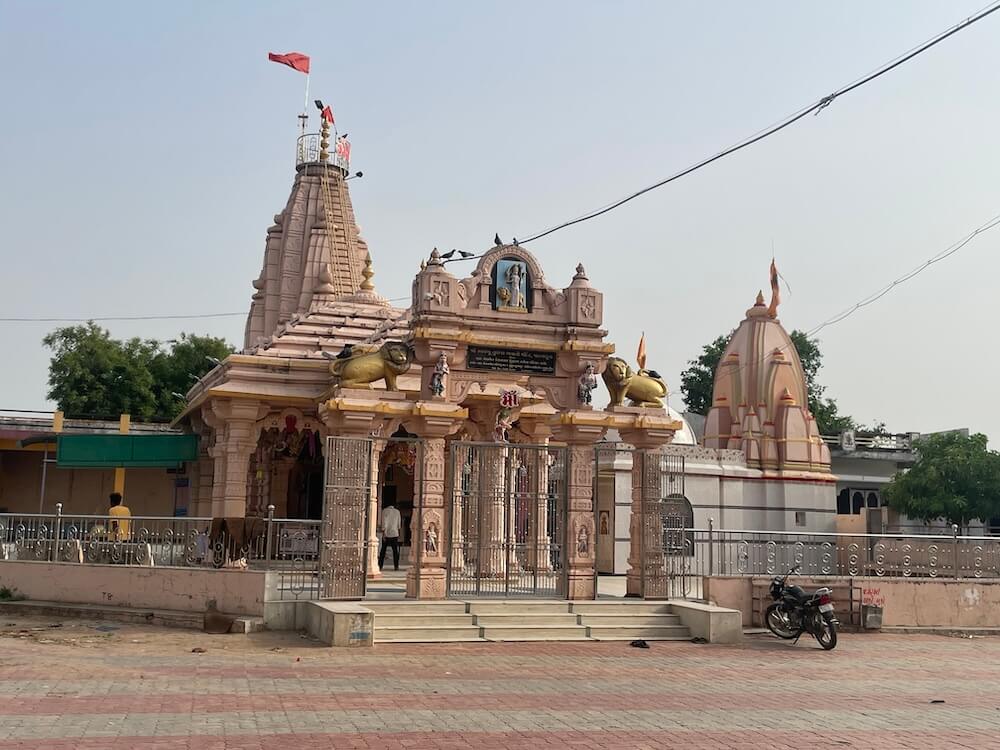
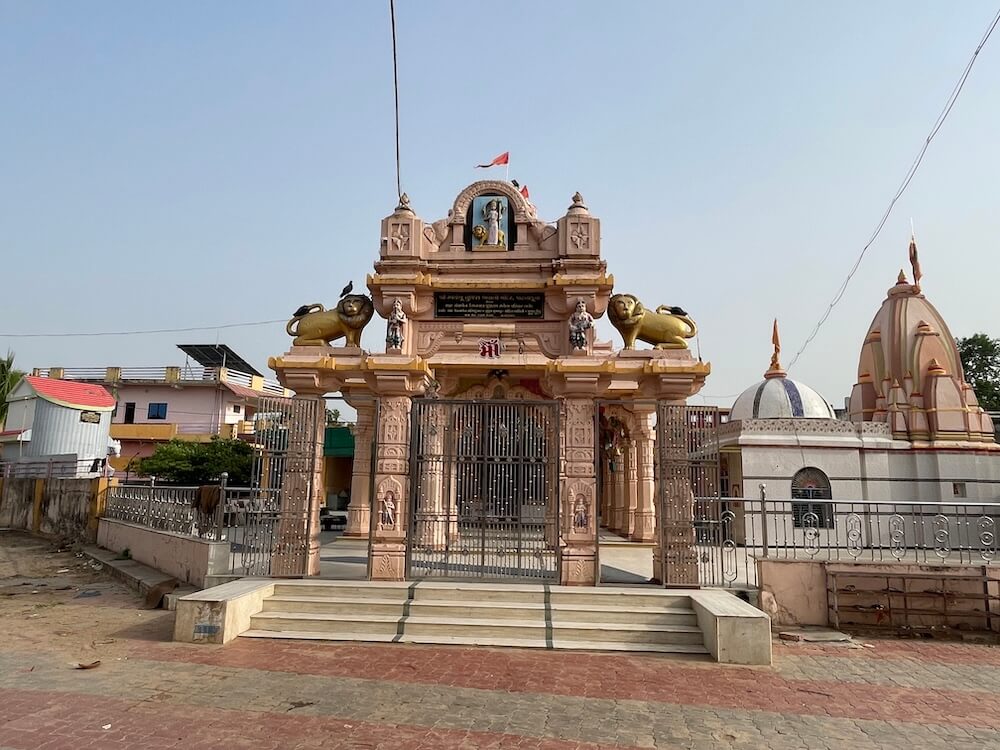
The temple stands prominently within the village’s main square, enclosed by a courtyard and marked by a tall, ornate entrance gate of pink stone adorned with three sculpted pillars. Lions perch atop the two outer pillars, while guardians and graceful divine attendants adorn the central pillar. Above the gateway arch, in a shrine niche, stands a four‑armed Bhavani bearing weapons, with the goddess’s lion mount carved behind her.
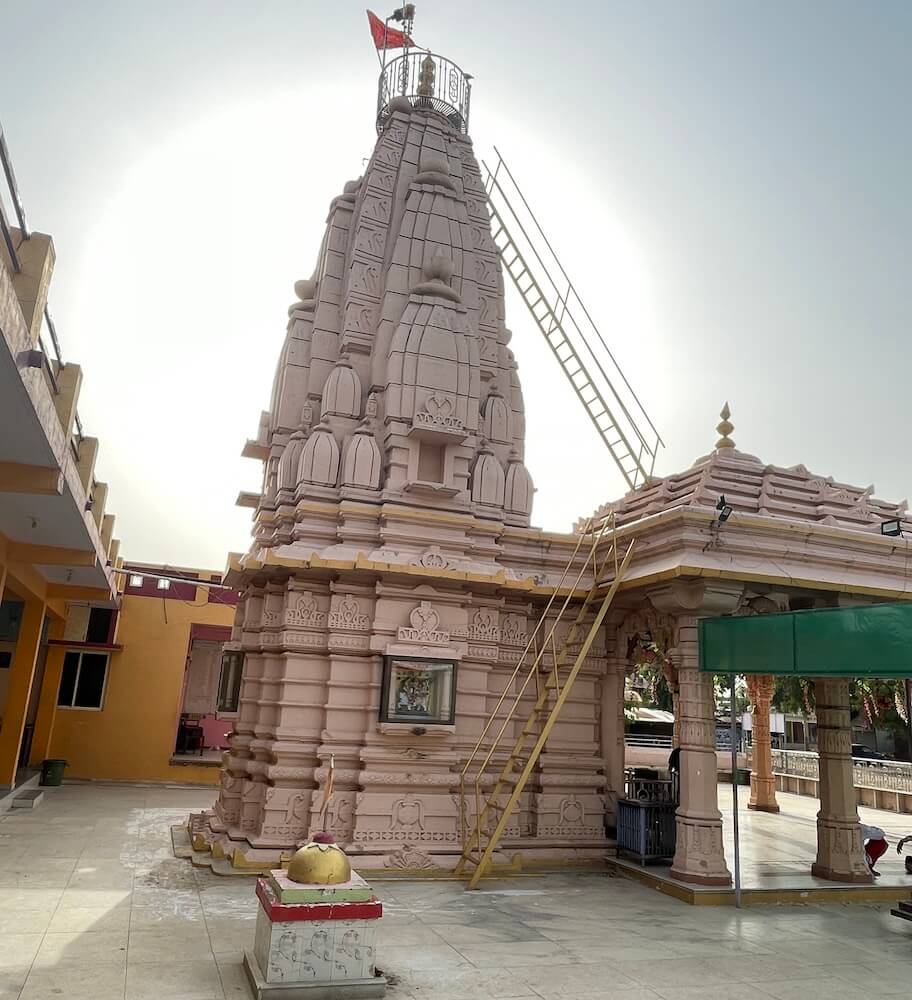
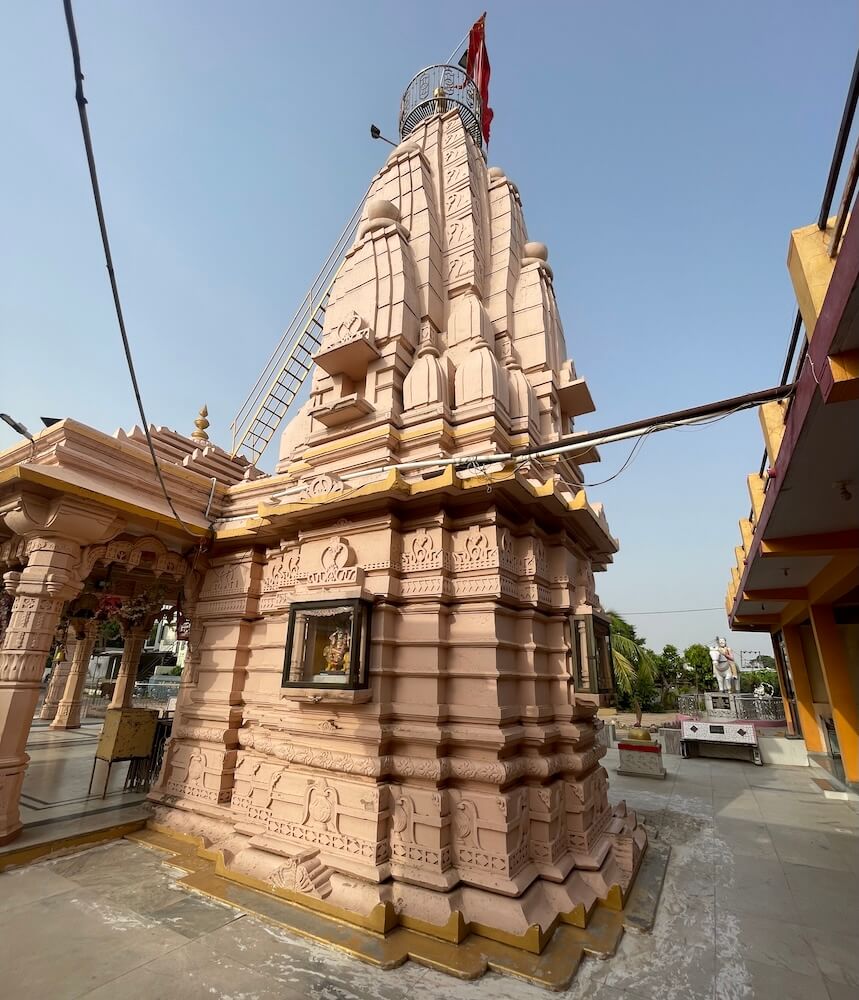
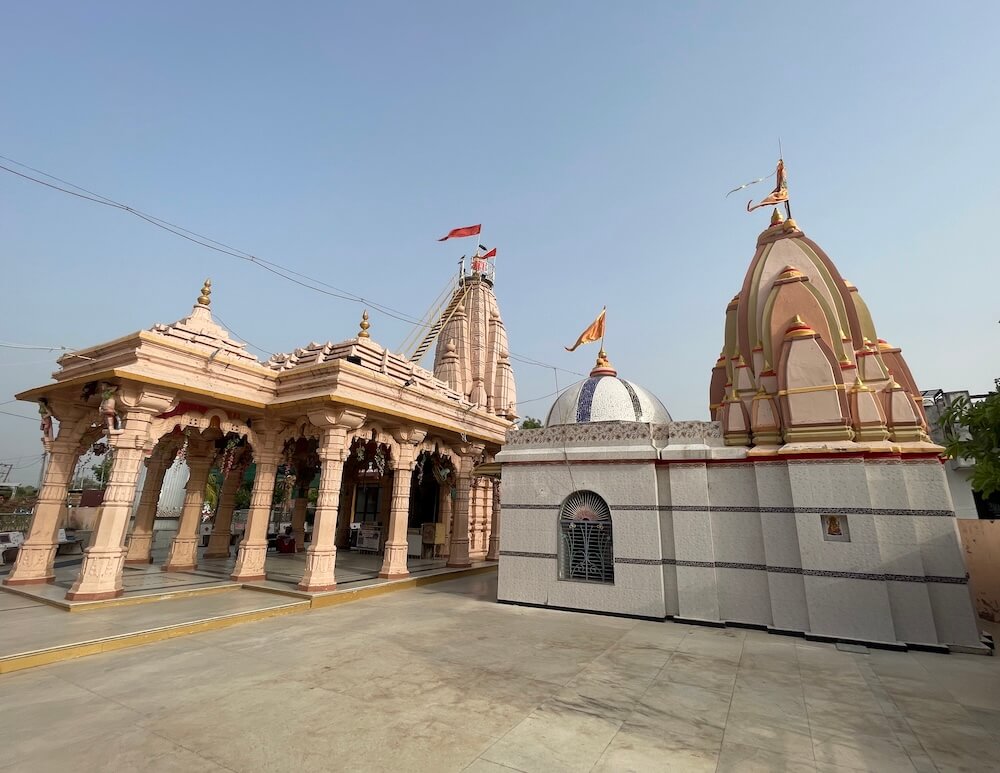
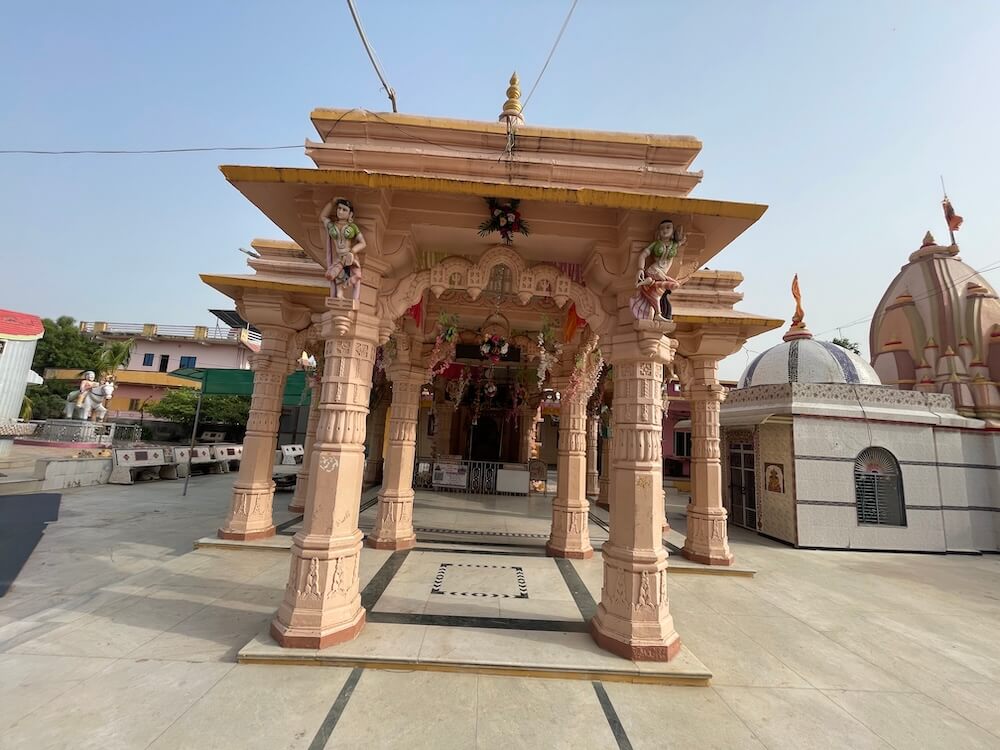 Entering the paved courtyard, one beholds the majestic temple built in the Nagara style from pink sandstone. Its layout comprises a main mukhamandap (entrance hall), an open sabhamandap, the antaral and the garbhagriha (sanctum). Both the mukhamandap and sabhamandap are crowned with pyramid‑shaped spires, each bearing an amalaka and a triple kalasha; the sanctum’s spire rises in the traditional urushringa style. The open halls feature intricately carved pillars and makar toranas and the capitals atop their pillars hold colorful surasundari (celestial maiden) sculptures.
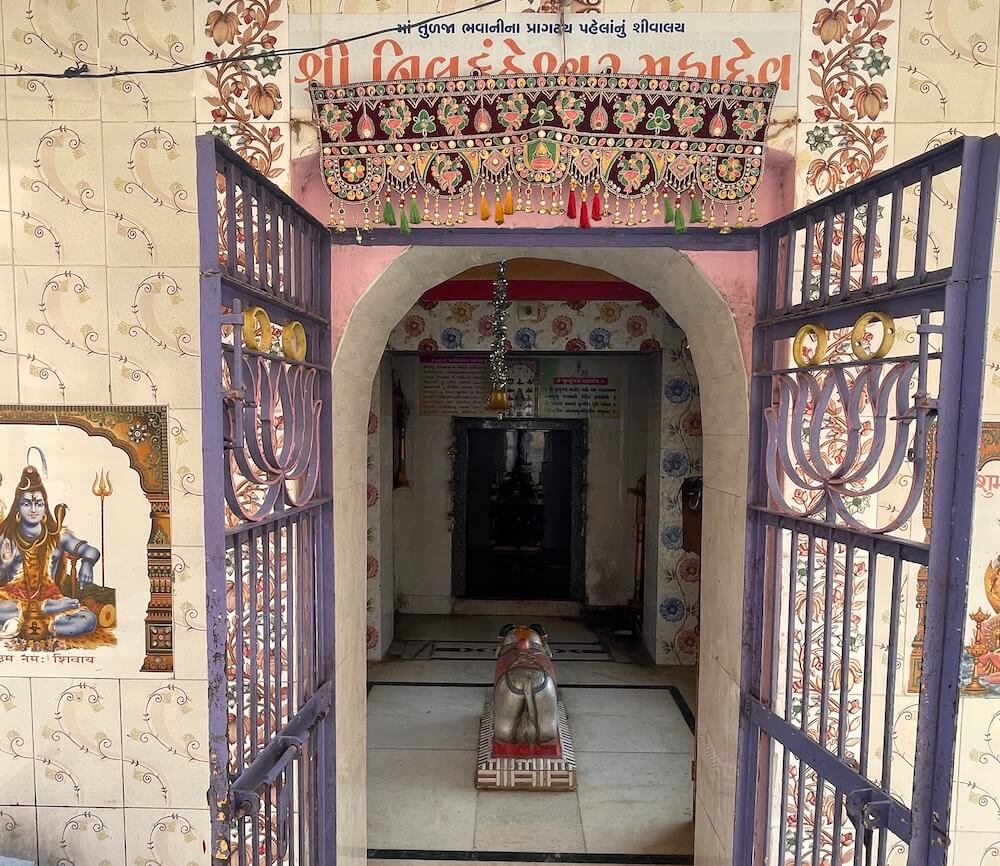
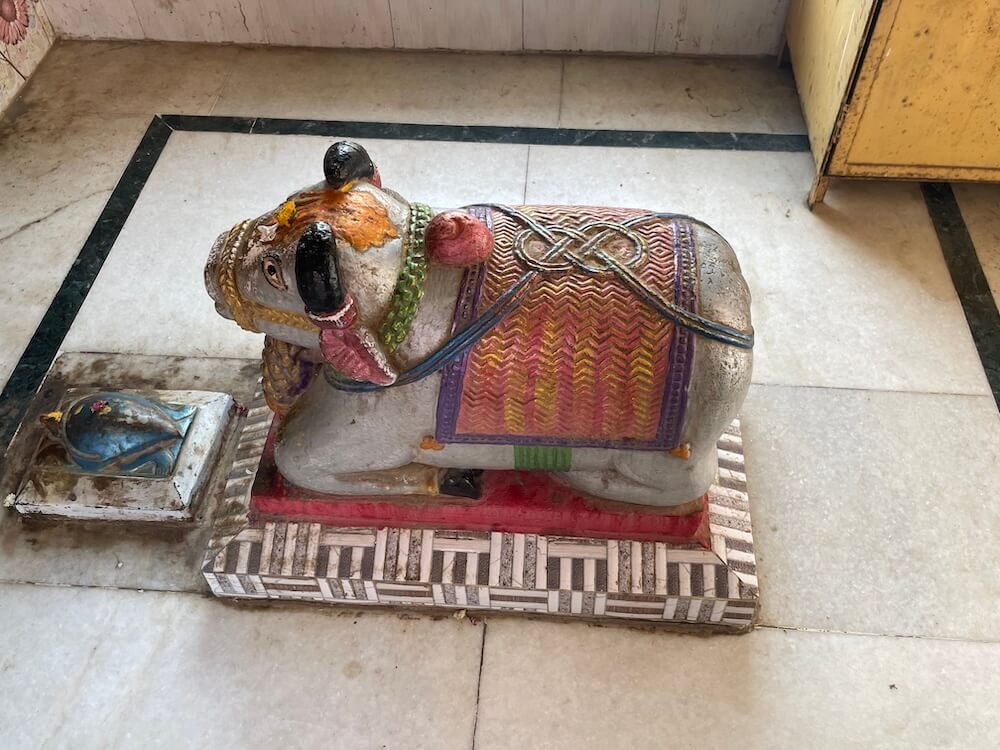
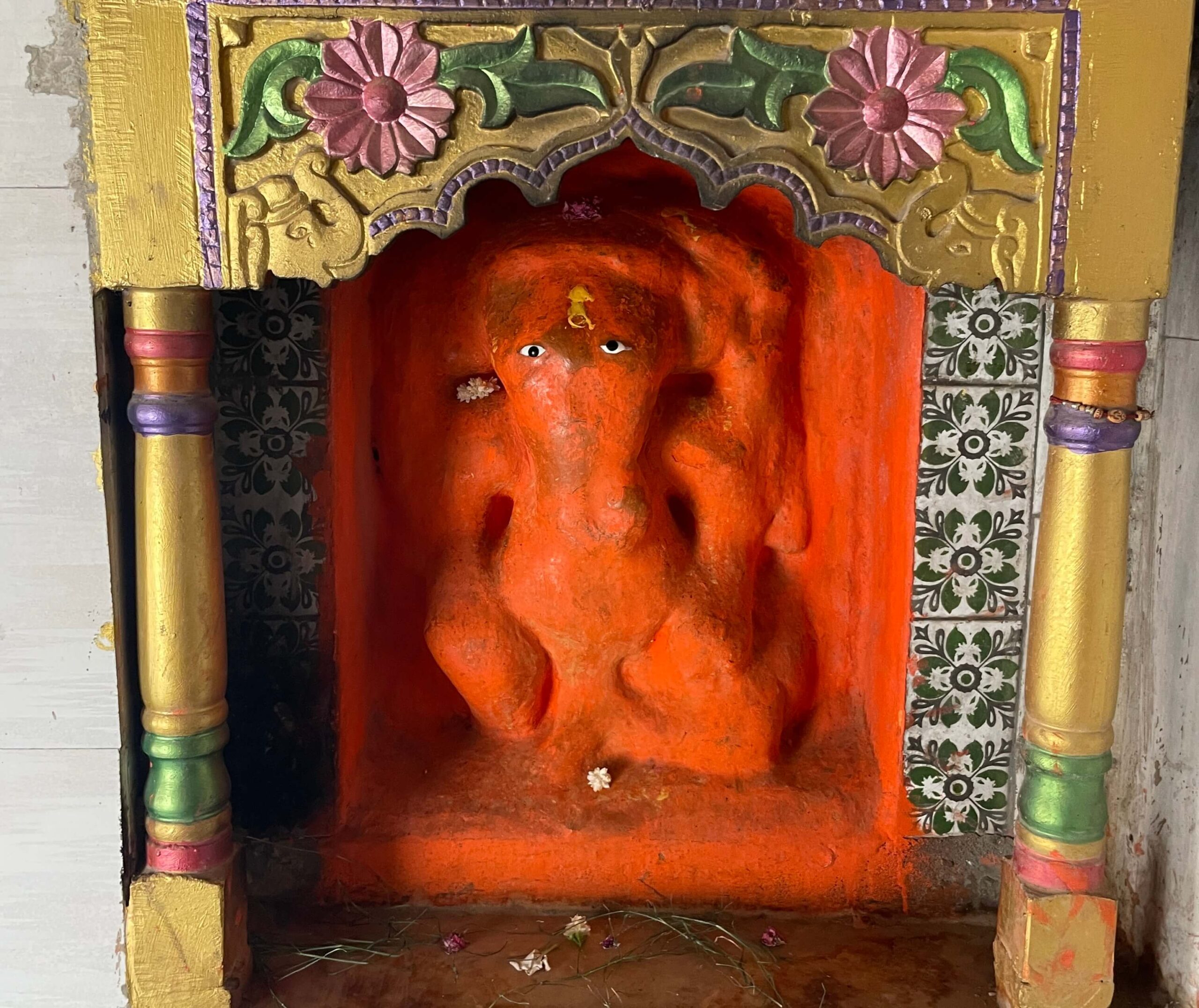
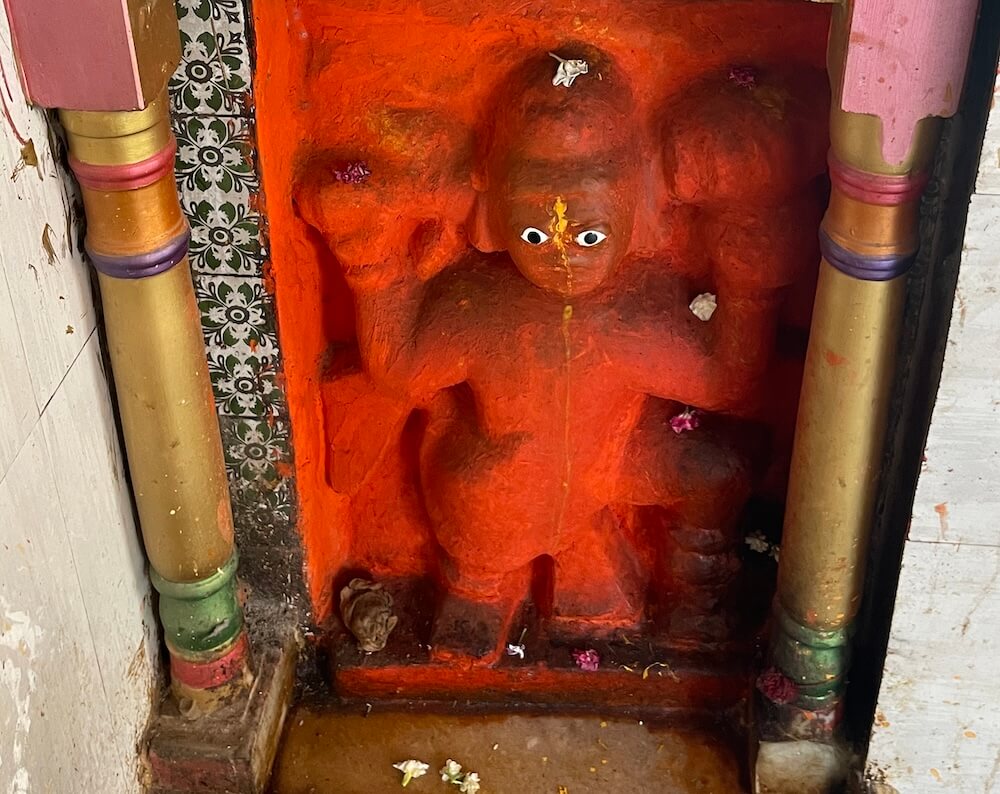
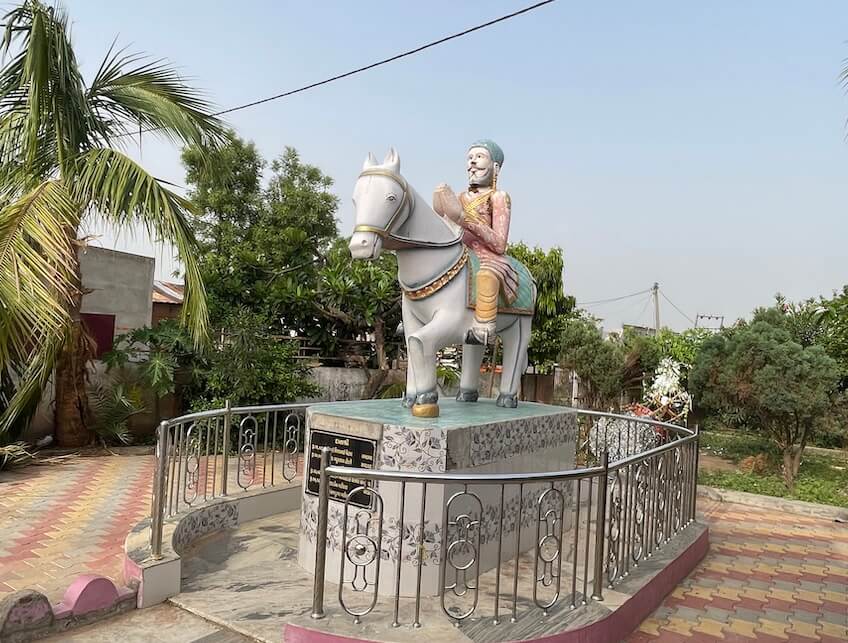
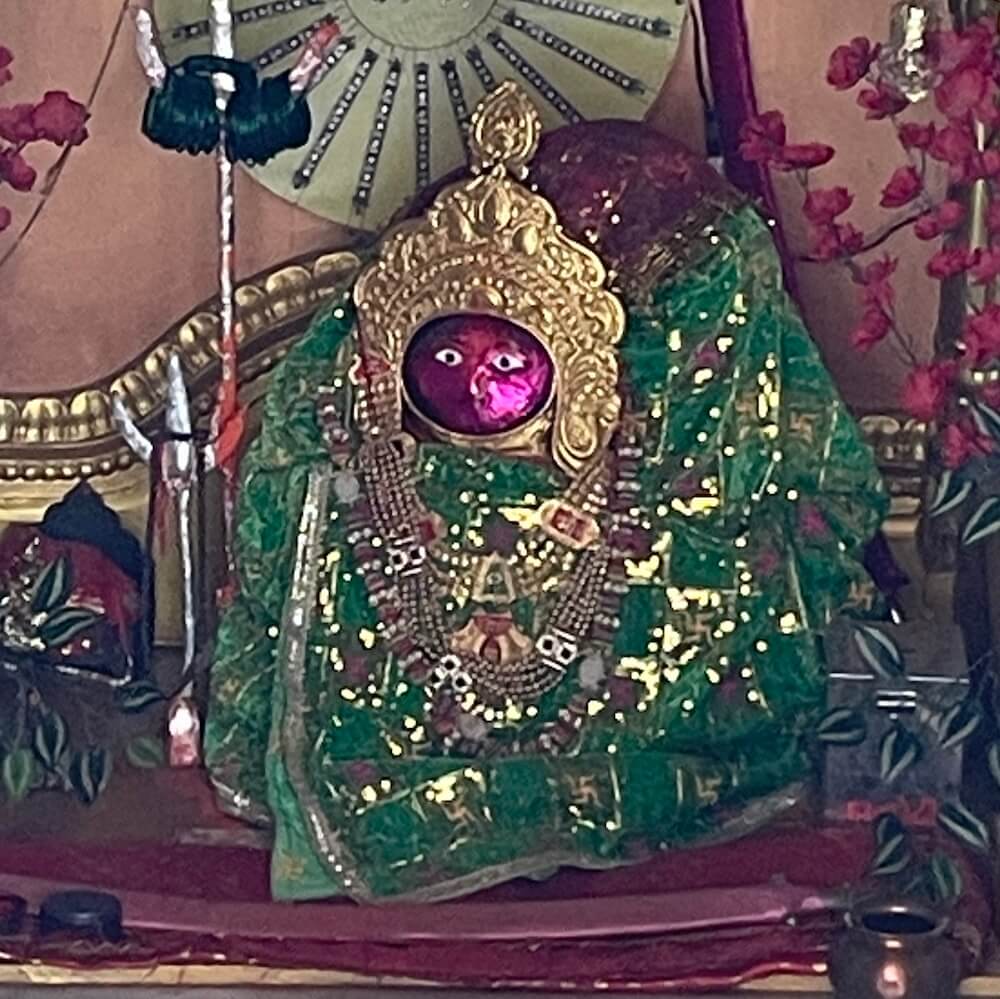
Within the sanctum, the goddess Tuljabhavani is seated inside a golden canopy on a stone pedestal. Adorned in ceremonial attire, she wears a golden crown and a nose ring. 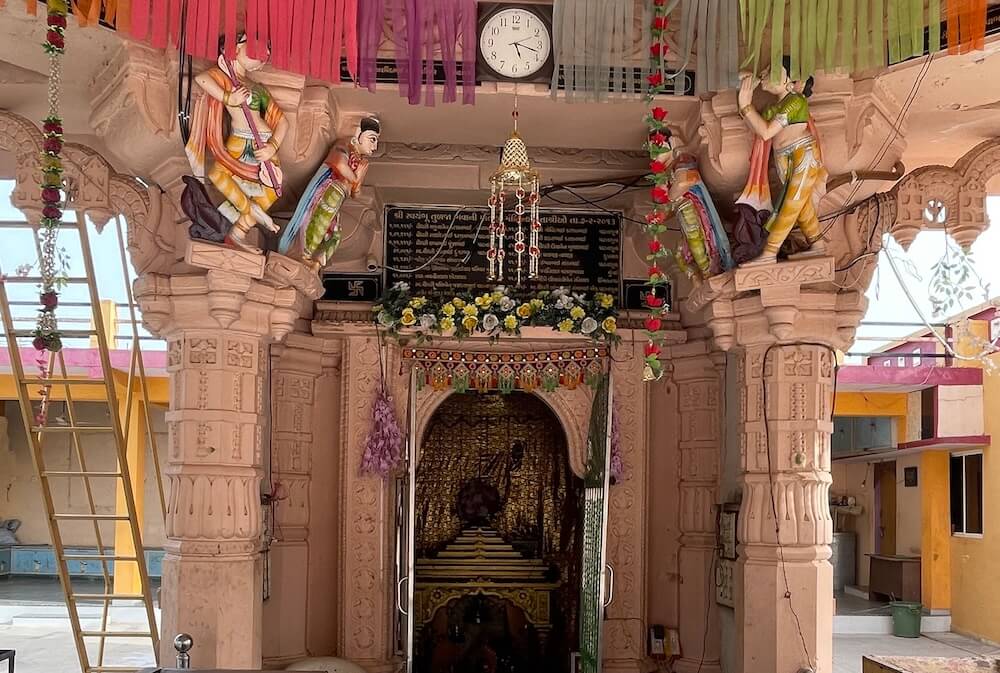 Flanking the canopy are stone‑carved lions and on the outer walls of the sanctum niche rest idols of Bahuchar Mata and Arbuda Mata – each seated on their respective mounts, i.e. a rooster and a lion. Nearby stands a statue of Chhatrapati Shivaji Maharaj on horseback, respectfully acknowledging the deity. To the left of the temple stands a large shrine dedicated to Neelkantheshwar Mahadev. Its structure comprises a sabhamandap (assembly hall), antaral (anteroom) and garbhagriha (sanctum). A dome-shaped spire crowns the sabhamandap, while the garbhagriha features a tall urushringa-style shikhara. Within the hall are stone statues of Nandi and a tortoise. In the antaral, the right shrine houses a stone idol of Ganesha, while the left shrine enshrines Hanuman.
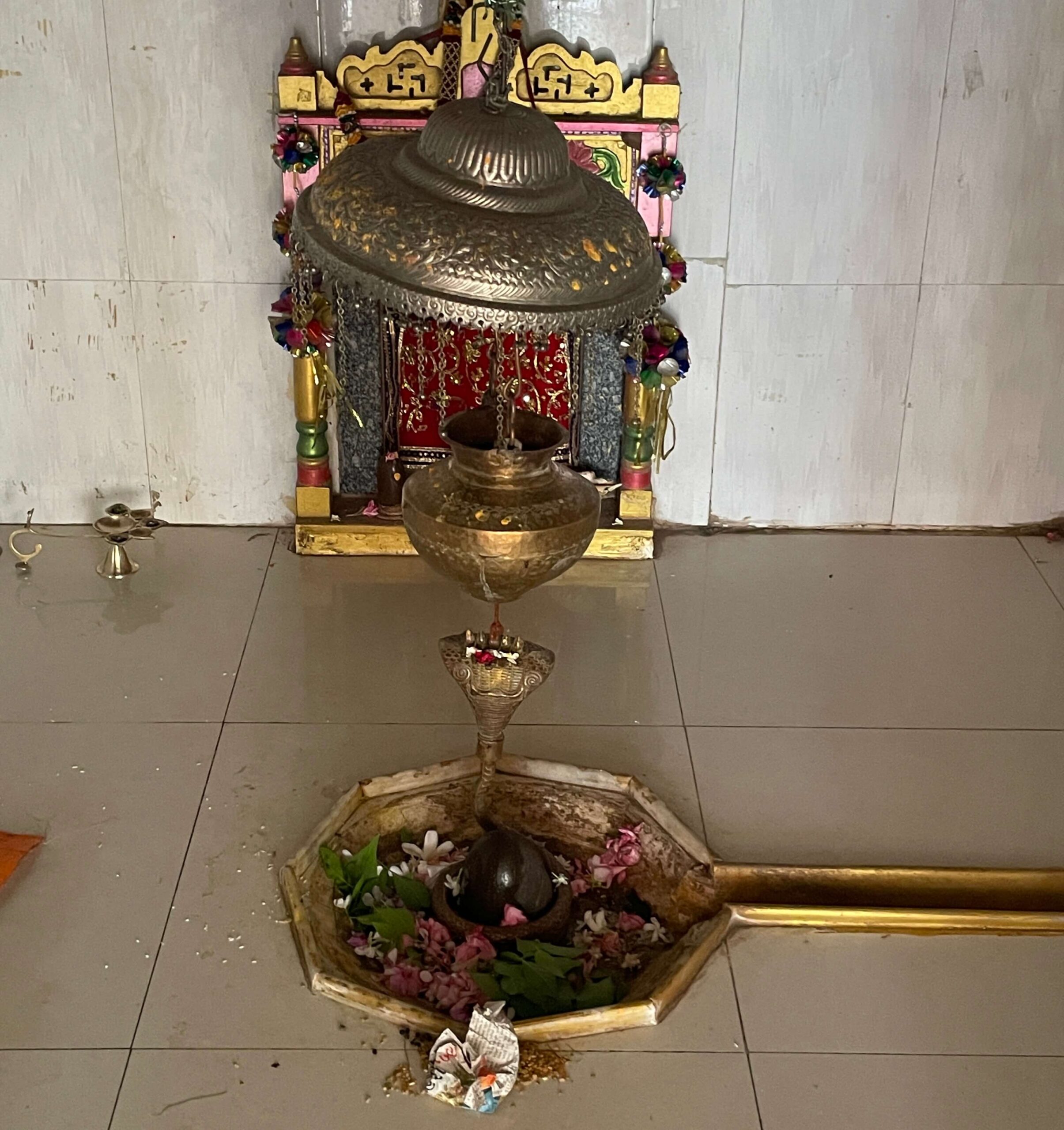
  Inside the octagonal base lies a Shiva lingam, adorned with a brass serpent, and a brass ritual pitcher (abhishek kalash) sits atop it. On the rear wall of the sanctum, in a ground-level niche, resides an idol of Goddess Parvati.
Devotees deeply believe that Tuljabhavani grants wishes made in devotion. Consequently, many offer vows or visit daily for darshan. Sundays and holidays attract large crowds. Monthly full-moon days feature celebratory rituals including fire-puja (havan), evening maha‑aarti, followed by distribution of divine offerings (mahaprasad). Major festivals, especially during Navratri, are celebrated with great zeal and include nine days of religious and cultural events. On Vijaya Dashami, local Brahmins from five nearby villages receive Brahmabhog (sacred feast).
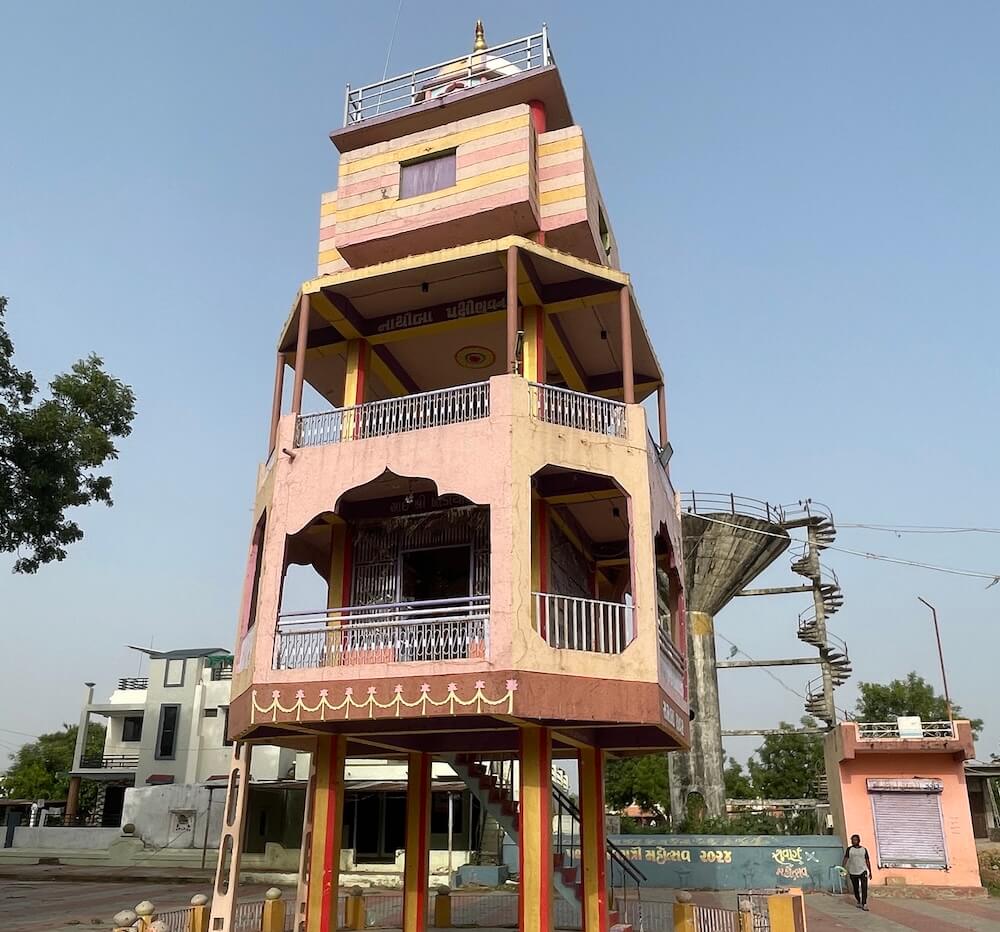
Opposite the temple stands a five-story octagonal ‘Ramla Tower’. During Navratri, the first floor displays a glass offering plate (roti mandvi) to the goddess. The second floor houses a deity of Khodiyar; the third features a birdhouse; the fourth, a clock; and atop the fifth floor rests a parasol-shaped dome and spire. The temple complex also includes a shrine to Lord Dattatreya and a communal dining hall (Annapurna Dham), which serves meals from 10 a.m. to 1 p.m.