
थ्रिप्पक्कुडम श्री महादेवाचे मंदिर
थलायझम, वायकोम, जि. कोट्टायम
Thrippakkudam Sree Mahadeva Temple
Thalayazham, Vaikom, Dist. Kottayam.
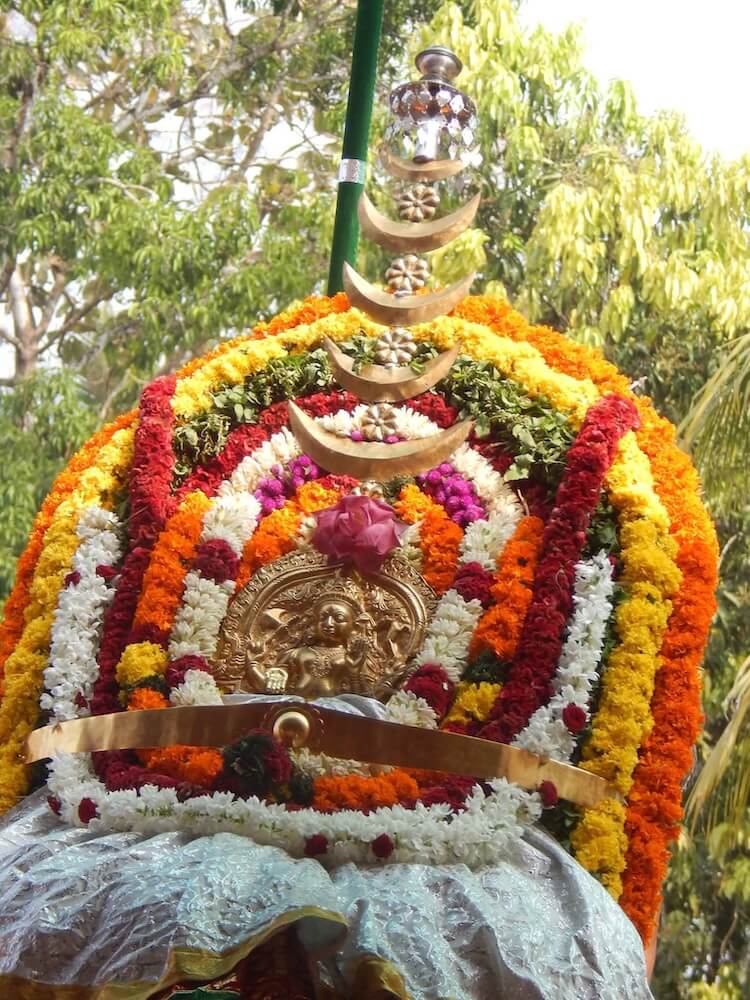 The famous Thrippakkudam Sree Mahadeva Temple is located at Thalayazham, near Vaikom in Kottayam district. Lord Shiva is the main deity and the temple is one of the important Shiva temples in Vaikom. It has a strong cultural connection with Vaikom Mahadeva Temple and is associated with several legends.
Thrippakkudam Sree Mahadeva Temple has a history dating back several centuries. According to local historical records, the area is believed to be more than 800 years old and was once under the rule of the Vadakkumkoor kings. Like other important temples in the region, its early construction and development took place during the period of the Vadakkumkoor kings. In the 18th century, after Maharaja Marthanda Varma defeated Vadakkumkoor, the temple became part of the Travancore royal kingdom. Its location near Vembanad Lake gave it a close connection with water transport, trade and travel in earlier times. It also served as a resting place for traders and travellers and as a cultural centre. The temple is also closely connected with the agricultural traditions of the region, with the centuries-old Niraputhari ritual reflecting its historical link with the local farming community.
Some rituals connected with the Aarattu of Vaikom Mahadeva Temple also have a historical link with this area. 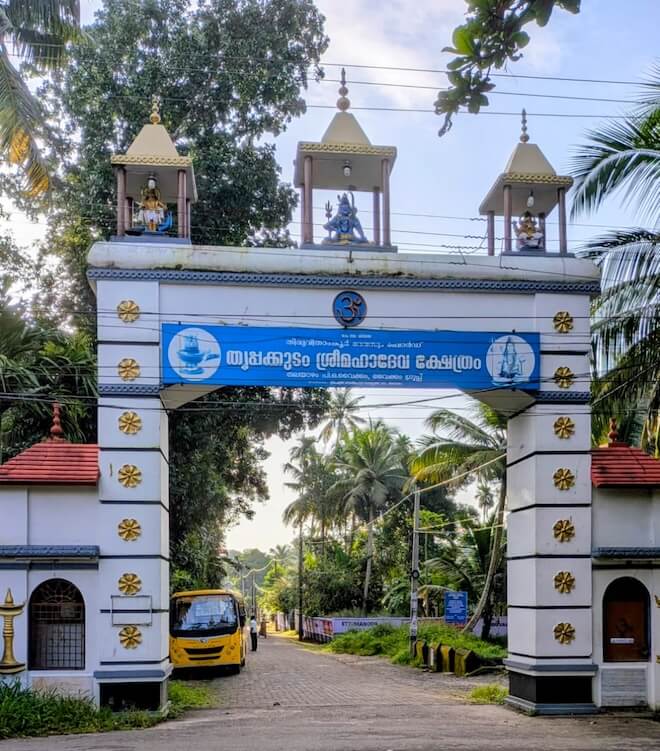 The Sreekovil and Chuttambalam have been rebuilt at different times after being damaged by natural disasters and age. The temple follows the traditional Kerala style of architecture, using wood and clay roof tiles. In earlier times, renovation work was carried out under the guidance of the Travancore rulers and later through the joint efforts of local people. At present, the temple is directly managed by the Travancore Devaswom Board, with an active Temple Advisory Committee involving local people in its daily affairs and festival arrangements.
Several interesting legends are associated with the temple. According to the local legend, an elephant once became a stone after facing Lord Shiva’s anger near the temple. This story is well known among the local people as ‘Thrippakkudam Mahadeva who turned an elephant into stone’. In connection with this legend, a special offering called ‘Parvathy Mangalam’ is performed at the temple to calm the Lord’s anger. There is also a legend about the origin of the name ‘Thrippakkudam’. It is said that a Shiva Lingam with a pot-like shape was once seen in a pond or natural spring here. The name is also associated with the words ‘Thiru + Paal + Kudam’ and the name ‘Thrippakkudam’.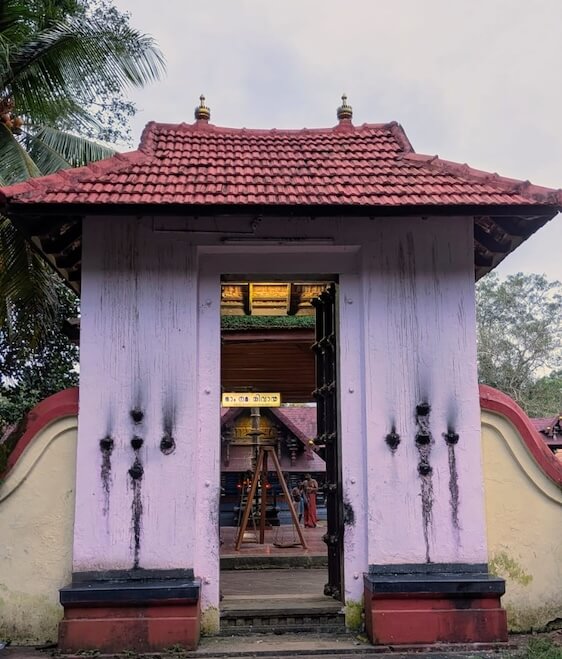
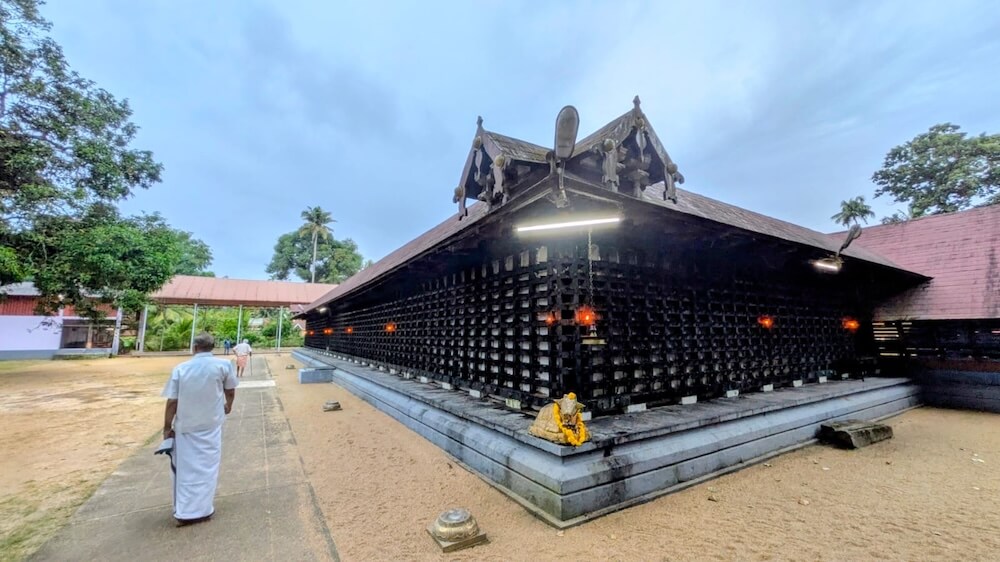
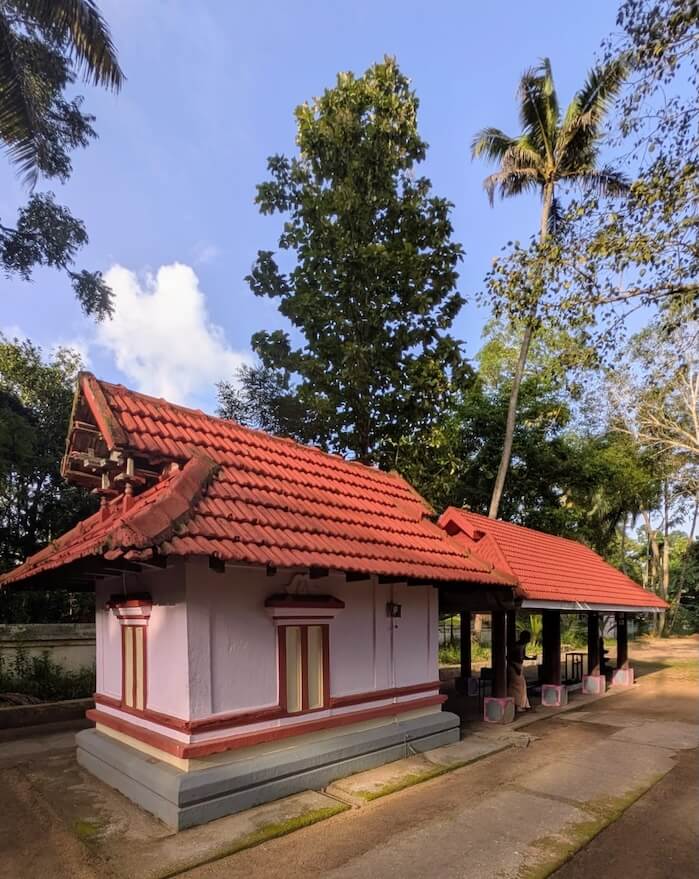
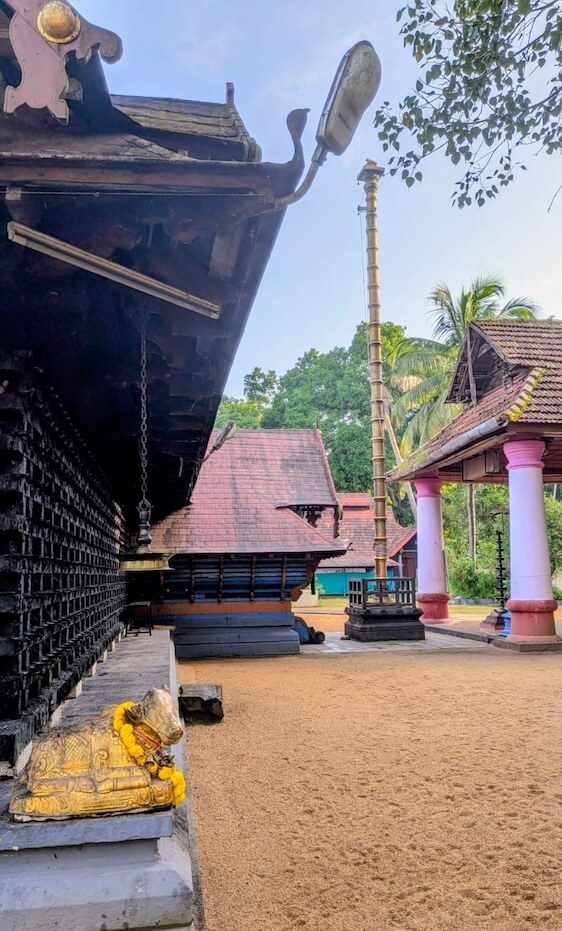
As you approach the temple, the first things you see are the beautiful tiled-roof Anappanthal and the traditional entrance gate. On entering, there is a spacious Nalambalam surrounding the main shrine, with its sides made of wooden panels and pillars. Looking through the main entrance, you can see the Balikkalpura, which houses a large Bali stone. The stone resembling an elephant, connected with the temple legend, can also be seen outside. Large traditional oil lamps are placed near the entrance. Inside the Nalambalam, there is a spacious open courtyard around the main Sreekovil.
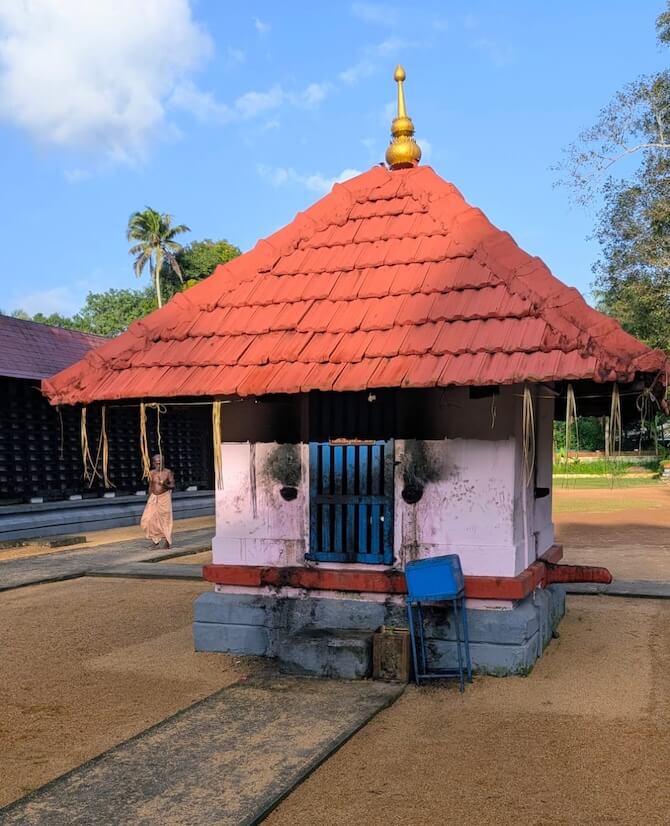
The Sreekovil is square-shaped and built on a granite base in the traditional Kerala style of architecture. Its tiled roof rests on a traditional wooden frame and is topped with a dome. Simple old wooden carvings can be seen on the front of the Sreekovil and on the nearby pillars. The Sopana has carved granite steps, while a granite Pranala on the side carries away the water used during the rituals. The main feature here is the presence of two Shiva Lingams installed on the same pedestal. The Shiva Lingam is a Swayambhu, formed naturally from stone. One of the Lingams has a pot-like shape. 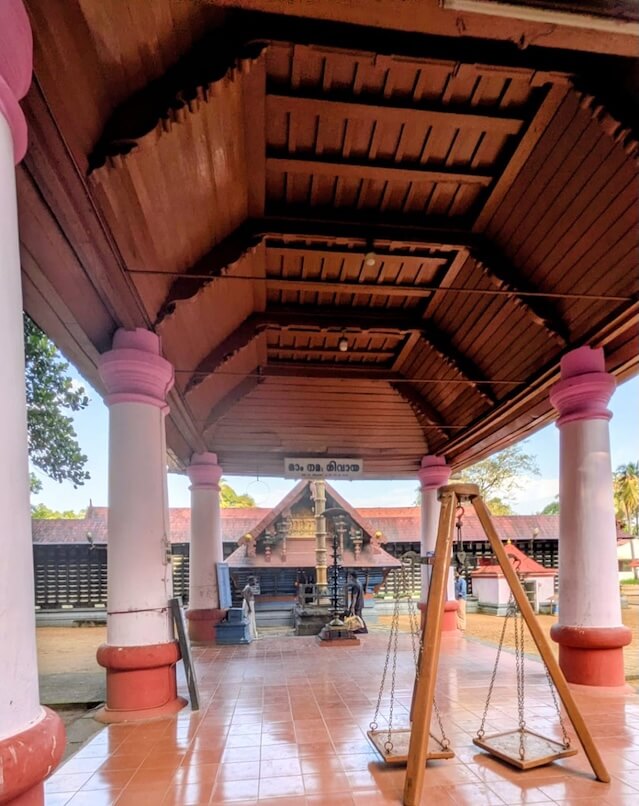 The two Shiva Lingams represent the fierce and calm forms of Lord Shiva.
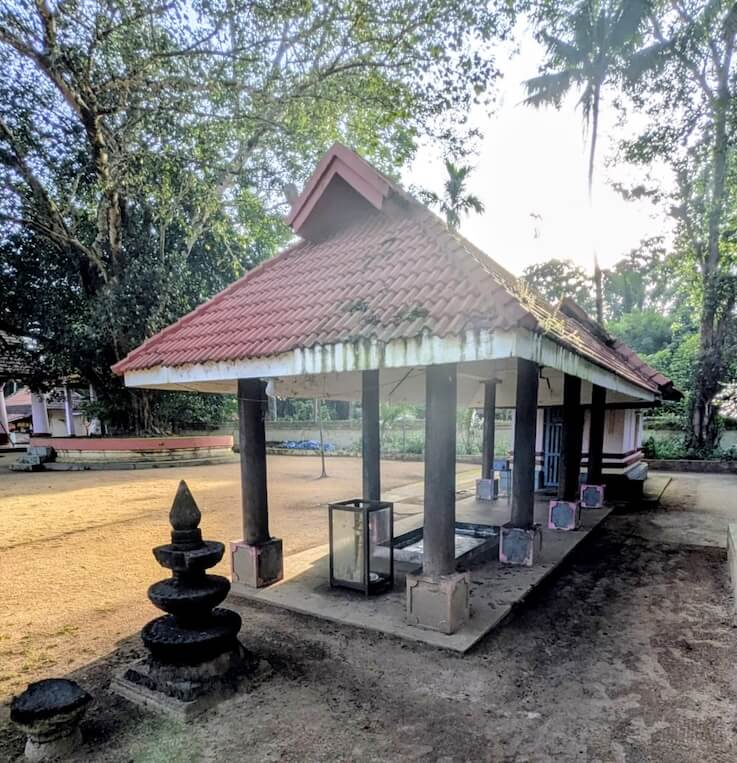
In addition to the main deity, there are shrines for other deities in different parts of the temple. In the south-west corner of the main Sreekovil, known as Kanni Moola, there is a shrine for Lord Ganesha facing east. Outside the Nalambalam, a separate shrine for Lord Sastha or Ayyappan can be seen on the south-eastern side. There is also a shrine for Bhagavathi within the temple complex. In the south-western part, a specially arranged Nagathara under the shade of large trees houses the Naga deities, including Nagaraja and Nagayakshi.
The main annual festival is held every year in the month of Kumbham (February–March). The festival begins with the Kodiyettam and on the final day, the historic Aarattu is held in Vembanad Lake. Many devotees come to the lakeside to witness the Aarattu. Pallivetta, Kettukazhcha and traditional art forms are also held in the temple grounds as part of the festival. On Maha Shivaratri, special Abhishekam and poojas are performed from the early morning and devotees stay awake at night to witness the Shivaratri lamp. Niraputhari is held at the end of Karkidakam or at the beginning of Chingam, when farmers offer the first harvested rice sheaves to the Lord. 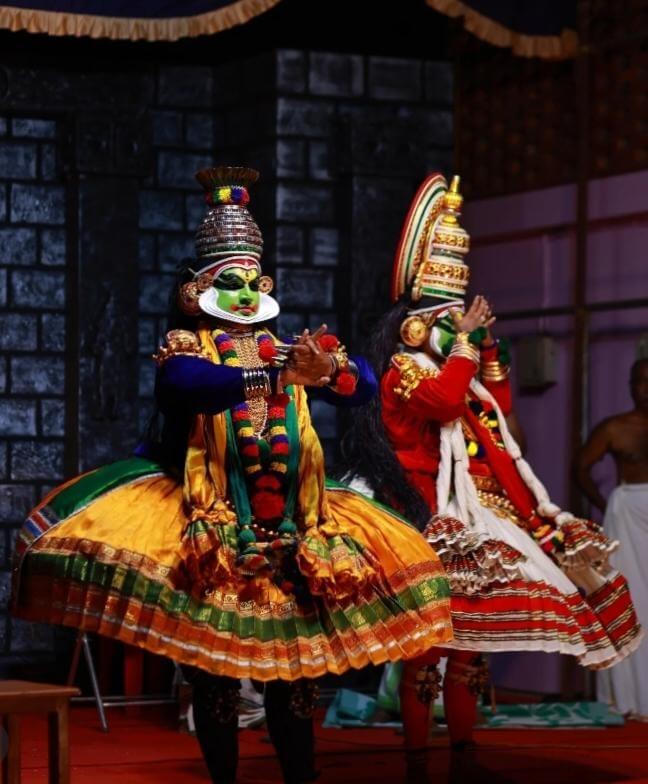 The blessed rice sheaves are then taken home and kept as part of the ritual. During the Mandala-Makaravilakku season, from the first day of Vrischikam, special poojas and lamps are offered to Sastha and Lord Shiva. During Karkidakam, special Deeparadhana, Ganapathi Homam and Bhagavathi Seva are performed, while on the first day of Chingam, Ashtadravya Maha Ganapathi Homam and special Laksharchana are offered.
The most special offering here is ‘Parvathy Mangalam’. This offering is performed to calm the fierce form of Lord Shiva and for family prosperity. Devotees also perform it for an obstacle-free marriage and a happy married life. The main offerings to Lord Shiva include Dhara, Koovalam Mala, Mrityunjaya Pushpanjali, Mrityunjaya Homam and Pinvilakku. Dhara is performed by continuously pouring water, milk, ghee or tender coconut water over the deity. Ganapathi Homam is the main offering to Lord Ganesha, while Noorum Paalum is offered to the Naga deities. These offerings are performed for removing obstacles, good health, family welfare and relief from Naga-related doshas.
The temple opens every day at 04:00 AM with Nirmalya Darshan. This is followed by Jalabhishekam, Malar Nivedyam and Usha Pooja for Lord Shiva. In the morning, the main offerings of Jala Dhara and Panthiradi Pooja are performed. The temple closes after Ucha Pooja and the main Nivedyam offering, around 09:30 to 10:00 AM. It reopens at 05:00 PM for evening darshan. Deeparadhana is performed around sunset, with traditional lamps lit around the temple. Athazha Pooja and the evening Nivedyam are performed between 07:30 and 08:00 PM, after which the temple closes. On special days such as Maha Shivaratri, the annual festival and Niraputhari, the timings may change due to additional poojas and rituals.
Key highlight :-
- Located 7 km from Vaikom, 20 km from Cherthala and 18 km from Kumarakom.
- The nearest railway stations are Vaikom Road, 15 km away and Cherthala, 18 km away.
- KSRTC and local bus services are available to the temple from Vaikom, Cherthala and Kottayam.
- Private vehicles can be parked in the temple’s parking area.
- Accommodation and food facilities are available in the nearby towns.
थ्रिपक्कुदम श्री महादेव मंदिर
थलायज़म, वैकोम, जिला। कोट्टायम
मंदिरे
Temples
मंदिर
મંદિરો
கோவில்கள்
దేవాలయాలు
ക്ഷേത്രങ്ങൾ
ದೇವಾಲಯಗಳು
মন্দিরসমূহ
ਮੰਦਿਰ
-
मूठदाथुकावू भगवती मंदिर मूथेदाथुकावू रोड, वायकोम, जि. कोट्टायम.
अधिक माहितीMoothedathukavu Bhagavathi Temple Moothedathukavu Road, Vaikom, Dist. Kottayam.
View Detailsमुथेदाथुकावु भगवती मंदिर मुथेदाथुकावु रोड, वैकोम, जिला। कोट्टायम.
विवरण देखेंMoothedathukavu Bhagavathi Temple Moothedathukavu Road, Vaikom, Dist. Kottayam.
વિગત જુઓMoothedathukavu Bhagavathi Temple Moothedathukavu Road, Vaikom, Dist. Kottayam.
விவரங்களைக் காண்கMoothedathukavu Bhagavathi Temple Moothedathukavu Road, Vaikom, Dist. Kottayam.
వివరాలను చూడండిMoothedathukavu Bhagavathi Temple Moothedathukavu Road, Vaikom, Dist. Kottayam.
വിശദാംശങ്ങൾ കാണുകMoothedathukavu Bhagavathi Temple Moothedathukavu Road, Vaikom, Dist. Kottayam.
ವಿವರಗಳನ್ನು ವೀಕ್ಷಿಸಿMoothedathukavu Bhagavathi Temple Moothedathukavu Road, Vaikom, Dist. Kottayam.
বিস্তারিত দেখুনMoothedathukavu Bhagavathi Temple Moothedathukavu Road, Vaikom, Dist. Kottayam.
ਵੇਰਵੇ ਦੇਖੋ -
वेल्लूर श्री सुब्रह्मण्य स्वामी मंदिर पामपाडी, जि. कोट्टायम
अधिक माहितीVelloor Sree Subrahmanya Swamy Temple Pampady, Dist. Kottayam
View Detailsवेल्लोर श्री सुब्रह्मण्य स्वामी मंदिर पंपडी, जिला. कोट्टायम
विवरण देखेंVelloor Sree Subrahmanya Swamy Temple Pampady, Dist. Kottayam
વિગત જુઓVelloor Sree Subrahmanya Swamy Temple Pampady, Dist. Kottayam
விவரங்களைக் காண்கVelloor Sree Subrahmanya Swamy Temple Pampady, Dist. Kottayam
వివరాలను చూడండిVelloor Sree Subrahmanya Swamy Temple Pampady, Dist. Kottayam
വിശദാംശങ്ങൾ കാണുകVelloor Sree Subrahmanya Swamy Temple Pampady, Dist. Kottayam
ವಿವರಗಳನ್ನು ವೀಕ್ಷಿಸಿVelloor Sree Subrahmanya Swamy Temple Pampady, Dist. Kottayam
বিস্তারিত দেখুনVelloor Sree Subrahmanya Swamy Temple Pampady, Dist. Kottayam
ਵੇਰਵੇ ਦੇਖੋ -
पुलियान्नूर शिव मंदिर पाला, जि. कोट्टायम
अधिक माहितीPuliyannur Siva Temple Pala, Dist. Kottayam
View Detailsपुलियान्नुर शिव मंदिर पाला, जिला. कोट्टायम
विवरण देखेंPuliyannur Siva Temple Pala, Dist. Kottayam
વિગત જુઓPuliyannur Siva Temple Pala, Dist. Kottayam
விவரங்களைக் காண்கPuliyannur Siva Temple Pala, Dist. Kottayam
వివరాలను చూడండిPuliyannur Siva Temple Pala, Dist. Kottayam
വിശദാംശങ്ങൾ കാണുകPuliyannur Siva Temple Pala, Dist. Kottayam
ವಿವರಗಳನ್ನು ವೀಕ್ಷಿಸಿPuliyannur Siva Temple Pala, Dist. Kottayam
বিস্তারিত দেখুনPuliyannur Siva Temple Pala, Dist. Kottayam
ਵੇਰਵੇ ਦੇਖੋ