
थ्रिक्कनगोडे रानडुमूर्ती मंदिर
थ्रिक्कनगोडे, ओट्टापलम, जि. पलक्कड.
Thrikkangode RanduMoorthy Temple
Thrikkangode, Ottappalam, Dist. Palakkad.
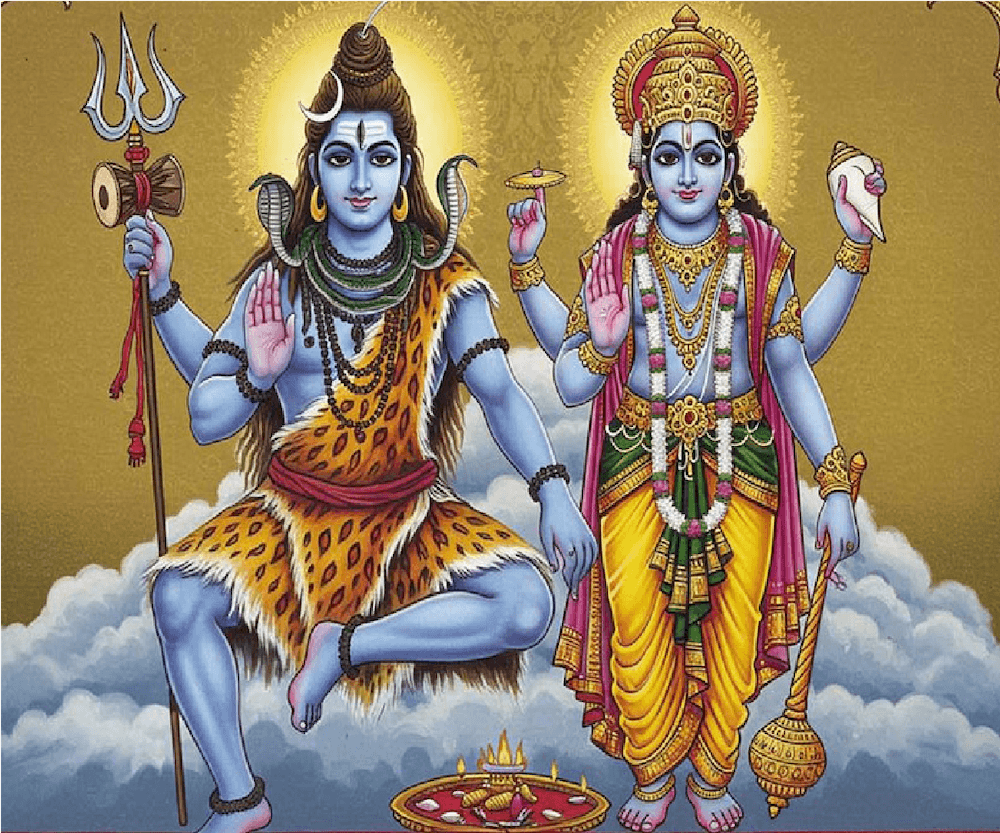 Thrikkangode Randu Moorthy Temple is a rare and spiritually significant temple where Lord Shiva and Lord Vishnu reside together within the same Sreekovil, in close proximity and with equal importance. The temple is regarded as an extraordinary sacred centre where devotees can worship both Hari and Hara without distinctions between Saiva and Vaishnava traditions. The unique presence of the two principal deities within a single Sreekovil gives the temple a special spiritual identity. It represents the underlying principle that Hari and Hara are manifestations of the same supreme divine reality and offers devotees the opportunity to seek the blessings of both deities at one sacred centre.
An assessment of the temple’s traditional architecture suggests that the present shrine is more than a thousand years old. The temple is traditionally associated with the Valluvanad royal lineage. 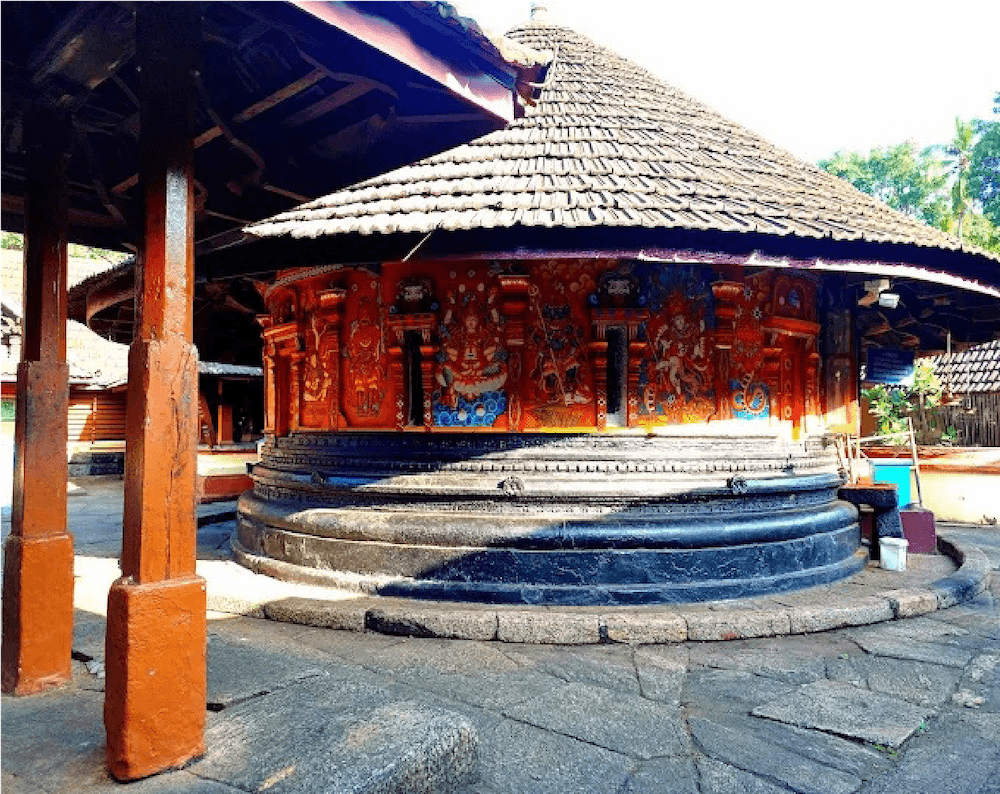 With the support of the Valluvanad rulers, eight traditional Namboothiri families known as the Ettumana, along with local chieftains and administrative authorities, are said to have taken part in establishing and maintaining the temple. The traditional Brahmin families were also responsible for the administration and management of the temple for generations.
During the military campaigns of Tipu Sultan in Malabar, the temple is believed to have faced the threat of attack. According to local tradition, the two principal idols were secretly removed from the shrine and carefully preserved in a concealed place within the temple premises to protect them from destruction. After the danger had passed, the idols were recovered, purification rituals were performed and the consecration was renewed. The temple continued under traditional Brahmin management for generations.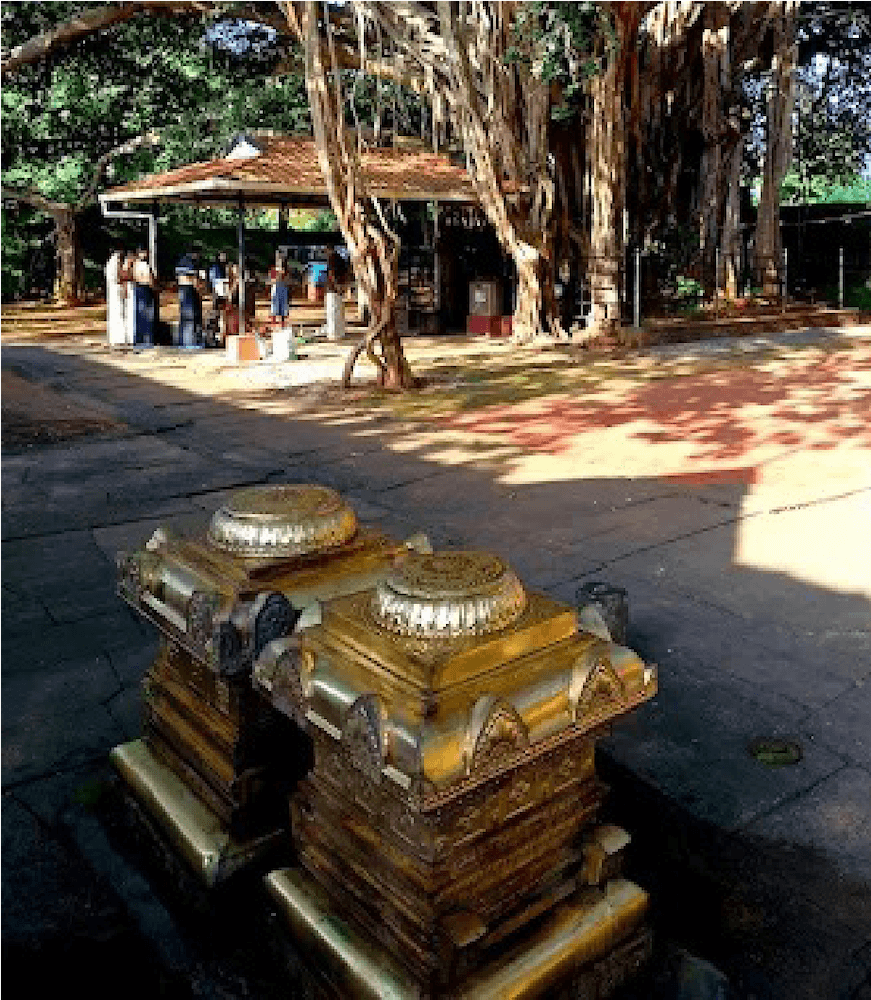 At present, the temple comes under the administration of the Malabar Devaswom Board. A committee representing the devotees also assists in the conduct of the temple’s day-to-day activities and festivals.
One tradition associates the temple with the 108 temples believed to have been consecrated by Parasurama. According to this belief, the original shrine later became overgrown and was eventually lost within the surrounding forest. Another popular legend connects the rediscovery of the sacred site with a couple named Chathan and Chakki. The area was once believed to have been a dense forest and the couple had entered the region to collect forest produce. While sharpening her sickle against a stone that she noticed on the ground, Chakki is said to have witnessed blood flowing from the stone. Frightened by the sight, the couple ran away and informed the local people. A subsequent Devaprasnam is traditionally said to have revealed that the stone was not an ordinary rock but a self-manifested sacred manifestation associated with Shiva and Vishnu. The discovery led to the establishment of a temple at the site. Another tradition tells of a sage who worshipped the Supreme Being without making a distinction between Saiva and Vaishnava traditions. 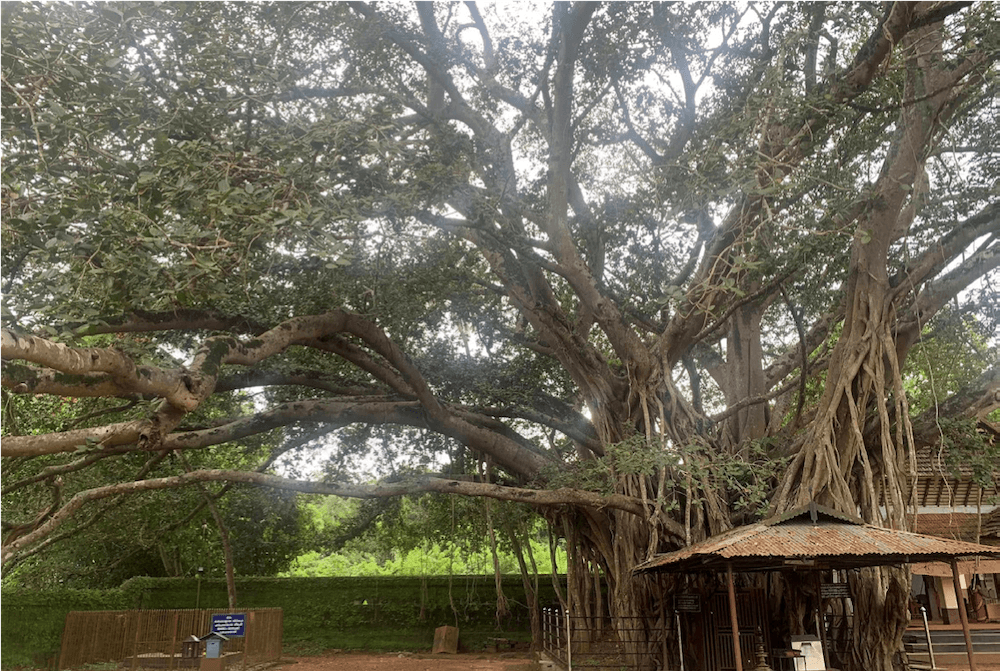 Having undertaken severe penance at this place, he is believed to have pleased both Shiva and Vishnu. The two deities are said to have appeared together before the sage and in response to his prayer, agreed to remain eternally present at the site. According to this tradition, the combined presence of Shiva and Vishnu was established to express the principle that Hari and Hara are one. The equal importance given to both deities within the same Sreekovil is therefore regarded as a spiritual symbol of unity beyond sectarian distinctions.
The temple follows the traditional architectural principles of Kerala temple architecture and retains the distinctive character of an ancient Kerala shrine. The temple complex is enclosed by a Chuttambalam and surrounding walls. 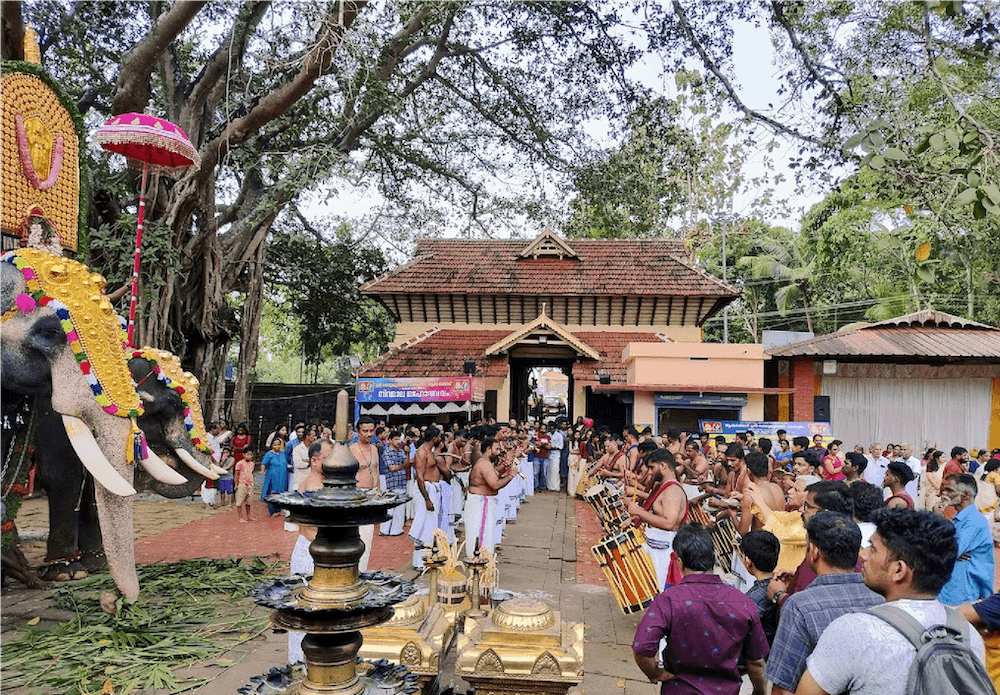 A large two-storeyed gateway provides the principal entrance through the enclosure. Two traditional stone lamps stand in front of the gateway, adding to the visual character of the entrance. On entering the enclosure, two Bali Kallu of similar size can be seen in front of the Nalambalam. A Nandi shrine is situated further ahead, before the Nalambalam. The principal Sreekovil is circular in plan, following the traditional Kerala architectural form. Stone, laterite and timber have been used in its construction. The circular Sreekovil is crowned with a tiled roof, characteristic of traditional Kerala temple architecture. In front of the Sreekovil is the Namaskara Mandapam, supported by beautifully carved wooden pillars. The detailed craftsmanship of the pillars is one of the attractive architectural features of the shrine.
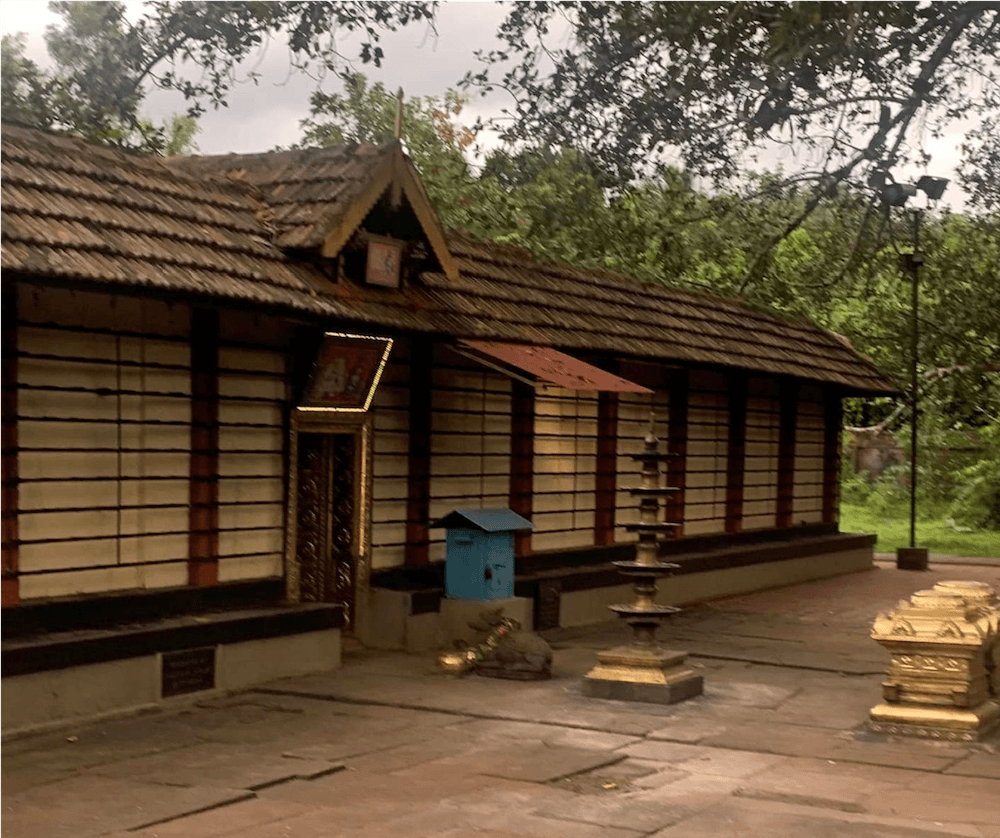 The walls of the Sreekovil are adorned with mural paintings, adding artistic and devotional richness to the temple interior. The principal shrine faces west and the main darshan is therefore towards the western direction.
The principal deities of the temple are Lord Shiva and Lord Vishnu, who reside together within the same Sreekovil. The principal manifestation is traditionally regarded as a Swayambhu Lingam. Lord Shiva is situated on the southern side and Lord Vishnu on the northern side. Both manifestations are worshipped with equal importance. Although the two deities share the same Sreekovil, separate poojas are performed for Shiva and Vishnu. The daily Dhara offered to both deities is one of the distinctive features of the temple. The daily Dhara offered particularly to Lord Mahavishnu is regarded as an especially unusual ritual practice. The combined presence of Shiva and Vishnu, 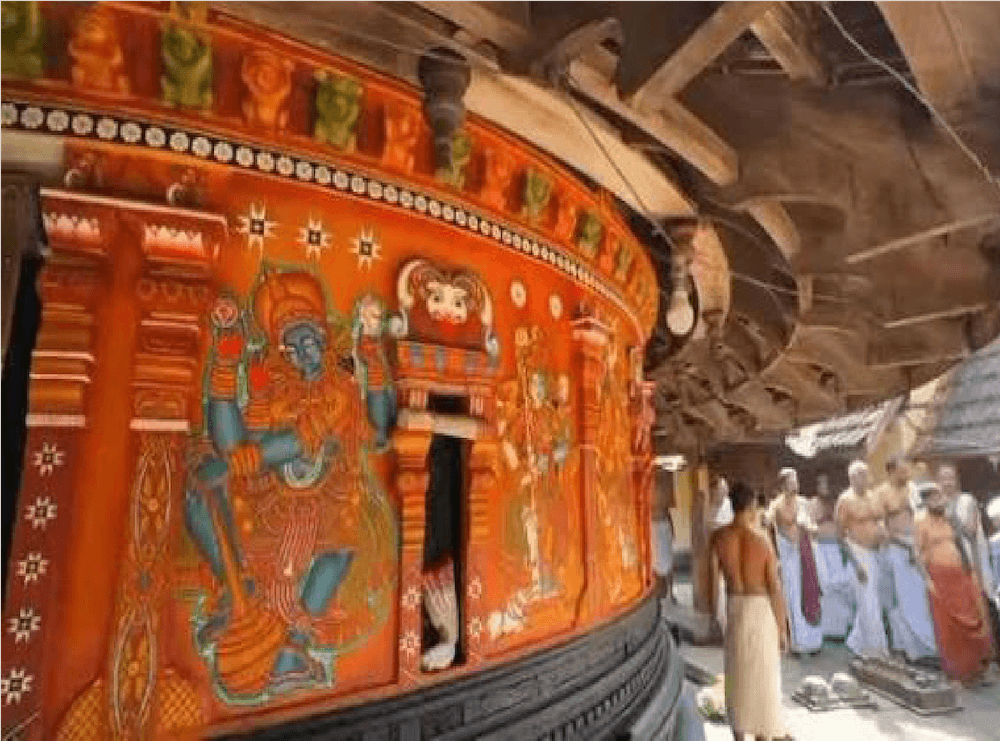 together with their individual worship within one Sreekovil, gives the temple a distinctive place among Kerala’s sacred centres. The main darshan is towards the west.
The temple complex contains several sub shrines associated with other Hindu deities. A shrine dedicated to Lord Ganapathi is situated towards the south-western side of the Sreekovil. Outside the Nalambalam, towards the south-eastern side, is a shrine dedicated to Lord Sreekrishna.The south-western area of the temple also contains shrines dedicated to the Naga deities and Lord Ayyappa. These sub shrines add to the wider devotional character of the temple complex, allowing devotees to offer worship to several deities during their visit.
Niramala Maholsavam is the principal annual festival of the temple. It is celebrated during the Malayalam month of Dhanu, towards the concluding stage of the Mandala season. The principal celebration is associated with the 41st Mandala day. The festival extends for seven days, with the seventh day culminating in the Aarattu ceremony. The festival brings together several traditional temple rituals and ceremonial processions. Sheeveli, Aanayezhunnellippu, Kazhcha Sheeveli and Sreebhootha Bali are among the important rituals and ceremonies associated with the festival. The ceremonial presence of caparisoned elephants and traditional temple percussion adds grandeur to the celebrations. The festival is an important occasion for the local community and devotees, combining ritual worship, traditional temple customs and festive celebrations. In addition to Niramala Maholsavam, Mahashivaratri and Ashtami Rohini are observed at the temple. The Prathishta Dinam is also celebrated during the Malayalam month of Kumbham. Special poojas and temple rituals are conducted as part of these observances.
The temple follows a traditional daily worship schedule, with separate worship offered to the two principal deities despite their shared Sreekovil. The major daily rituals include the morning worship, Dhara, Ucha Pooja and Sheeveli. 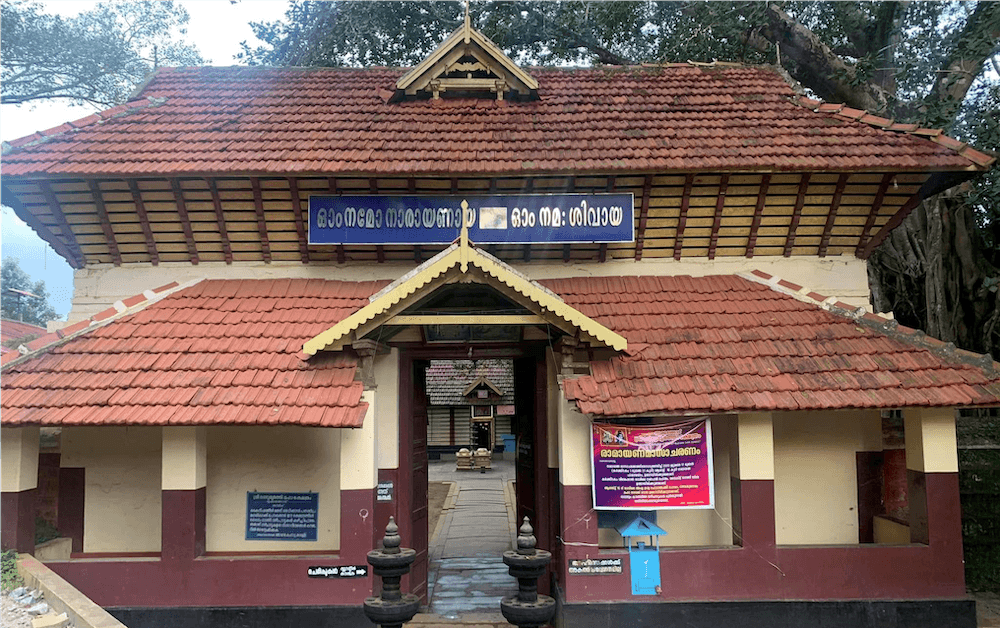 Sreebhootha Bali and Kazhcha Sheeveli are also important ritual observances, particularly on special and festival days. Sheeveli holds an important place in the ritual life of the temple. During Sheeveli, the sacred processional ritual is conducted within the temple precincts accompanied by traditional temple customs. During the annual festival, the ceremony becomes more elaborate with Aanayezhunnellippu and traditional percussion. The performance of separate poojas for Shiva and Vishnu within the same Sreekovil is itself an important ritual characteristic of the temple. Daily Dhara for both deities is another distinctive practice. During special observances and festival days, additional rituals such as Navakam, Panchagavyam and Shankhabhishekam are performed.
The temple is associated with several traditional offerings and special worship practices.The principal offerings include
Dhara, Navakam, Panchagavyam, Shankhabhishekam, Mahamrityunjaya Homam, Archana and other special worship offerings. Dhara has particular significance at this temple because it is offered daily to both principal deities. The worship of Shiva and Vishnu together, while maintaining their individual ritual traditions, makes such offerings especially significant here. Navakam and Panchagavyam are among the important ritual offerings associated with the temple, particularly during special periods and observances. Shankhabhishekam is another significant offering connected with the worship of the divine manifestations. Mahamrityunjaya Homam is also performed as a special offering, traditionally associated with prayers for health, protection and longevity.
The temple traditionally opens for worship in the early morning and reopens in the evening after the afternoon closure. Morning: 5.00 AM – 10.00 AM and Evening: 5.00 PM – 8.00 PM. The exact opening and closing times, as well as the timings of individual poojas, may vary on festival days and other special occasions.
Key highlights
- Located 6 km from Ottappalam, 7 km from Shoranur and 3 km from Vaniyamkulam.
- Ottappalam Railway Staion is the nearest Railway Station, about 6 km from the temple.
- Private bus services are available to the temple from Vanniyamkulam and Ottappalm.
- Private vehicles can be parked in the temple’s designated parking area.
- Accommodation and food facilities are available in the nearby towns.
थ्रीक्कनगोडे रंडुमूर्ति मंदिर
थ्रीक्कनगोडे, ओट्टापलम, जिला। पलक्कड़.
मंदिरे
Temples
मंदिर
મંદિરો
கோவில்கள்
దేవాలయాలు
ക്ഷേത്രങ്ങൾ
ದೇವಾಲಯಗಳು
মন্দিরসমূহ
ਮੰਦਿਰ
-
थेनकुरिस्सी शिव मंदिर थेनकुरिस्सी, जिल्हा पालक्काड.
अधिक माहितीThenkurissi Shiva Temple Thenkurissi, Dist. Palakkad.
View Detailsथेनकुरिस्सी शिव मंदिर थेनकुरिस्सी, ज़िला पलक्कड़।
विवरण देखेंThenkurissi Shiva Temple Thenkurissi, Dist. Palakkad.
વિગત જુઓThenkurissi Shiva Temple Thenkurissi, Dist. Palakkad.
விவரங்களைக் காண்கThenkurissi Shiva Temple Thenkurissi, Dist. Palakkad.
వివరాలను చూడండిThenkurissi Shiva Temple Thenkurissi, Dist. Palakkad.
വിശദാംശങ്ങൾ കാണുകThenkurissi Shiva Temple Thenkurissi, Dist. Palakkad.
ವಿವರಗಳನ್ನು ವೀಕ್ಷಿಸಿThenkurissi Shiva Temple Thenkurissi, Dist. Palakkad.
বিস্তারিত দেখুনThenkurissi Shiva Temple Thenkurissi, Dist. Palakkad.
ਵੇਰਵੇ ਦੇਖੋ -
थयंकावू भगवती मंदिर थेनकुरीसी, जि. पलक्कड.
अधिक माहितीThayankavu Bhagavathi Temple Thenkurissi, Dist. Palakkad.
View Detailsथायंकावु भगवती मंदिर थेनकुरिसि, जिला. पलक्कड़.
विवरण देखेंThayankavu Bhagavathi Temple Thenkurissi, Dist. Palakkad.
વિગત જુઓThayankavu Bhagavathi Temple Thenkurissi, Dist. Palakkad.
விவரங்களைக் காண்கThayankavu Bhagavathi Temple Thenkurissi, Dist. Palakkad.
వివరాలను చూడండిThayankavu Bhagavathi Temple Thenkurissi, Dist. Palakkad.
വിശദാംശങ്ങൾ കാണുകThayankavu Bhagavathi Temple Thenkurissi, Dist. Palakkad.
ವಿವರಗಳನ್ನು ವೀಕ್ಷಿಸಿThayankavu Bhagavathi Temple Thenkurissi, Dist. Palakkad.
বিস্তারিত দেখুনThayankavu Bhagavathi Temple Thenkurissi, Dist. Palakkad.
ਵੇਰਵੇ ਦੇਖੋ -
श्री कुरुंबा भगवती मंदिर चोरोत्तूर, ओट्टापलम, जि. पलक्कड.
अधिक माहितीSree Kurumba Bhagavathi Temple Chorottur, Ottapalam, Dist. Palakkad.
View Detailsश्री कुरुम्बा भगवती मंदिर चोरोट्टूर, ओट्टापलम, जिला। पलक्कड़.
विवरण देखेंSree Kurumba Bhagavathi Temple Chorottur, Ottapalam, Dist. Palakkad.
વિગત જુઓSree Kurumba Bhagavathi Temple Chorottur, Ottapalam, Dist. Palakkad.
விவரங்களைக் காண்கSree Kurumba Bhagavathi Temple Chorottur, Ottapalam, Dist. Palakkad.
వివరాలను చూడండిSree Kurumba Bhagavathi Temple Chorottur, Ottapalam, Dist. Palakkad.
വിശദാംശങ്ങൾ കാണുകSree Kurumba Bhagavathi Temple Chorottur, Ottapalam, Dist. Palakkad.
ವಿವರಗಳನ್ನು ವೀಕ್ಷಿಸಿSree Kurumba Bhagavathi Temple Chorottur, Ottapalam, Dist. Palakkad.
বিস্তারিত দেখুনSree Kurumba Bhagavathi Temple Chorottur, Ottapalam, Dist. Palakkad.
ਵੇਰਵੇ ਦੇਖੋ