
श्री कुरुंबा भगवती मंदिर
चोरोत्तूर, ओट्टापलम, जि. पलक्कड.
Sree Kurumba Bhagavathi Temple
Chorottur, Ottapalam, Dist. Palakkad.
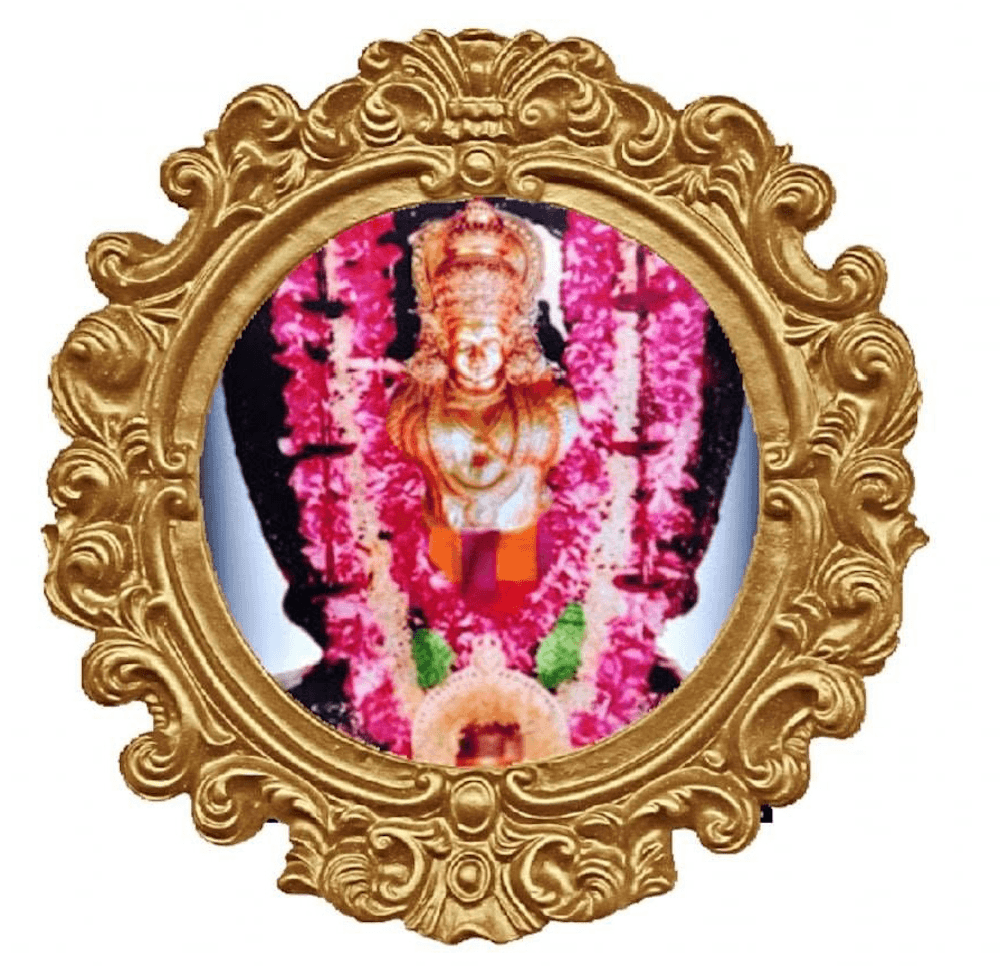 Sree Kurumba Bhagavathi Temple, popularly known as Chorottur Kavu, is one of the renowned Bhadrakali temples in the historic region of Valluvanad. The temple is an important centre of Bhadrakali worship and Saktheya tradition, continues to hold a significant place in the spiritual and cultural heritage of Chorottur. The presiding deity, Sree Kurumba Bhagavathi, is traditionally believed to reside here with the same divine presence and spiritual essence as the revered Kodungallur Bhagavathi. A popular traditional saying associated with the shrine holds that those who are unable to visit Kodungallur may visit Chorottur instead and receive the blessings of the Mother. This enduring belief has strengthened the temple’s special place in the devotional life of the region.
The history of Sree Kurumba Bhagavathi Temple is believed to extend back more than three centuries. According to local tradition, the shrine was established through the efforts of the Karanavars of Pozhathu Mana together with prominent local families.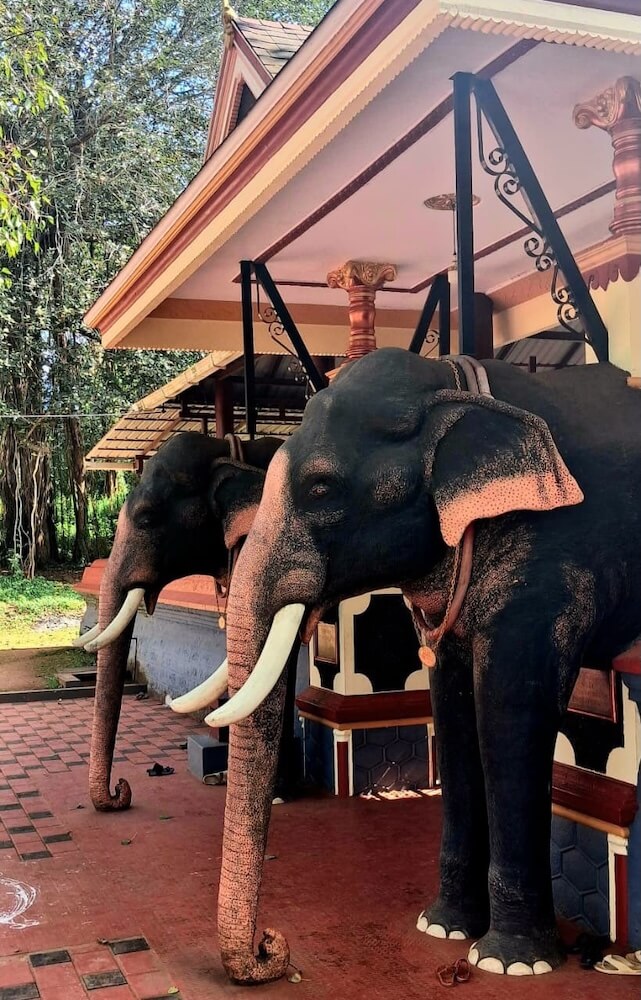 In its early form, the shrine followed the traditional concept of a kavu, a sacred grove associated with the worship of the deity and the natural surroundings. Over the generations, the temple gradually developed into a more structured sacred complex. Architectural features such as the Nalambalam and Chuttambalam were subsequently incorporated, giving the shrine its present temple form while retaining its traditional character.
The administration of the temple was traditionally entrusted to the Ooralans of Pozhathu Mana. At present, the temple functions under the Malabar Devaswom Board. A temple administration committee comprising members of Pozhathu Mana and local devotees also participates in the management and activities of the shrine.
One of the most cherished accounts associated with the origin of the temple concerns a Karanavar of Pozhathu Mana, who was an ardent devotee of Kodungallur Bhagavathi. According to tradition, he would undertake the journey to Kodungallur on foot every Monday and spend time in devotional worship before the Goddess. As age advanced, however, the long journey gradually became difficult for him. Eventually, he found himself unable to continue his regular pilgrimage. With a heart filled with devotion, he stood before Kodungallur Bhagavathi and took leave of the Goddess, expressing his sorrow at being unable to visit her as before. Pleased by the sincerity of his devotion, the Goddess is traditionally believed to have accompanied her devotee on his return journey by entering his palm-leaf umbrella. Unaware of the divine presence within the umbrella, the Karanavar continued his journey. When he reached the area
where the temple stands today, he became tired and stopped to rest. 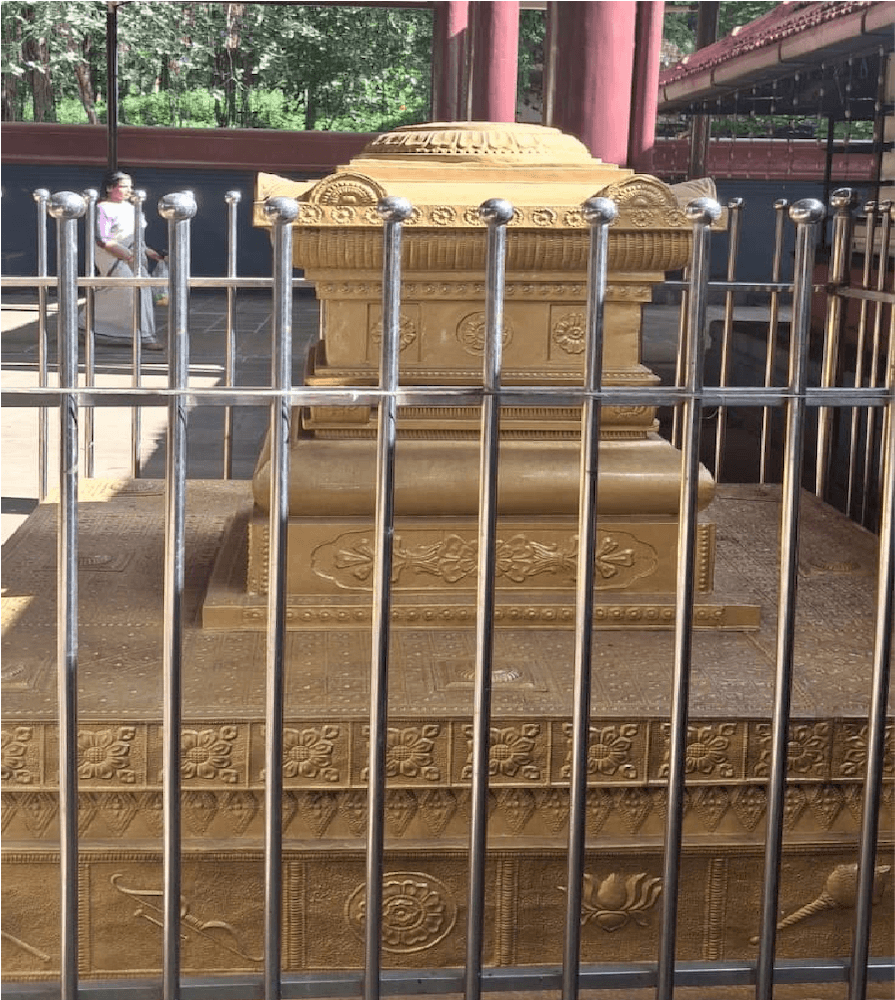 After some time, he rose to continue his journey and attempted to pick up his palm-leaf umbrella. To his surprise, the umbrella could not be moved from the spot where he had placed it. A traditional divination was subsequently conducted, through which it was understood that the divine presence of Kodungallur Bhagavathi had manifested at that very place. A sacred grove was established there and the Goddess was installed for worship. According to this traditional account, the sacred presence established at that site became the foundation of the present Sree Kurumba Bhagavathi Temple.
Another traditional account connected with the temple concerns Kavalampara Mooppil Nair, who once held authority over the Chorottur region. According to local tradition, Mooppil Nair attempted to take control of the administration of the temple from Pozhathu Mana. His attempt was opposed by the members of Pozhathu Mana, who continued to retain their traditional authority over the shrine. Displeased by the opposition, Mooppil Nair is said to have instructed his subjects not to visit the temple. Soon afterwards, he and members of his household were traditionally believed to have been affected by a severe outbreak of smallpox. 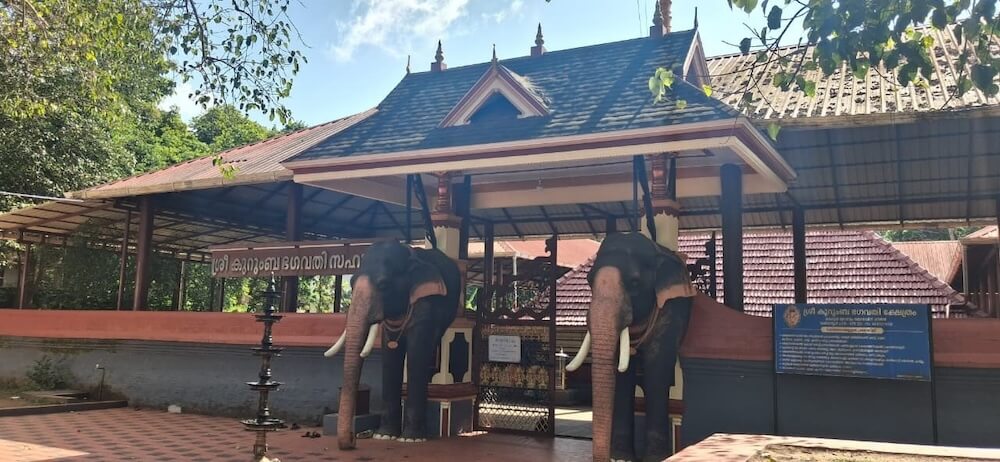 When the matter was examined through traditional divination, it was understood that the illness was connected with the displeasure of Bhagavathi. Realising his mistake, Mooppil Nair approached the Goddess with humility and sought forgiveness for his pride.
He is said to have acknowledged that he was merely one among the subjects of the Goddess. As an expression of his submission and devotion, he constructed a stone platform within the temple premises and offered it to Bhagavathi. This platform subsequently came to be known as the Nilapadu Thara. 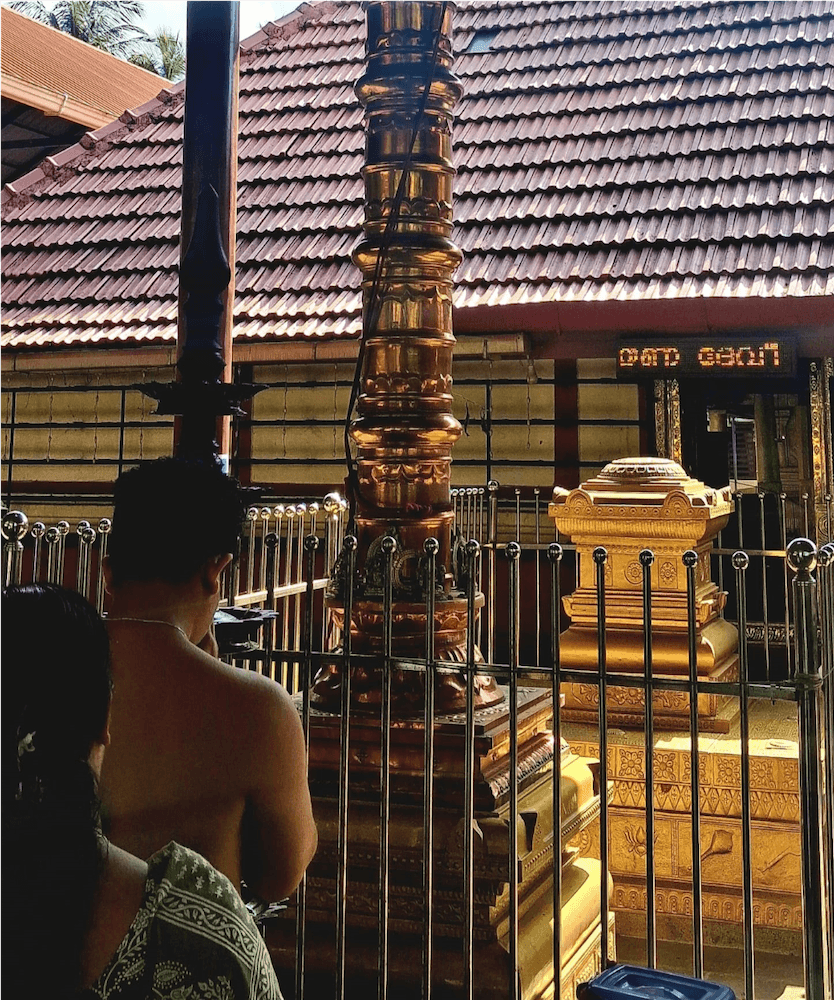 According to tradition, during the annual festival, Mooppil Nair would come to the Nilapadu Thara and stand before the Goddess in reverence.
Sree Kurumba Bhagavathi Temple follows the traditional architectural style of Kerala. The present temple complex reflects the gradual transformation of the original kavu concept into a structured temple while retaining elements of its traditional character. The entrance to the temple leads towards the Chuttambalam. A large gateway stands on the front side, creating a distinctive approach to the inner temple precincts. On either side of the entrance gateway are two life-sized elephant sculptures, which form an impressive feature of the temple entrance. Upon entering through the gateway, the Dwajasthambam can be seen positioned in front of the sacred precinct. The Dwajasthambam is covered in panchaloha, giving it a distinctive appearance. A Balikkallu is situated in front of the temple as part of the traditional arrangement of the sacred space. From the outer precinct, devotees proceed into the Nalambalam and towards the Sreekovil, the most sacred part of the temple. The Sreekovil is square in plan and has a distinctive appearance created by its complete covering of metal plates finished in a gold colour. 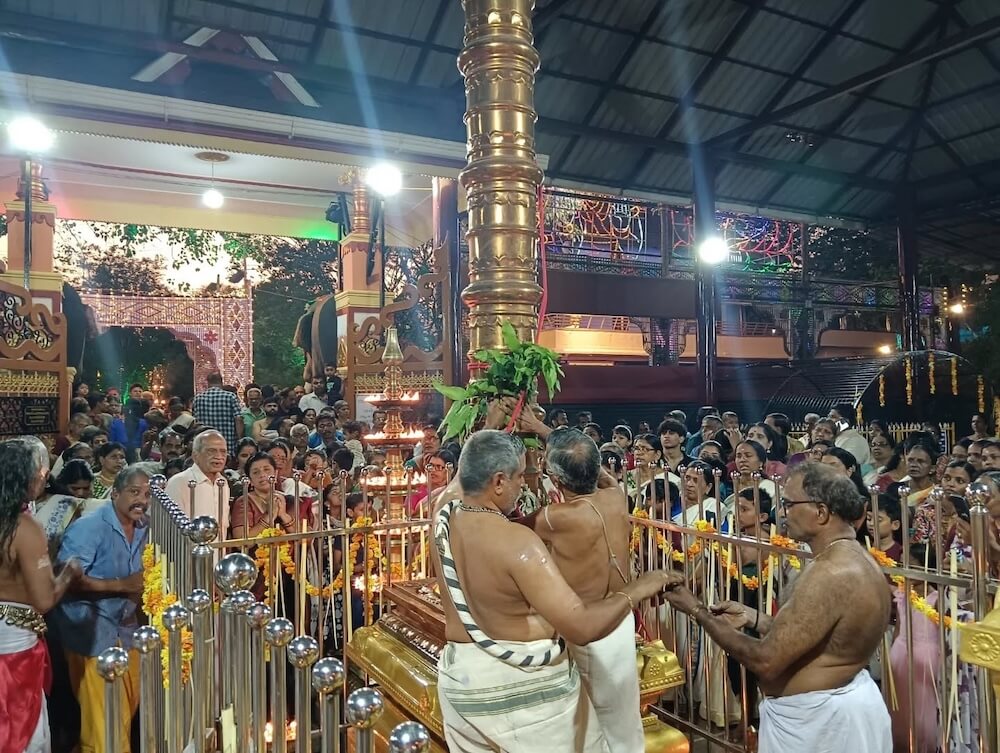 The golden exterior gives the sanctum a striking presence within the temple complex. A small Namaskara Mandapam is situated directly in front of the Sreekovil. Outside the Nalambalam, on the northern side, stands the shrine of the Kshethrapalaka. Towards the north-western side are the Nilapadu Thara and the Nagathara. The temple pond is located outside the temple walls towards the south-western side.
Sree Kurumba Bhagavathi is the principal deity of the temple. She is worshipped as Bhadrakali and is traditionally believed to manifest at Chorottur with the same divine presence and spiritual essence associated with Kodungallur Bhagavathi. The idol of the Goddess is a Daru Shilpam, a sacred wooden idol. Traditionally, a Daru Shilpam refers to a divine idol carved from wood. The idol at Chorottur is approximately five feet in height and has eight arms.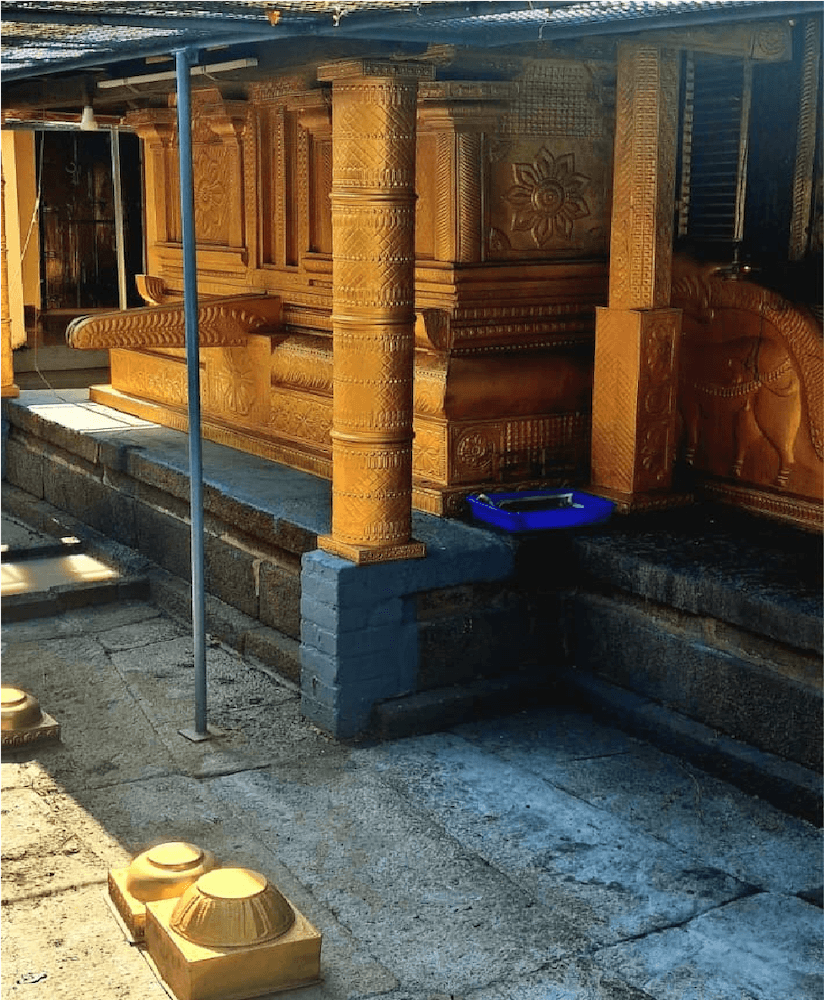
Although the Goddess is worshipped as Bhadrakali, she is traditionally regarded here as manifesting in a serene and motherly form rather than in a predominantly fierce aspect. This gentle conception of the Goddess is one of the distinctive features of the temple and forms an important part of the devotional tradition associated with Sree Kurumba Bhagavathi. Since the principal image is made of wood, direct Jalabhishekam or Paalabhishekam cannot be performed on the idol. Instead, the temple follows the distinctive ritual of Chanthattu, prepared using a combination of rare medicinal substances and traditional oils. Chanthattu is therefore an important ritual associated with the worship of Sree Kurumba Bhagavathi and forms one of the unique features of the temple’s traditional worship.
The temple has two principal sub deity shrines associated with the wider sacred precinct. The shrine of the Kshethrapalaka is situated on the northern side outside the Nalambalam. The Kshethrapalaka is traditionally regarded as the guardian deity of the temple and its sacred precincts. The temple also has a Nagathara dedicated to the Naga devathas, Special worship is conducted here on the Ayilyam day of every Malayalam month,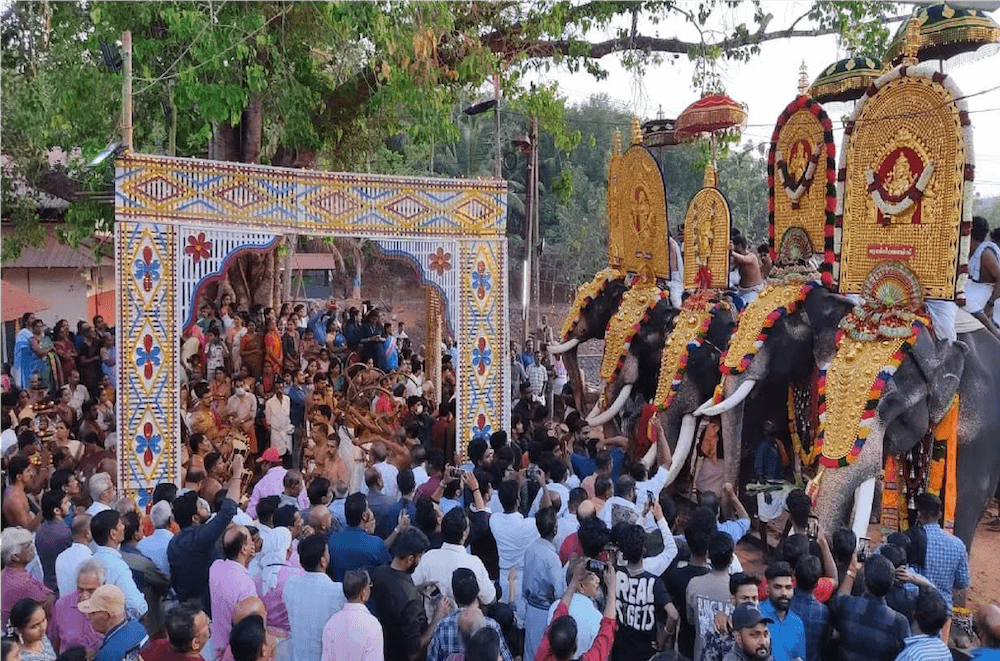 continuing the traditional reverence for the Naga devathas.
The principal annual festival of Sree Kurumba Bhagavathi Temple is the Bhagavathi Thalipoli Maholsavam. The festival is conducted during the Malayalam month of Kumbham under the Uthram nakshatra and continues for five days. The festival begins with the traditional Kodiyettam and includes Kavunarthal and various special poojas. Desha Velas and ceremonial processions are also important features of the celebrations. During the festival, the Goddess is taken out in procession accompanied by decorated elephants. The majestic presence of the elephants, together with the traditional percussion ensembles, creates a vibrant and devotional atmosphere throughout the celebrations.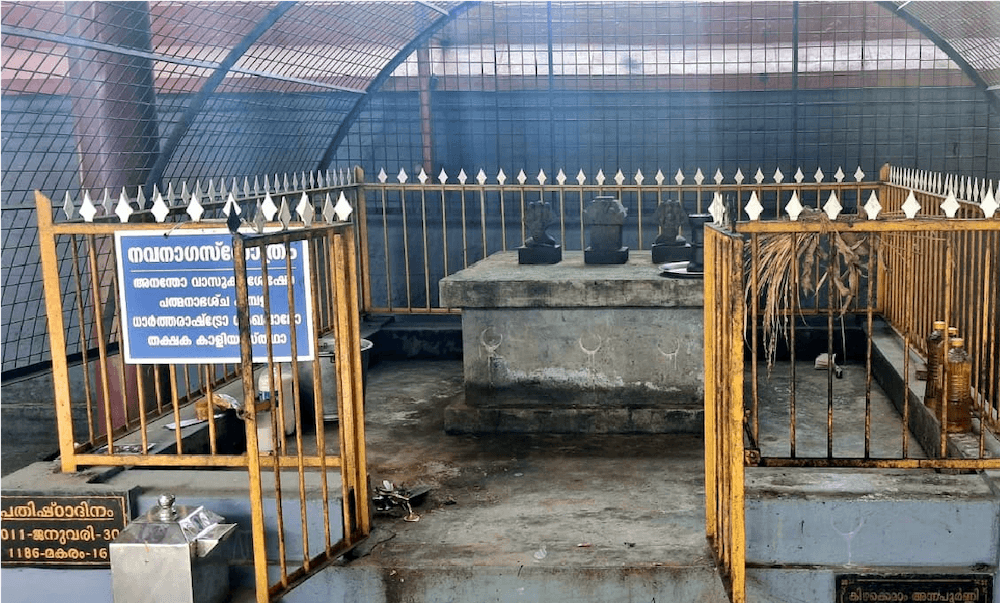 Melam and Panchavadyam form an integral part of the festival proceedings. The rhythmic sounds of traditional percussion, combined with the ceremonial processions and participation of devotees, add to the grandeur of the annual festival. The Thalipoli Maholsavam is not only an important religious observance but also a significant cultural occasion that brings together devotees and communities from Chorottur and the surrounding areas.
Prathishta Dinam is another important annual observance at the temple. It is celebrated during the Malayalam month of Meenam. Anandhanam is also conducted as part of the observances associated with this occasion. Every Malayalam month, the Nagathara becomes a special centre of worship on the day of Ayilyam. Traditional offerings including Noorum Paalum and special poojas are performed for the Naga Daivangal.
Kootupayasam is an important offering made by devotees seeking Karyasiddhi, the successful fulfilment of their prayers and desired objectives. Devotees offer Kootupayasam as an expression of their faith and as a prayer for the successful completion of their aspirations. Chanthattu is another significant offering associated with the principal deity. The distinctive nature of this offering is closely connected with the Daru Shilpam of Sree Kurumba Bhagavathi and the traditional method of worship followed at the temple.
The temple opens for worship at 5:30 a.m. The morning rituals begin with Nirmalyam, followed by Abhishekam and Ushapooja. The Ucha Pooja is subsequently performed, after which the temple closes at 10:00 a.m. In the evening, the temple reopens at 5:30 p.m. Deeparadhana and the evening rituals are conducted, followed by the Athazha Pooja. The temple closes for the day at 7:00 p.m.
Key Highlight
- Located 6 km from Ottapalam, 5 km from
- Vaniyamkulam and 11 km from Shoranur.
- The nearest railway station is Ottapalam raiway station, located 6 km from the temple.
- Private buses are available to the temple from Ottapalam and Vaniyamkulam.
- Private vehicles can be parked in the temple’s parking area.
- Accommodation and food facilities are available in the nearby towns.
श्री कुरुम्बा भगवती मंदिर
चोरोट्टूर, ओट्टापलम, जिला। पलक्कड़.
मंदिरे
Temples
मंदिर
મંદિરો
கோவில்கள்
దేవాలయాలు
ക്ഷേത്രങ്ങൾ
ದೇವಾಲಯಗಳು
মন্দিরসমূহ
ਮੰਦਿਰ
-
थ्रिक्कनगोडे रानडुमूर्ती मंदिर थ्रिक्कनगोडे, ओट्टापलम, जि. पलक्कड.
अधिक माहितीThrikkangode RanduMoorthy Temple Thrikkangode, Ottappalam, Dist. Palakkad.
View Detailsथ्रीक्कनगोडे रंडुमूर्ति मंदिर थ्रीक्कनगोडे, ओट्टापलम, जिला। पलक्कड़.
विवरण देखेंThrikkangode RanduMoorthy Temple Thrikkangode, Ottappalam, Dist. Palakkad.
વિગત જુઓThrikkangode RanduMoorthy Temple Thrikkangode, Ottappalam, Dist. Palakkad.
விவரங்களைக் காண்கThrikkangode RanduMoorthy Temple Thrikkangode, Ottappalam, Dist. Palakkad.
వివరాలను చూడండిThrikkangode RanduMoorthy Temple Thrikkangode, Ottappalam, Dist. Palakkad.
വിശദാംശങ്ങൾ കാണുകThrikkangode RanduMoorthy Temple Thrikkangode, Ottappalam, Dist. Palakkad.
ವಿವರಗಳನ್ನು ವೀಕ್ಷಿಸಿThrikkangode RanduMoorthy Temple Thrikkangode, Ottappalam, Dist. Palakkad.
বিস্তারিত দেখুনThrikkangode RanduMoorthy Temple Thrikkangode, Ottappalam, Dist. Palakkad.
ਵੇਰਵੇ ਦੇਖੋ -
थेनकुरिस्सी शिव मंदिर थेनकुरिस्सी, जिल्हा पालक्काड.
अधिक माहितीThenkurissi Shiva Temple Thenkurissi, Dist. Palakkad.
View Detailsथेनकुरिस्सी शिव मंदिर थेनकुरिस्सी, ज़िला पलक्कड़।
विवरण देखेंThenkurissi Shiva Temple Thenkurissi, Dist. Palakkad.
વિગત જુઓThenkurissi Shiva Temple Thenkurissi, Dist. Palakkad.
விவரங்களைக் காண்கThenkurissi Shiva Temple Thenkurissi, Dist. Palakkad.
వివరాలను చూడండిThenkurissi Shiva Temple Thenkurissi, Dist. Palakkad.
വിശദാംശങ്ങൾ കാണുകThenkurissi Shiva Temple Thenkurissi, Dist. Palakkad.
ವಿವರಗಳನ್ನು ವೀಕ್ಷಿಸಿThenkurissi Shiva Temple Thenkurissi, Dist. Palakkad.
বিস্তারিত দেখুনThenkurissi Shiva Temple Thenkurissi, Dist. Palakkad.
ਵੇਰਵੇ ਦੇਖੋ -
थयंकावू भगवती मंदिर थेनकुरीसी, जि. पलक्कड.
अधिक माहितीThayankavu Bhagavathi Temple Thenkurissi, Dist. Palakkad.
View Detailsथायंकावु भगवती मंदिर थेनकुरिसि, जिला. पलक्कड़.
विवरण देखेंThayankavu Bhagavathi Temple Thenkurissi, Dist. Palakkad.
વિગત જુઓThayankavu Bhagavathi Temple Thenkurissi, Dist. Palakkad.
விவரங்களைக் காண்கThayankavu Bhagavathi Temple Thenkurissi, Dist. Palakkad.
వివరాలను చూడండిThayankavu Bhagavathi Temple Thenkurissi, Dist. Palakkad.
വിശദാംശങ്ങൾ കാണുകThayankavu Bhagavathi Temple Thenkurissi, Dist. Palakkad.
ವಿವರಗಳನ್ನು ವೀಕ್ಷಿಸಿThayankavu Bhagavathi Temple Thenkurissi, Dist. Palakkad.
বিস্তারিত দেখুনThayankavu Bhagavathi Temple Thenkurissi, Dist. Palakkad.
ਵੇਰਵੇ ਦੇਖੋ