
थेनकुरिस्सी शिव मंदिर
थेनकुरिस्सी, जिल्हा पालक्काड.
Thenkurissi Shiva Temple
Thenkurissi, Dist. Palakkad.
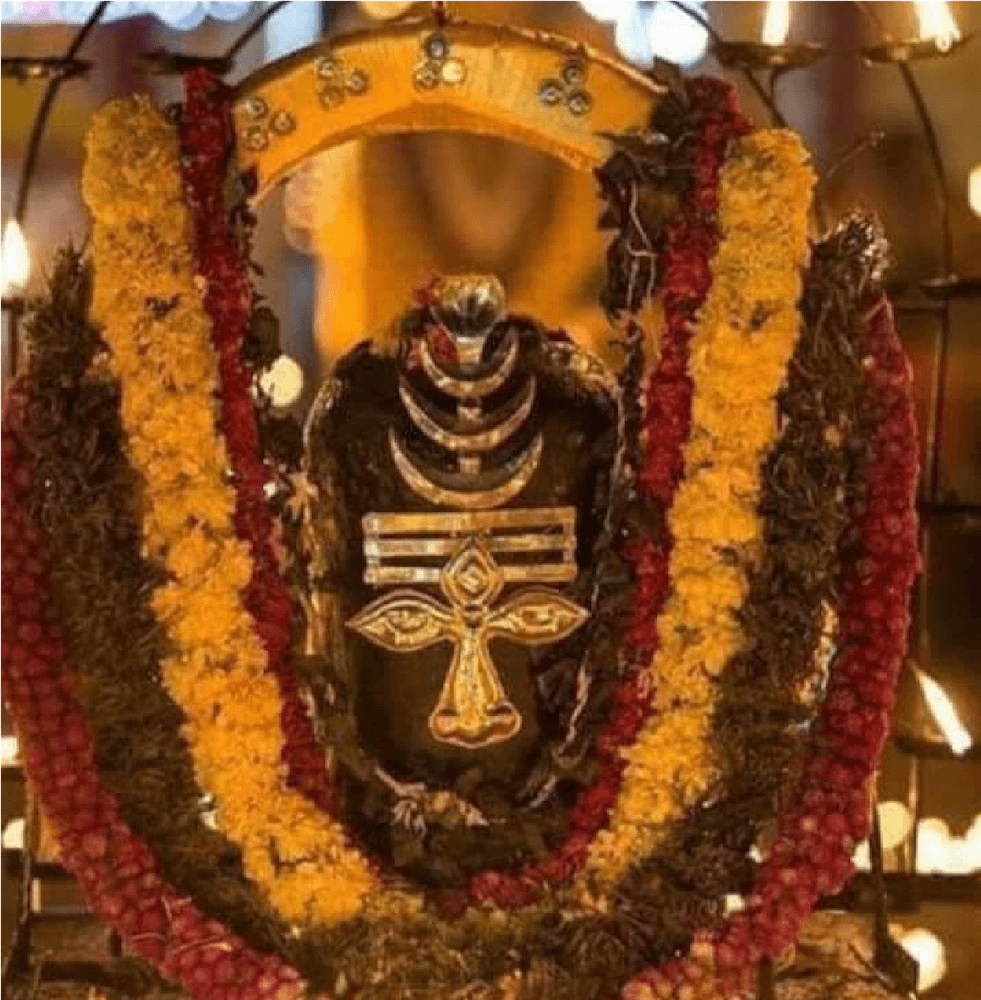 Situated in the picturesque village of Thenkurissi in Palakkad district, this ancient Shiva temple is regarded as one of the principal places of worship in the locality. The presiding deity is revered as Thenkurissi Appan, reflecting the deep bond between Mahadeva and the people of the region. The deity is worshipped as the guardian of the village, with devotees seeking His protection, blessings and spiritual guidance.
The shrine forms an important part of the religious and cultural life of Thenkurissi. Its traditional Kerala-style architecture, sacred precincts and long-standing customs contribute to its distinctive character. For generations, the temple has remained a place where the local community gathers for worship, festivals, observances and other religious occasions.
The temple is believed to have a history of around 300 years. It is traditionally understood that the shrine was established through the collective efforts of the prominent Naduvazhi tharavads of the period. 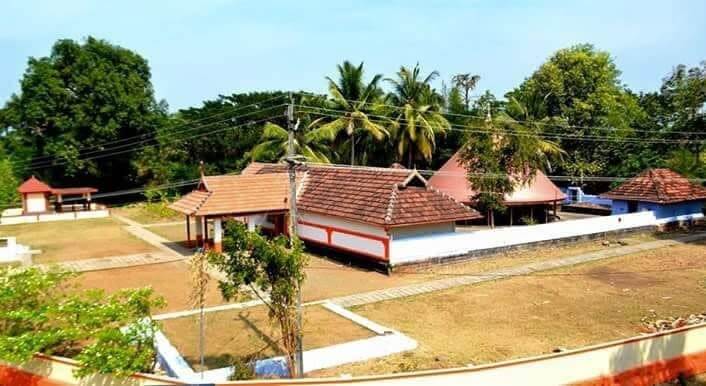 During that era, the Naduvazhis played an important role in the administration of the locality and were closely associated with the establishment and protection of the shrine. The temple continued to function as an important spiritual centre for the people of Thenkurissi through successive generations. In the present day, its affairs are managed by a temple administration committee led by local devotees, continuing the community-oriented tradition associated with the shrine.
Mahadeva is revered here as the guardian of Thenkurissi and as the divine presence who protects the people of the locality. The temple’s origin is associated with a traditional legend connected with the discovery of the divine presence. 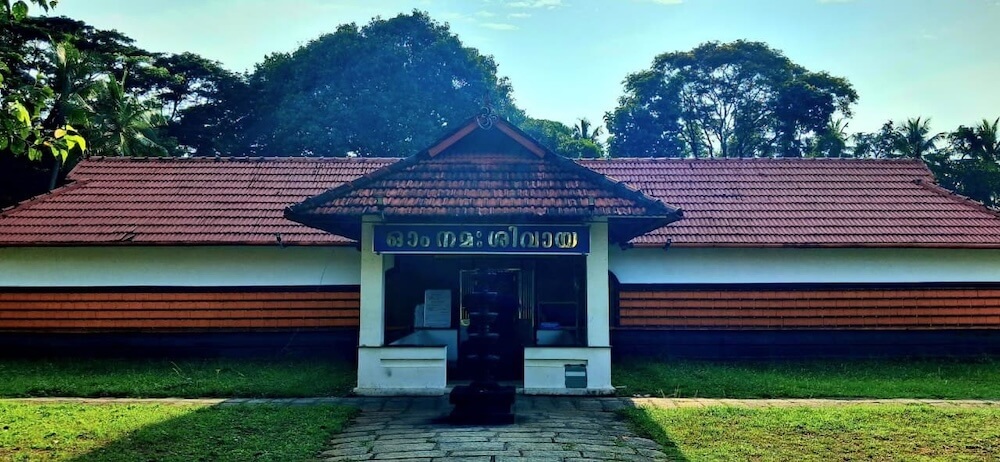 It is said that the area where the temple now stands was once covered by a dense forest. Cattle belonging to a nearby family were regularly taken there for grazing. Among them was a cow that would return home every evening without milk in its udder, despite being a milch cow. Curious about this unusual occurrence, the members of the household followed the animal one day. They are said to have witnessed the cow releasing its milk over a particular stone in the forest.
 The incident led the people to seek divine clarification through a Deva Prasnam, a traditional method of understanding matters connected with a sacred presence. The presence of Mahadeva was believed to have been revealed at the site. Following this revelation, the Naduvazhis together with the local people are believed to have established the temple at the sacred spot. The deity has since been worshipped as Thenkurissi Appan, the protector of the land and its people.
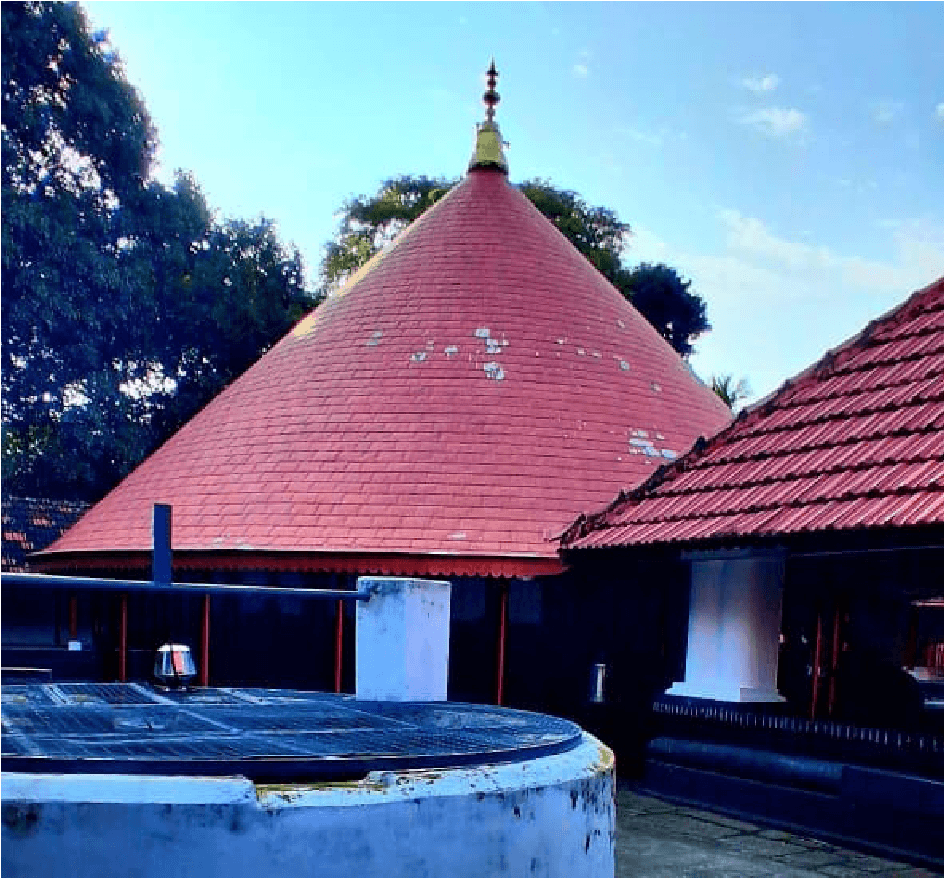
The temple follows the traditional Kerala style of temple architecture. Upon entering the temple precinct through the large gateway, the devotee is led into the sacred enclosure where the visual character of the shrine gradually unfolds. A tall Deepasthambam, carved in stone, stands prominently within the courtyard. In front of the Nalambalam is the Balikkalpura, projecting towards the outer side of the structure. Its large Bali Kallu rises to a height of approximately six feet, giving it a striking presence. The Nalambalam has plastered walls finished with paint and a traditional tiled roof, retaining the characteristic appearance of a Kerala temple. 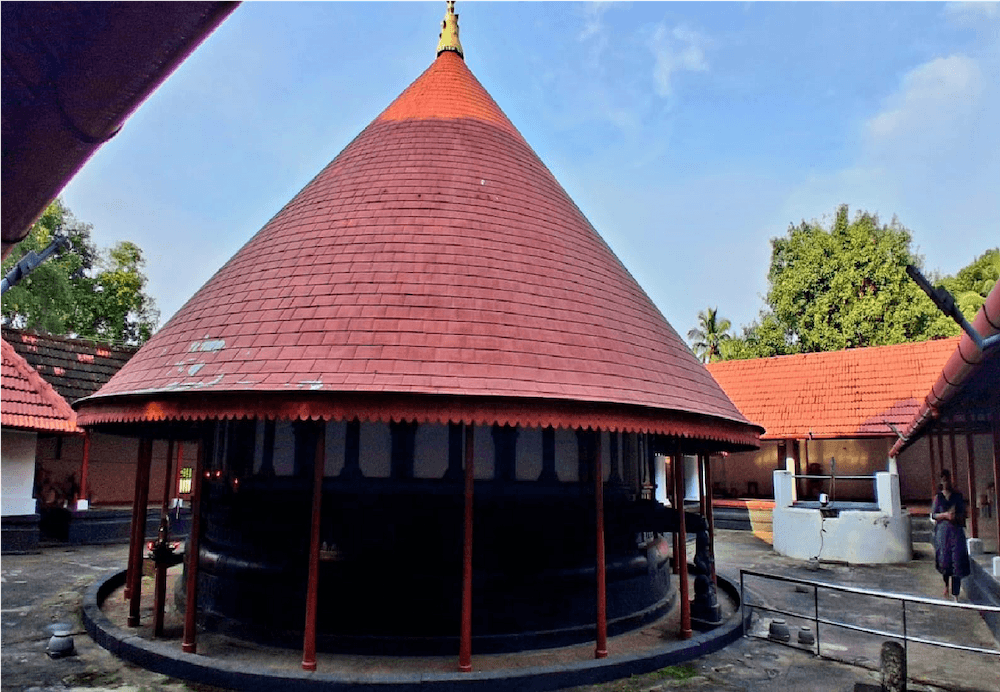 Crossing the Nalambalam, the graceful Namaskara Mandapam comes into view before the Sreekovil. Its Adhisthana is constructed in blackstone and supported by four finely proportioned black stone pillars, while the roof is covered with traditional tiles. The Sreekovil is circular in form and forms the principal architectural focus of the inner precinct. Its Adhisthana is constructed in black stone and features attractive carved detailing. On either side of the Sopana at the front are figures of Kshetrapalakas, guarding the sacred approach to the shrine. The walls are plastered and painted. Although the Sreekovil is single-storeyed in elevation, its interior is arranged into two distinct chambers.
 The larger westernfacing chamber houses the principal Shiva Prathishta, while the smaller chamber opening towards the southern side contains the Prishtas of Ganapathi and Dakshinamoorthi. The Sreekovil is crowned by a distinctive circular, steeply sloping roof with copper sheeting and a prominent Thazhikakudam at its summit. A paved Pradakshina patha of black stone surrounds the Sreekovil. A well is situated towards its northern side, adding another traditional functional element to the sacred precinct.
The principal Prathishta is Mahadeva, worshipped in the form of a Shivalinga. The Shivalinga is notably large in proportion and is adorned with a metal covering, giving the sacred form a distinctive appearance during worship. The Darshanam is towards the west. Devotees approach the deity with the belief that His presence protects the village and blesses its people with well-being, prosperity and spiritual strength.The southern chamber of the Sreekovil houses the Ganapathi and Dakshinamoorthi Prathishtas. Ganapathi is worshipped as the remover of obstacles and as the deity traditionally invoked before beginning important undertakings. Dakshinamoorthi, the serene form of Shiva associated with wisdom and spiritual knowledge, holds a revered place within the shrine. Outside the Nalambalam, the Naga Devathas are situated towards the northern side of the temple precinct. An Ayyappan Prathishta is located towards the north-western side. These Upa Devathas form an integral part of the devotional landscape of the temple and receive worship according to the customs followed here.
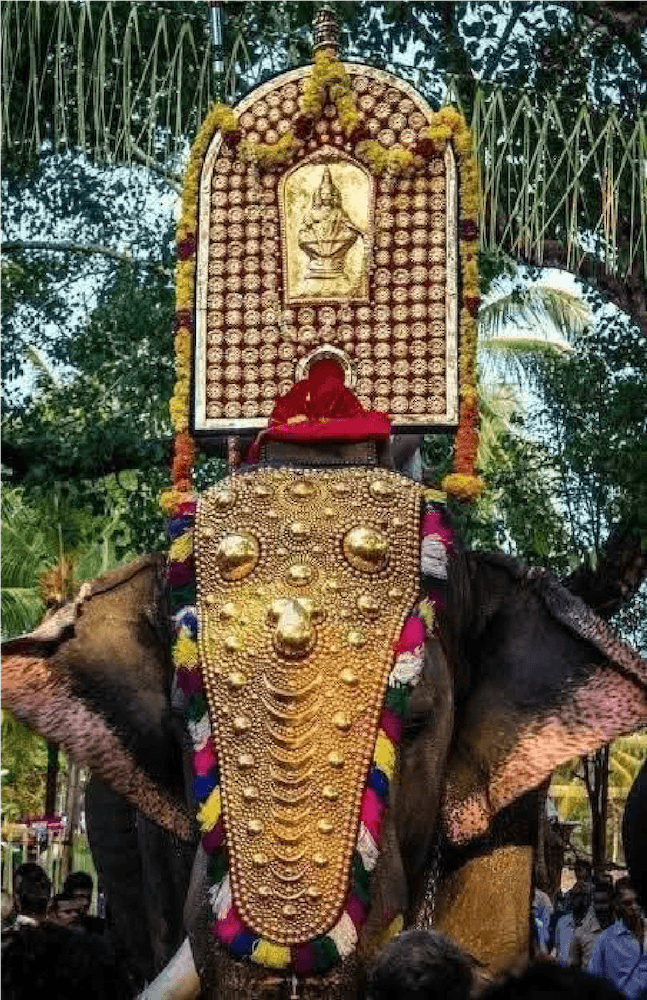
The most prominent annual celebration is the Ayyappan Vilakku, conducted during the Mandala season. 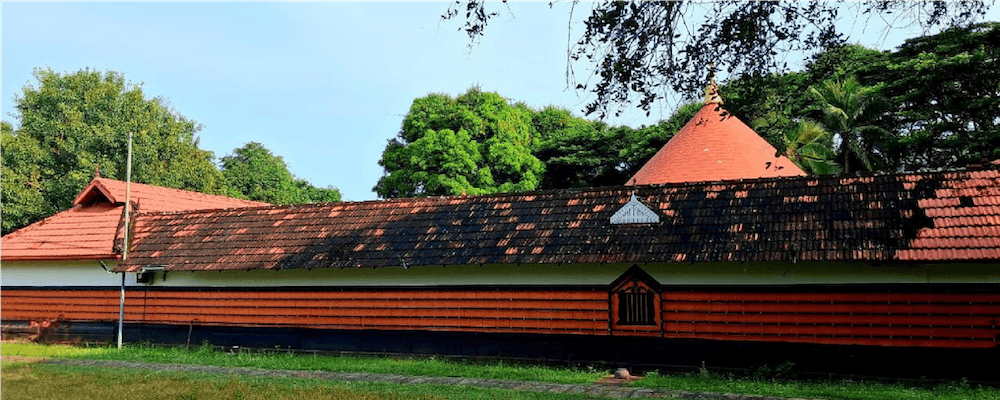 The festival is held over three days towards the end of December, on Wednesday, Thursday and Friday. Each day features special poojas, religious observances and ceremonial activities. Annadanam is arranged during the festival, bringing devotees and members of the local community together in a spirit of devotion and fellowship. Elephant procession also forms part of the celebrations, adding grandeur to the occasion. Shivarathri is another important festival observed with special religious significance. Special pooja karmas are conducted on the sacred day, followed by Seeveli. From the evening onwards, a variety of cultural programmes are organised as part of the celebrations. Annadanam is also arranged for devotees. The temple also observes Navarathri Vilakku, a grand nine-day celebration held during Navarathri. The festival is marked by devotional activities throughout the nine days. Cultural programmes are conducted every evening, creating a vibrant atmosphere within the temple precinct while preserving the devotional character of the observance.
The principal Vazhipadus offered at the shrine include Rudrabhishekam, Dhara, Vella Nivedyam and Ganapathihomam. Rudrabhishekam is traditionally performed with the chanting of Rudra mantras and is sought by devotees for spiritual purification, inner strength and the blessings of Mahadeva. Dhara, the continuous offering of sacred water over the Sivalinga, is associated with peace, mental calmness and the removal of difficulties. Vella Nivedyam, an offering prepared with rice, is made with devotion while seeking the deity’s blessings for well-being and prosperity. Ganapathihomam is performed invoking Ganapathi before important undertakings and is traditionally sought for the removal of obstacles, success in endeavours and auspicious beginnings. Devotees undertake these Vazhipadus according to their personal prayers and religious observances.
The temple opens in the morning at 5:30 am. The morning worship begins with Nirmalyam, followed by Abhishekam, Malar Nivedyam, Ushapooja and Uchapooja. After the morning rituals are completed, the temple closes at approximately 9:30 am. The temple reopens in the evening at 5:30 pm. The evening worship includes Deeparadhana followed by Athazha Pooja. The temple closes for the day at approximately 7:30 pm. The timings and sequence of rituals form part of the temple’s traditional daily worship and may be subject to changes on festival days or other special occasions.
Key highlights
- Located 3 km from Thenkurissi, 5 km from Kuzhalmannam and 10 km from Palakkad.
- Palakkad Town Railway Station is the nearest Railway Station, about 11 km from the temple.
- Private bus services are available to the temple from Thenkurissi and Kuzhalmanam.
- Private vehicles can be parked in the temples designated parking area.
- Accommodation and food facilities are available in the nearby towns.
थेनकुरिस्सी शिव मंदिर
थेनकुरिस्सी, ज़िला पलक्कड़।
मंदिरे
Temples
मंदिर
મંદિરો
கோவில்கள்
దేవాలయాలు
ക്ഷേത്രങ്ങൾ
ದೇವಾಲಯಗಳು
মন্দিরসমূহ
ਮੰਦਿਰ
-
थ्रिक्कनगोडे रानडुमूर्ती मंदिर थ्रिक्कनगोडे, ओट्टापलम, जि. पलक्कड.
अधिक माहितीThrikkangode RanduMoorthy Temple Thrikkangode, Ottappalam, Dist. Palakkad.
View Detailsथ्रीक्कनगोडे रंडुमूर्ति मंदिर थ्रीक्कनगोडे, ओट्टापलम, जिला। पलक्कड़.
विवरण देखेंThrikkangode RanduMoorthy Temple Thrikkangode, Ottappalam, Dist. Palakkad.
વિગત જુઓThrikkangode RanduMoorthy Temple Thrikkangode, Ottappalam, Dist. Palakkad.
விவரங்களைக் காண்கThrikkangode RanduMoorthy Temple Thrikkangode, Ottappalam, Dist. Palakkad.
వివరాలను చూడండిThrikkangode RanduMoorthy Temple Thrikkangode, Ottappalam, Dist. Palakkad.
വിശദാംശങ്ങൾ കാണുകThrikkangode RanduMoorthy Temple Thrikkangode, Ottappalam, Dist. Palakkad.
ವಿವರಗಳನ್ನು ವೀಕ್ಷಿಸಿThrikkangode RanduMoorthy Temple Thrikkangode, Ottappalam, Dist. Palakkad.
বিস্তারিত দেখুনThrikkangode RanduMoorthy Temple Thrikkangode, Ottappalam, Dist. Palakkad.
ਵੇਰਵੇ ਦੇਖੋ -
थयंकावू भगवती मंदिर थेनकुरीसी, जि. पलक्कड.
अधिक माहितीThayankavu Bhagavathi Temple Thenkurissi, Dist. Palakkad.
View Detailsथायंकावु भगवती मंदिर थेनकुरिसि, जिला. पलक्कड़.
विवरण देखेंThayankavu Bhagavathi Temple Thenkurissi, Dist. Palakkad.
વિગત જુઓThayankavu Bhagavathi Temple Thenkurissi, Dist. Palakkad.
விவரங்களைக் காண்கThayankavu Bhagavathi Temple Thenkurissi, Dist. Palakkad.
వివరాలను చూడండిThayankavu Bhagavathi Temple Thenkurissi, Dist. Palakkad.
വിശദാംശങ്ങൾ കാണുകThayankavu Bhagavathi Temple Thenkurissi, Dist. Palakkad.
ವಿವರಗಳನ್ನು ವೀಕ್ಷಿಸಿThayankavu Bhagavathi Temple Thenkurissi, Dist. Palakkad.
বিস্তারিত দেখুনThayankavu Bhagavathi Temple Thenkurissi, Dist. Palakkad.
ਵੇਰਵੇ ਦੇਖੋ -
श्री कुरुंबा भगवती मंदिर चोरोत्तूर, ओट्टापलम, जि. पलक्कड.
अधिक माहितीSree Kurumba Bhagavathi Temple Chorottur, Ottapalam, Dist. Palakkad.
View Detailsश्री कुरुम्बा भगवती मंदिर चोरोट्टूर, ओट्टापलम, जिला। पलक्कड़.
विवरण देखेंSree Kurumba Bhagavathi Temple Chorottur, Ottapalam, Dist. Palakkad.
વિગત જુઓSree Kurumba Bhagavathi Temple Chorottur, Ottapalam, Dist. Palakkad.
விவரங்களைக் காண்கSree Kurumba Bhagavathi Temple Chorottur, Ottapalam, Dist. Palakkad.
వివరాలను చూడండిSree Kurumba Bhagavathi Temple Chorottur, Ottapalam, Dist. Palakkad.
വിശദാംശങ്ങൾ കാണുകSree Kurumba Bhagavathi Temple Chorottur, Ottapalam, Dist. Palakkad.
ವಿವರಗಳನ್ನು ವೀಕ್ಷಿಸಿSree Kurumba Bhagavathi Temple Chorottur, Ottapalam, Dist. Palakkad.
বিস্তারিত দেখুনSree Kurumba Bhagavathi Temple Chorottur, Ottapalam, Dist. Palakkad.
ਵੇਰਵੇ ਦੇਖੋ