तारकेश्वर महादेव मंदिर वडोदरा, ता./जि. वडोदरा
 Queen Jamnabai of the Baroda State, who was honored as the ‘Crown of India’ by Queen Victoria, the Empress of Great Britain, built the Tarkeshwar Mahadev Temple in memory of her daughter, Tara Bai. This temple stands as one of the more recent yet historically significant Shiva temples of Vadodara. Located opposite Jubilee Garden in the city’s heart, the temple follows traditional Nagara architectural principles and is considered a splendid exemplar of classical temple design. Devotees hold deep faith in the jagrut (awakened) Shiva linga here. Even today, on Mahashivaratri, members of the royal family perform the sacred abhishek to the deity.
The temple’s origins trace back to the tumultuous years of Baroda State in the late 19th century. Queen Jamnabai, 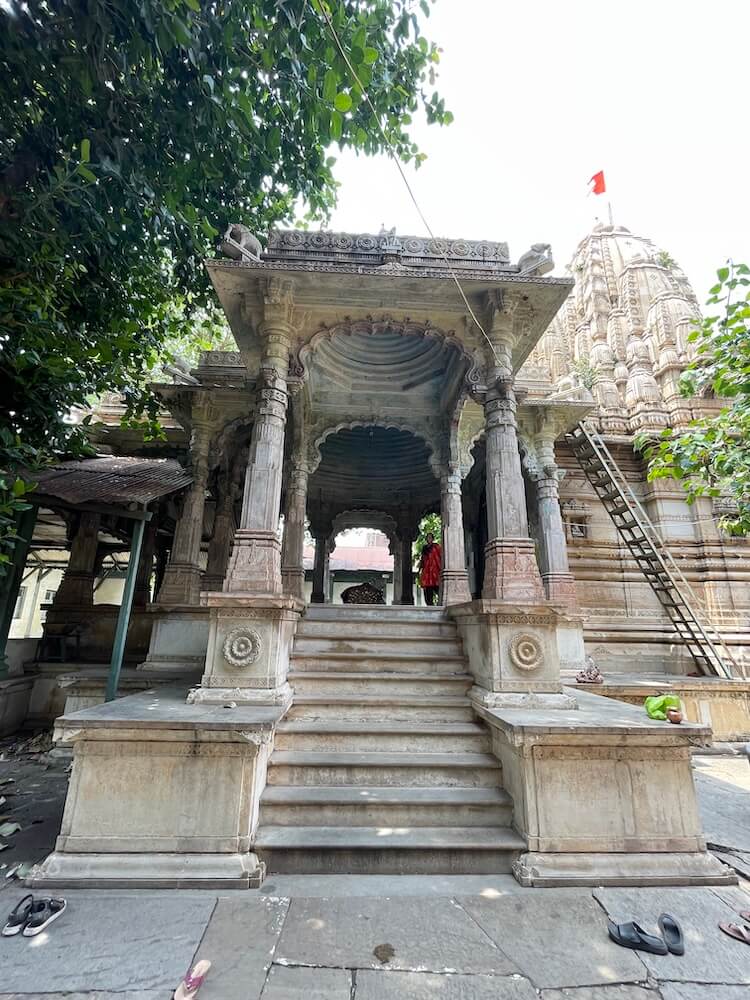 wife of Maharaja Khanderao Gaekwad II, lost her husband just four years into their marriage in 1870. Then pregnant and without a direct male heir to the throne, Jamnabai’s childbirth was pivotal. Her younger brother Malharrao Gaekwad had been imprisoned amid palace conspiracies and was considered the likely heir. Yet, the British government deferred major decisions until the child was born. On July 5, 1871, Queen Jamnabai gave birth to a daughter, Tara Bai.
Malharrao was known for his ruthless and extravagant nature, ruling with authoritarian methods. Tensions escalated when he was accused of attempting to poison the British Resident, Colonel Robert Phayre. He was arrested by the British government on January 13, 1875. Following his conviction, he was deposed and imprisoned in Madras on April 21. In the interim, Jamnabai took charge of state affairs and with the assistance of Dewan Sir T. Madhavrao, restored stability. A few days later, Maharani Jamnabai adopted Gopalrao, the son of wealthy Kashinath Gaekwad from Kalvana in Malegaon taluka, Nashik district. He was thereafter known as Sayajirao Gaekwad III. Sayajirao held great affection for Tara Bai. They shared a close bond. When Tara Bai was nine years old, on December 31, 1879, she was married to Raja Bahadur Raghunathrao Sardesai of Sawantwadi. Tragically, Tara Bai passed away in Sawantwadi in 1895, at the young age of just 24. In her memory, 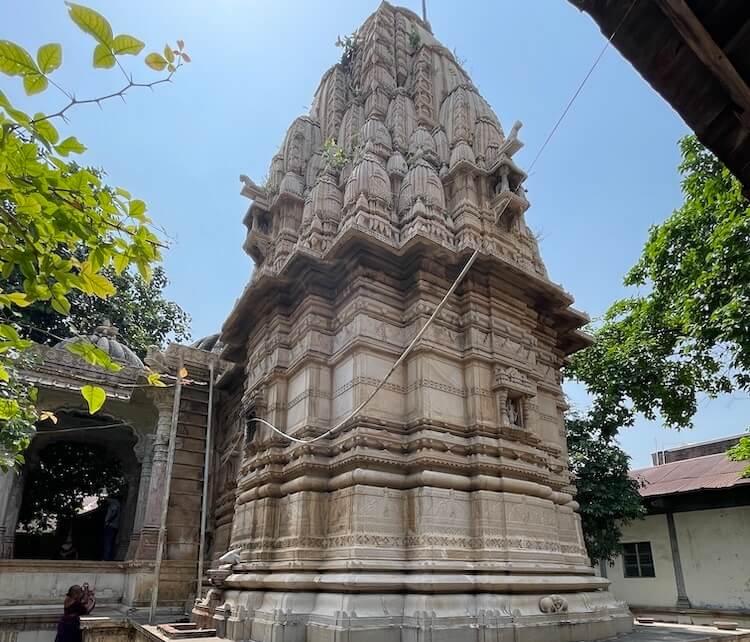 Maharani Jamnabai commissioned the construction of this temple.
The temple is situated within the expansive courtyard of a grand double-storied bungalow on the northern bank of Sursagar lake, adjacent to Jubilee Garden. Entering through the stone gateway of the old mansion, one immediately beholds the majestic temple raised on its terrace. Its structure comprises a mukhamandap (entrance hall) on three sides, followed by a sabhamandap (assembly hall), an antaral (vestibule) and the garbhagriha (sanctum). The mukhamandap and sabhamandap are surmounted by dome-shaped spires, while the sanctum is topped by a tall urushringa-style shikhara with an amalaka disc and a kalasha atop. Ornate features like cornices, lion sculptures and carved deities in the shrine niches enhance the aesthetic appeal. Intricate sculptures of deities adorn the external walls as well.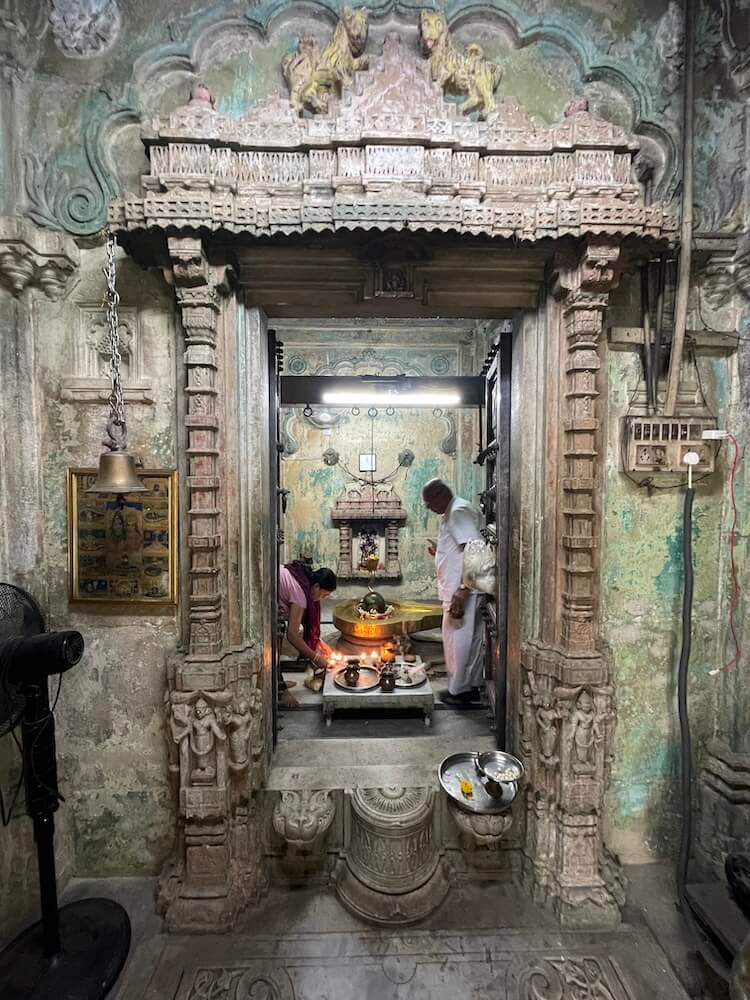
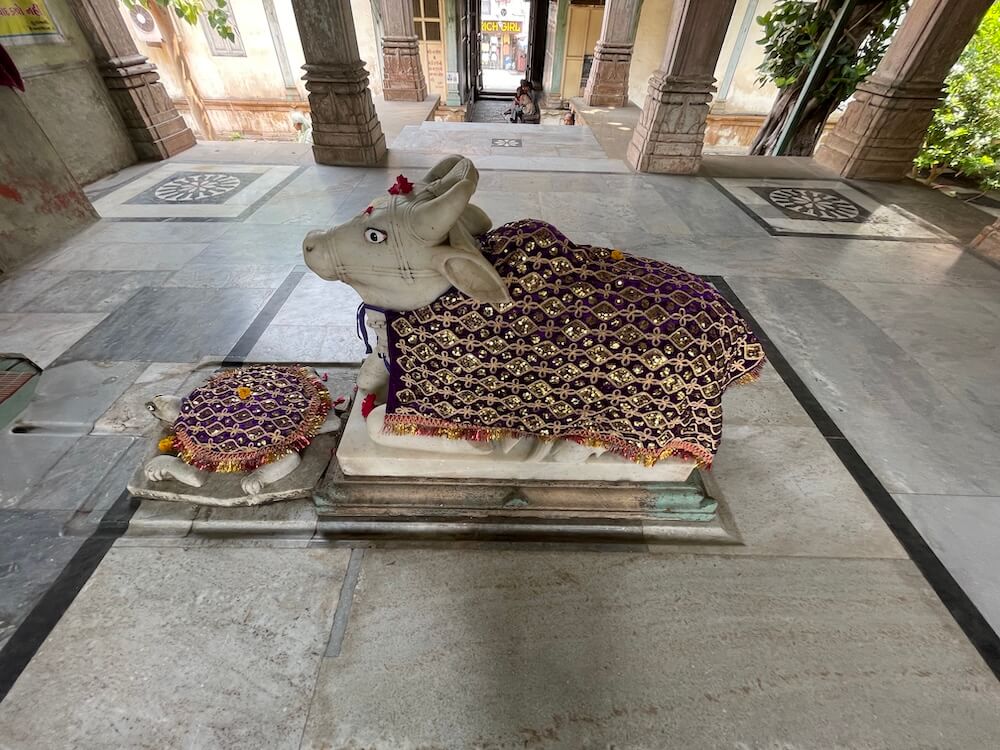
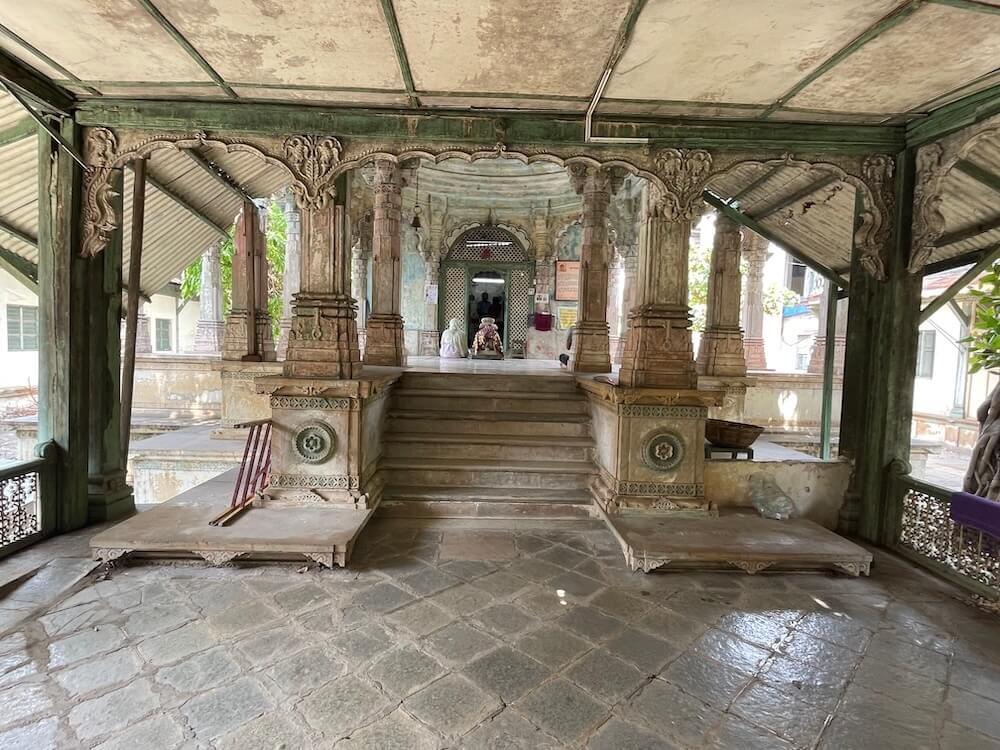
In front of the temple stands an open wooden hall erected for religious ceremonies and public gatherings. The walls here display two portraits of Sayajirao Gaekwad III. A few steps lead up to the central entrance hall, whose side aisles are approached via ten steps each. Pillars and ceilings exhibit exquisite carving work, with arches (mahirapi kamani) adorning the supports. In the assembly hall stands a carved marble Nandi facing a tortoise pedestal.
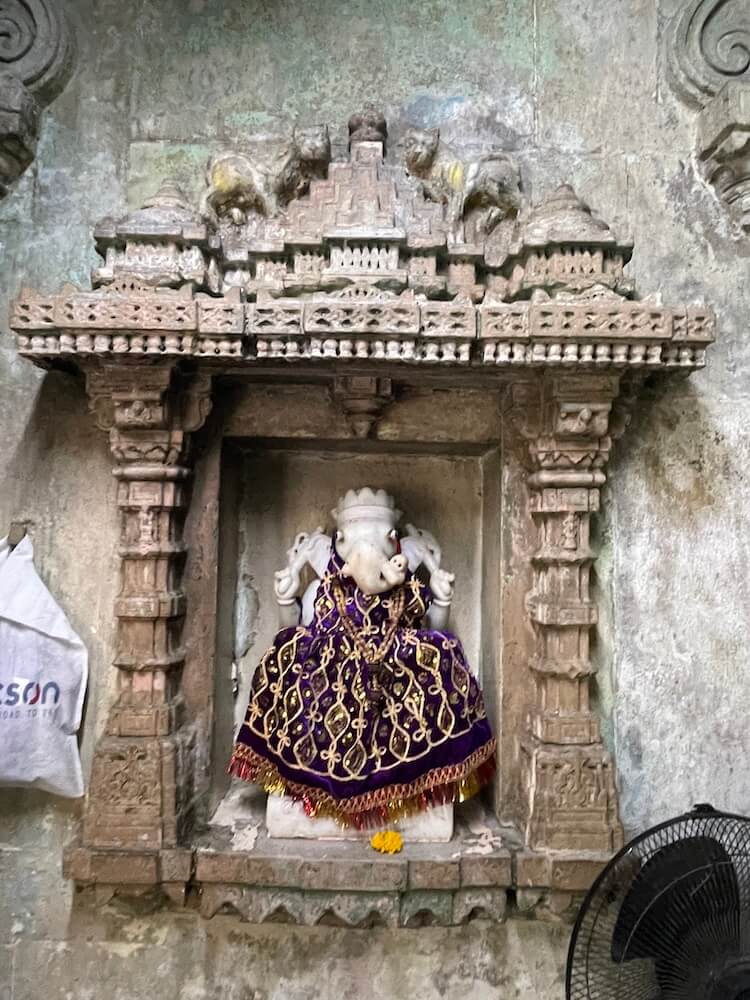
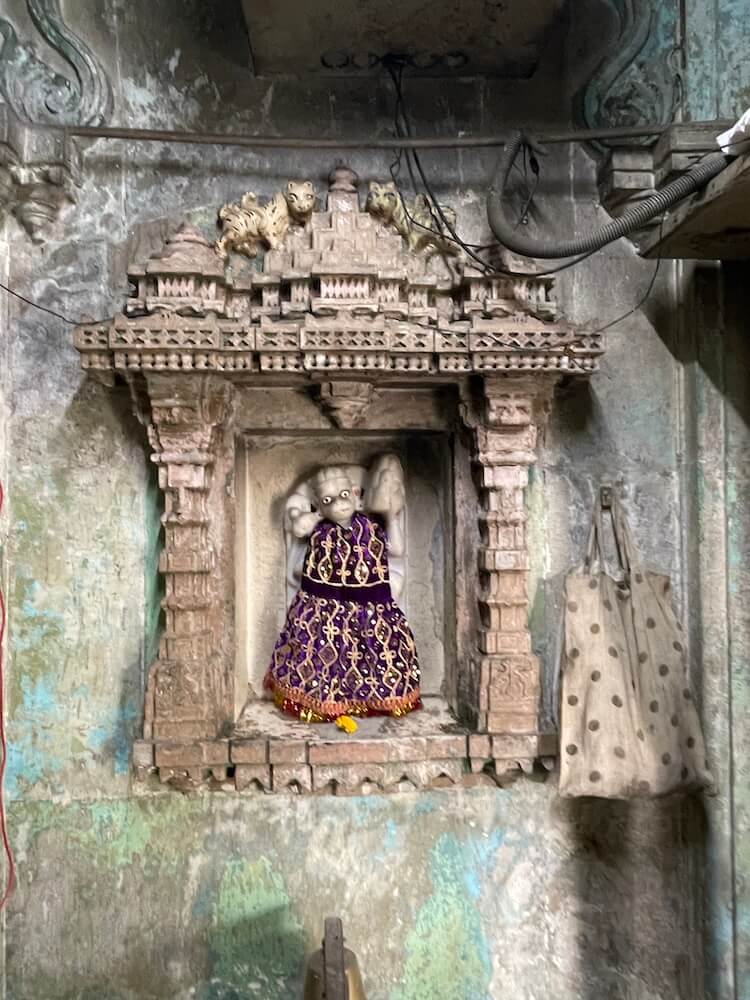
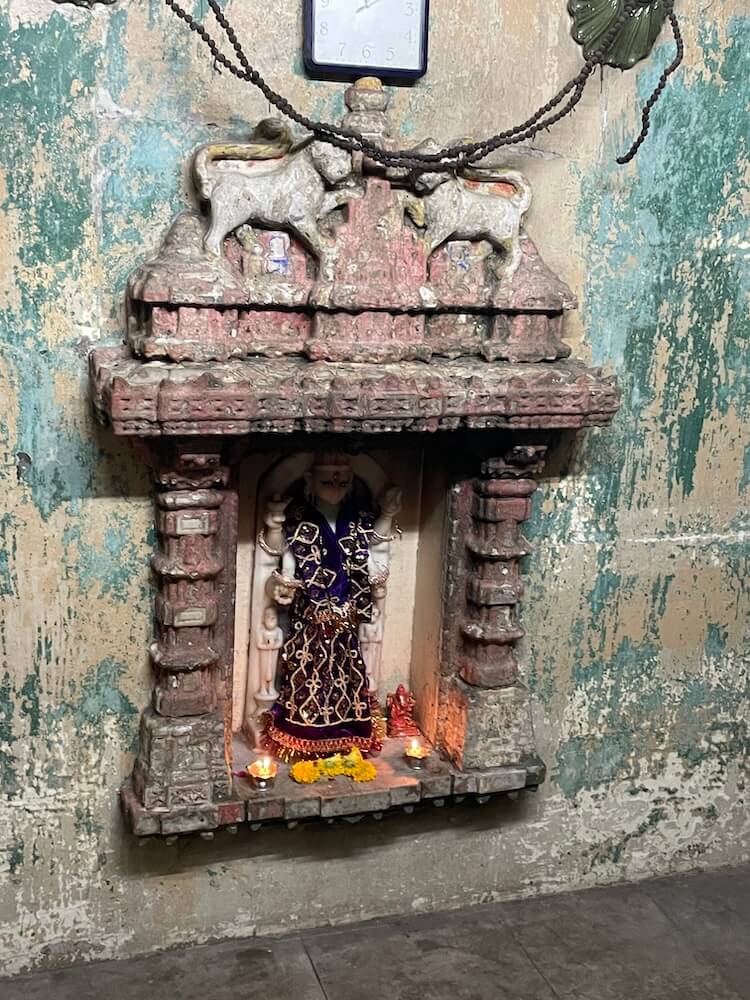
The antaral is accessed through a wooden latticed door. Within, the left shrine niche houses a marble idol of Ganesha, while the right niche holds a marble Hanuman figure. These niches echo the shrine layout of the main sanctum. The sanctum is entered via a trishakha-shaped (three-arched) stone doorway richly carved with guardian figures, attendant deities (sevika), demon heads (kirti mukha) on the lintel and Lord Ganesha in the upper pediment. Above the door is a miniature crown-like spire flanked by twin tiger sculptures.
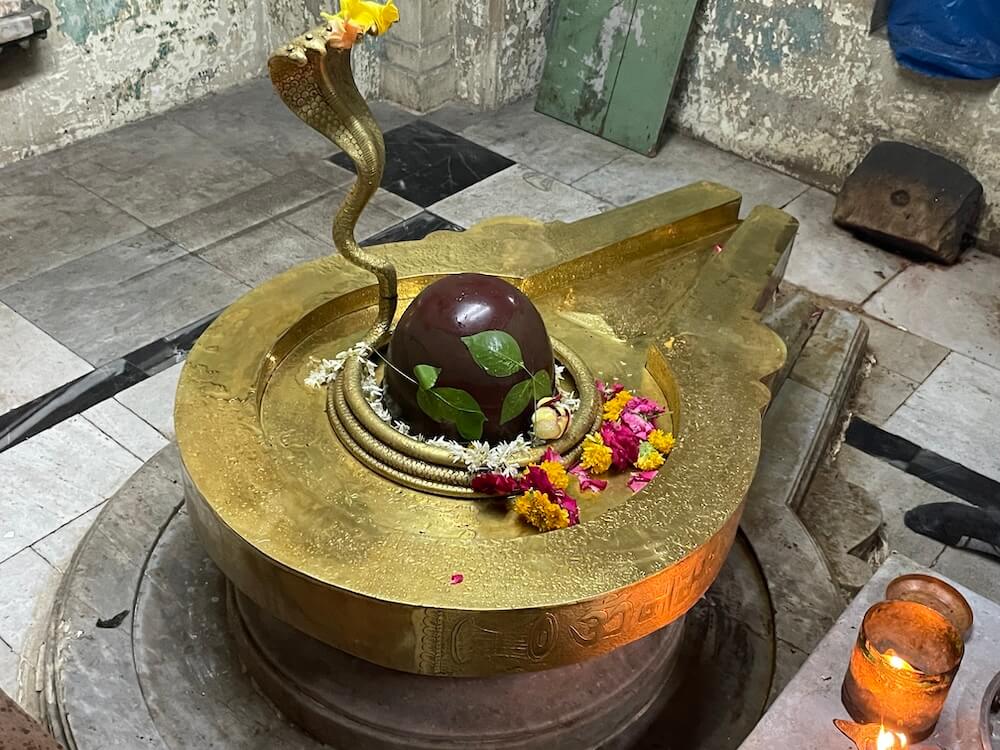
Inside, the sanctum houses a substantial Shiva lingam placed atop a golden disc. This lingam is distinctive in form and structure, divided into three levels, i.e. Brahma-bhaga, Vishnu-bhaga and Rudra-bhaga. Typically, the lower two sections are buried underground, but here they rise above ground level; remarkably, even the Brahma section has a visible disc. The Rudra portion forms a tall cylindrical projection, crowned with a pancha-dhatu snake and an abhishek vessel. On the rear wall niche of the sanctum sits a carved figure of Parvati, mirroring the entrance motifs.
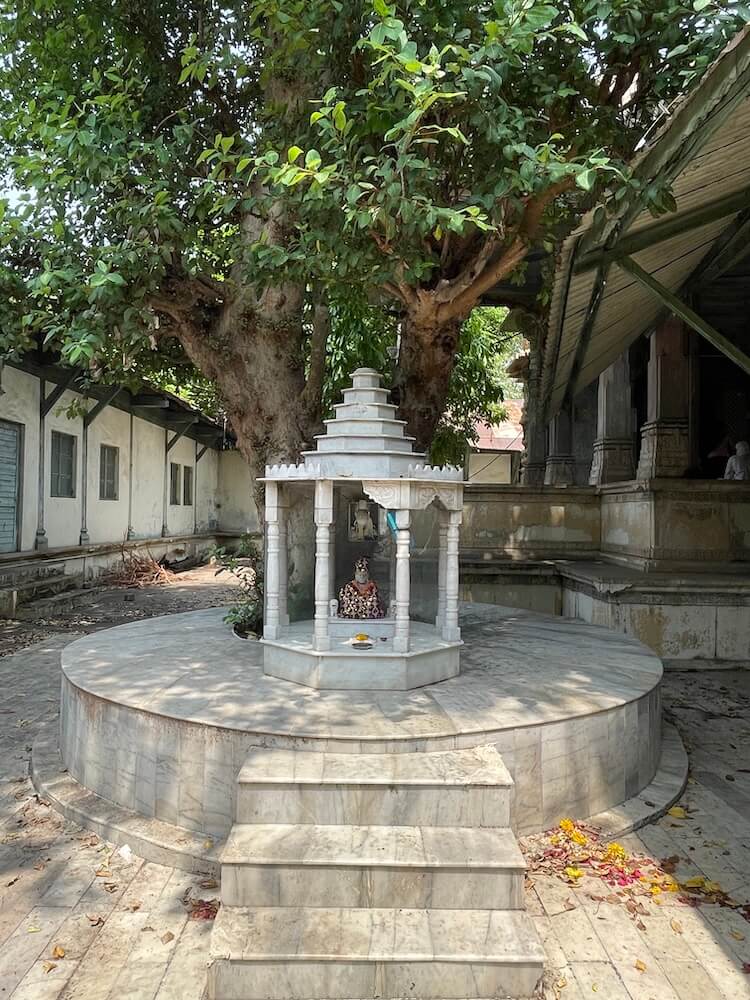
Within the temple grounds, a marble statue of Lord Dattatreya was restored—along with the padukas (sacred sandals)—by the Rangavdhoot Swamis on December 1, 1960. Devotees deeply believe in the presence (jagrit) of the Shivalinga here. The temple hosts celebrations on major festivals, particularly Mahashivaratri, when royal ablution rituals conducted by members of the former royal family are followed by grand maha-aarti in front of assembled devotees.
तारकेश्वर महादेव मंदिर वड़ोदरा, ता./जि. वरा