स्वामी समर्थ मंदिर-मैठ
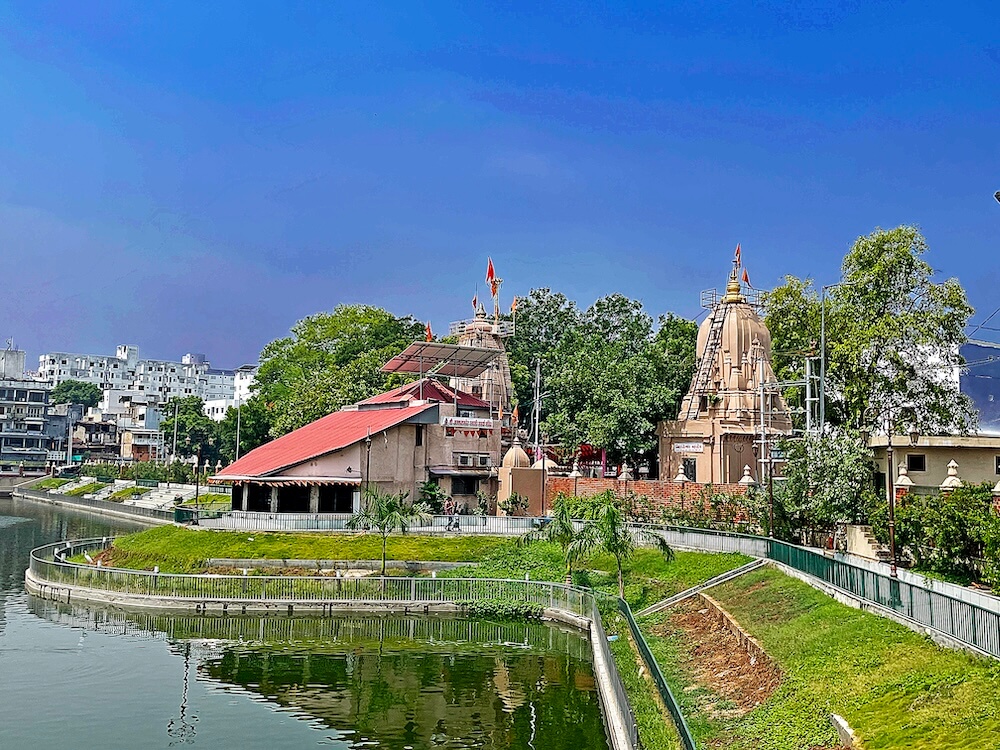
सुरसागर तलावाजवळ, वडोदरा, जिल्हा वडोदरा
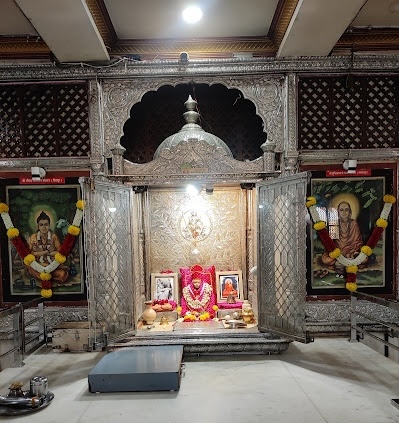 Near the serene banks of Sursagar Lake in Vadodara lies a spiritually charged place of deep reverence – the Swami Samarth Math. This sacred temple holds special significance within the Swami Samarth tradition as it is believed to be the very site where Swami Samarth himself miraculously appeared to dissuade the renowned spiritual writer Vamanrao Vaidya-Vamorikar from taking jalasamadhi (water-bound renunciation). Devotees believe that the divine presence of Swami Samarth still resides at this very spot. It was at this location that the temple or math, was later constructed and its foundation was consecrated by none other than the revered spiritual saint, Ranga Avadhoot Swami. During festivals like Datta Jayanti, Guru Pratipada and Swami Samarth’s Prakat Din, the entire area resonates with heartfelt chants of ‘Swami Ho’, echoing through the air in waves of devotion.
Vamanrao Vaidya, the deeply devoted disciple of Swami Samarth and the author of the spiritually profound text ‘Shri Guruleelamrit’, was born on 16th August 1848 in Vamori village into a Yajurvedic Brahmin family. 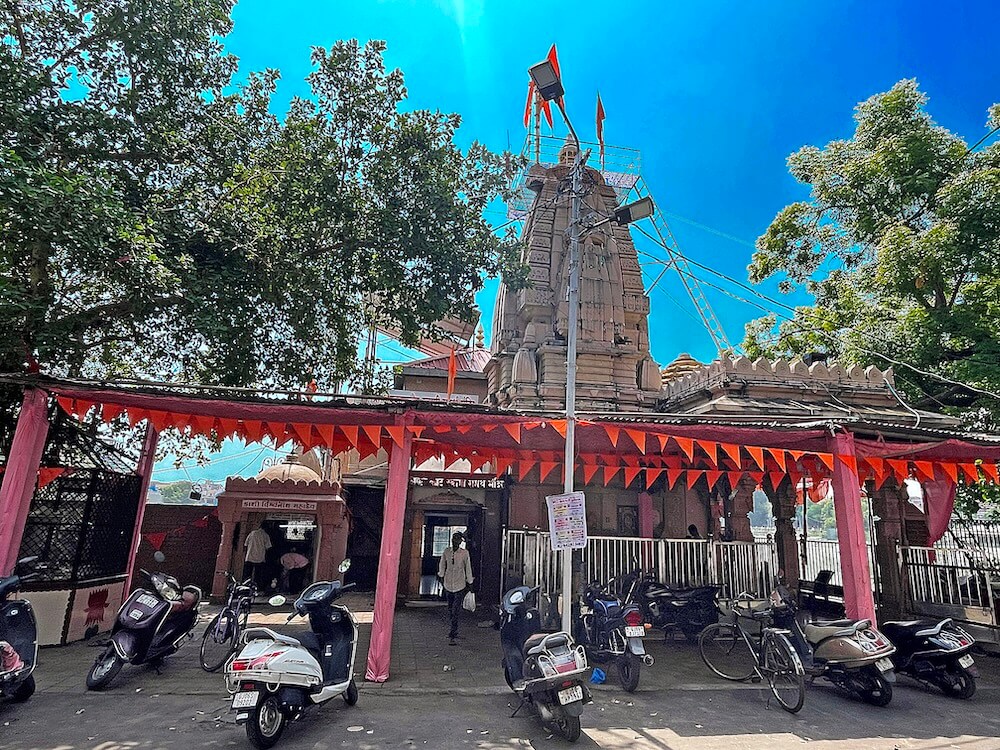 From a young age, he had a natural inclination toward spiritual gatherings and completed his basic studies up to the sixth grade in Marathi. He studied the Vedas and initially worked as an assistant teacher. Later, he served for some time in the collector’s office at Dhule and then worked as a writer at the Vrittavaibhav press in Ahilyanagar.
During his time at the press, a pivotal moment occurred when he visited the home of Gopalrao Dada Natu in Pune’s Tulshibaug area. There, engaged in discussions about enlightened beings, he was advised by a Brahmin to visit Akkalkot to receive the darshan of the great saint Swami Samarth. Following this advice, Vamanrao traveled to Akkalkot. When he arrived, Swami Samarth was temporarily away in a nearby village and it was on the banks of the sacred Payonadi river that Vamanrao first encountered him. 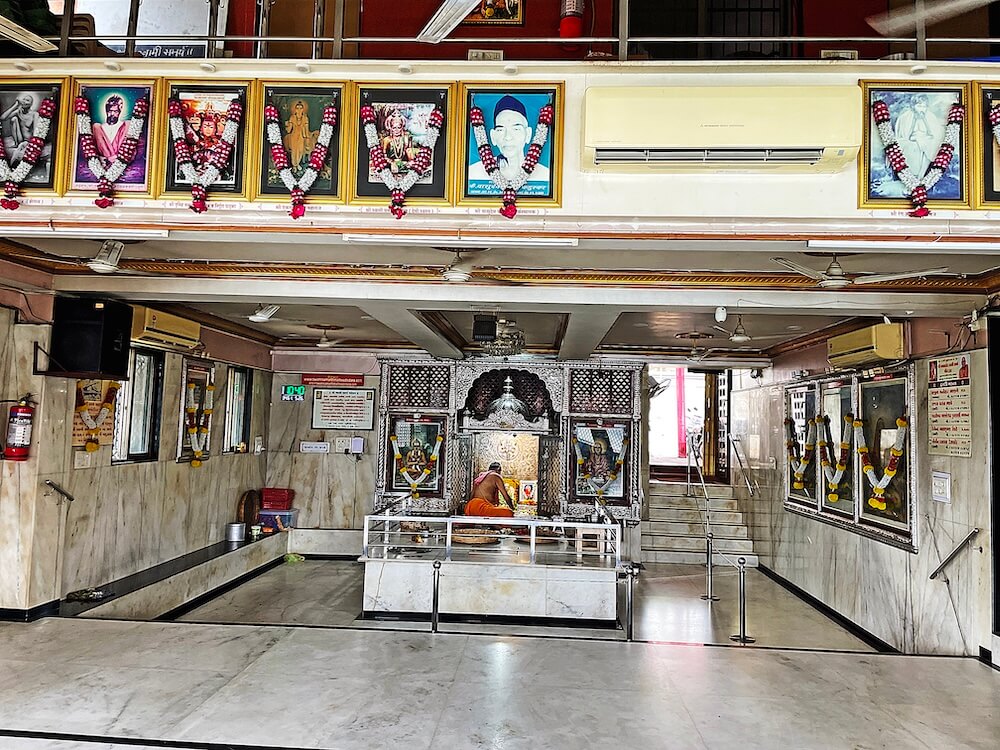 This marked the beginning of a deep, lasting bond. Vamanrao immersed himself completely in the service of the saint and later settled in Vadodara.
In 1876, his health began to decline and despite undergoing various treatments, he experienced no improvement. Stricken with unbearable physical pain, he desperately wrote letters to Swami Samarth, hoping for guidance or solace. Receiving no reply, Vamanrao, consumed by suffering, decided to renounce his life through jalasamadhi in Sursagar Lake. On the night of 27th April 1876, as he prepared to plunge into the water, Swami Samarth suddenly manifested before him. With a powerful rebuke, Swami commanded him, “Until the body’s prarabdha (karmic destiny) is exhausted, you must endure it.”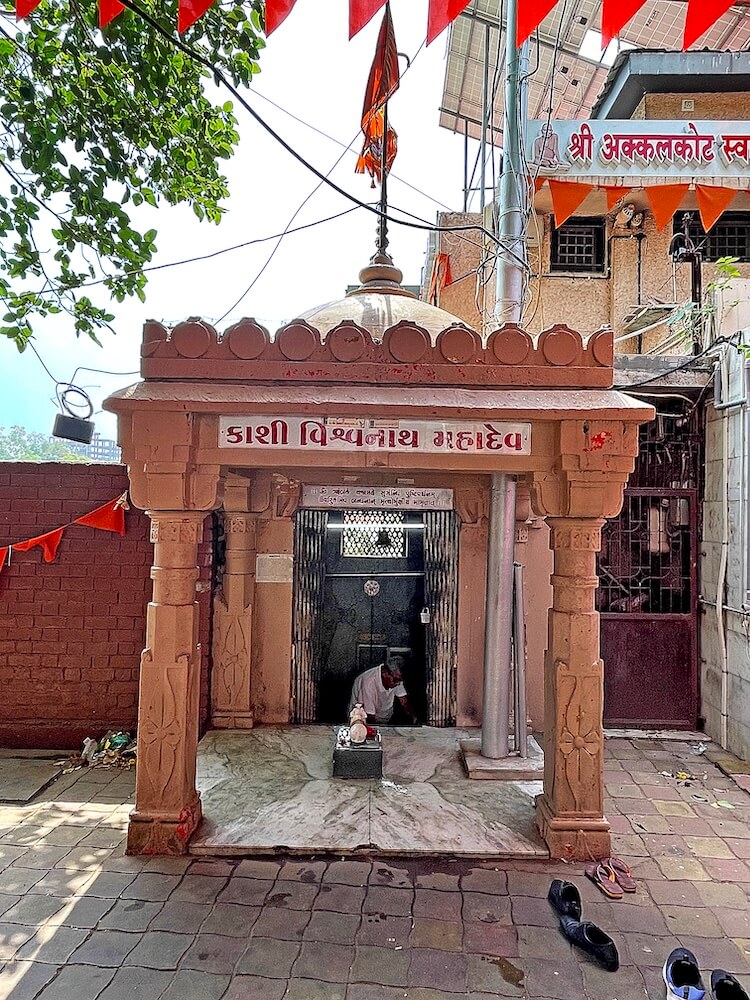 He forbade Vamanrao from taking his own life, comforted him and personally escorted him home. Upon being touched by the divine hands of Swami Samarth, Vamanrao experienced a complete recovery from his ailments.
Soon after, Vamanrao installed Swami Samarth’s symbolic footprints (padukas) in a small shrine on the western bank of the lake where Swami had appeared. He later took residence in the home of Shankarrao Pattankar in Vadodara, where he authored his magnum opus ‘Shri Guruleelamrit’, a monumental spiritual work comprising 55 chapters and 9,757 verses. After completing the text, he embraced sannyas (renunciation) on 17th March 1901, adopting the name Advaitananda and just a week later, on 25th March, he attained samadhi.
It is at this hallowed location, where Swami Samarth appeared to save Vamanrao, that the present-day math was built. An associated legend tells of Vasudevrao (Bhau) Kaduskar, the founder of the math, who yearned for a sign confirming Swami Samarth’s presence at the site. One day, he received a divine indication that two idols of Swami Samarth lay near the dome of the Tarkeshwar Mahadev temple, on the northern shore of the lake. Upon visiting the site, he indeed found the two idols. One was cracked, but at that moment, he reportedly heard Swami Samarth’s voice assuring him, “I dwell within the second idol.” 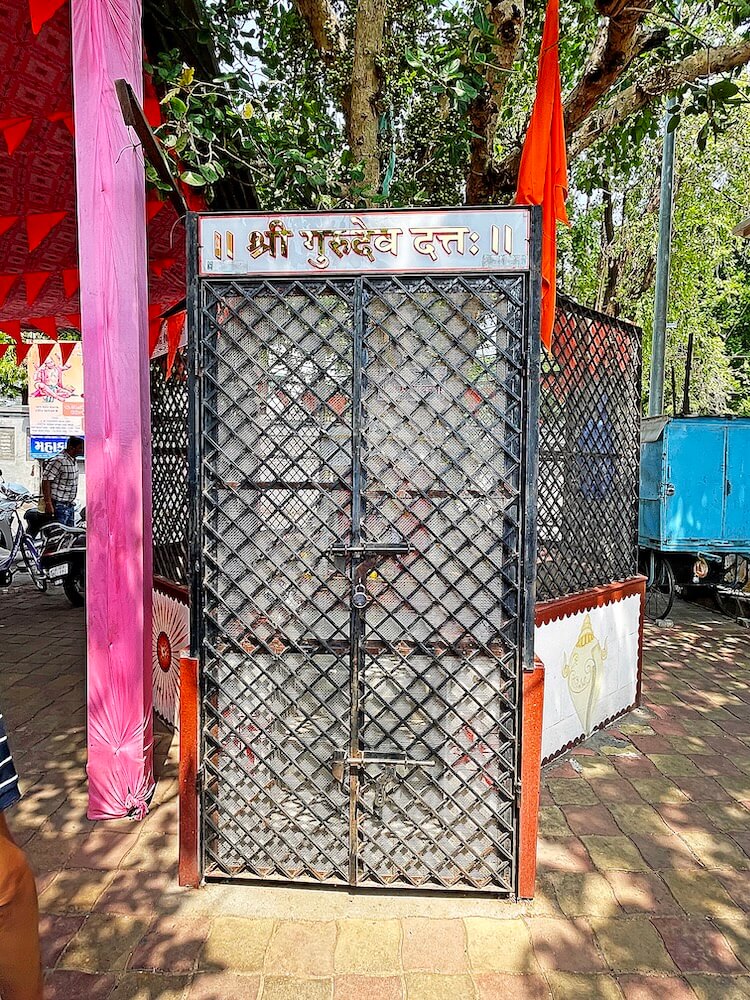 Taking this as divine approval, Kaduskar decided to install the idol in the math. On 1st December 1960, in the presence of Ranga Avadhoot Maharaj at Nareshwar, the idol was ceremonially consecrated. The math underwent renovation during 2009-10 to preserve and enhance its sanctity.
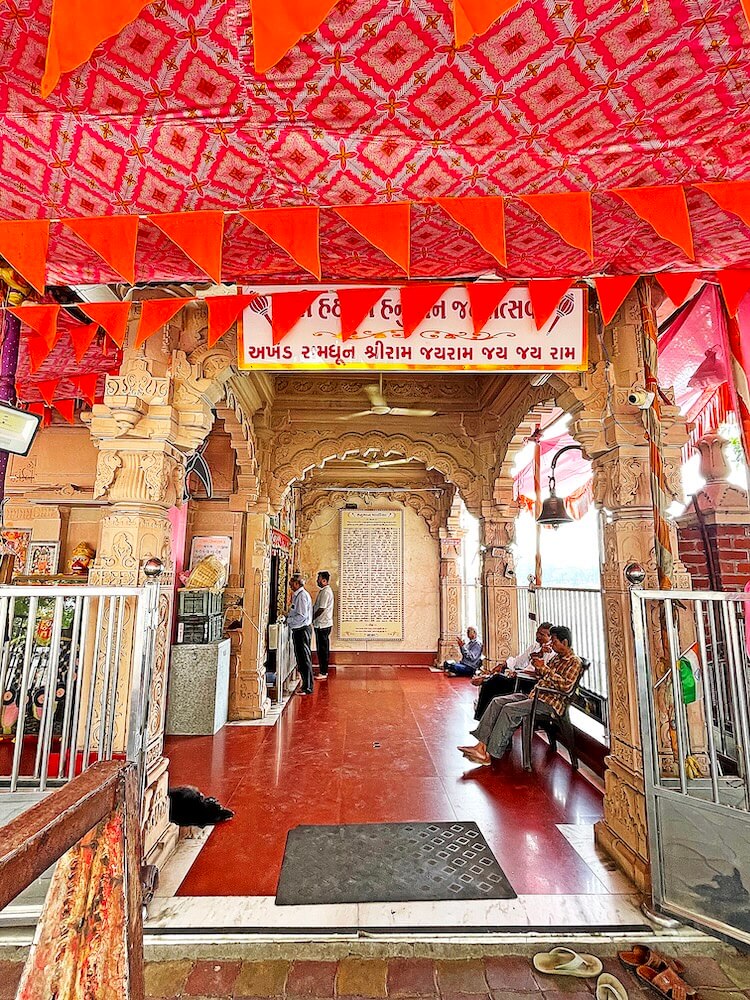
The math-mandir is designed with a mukhamandap (entrance hall), a sabhamandap (assembly hall) and a sanctum sanctorum (garbhagriha). The mukhamandap features a dome-shaped spire, while the sanctum has a tiered tower in the urushringa style. A few steps down from the main entrance lead devotees into the grand sabhamandap, where large portraits of Swami Samarth, Ranga Avadhoot Swami and Vasudevananda Saraswati grace the walls. Other saints such as Gajanan Maharaj of Shegaon, Shankar Maharaj, Narasimha Saraswati Maharaj, Ekamukhi Datt Maharaj, Devi-svarup Swami Samarth and the founder Kaduskar himself are also commemorated here with reverent images.
In front of the sanctum is a railing. A large marble platform, plated with silver, supports the sanctum structure. On the left side stands a large image of Shripad Vallabh, while on the right is that of Narasimha Saraswati. In the center is a beautifully adorned makhar with a silver dome, housing a stunning idol of Swami Samarth seated on a silver throne. A golden crown adorns the deity’s head and behind the idol, 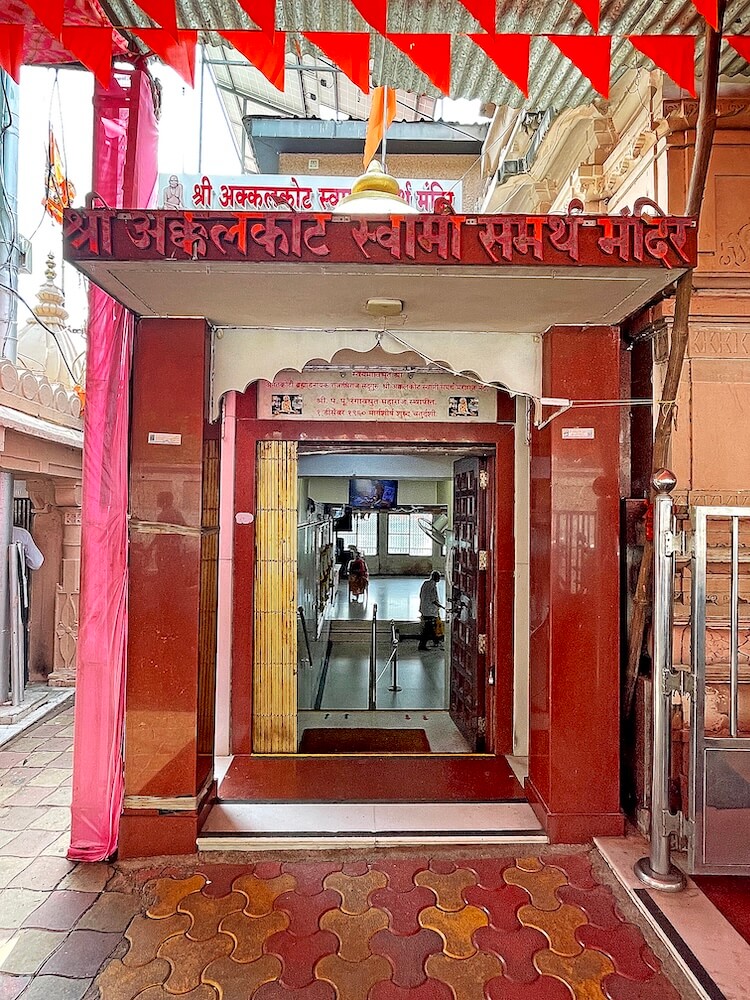 on the ornamental arch (prabhavali), a sacred banyan tree is depicted, with Lord Dattatreya carved into its center. At the base, in front of the idol, are the revered padukas of Swami Samarth. To the idol’s left is the image of Ranga Avadhoot Swami.
Devotees can have darshan at this math from 6:30 AM to 12:30 PM and again from 4:00 PM to 9:30 PM. Rituals are performed year-round, with daily aartis held at 8:00 AM, 11:15 AM and 7:00 PM. On Thursdays, special rituals begin with aarti at 8:00 AM, followed by abhishek, avartan and laghurudra till 10:00 AM. At 11:30 AM, there is another aarti along with the recitation of Datt Bavani. In the evening, bhajans are sung at 5:00 PM, followed by mahaarti from 7:30 PM to 9:00 PM.
Swami Samarth’s Prakat Din (appearance day) is celebrated on Chaitra Shukla Dvitiya, marked by full-day worship, evening bhajans and devotional music. On Chaitra Vadya Trayodashi, his Punyatithi (death anniversary) is commemorated with rituals, samradhana from 9:30 AM to 1:00 PM and a procession at 8:00 PM. Guru Dvadashi is celebrated on Ashwin Vadya Dvadashi and Ranga Avadhoot Maharaj Jayanti falls on Kartik Shukla Navami, featuring abhishek, pujan, laghurudra and a ceremonial palkhi.
The biggest festival at the math is Datta Jayanti, celebrated from Margashirsha Shukla Ashtami to Pournima. During this period, rituals include early morning (kakad) aarti, mahaarti, madhukari, evening vida and shejarati. On Datta Jayanti, special events such as Datta Bavani, Datta Janma and kirtan are performed. A grand procession follows on the next day and within a week, maha prasad is distributed to devotees. Other celebrations such as Guru Pratipada and Shailgaman Yatra Divas are also observed here.
To ensure the comfort of devotees, the math is equipped with air conditioning, water coolers and a sound system. A modern kitchen has also been installed to prepare offerings for Swami Samarth.
स्वामी समर्थ मंदिर-मठ
सुरसागर झील के पास, वडोदरा, जिला। वडोदरा