
श्री कुरुंबक्कावू भगवती मंदिर
पोईक्कट्टुसेरी, जि. एर्नाकुलम
Sree Kurumbakkavu Bhagavathy Temple
Poikkattussery, Dist. Ernakulam
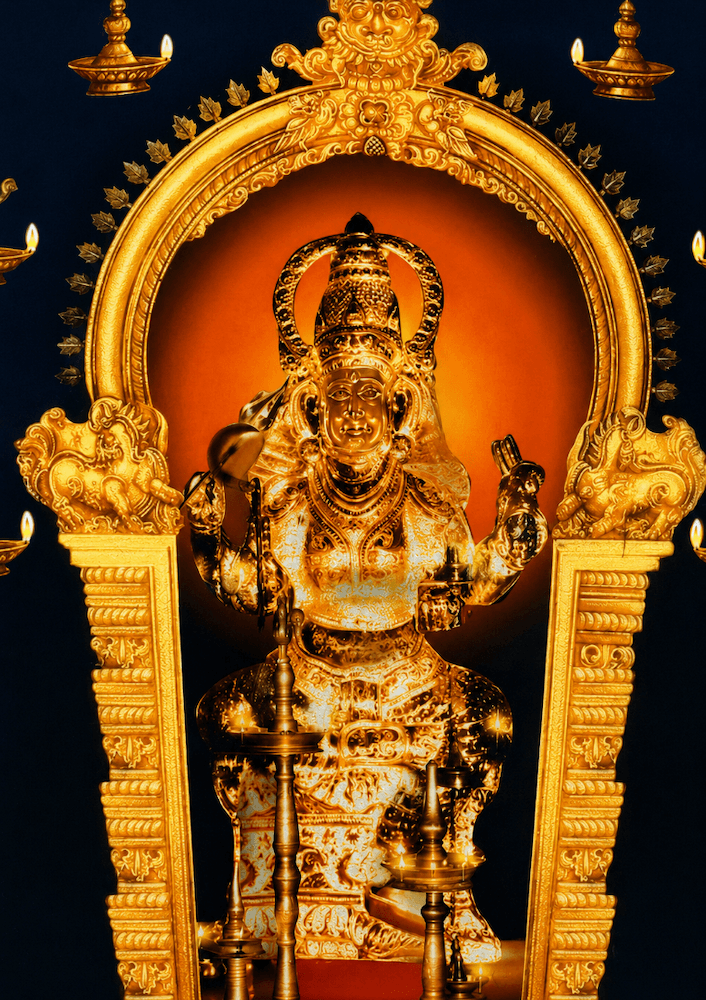 The Poikkattussery Sree Kurumbakkavu Bhagavathy Temple is an ancient shrine situated in the serene village of Chengamanad Grama Panchayat in Ernakulam district, Kerala. The temple is primarily dedicated to Goddess Bhagavathy, affectionately worshipped as Sree Kurumbakkavilamma, a powerful yet benevolent manifestation of Goddess Durga. With its historical associations and tranquil rural setting, the temple serves as an important spiritual and cultural centre for the local community and devotees.
The temple is associated with a history and traditions believed to extend back several centuries. According to local tradition and historical accounts, an earlier and larger Bhagavathy temple once stood at the site. The temple was destroyed during the military campaigns of Tipu Sultan in Kerala in the late eighteenth century. Following this period, only a small sacred platform is said to have remained at the site for many years. The shrine was subsequently rebuilt through the efforts of local residents and devotees, gradually developing into the present temple complex.
According to local tradition, the area was a secluded and forested tract around 300 years ago. A woman belonging to the Pulaya community came there to cut grass and began sharpening her sickle on a large, flat stone. As she rubbed the sickle against the stone, blood suddenly emerged from it. Frightened, she cried out, attracting local residents to the spot. 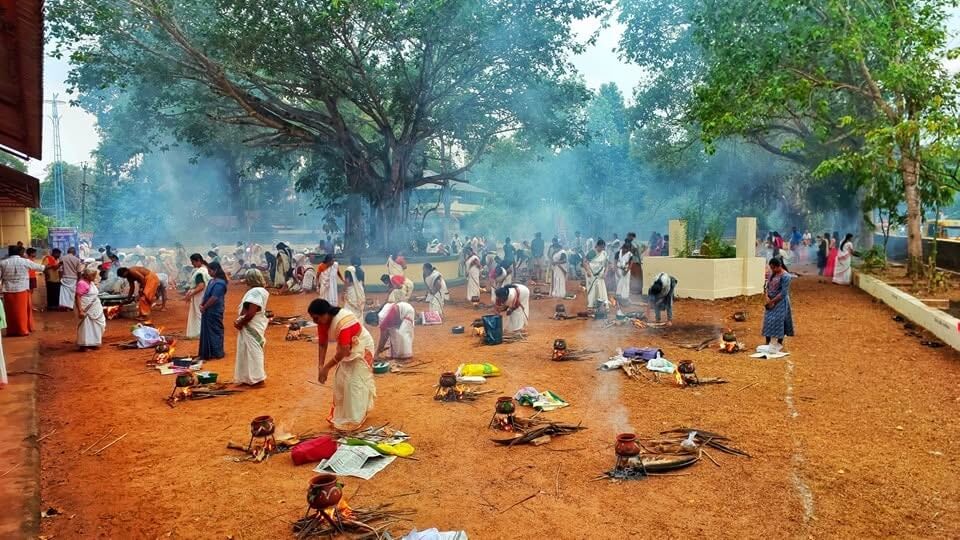 On learning of the incident, the local ruler, known as the Thaliyathiri and the Karanavar of Chengamanad East Variam visited the site. They recognised the occurrence as a manifestation of the divine presence of Jagadambika and initiated worship there. The area is also traditionally believed to have earlier contained a Kandakarna Thara, a sacred platform associated with a form of worship practised by members of the Pulaya community.
The manifestation of the divine at this spot is traditionally regarded as the origin of the present shrine.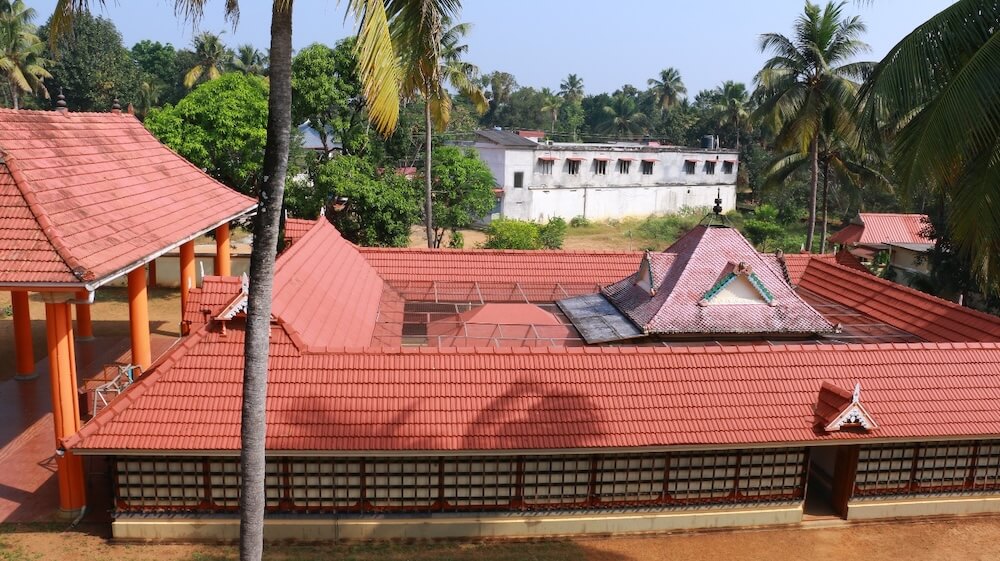 Tradition further holds that Poikkattussery Kavu once maintained a close spiritual relationship with the renowned Chengamanad Mahadeva Temple and that Sree Kurumbakkavilamma formerly visited Chengamanadappan to offer worship. This observance is believed to have ceased following the destruction of the temple. The temple is also connected in local tradition with the wider network of Kurumbakkavu shrines in Kerala, many of which are associated with the worship of Bhagavathy and traditionally linked with the Sree Kurumba Bhagavathy Temple at Kodungallur.
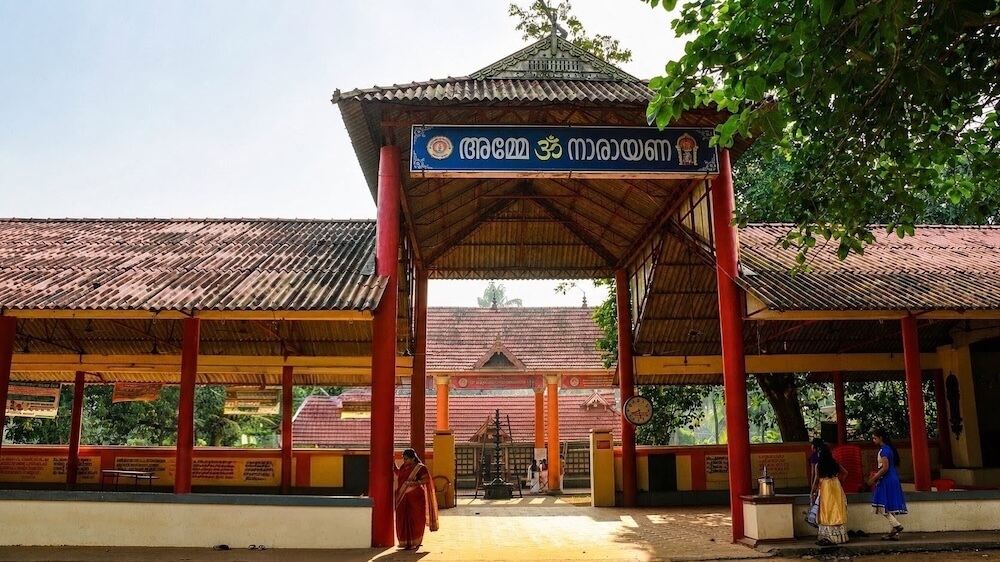
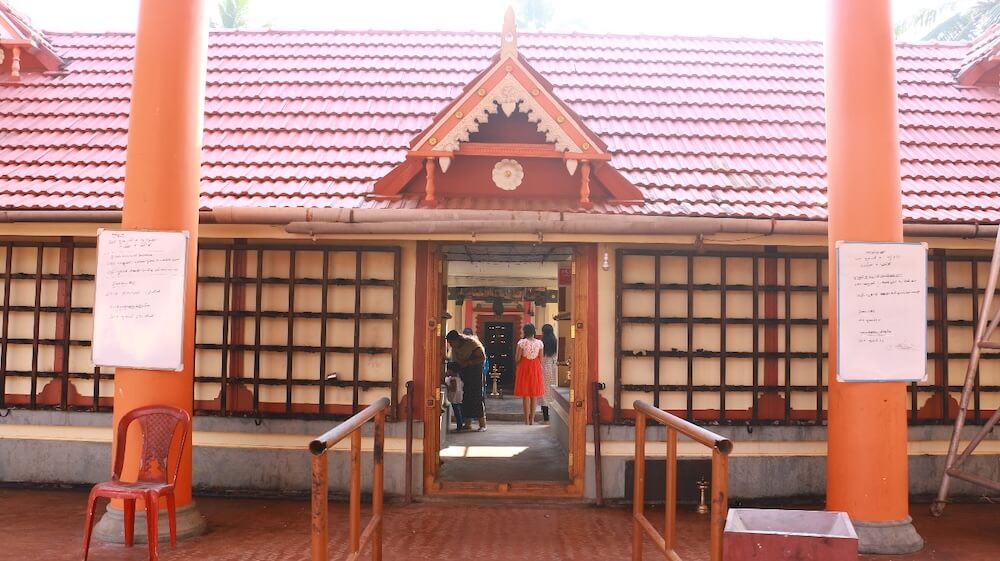 The temple complex follows the traditional Kerala style of temple architecture, with a predominantly low-rise composition arranged around the central shrine and enclosed ritual spaces. The principal entrance consists of a broad covered gateway supported by tall circular pillars and crowned with a sloping tiled roof, projecting eaves and a decorative triangular gable. The main structures are enclosed within a Chuttambalam, comprising roofed corridors and subsidiary spaces surrounding the inner courtyard. The courtyard serves as the principal space for circulation and rituals, with the Deepastambha positioned along the main axis in front of the shrine.
 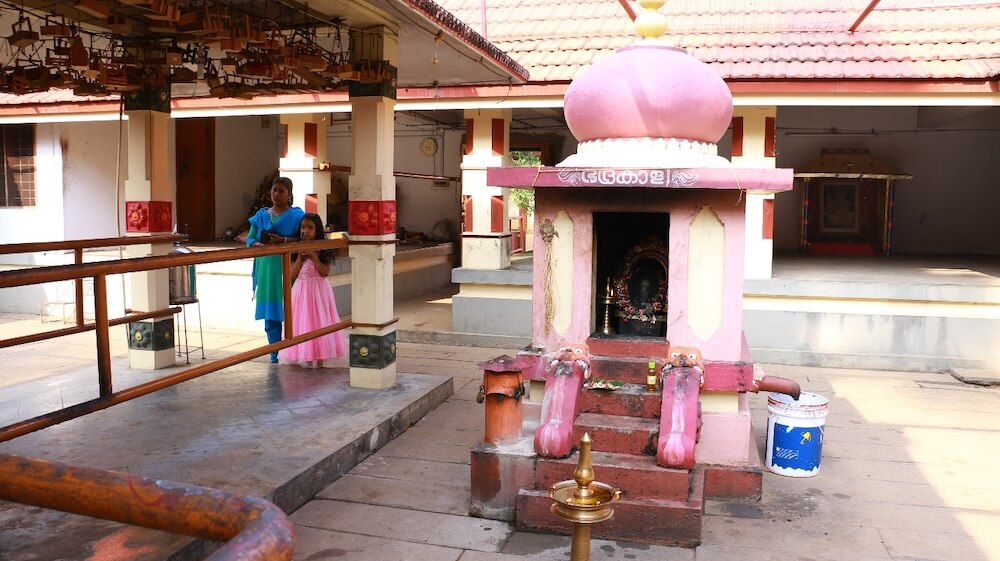 Decorative triangular gables above the entrances are embellished with carved and painted floral and geometric motifs, while the pillars feature ornamental bases, capitals and painted bands. Overall, the architecture incorporates several characteristic elements of Kerala temple construction.
The Sreekovil is a compact and traditionally proportioned structure, crowned by a steeply sloping tiled roof and approached through the inner courtyard. The principal deity, Sree Kurumbakkavilamma, is worshipped as a benevolent and sheltering maternal force who blesses devotees with well-being, health and prosperity.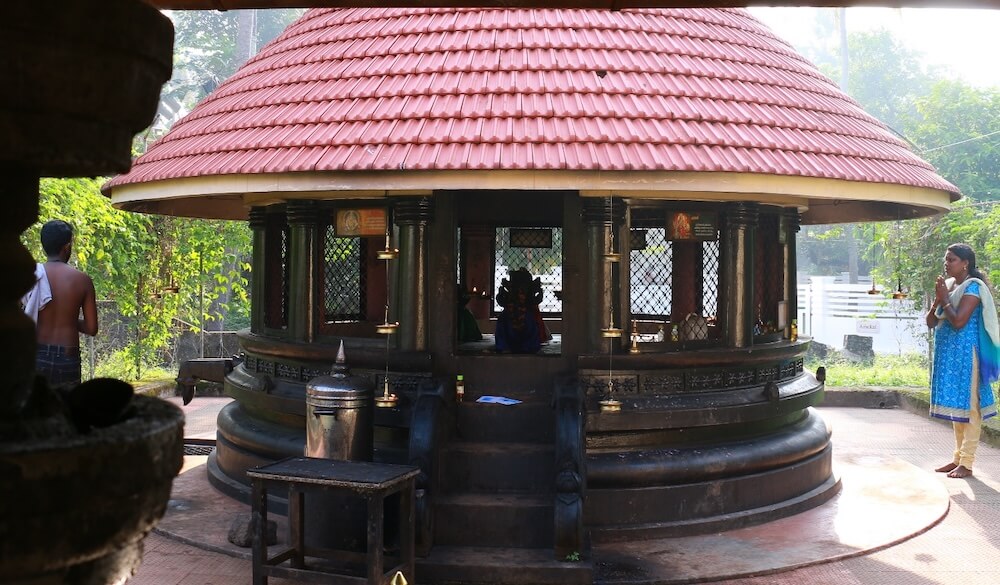
Apart from the principal deity, Sree Bhadrakali is the only other deity worshipped within the Nalambalam. According to temple legend, Bhadrakali, regarded as the younger sister of the Divine Mother, arrived at the sacred site sometime after her elder sister’s consecration. As Bhadrakali was believed to possess a fierce and short-tempered nature that could cause hardship to devotees, the Divine Mother provided her with a separate Sreekovil within the Nalambalam. No other deities are worshipped there.
The remaining sub-deities, including Brahmarakshas, Khandakarnan, Nagaraja, Nagayakshi and other Naga deities,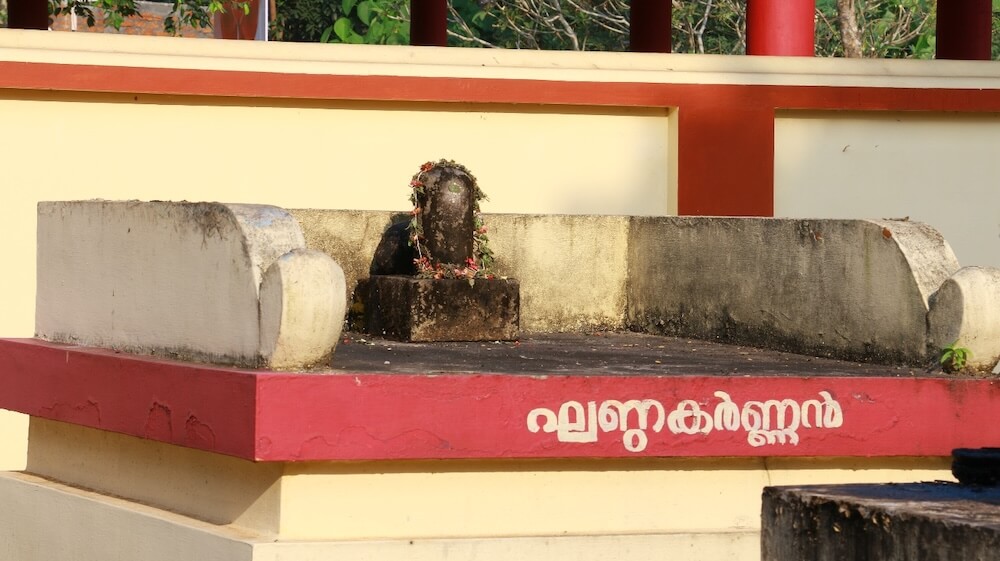 are worshipped outside the Chuttambalam.
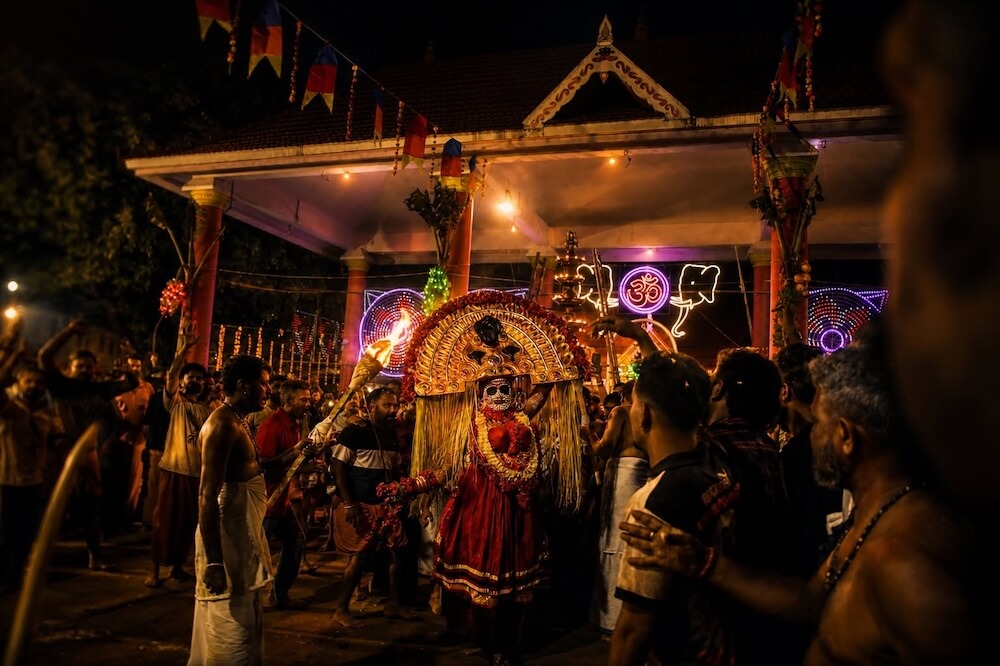
The annual Thiruvutsavam, also known as the Mudiyettu Mahotsavam, is the principal festival of the temple and is generally celebrated during the Malayalam months of Kumbham- Meenam. The festival’s major ritual attraction is Mudiyettu, the traditional ritual theatre of Kerala depicting the battle between Goddess Bhadrakali and the demon Darika. Mudiyettu is recognised by UNESCO as an element of the Representative List of the Intangible Cultural Heritage of Humanity.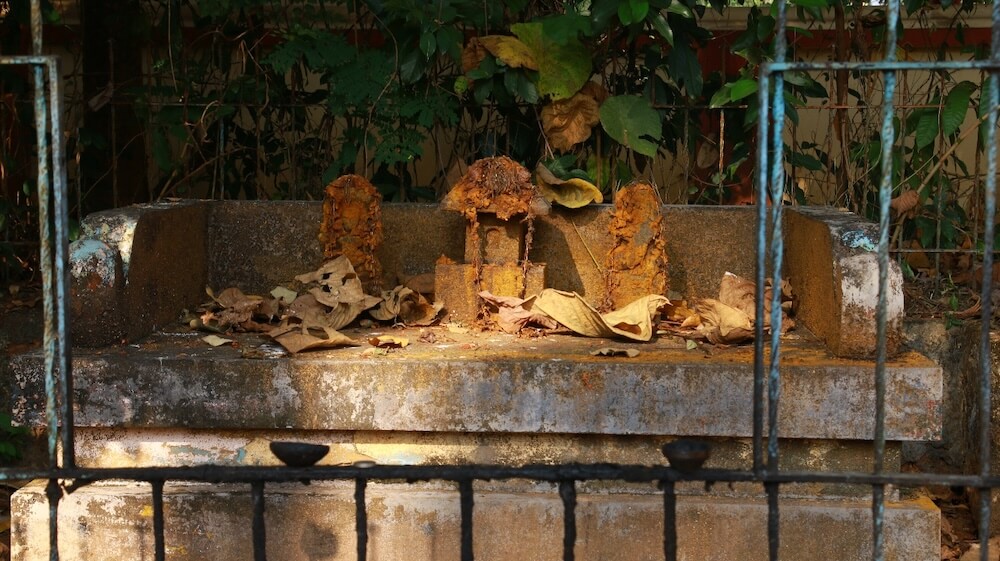
The festival is further marked by Kazhchasreebali, accompanied by decorated elephants, traditional Melam, Panchavadyam and Thalappoli. An extensive Navaratri music festival is organised annually during the Malayalam month of Kanni, corresponding approximately to September–October. Special worship and devotional programmes are conducted throughout the Navaratri period, culminating in Vijayadashami, when the traditional Vidyarambham ceremony is conducted for children commencing their formal learning. On the day of Uthradam in the Malayalam month of Chingam, devotees offer Niraputhari and Kazhchakkula to the Goddess.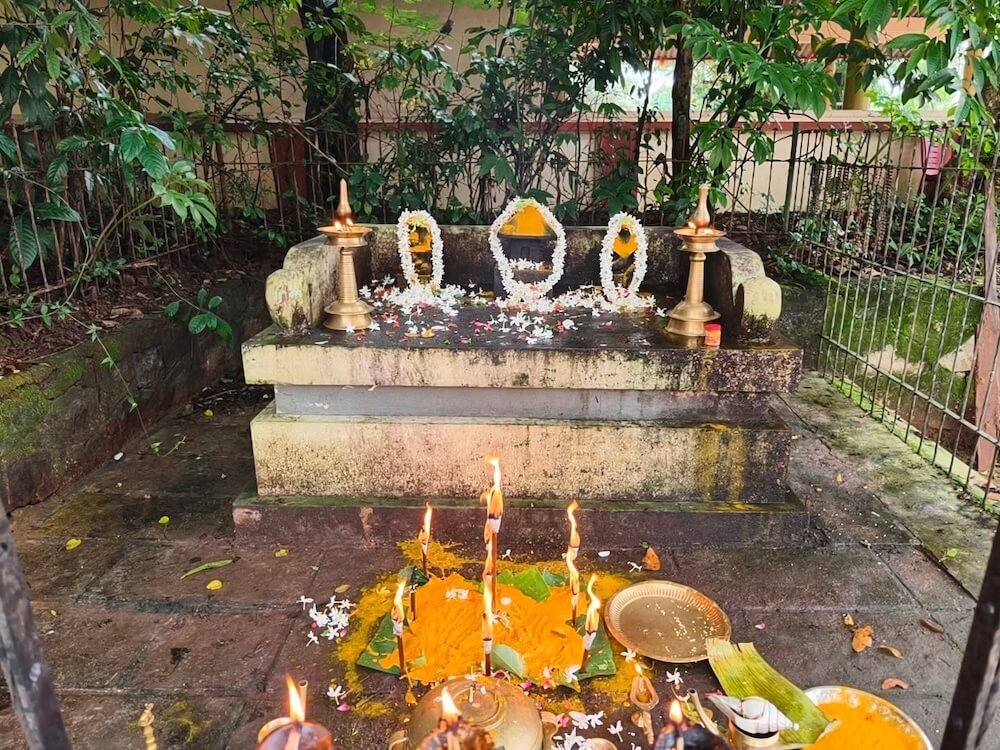 Freshly harvested paddy sheaves are ceremonially offered as a symbol of agricultural prosperity, with the traditional belief that the new grain brings prosperity and abundance to households. During the Mandala season, extending from the first day of Vrischikam to the 11th day of Dhanu, special lamps and rituals are conducted at the temple
The temple offers a wide range of Pushpanjali and other special offerings. These include Raktha Pushpanjali and Shatru Samhara Pushpanjali, offered for overcoming perceived negative influences and obstacles; Swayamvara Pushpanjali for marriage-related aspirations; Vidyamantra and Saraswatha Sukta Pushpanjali for education and learning; and Bhagya Sukta Pushpanjali for prosperity and good fortune.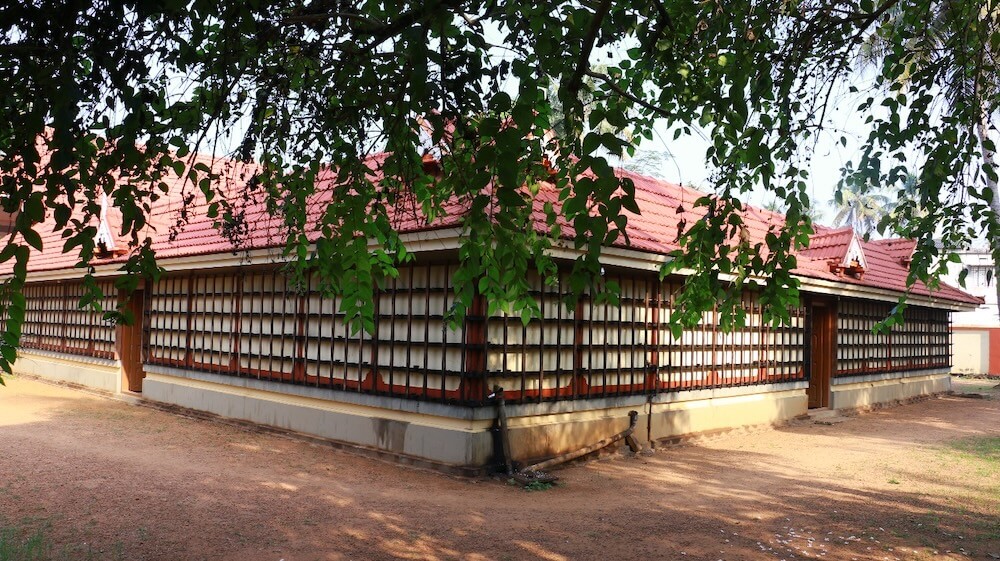 Special Guruthi offerings include Karyasadhya Guruthi, associated with the fulfilment of desired undertakings; Thozhil Guruthi for employment and professional progress; Shatru Samhara Guruthi for protection from perceived negative influences; and Panthrandu Pathram Guruthi for special remedial purposes. Muttarukkal, involving the ritual breaking of coconuts, is performed for the removal of obstacles, with specific forms associated with education, employment, marriage and health. Other important offerings include Kadumpayasam, Neypayasam, Koottupayasam and Palpayasam, traditionally offered for prosperity and family welfare, as well as Pattucharthal, Thalicharthal, Chuttuvilakku and Niramala.
  Nelpara and Manjalpara are associated with agricultural and financial prosperity. Ayilya Puja and Noorum Palum are offered to the Naga deities Nagaraja and Nagayakshi, particularly on Ayilyam and other auspicious days, traditionally seeking relief from Sarpa Dosha. Another important ritual is Valiya Guruthi, a ceremonial offering performed to pacify the fierce aspect of the Goddess following the destruction of Darika.
The daily pooja schedule begins with the opening of the temple at 5.00 AM, followed by Nirmalya Darshanam, Malar Nivedyam and Kadalipazham Nivedyam. Ucha Pooja is conducted at 7.00 AM, followed by Guruthi at 9.00 AM and another Ucha Pooja at 9.00 AM. The temple closes at 10.00 AM. The temple reopens at 5.00 PM, followed by Deeparadhana at 6.45 PM. Athazha Pooja is conducted at 7.00 PM, followed by Prasanna Pooja and the day’s rituals conclude with the closing of the temple at 7.30 PM.
Key Highlights
- Located 10 km from Aluva town.
- About 10 km from Aluva Railway Station.
- KSRTC and local bus services are available.
- Dedicated parking is available for private vehicles.
- Accommodation and dining facilities are available nearby.
श्री कुरुम्बक्कवु भगवती मंदिर
पोइकट्टुस्सेरी, जिला। एर्नाकुलम
मंदिरे
Temples
मंदिर
મંદિરો
கோவில்கள்
దేవాలయాలు
ക്ഷേത്രങ്ങൾ
ದೇವಾಲಯಗಳು
মন্দিরসমূহ
ਮੰਦਿਰ
-
थिरुवेल्लमंथुल्ली वडक्कुन्नाथन मंदिर कलाडी, जि. एर्नाकुलम
अधिक माहितीThiruvellamanthulli Vadakkunnathan Temple Kalady, Dist. Ernakulam
View Detailsतिरुवेल्लामंथुल्ली वडक्कुनाथन मंदिर कलाडी, जिला. एर्नाकुलम
विवरण देखेंThiruvellamanthulli Vadakkunnathan Temple Kalady, Dist. Ernakulam
વિગત જુઓThiruvellamanthulli Vadakkunnathan Temple Kalady, Dist. Ernakulam
விவரங்களைக் காண்கThiruvellamanthulli Vadakkunnathan Temple Kalady, Dist. Ernakulam
వివరాలను చూడండిThiruvellamanthulli Vadakkunnathan Temple Kalady, Dist. Ernakulam
വിശദാംശങ്ങൾ കാണുകThiruvellamanthulli Vadakkunnathan Temple Kalady, Dist. Ernakulam
ವಿವರಗಳನ್ನು ವೀಕ್ಷಿಸಿThiruvellamanthulli Vadakkunnathan Temple Kalady, Dist. Ernakulam
বিস্তারিত দেখুনThiruvellamanthulli Vadakkunnathan Temple Kalady, Dist. Ernakulam
ਵੇਰਵੇ ਦੇਖੋ -
थरमेकावू भगवती मंदिर चुरक्कड, त्रिपुनिथुरा, जि. एर्नाकुलम.
अधिक माहितीTharamekavu Bhagavathy Temple Choorakkad, Thripunithura, Dist. Ernakulam.
View Detailsथरमेकावु भगवती मंदिर चूराक्कड़, त्रिपुनिथुरा, जिला। एर्नाकुलम.
विवरण देखेंTharamekavu Bhagavathy Temple Choorakkad, Thripunithura, Dist. Ernakulam.
વિગત જુઓTharamekavu Bhagavathy Temple Choorakkad, Thripunithura, Dist. Ernakulam.
விவரங்களைக் காண்கTharamekavu Bhagavathy Temple Choorakkad, Thripunithura, Dist. Ernakulam.
వివరాలను చూడండిTharamekavu Bhagavathy Temple Choorakkad, Thripunithura, Dist. Ernakulam.
വിശദാംശങ്ങൾ കാണുകTharamekavu Bhagavathy Temple Choorakkad, Thripunithura, Dist. Ernakulam.
ವಿವರಗಳನ್ನು ವೀಕ್ಷಿಸಿTharamekavu Bhagavathy Temple Choorakkad, Thripunithura, Dist. Ernakulam.
বিস্তারিত দেখুনTharamekavu Bhagavathy Temple Choorakkad, Thripunithura, Dist. Ernakulam.
ਵੇਰਵੇ ਦੇਖੋ -
श्री मुनिक्कल गुहालय मंदिर चेंगमनाड, अलुवा, जि. एर्नाकुलम.
अधिक माहितीSree Munikkal Guhalaya Temple Chengamanad, Aluva, Dist. Ernakulam.
View Detailsश्री मुनिक्कल गुहालय मंदिर चेंगमानाड, अलुवा, जिला। एर्नाकुलम.
विवरण देखेंSree Munikkal Guhalaya Temple Chengamanad, Aluva, Dist. Ernakulam.
વિગત જુઓSree Munikkal Guhalaya Temple Chengamanad, Aluva, Dist. Ernakulam.
விவரங்களைக் காண்கSree Munikkal Guhalaya Temple Chengamanad, Aluva, Dist. Ernakulam.
వివరాలను చూడండిSree Munikkal Guhalaya Temple Chengamanad, Aluva, Dist. Ernakulam.
വിശദാംശങ്ങൾ കാണുകSree Munikkal Guhalaya Temple Chengamanad, Aluva, Dist. Ernakulam.
ವಿವರಗಳನ್ನು ವೀಕ್ಷಿಸಿSree Munikkal Guhalaya Temple Chengamanad, Aluva, Dist. Ernakulam.
বিস্তারিত দেখুনSree Munikkal Guhalaya Temple Chengamanad, Aluva, Dist. Ernakulam.
ਵੇਰਵੇ ਦੇਖੋ