
चेम्मनाद श्रीकृष्ण गरुड महाविष्णू मंदिर
तिरुवनियूर, जि. एर्नाकुलम
Chemmanad Sree Krishna Garuda Mahavishnu Temple
Thiruvaniyoor, Dist. Ernakulam
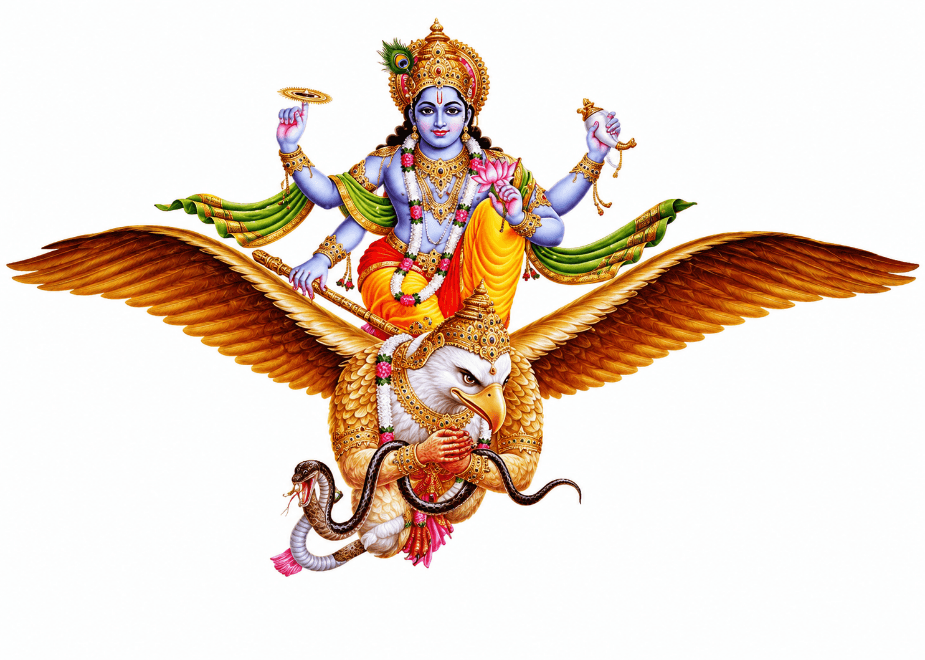 Situated approximately four kilometres east of the famous Chottanikkara Devi Temple, in Thiruvaniyoor Panchayat of Ernakulam district, the Chemmanad Sree Krishna Garuda Mahavishnu Temple is believed to be more than a thousand years old. The principal deities are Garuda, the divine vehicle of Mahavishnu; Sri Krishna, an incarnation of Vishnu and Mahavishnu in his Mohini form. The temple is regarded as unique in Kerala for having these three Vaishnava manifestations installed together as principal deities. It is also traditionally believed to be the only temple in Kerala where Garuda appeared in person before his consecration.
The rituals and observances followed at the temple bear considerable similarity to those of the famous Guruvayur Temple. 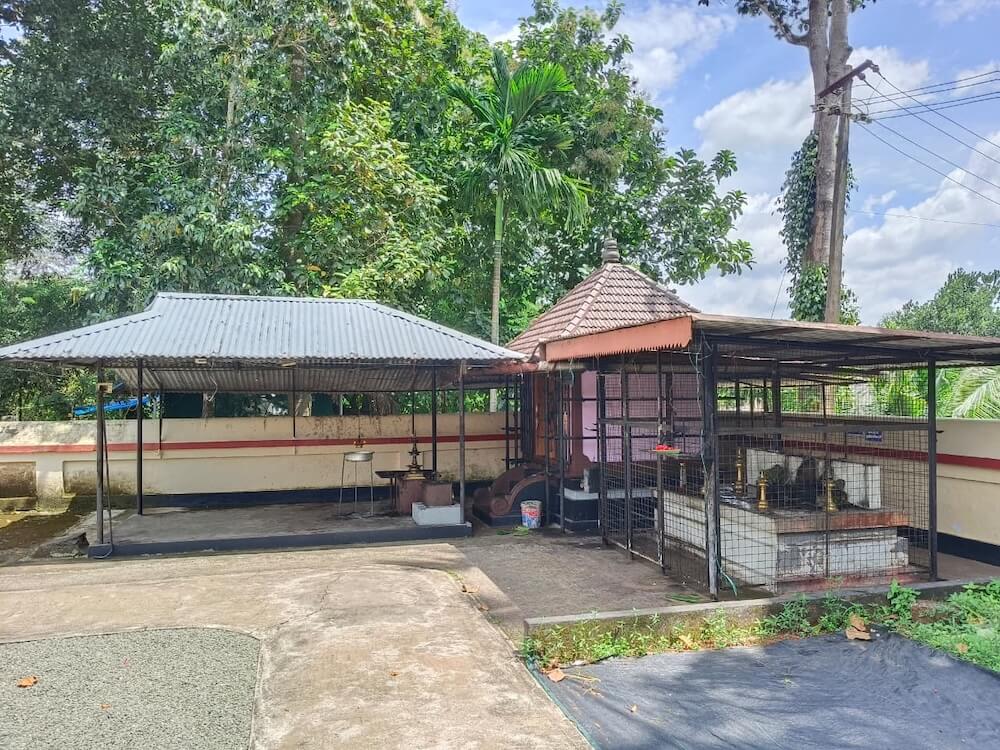 Another distinctive feature is that the Sreekovils of Sri Krishna and Mahavishnu stand facing the same wall. The temple is mentioned in Aithihyamala, the famous collection of legends compiled by Kottarathil Sankunni. The temple is under the joint Oorāṇma of Ayinippilly Mana and Kokkara Mana. Its day-to-day administration and the conduct of festivals are undertaken by the Chemmanad Sree Krishna Temple Seva Samithi, under the leadership of local residents. According to local tradition, Kokkaramana Parameswaran Namboothiri, an Ayurvedic scholar and physician of the Cochin royal palace, worshipped Garuda as his family deity and chose this temple as a centre for traditional treatment for poisoning.
Chemmanad has traditionally been regarded as a land of devotees of Vishnu. 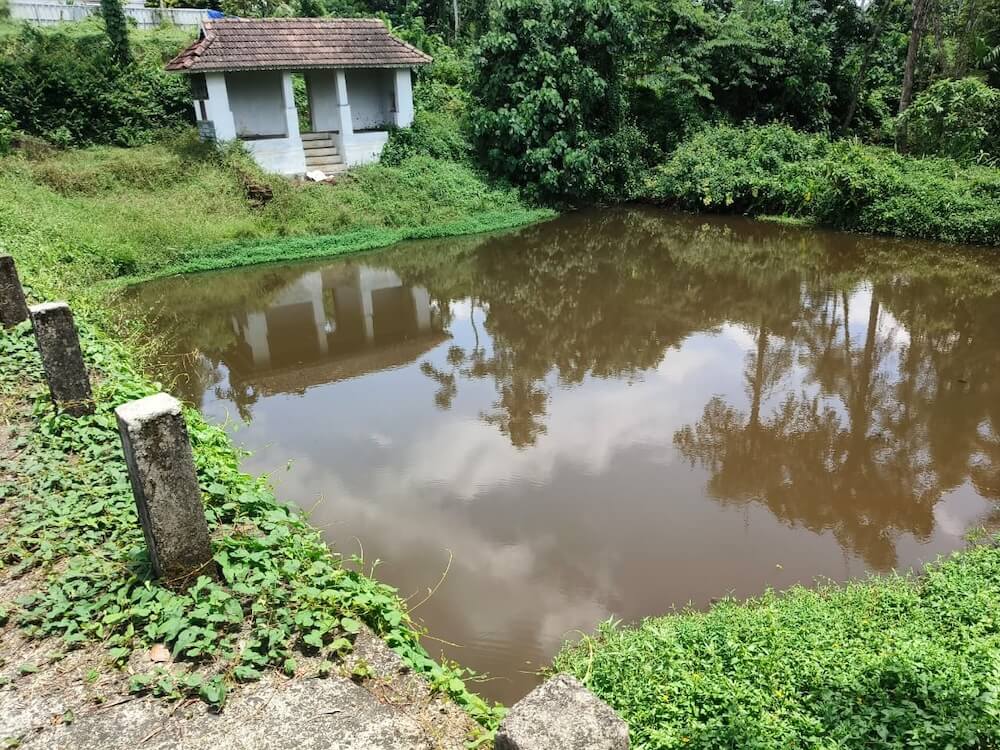 From ancient times, the people of this region are believed to have worshipped Mahavishnu, the Lord of Vaikuntha, in his Mohini form. At a later period, with the intention of installing the idol of Mahavishnu in his Mohini form, known as Chemmanattappan, in a more elevated Sreekovil for the prosperity and advancement of the land, a new semicircular Sreekovil was constructed. Before the consecration of the idol, the temple Thantri went to the temple pond to bathe. At that moment, he saw a wooden box floating up from the water. When he opened it, he found three Vaishnava idols carved from Anjanakallu, a black stone traditionally used for sacred images. According to the Prasna Vidhi that followed, the smallest of the three idols, the image of Sri Krishna, was to be installed in the newly constructed Sreekovil.
 The other two idols were destined for installation at nearby places, namely Thulavankulangara Variyam and Veloppilly at Perumpilly. At this point, an Asareeri or divine disembodied voice, announced that a Krishna Parunthu, traditionally identified with Garuda, would arrive to indicate the auspicious moment of the consecration. The Krishna Parunthu was awaited for a considerable time, but it did not appear. The Sri Krishna idol was therefore consecrated, followed by the prescribed Arghya, Paadya and Naivedya.
When the Thantri subsequently came outside for Sreebhootha Bali, a large bird suddenly arrived with the loud beating of its wings and perched at the twenty-fifth Kazhuukol at the Kannimoola corner of the semicircular Sreekovil. 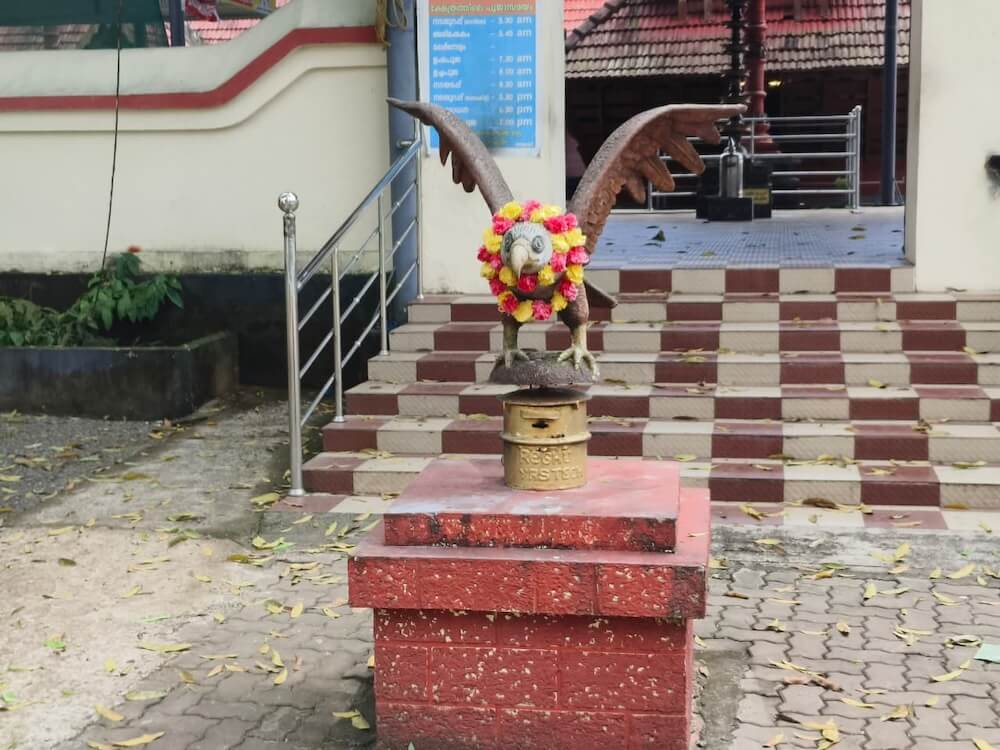 A carving of Garuda had been made on that rafter. The Thantri then took the remaining water from the Kalasha used for the consecration of Sri Krishna and offered it to Garuda. After performing the prescribed puja and Naivedya, he performed an Abhishekam with coconut water and consecrated Garuda on that very rafter. Since coconut water was the first substance used for Garuda’s abhishekam, the daily morning abhishekam of Garuda continues to be performed with coconut water. According to temple tradition, this abhishekam is performed only once a day. After the abhishekam, devotees who offer coconuts to Garuda traditionally break them on a circular stone in front of the Garuda Sreekovil. This offering is known as Naalikeram Udakkal.
 Local residents also traditionally break a coconut before Garuda whenever they encounter a snake. The first offering made to Garuda is said to have consisted of one Naazhi measure of cooked rice and one small portion of cooked rice. This later became known as Naazhi-yum Pidiyum. An offering called Pakshimani Samarpanam is also made to Garuda to seek relief from Pakshipida, traditionally understood as an affliction associated with birds. Garuda is not ordinarily taken outside the temple in procession.
According to local belief, he flies over the locality on his own wings and continuously watches over its people.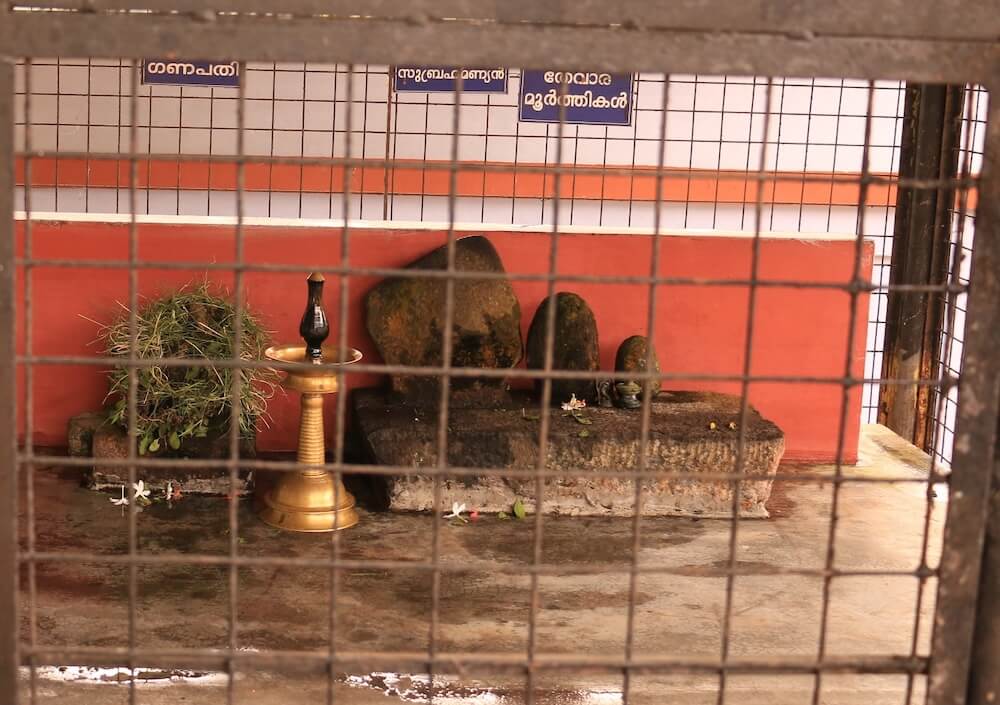 It is believed that Garuda may be taken outside the temple only when he arrives at the Chemmanad Kara without any means of transport. If he is taken in procession in such circumstances, it is believed that he will bring everything necessary for the temple and the land. Chemmanattappan is traditionally regarded as the brother of Chottanikkara Bhagavathy. According to local tradition, in earlier times, when the ceremonial Parayeduppu from Chottanikkara Temple reached the area, the deity’s procession would stop beneath the banyan tree at Keezhakkavu. This is associated with the traditional belief that the younger sister rises to receive her elder brother when he arrives. There are also numerous local accounts concerning the protective power of Garuda.
 It is traditionally believed that people suffering from Pakshipida, as well as some people who have suffered snake bites, have recovered after receiving Garuda Swami’s Prasadam. There are also accounts of children who were unable to walk or speak or who had physical disabilities and who are said to have recovered after visiting the temple and making offerings to Garuda.
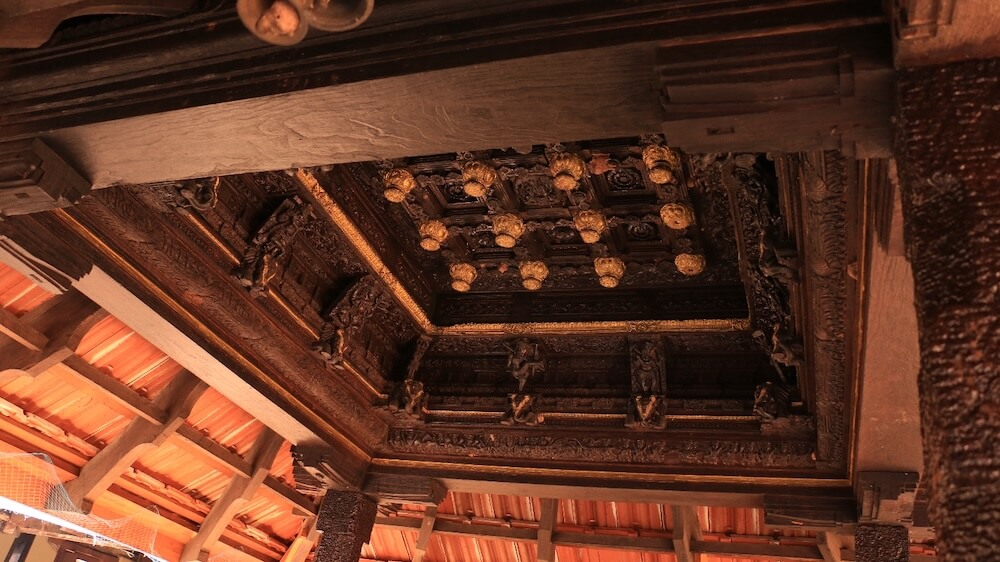
The temple complex is enclosed within a compound wall and entered through a traditional entrance leading to the open courtyard. A particularly distinctive feature of the temple is its three flagposts, an exceptionally unusual arrangement in Kerala temple architecture.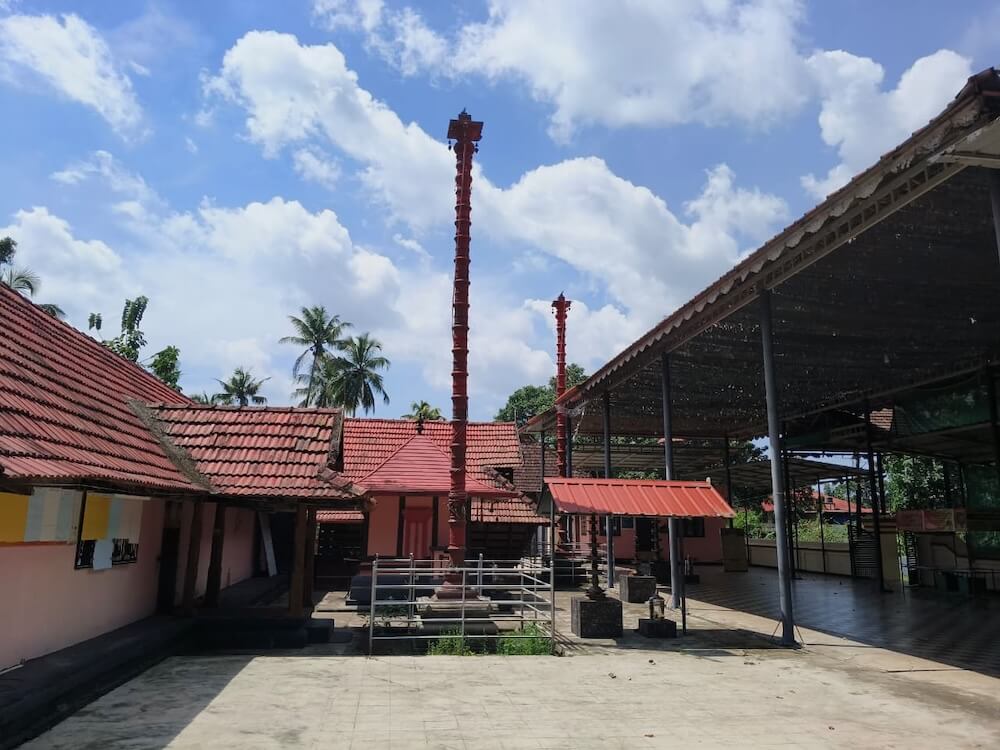 Two tall flagposts stand in the outer courtyard in front of the main shrine complex, while a smaller flagpost is positioned within the Nalambalam, directly in front of the Garuda shrine. The Nalambalam encloses the principal sacred area and consists of covered spaces supported by traditional wooden pillars. The Balikkallu is positioned in the courtyard in front of the main shrine. In front of the principal Sreekovil is the Namaskara Mandapam, whose intricately carved timber ceiling features recessed panels, ornamental mouldings, beams and traditional decorative and figural motifs. Within the Nalambalam, close to the principal Sreekovil, is the distinctive Garuda shrine.
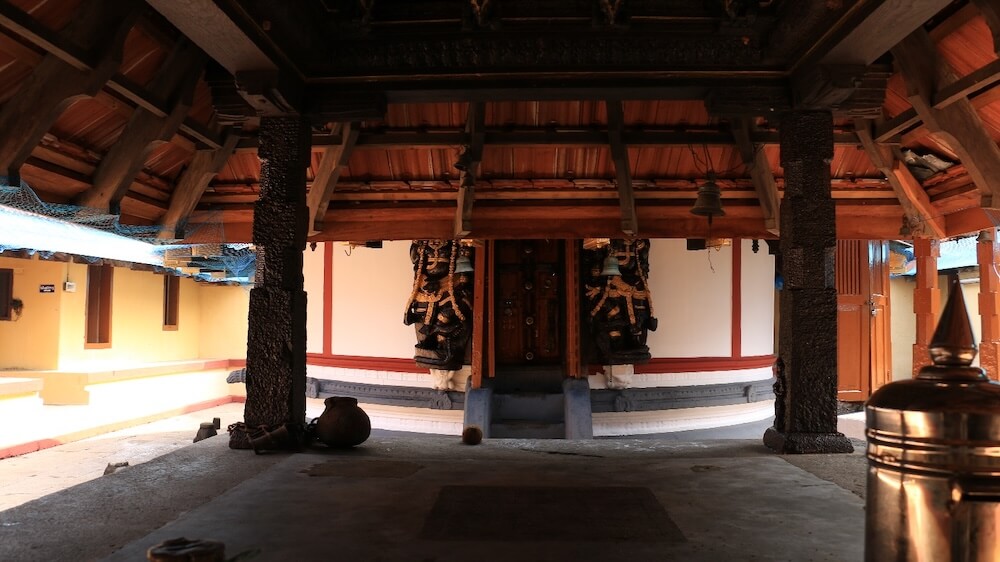 The principal Sreekovil is semicircular in form, raised on a moulded plinth and covered by a traditional Kerala-style tiled roof supported by an elaborate timber framework. Its entrance is framed by richly carved wooden elements, including prominent Dwarapalakas on either side of the doorway, while the surrounding wooden components display fine traditional craftsmanship and intricate carved detailing.
The majestic and formidable form of Garuda, the principal deity of the temple, corresponds to the conception described in the following Dhyana Sloka:
“Yo Vishvaa Pranabhutas-tat-tanu-racita-harer
Yaana-ketusvarupam
Yam Sanchintyaiva Sadya-svayam Uraga-vadhu-varga Garbhah Patanti;
Chanchach-Chandorutunda-trutiphani-vasaa-rakta-pankaankitaasyam;
Vande Chandomayam Tam Khagapatim Amala-svarnam Varnam Suparnam.”
“I bow to Garuda, the foremost among birds, who is the very embodiment of the Vedas, who possesses the pure golden radiance, who is the life force of the entire universe, a manifestation of Mahavishnu and the emblem upon his chariot; merely upon remembering whom the wives of Nagas are overcome with fear; whose face is stained with the blood and fat of Nagas torn apart by his sharp and powerful beak.” The Garuda idol at Chemmanad embodies this fierce aspect described in the Dhyana Sloka. He is depicted gripping the middle of a Naga with his beak, holding its head and tail in his two hands and appearing ready to take flight with his wings spread. 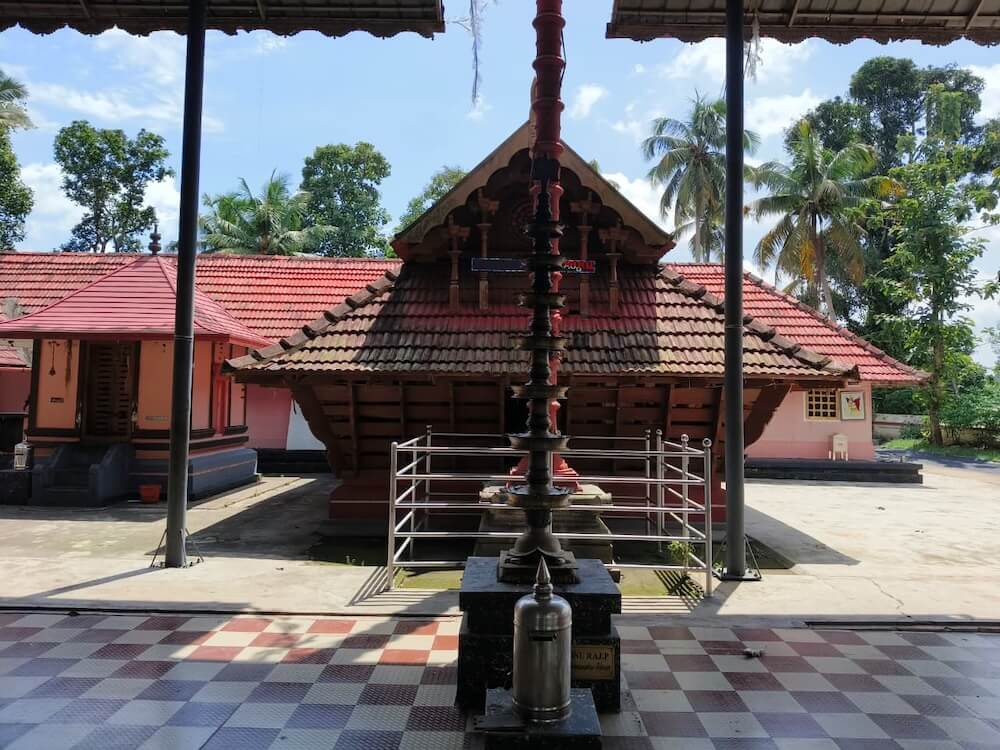 The resulting Raudra Bhava is striking and somewhat fearsome.
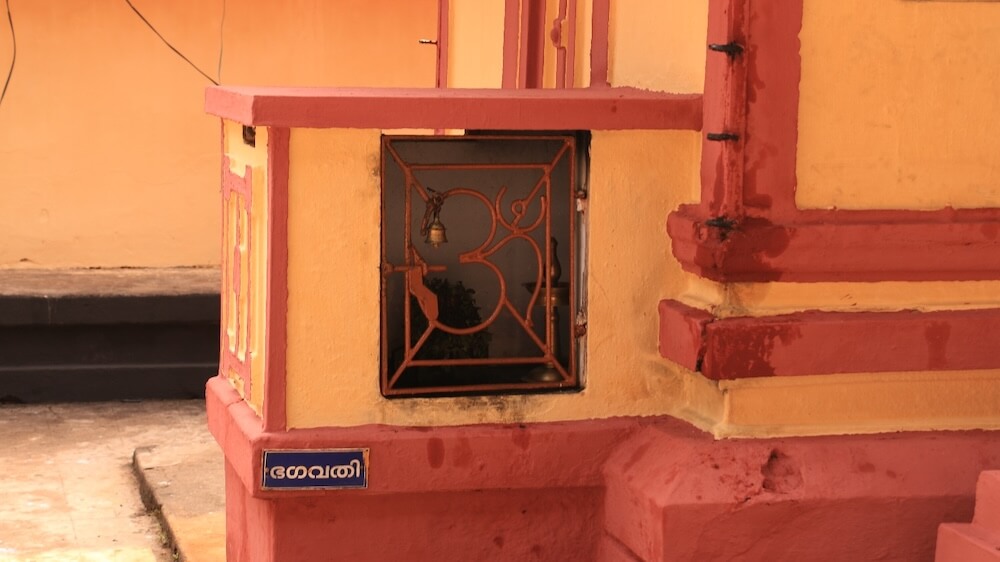
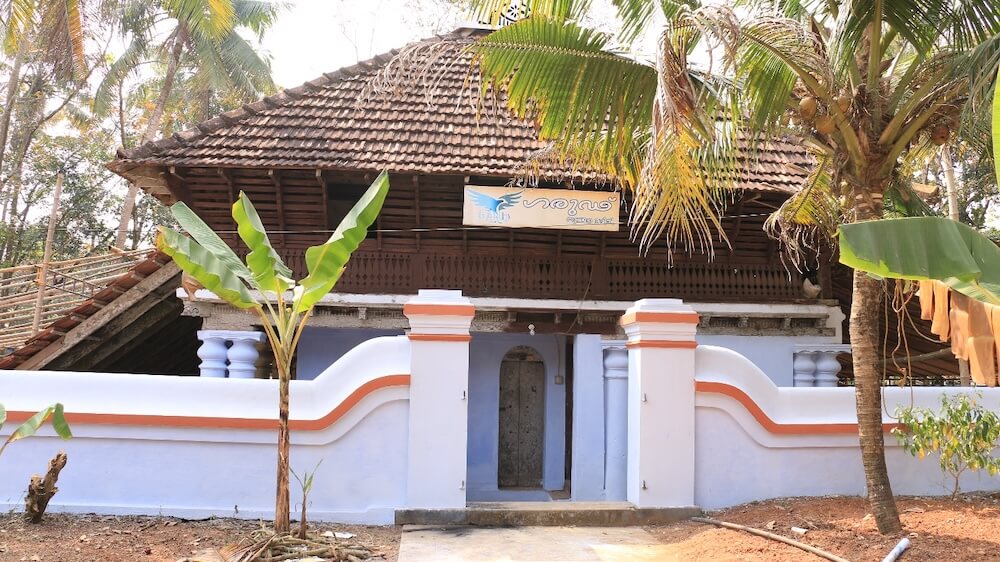
The Malika, the traditional ancestral mansion adjoining the temple, is of great importance to the people of Chemmanad and is believed to be as old as the temple itself. This is attributed to the belief that a divine presence associated with the temple also extends to the Maalika. The temple’s Thiruvabharanam or sacred ornaments, is preserved in the underground vault of the Maalika. During the festival, the ornaments are worn by the deity only on the day of Valiya Vilakku and are therefore taken out of the vault only on that day. According to tradition, a Naga guards the sacred ornaments in the vault and several people are said to have seen it. The Thiruvabharanam is removed from the vault only in the presence of the Oorāṇmakār, the traditional custodians of the temple. The Maalika also contains numerous chambers, 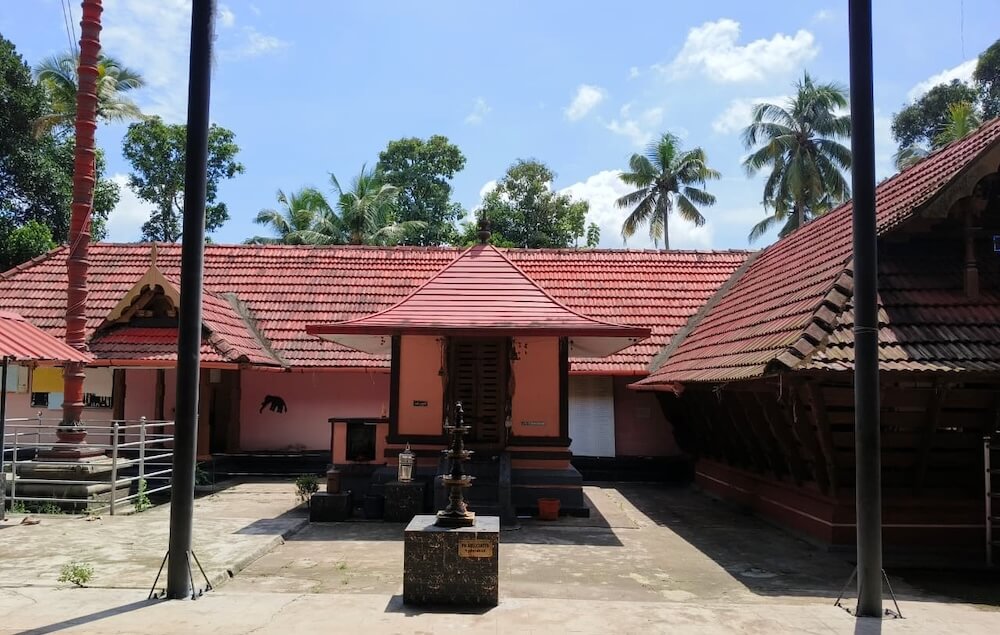 palm-leaf manuscripts and traditional wood carvings. Some of the chambers are said to contain moisture or water and a snake is believed to guard them. The traditional Nalukettu, with its numerous Manichitrathazhu—ornate traditional locks—reflects the architectural and cultural heritage of the locality. The temple precinct also contains several sub-shrines, including those dedicated to Siva with Parvati, Bhagawathi, Ayyappa, Subrahmanya and the Thevaramurthis. These are housed in smaller Kerala-style structures with raised plinths and tiled roofs, with some of the shrines protected by metal enclosures.
The annual flag-hoisting festival is held during the Malayalam month of Makaram. The festival begins with the hoisting of the temple flag on the day of the Chothi nakshatra and concludes with the ceremonial Aarattu on Thiruvonam. It is customary for the flag-hoisting and flag-lowering ceremonies at the two temples to take place simultaneously. Annadanam, the ceremonial distribution of food, is an important part of the festival. Ashtami Rohini, Mandala Puja and Sastham Paattu are also observed with importance. The 28th day of the Malayalam month of Makaram is an important day dedicated to Garuda and is known as Irupathettumuchaal. According to oral tradition, this was the day on which Garuda was consecrated at the temple.
Pakshi, Mani, Paambu offering is made to propitiate Garuda and seek protection from afflictions associated with birds. Pakshipida is traditionally believed to affect children particularly severely. When Garuda Bhagavan is believed to have first appeared at the temple, one Naazhi measure of cooked rice and then a handful of cooked rice were offered to him. Naazhim Pidim offering is made in remembrance of that tradition and is performed for the propitiation of Garuda and the fulfilment of one’s wishes. Muzhukkappu refers to applying sandalwood paste over the entire idol of the deity. It is offered for prosperity and the fulfilment of one’s wishes. As Mahavishnu is traditionally regarded as fond of adornment, this is considered one of the offerings especially dear to the Lord. Mukham Chaarthu refers to applying sandalwood paste only to the face of the deity. It is offered for the fulfilment of one’s wishes and is likewise considered an offering especially dear to the Lord. The complete series of daily pujas performed at the temple is offered together as a single offering, traditionally considered especially auspicious for the fulfilment of one’s wishes. Bhagavathi Seva is an important offering performed to remove obstacles and difficulties and to attain prosperity. Performing it every month on one’s birth-star day is traditionally considered beneficial for the removal of various afflictions. The Dhaara abhishekam offered to Lord Mahadeva with 1,001 pots of water is considered especially sacred for the removal of the adverse effects of Saturn and planetary afflictions and for attaining prosperity. Dhaara is traditionally regarded as an offering particularly dear to Lord Shiva.
Those who are believed to be experiencing adverse effects of Saturn due to its unfavourable position in their horoscope, including Ezharashani and Kantakashani, may perform Shani Dosha Puja. This offering may be performed on Saturdays or on one’s birth-star day. Ashtadravya Mahaganapathi Homam is a significant ritual performed to propitiate Lord Ganesha, the remover of obstacles and to seek relief from impediments and the blessings of the Supreme Lord. Eight ritual substances are used in the homam: banana, sesame, sugarcane, honey, jaggery, coconut, Appam and Malar (puffed rice). Sudarshana Homam is performed for the alleviation of afflictions traditionally associated with enemies, black magic and ancestral issues and for success in endeavours, well-being and prosperity. It is generally performed in Vaishnava temples.
The temple follows a prescribed daily worship schedule. The morning opening is at 5:30 am, followed by Abhishekam at 5:45 am, Usha Pooja at 7:30 am and Ucha Pooja at 9:00 am, after which the temple closes at 9:30 am. In the evening, the temple reopens at 5:30 pm, followed by Deeparadhana at 6:30 pm and Athazha Pooja at 7:00 pm. The timings may vary on Thursdays and Sundays.
Key Highlights
- Located 19 km from Ernakulam town
- About 19 km from Ernakulam Railway Station.
- Local bus services are available.
- Dedicated parking is available for private vehicles.
- Accommodation and dining facilities are available nearby.
चेम्मानाड श्री कृष्ण गरुड़ महाविष्णु मंदिर
तिरुवनियूर, जिला। एर्नाकुलम
मंदिरे
Temples
मंदिर
મંદિરો
கோவில்கள்
దేవాలయాలు
ക്ഷേത്രങ്ങൾ
ದೇವಾಲಯಗಳು
মন্দিরসমূহ
ਮੰਦਿਰ
-
राममंगलम पेरुमथ्रिकोविल मंदिर रामामंगलम, जि. एर्नाकुलम
अधिक माहितीRamamangalam Perumthrikkovil Temple Ramamangalam, Dist. Ernakulam
View Detailsराममंगलम पेरुमथ्रिककोविल मंदिर राममंगलम, जिला. एर्नाकुलम
विवरण देखेंRamamangalam Perumthrikkovil Temple Ramamangalam, Dist. Ernakulam
વિગત જુઓRamamangalam Perumthrikkovil Temple Ramamangalam, Dist. Ernakulam
விவரங்களைக் காண்கRamamangalam Perumthrikkovil Temple Ramamangalam, Dist. Ernakulam
వివరాలను చూడండిRamamangalam Perumthrikkovil Temple Ramamangalam, Dist. Ernakulam
വിശദാംശങ്ങൾ കാണുകRamamangalam Perumthrikkovil Temple Ramamangalam, Dist. Ernakulam
ವಿವರಗಳನ್ನು ವೀಕ್ಷಿಸಿRamamangalam Perumthrikkovil Temple Ramamangalam, Dist. Ernakulam
বিস্তারিত দেখুনRamamangalam Perumthrikkovil Temple Ramamangalam, Dist. Ernakulam
ਵੇਰਵੇ ਦੇਖੋ -
कलामबुकवू भगवती मंदिर पिरावोम, जि. एर्नाकुलम
अधिक माहितीKalambookavu Bhagavathy Temple Piravom, Dist. Ernakulam
View Detailsकलामबुकवु भगवती मंदिर पिरावोम, जिला. एर्नाकुलम
विवरण देखेंKalambookavu Bhagavathy Temple Piravom, Dist. Ernakulam
વિગત જુઓKalambookavu Bhagavathy Temple Piravom, Dist. Ernakulam
விவரங்களைக் காண்கKalambookavu Bhagavathy Temple Piravom, Dist. Ernakulam
వివరాలను చూడండిKalambookavu Bhagavathy Temple Piravom, Dist. Ernakulam
വിശദാംശങ്ങൾ കാണുകKalambookavu Bhagavathy Temple Piravom, Dist. Ernakulam
ವಿವರಗಳನ್ನು ವೀಕ್ಷಿಸಿKalambookavu Bhagavathy Temple Piravom, Dist. Ernakulam
বিস্তারিত দেখুনKalambookavu Bhagavathy Temple Piravom, Dist. Ernakulam
ਵੇਰਵੇ ਦੇਖੋ -
ओरामाना पेरुमथ्रिकोविल ओरमणा, जि. एर्नाकुलम
अधिक माहितीOoramana Perumthrikkovil Ooramana, Dist. Ernakulam
View Detailsऊरामना पेरुमथ्रिककोविल ऊरामना, जिला. एर्नाकुलम
विवरण देखेंOoramana Perumthrikkovil Ooramana, Dist. Ernakulam
વિગત જુઓOoramana Perumthrikkovil Ooramana, Dist. Ernakulam
விவரங்களைக் காண்கOoramana Perumthrikkovil Ooramana, Dist. Ernakulam
వివరాలను చూడండిOoramana Perumthrikkovil Ooramana, Dist. Ernakulam
വിശദാംശങ്ങൾ കാണുകOoramana Perumthrikkovil Ooramana, Dist. Ernakulam
ವಿವರಗಳನ್ನು ವೀಕ್ಷಿಸಿOoramana Perumthrikkovil Ooramana, Dist. Ernakulam
বিস্তারিত দেখুনOoramana Perumthrikkovil Ooramana, Dist. Ernakulam
ਵੇਰਵੇ ਦੇਖੋ