
राममंगलम पेरुमथ्रिकोविल मंदिर
रामामंगलम, जि. एर्नाकुलम
Ramamangalam Perumthrikkovil Temple
Ramamangalam, Dist. Ernakulam
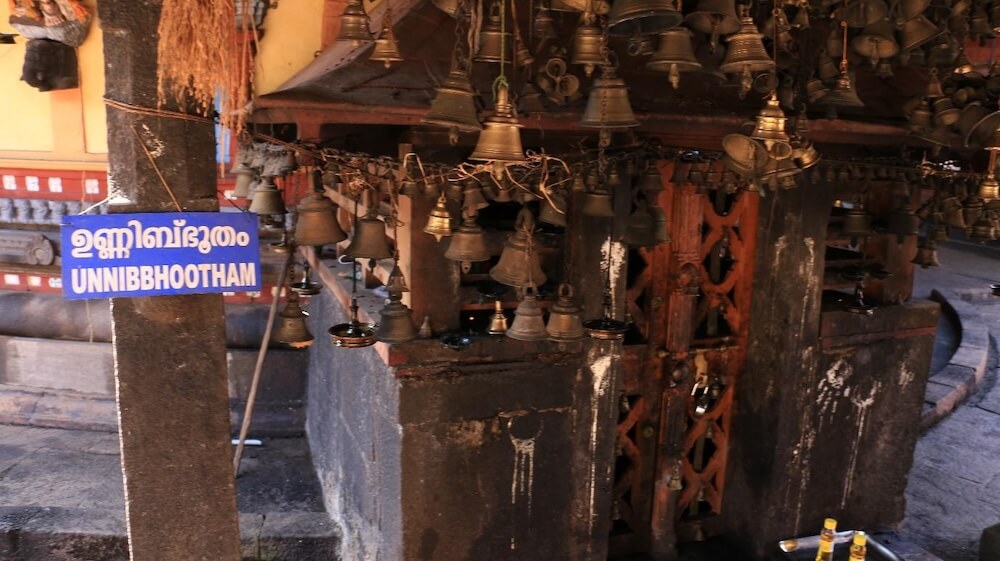
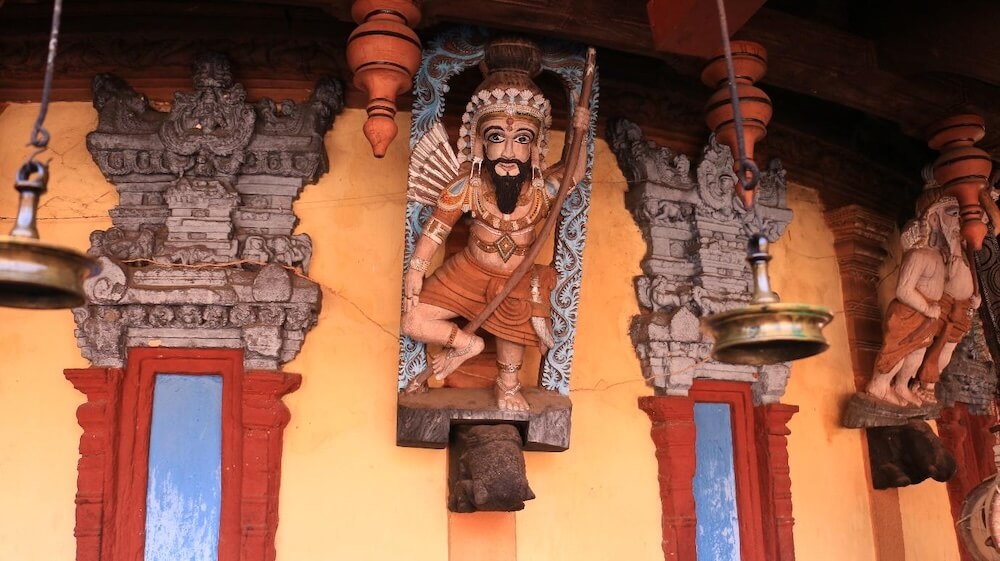 Perumthrikkovil Temple, Ramamangalam, is situated at Ramamangalam in Ernakulam district, about six kilometres from Pampakuda on the Muvattupuzha–Piravom route. The principal deity is Bala Narasimha. However, it is Oovuthangi, represented as Unnibhootham, that enjoys an unusual prominence here, almost equal to that of the principal deity. This makes the temple particularly distinctive. Narasimha faces west, while Oovuthangi, known as Unnibhootham, faces north. Both deities have their own flagstaffs. One of the most remarkable features of the temple is that the flagstaff in front of Narasimha is said to be the tallest temple flagstaff in Kerala, while that of Unnibhootham is said to be the shortest.
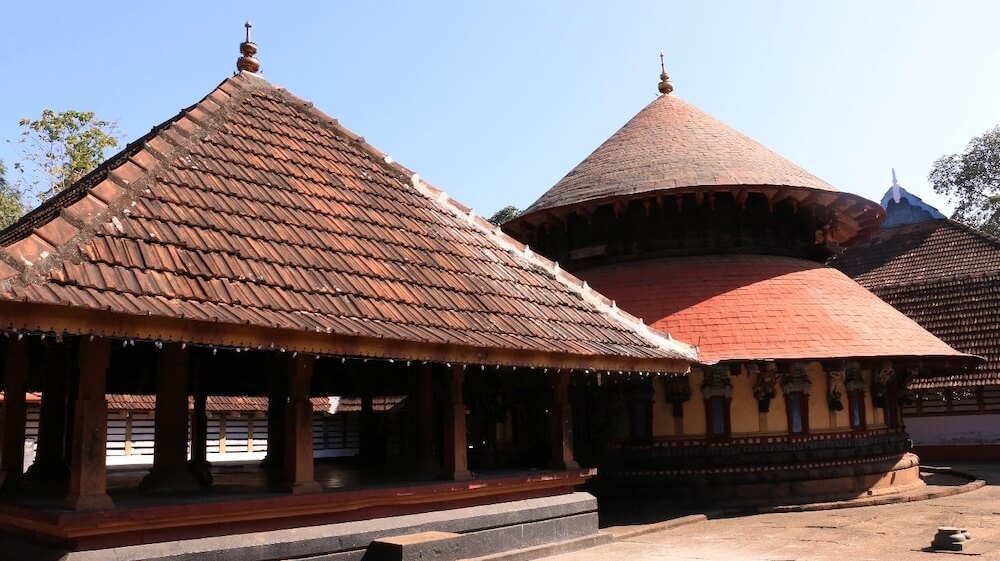 The temple is also regarded as one of the five major temples or Panchamaha Kshethrams, of central Kerala.
Ramamangalam Perumthrikkovil Temple has a remarkable historical background extending over more than a thousand years. According to the historical records presently available, the temple is believed to have been built sometime between the eighth and twelfth centuries AD, during the period of the Second Chera Empire. Historians believe that Cheraman Perumal, one of the prominent Perumal rulers, was associated with its construction. 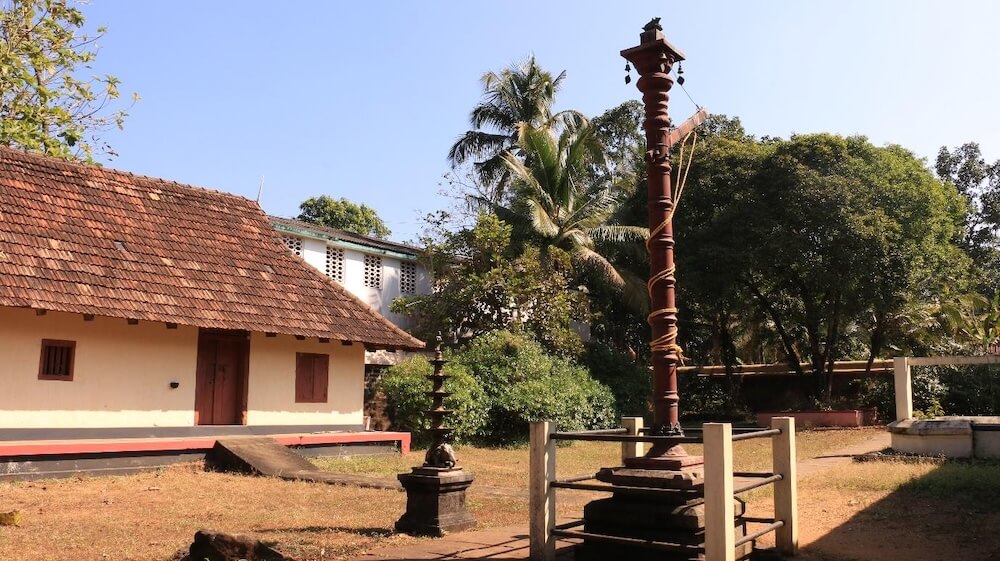 The remains of a palace complex believed to have been occupied by Cheraman Perumal can still be seen to the south of the temple and are cited in support of this tradition.
According to tradition, during the Treta Yuga, Lord Rama, Sita Devi and Lakshmana came to this region during their period of exile. It is believed that, at the request of Bharata and Kaikeyi, they stayed for some time in this beautiful village. The place where Lord Rama resided auspiciously came to be known initially as ‘Sriramamangalam’, meaning the auspicious abode of Sri Rama and the name was subsequently shortened to ‘Ramamangalam’. The temple also has a distinctive legend associated with Unnibhootham, whose image is installed in the form of one supporting the oovu, the projecting drainage element of the Sreekovil. According to tradition, after the consecration of the temple, Cheraman Perumal was not permitted to witness the Kalashaatal ceremony performed by the Tantris and Brahmins. Deeply hurt by what he regarded as the disregard shown to him as the king, Cheraman Perumal walked away from the temple. Seeing the distress of his devotee, a Siva Bhootha, regarded as a divine attendant of Lord Siva, suddenly appeared. According to some traditions, it was Ayyappa, carrying a staff, who appeared instead. 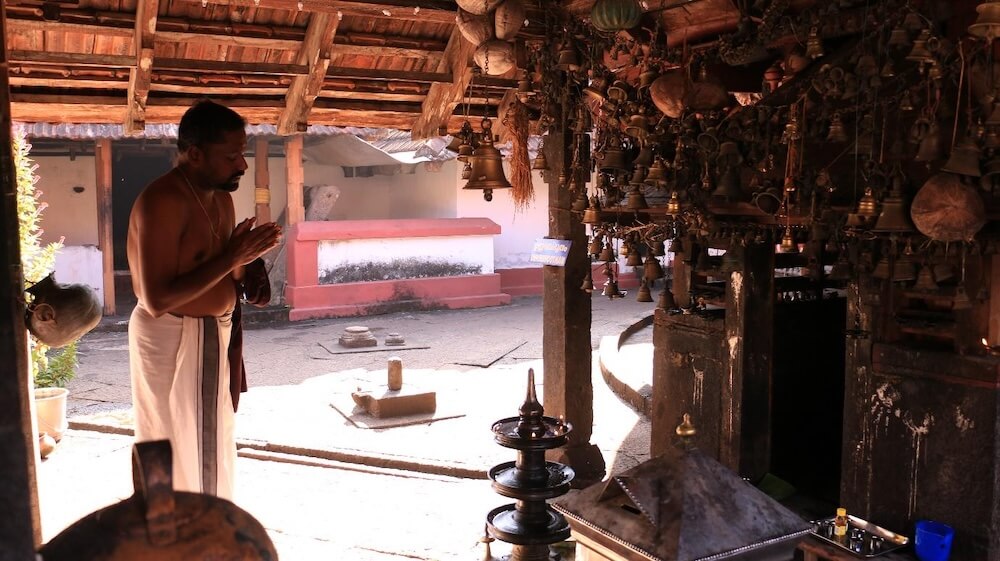 The Bhootha then drove the Brahmins who had insulted the Perumal away from the temple. It is believed that following this incident, the Bhootha took up his position at the northern side of the Sreekovil, holding up the oovu. This form came to be worshipped as Unnibhootham, enjoying a status almost equal to that of the principal deity.
The title ‘Perumthrikkovil’ was traditionally bestowed upon only a small number of ancient and distinguished temples in Kerala. The term refers to temples possessing the complete architectural arrangement of the Pancha Prakaras, the characteristic layout of traditional Kerala temple architecture,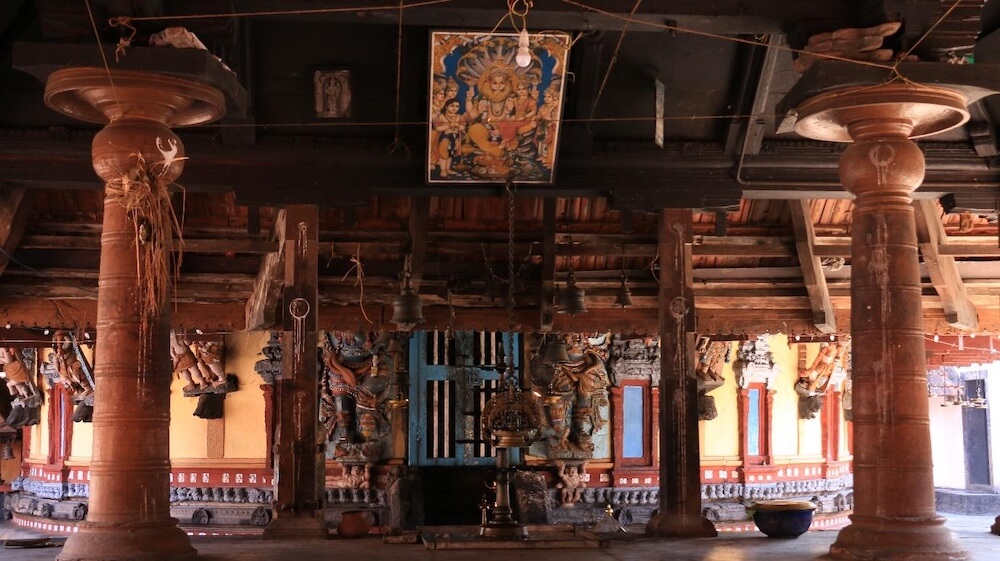 incorporating the Sreekovil, Nalambalam, Vilakkumaadam, inner and outer Balikkals, Namaskara Mandapam and surrounding enclosure walls. The architecture of the temple itself reflects its historical importance. Surrounding the temple is an ancient granite enclosure wall, rising in a sloping form reminiscent of the back of an elephant. This is believed to form part of the defensive and protective architectural traditions of earlier times. The two-tiered western gopuram is adorned with numerous exquisite sculptures. Images of Deepalakshmis can be seen on the two pillars flanking the gateway.
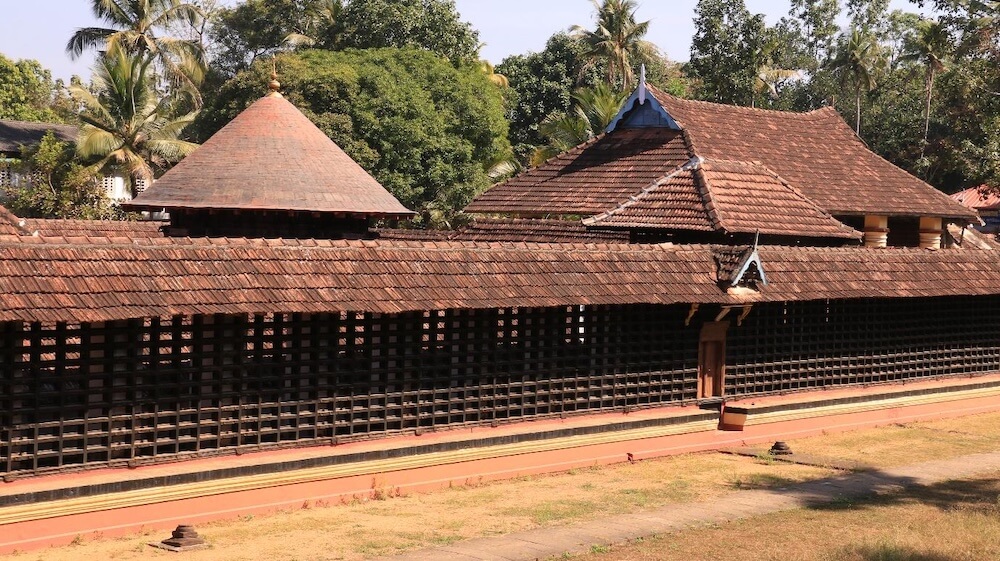 Sculptures of elephants, the Dashavatara and episodes from the stories of Lord Siva can also be seen. The gopuram at the eastern entrance is less imposing than the western one. There is another Aanakkottil at the eastern entrance, behind the temple. It is smaller than the one at the western entrance, but it can accommodate three elephants during a ceremonial procession. While the western Aanakkottil is broader, the eastern one is longer. At the southern entrance are the remains of the old palace believed to have belonged to Cheraman Perumal. Two figures of soldiers stand on either side of its entrance, providing another interesting feature of the temple complex.
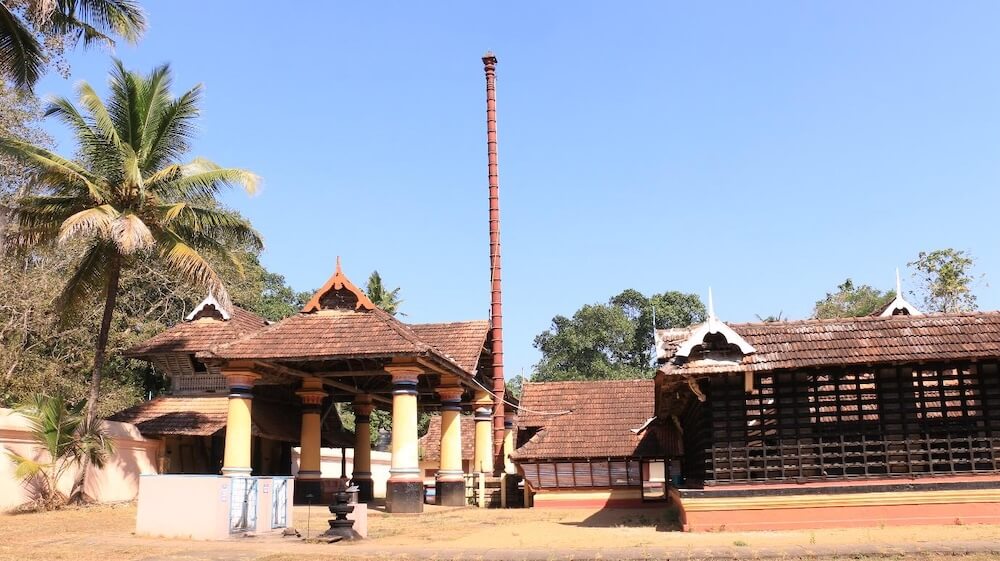
The Sreekovil is a perfectly proportioned, circular, two-tiered structure. Its foundation is built of granite, while the walls are constructed of dressed stone. Both tiers are completely covered with copper sheeting and a golden finial crowns the structure. The steps leading directly into the Sreekovil are entirely made of granite and covered with brass. After ascending these steps, one must pass through three chambers before reaching the sanctum sanctorum where the deity is installed. Within the sanctum resides Ramamangalthappan, represented by an approximately six-foot-tall, four-armed image of Mahavishnu, facing west. The consecration is conceived as that of Bala Narasimha, seated in a peaceful state after blessing his devotee Prahlada. The four-armed deity holds the Sudarshana Chakra in the rear right hand, the Panchajanya conch in the rear left hand, the Kaumodaki mace in the front left hand and a lotus in the front right hand. When adorned with garments and ornaments, the natural beauty of the image is greatly enhanced. Thus, embodying the primordial radiance of the cosmic creation, Ramamangalthappan is believed to reside within the sanctum. The Sreekovil is richly decorated with numerous beautiful wooden carvings. Scenes from various Puranic narratives have been exquisitely carved in wood and constitute one of the principal attractions of the temple. On the northern side, the oovu has been beautifully fashioned in the form of a Vyali.
The sacred water used for the ritual bathing of the deity flows out through it. It is in the form of supporting this oovu that Unnibhootham, another principal deity of the temple, is installed. Unnibhootham is conceived as one of the Siva Bhootha Ganas, the attendants of Lord Siva and is worshipped here in the form of Siva. The sub-deities include Bhadrakali, Sastha, Durga, Bhagavathi and the Nagas. A Swamiyar is also installed within the temple complex. Directly opposite this shrine, on an open platform without a roof, are the shrines of the temple’s sub-deities, apart from Ganapati. Of these, Bhadrakali is considered the most important. This Bhadrakali is known as Koovalthinmoottil Bhagavathi. According to tradition, she was originally worshipped beneath a koovalam tree near the temple and was later relocated. The name itself is said to preserve this memory. The deity is represented by a Kannadi Vigraham, approximately two feet in height. The goddess receives three daily poojas, of which the Athazha Pooja is particularly significant.
The temple was once a great centre of worship where a 28-day annual festival was conducted, beginning with the hoisting of the festival flag on Thiruvonam in the month of Meenam and concluding with the ceremonial bathing or Aarattu, on Thiruvonam in the month of Medam. The present festival is a ten-day flag-hoisting festival, arranged so that the Aarattu falls on the day after Vishu in the month of Medam. On the third day of the annual festival, when the ceremonial procession reaches at Unnibhootham’s shrine, a special ritual takes place in which 12,000 coconuts are traditionally broken simultaneously. Thousands of people gather to witness this remarkable ceremony. The Vilakku ceremony held on Vishu is particularly significant. Other important celebrations include Narasimha Jayanti, Ashtami Rohini and Navaratri.
The principal offerings to Narasimha include Palpayasam, Panakam, Trimadhuram, Kadali bananas, Udayasthamana Pooja and Sahasranamarchana. These offerings are made by devotees seeking the Lord’s blessings for the fulfilment of wishes, family welfare, prosperity, health and protection. Palpayasam, Panakam, Trimadhuram and Kadali are offered as expressions of devotion and thanksgiving, as well as in fulfilment of specific prayers. Udayasthamana Pooja, an extended form of worship conducted throughout the course of the day, is regarded as a comprehensive offering undertaken for the fulfilment of important prayers and for the overall welfare of the devotee and family. Sahasranamarchana, involving the recitation of the thousand names of the Lord, is performed seeking divine grace, protection, spiritual merit and the fulfilment of one’s prayers. Unnibhootham has a distinctive set of offerings associated with it. Manjadikuru is offered particularly for the welfare and protection of children and to ward off Balarishta, according to the traditional belief recorded in the temple’s list of offerings. The offering of coconuts and their ritual breaking is associated with the removal of obstacles and the fulfilment of devotees’ prayers. The ritual assumes an exceptional form during the annual festival, when 12,000 coconuts are traditionally broken simultaneously as the ceremonial procession reaches the northern entrance
As a designated high-sanctity Maha Kshetram, the temple follows the traditional schedule of five major daily poojas (Pancha Poojas) and three daily Seeveli processions, in which the deity is ceremonially taken around the temple and offerings are made to the attendant deities. The temple opens at 5:15 am, beginning the morning worship with Nirmalya Darshanam, during which devotees have darshan of the deity adorned as it was the previous night, followed by ritual cleansing and Abhishekam and the Usha Pooja, the dawn offering. The mid-morning rituals include Ethrithu Pooja and Pantheeradi Pooja, accompanied by the morning Seeveli. Before the temple closes for the afternoon, the Ucha Pooja, the principal noon offering, is performed, followed by the Ucha Seeveli. The temple reopens at 5:30 pm for the evening worship. Around dusk, usually between 6:15 and 6:45 pm, the Deeparadhana or ceremonial waving of lamps, is performed, creating a particularly sacred atmosphere as the sanctum is illuminated by traditional oil lamps. Later in the evening, the final major offering of the day, the Athazha Pooja, is performed, followed by the Rathri Seeveli, the final ceremonial procession of the day, which usually concludes between 7:30 and 7:45 pm, after which the sanctum is closed for the night.
Key Highlights
- Located 29 km from Ernakulam town.
- About 29 km from Ernakulam Railway Station.
- Local bus services are available.
- Dedicated parking is available for private vehicles.
- Accommodation and dining facilities are available nearby.
राममंगलम पेरुमथ्रिककोविल मंदिर
राममंगलम, जिला. एर्नाकुलम
मंदिरे
Temples
मंदिर
મંદિરો
கோவில்கள்
దేవాలయాలు
ക്ഷേത്രങ്ങൾ
ದೇವಾಲಯಗಳು
মন্দিরসমূহ
ਮੰਦਿਰ
-
चेम्मनाद श्रीकृष्ण गरुड महाविष्णू मंदिर तिरुवनियूर, जि. एर्नाकुलम
अधिक माहितीChemmanad Sree Krishna Garuda Mahavishnu Temple Thiruvaniyoor, Dist. Ernakulam
View Detailsचेम्मानाड श्री कृष्ण गरुड़ महाविष्णु मंदिर तिरुवनियूर, जिला। एर्नाकुलम
विवरण देखेंChemmanad Sree Krishna Garuda Mahavishnu Temple Thiruvaniyoor, Dist. Ernakulam
વિગત જુઓChemmanad Sree Krishna Garuda Mahavishnu Temple Thiruvaniyoor, Dist. Ernakulam
விவரங்களைக் காண்கChemmanad Sree Krishna Garuda Mahavishnu Temple Thiruvaniyoor, Dist. Ernakulam
వివరాలను చూడండిChemmanad Sree Krishna Garuda Mahavishnu Temple Thiruvaniyoor, Dist. Ernakulam
വിശദാംശങ്ങൾ കാണുകChemmanad Sree Krishna Garuda Mahavishnu Temple Thiruvaniyoor, Dist. Ernakulam
ವಿವರಗಳನ್ನು ವೀಕ್ಷಿಸಿChemmanad Sree Krishna Garuda Mahavishnu Temple Thiruvaniyoor, Dist. Ernakulam
বিস্তারিত দেখুনChemmanad Sree Krishna Garuda Mahavishnu Temple Thiruvaniyoor, Dist. Ernakulam
ਵੇਰਵੇ ਦੇਖੋ -
कलामबुकवू भगवती मंदिर पिरावोम, जि. एर्नाकुलम
अधिक माहितीKalambookavu Bhagavathy Temple Piravom, Dist. Ernakulam
View Detailsकलामबुकवु भगवती मंदिर पिरावोम, जिला. एर्नाकुलम
विवरण देखेंKalambookavu Bhagavathy Temple Piravom, Dist. Ernakulam
વિગત જુઓKalambookavu Bhagavathy Temple Piravom, Dist. Ernakulam
விவரங்களைக் காண்கKalambookavu Bhagavathy Temple Piravom, Dist. Ernakulam
వివరాలను చూడండిKalambookavu Bhagavathy Temple Piravom, Dist. Ernakulam
വിശദാംശങ്ങൾ കാണുകKalambookavu Bhagavathy Temple Piravom, Dist. Ernakulam
ವಿವರಗಳನ್ನು ವೀಕ್ಷಿಸಿKalambookavu Bhagavathy Temple Piravom, Dist. Ernakulam
বিস্তারিত দেখুনKalambookavu Bhagavathy Temple Piravom, Dist. Ernakulam
ਵੇਰਵੇ ਦੇਖੋ -
ओरामाना पेरुमथ्रिकोविल ओरमणा, जि. एर्नाकुलम
अधिक माहितीOoramana Perumthrikkovil Ooramana, Dist. Ernakulam
View Detailsऊरामना पेरुमथ्रिककोविल ऊरामना, जिला. एर्नाकुलम
विवरण देखेंOoramana Perumthrikkovil Ooramana, Dist. Ernakulam
વિગત જુઓOoramana Perumthrikkovil Ooramana, Dist. Ernakulam
விவரங்களைக் காண்கOoramana Perumthrikkovil Ooramana, Dist. Ernakulam
వివరాలను చూడండిOoramana Perumthrikkovil Ooramana, Dist. Ernakulam
വിശദാംശങ്ങൾ കാണുകOoramana Perumthrikkovil Ooramana, Dist. Ernakulam
ವಿವರಗಳನ್ನು ವೀಕ್ಷಿಸಿOoramana Perumthrikkovil Ooramana, Dist. Ernakulam
বিস্তারিত দেখুনOoramana Perumthrikkovil Ooramana, Dist. Ernakulam
ਵੇਰਵੇ ਦੇਖੋ