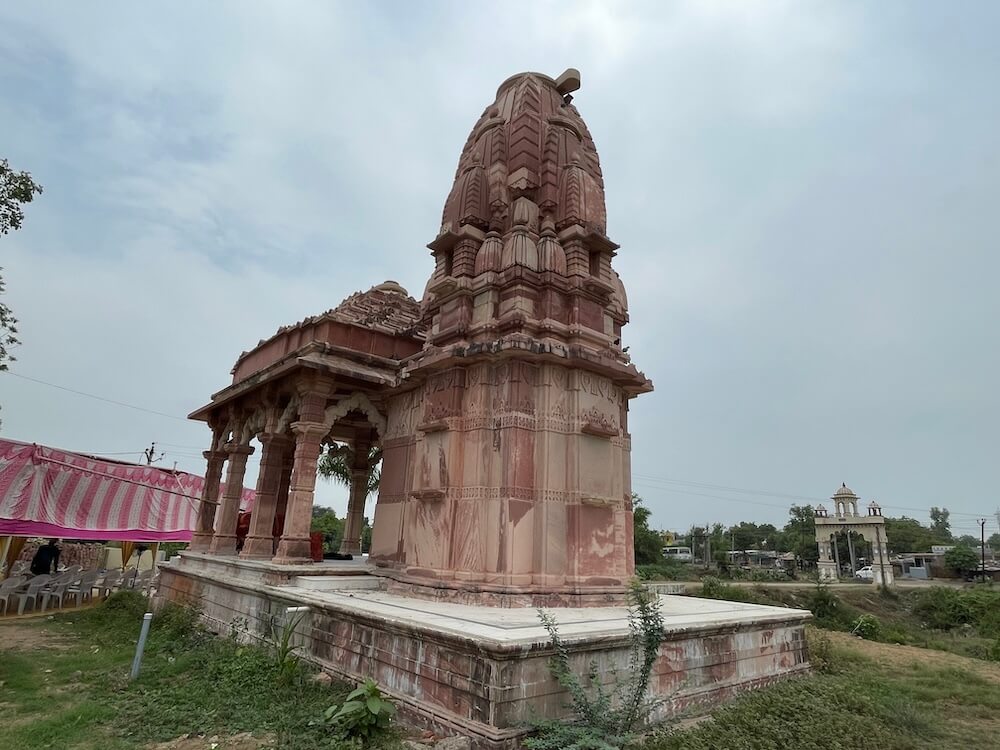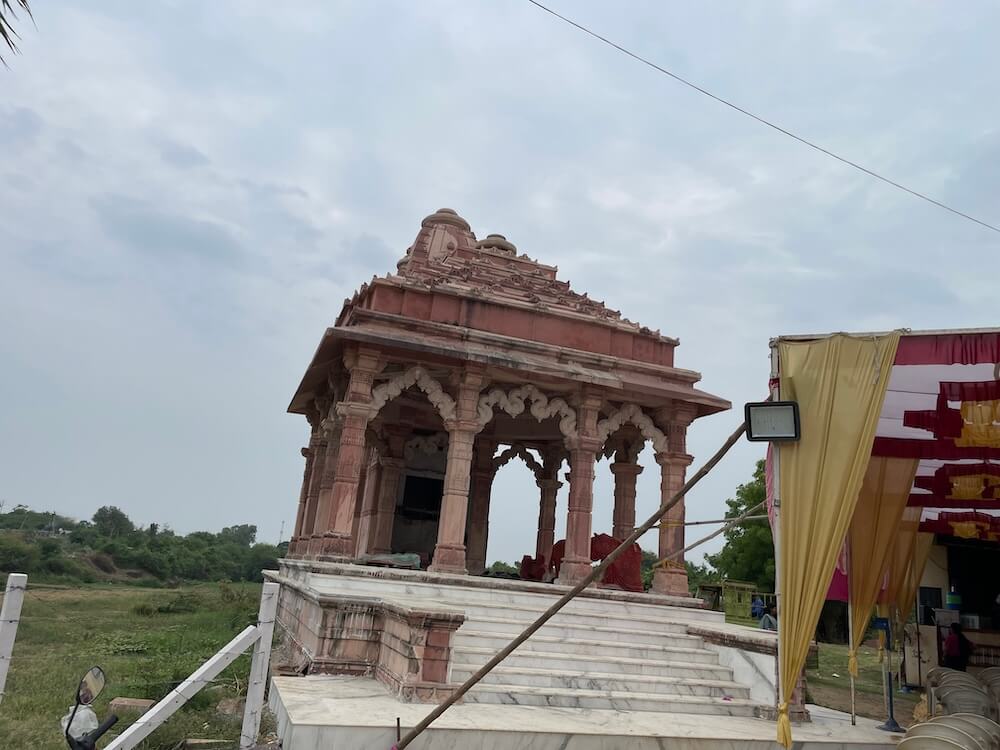
 Once known as Karvan in ancient times and believed to have existed since the four Yugas, Kayavarohan is recognized as the tapasya (meditation) land of Sage Vishwamitra. It is also the birthplace of Acharya Lakulish, regarded as the 28th and final incarnation of Lord Shiva. This spiritually significant village is home to the ancient Sindhwai Mata Temple, said to be around 5,000 years old. According to legend, the right portion of Goddess Sati’s body fell here, making it a sacred site comparable in importance to a Shakti Peetha. Devotees believe that Goddess Sindhwai is a living, awakened deity (jagrut devi).
According to mythology, King Daksha, father of Goddess Sati, once organized a grand yajna (sacrificial ritual), inviting all deities except Sati and Shiva. Despite not being invited, Sati attended the yajna at her father’s place, where Daksha insulted Shiva. Unable to bear the disrespect toward her husband, Sati immolated herself in the sacred fire. Enraged, Lord Shiva carried her body and roamed the universe, causing chaos across the three worlds. As per the Vaishnava Puranas, all gods approached Lord Vishnu for help. Vishnu then used his Sudarshan Chakra to cut
Sati’s body into pieces. Wherever those parts fell, Shakti Peethas were formed. It is believed that the right side of Sati’s body fell at Kayavarohan, making it a highly revered Shakti site.
This location was known as Ichhapuri in Satyuga, Mayapuri in Tretayuga and Meghavati in Dwaparyuga. In the late 1st century BCE or early 2nd century CE, Acharya Lakulish was born here,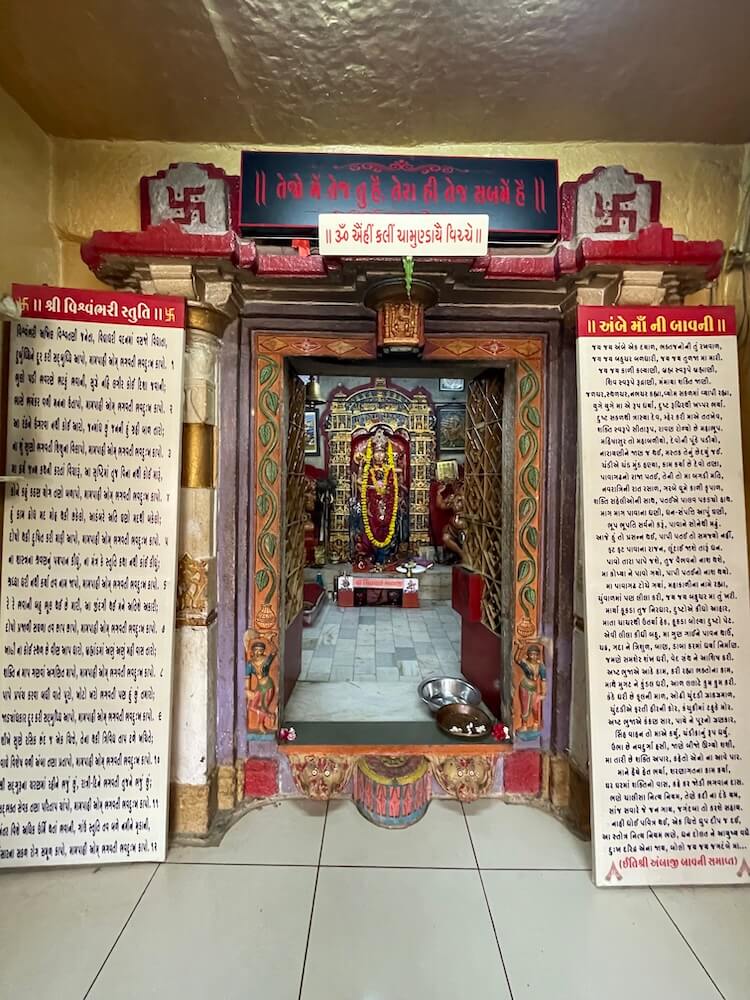 who is considered the final human incarnation of Lord Shiva. Since Shiva descended in human form (kaya) as Lakulish, the place came to be known as Kayavarohan (Kaya + Avarohan = descent of the divine into the body). Lakulish Tirtha here is considered the 51st out of 68 Shiva Tirthas. From an archaeological perspective, this village is highly significant. Excavations have revealed numerous Hindu idols, copper coins, a sculpture of a sage’s head, an 8th-century idol of Kartikeya, a sculpture of Uma-Maheshwara leaning against Nandi, a dancing maiden from the Gurjara-Pratihara era and a 9th-century standing idol of Surya (Sun God). The Archaeological Survey of India has recognized this village as a heritage site and a museum has been established to preserve the discovered artifacts.
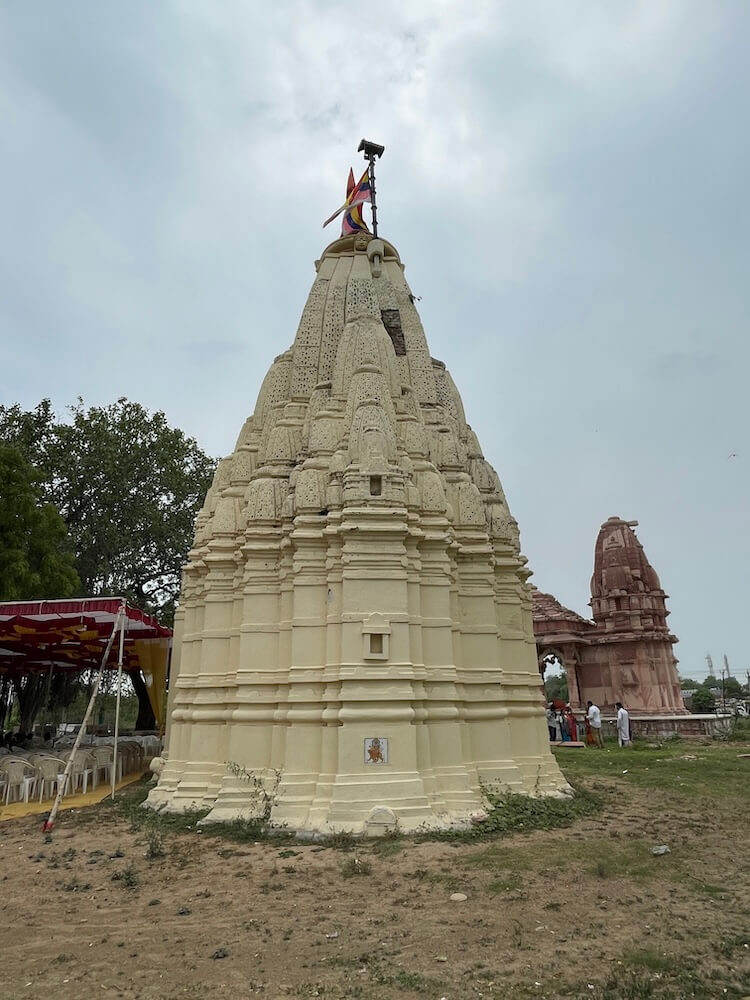
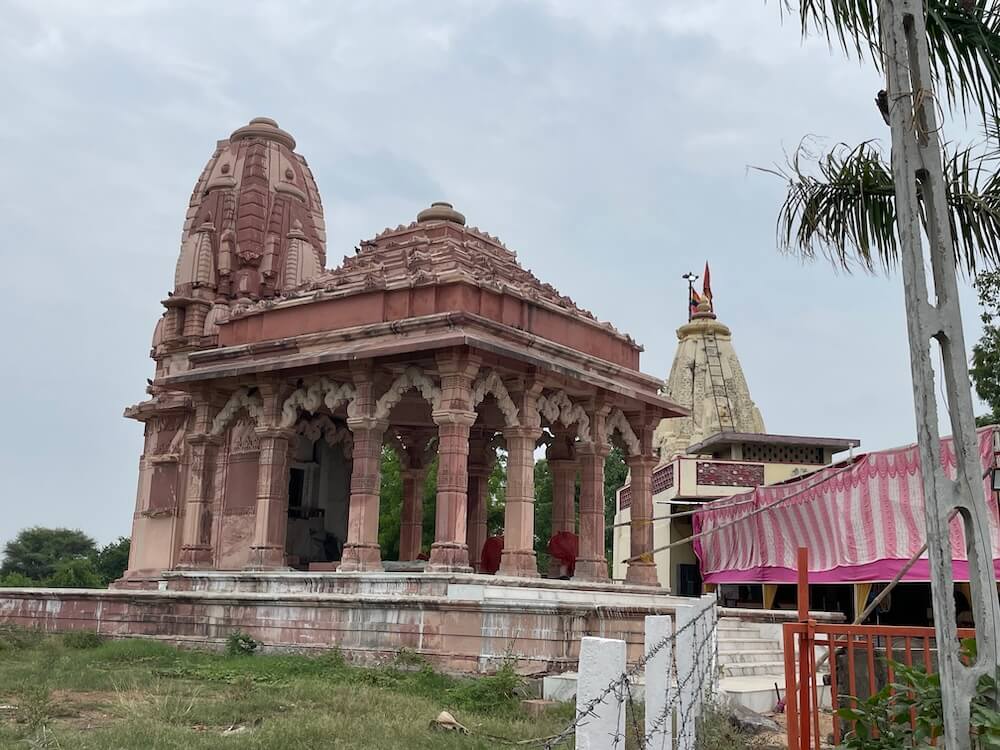
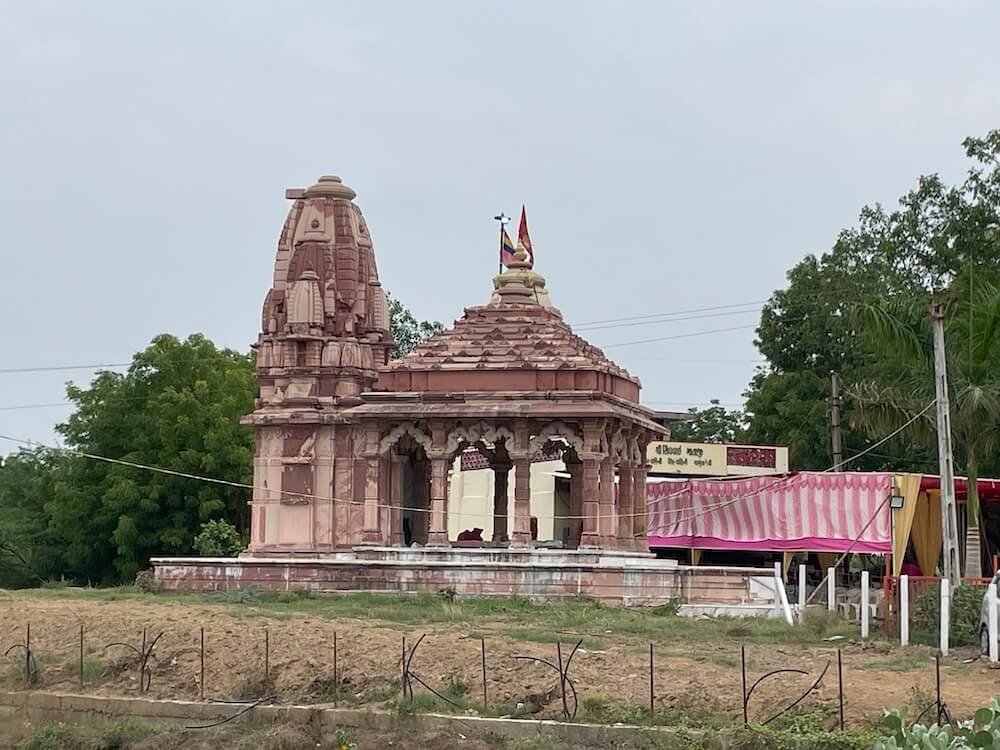
One of the many ancient temples in the village, the Sindhwai Mata Temple has undergone several renovations over time, most recently giving it its present form. The tall shikhara (temple spire) built in Urushringa style immediately captures attention. Near the top, an image of Adi Shakti is carved.
The temple layout consists of Darshan Mandap (viewing hall), Sabhamandap (assembly hall), Antaral (vestibule) and Garbhagriha (sanctum). The Sabhamandap is open-fronted with square pillars and a homakund (sacred fire pit) lies at its center. The ceiling above is perforated to allow smoke to escape.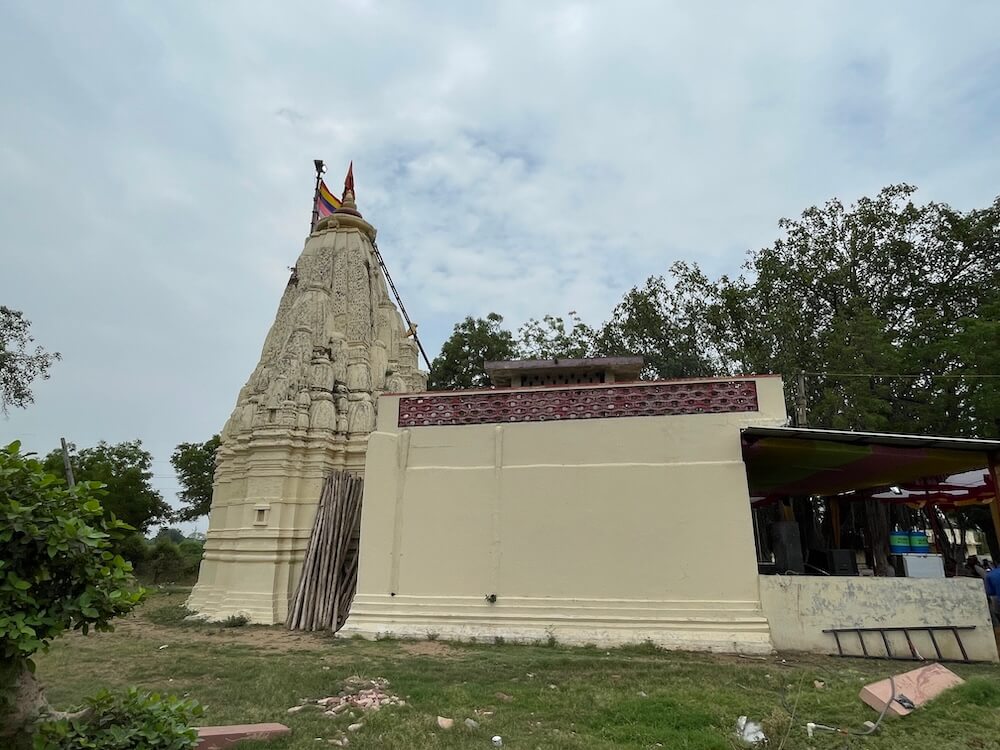 Near the homakund is a statue of a lion, the vehicle of the Goddess. The walls are painted with depictions of Mahakali, Mahalakshmi and Saraswati.
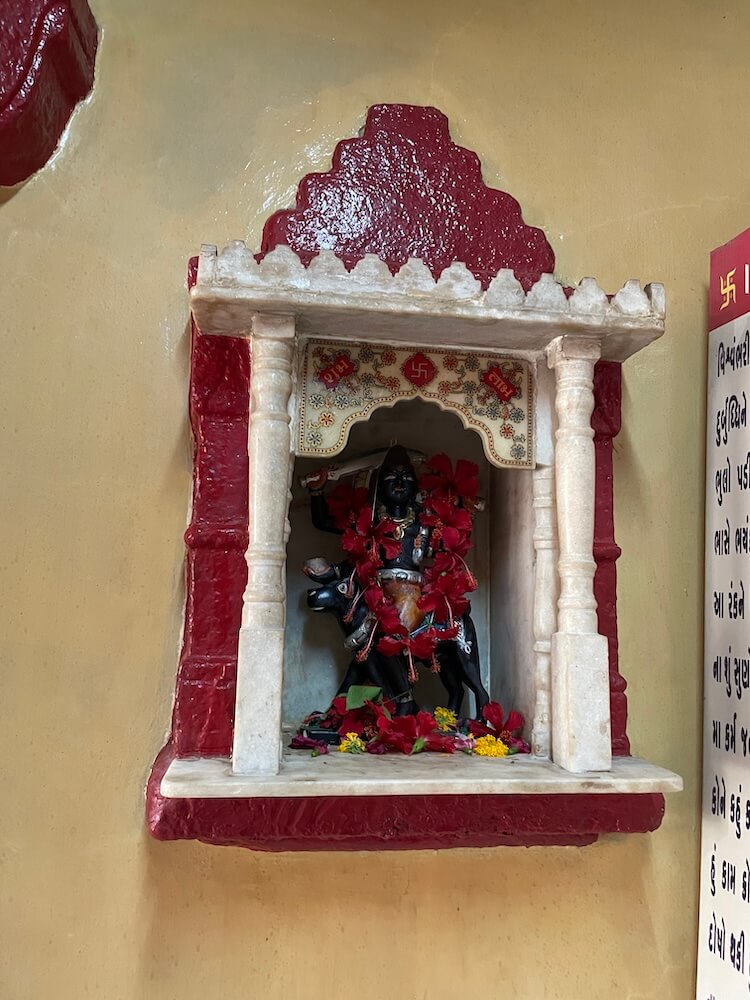
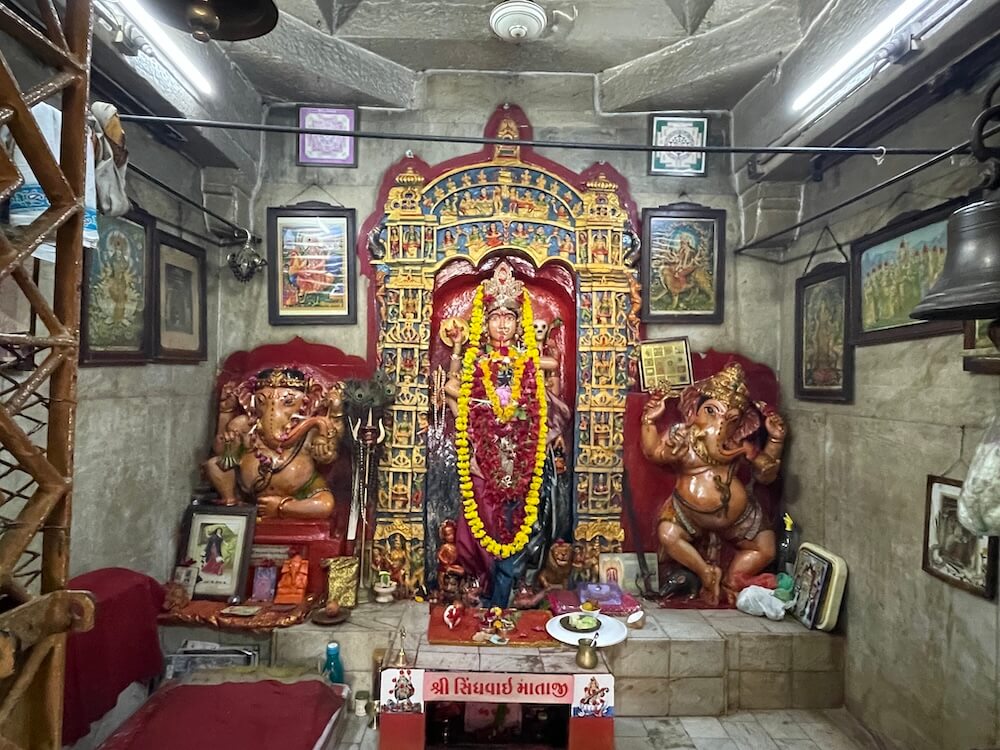
On the left side of the vestibule is a shrine to Kalbhairav and on the right is one for Lord Hanuman. The sanctum’s entrance is stone-built and three-sectioned. The doorway features carvings of leaves and below them, there are reliefs of doorkeepers holding flywhisks. On the lintel, there is an image of Lord Ganesha. The threshold has a crescent-shaped stone flanked by Kirtimukhas (mythical guardian faces). Inside, a marble pedestal holds the standing idol of Goddess Sindhwai Mata, depicted in a six-armed (Shatbhuja) form. She holds a human skull, a serpent, a demon face and various weapons. She wears a tall crown, bangles, a nose ring and other ornaments. A lion, her vahana (vehicle), stands near her right foot. The idol is surrounded by a stone canopy (makhar) intricately carved with images of the Goddess’s attendants in various poses. To her left sits an idol of Ganesha, while on her right is a dancing form of Ganesha. Near the seated Ganesha is a small, vermilion-smeared idol of Ganpati.
Sindhwai Mata, considered a living deity, attracts many devotees. Navratri and other festivals are celebrated with great enthusiasm.