
श्रीमद राजचंद्र मिशन
धरमपूर, ता. धरमपूर, जि. वलसाड
Shrimad Rajchandra Mission
Dharampur, Tal. Dharampur, Dist. Valsad
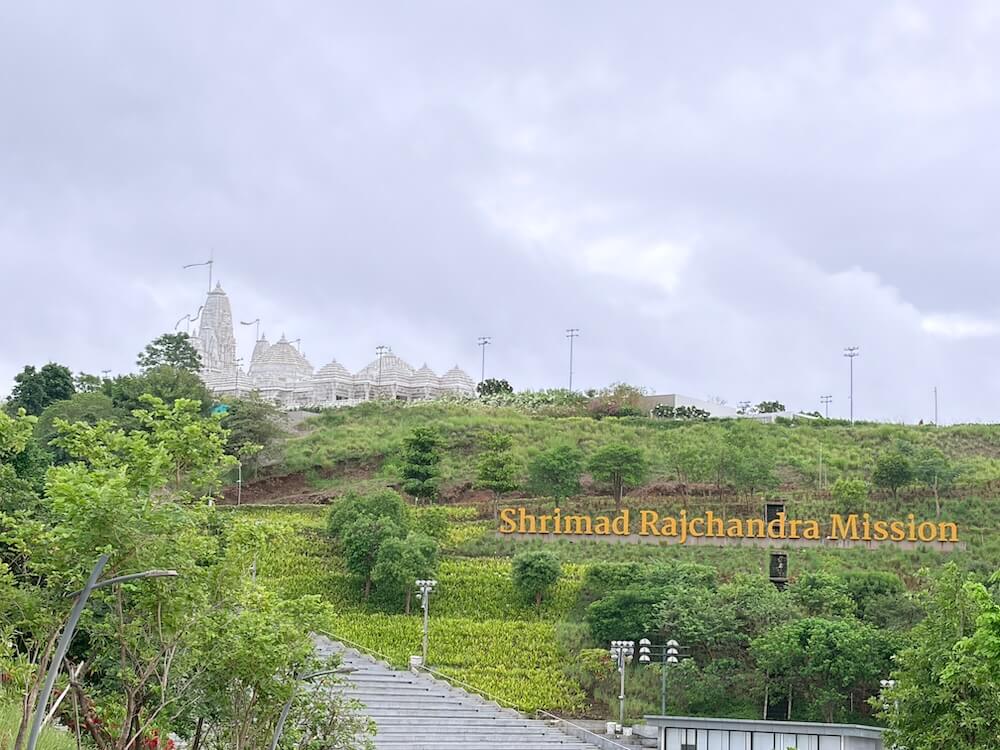
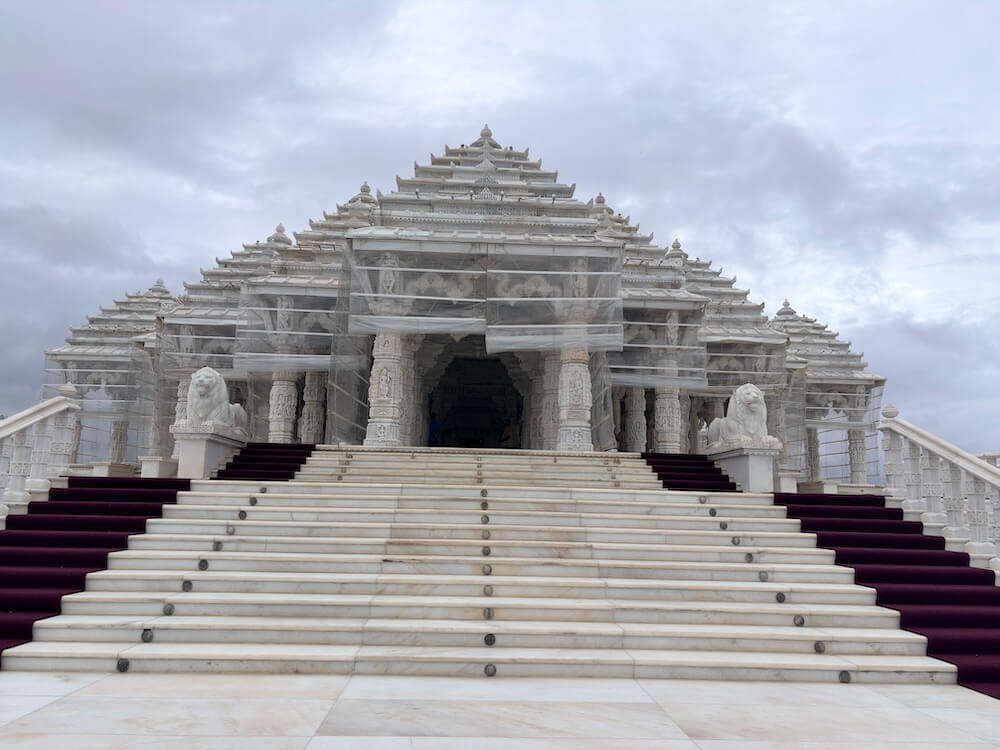
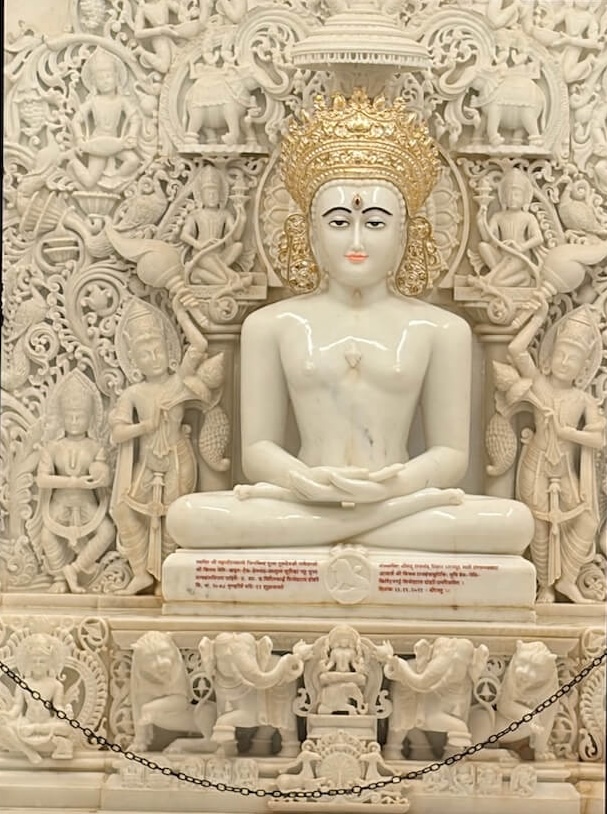 Nestled atop a hill in Dharampur, South Gujarat, stands the principal ashram of the ‘Shrimad Rajchandra Mission’. This sanctuary is founded upon the profound teachings of Shrimad Rajchandraji, a revered Jain saint and the spiritual mentor to Mahatma Gandhi. The ashram was established by Gurudev Sri Rakeshbhai. Spanning a vast expanse of 223 acres, the ashram serves as a global epicentre for spiritual evolution and humanitarian service. The design of this architectural marvel seamlessly harmonises cutting-edge modern technology with traditional heritage architecture.
According to the biographical accounts of Shrimad Rajchandraji, he was born on 9 November 1867 in Vavania village, Gujarat. At the tender age of seven, he experienced a profound spiritual awakening through which he recalled his past births. This phenomenon of recollecting previous incarnations is termed ‘Jatismaran Dnyan’. By the age of nineteen, he successfully demonstrated astounding feats of ‘Shatavdhan’. The practice of ‘Shatavdhan’ entails focusing simultaneously on one hundred diverse things and recalling them with absolute accuracy. He authored numerous seminal treatises rooted in Jain philosophy, amongst which the ‘Atmasiddhi Shastra’ remains exceptionally renowned. He passed away in 1901 at the young age of 33.
Mahatma Gandhi, across his extensive writings has revered Shrimad Rajchandraji as his spiritual guide. 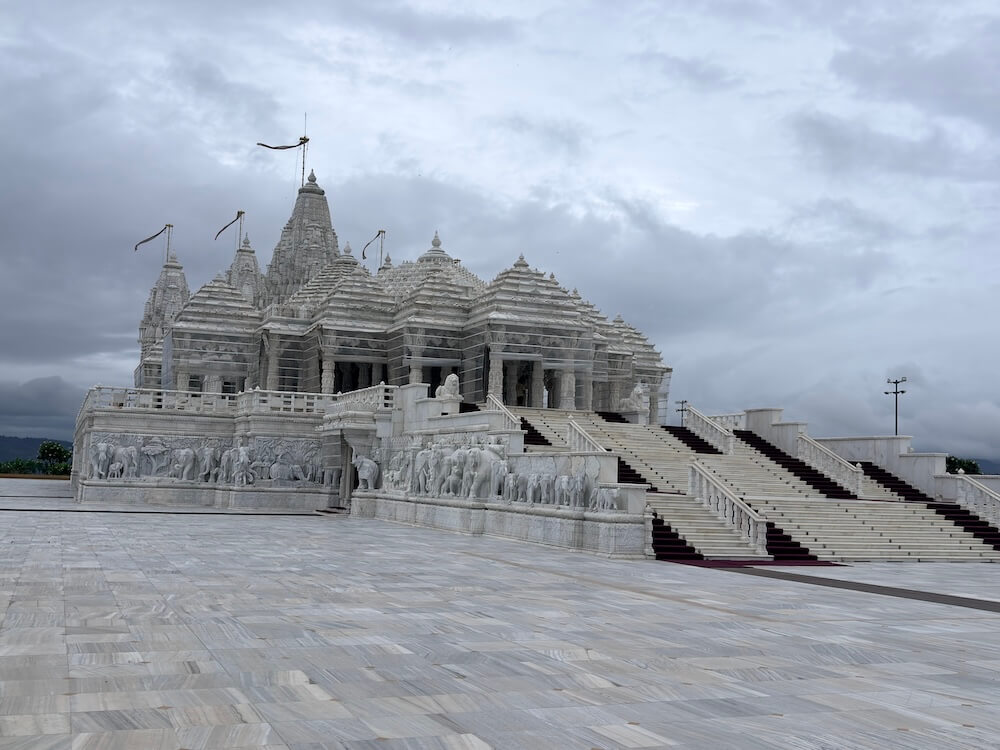 Elaborate details regarding this relationship are chronicled in Gandhiji’s autobiography, ‘The Story of My Experiments with Truth’. The original letters exchanged with him whilst Gandhiji resided in South Africa are meticulously preserved to this day within the National Archives.
Presently, the mission operates over 206 centres worldwide. This includes 47 centres in North America, 20 in Europe, 7 in the Middle East, 6 in Africa and 9 within the Asia-Pacific region. Within India, 45 centres operate in the western region, 14 in South India and numerous others are functional across the rest of the nation.
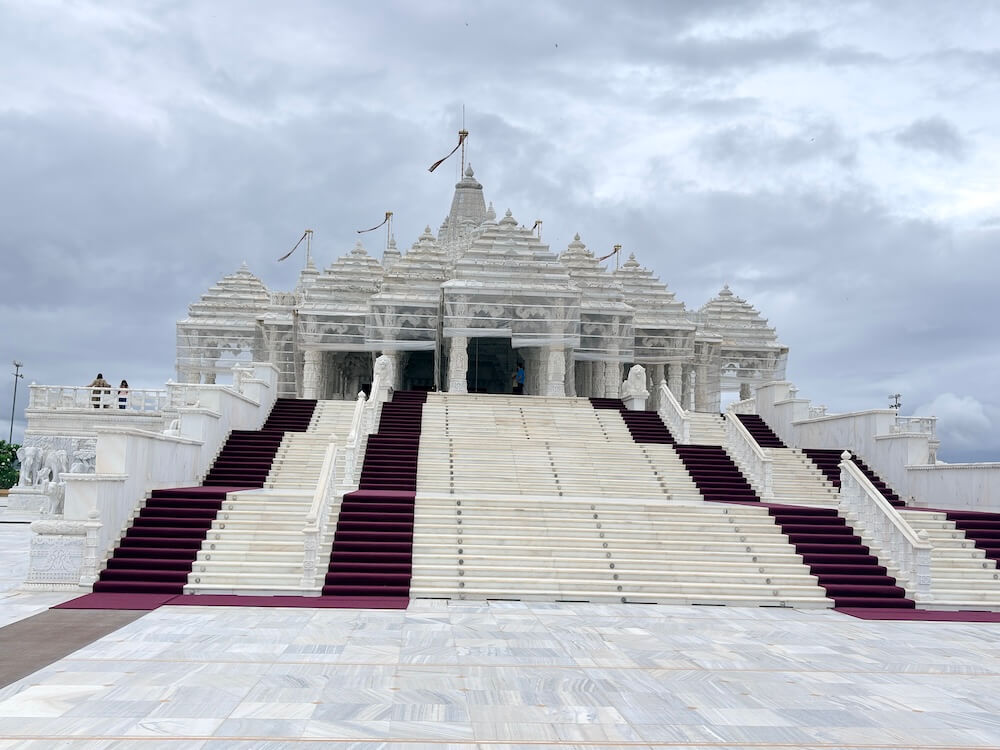
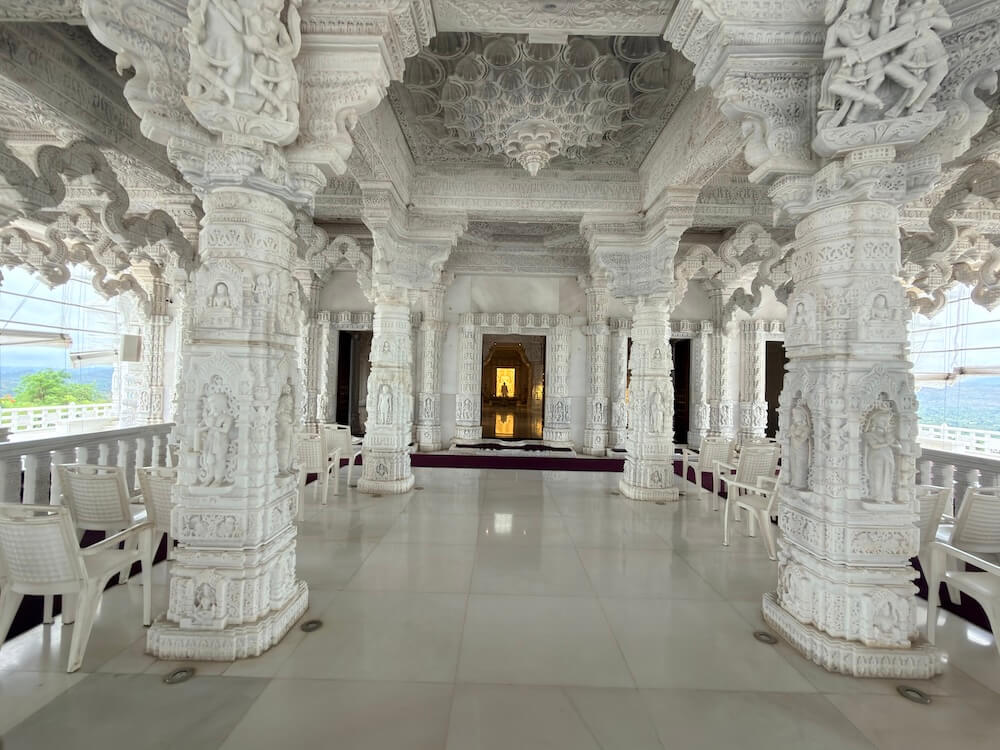
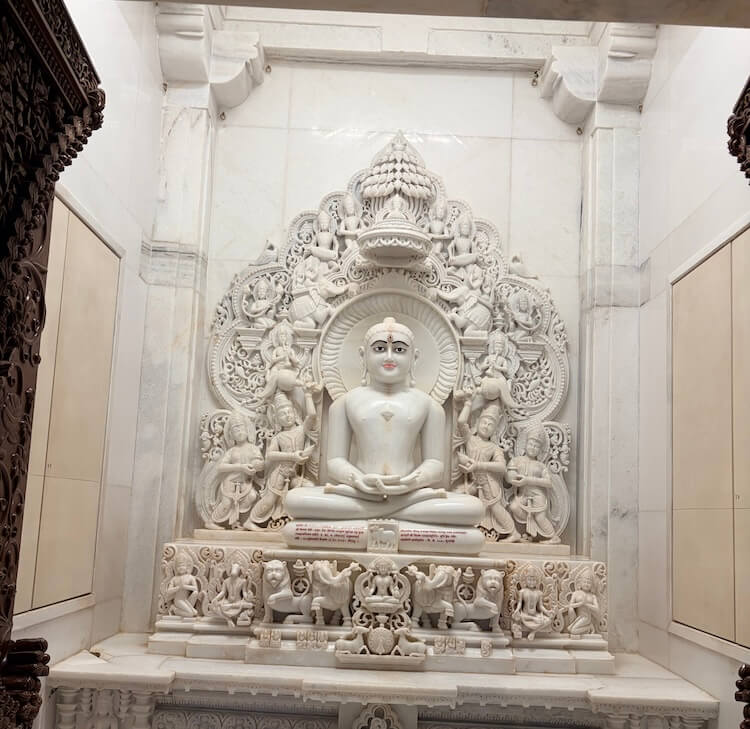
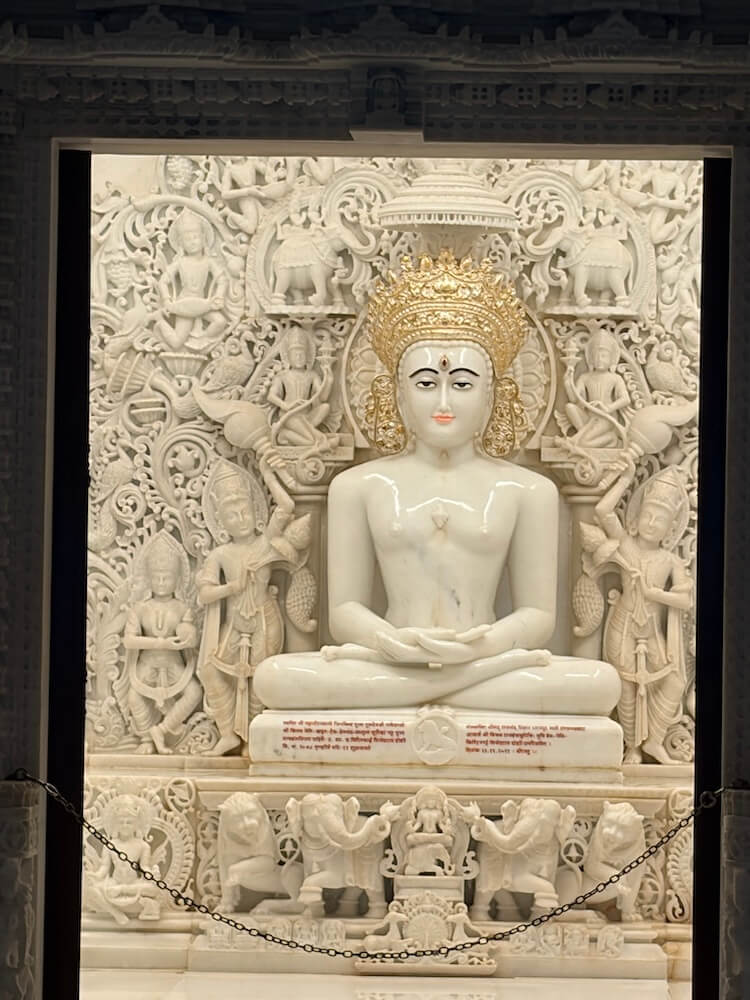
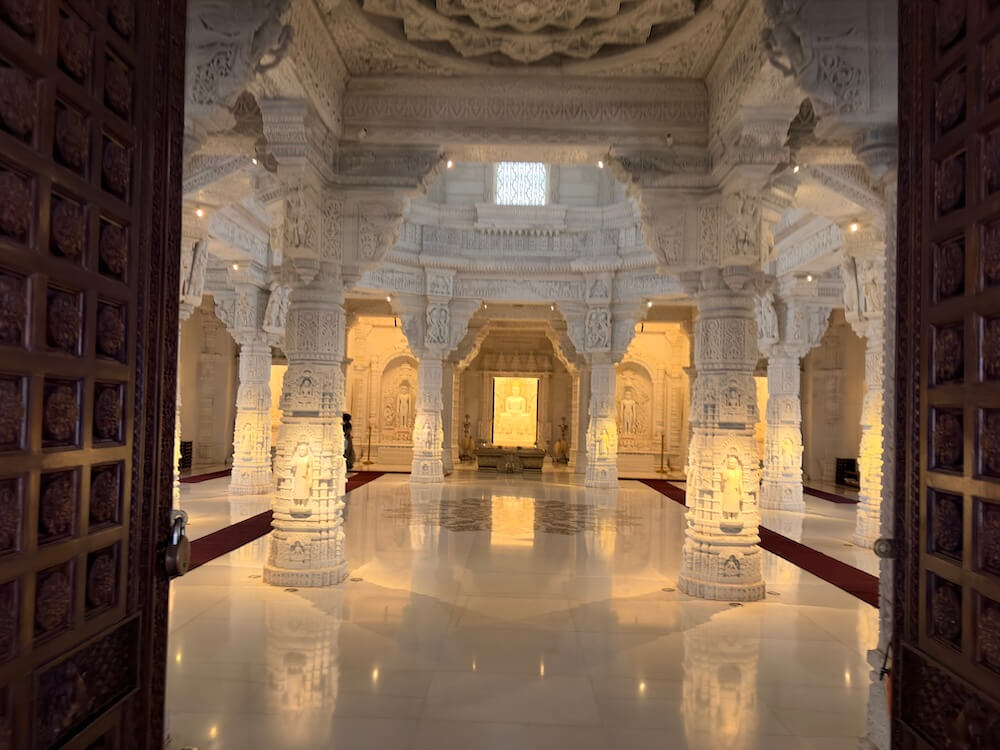
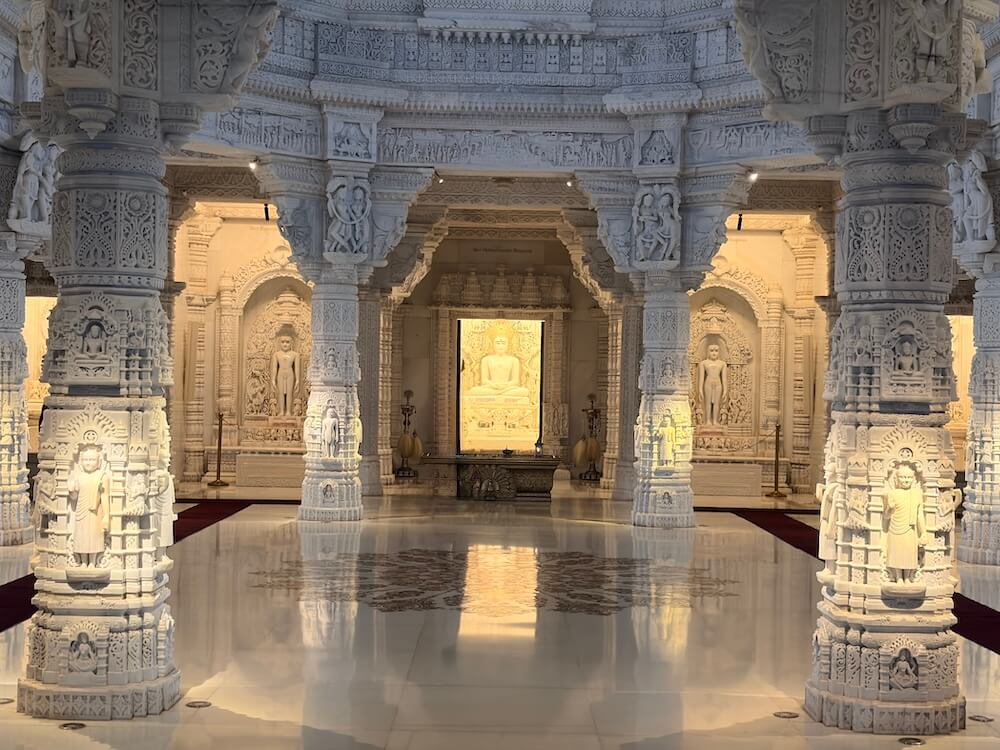
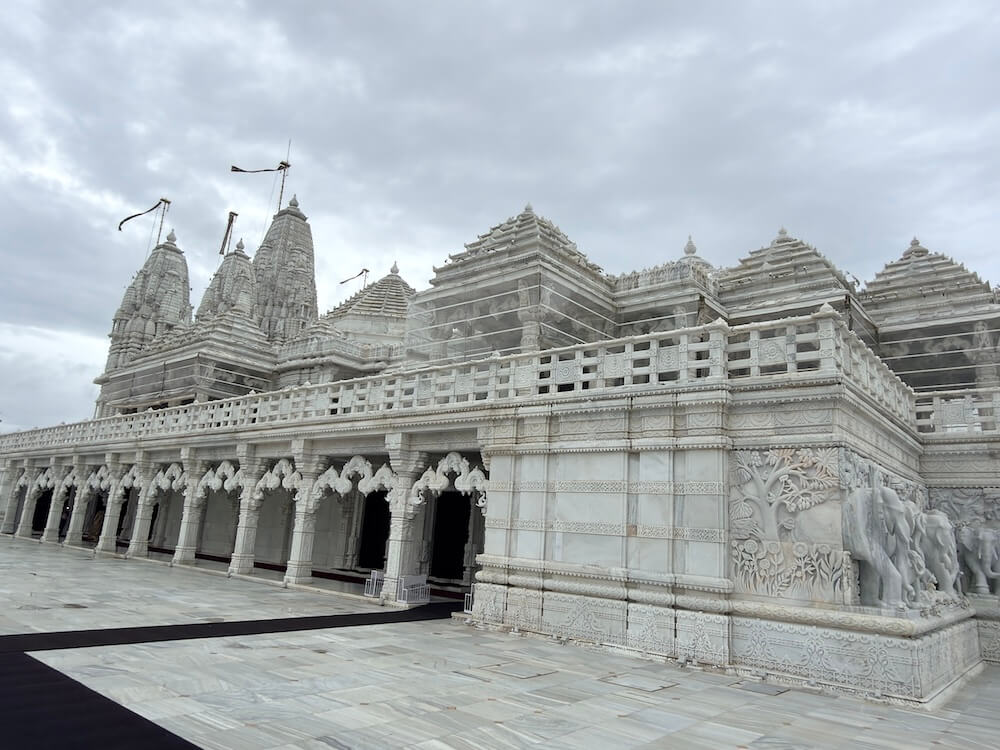 The magnificent structures within the ashram precincts, namely the ‘Sri Mahavir Prasad’ (a Shvetambara Jinmandir) and the ‘Gurumandir’, are deeply rooted in Jain religious traditions and classical architecture. Perched atop Dharampur hill, this temple has been meticulously constructed following the canonical principles of Vastu Shastra and Shilpa Shastra. Enshrined within the primary sanctum sanctorum of the temple is a 55-inch idol of Bhagwan Mahavir. Alongside the main deity, the idols of Bhagwan Rishabhdev, Bhagwan Shantinath, Bhagwan Neminath, Bhagwan Parshvanath, the current Tirthankar Bhagwan Simandhar Swami and the future Tirthankar Bhagwan Padmanabha have also been ceremoniously consecrated. The temple has been constructed in the traditional ‘Nagara’ architectural style. Approximately two hundred thousand cubic feet of pristine white Makrana marble was utilised for its creation.
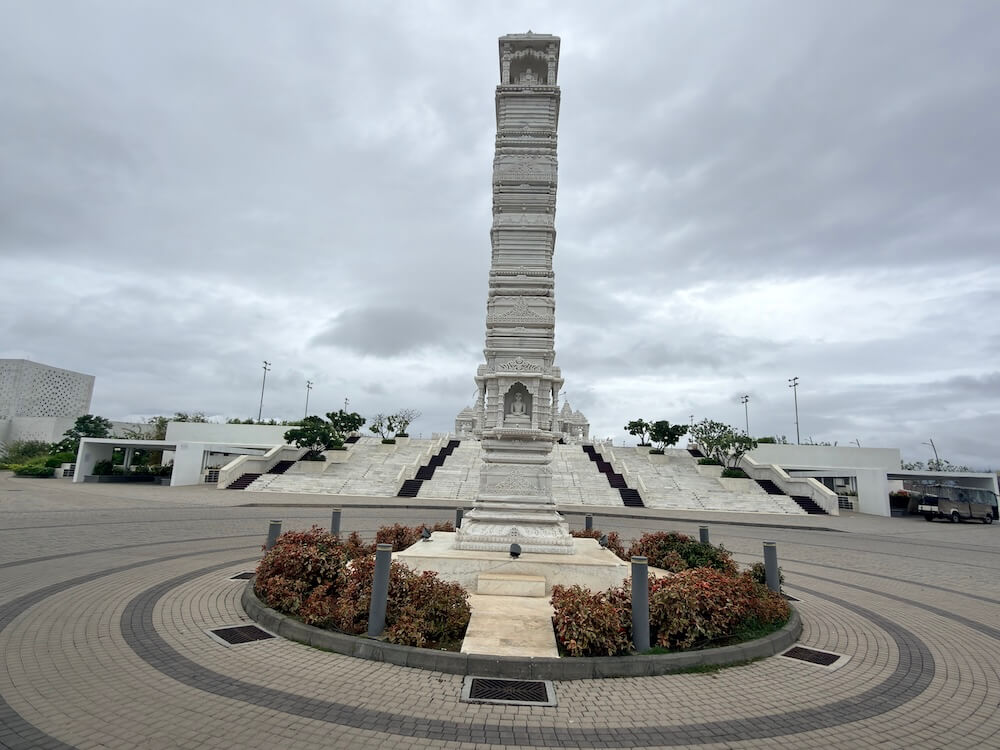
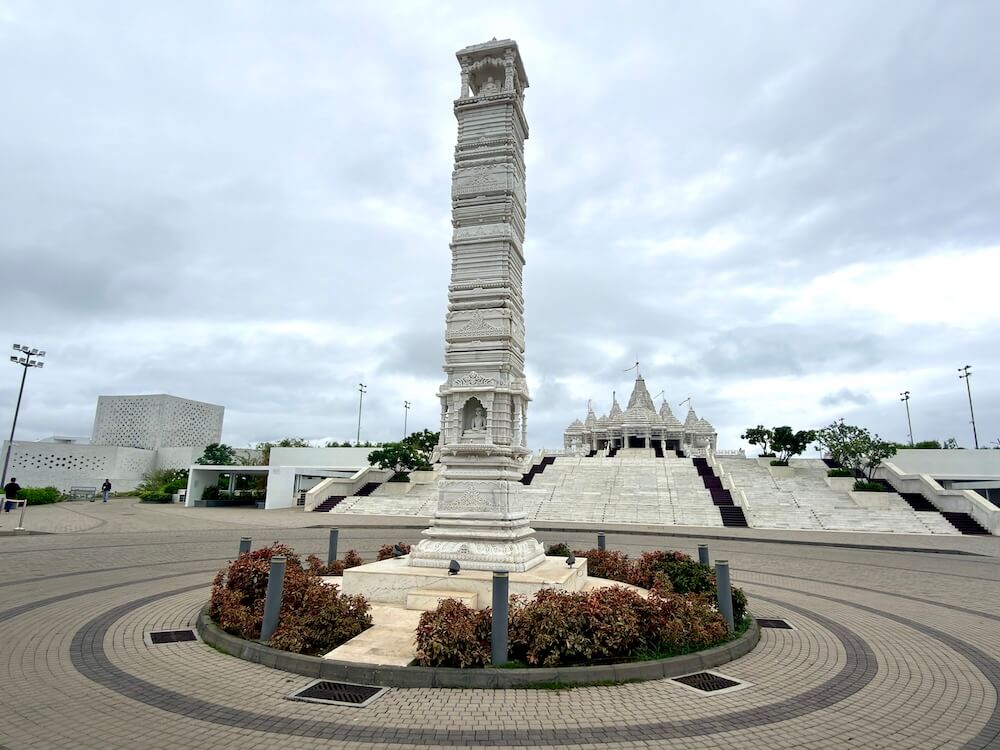
 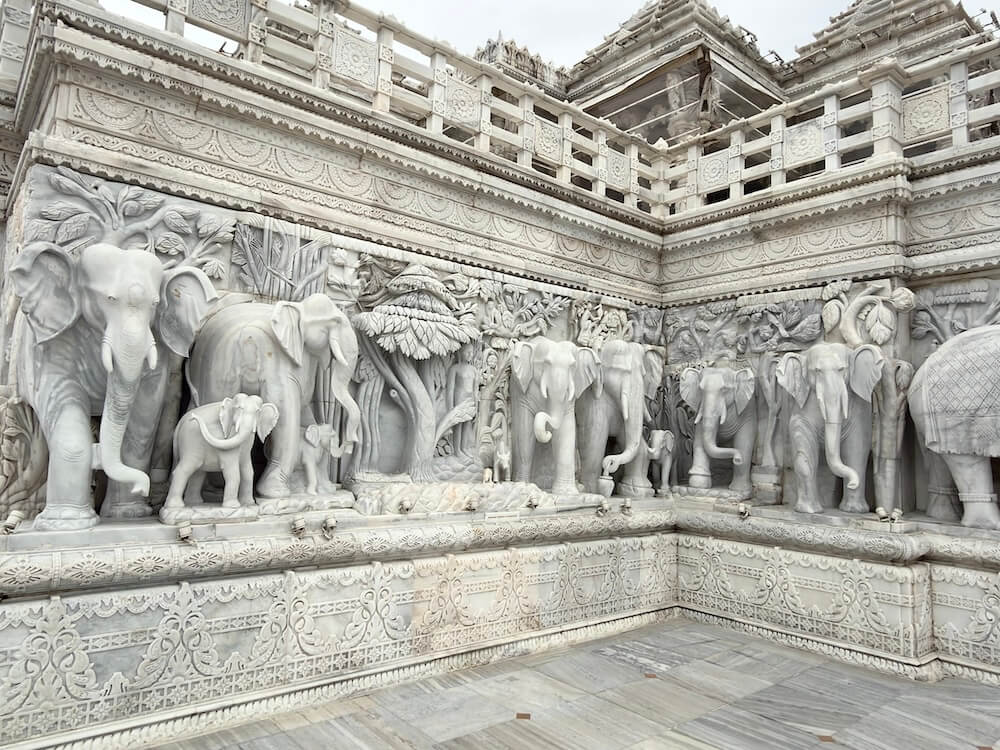 In laying the foundation of the temple, the use of iron or steel was completely eschewed in favour of copper, a deliberate choice that maintains harmony with the Earth’s magnetic field. The entire edifice was erected using traditional masonry methods, completely dispensing with cement concrete. The engineering blueprints ensure that the temple can withstand earthquakes measuring up to 7.0 on the Richter scale and endure for thousands of years. The exterior walls, known as the ‘Mandovar’ section, feature exquisitely intricate carvings. The temple measures 262 feet in length, 180 feet in width and rises to a height of 108 feet. Atop the primary spire, a red and white flag flutters at an altitude of 108 feet. A majestic Kirtistambha (pillar of glory) standing 35 feet high has been erected near the temple entrance.
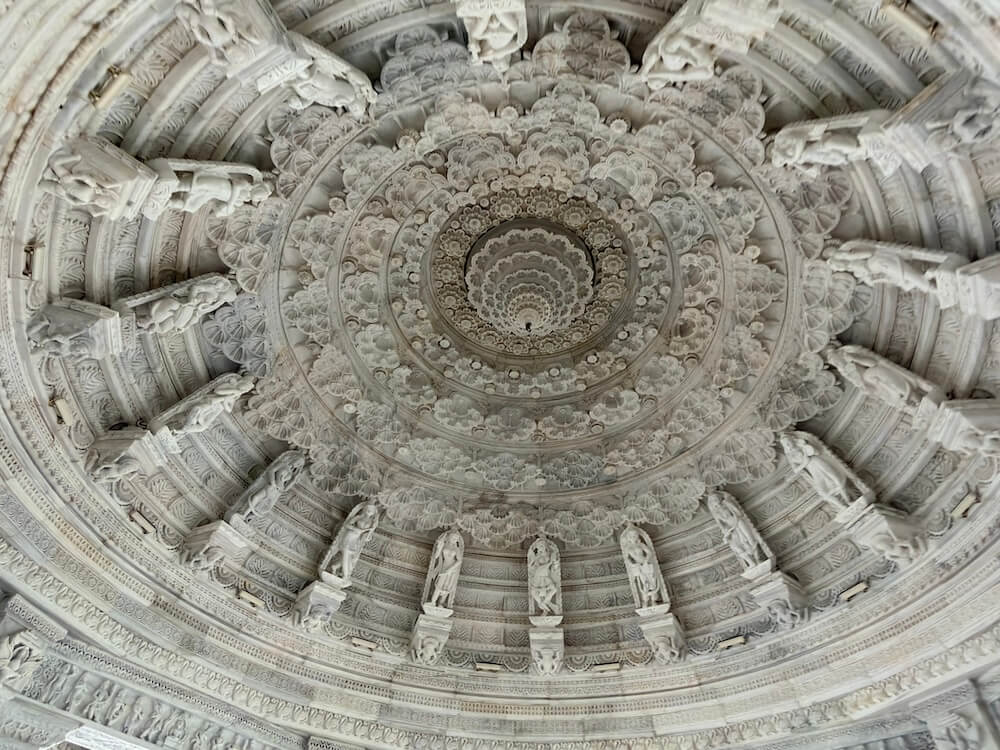
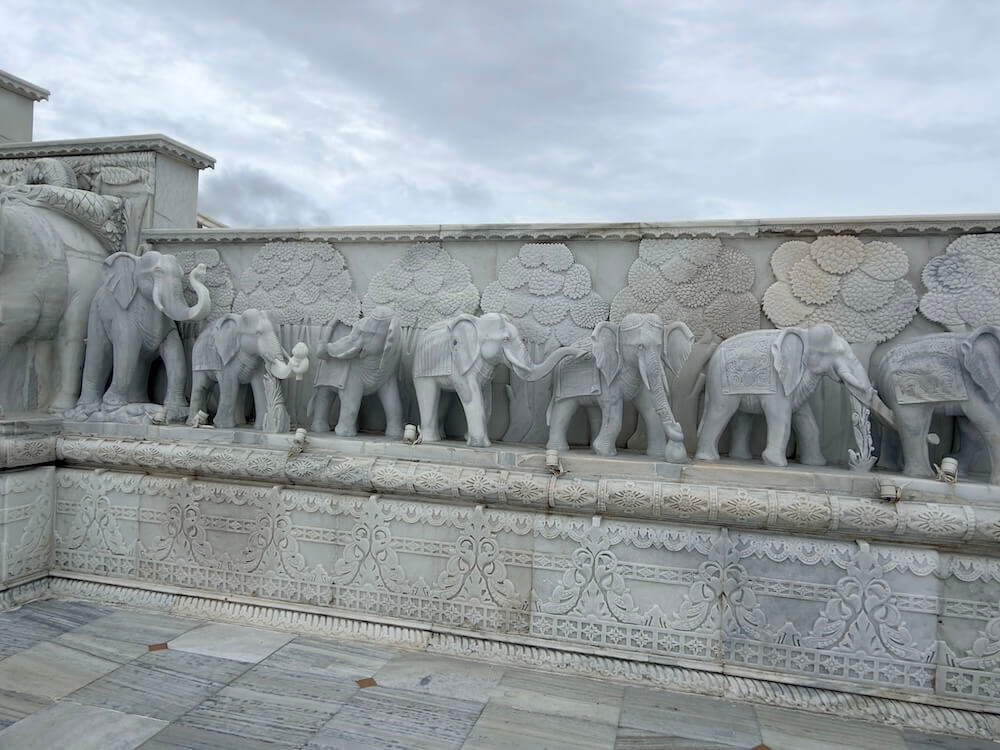
 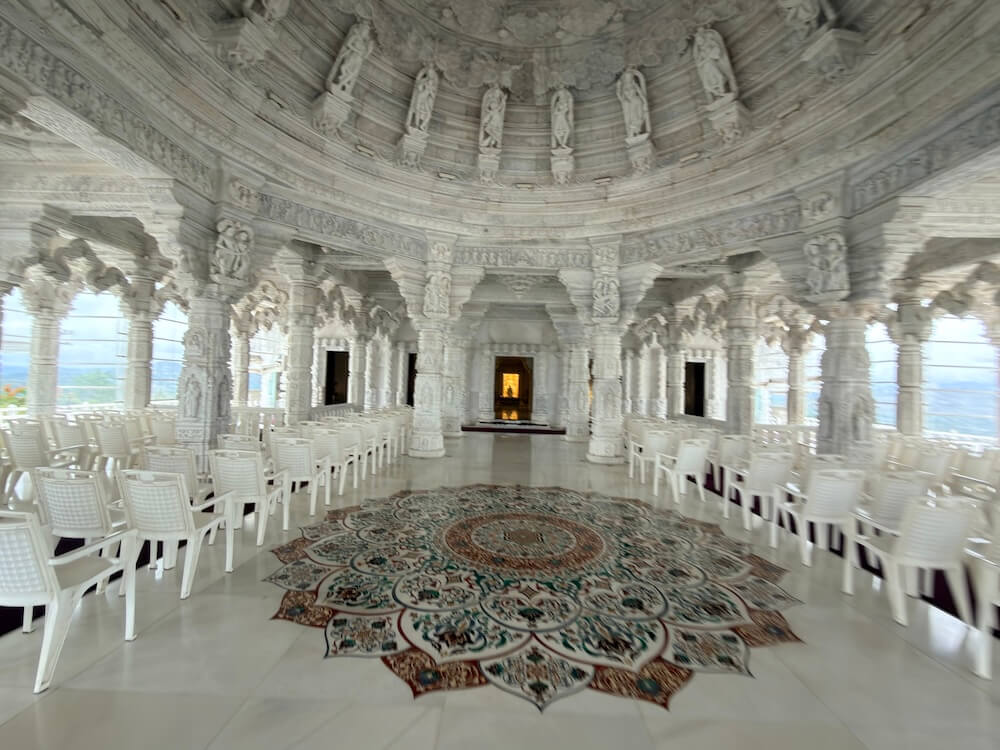 Adjacent to the steps lies the ‘Gajapitha’, where a frieze of elephants portrays 16 historical episodes based on the sublime teachings of Bhagwan Mahavir. This Jinmandir is supported by a total of 108 elaborately carved pillars. Sculpted upon these pillars are the representations of the 11 Ganadharas of Bhagwan Mahavir, sadhus, sadhvis, shravaks, shravikas and the Tirthankaras. The temple features 19 external domes (Samaran) and 2 internal domes, complemented by 84 ceilings and 108 ornamental arches (Toranas). The temple flooring features patterns created by embedding 1,75,000 pieces of marble and precious stones.
Situated directly beneath the main Jinmandir is the Gurumandir, a meditation hall dedicated exclusively to Shrimad Rajchandraji.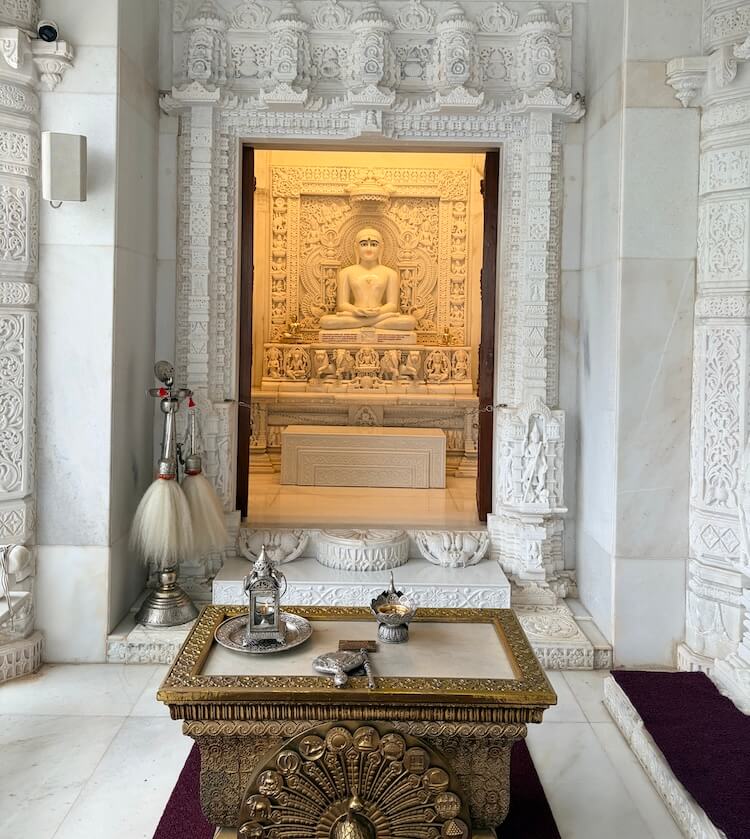 Within this sanctum sanctorum, a 72-inch idol of Shrimad Rajchandraji in the lotus posture (Padmasana) is enthroned upon a sculpted lotus. The Gurumandir features 150 carved pillars, which depict the visages of Shrimad Rajchandraji’s parents and his prominent disciples. A remarkable architectural feature of this Gurumandir is its 30-by-30-foot dome known as the ‘Tavadi’. This extraordinary dome rises without the support of a single pillar, constructed by interlocking 154 uniquely carved stones without the use of cement or any binding agent.
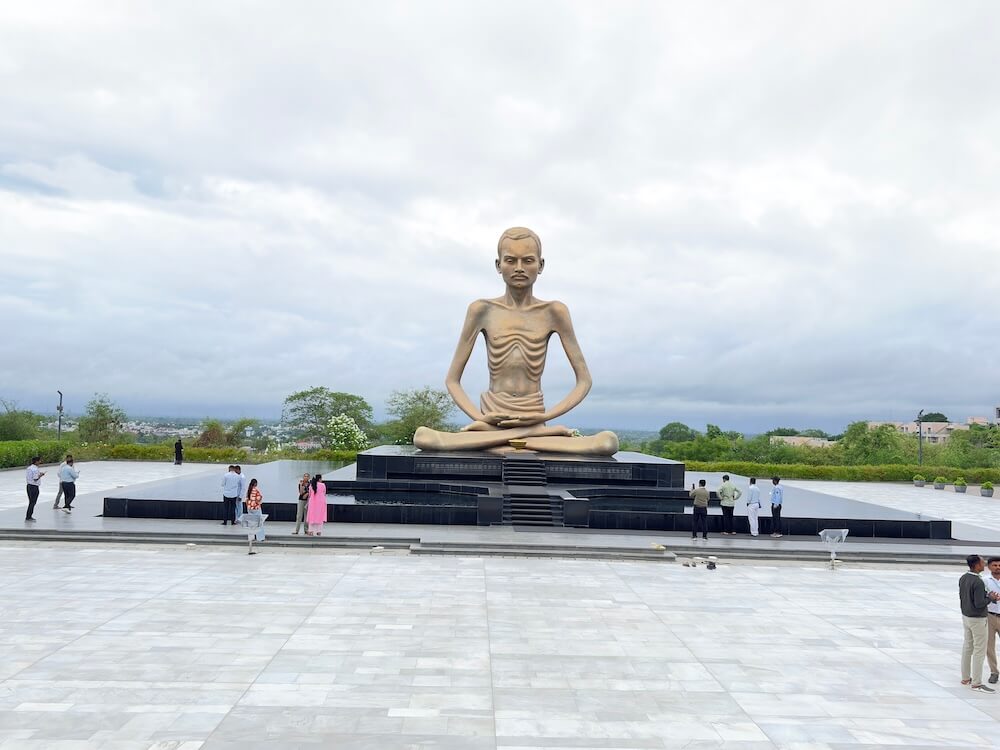
A colossal 34-foot-tall statue of Shrimad Rajchandraji has been erected within the ashram campus. Shrimad Rajchandraji’s earthly lifespan encompassed 34 years; thus, the height of the statue was deliberately fixed at precisely 34 feet to represent each year of his life. The outer shell of the monument is crafted predominantly from bronze. The statue depicts Shrimad Rajchandraji in the Padmasana posture, completely absorbed in a state of deep meditation. The statue is anchored upon a robust and massive pedestal. This platform and its surrounding plaza are designed to accommodate thousands of spiritual seekers gathering to meditate simultaneously.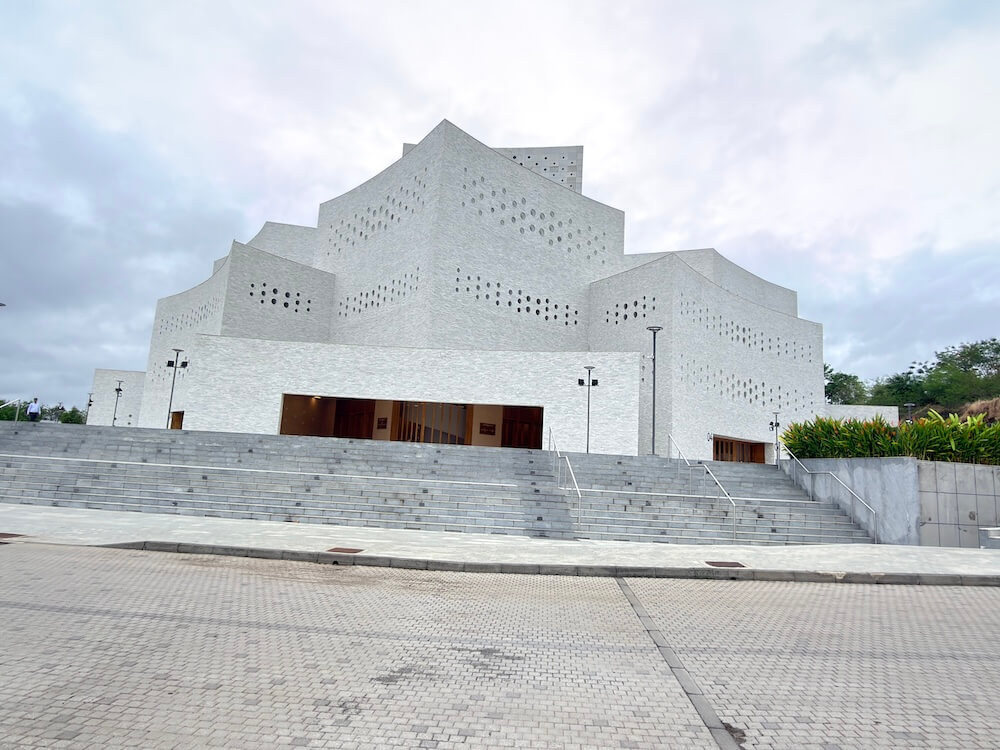
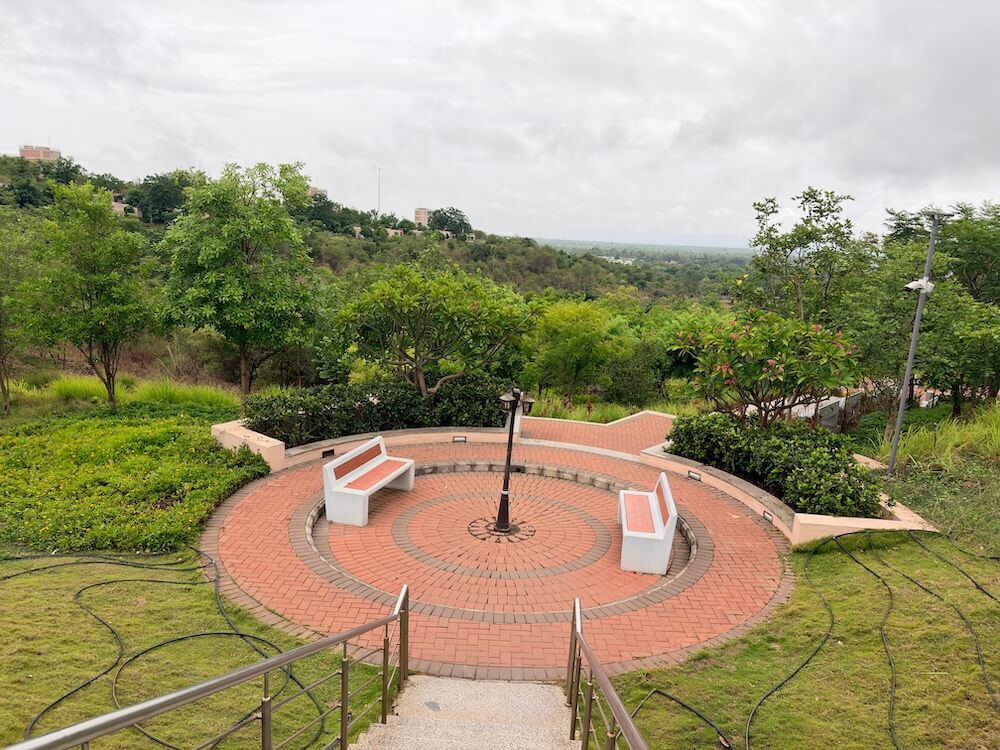
Furthermore, the ashram premises house state-of-the-art meditation centres, a massive Satsang Hall, the Raj Darbar, the Raj Sabhagruh, a meditation complex, a Meditation Garden, the Kartik Tower and residential quarters. A spacious dining complex and cafeteria are available to cater to the culinary needs of the devotees. Alongside its spiritual endeavours, the mission operates extensive medical and educational projects, which include the Shrimad Rajchandra Hospital and various academic institutions. Diverse programmes are conducted within the ashram to foster spiritual development, including satsangs, meditation sessions, SRMD Yoga and residential retreats.
In tandem with its spiritual mission, the organisation carries out extensive social welfare and charitable work under the banner of ‘Shrimad Rajchandra Love and Care’. 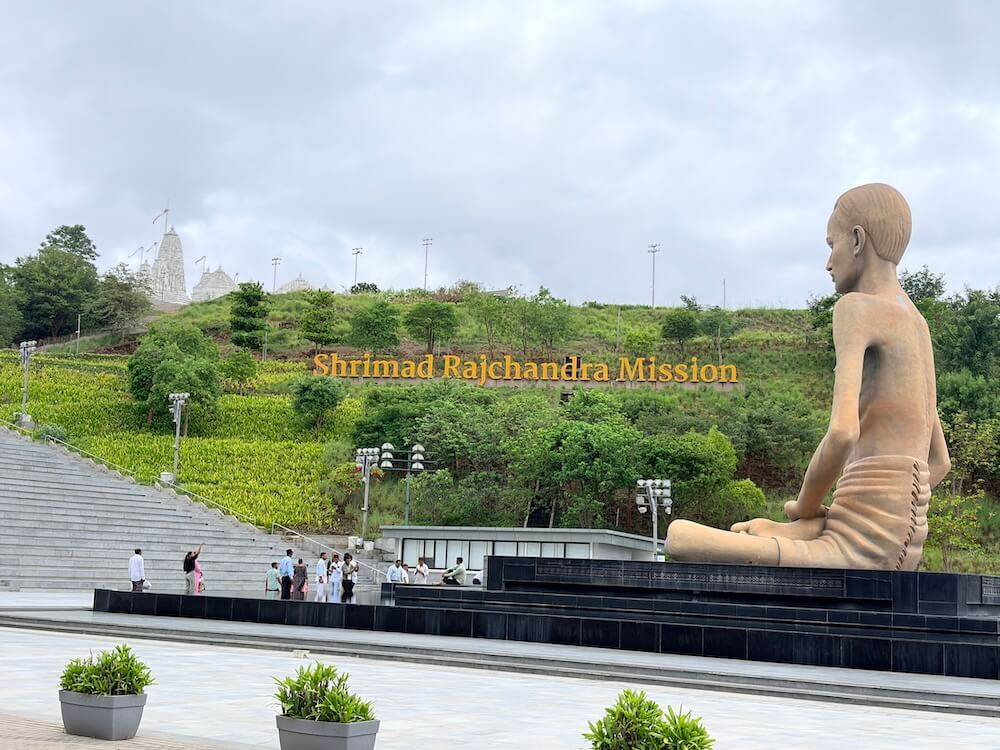 As part of its healthcare vertical, a 250-bed hospital is operated here, supplemented by medical camps organised in remote villages. The educational initiatives encompass a university, a Gurukul and residential schools. Under the women’s empowerment programme, various skill development modules are provided to make women self-reliant and employable. Projects aimed at eradicating malnutrition and improving healthcare are actively implemented for children in tribal regions. Mobile clinics for mute animals and rehabilitation centres for their welfare have been established. For environmental protection, extensive tree plantation drives, water conservation projects and the preservation of natural resources are undertaken. During natural calamities, the mission works proactively to provide immediate food, shelter and medical relief to flood and earthquake victims.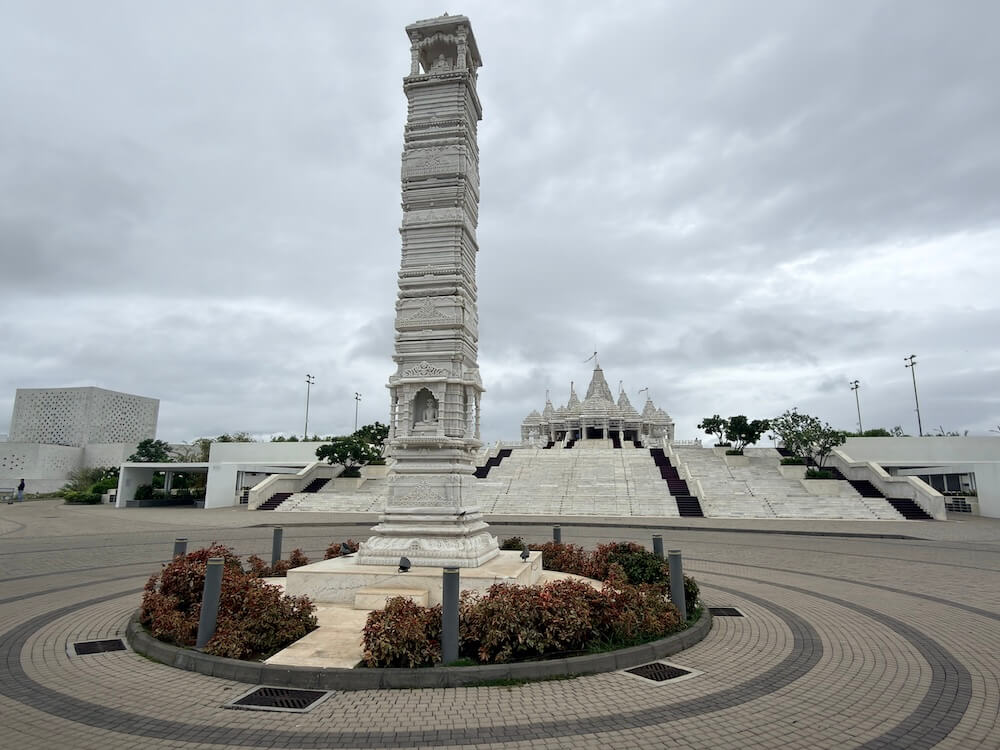
The exemplary work of this ashram and the mission has garnered recognition at both national and international levels. The mission’s social contributions have been honoured by the Prime Minister of India, Narendra Modi and the former President, Ram Nath Kovind. Prime Minister Narendra Modi has also personally visited the ashram. Global spiritual luminaries, including His Holiness the Dalai Lama and Sri Sri Ravi Shankar, have graced the ashram with their visits. Representatives from numerous countries frequently visit the site to study the ashram’s operational models.
Throughout the year, a plethora of festivals and spiritual events are hosted within the ashram precincts.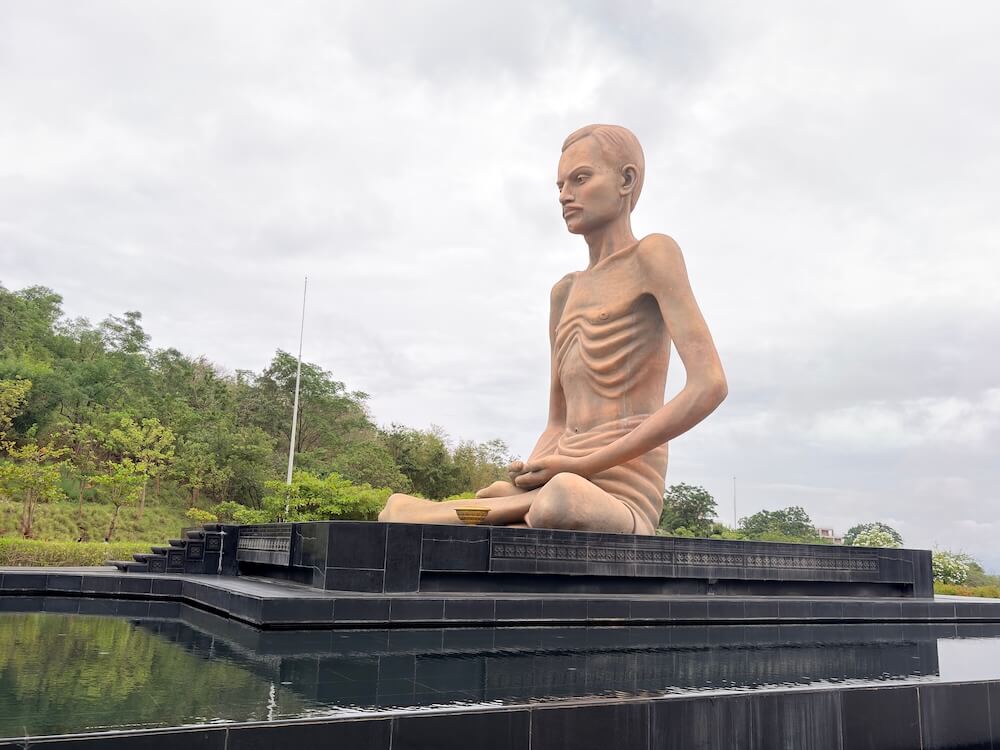 The celebrations primarily revolve around the lives and legacies of Bhagwan Mahavir and Shrimad Rajchandraji. A special spiritual retreat is organised during the festival of ‘Guru Purnima’. The holy festival of Jainism, ‘Paryushan Mahaparva’, is also celebrated here with profound devotion. This period features continuous spiritual discourses, satsangs and inner rituals. On the occasion of ‘Mahavir Janma Kalyanak’ (Mahavir Jayanti), the ashram hosts programmes centred on the philosophy and teachings of Bhagwan Mahavir. In addition, the festival of ‘Varshitap Parana’ is celebrated here on the auspicious day of Akshaya Tritiya to commemorate the thirteen-month fast observed by Bhagwan Rishabhdev, during which numerous spiritual practitioners formally conclude their fasts. The special event ‘Param Krupaludev Param Prayan Parva’ is also organised in the ashram.
Every morning at 7 o’clock, the sacred bathing ritual (Prakshal Vidhi) of the Lord is performed in the Shvetambara and Digambara Jinmandir. This is followed by the Prakshal ritual in the Gurumandir at 8 o’clock. In the evening, the grand Aarati ceremony is performed at 7:30. Devotees can take darshan of Bhagwan Mahavir and Shrimad Rajchandraji in the temple daily from 6:00 am to 6:00 pm. For the convenience of the pilgrims, breakfast is served daily from 6:00 am to 9:30 am, lunch from 12:00 pm to 1:30 pm and dinner from 5:30 pm to 6:30 pm.
Useful Information :
- Situated at 3 km away from the Dharampur Bus Stand and 30 km away from Valsad city.
- State Transport (ST) bus services are readily available from both Dharampur and Valsad.
- Private vehicles can drive directly up to the ashram’s dedicated parking lot.
- Accommodation and breakfast facilities are available within the premises.
- Contact : Temple Office, Mobile Number: 7285040000
श्रीमद राजचंद्र मिशन
धरमपुर, ताल। धरमपुर, जिला. वलसाड
मंदिरे
Temples
मंदिर
-
साईबाबा मंदिर तिथळ, ता./जि. वलसाड
अधिक माहितीSai Baba Temple Tithal, Tal./Dist. Valsad
View Detailsसाईं बाबा मंदिर तीथल, ताल./जिला. वलसाड
विवरण देखें -
भाव-भावेश्वर महादेव मंदिर बारुमाळ, ता. धरमपूर, जि. वलसाड
अधिक माहितीBhav-Bhaveshwar Mahadev Temple Barumal, Tal. Dharampur, Dist. Valsad
View Detailsभाव-भावेश्वर महादेव मंदिर बारुमल, ताल. धरमपुर, जिला. वलसाड
विवरण देखें -
दत्त मंदिर पाथरी, ता./जि. वलसाड
अधिक माहितीDatt Temple Pathri, Tal./Dist. Valsad
View Detailsदत्त मंदिर पाथरी, ताल./जिला. वलसाड
विवरण देखें