
भाव-भावेश्वर महादेव मंदिर
बारुमाळ, ता. धरमपूर, जि. वलसाड
Bhav-Bhaveshwar Mahadev Temple
Barumal, Tal. Dharampur, Dist. Valsad
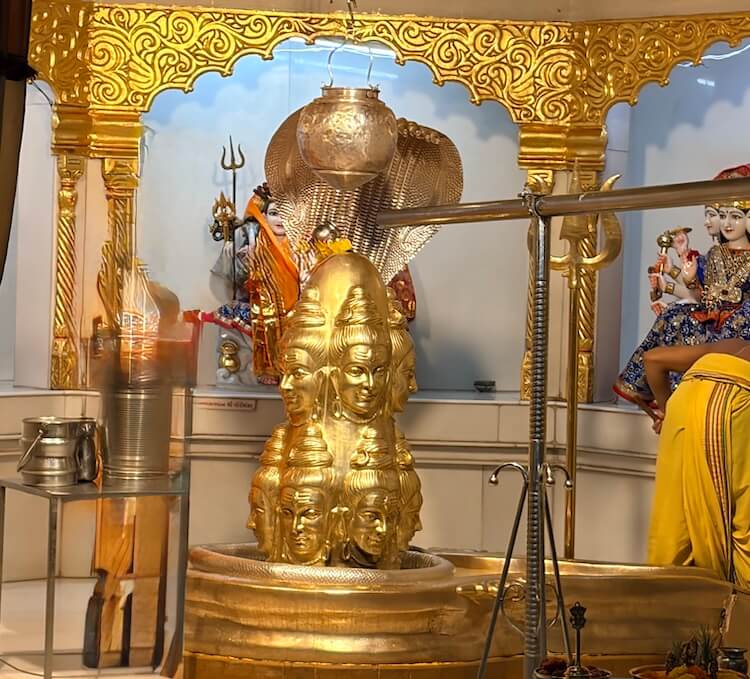
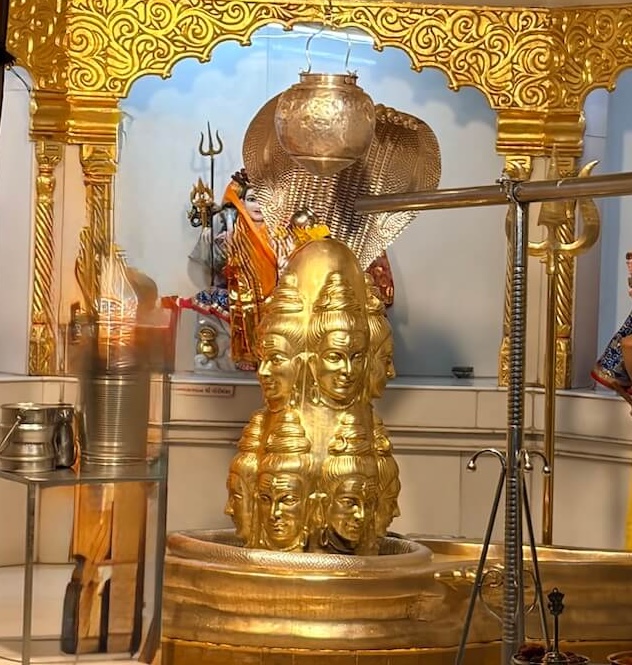 Near the British-era hill station of Wilson Hills in Barumal stands the magnificent Bhav-Bhaveshwar Mahadev Temple. Established under the inspiration of Swami Akhandanand Saraswati Maharaj, the temple has a history of about fifty years. It is also known as the ‘Thirteenth Jyotirlinga’. The sanctum enshrines a magnificent Ashtadhatu (eight-metal alloy) Shivalinga of Bhav-Bhaveshwar Mahadev. The temple complex also contains replicas of all twelve Jyotirlingas. Every year, thousands of devotees from Gujarat, Maharashtra and the Union Territory of Dadra and Nagar Haveli visit this sacred place for pilgrimage and spiritual tourism.
Barumal is a predominantly tribal region nestled in the Sahyadri mountain range of Dharampur Taluka. According to local tradition, the village derives its name from a wealthy and respected landlord named Barumal Mittal, who is said to have helped many tribal farmers in the area. As this story does not appear in any historical records, it is regarded as a local legend.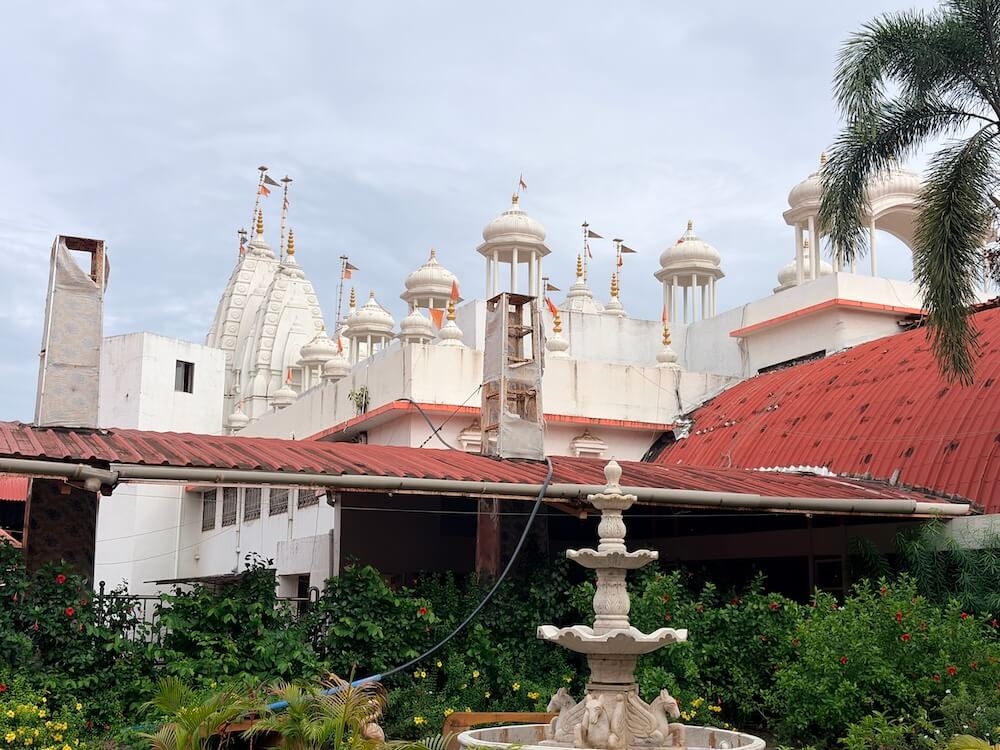
After India’s independence, both the government and several social organisations made sustained efforts to improve the living conditions of tribal communities and integrate them into the mainstream of development. Swami Akhandanand was one of the leading figures associated with this movement. Believing that service to humanity is a path to the service of God, he established an organisation here about half a century ago to improve the lives of the tribal people and nurture their spiritual growth. Through this organisation, the grand Bhav-Bhaveshwar Mahadev Temple was built.
According to available records, the temple was established during the 1980s. Its principal objective was to serve people living in remote forests and tribal areas through education, 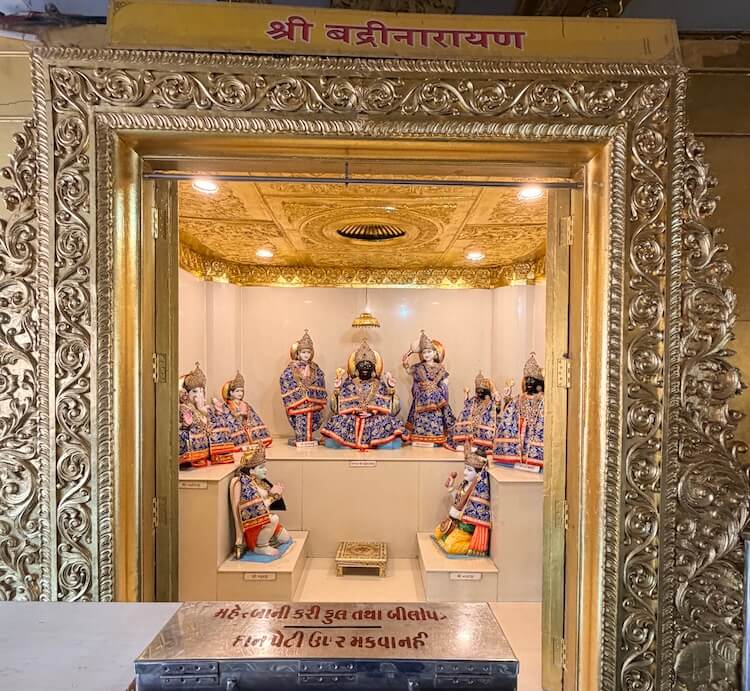 healthcare and a free community kitchen. Under the aegis of the ‘Shri Sadguru Swami Akhandanand Memorial Charitable Trust’, the temple complex has been expanded in phases.
The Trust operates a large dining hall where free Mahaprasad, comprising daily meals, is served to nearly 2,500 people every day, including students, monks, staff and devotees. It also provides a range of healthcare services, including a free mobile medical clinic, a twenty-four-hour medical centre and free anti-snakebite treatment. The Trust has also made significant contributions to education. It runs a residential school and a college for tribal students. Because of these social initiatives, together with its massive Ashtadhatu Shiva Linga, replicas of the twelve Jyotirlingas, shrines dedicated to various deities, landscaped gardens and tranquil natural surroundings, the temple has become one of the region’s foremost religious and social centres.
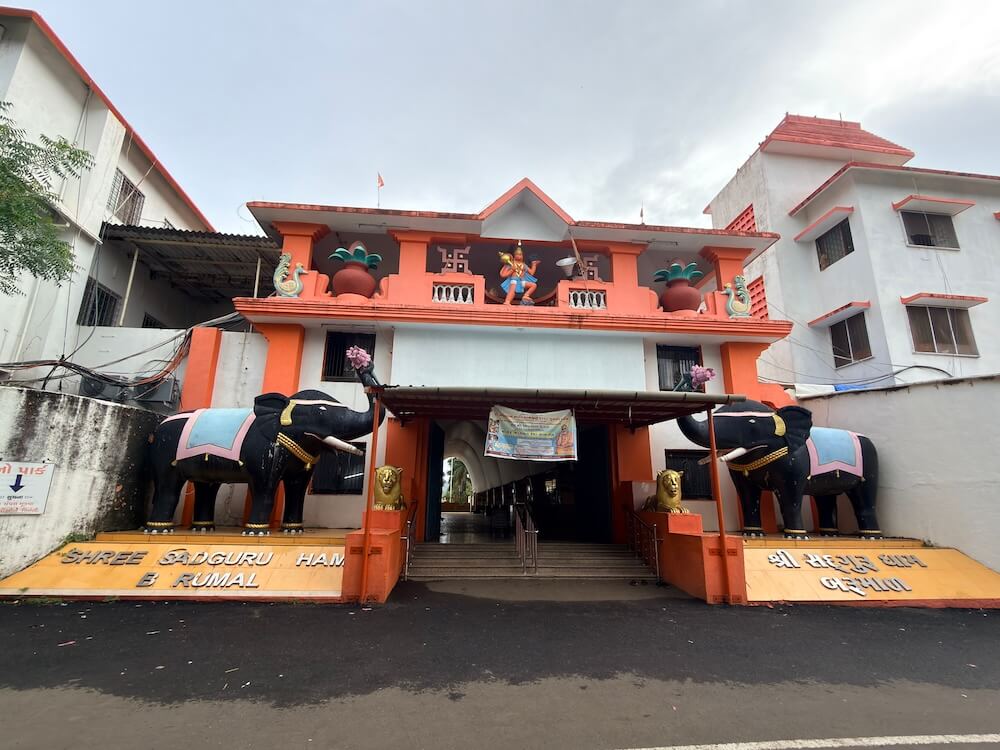 The approach from the parking area to the temple is lined with shops selling offerings and prasad. At the main entrance to the temple enclosure, large elephant sculptures stand on either side, each holding a lotus flower in its trunk. Beside them are sculptures of lions. Above the gateway, at its centre, is an idol of Veer Hanuman carrying the Dronagiri mountain. The two corners of the roof are adorned with sculpted Purna Kalashas, symbols of prosperity, together with peacock figures. Passing through this gateway, visitors enter the spacious temple courtyard. On one side of the approach is a beautifully maintained garden, while the temple office and other buildings stand on the other.
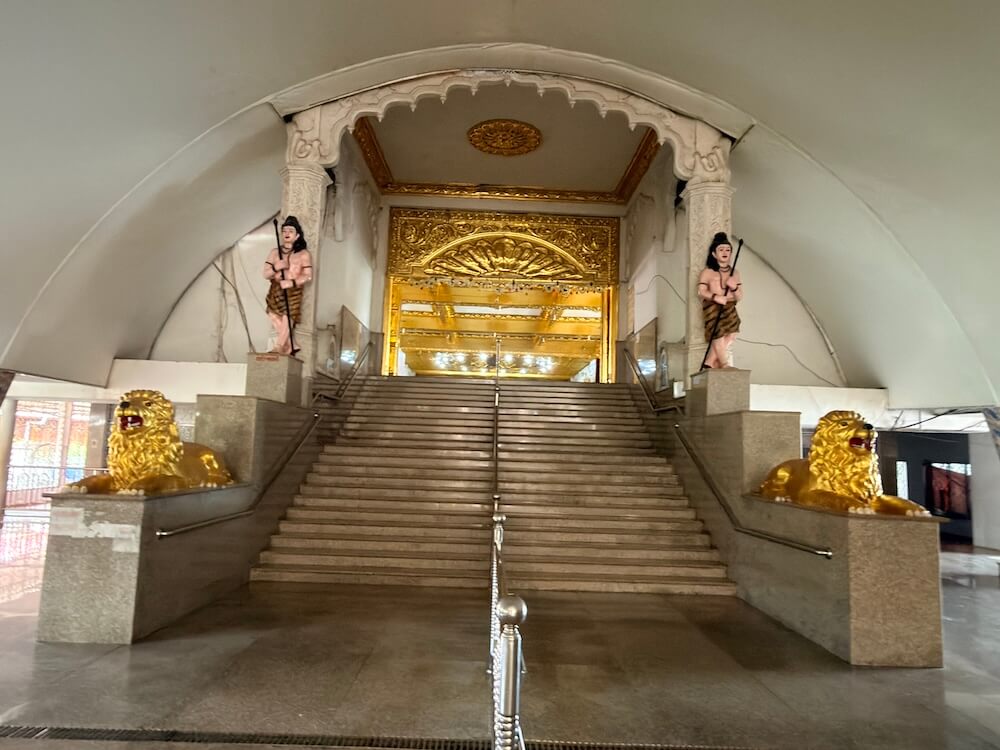
The entrance gateway before the main temple presents a distinctive blend of modern engineering and the ancient Indian tradition of the Gaja Torana. 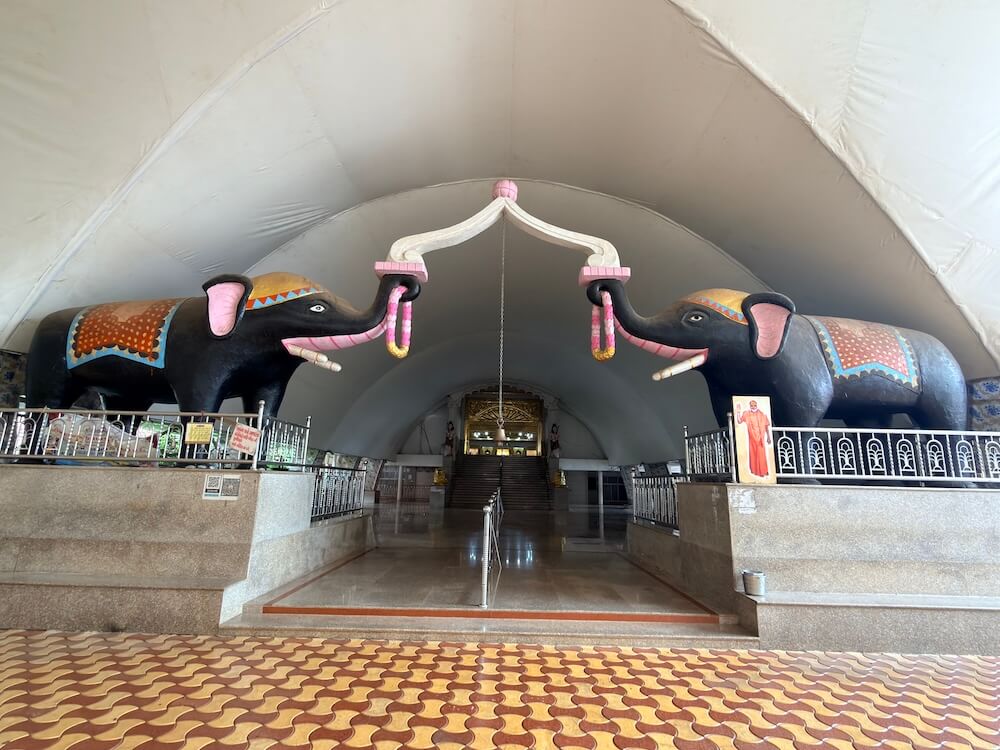 Two colossal elephant sculptures stand facing one another upon massive pedestals. Their raised trunks form an ornamental elephant arch. From here begins the flight of steps leading to the temple, which stands upon a lofty Vajrapitha. After climbing about twenty-one steps, devotees reach the entrance porch. Sculptures of lions and guardian deities stand on either side of the staircase.
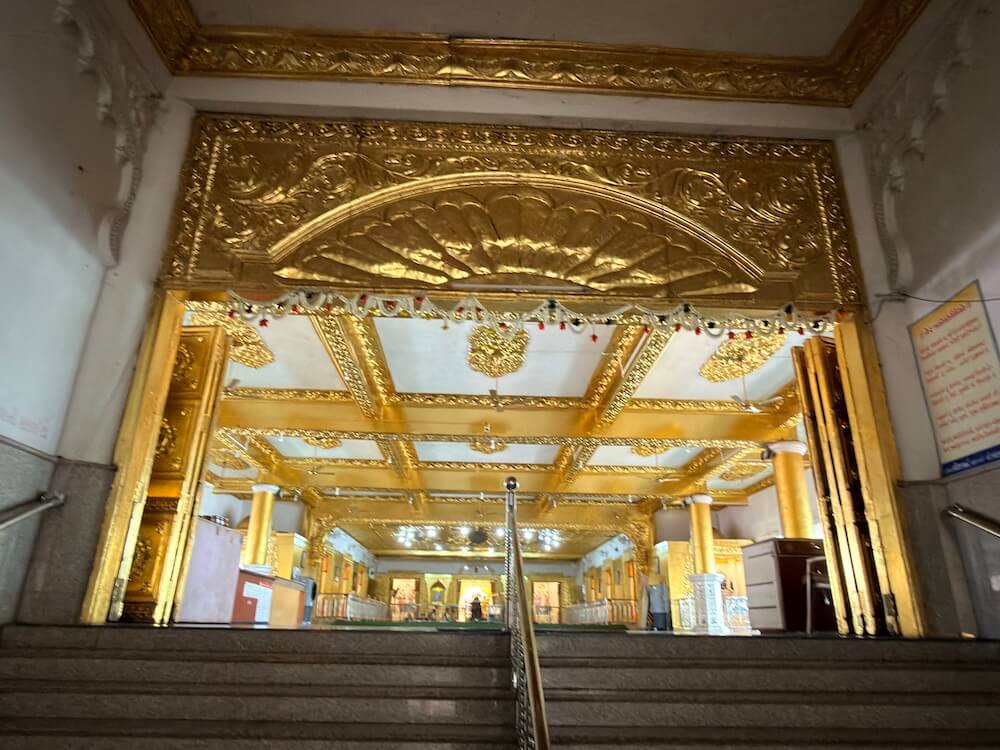
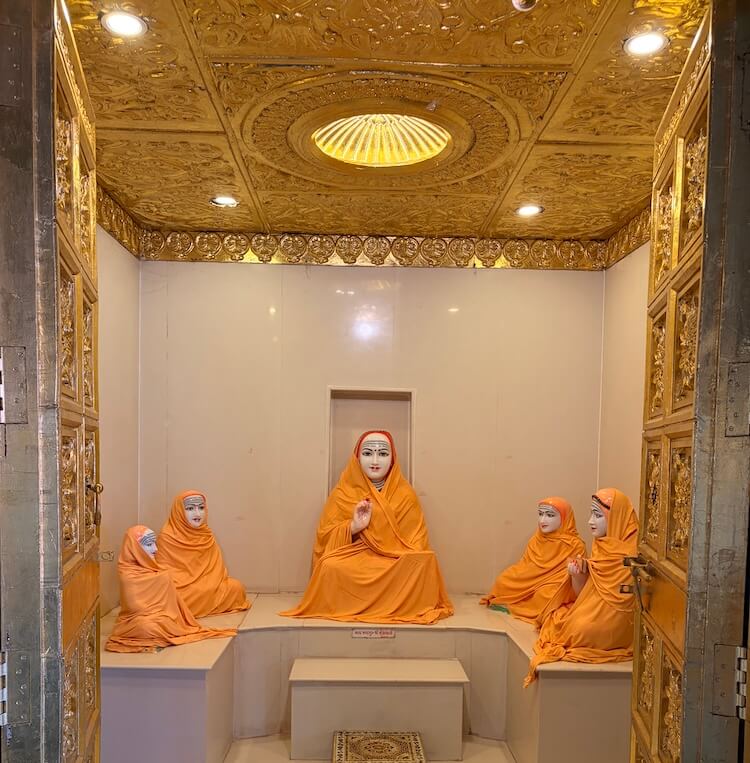
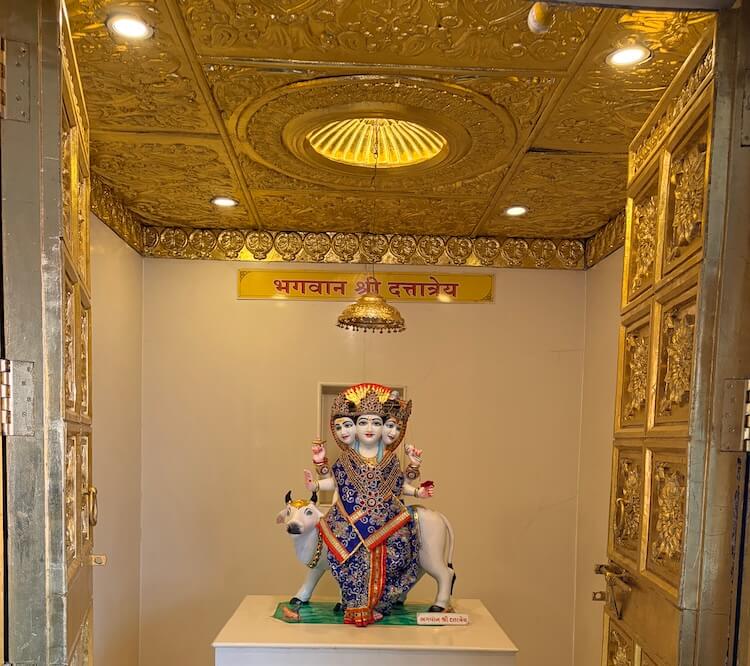
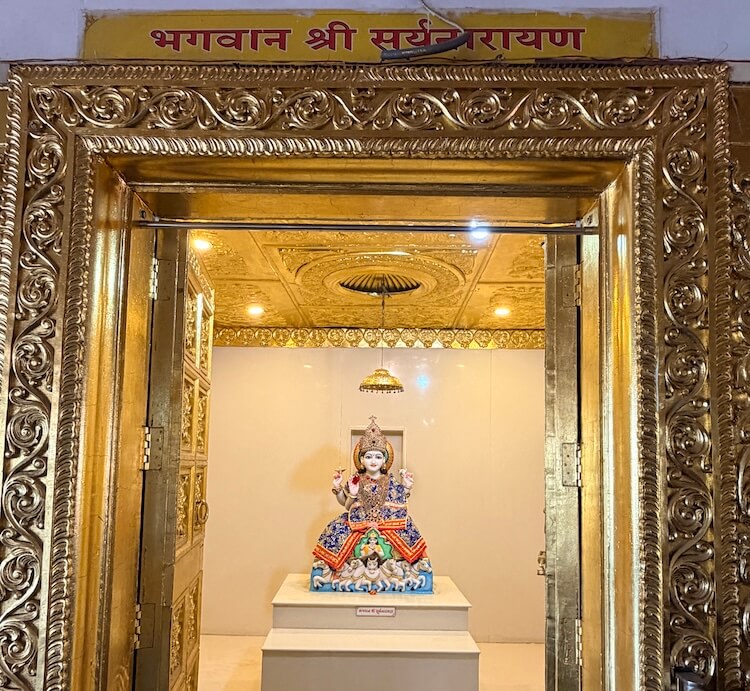
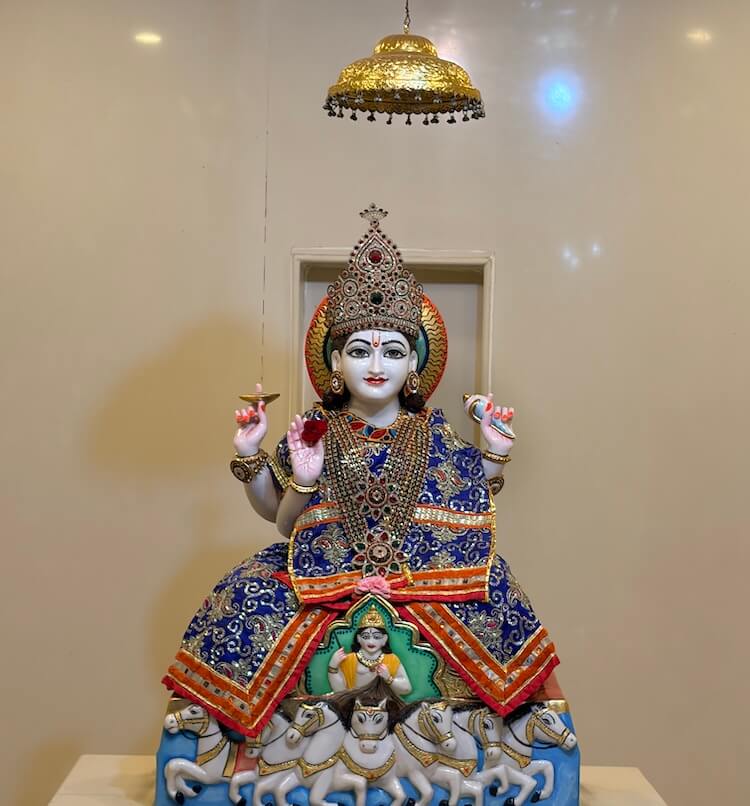
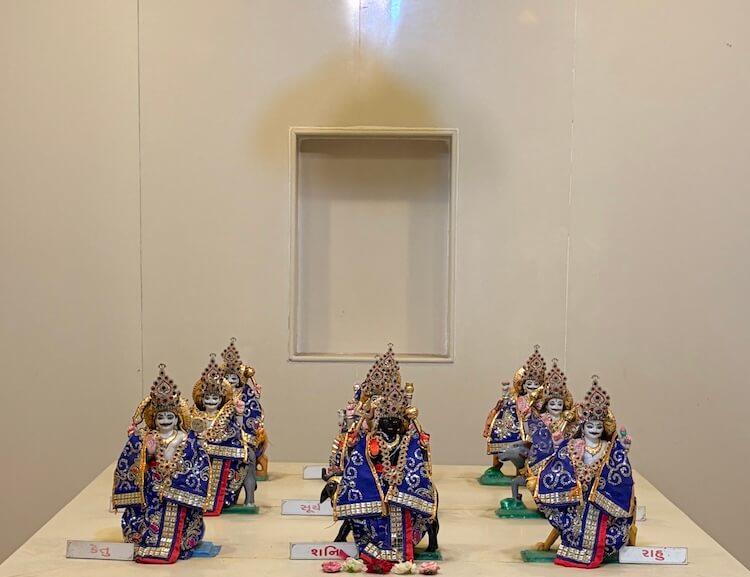
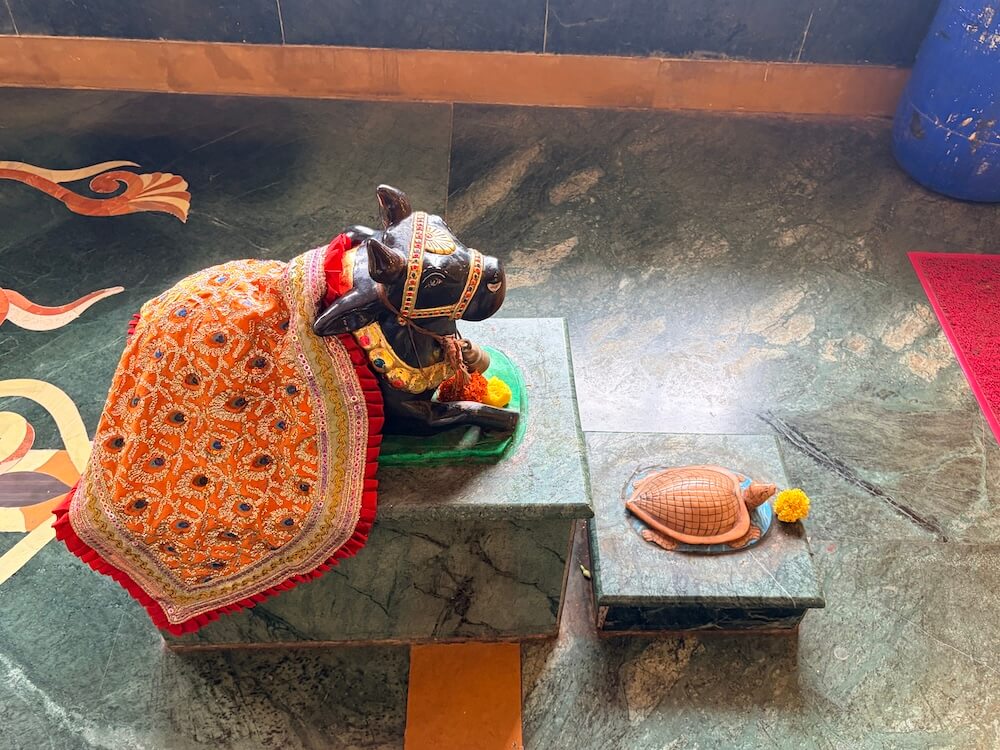
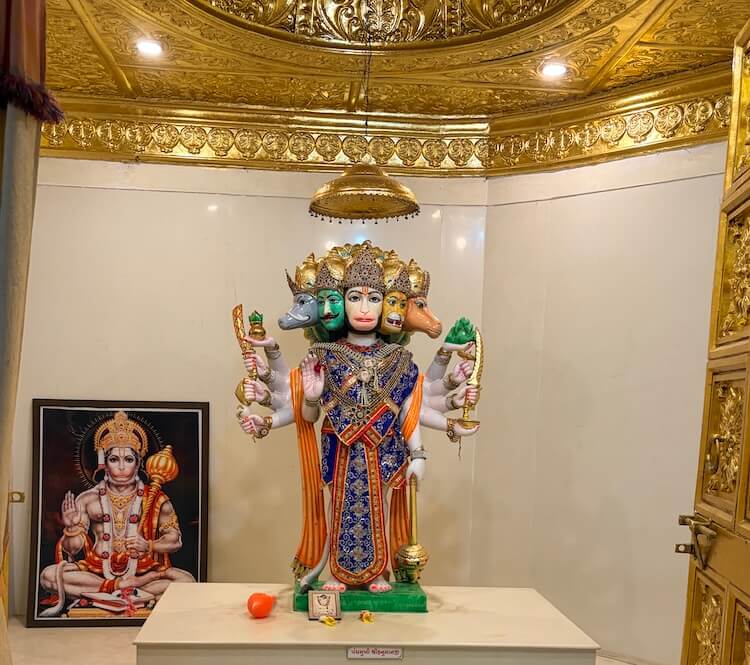
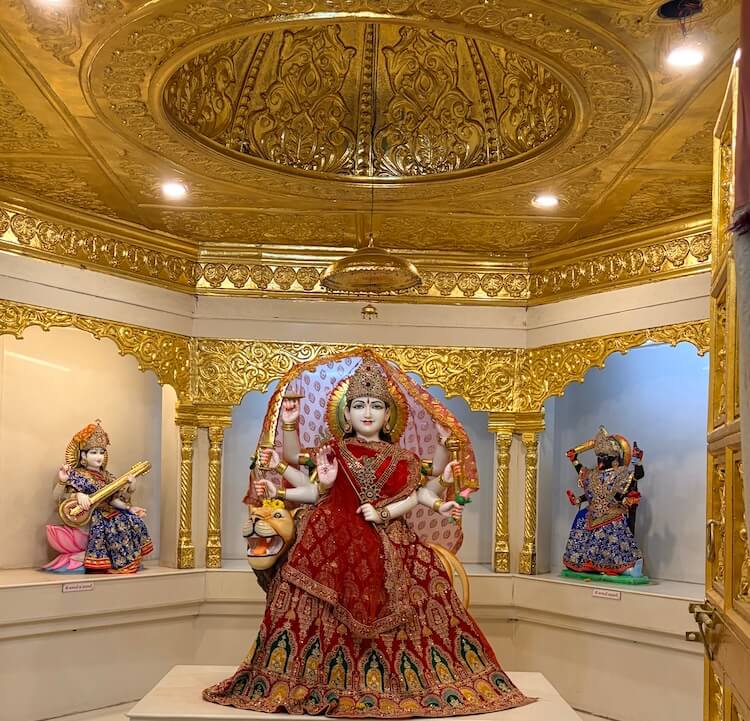
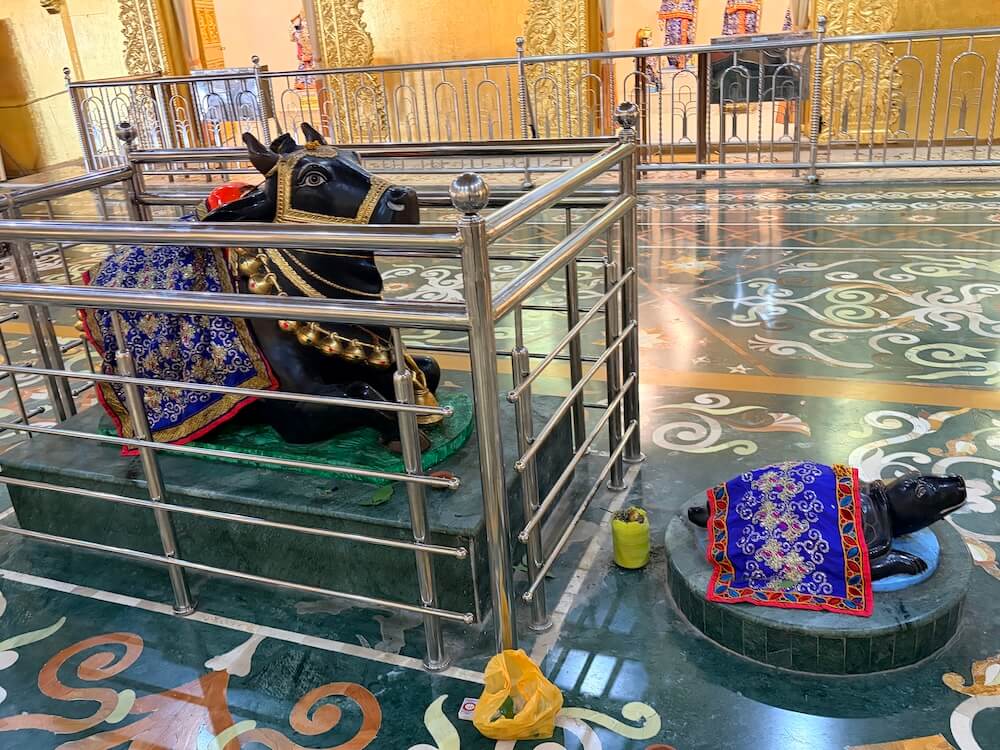
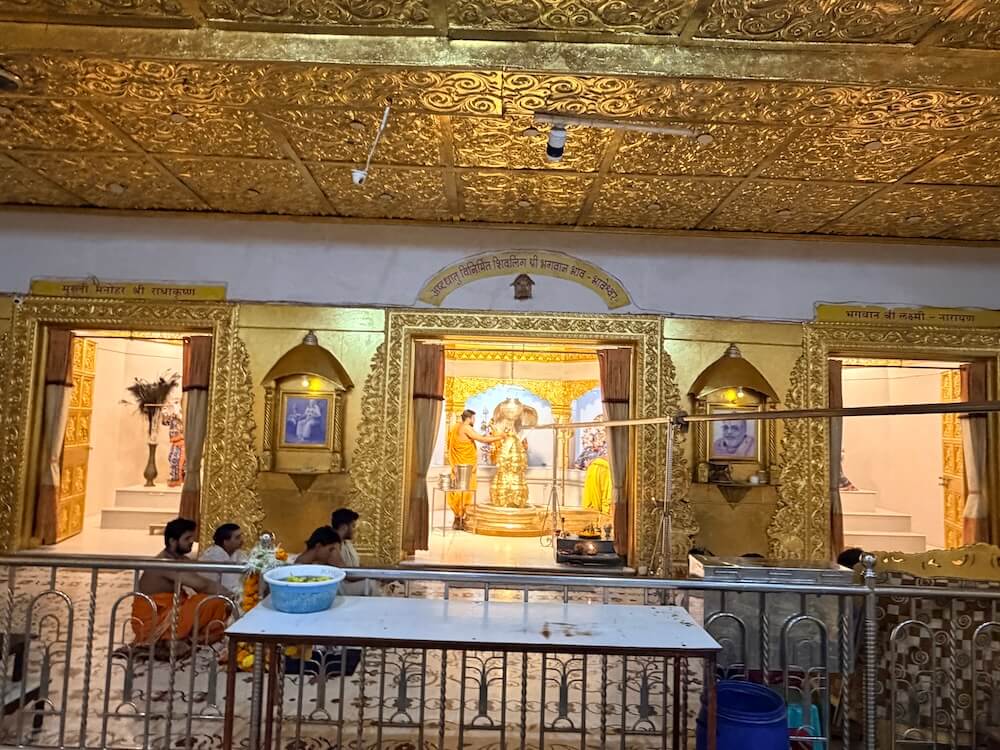
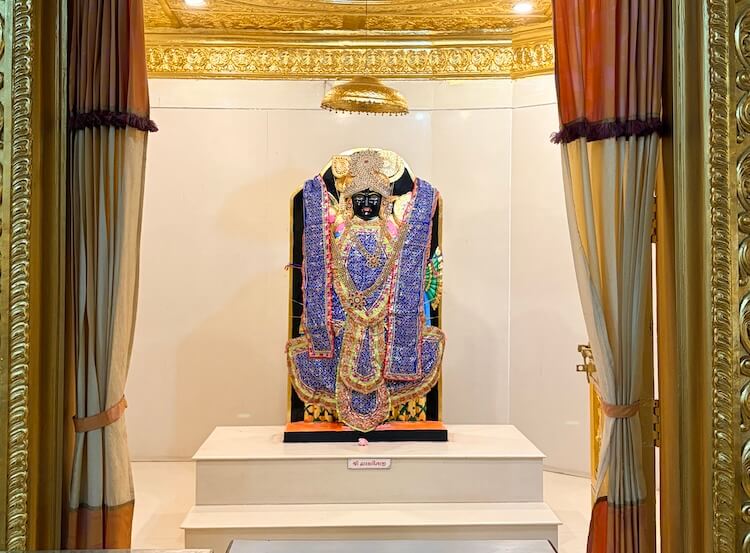
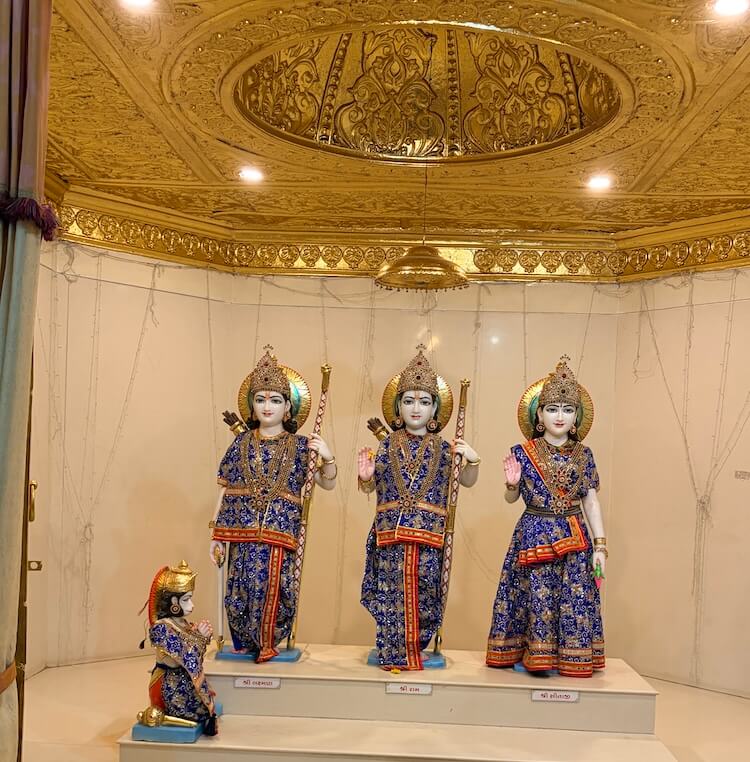
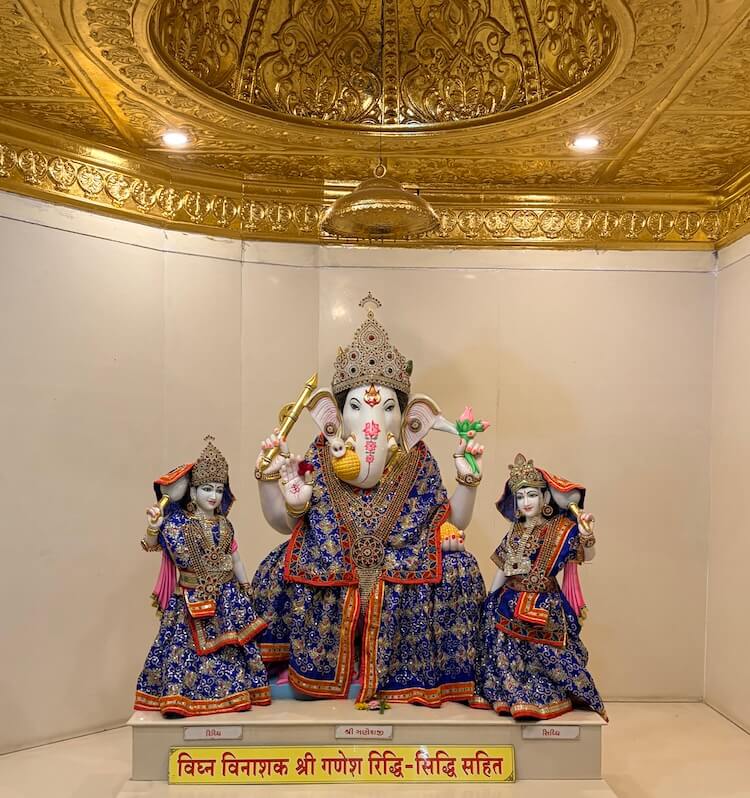
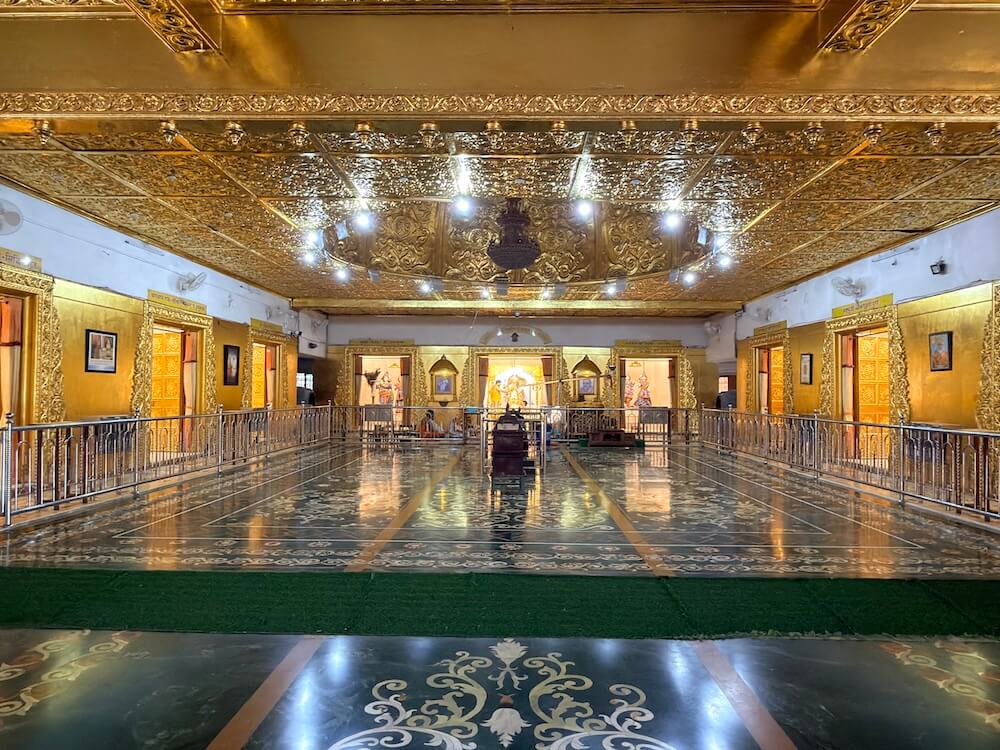
The entrance doorway of the assembly hall, its doorframe and the decorative lintel above are clad in embossed golden metal sheets. Within the spacious assembly hall, subsidiary sanctums on either side house idols of Jagadguru Shankaracharya, Shri Dattatreya, Surya Narayan, the Navagrahas, Jagannath, Balabhadra and Subhadra, Panchamukhi Hanuman, Goddess Durga, Goddess Bhagavati, Dwarkadhish, Lord Shri Ram, Lakshmana, 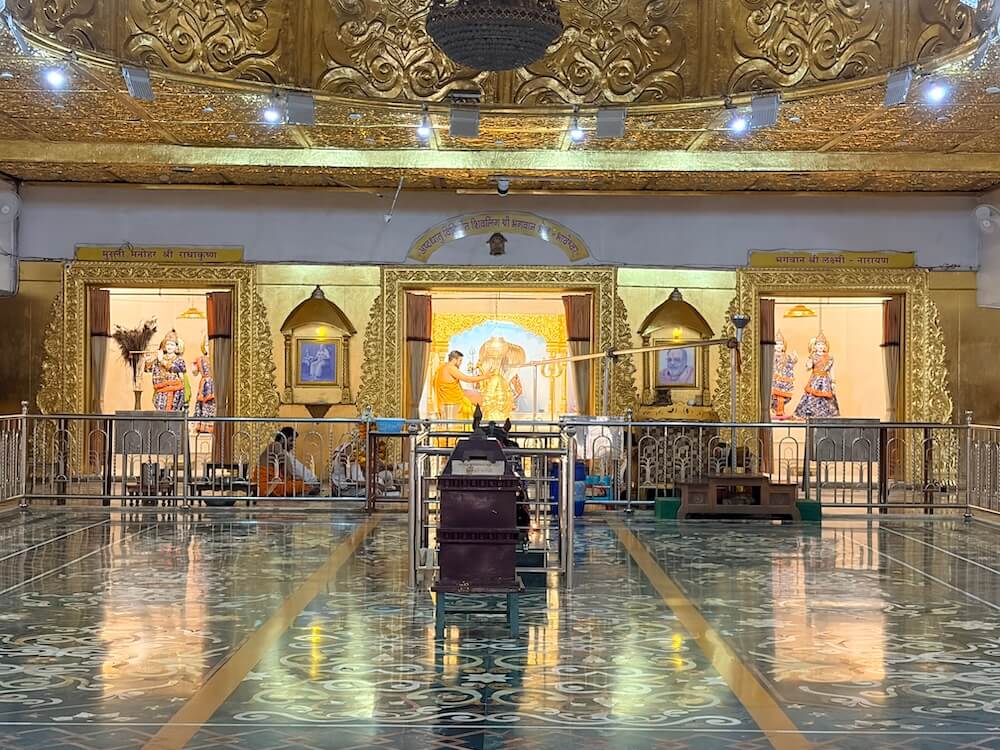 Goddess Sita and Lord Hanuman, Vighnavinayak Ganesha accompanied by Riddhi and Siddhi and Lord Badrinarayan. The ceiling of the assembly hall is also covered with intricately decorated golden metal sheets. In front of the sanctum, upon a marble platform, stand a black stone idol of Nandi and, before it, a stone tortoise.
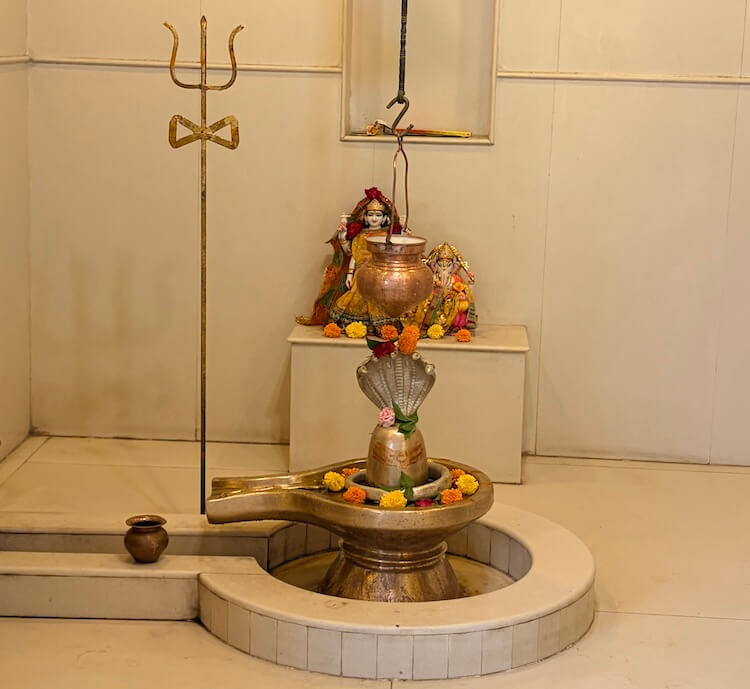
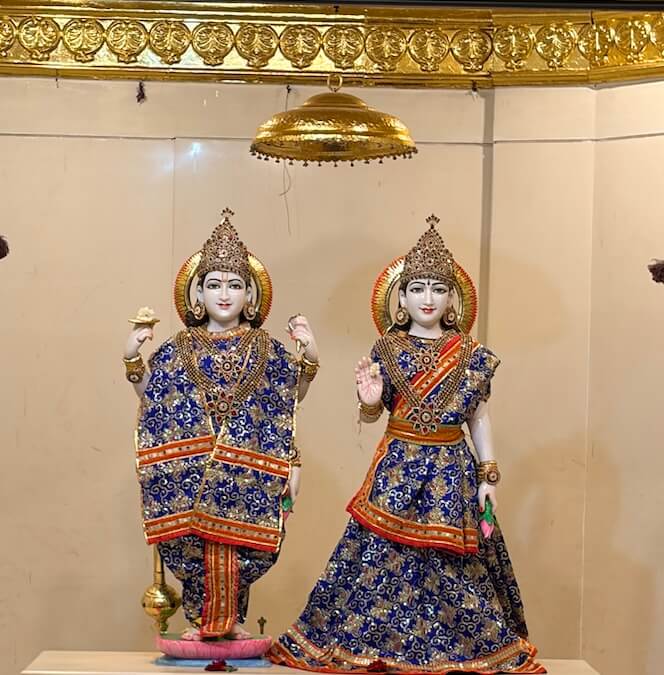
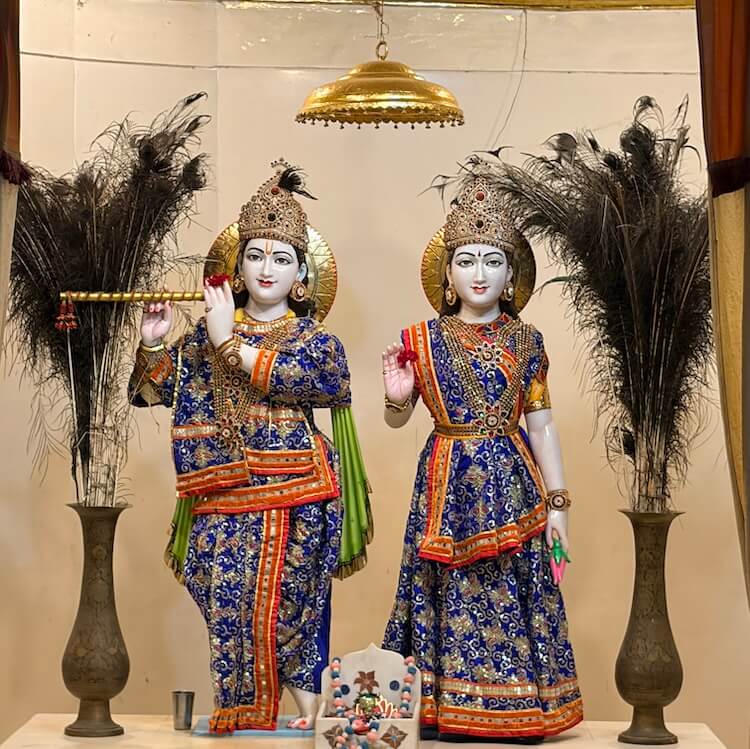
The main sanctum houses the magnificent Ashtadhatu Shivalinga of Bhav-Bhaveshwar Mahadev. The faces of Lord Shiva are carved on all sides of the Linga. Both the Linga and its Shalunka are clad in brass sheets. A niche in the rear wall contains an idol of Goddess Parvati. The two subsidiary sanctums adjoining the main shrine house the idols of Radha-Krishna and Lakshmi-Narayan.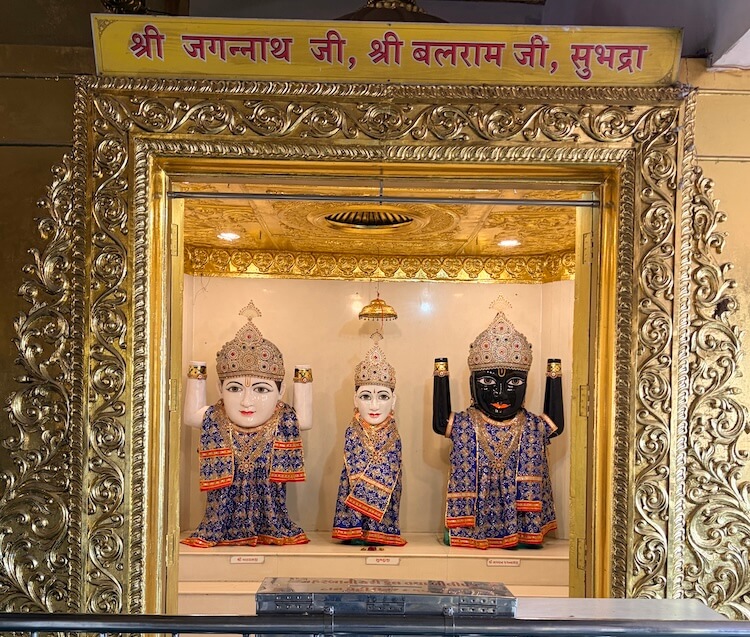
Devotees may visit the temple every day from 6.00 a.m. to 8.00 p.m. Maha Shivaratri is the temple’s most important annual festival. On this occasion, hundreds of thousands of devotees gather here for the darshan of Bhav-Bhaveshwar Mahadev and to perform Jalabhishek. Special ceremonies, including Rudrabhishek, elaborate worship and the distribution of Mahaprasad, are organised throughout the day.
The temple receives large numbers of devotees throughout the holy month of Shravan. Every Monday during Shravan, the Shivalinga is adorned with a special decoration and various religious ceremonies are performed. In addition, Kartik Purnima, Pradosh Vrat, Guru Purnima and spiritual discourses are observed with great devotion. On every Amavasya, a special religious ceremony is held. On this occasion, approximately one hundred needy families receive ten kilograms of free grain each.
Useful Information :
- Located at 7 km from Dharampur and 36 km from Valsad city.
- State Transport (ST) bus services are available from Valsad and Dharampur.
- Private vehicles can reach the temple parking area.
- Accommodation and dining facilities are available nearby.
भाव-भावेश्वर महादेव मंदिर
बारुमल, ताल. धरमपुर, जिला. वलसाड
मंदिरे
Temples
मंदिर
મંદિરો
கோவில்கள்
దేవాలయాలు
ക്ഷേത്രങ്ങൾ
ದೇವಾಲಯಗಳು
মন্দিরসমূহ
ਮੰਦਿਰ
-
साईबाबा मंदिर तिथळ, ता./जि. वलसाड
अधिक माहितीSai Baba Temple Tithal, Tal./Dist. Valsad
View Detailsसाईं बाबा मंदिर तीथल, ताल./जिला. वलसाड
विवरण देखेंSai Baba Temple Tithal, Tal./Dist. Valsad
વિગત જુઓSai Baba Temple Tithal, Tal./Dist. Valsad
விவரங்களைக் காண்கSai Baba Temple Tithal, Tal./Dist. Valsad
వివరాలను చూడండిSai Baba Temple Tithal, Tal./Dist. Valsad
വിശദാംശങ്ങൾ കാണുകSai Baba Temple Tithal, Tal./Dist. Valsad
ವಿವರಗಳನ್ನು ವೀಕ್ಷಿಸಿSai Baba Temple Tithal, Tal./Dist. Valsad
বিস্তারিত দেখুনSai Baba Temple Tithal, Tal./Dist. Valsad
ਵੇਰਵੇ ਦੇਖੋ -
दत्त मंदिर पाथरी, ता./जि. वलसाड
अधिक माहितीDatt Temple Pathri, Tal./Dist. Valsad
View Detailsदत्त मंदिर पाथरी, ताल./जिला. वलसाड
विवरण देखेंDatt Temple Pathri, Tal./Dist. Valsad
વિગત જુઓDatt Temple Pathri, Tal./Dist. Valsad
விவரங்களைக் காண்கDatt Temple Pathri, Tal./Dist. Valsad
వివరాలను చూడండిDatt Temple Pathri, Tal./Dist. Valsad
വിശദാംശങ്ങൾ കാണുകDatt Temple Pathri, Tal./Dist. Valsad
ವಿವರಗಳನ್ನು ವೀಕ್ಷಿಸಿDatt Temple Pathri, Tal./Dist. Valsad
বিস্তারিত দেখুনDatt Temple Pathri, Tal./Dist. Valsad
ਵੇਰਵੇ ਦੇਖੋ -
राधा-कृष्ण मंदिर धरमपूर, ता. आणि जि. वलसाड
अधिक माहितीRadha-Krishna Temple Dharampur, Tal. & Dist. Valsad
View Detailsराधा-कृष्ण मंदिर धरमपुर, ताल. एवं जिला. वलसाड
विवरण देखेंRadha-Krishna Temple Dharampur, Tal. & Dist. Valsad
વિગત જુઓRadha-Krishna Temple Dharampur, Tal. & Dist. Valsad
விவரங்களைக் காண்கRadha-Krishna Temple Dharampur, Tal. & Dist. Valsad
వివరాలను చూడండిRadha-Krishna Temple Dharampur, Tal. & Dist. Valsad
വിശദാംശങ്ങൾ കാണുകRadha-Krishna Temple Dharampur, Tal. & Dist. Valsad
ವಿವರಗಳನ್ನು ವೀಕ್ಷಿಸಿRadha-Krishna Temple Dharampur, Tal. & Dist. Valsad
বিস্তারিত দেখুনRadha-Krishna Temple Dharampur, Tal. & Dist. Valsad
ਵੇਰਵੇ ਦੇਖੋ