
साईबाबा मंदिर
तिथळ, ता./जि. वलसाड
Sai Baba Temple
Tithal, Tal./Dist. Valsad
 Valsad, known in ancient times as Nyagrodhapura, has a rich historical legacy. It formed part of the Maurya, Traikutaka, Chalukya and Rashtrakuta empires and today serves as the headquarters of Valsad district. About 5 km from the city lies the popular seaside destination of Tithal. On its picturesque beach stands a magnificent temple dedicated to Shirdi Sai Baba. Sai Baba, who gave the timeless message of ‘Shraddha and Saburi’ (‘Faith and Patience’) and taught that all religions ultimately lead to the same Supreme Being, is revered through countless temples across the world. The temple at Tithal is one of the most prominent among them. Surrounded by lush trees and beautifully landscaped gardens, it has become a major attraction for both devotees and tourists.
Shirdi Sai Baba is one of the most widely revered spiritual figures in India, worshipped by people belonging to many faiths and communities. According to one tradition, he was born in AD 1838 at Pathri in present-day Parbhani District, Maharashtra. It is also said that this view is mentioned in the celebrated work ‘Shri Sai Satcharita’, written by Govind Raghunath Dabholkar (Hemadpant), who had the privilege of personally associating with Sai Baba. However, the Shri Sai Baba Sansthan Trust at Shirdi maintains that Sai Baba’s exact birthplace remains unknown. Scholars at Pathri believe that his original name was Haribhau Bhusari.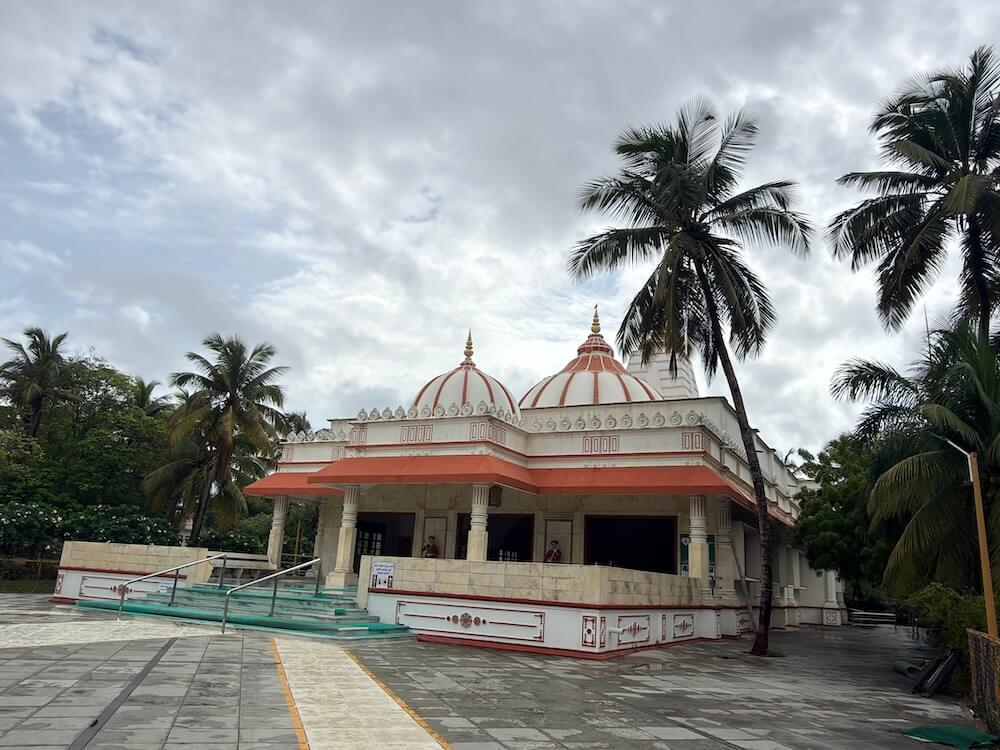 According to Pathri tradition, his father entrusted him to the care of a fakir during his childhood. Sai Baba’s elder brother is also believed to have become a fakir and his influence shaped Baba’s early life. At the age of eighteen, Sai Baba arrived in Shirdi, which became the centre of his life’s work. Through his compassion, selfless service and spirit of religious harmony, he came to be revered by Hindus, Muslims, Sikhs, Parsis, Jains and followers of many other faiths. Compassion, forgiveness, peace and the ideals of ‘Faith and Patience’ formed the foundation of his teachings. He attained Mahasamadhi at Shirdi on 15 October 1918.
The first temple dedicated to Sai Baba was established in AD 1922 at Kavilgaon in Kudal Taluka of Sindhudurg District, Maharashtra. It was here that the first idol of Sai Baba was installed. 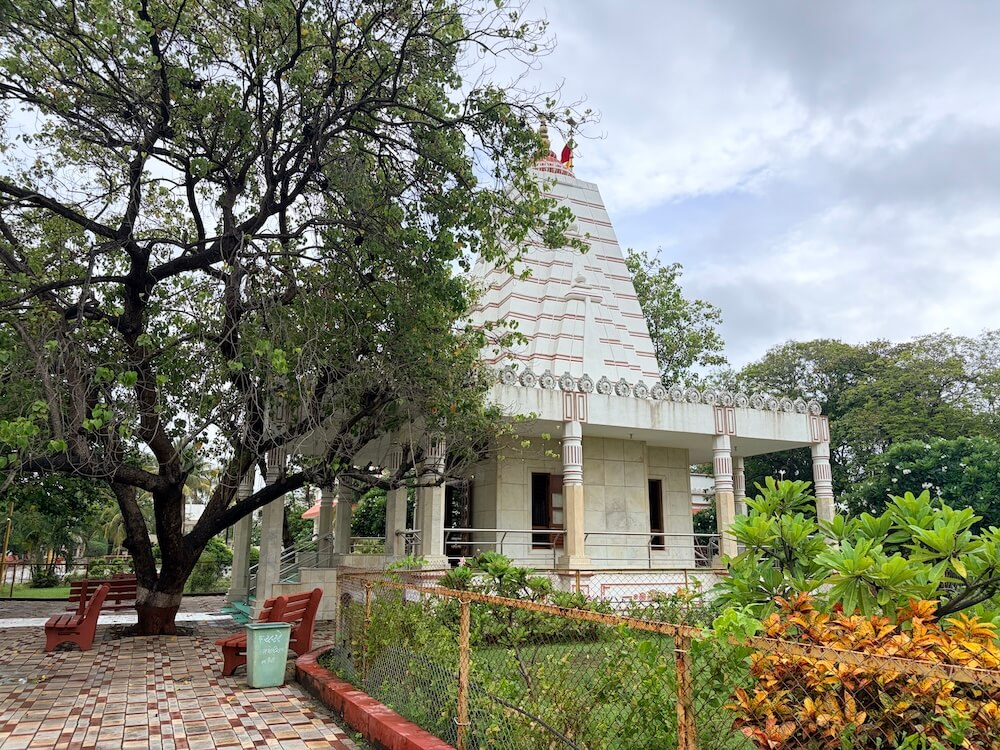 Later, in AD 1954, the marble idol that continues to be worshipped today was consecrated in Sai Baba’s Samadhi Temple at Shirdi. It was sculpted by the noted sculptor Balaji Vasant Talim. Thereafter, Sai temples were established throughout India. Idols of Sai Baba were also installed in many temples dedicated to other Hindu deities.
According to local tradition, the history of the Sai Baba Temple at Tithal began with Ramanlal Chhaganlal Panwala of Valsad, an ardent devotee of Sai Baba who frequently travelled to Shirdi for darshan. One day, he conceived the idea of building a grand temple dedicated to Sai Baba on the seashore at Tithal. It is said that a Parsi gentleman from Tithal, who was a close friend of Ramanlal Panwala, was deeply moved by the proposal. He generously donated his 5.5 acre seaside property free of cost for the project. 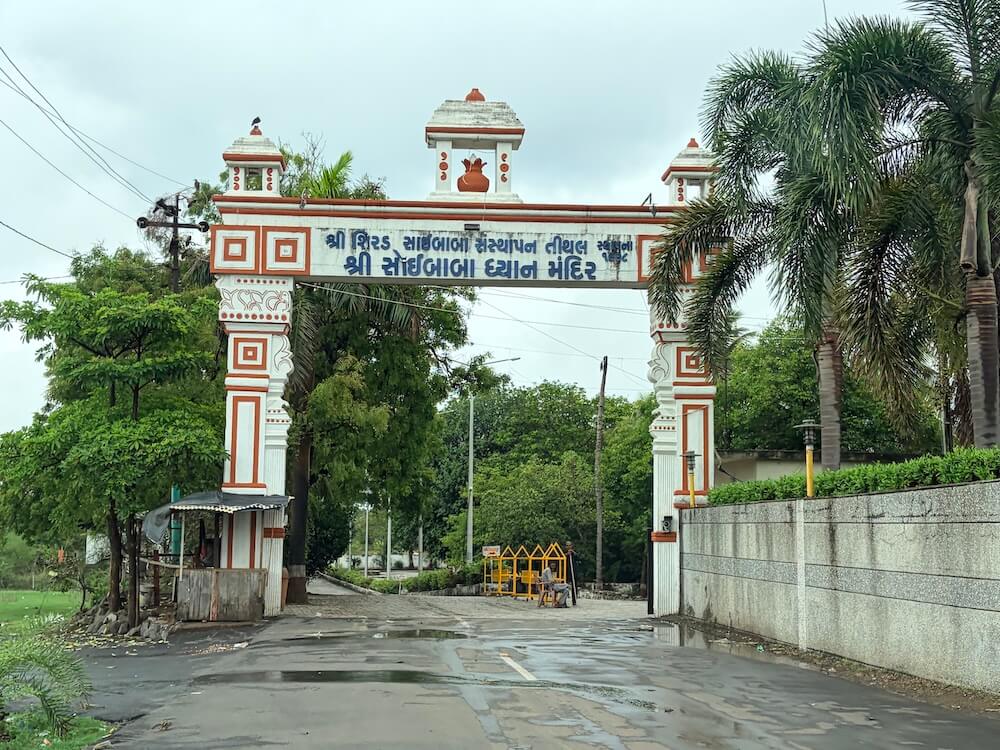 It was upon this land that the present temple, built entirely of marble, was constructed in AD 1992. The marble idol of Sai Baba enshrined here is said to have been sculpted by the Mumbai-based sculptor Madhu Patel. After extensive restoration and renovation in AD 2007, the temple acquired its present form.
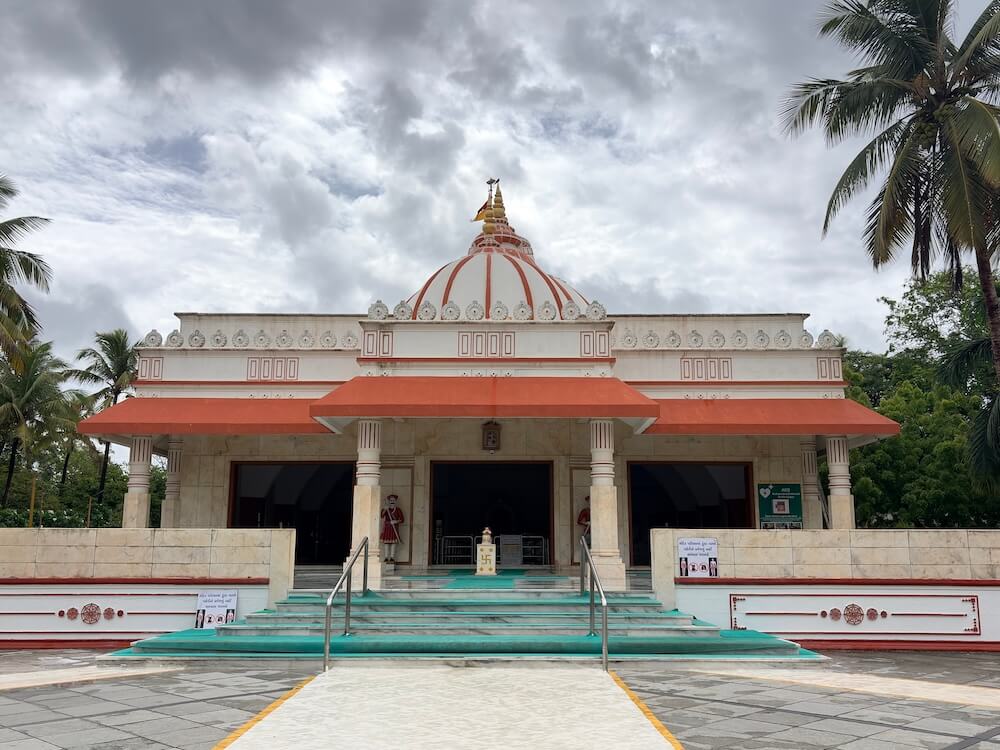
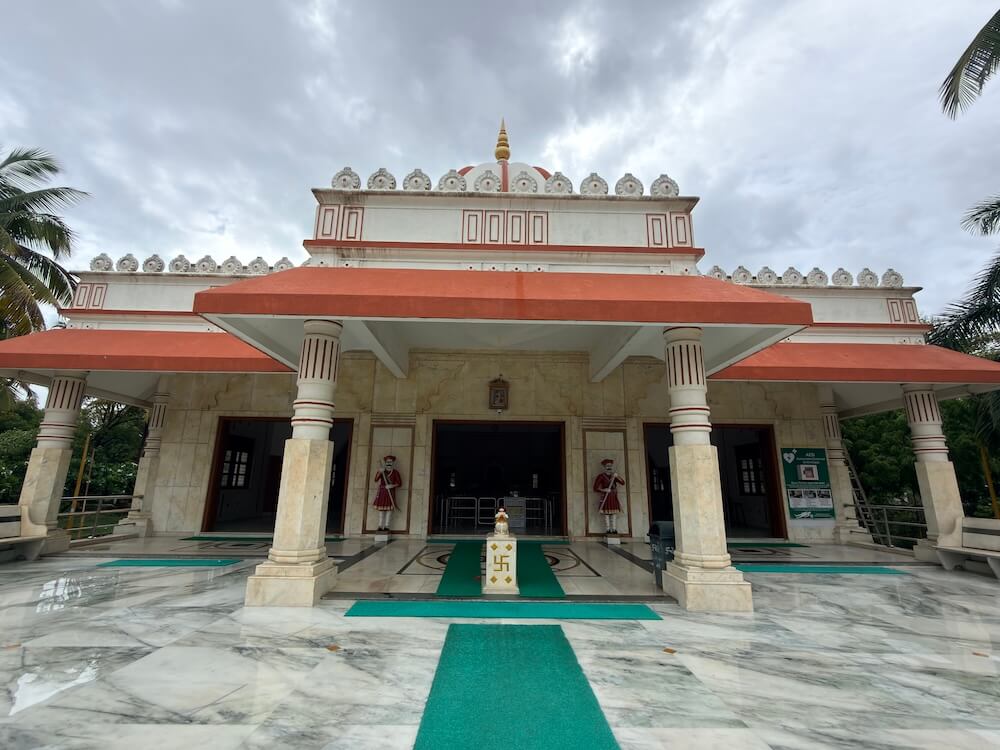
The temple stands within a spacious and thoughtfully planned complex. A paved pathway leads from the entrance archway to the temple. On either side are beautifully maintained gardens with green lawns and ornamental plants. From the courtyard, six steps lead to the entrance porch, which stands upon a raised platform. This semi-open porch has marble flooring and provides seating for devotees.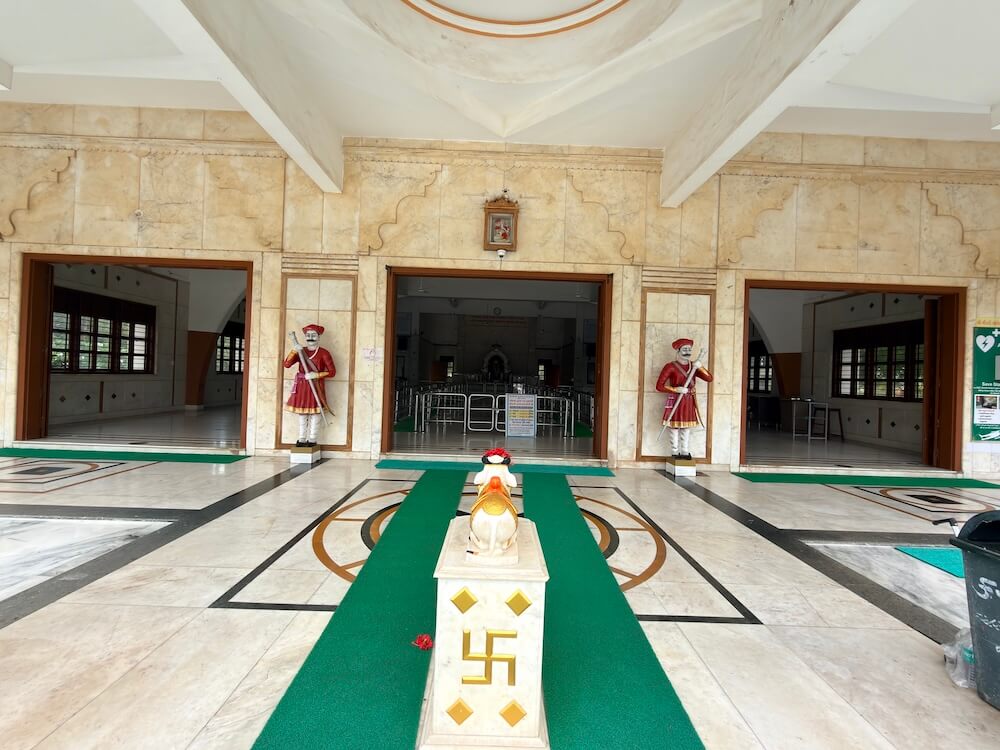
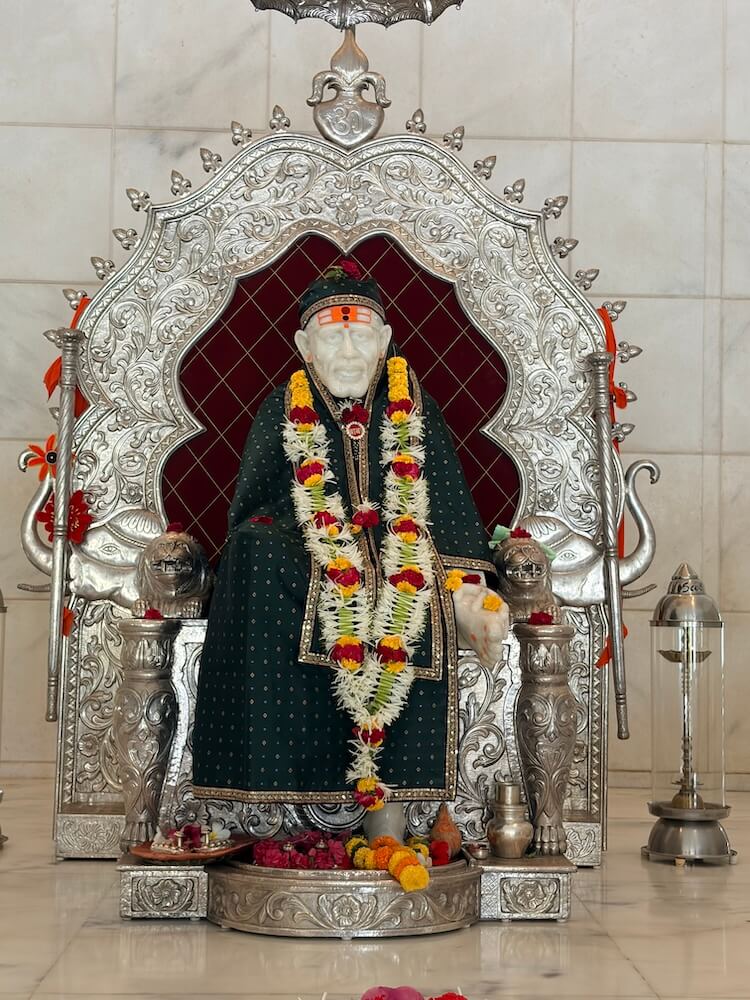
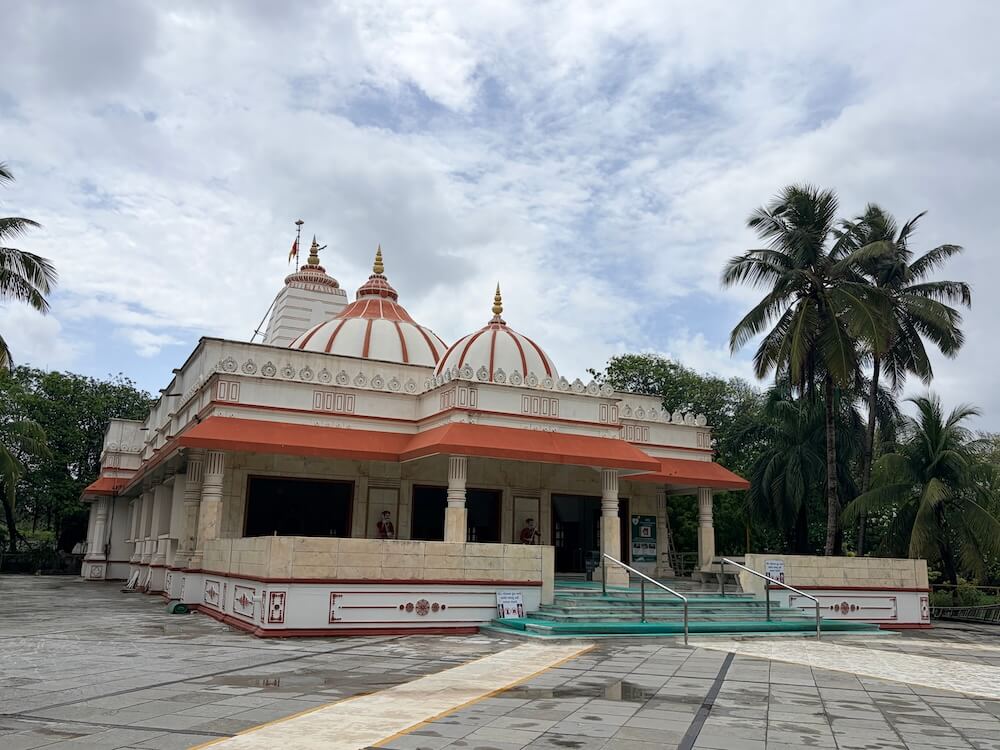
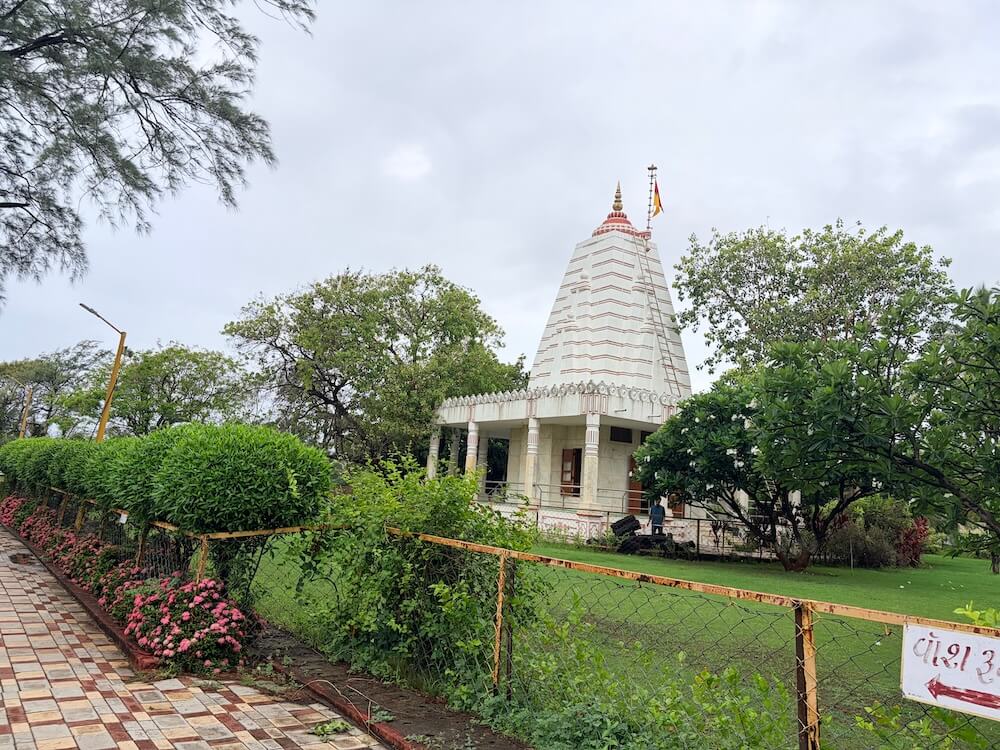
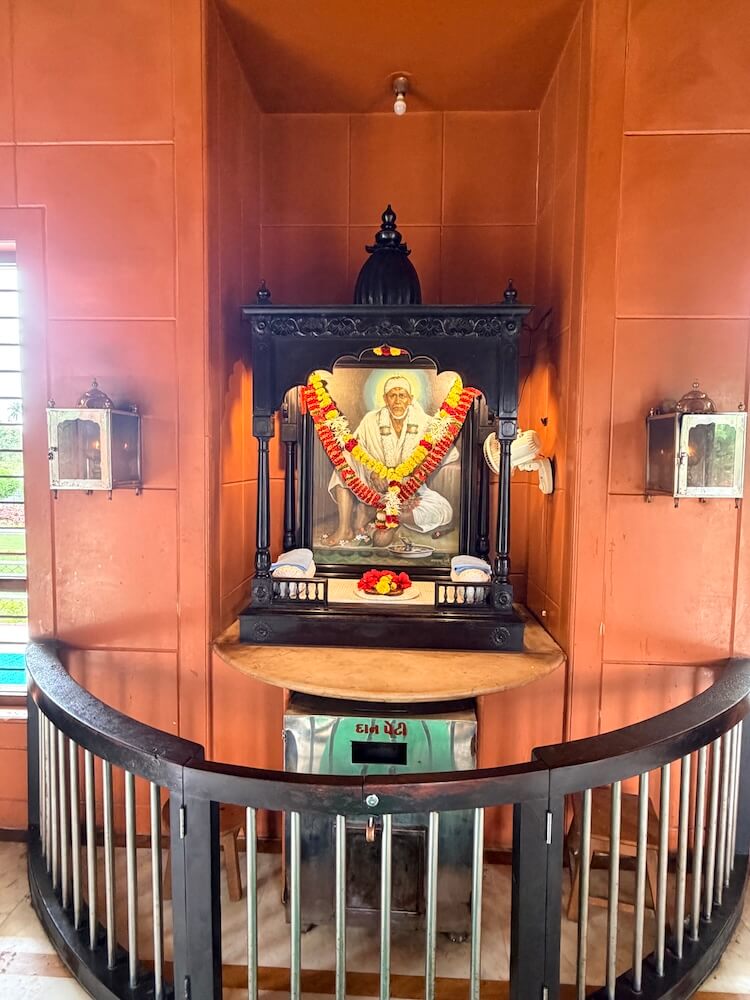
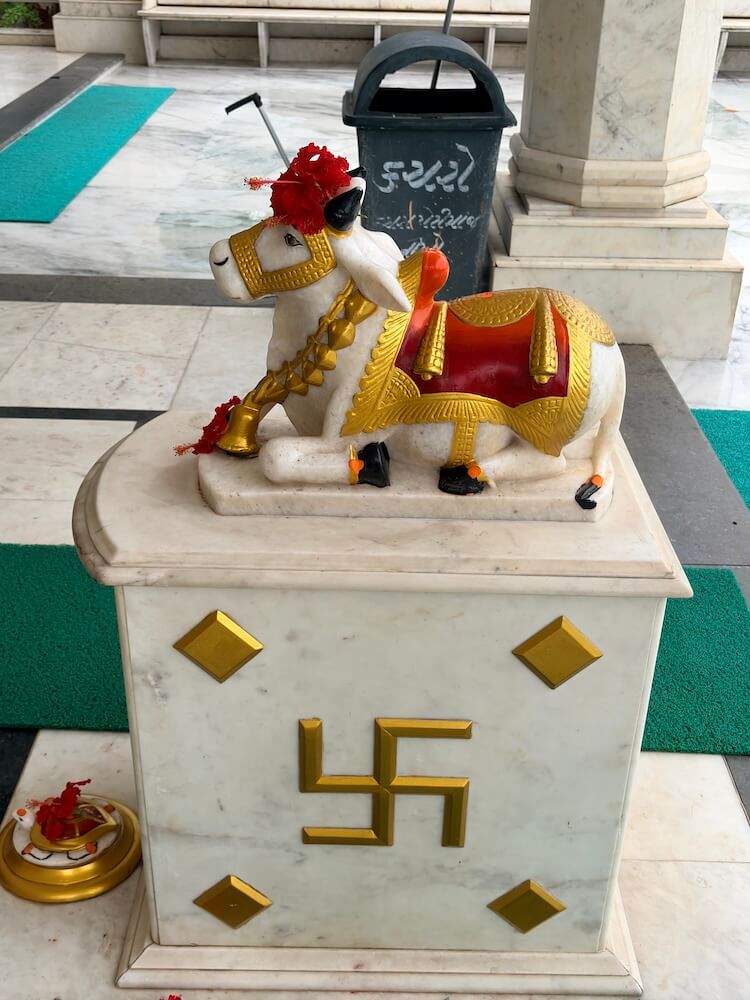
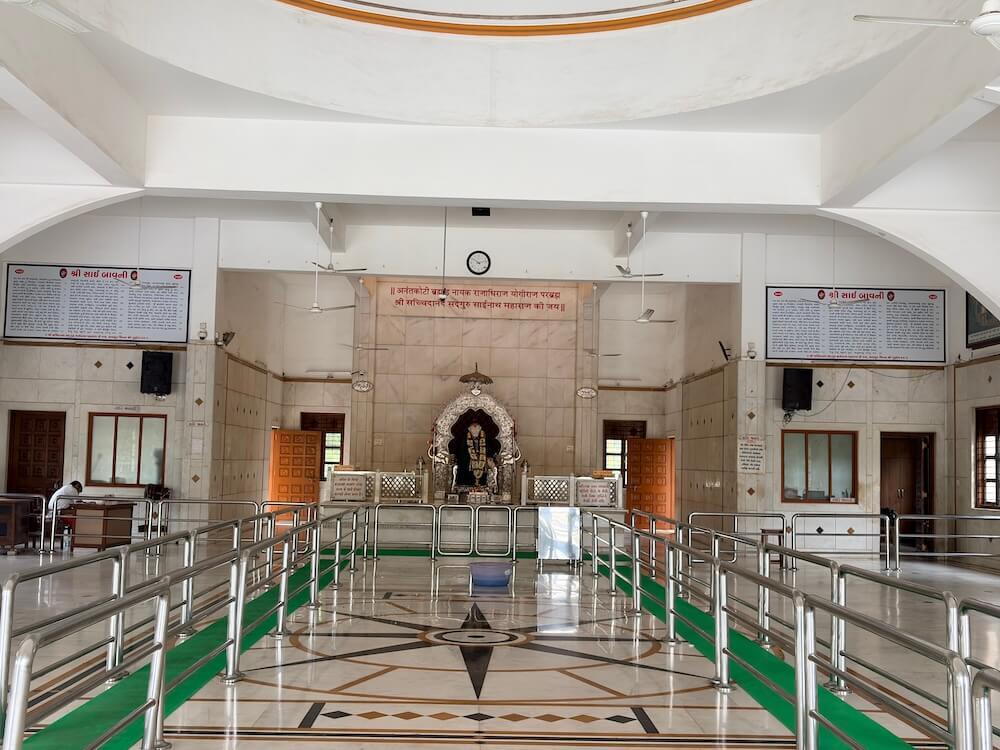
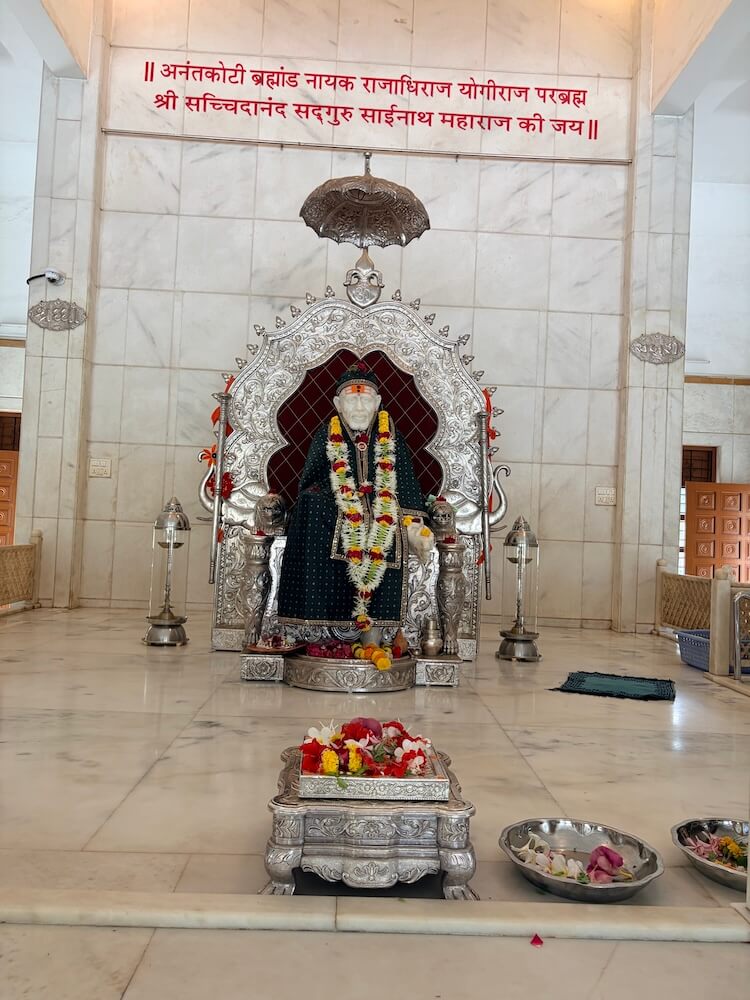
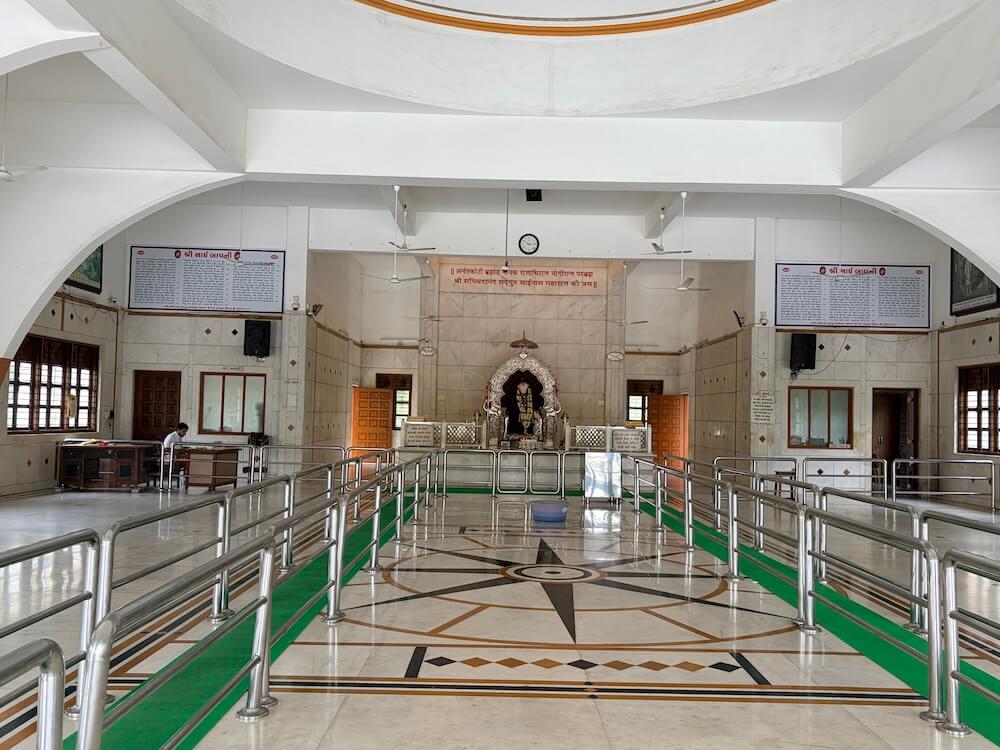
At the centre of the entrance porch, upon a high marble pedestal, stands a white marble idol of Nandi, with a stone tortoise placed before it. Three large doorways in the front wall lead into the assembly hall. The main central doorway is flanked by guardian figures, while an idol of Lord Ganesha is placed above the entrance. The spacious assembly hall has an orderly queue system to facilitate darshan. At the front of the hall, upon a raised platform surrounded by a circumambulatory path, stands Sai Baba’s white marble idol seated upon an ornate silver throne. The throne is beautifully carved. In front of the idol, Sai Baba’s sacred Padukas are placed upon a silver pedestal. Both the entrance porch and the assembly hall are crowned with domed spires, 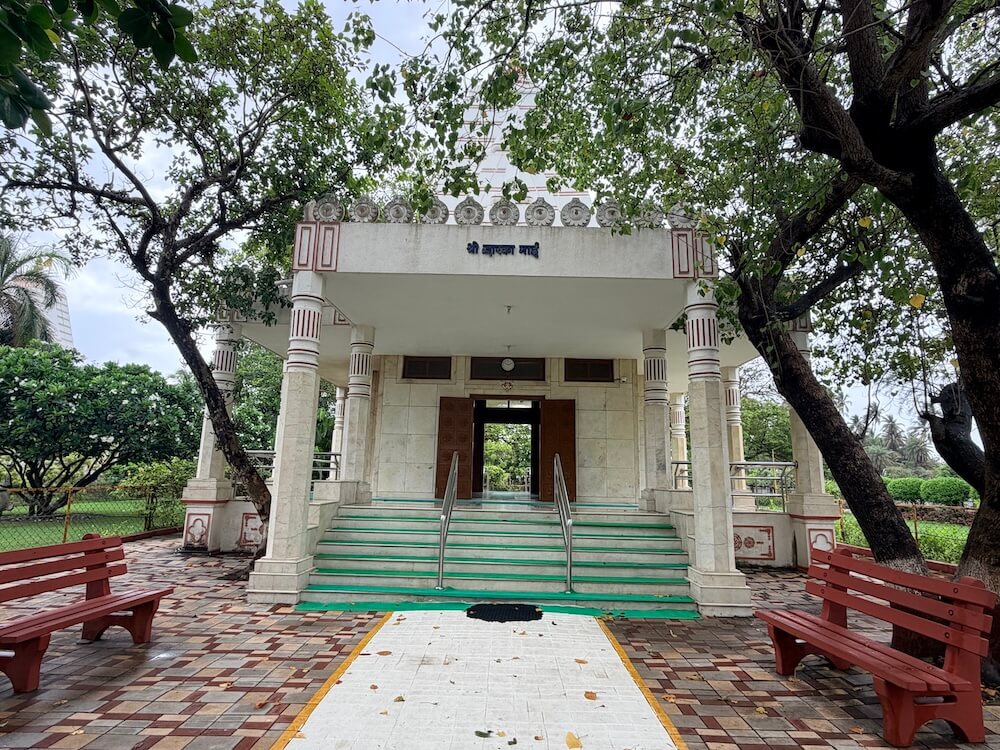 while the sanctum is surmounted by a square tower. Adjacent to the main temple is the shrine of Dwarkamai, where the sacred Dhuni (eternal fire) burns continuously. The temple complex also provides accommodation for devotees and a dining hall.
Devotees may have darshan every day from 6.00 a.m. to 8.00 p.m. Aarti is performed daily at 6.30 a.m. and 7.00 p.m. The temple celebrates various religious festivals with great enthusiasm throughout the year.
The number of visitors is especially high on Thursdays, Sundays and public holidays. A Mahaprasad is also served every Thursday. Guru Purnima is the temple’s principal annual celebration. On this occasion, a grand festival in honour of Sai Baba is organised.
Along with devotees from the Tithal region, large numbers of tourists also participate in the religious programmes.
Useful Information :
- Located at 6 km from Valsad and 1 km from Tithal Bus Station.
- State Transport (ST) bus services to Tithal are available from many towns across the district.
- Private vehicles can reach the temple parking area.
- Accommodation and breakfast facilities are available nearby.
- Contact: Temple Office. Telephone: +91 2632 248716.
साईं बाबा मंदिर
तीथल, ताल./जिला. वलसाड
मंदिरे
Temples
मंदिर
મંદિરો
கோவில்கள்
దేవాలయాలు
ക്ഷേത്രങ്ങൾ
ದೇವಾಲಯಗಳು
মন্দিরসমূহ
ਮੰਦਿਰ
-
भाव-भावेश्वर महादेव मंदिर बारुमाळ, ता. धरमपूर, जि. वलसाड
अधिक माहितीBhav-Bhaveshwar Mahadev Temple Barumal, Tal. Dharampur, Dist. Valsad
View Detailsभाव-भावेश्वर महादेव मंदिर बारुमल, ताल. धरमपुर, जिला. वलसाड
विवरण देखेंBhav-Bhaveshwar Mahadev Temple Barumal, Tal. Dharampur, Dist. Valsad
વિગત જુઓBhav-Bhaveshwar Mahadev Temple Barumal, Tal. Dharampur, Dist. Valsad
விவரங்களைக் காண்கBhav-Bhaveshwar Mahadev Temple Barumal, Tal. Dharampur, Dist. Valsad
వివరాలను చూడండిBhav-Bhaveshwar Mahadev Temple Barumal, Tal. Dharampur, Dist. Valsad
വിശദാംശങ്ങൾ കാണുകBhav-Bhaveshwar Mahadev Temple Barumal, Tal. Dharampur, Dist. Valsad
ವಿವರಗಳನ್ನು ವೀಕ್ಷಿಸಿBhav-Bhaveshwar Mahadev Temple Barumal, Tal. Dharampur, Dist. Valsad
বিস্তারিত দেখুনBhav-Bhaveshwar Mahadev Temple Barumal, Tal. Dharampur, Dist. Valsad
ਵੇਰਵੇ ਦੇਖੋ -
दत्त मंदिर पाथरी, ता./जि. वलसाड
अधिक माहितीDatt Temple Pathri, Tal./Dist. Valsad
View Detailsदत्त मंदिर पाथरी, ताल./जिला. वलसाड
विवरण देखेंDatt Temple Pathri, Tal./Dist. Valsad
વિગત જુઓDatt Temple Pathri, Tal./Dist. Valsad
விவரங்களைக் காண்கDatt Temple Pathri, Tal./Dist. Valsad
వివరాలను చూడండిDatt Temple Pathri, Tal./Dist. Valsad
വിശദാംശങ്ങൾ കാണുകDatt Temple Pathri, Tal./Dist. Valsad
ವಿವರಗಳನ್ನು ವೀಕ್ಷಿಸಿDatt Temple Pathri, Tal./Dist. Valsad
বিস্তারিত দেখুনDatt Temple Pathri, Tal./Dist. Valsad
ਵੇਰਵੇ ਦੇਖੋ -
राधा-कृष्ण मंदिर धरमपूर, ता. आणि जि. वलसाड
अधिक माहितीRadha-Krishna Temple Dharampur, Tal. & Dist. Valsad
View Detailsराधा-कृष्ण मंदिर धरमपुर, ताल. एवं जिला. वलसाड
विवरण देखेंRadha-Krishna Temple Dharampur, Tal. & Dist. Valsad
વિગત જુઓRadha-Krishna Temple Dharampur, Tal. & Dist. Valsad
விவரங்களைக் காண்கRadha-Krishna Temple Dharampur, Tal. & Dist. Valsad
వివరాలను చూడండిRadha-Krishna Temple Dharampur, Tal. & Dist. Valsad
വിശദാംശങ്ങൾ കാണുകRadha-Krishna Temple Dharampur, Tal. & Dist. Valsad
ವಿವರಗಳನ್ನು ವೀಕ್ಷಿಸಿRadha-Krishna Temple Dharampur, Tal. & Dist. Valsad
বিস্তারিত দেখুনRadha-Krishna Temple Dharampur, Tal. & Dist. Valsad
ਵੇਰਵੇ ਦੇਖੋ