
शांतीधाम जिनालय
तिथळ, ता. वलसाड, जि. वलसाड
Shantidham Jinalaya
Tithal, Tal. Valsad, Dist. Valsad
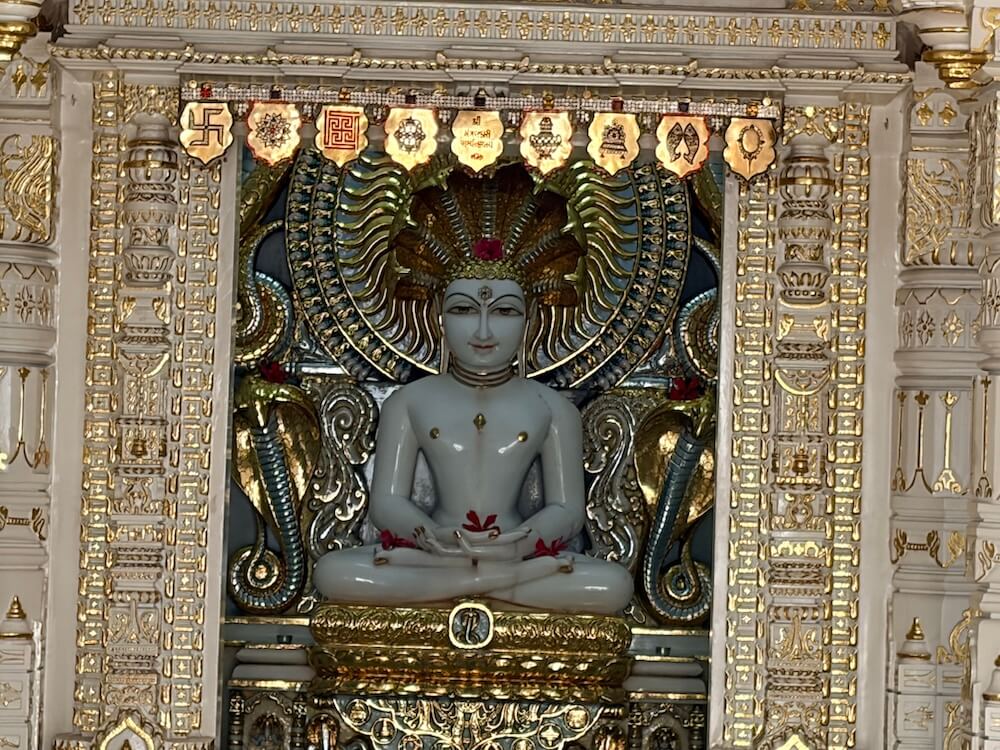 Adjacent to the scenic Tithal coastline in the Valsad district lies the Shantidham Jinalaya, revered by devotees as the sacred abode of the benign twenty-third Tirthankara of the Jain faith, Lord Parshvanath. This sacred place is popularly known as the Shantidham Aradhana Kendra or the Shantidham Jain Derasar. The entire spiritual complex was established in the year 2008 under the profound guidance of the Muni Jinchandraji Maharaj (of the celebrated Bandhutriputi triumvirate), who had embraced the rigours of Jain monastic initiation at the tender age of eight along with his entire family. Incorporating the needs of visiting pilgrims, the architectural layout integrates various modern amenities.
  These include a spacious discourse hall, air-conditioned residential quarters for pilgrims arriving from distant shores and an independent Upashraya structure specifically designated for the serene stay of revered Jain ascetics and nuns.
Situated a brief distance from the district headquarters of Valsad, the renowned coastal resort of Tithal stands as a sanctified and vital spiritual hub for the Jain community. The profound connection between this coastal expanse and the Jain faith grew particularly strong during the latter half of the twentieth century. The holistic development of this sacred domain was inspired by the illustrious Jain ascetics known as the ‘Bandhutriputi’ Maharaj Sahebs—namely Munichandraji Maharaj, Kirtichandraji Maharaj and Jinchandraji Maharaj. They selected the tranquil and pristine natural ambience of Tithal for their deep meditation and spiritual practices. Drawn by their momentous decision, the Jain community gravitated towards this region in vast numbers and within a short span, Tithal emerged as a pre-eminent centre for Jain culture and religious events. 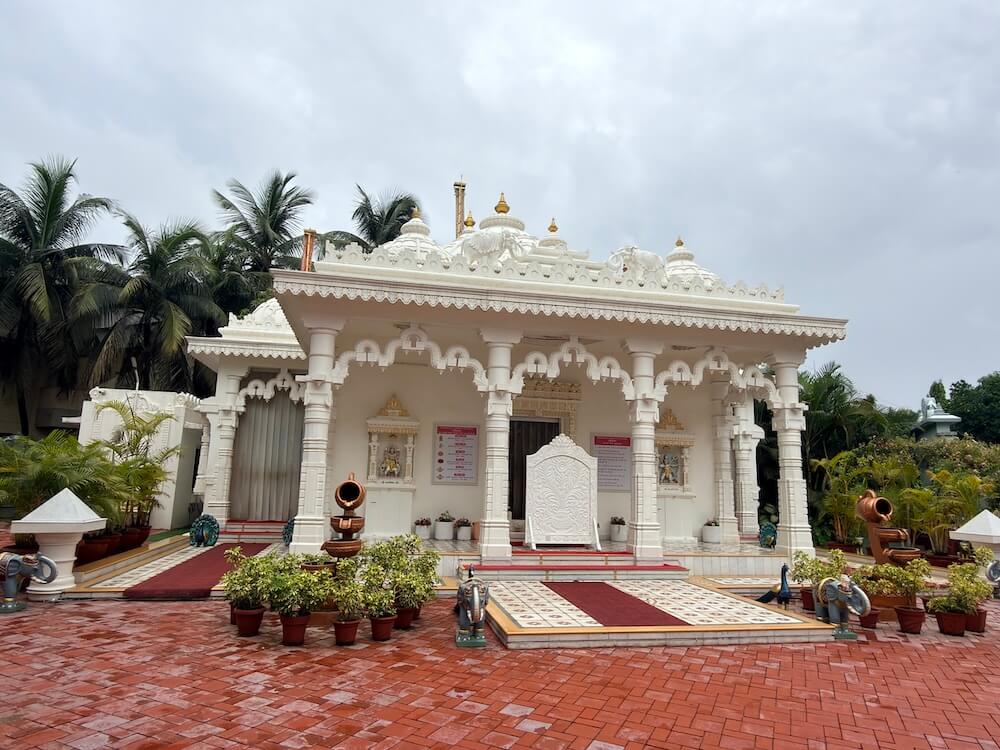 Remarkably, the comprehensive construction and ultimate realisation of this Shantidham Jinalaya was accomplished within the span of a single year.
The temple is profoundly dedicated to the twenty-third Tirthankara of Jainism, Lord Parshvanath. According to Jain historical records, Lord Parshvanath was the penultimate Tirthankara, preceding Lord Mahavira. He was born circa 850 BC, approximately two hundred and fifty years before Lord Mahavira, in the ancient city of Kashi to King Ashvasena and Queen Vamadevi. Parshvanath married Prabhavati, the daughter of King Prasenajit of Kushasthala (Kannauj). At the age of thirty, upon listening to the ‘Rishabhadeva Charitra’ in the royal court, a particular incident left an indelible impression upon his mind. 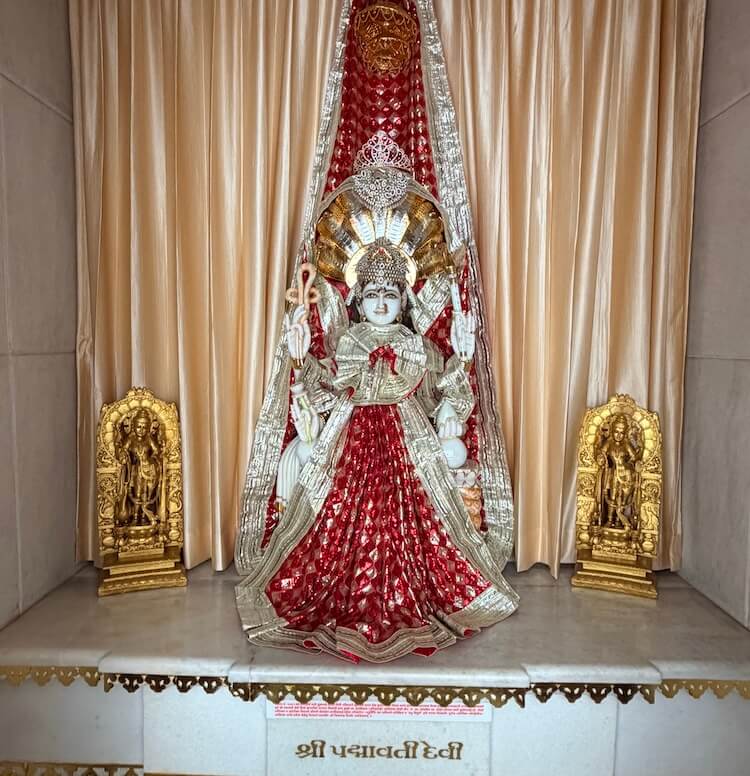 Consequent to this awakening, he resolved to renounce the material world completely. Embracing asceticism, he dedicated himself entirely to the path of spiritual liberation. Lord Parshvanath observed rigorous and unyielding meditation for eighty-three consecutive days at Ahichchhatra (in modern-day Uttar Pradesh), where on the eighty-fourth day, corresponding to Chaitra Krishna Chaturthi, he attained ‘Kevalajnana’. This supreme wisdom is regarded as the absolute zenith of spiritual knowledge. Ultimately, he attained moksha (liberation) atop Mount Sammed Shikhar, located near Madhuban in the modern state of Jharkhand, which is why the Sammed Shikhar region is revered as the ultimate place of pilgrimage for the Jain community.
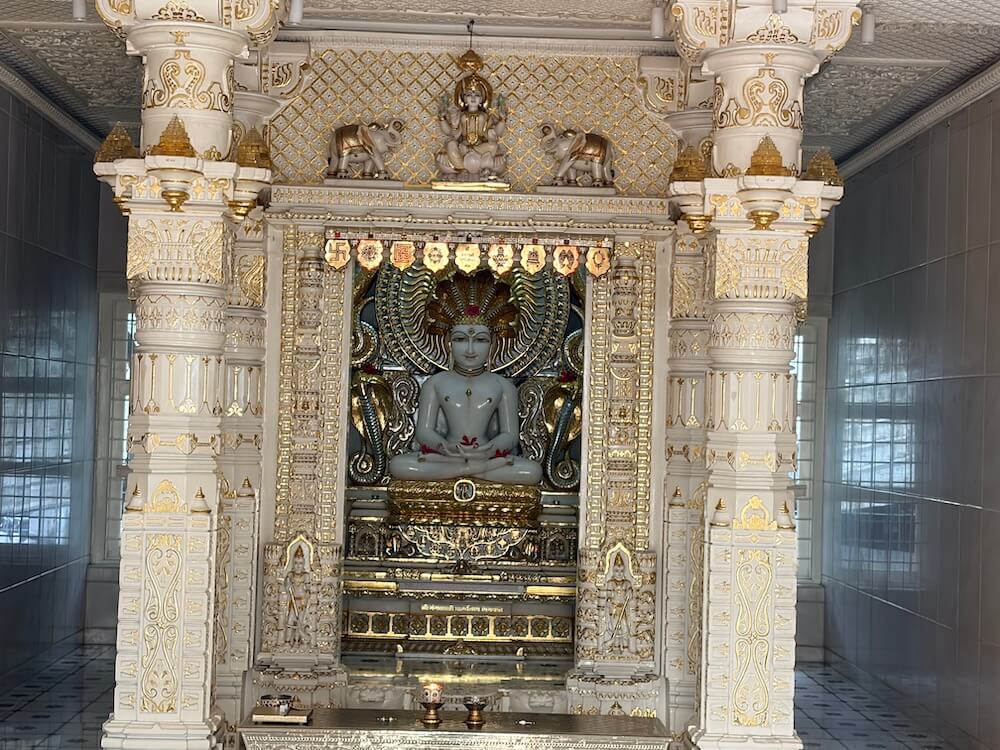
Within the Jain tradition, the iconographic form of each Tirthankara features a specific cognisance or emblem to facilitate easy recognition. For Lord Parshvanath, this emblem is a seven-hooded serpent, which is widely revered as a symbol of the divine protection accorded to him during his intense austerities. 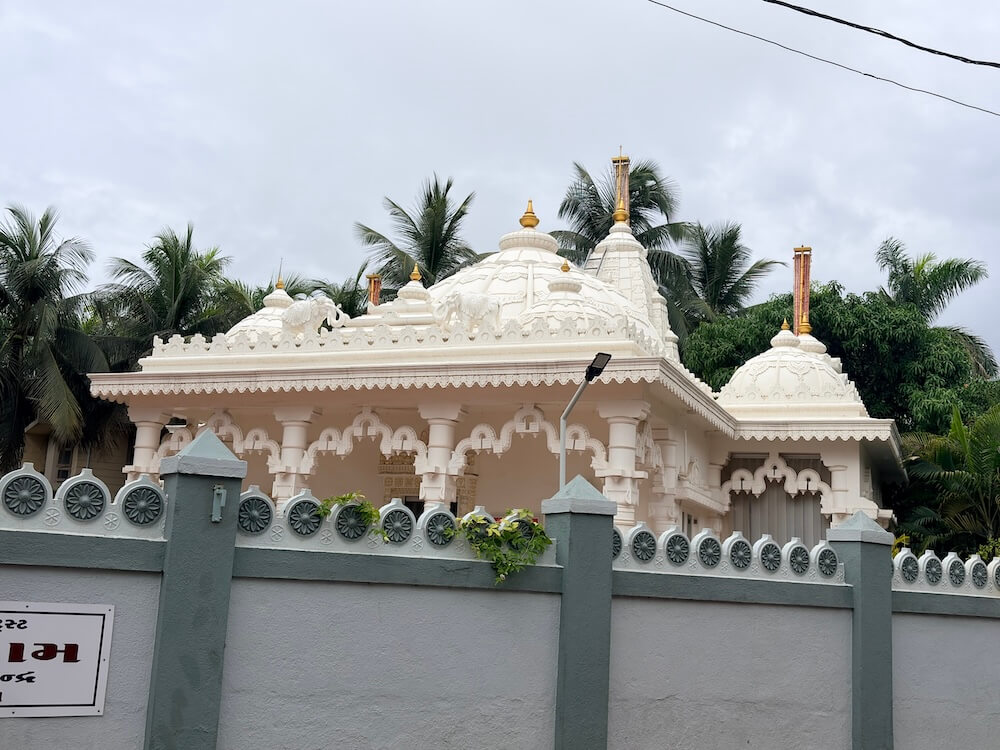 According to sacred lore, whilst he was deeply absorbed in meditation at Ahichchhatra, a demonic entity named ‘Kamatha’—his adversary from a previous incarnation—attempted to disrupt his penance by unleashing a torrential downpour and a violent storm. At that critical juncture, the serpent king Dharanendra, whom Parshvanath had compassionately saved from the throes of death in a past life, manifested to protect him. Lord Dharanendra deployed his massive seven-hooded canopy over the head of the meditating Parshvanath, shielding him from the elements. Alongside him, his consort, Goddess Padmavathi, also assisted in guarding the Lord. While numerous temples and idols of Lord Parshvanath are found across the nation, the Chintamani Parshvanath Jain Temple at Tithal in the Valsad district stands distinguished as a deeply sacred and venerated shrine for Jain pilgrims.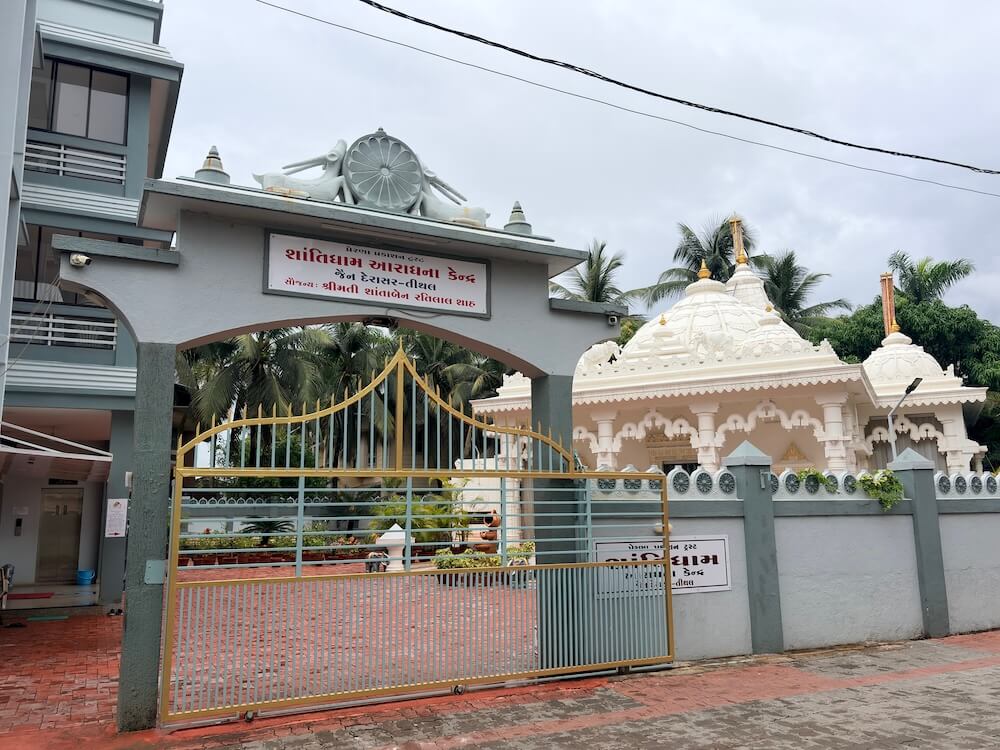
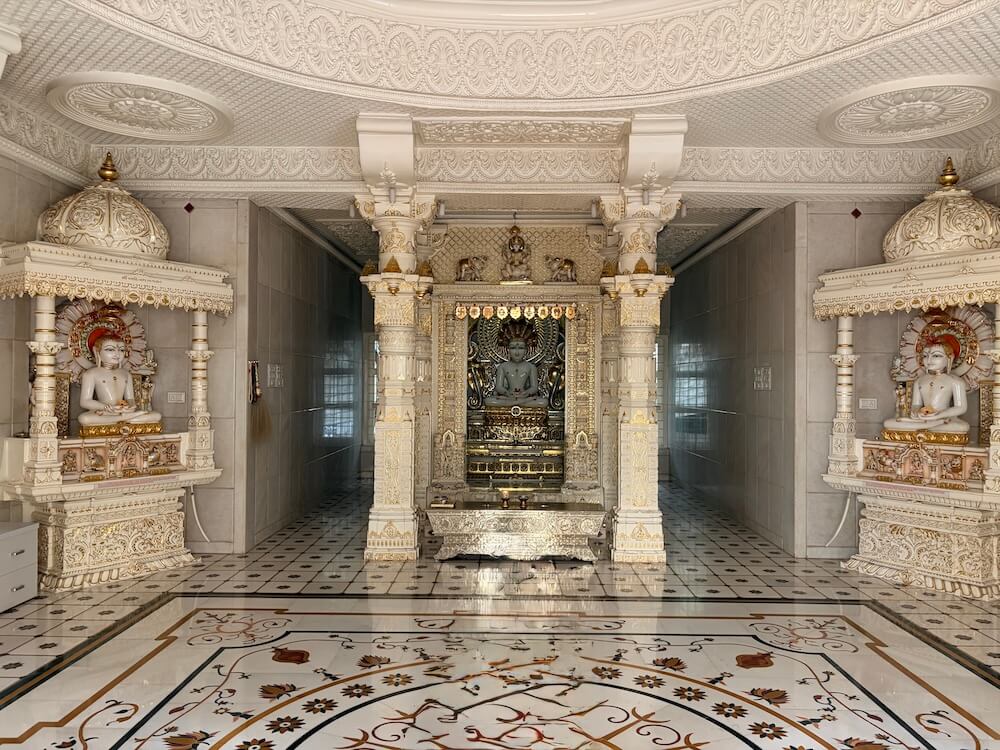
Access to the temple courtyard is gained through a gateway set into the fortified wall encompassing the sanctuary, which is known as the ‘Shantidham Aradhana Kendra’ or ‘Shri Chintamani Parshvanath Jain Derasar’. Upon entering the courtyard, the well-equipped building of the spiritual centre lies to the left, while the distinctive Derasar, crafted from pristine white marble, stands elegantly to the right. The architectural design bears the visible imprint of the traditional Maru-Gurjara style, commonly known as Solanki architecture, prevalent in Western India. The structural composition of this temple comprises a front portico, an assembly hall, the sanctum sanctorum and two flanking subsidiary shrines.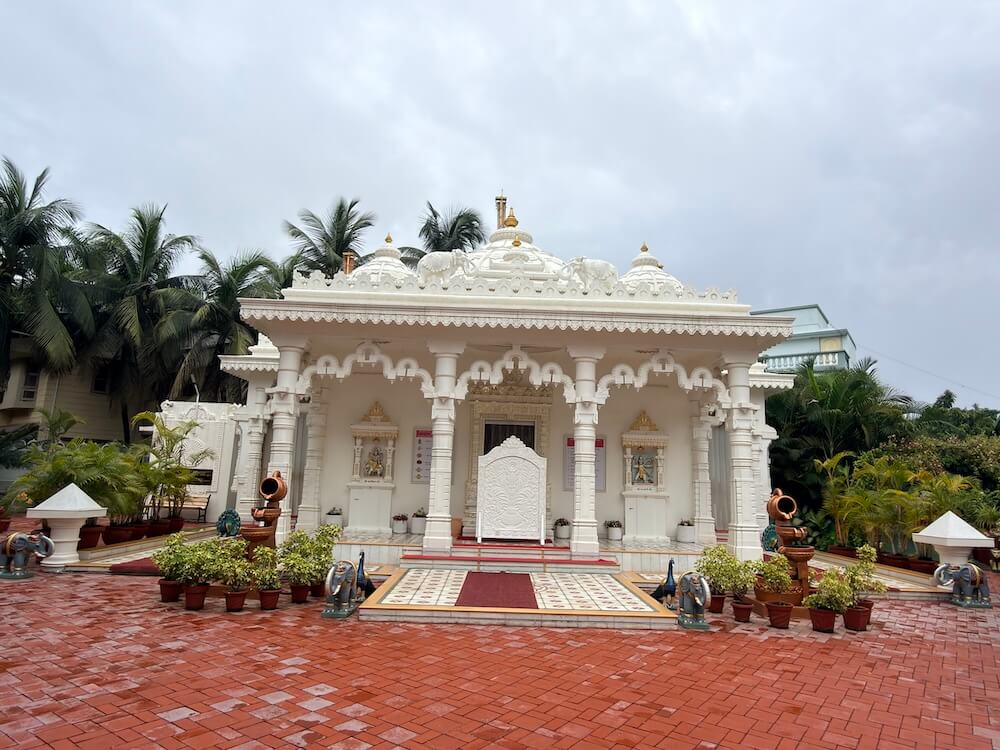 Fine sculptures of peacocks and elephants grace the courtyard in front of the temple. Within the front portico, the load-bearing pillars are seamlessly joined together by sweeping, decorative cusped arches. Positioned near the entrance of the assembly hall within the portico is a monolithic, elaborately carved stone slab known as the ‘Shilapatta’. In accordance with traditional architectural belief, this stone slab serves as a vital barrier to regulate the flow of energy, ensuring that the spiritual and positive energy generated within the inner sanctum does not disperse directly outside, but remains concentrated within the temple precincts. The pillars and walls of the assembly hall display intricate and artistic craftsmanship.
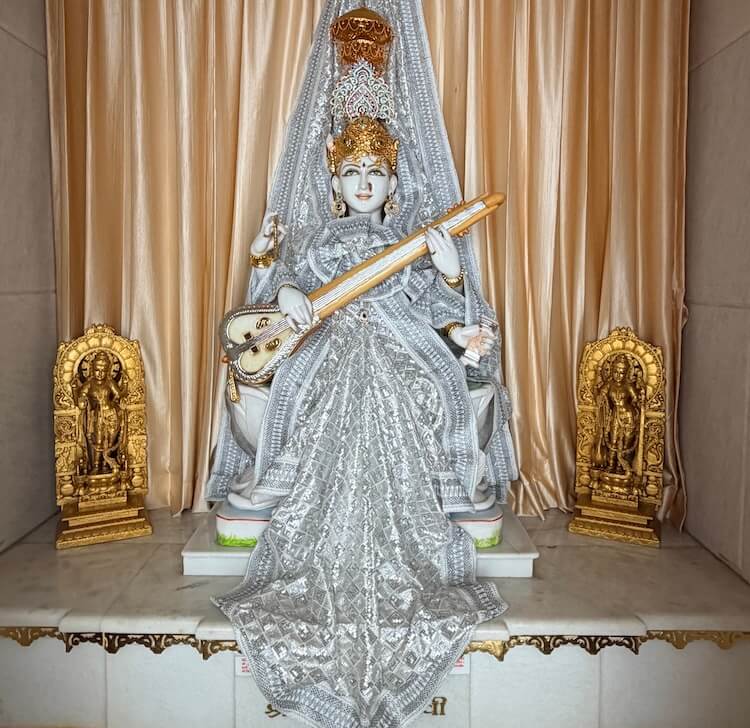
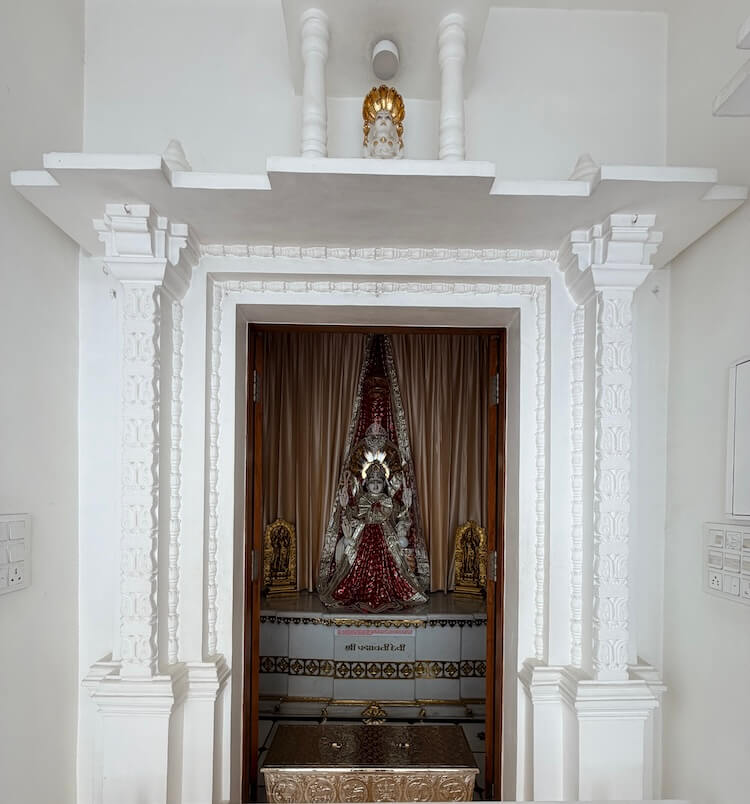
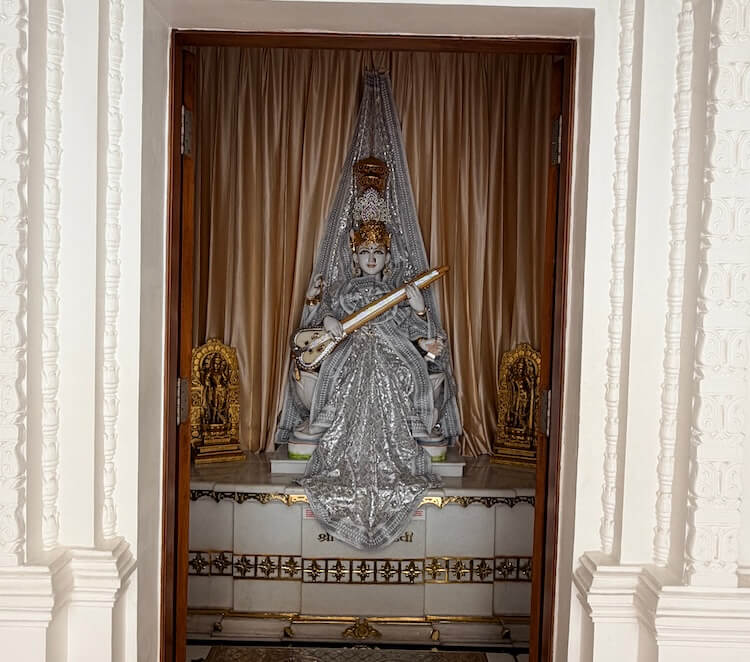
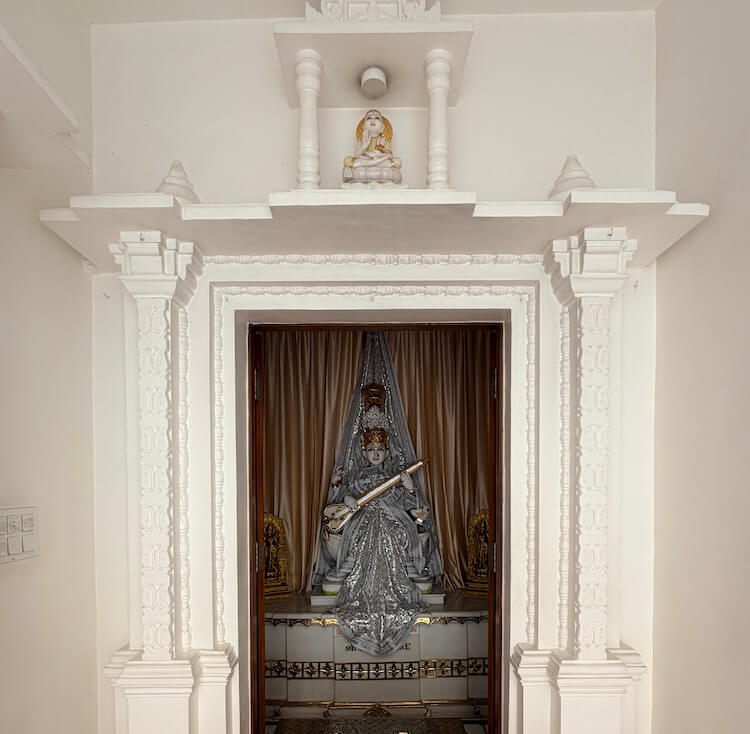
Flanking the entrance to the inner sanctum within the assembly hall are two marble canopies enshrining the idols of Lord Adinath and Lord Shantinath. 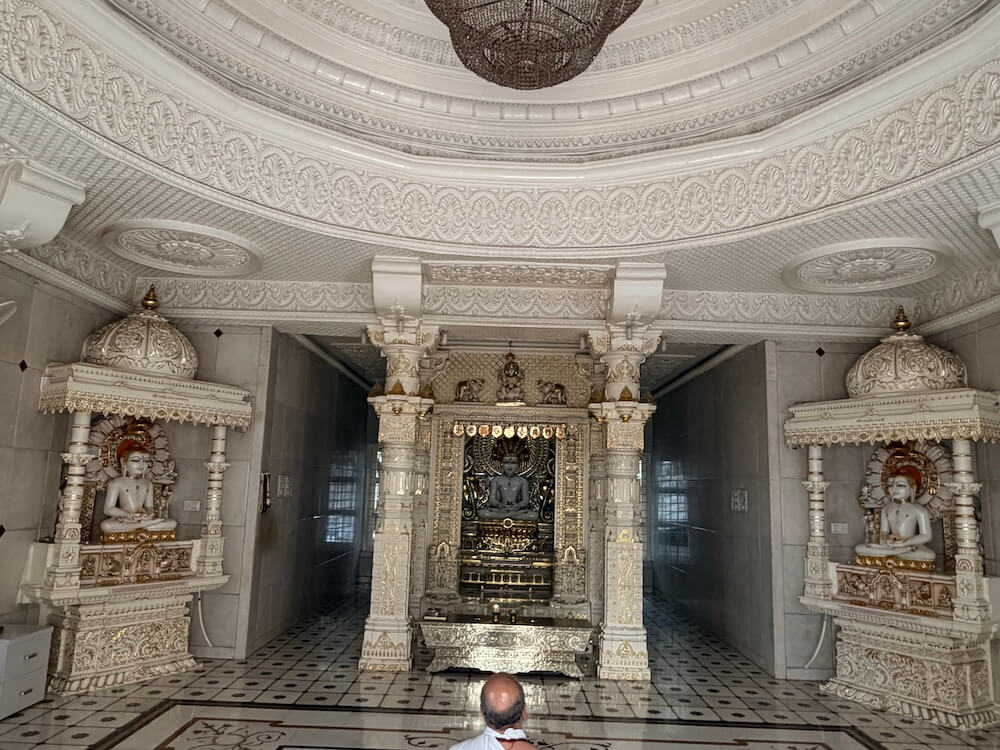 Inside the principal sanctum sanctorum, the idol of the temple’s primary deity, the twenty-third Tirthankara Lord Parshvanath, is consecrated upon the main altar. The subsidiary shrines located to the left and right of the main temple house the idols of Goddess Saraswati and Goddess Padmavathi, respectively. Crowning the temple roof, in addition to the primary spire, are smaller tiered domes characteristic of Jain architecture known as the samavasarana (or samavaran), which feature stepped roofs. The outer edges of these unique stepped ceilings are intricately carved with rows of elephant sculptures.
Every year, during the holy festival of Paryushan and throughout the period of Chaturmas, a vast number of Jain laymen and laywomen arrive from all corners of the country, particularly from Mumbai and Surat, to participate in meditation, mantra recitation and the observance of vows of silence. The annual spiritual study camps and religious value classes conducted here play a pivotal role in keeping the younger generation of the Jain community connected with their core ancestral values. Furthermore, numerous monastic initiation ceremonies and auspicious celebrations marking the five major life events of a Tirthankara are conducted on this holy soil with immense spiritual fervour. Devotees are granted admission to the Shantidham Aradhana Kendra and the Shantidham Jain Derasar daily from 8:00 am to 1:00 pm and from 3:00 pm to 8:30 pm.
Useful Information :
- Situated at a distance of 5 km from Valsad railway station
- State transport bus facilities to Valsad are readily available from numerous major cities across the state.
- Reliable state transport buses and private vehicle services operate frequently from Valsad city.
- Private vehicles can drive directly up to the temple premises.
- Excellent accommodation and breakfast facilities are available in the immediate vicinity for
visiting devotees. - Contact: Temple Office, Mob. 9374255874, Tel: 02632255874
शांतिधाम जिनालय
तीथल, ताल. वलसाड, जिला. वलसाड
मंदिरे
Temples
मंदिर
-
साईबाबा मंदिर तिथळ, ता./जि. वलसाड
अधिक माहितीSai Baba Temple Tithal, Tal./Dist. Valsad
View Detailsसाईं बाबा मंदिर तीथल, ताल./जिला. वलसाड
विवरण देखें -
भाव-भावेश्वर महादेव मंदिर बारुमाळ, ता. धरमपूर, जि. वलसाड
अधिक माहितीBhav-Bhaveshwar Mahadev Temple Barumal, Tal. Dharampur, Dist. Valsad
View Detailsभाव-भावेश्वर महादेव मंदिर बारुमल, ताल. धरमपुर, जिला. वलसाड
विवरण देखें -
दत्त मंदिर पाथरी, ता./जि. वलसाड
अधिक माहितीDatt Temple Pathri, Tal./Dist. Valsad
View Detailsदत्त मंदिर पाथरी, ताल./जिला. वलसाड
विवरण देखें