 The Shambheshwar Mahadev Temple, located in Delwada village of Mansa Taluka, is one of the five temples in Gujarat that enshrine a Yoni-Lingam (Bhavalingam) of Lord Shiva. According to legend, Lord Shiva manifested here through the hoof print of a cow. The temple is believed to be around 600 years old and the Shivalingam is considered to be jagrut (divinely active or spiritually awakened) by devotees. During Mahashivratri and the holy month of Shravan, hundreds of devotees come here chanting ‘Har Har Mahadev’, to offer Belpatra (leaves) and perform ritual ablutions (Abhishek).
Typically, Shiva temples house either an idol or a Shivalingam. But at the Shambheshwar Mahadev Temple in Delwada, a Yoni-Lingam is worshipped. Gujarat is known for its ancient Shiva temples and only five such temples in the state enshrine a Yoni-Lingam. This temple is one of them.
According to the local myth, around 600 years ago, this area was under Rajput rule. At that time, locals used to bring their cattle to graze in the surrounding forest. One cow stopped giving milk at home, so it was observed closely. It was found that the cow was releasing milk at a specific spot. When villagers dug the spot, Lord Shiva was revealed in the form of a hoof print. This miraculous event led the villagers to build a small shrine at the site. As word spread about this awakened (jagrut) shrine, devotees from nearby villages began visiting for darshan.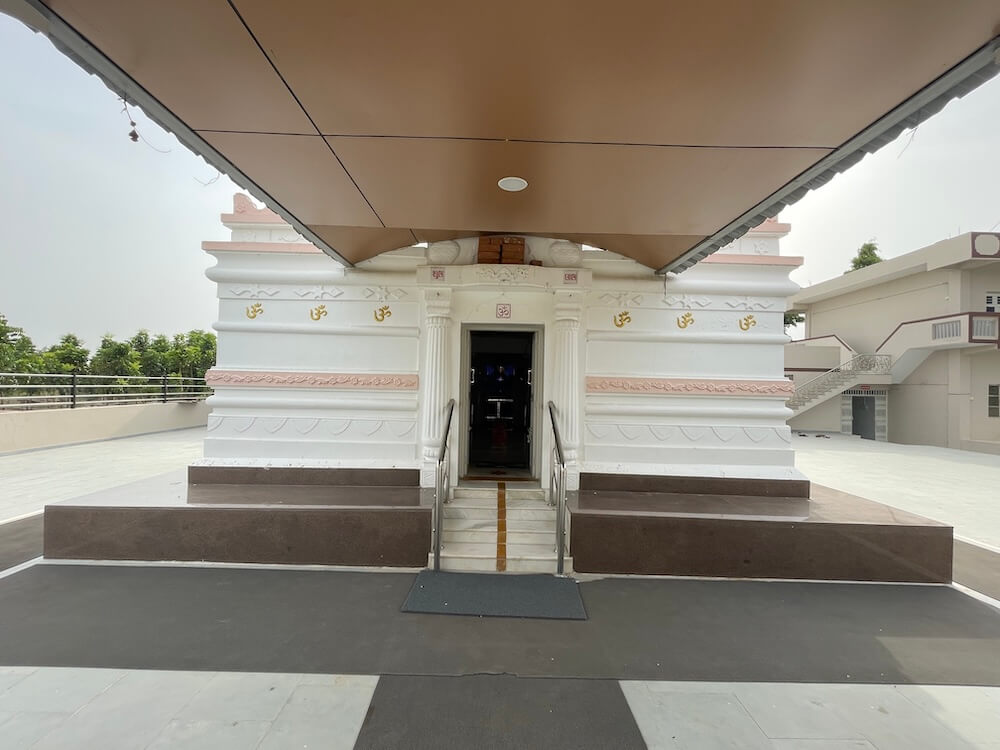 Earlier, the temple rituals were conducted by ascetic priests. 26 years ago, villagers from Delwada and surrounding areas undertook the renovation of the temple. In 2024, the Silver Jubilee of the temple’s restoration was celebrated with great enthusiasm.
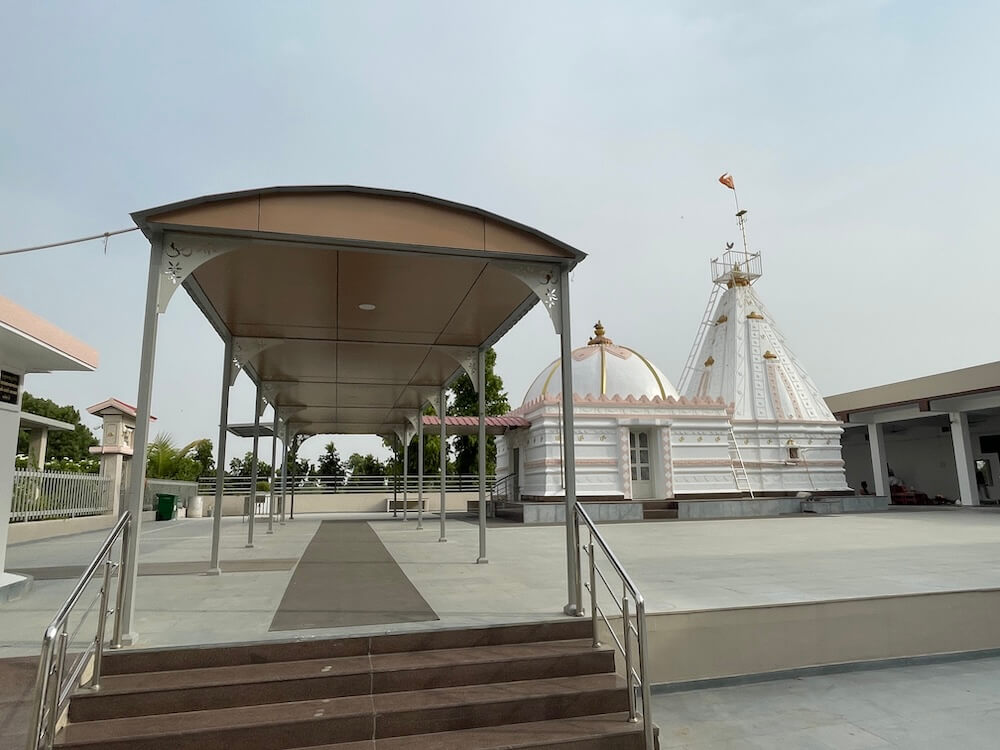
The temple is located on the border of Delwada and Aajol villages, along the Mansa-Vijapur Highway. Behind the temple is a large pond. Entering through a grand gateway, a paved pathway leads to the temple. Cement benches are provided along the way for devotees to sit and rest. The area features flowering plants and a children’s play area.
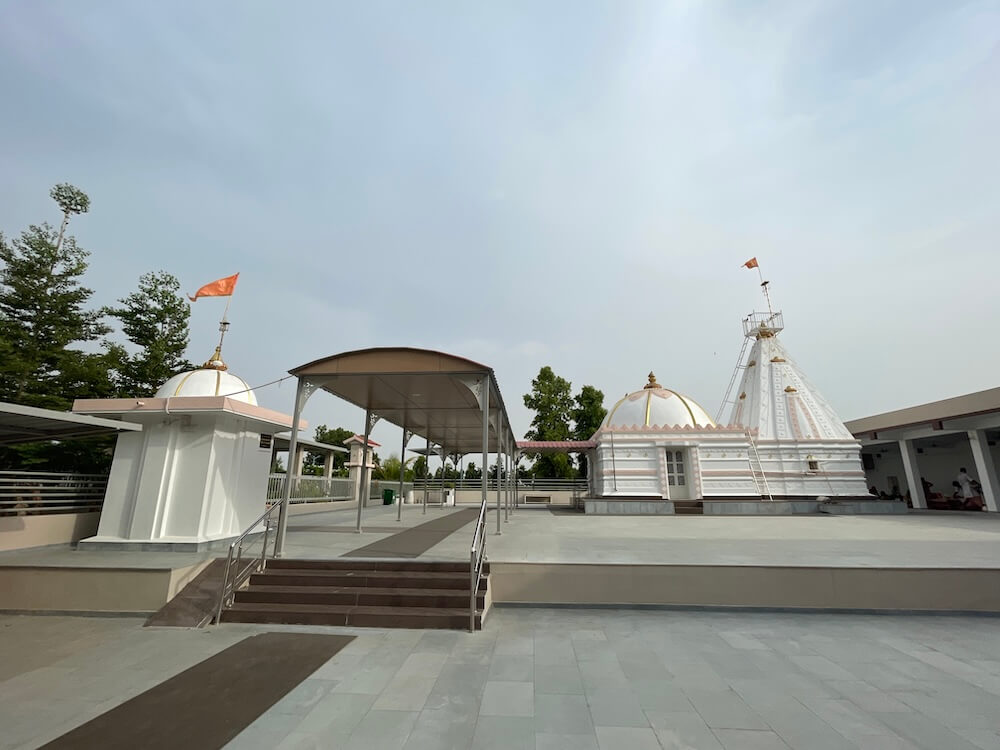
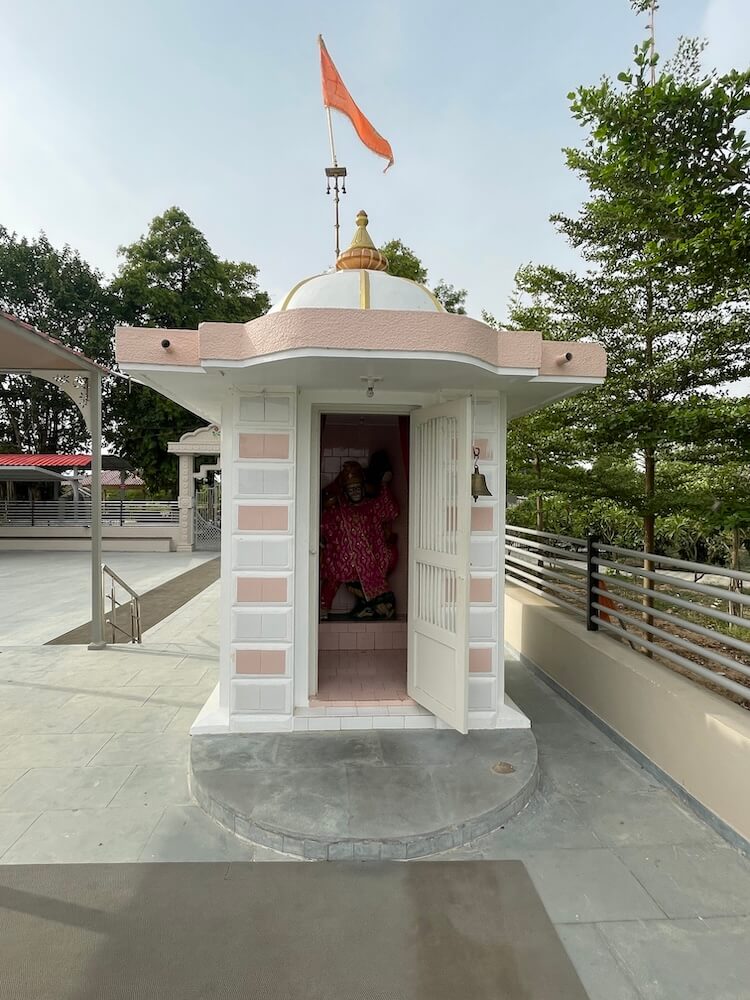
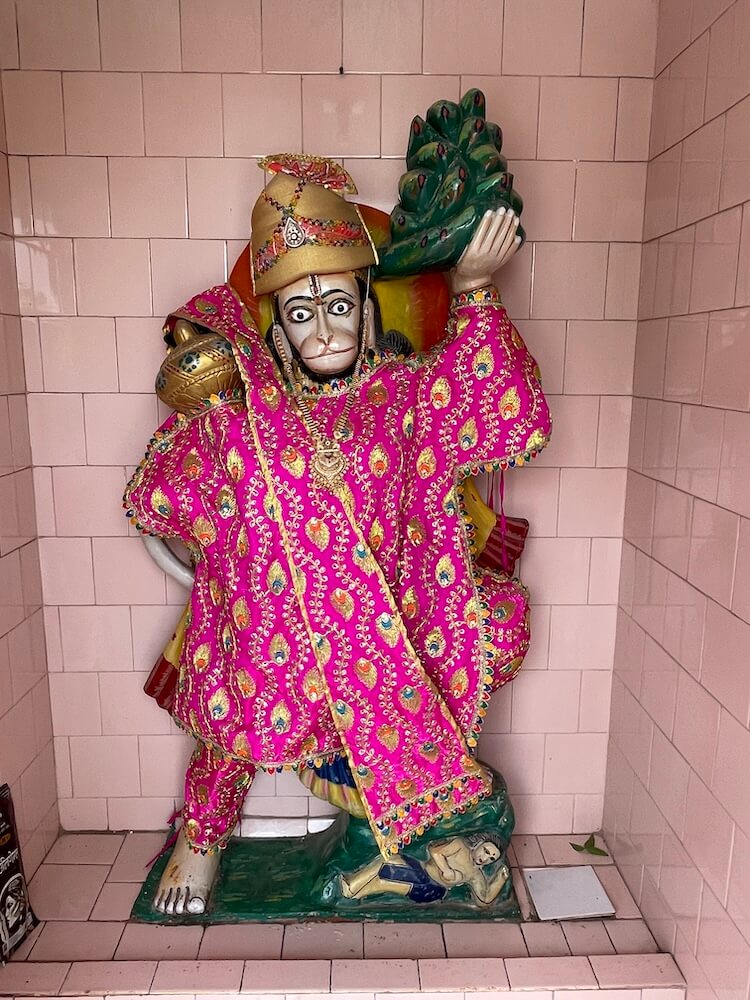
A few steps ahead, the temple’s main entrance appears, leading into a large courtyard where the temple, built in Nagar architectural style, stands prominently. There is also a small Hanuman temple within the courtyard. 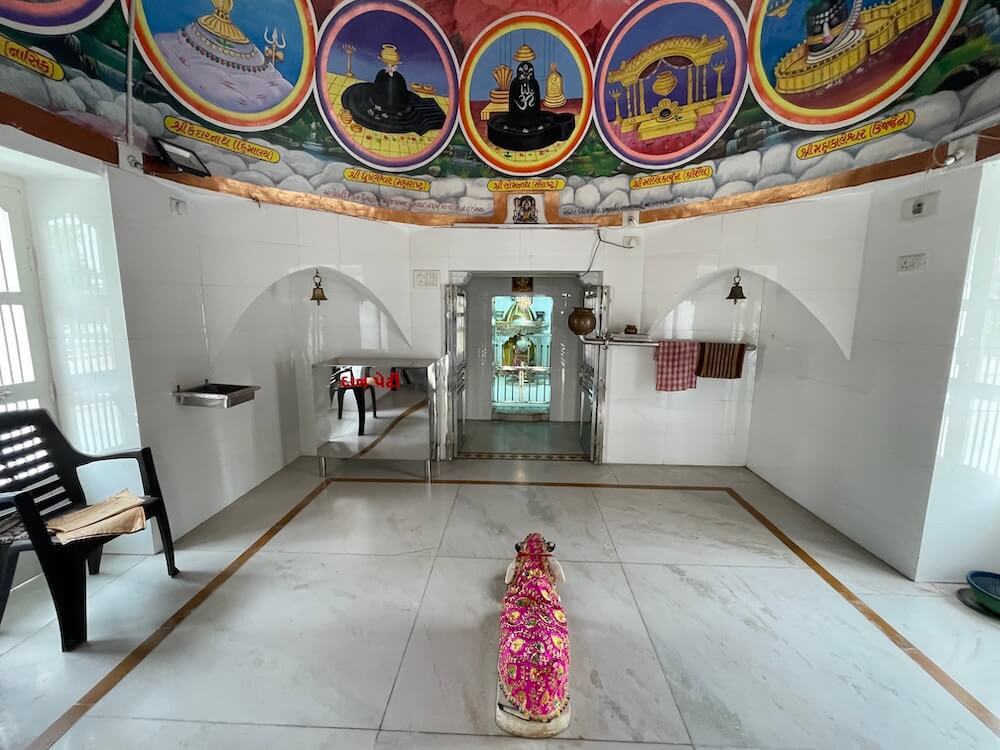 The temple complex includes a two-story Satsang Bhavan (community hall) and the office of the temple trust.
The temple stands on a raised platform. In front of the temple is a shed with a yajna kund (sacrificial fire pit). Built in stone, the temple structure consists of a sabhamandap (assembly hall), antaral (vestibule) and a garbhagriha (sanctum sanctorum). The sabhamandap has a dome-shaped spire topped with a small amalaka and kalasha. The tall main spire over the sanctum follows the Urushringa pattern and is painted white and pink, with a golden amalaka and kalasha at the top.
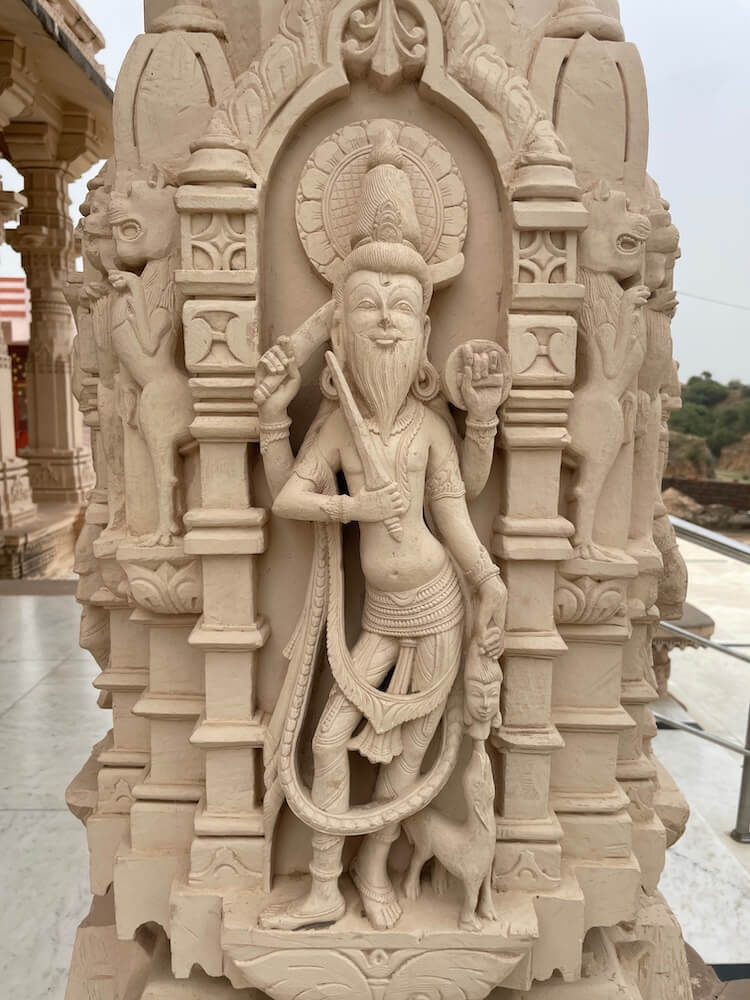
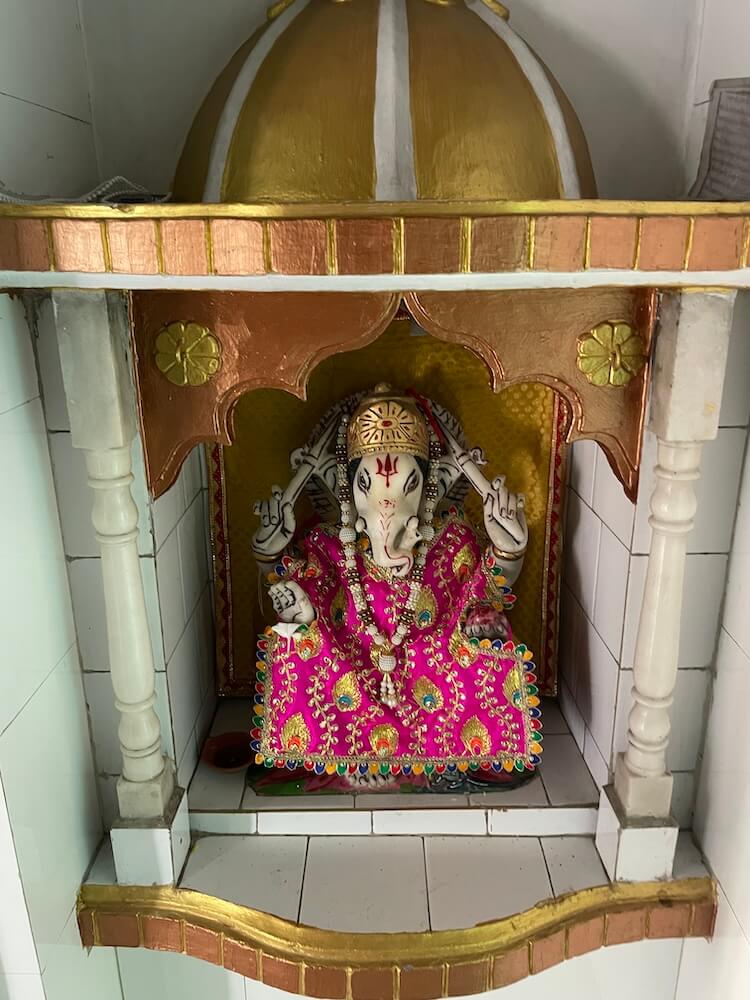
There are three entrances to the sabhamandap. At the center of the main entrance is an image of Shiva. 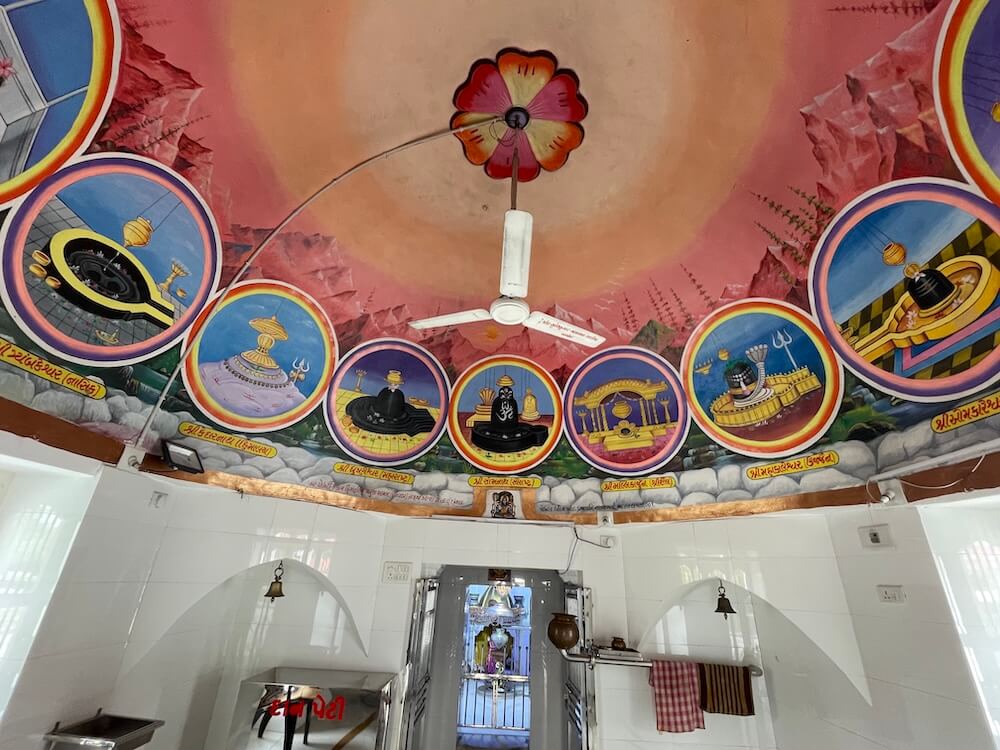 Inside the sabhamandap, there is a beautifully carved marble idol of Nandi, Shiva’s mount, facing the sanctum and in front of him, a marble tortoise. The ceiling dome of the sabhamandap displays painted images of the twelve Jyotirlingas. Within side shrines (devlis) of the antaral, there are marble idols of Lord Ganesha and Hanuman.
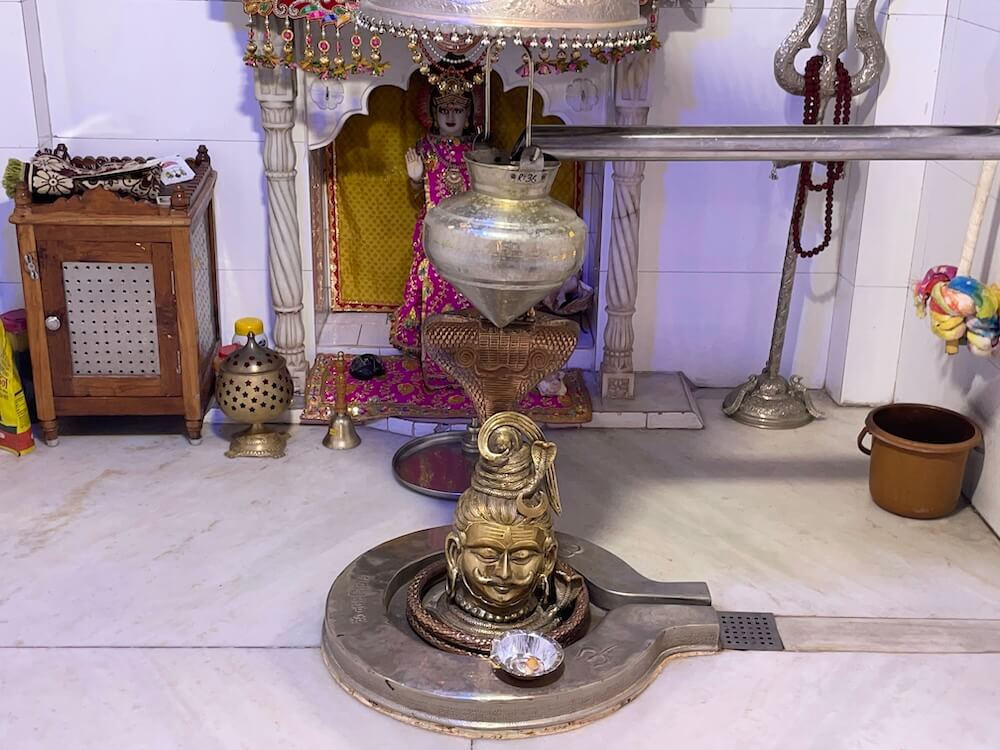
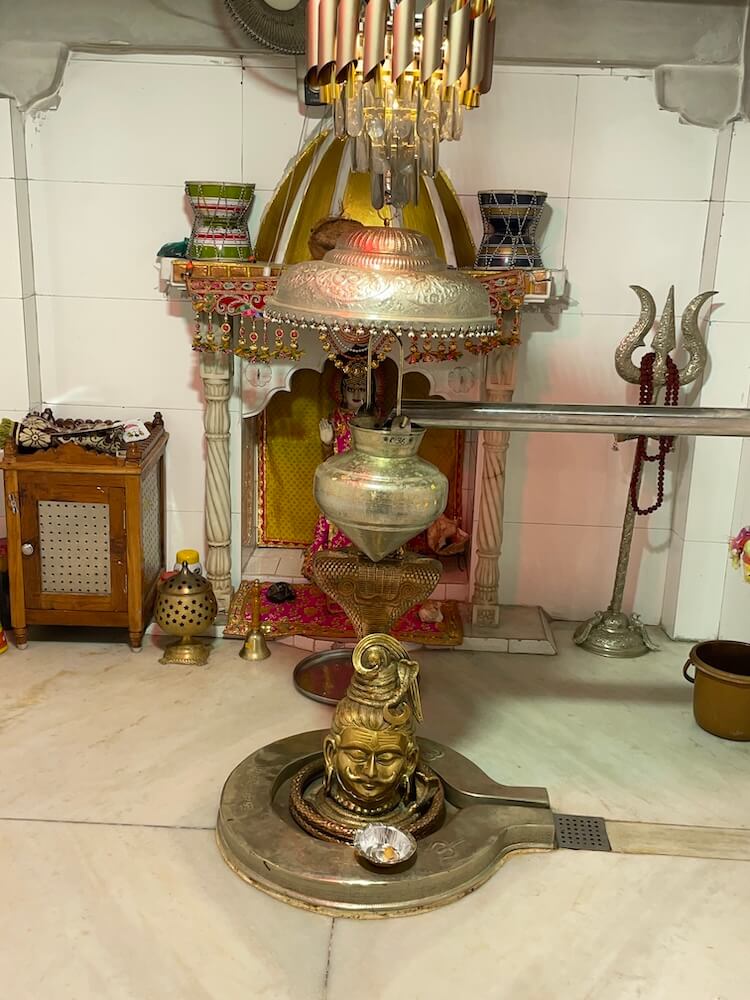
The sanctum’s marble entrance has an image of Ganesha at the top centre. Inside, the Yoni-Lingam rests in a shalunka (base) and a brass mask of Shiva’s face is placed on top. A brass serpent holds a canopy above the mask. Behind, on the sanctum’s rear wall, there is a shrine housing Goddess Parvati.
Managed by the Shambheshwar Mahadev Trust, daily worship and rituals are conducted here. Many devotees, believing in the power of this awakened deity, visit regularly. On Mondays, especially, numerous devotees come for prayer and chanting. On Mahashivratri, hundreds offer Belpatra and perform milk and water abhishekam. During the month of Shravan, large crowds gather every Monday and many religious events are organized throughout the month. A religious fair is held on Ashtami or Navami during Shravan.