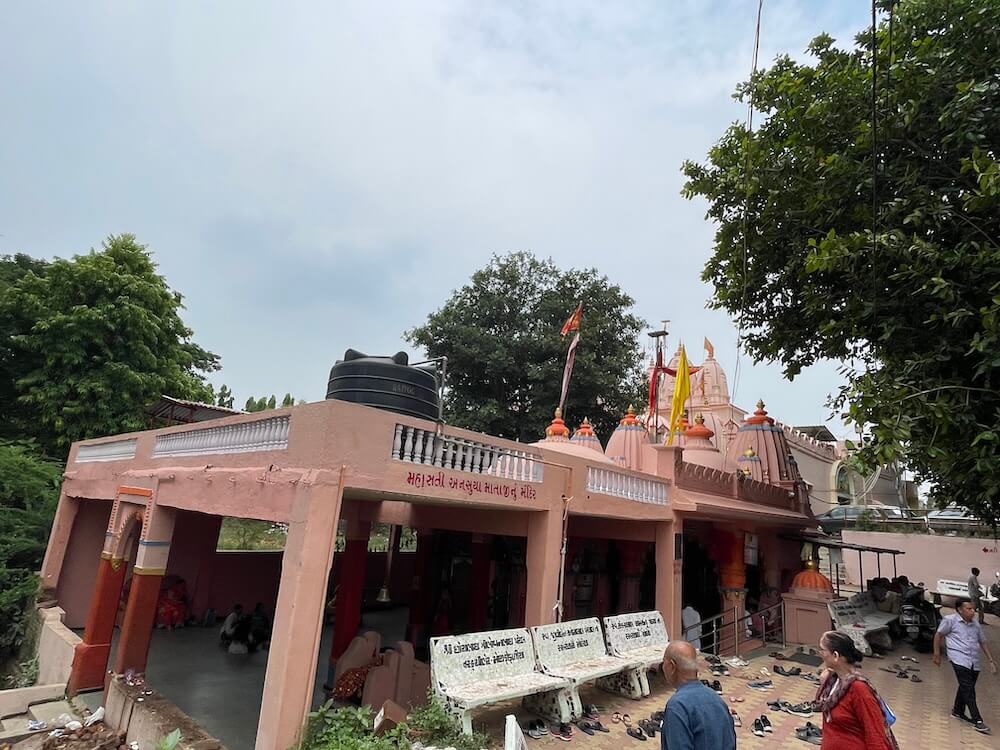
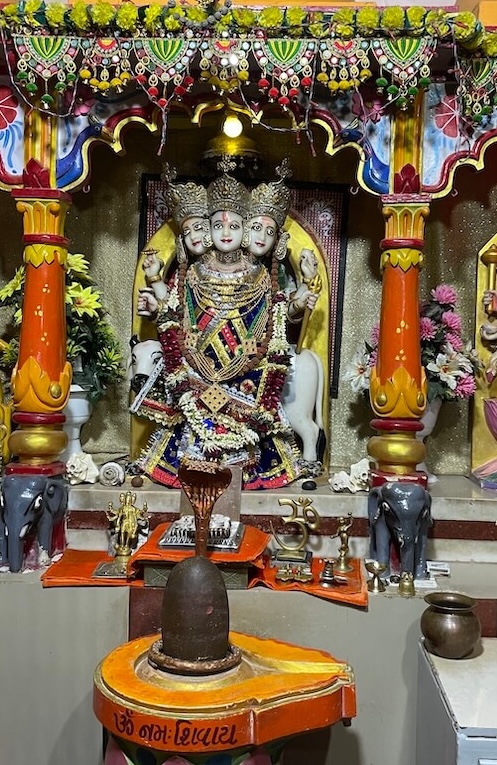
 The name Anusuya, derived from Sanskrit, means ‘one who is free from jealousy and envy’. In Hindu tradition, Sati Anusuya Mata is revered as the ideal of devoted wifehood (pativrata dharma) and hospitality (atithi dharma). The ancient temple dedicated to this revered figure is located in Ambali. According to mythology, this sacred site is where, due to the boon granted to Anusuya, the Trimurti – Brahma, Vishnu and Mahesh (Shiva)- incarnated on Earth as Chandra, Dattatreya and Durvasa. Devotees believe that applying the sacred soil from this temple premises cures all types of skin ailments.
Anusuya was the youngest daughter of Sage Kardam and Devahuti and sister of Kapila Muni. She is considred as one of the five greatest pativratas of Bharatvarsha. She was married to Sage Atri, one of the Saptarishis (Seven Sages). Her mother, Devahuti, had resolved to populate divine beings on Earth, but couldn’t fulfill this goal in her lifetime. Anusuya vowed to fulfill her mother’s wish and informed her husband Atri Rishi after their marriage. Atri told her that intense penance on the northern banks of the Narmada could fulfill this divine purpose. They built an ashram there and both began deep penance. In summer, Anusuya sat amid burning fires, in monsoon, she wore wet clothes, in winter she continued the same in the freezing cold.
Her austerity became the talk of all three worlds. When Sage Narada praised her to the wives of the Trimurti – Savitri (Brahma’s wife), Lakshmi (Vishnu’s wife) and Parvati (Shiva’s wife) – they became envious.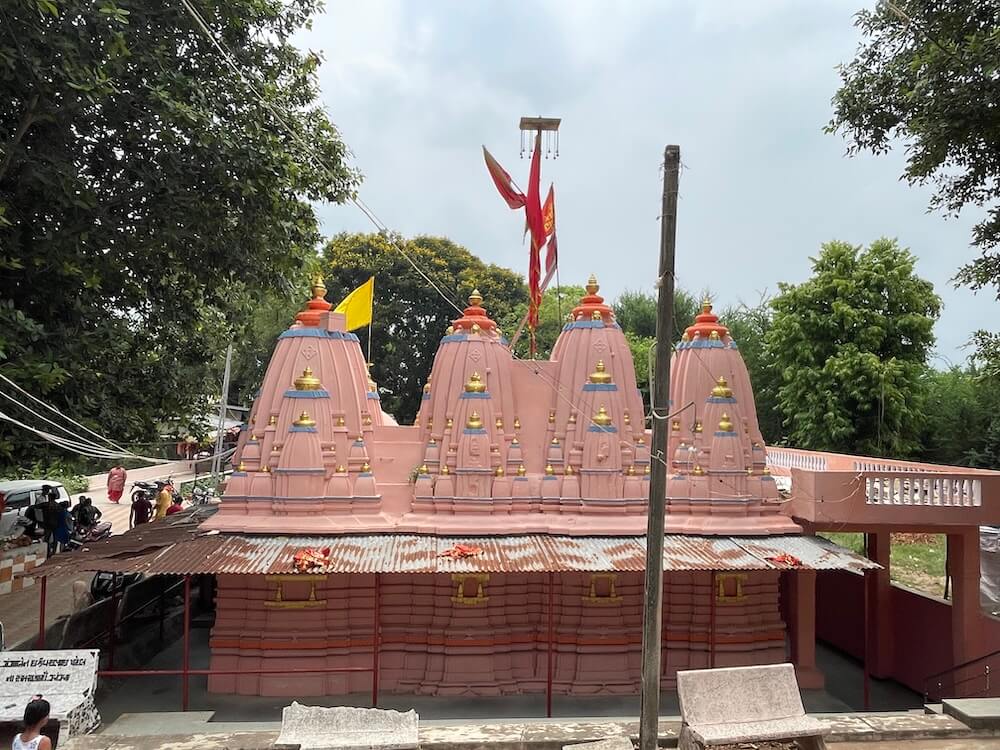 To test her chastity, they sent their husbands to her hermitage in disguise. Appearing as three Brahmins, the Trimurti visited the ashram during the midday while Atri Rishi was away. Anusuya welcomed them warmly and offered food. They agreed to eat, but on one condition, that she serve them food while unclothed. This placed her in a moral dilemma that if she refused, her hospitality would be compromised; if she complied, her chastity would be questioned.
She then invoked her husband’s guidance in her heart. Atri, through divine insight, realized the guests were none other than the Trimurti and instructed her to sprinkle sacred Ganga water on them. As she did so, all three deities transformed into six-month-old infants. She then served them food as per their wish.
 The infant deities stayed at the hermitage for over six months. Meanwhile, their wives began fasting, unable to eat without their husbands. They approached Narada, who advised them to visit Anusuya in disguise as Brahmin women. Anusuya welcomed them and showed them the three infants, asking them to identify their husbands if they truly were them. When they couldn’t identify them, they confessed everything and sought her forgiveness. They blessed Anusuya, saying, ‘You shall be known throughout the cosmos as Mahasati (the great chaste one).’ Anusuya then sprinkled Ganga water again and the three children regained their divine forms. She respectfully fed them and requested, ‘As a blessing, may you remain here in the form of children to bring happiness to the lives of those in distress.’
 The gods agreed and vanished. Later, it is believed that from Brahma’s radiance Chandra was born, from Vishnu’s radiance Dattatreya and from Shiva’s radiance Durvasa was born.
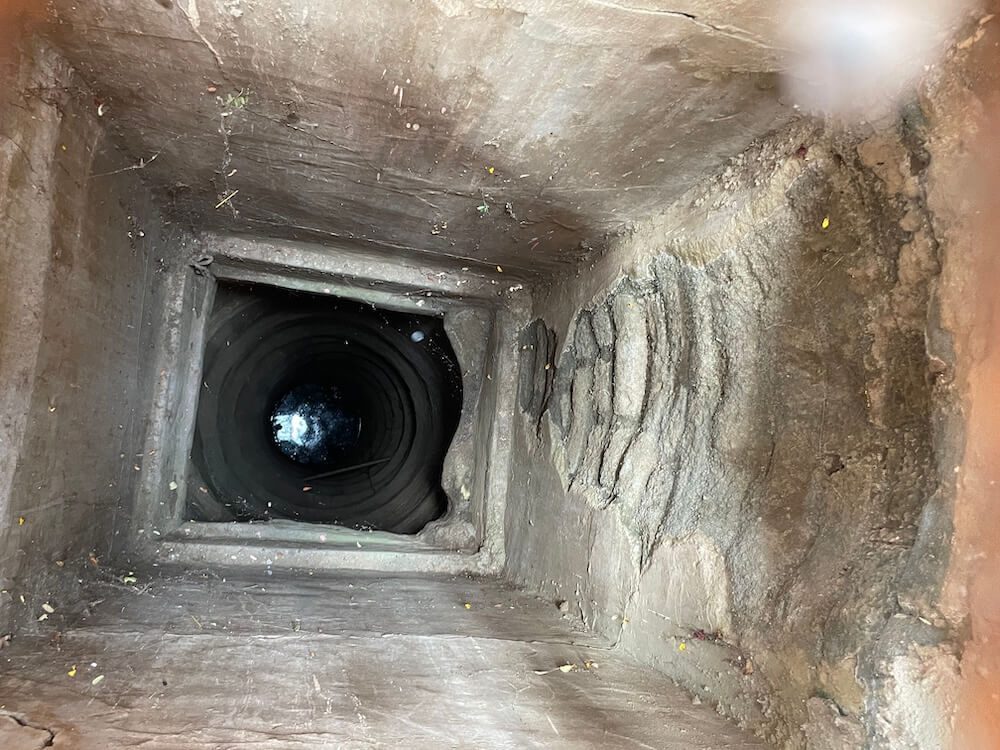
Beside the temple entrance is the Ganga Kund, which also has a mythological story. During a ten-year drought while Atri and Anusuya were in their hermitage, all water sources, including the Narmada had dried up. One day, upon waking from meditation, Atri Rishi asked for water, but there was not a single drop to be found. Anusuya prayed to the Ganga River, who responded, ‘Offer me the merit of one year of your penance and I shall appear.’ Anusuya agreed and the Ganga manifested in the Kund, which is believed to never dry up. Even today, water from this kund is used for Anusuya Devi’s rituals.
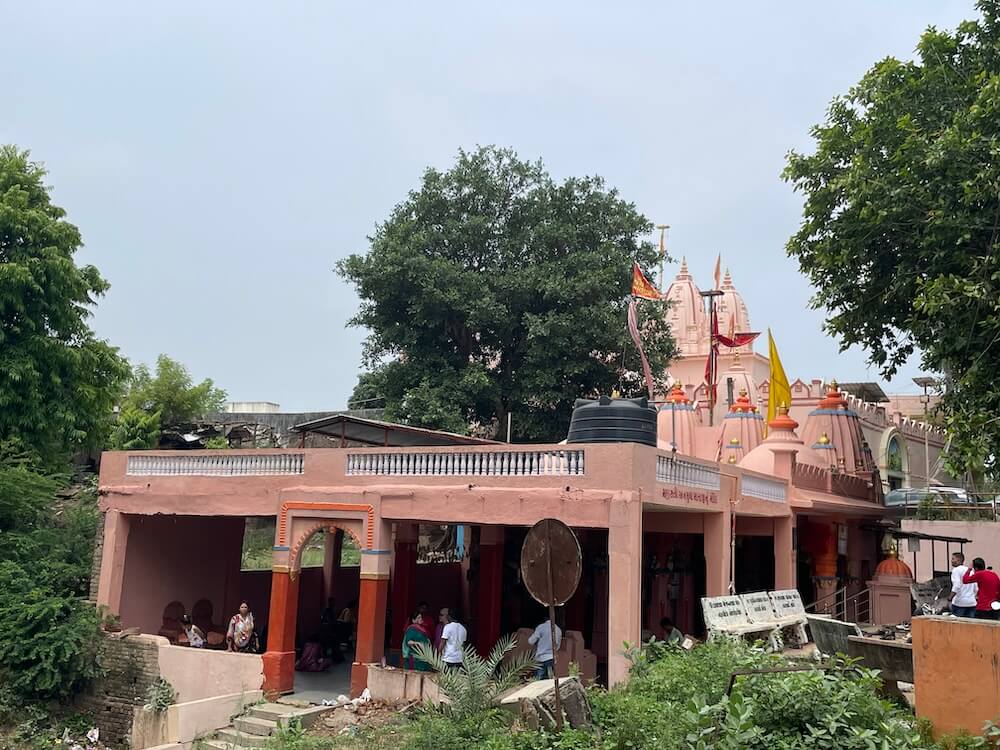
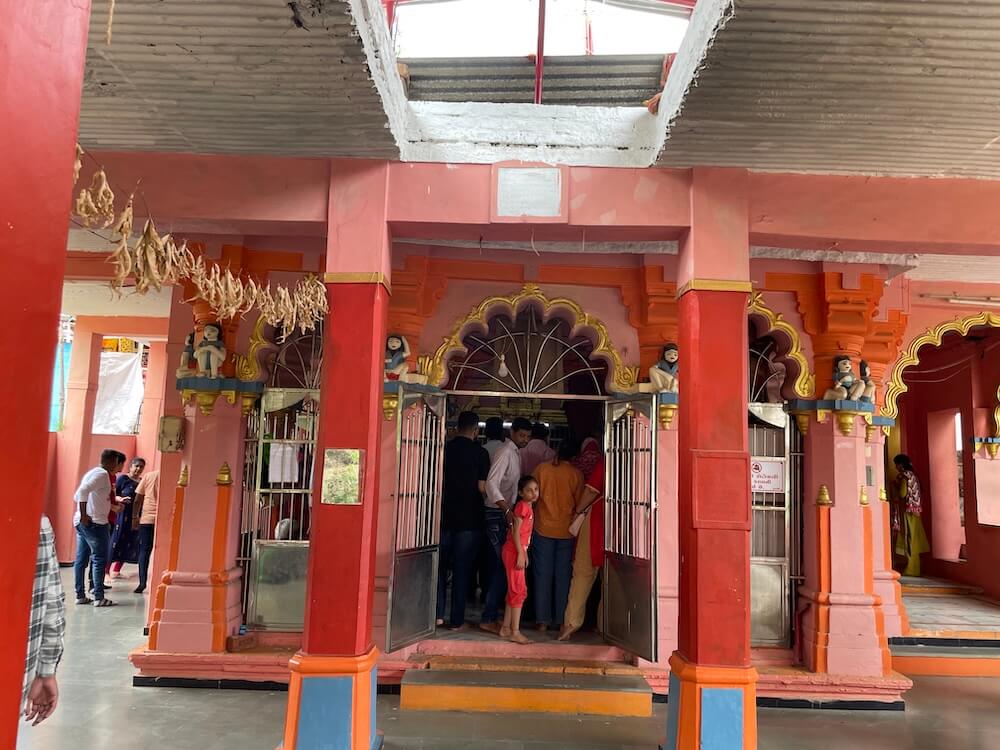
 The temple surroundings are peaceful and serene, with a banyan tree and other trees in front. The temple has Sabhamandap (assembly hall) with a dome-shaped spire, Antaral (vestibule) and Garbhagriha (sanctum) with a Nagar-style Urushringa shikhara. There is a paved mandap in front of the temple with a Yajna Kund and the Ganga Kund to the right of the entrance. Sculptures of young girls are carved on the pillars inside the Sabhamandap. The stone-built entrance of the sanctum has an image of Lord Shiva.
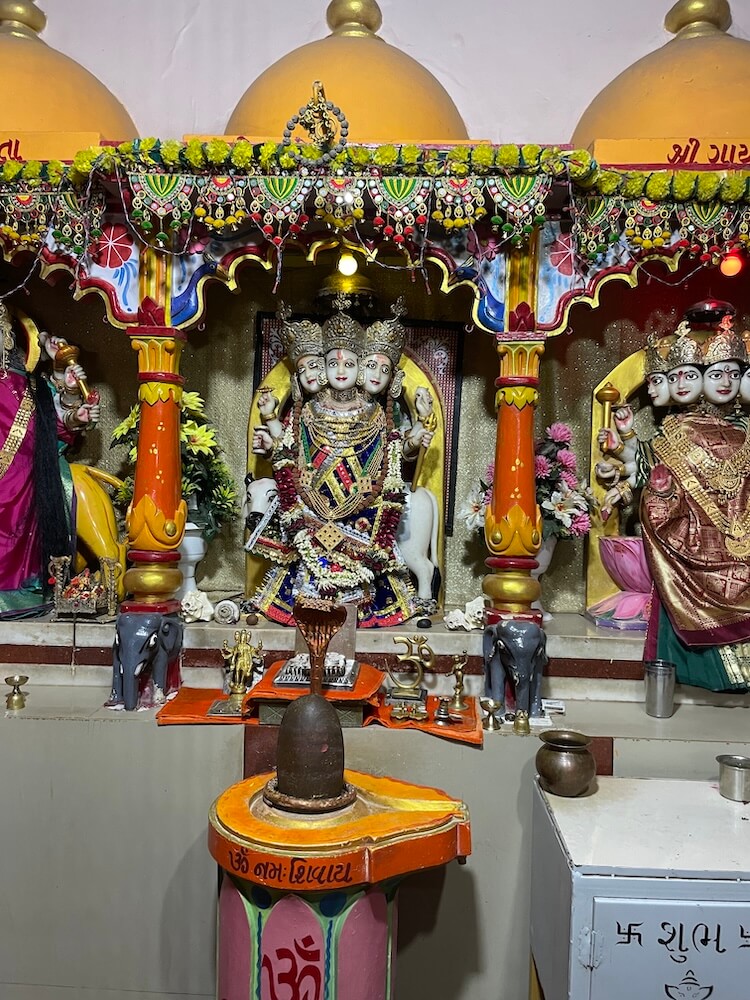
Inside the sanctum stands the self-manifested idol of Anusuya Mata, believed to have emerged from an Audumbar tree. The idol is adorned in traditional Maharashtrian attire and features golden ornamentation with exquisite carvings on her mukhara (crown) and backdrop. 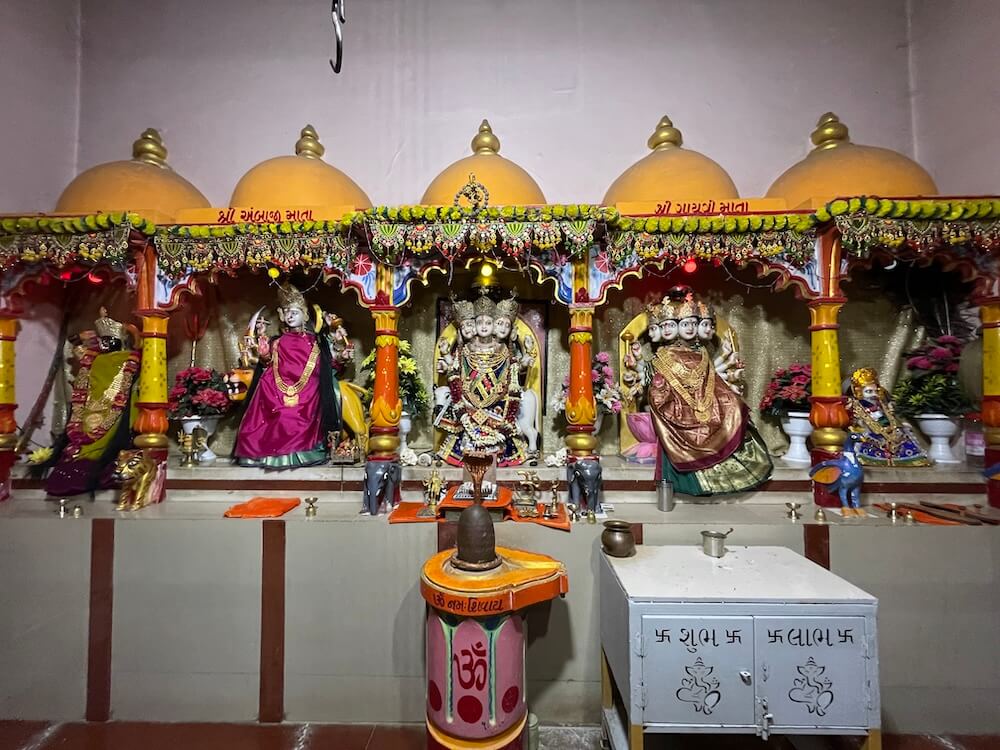 In front of the idol are Padukas (sacred footprints) of Sage Atri. To the left of Anusuya Mata is an idol of Vishnu and to the right, Brahma. To the right of the sanctum is a shrine dedicated to Bal Dattatreya.
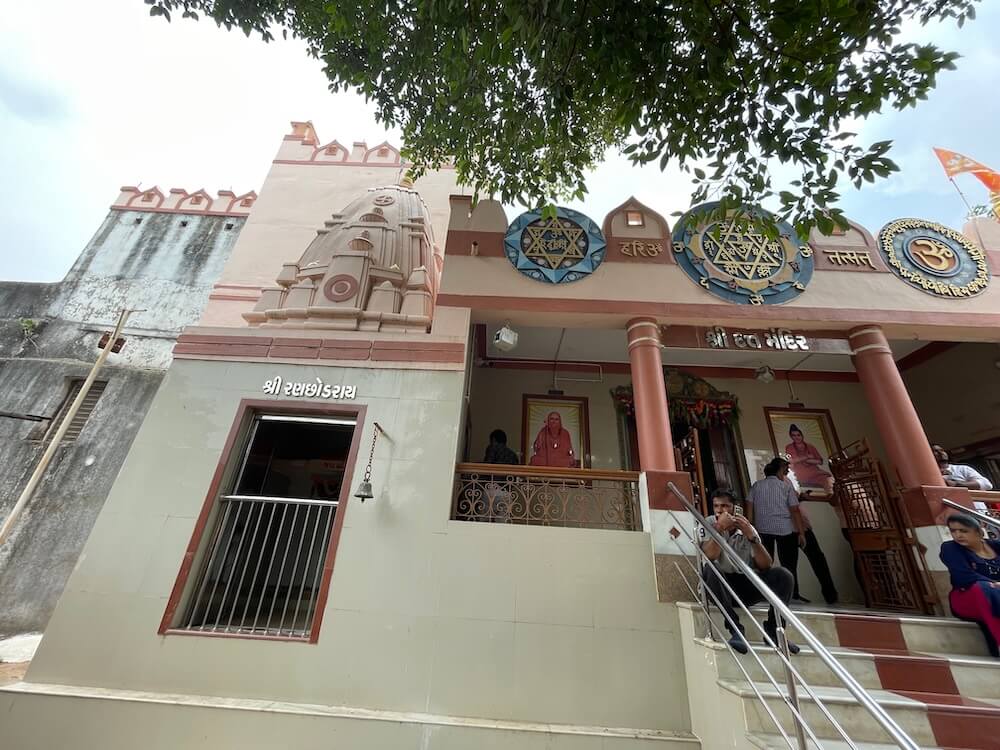
At the rear side of the Anusuya Mata temple, there is a Dattatreya Temple, which is accessed by climbing eight to ten steps. At the center of the temple’s entrance, the Gayatri Mantra and Shri Yantra are engraved. To the left of the entrance, there is an idol of Nrusimha Saraswati and to the right, an idol of Shripad ShriVallabh. Inside the assembly hall (Sabhamandap), there is a sacrificial fire pit (Yajna Kund). In the sanctum, on a platform, stand idols of Mahakali, Amba Mata, Dattatreya, Gayatri Devi, and Vishwakarma, in sequence.
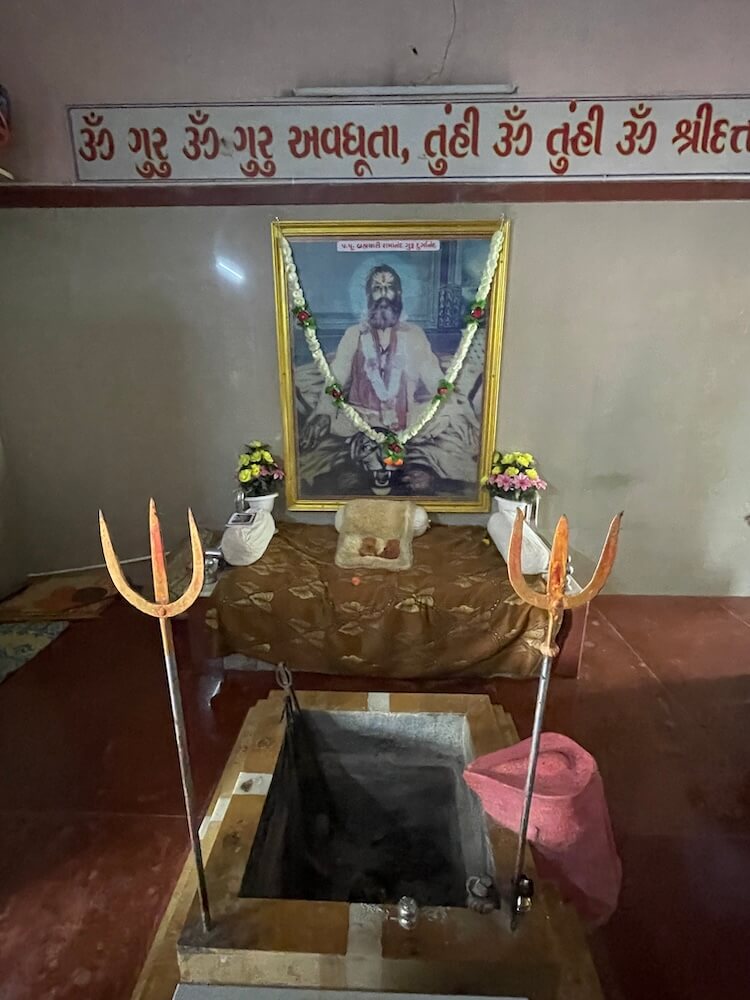
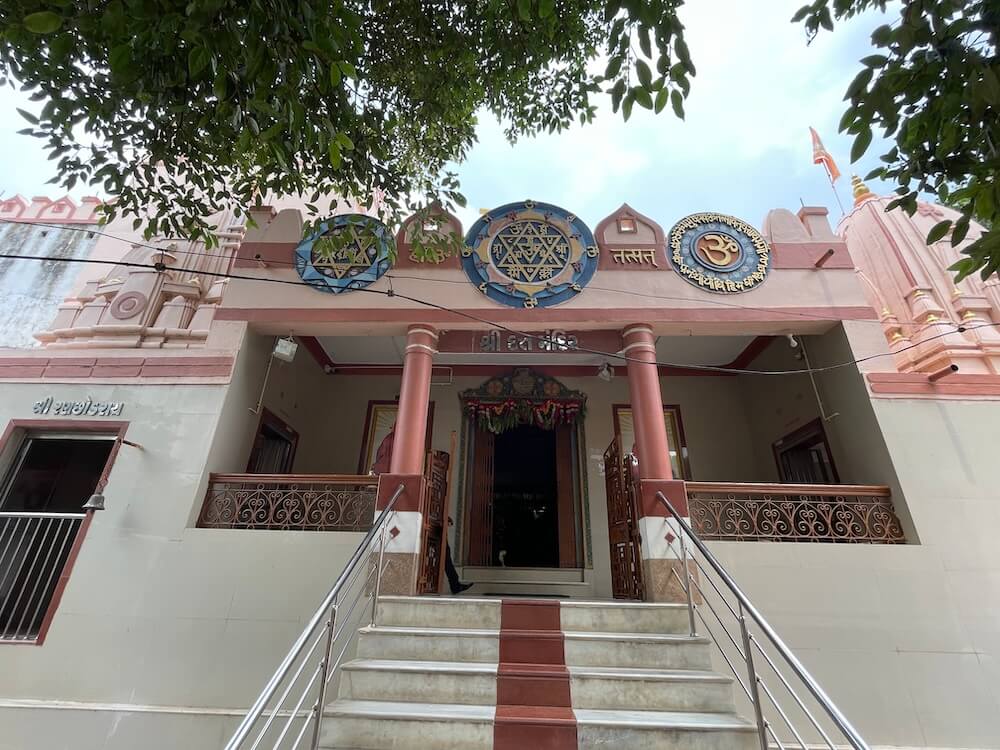 To the left of this temple is a shrine dedicated to Ranchhodray (a form of Lord Krishna) and nearby there is a small Shiva temple. Additionally, within the temple premises, there is another Shiva temple, as well as shrines for Ashapura Devi, Narmada Mata and the divine trio of Shri Ram, Lakshman and Sita.
Devotees believe that applying sacred soil from the Narmada riverbed in the temple area can heal all types of skin diseases, including black and white patches on the skin. It is said that Maharaja Malharrao Gaekwad of the Baroda princely state once developed black patches on his skin. After applying the soil from this site, the patches disappeared. As an expression of gratitude, he renovated the temple and offered gold ornaments worth ₹1.25 lakh to the goddess.
Every year, on Chaitra Shuddha Purnima, a grand festival is held at the temple, during which the goddess is adorned with these golden ornaments.