
सचदेव सुमतिनाथ भगवान मंदिर
मातर, ता. मातर, जि. खेडा
Sachdev Sumatinath Bhagwan Temple
Matar, Tal. Matar, Dist. Kheda
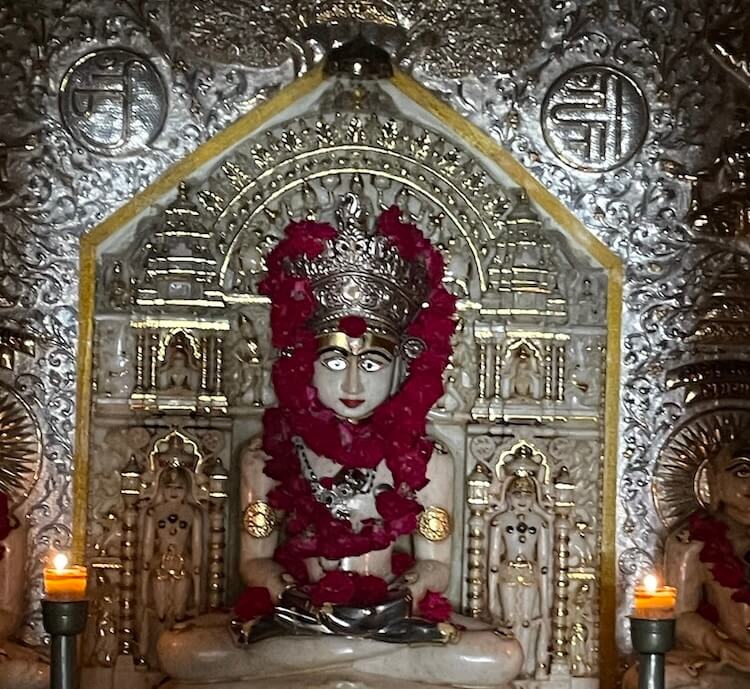 Situated upon the main thoroughfare in the heart of Matar village within the Kheda district, the Sachdev Sumatinath Bhagwan Temple stands as a hallowed sanctuary for thousands of devotees. Regarded as an ancient Jain Teertha (pilgrimage site), the temple enshrines a pristine white image of Bhagwan Sumatinath in the Padmasana (lotus posture). Owing to numerous ‘Atishayas’ (divine miracles) inspired by Bhagwan Sumatinath, He is reverently hailed by the faithful as ‘Saccha Dev’ (the True God), a belief that imparts profound spiritual significance to this region. For the Jain community, this temple holds pre-eminent historical and religious importance.
Historical chronicles suggest that this Teertha was established in the early part of the eleventh century. Prior to its current form, a modest shrine existed in the village, dedicated to Bhagwan Shri Munisuvratswami as the Mulnayak (principal deity).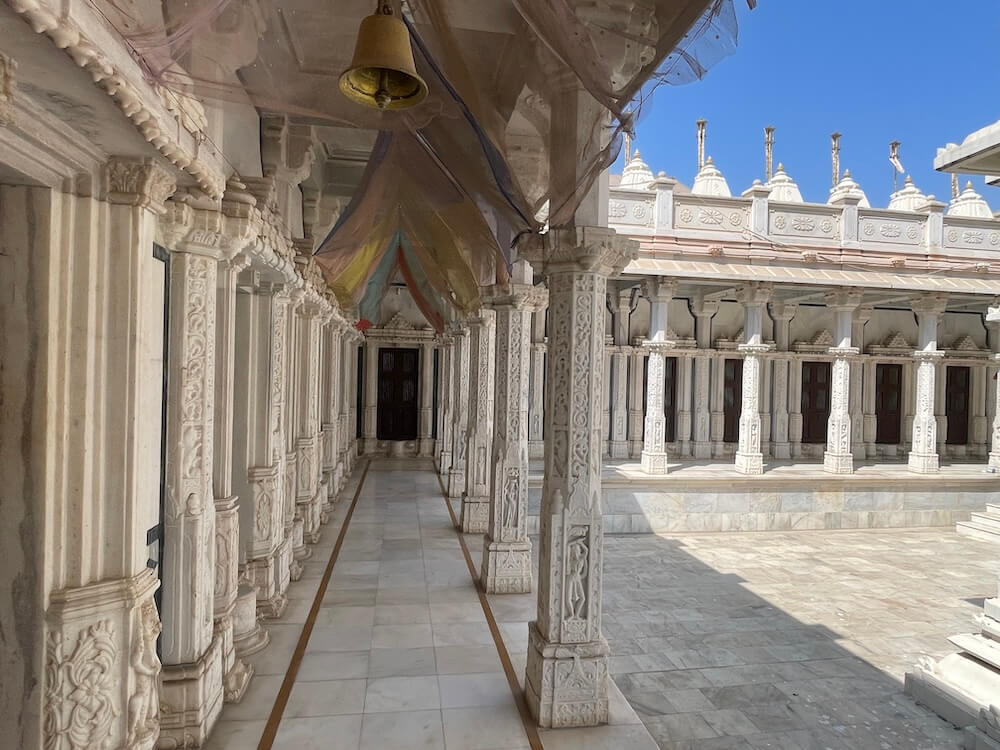 However, by the will of the Adhishthayak Devas (guardian deities) and following the advent of Bhagwan Sumatinath, the site blossomed into a major pilgrimage centre. In the fifteenth century, the image of Bhagwan Sumatinath manifested from beneath the earth within a yard of ‘Barot Haveli’ in Sinhuj village, located in the Mahuva region beyond Matar. The first ‘Anjan-Shalakha’ (consecration ceremony of the eyes) was performed on the seventh day of the dark fortnight of Vaishakh in 1467 AD, by the auspicious hands of Acharya Shri Lakshmisagarsurishwarji. Years later, a pivotal decision was made by the Sangha (community) to relocate the idol to Matar. During the monsoon, a chariot was arranged for the journey, yet nature presented a formidable challenge. At the confluence of the Vatrak and Shedhi rivers, the waters rose abruptly, flooding the surroundings. Miraculously,
  the charioteer beheld only sand instead of water in the riverbed, enabling the chariot to proceed smoothly. The devotees reached Matar safely without hindrance. Moved by this wondrous Atishaya, the faithful proclaimed Bhagwan Sumatinath as ‘Saccha Dev’ and ‘Sachdev’.
The idol was re-consecrated in a grand temple on the third day of the bright fortnight of Jyeshtha in 1498 AD. In 1796 AD, a weaver from Baroda village discovered an image of Bhagwan Suparshvanath whilst excavating sand from the Vatrak river. Upon bringing the idol home, the weaver was blessed with a son in his fiftieth year, alongside significant spiritual and material prosperity. As the glory of this idol spread, Jain Shravakas (lay followers) of Matar, namely Sakalchand Hirachand, Nagindas Kashidas and Chunilal Bhikhabhai, received a divine vision in their dreams. Seth Jethadas Lallubhai of Kharoti eventually acquired the idol from the weavers in lieu of a thousand-rupee debt. 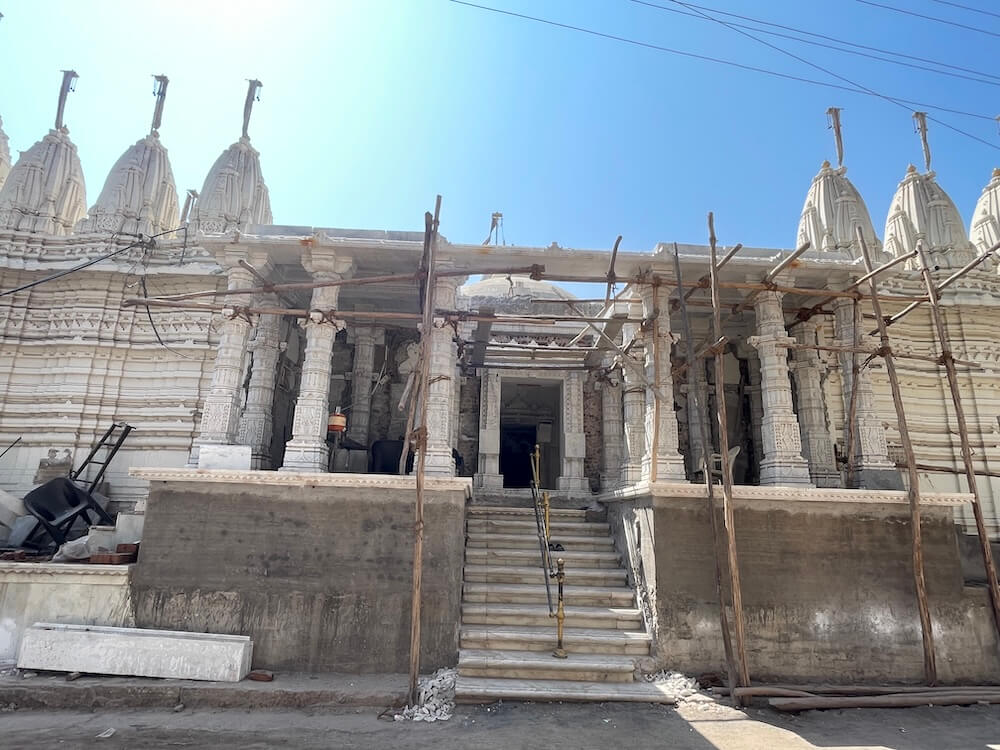 Subsequently, the Shravakas of Matar obtained the image with due honour from Jethadas and installed it in Matar on the fourteenth day of the bright fortnight of Magh in 1796 AD. On the day of the Vaishakh full moon in 1803 AD, Bhagwan Suparshvanath was ceremoniously enshrined in a new Garbhagriha (sanctum sanctorum) commissioned by the devotee Parvatibai. In 1921, Seth Jamnabhai Maganbhai of Ahmedabad undertook a grand restoration, expending five lakh rupees to construct a marble foundation for the fifty-two Deris (small peripheral shrines) surrounding the temple, bestowing upon it a new magnificence. Further renovations occurred in 1948 under the inspiration of Acharya Shri Siddhisurishwarji Maharaj. Finally, on the full moon of Vaishakh in 1951, Bhagwan Sumatinath was established as the Mulnayak in the new sanctum in the presence of Acharya Shri Ramchandrasurishwarji Maharaj, while Ramanlal Jethalal installed Shri Munisuvratswami in the upper-floor sanctum.
According to Jain Agamas (scriptures), the life of Bhagwan Sumatinath, born in Ayodhya to Mother Mangalavati and Father Meghraj, is of vast spiritual proportions. Distinguished by the emblem of the Krauncha (curlew) bird, this Tirthankara’s Kalyanakas (auspicious life events) are deeply venerated : the Chyavana (conception) occurred on the second day of the bright fortnight of Shravan; the Janma (birth) on the eighth of Vaishakh; the Diksha (initiation) on the ninth of Vaishakh and the Kevalgyan (omniscience) on the eleventh of Chaitra – all within Ayodhya. 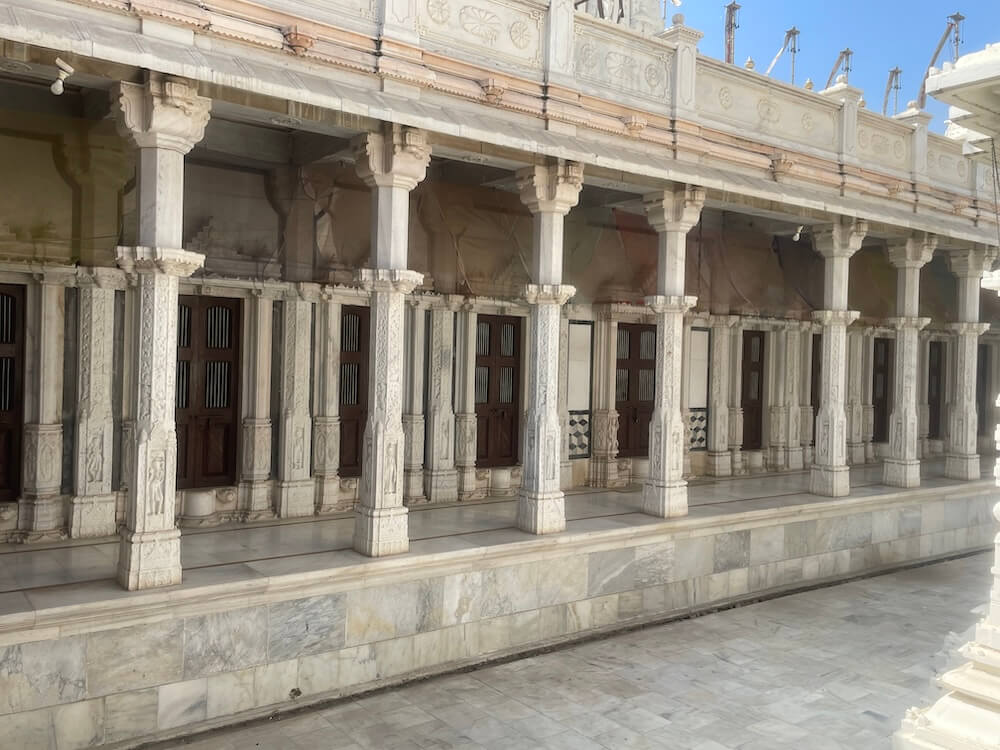 His Nirvana (liberation) took place at Sammed Shikharji on the ninth day of the bright fortnight of Chaitra. His celestial assembly included 116 Ganadharas (chief disciples) and 3,20,000 monks led by Chamrendra, 5,30,000 nuns led by Kashyapi, 2,81,000 laymen and 5,16,000 laywomen. The guardian deities Tumburu and Mahakali served as His Shasanadev and Shasanadevi. Jain literature details three previous incarnations of Sumatinath, including his birth as Atibal. He possessed a golden complexion and a height of 300 Dhanushya (bow-lengths), living for a staggering forty lakh Purvas. He derived the name ‘Sumatinath’ because His mother’s intellect remained exceptionally refined and virtuous (Su-mati) during her pregnancy.
Other spiritual chronicles linked to this Teertha include the history of Sadhvi Prasannashriji (also known as Padmashri),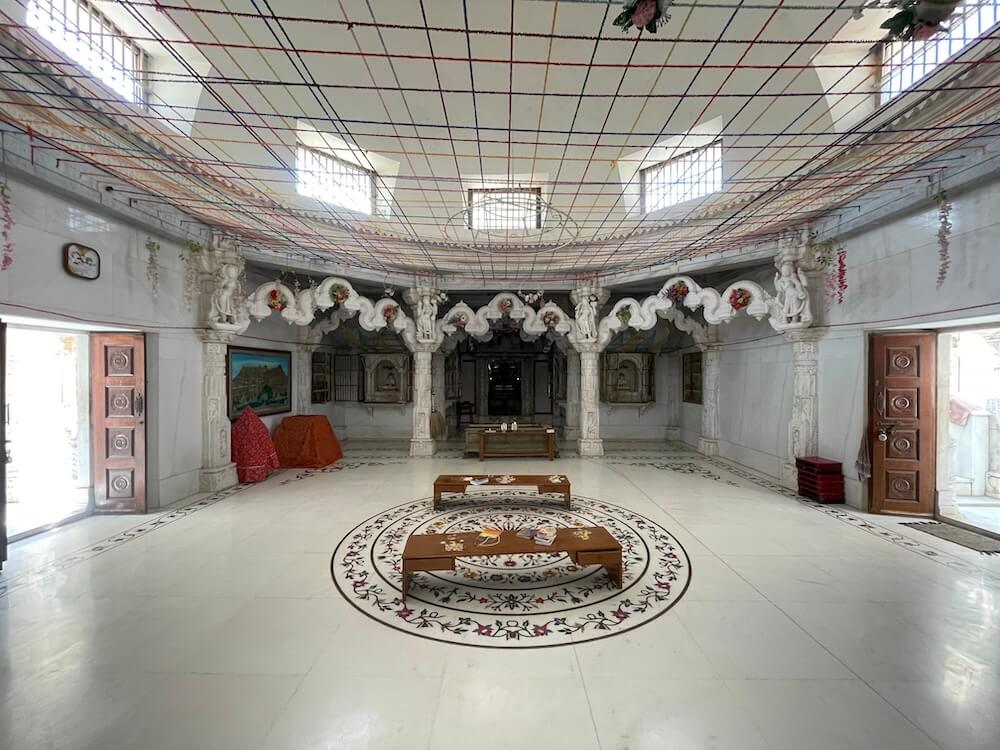 who was born near Khambhat and attained the high rank of Mahattara at the age of twenty-eight. An image of this Sadhvi is consecrated to the right of Bhagwan Parshvanath along the circumambulatory path of the fifty-two shrines. According to a local legend, following the Paryushan festival of 1992, a significant Atishaya occurred during a pilgrimage by the Shri Vishashrimali Jain Sangha of Vadodara, where droplets of saffron and nectar spontaneously fell within the temple and assembly hall. Detailed accounts of this Atishaya is preserved in the volume ‘Matar Teertha : Itihas’, compiled by Nirav Pravinchandra Shah and Rupal Nirav Shah.
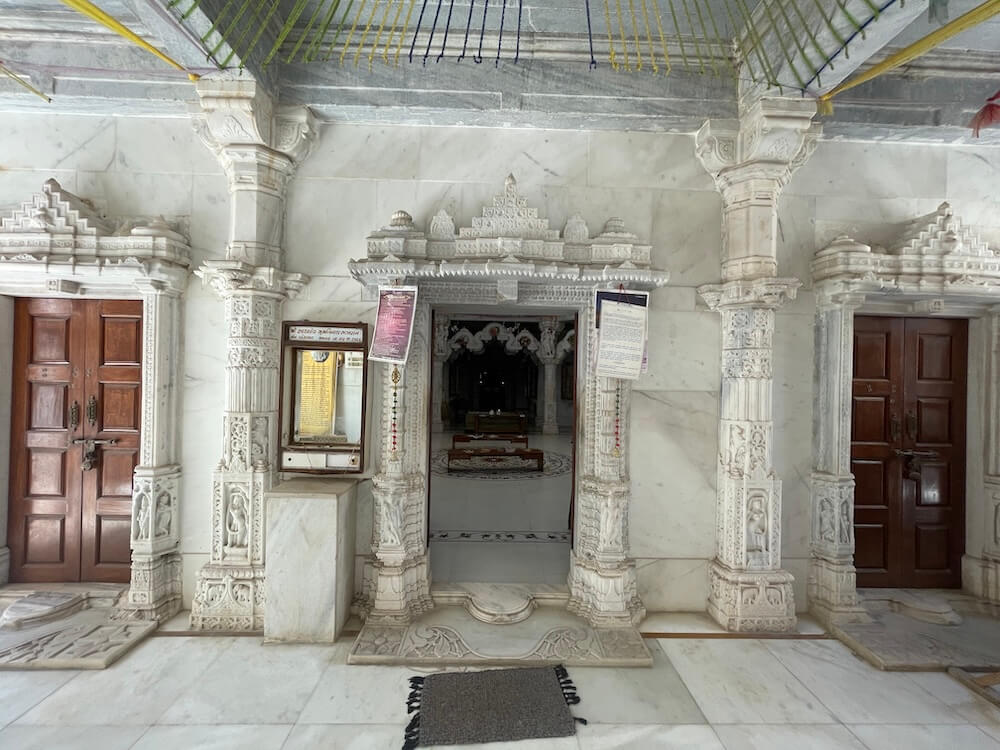
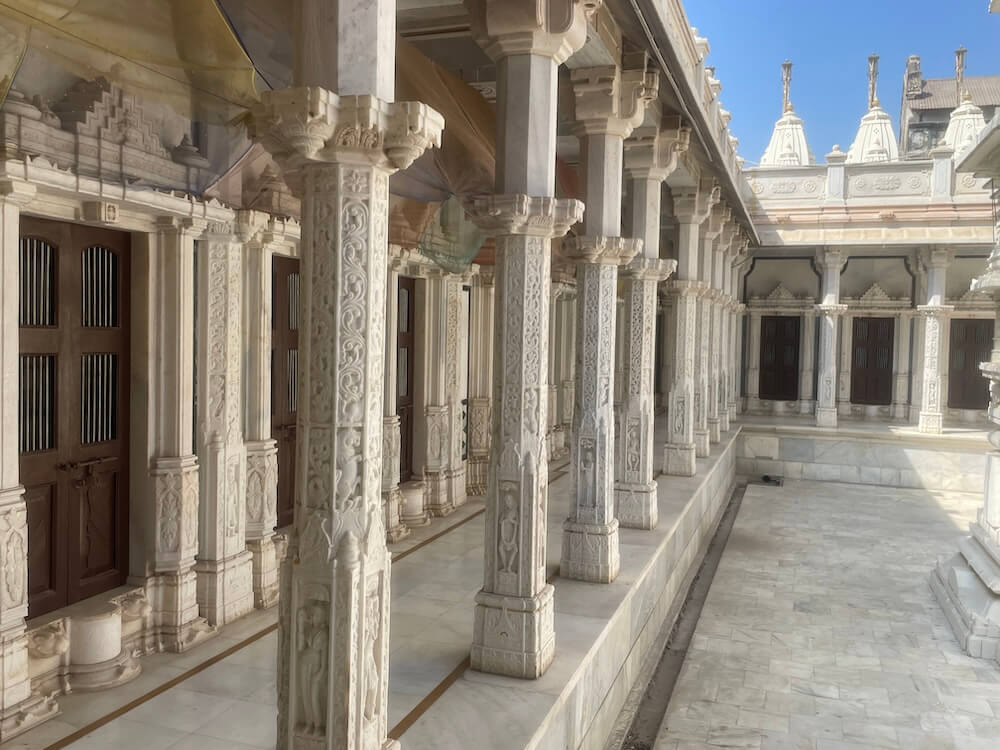
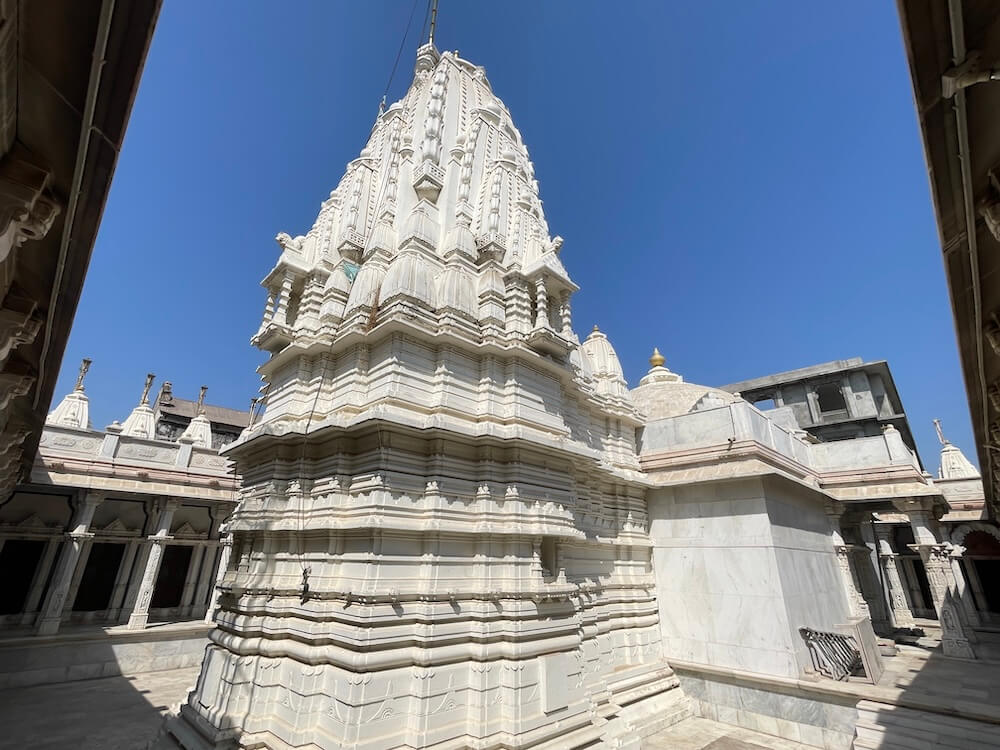
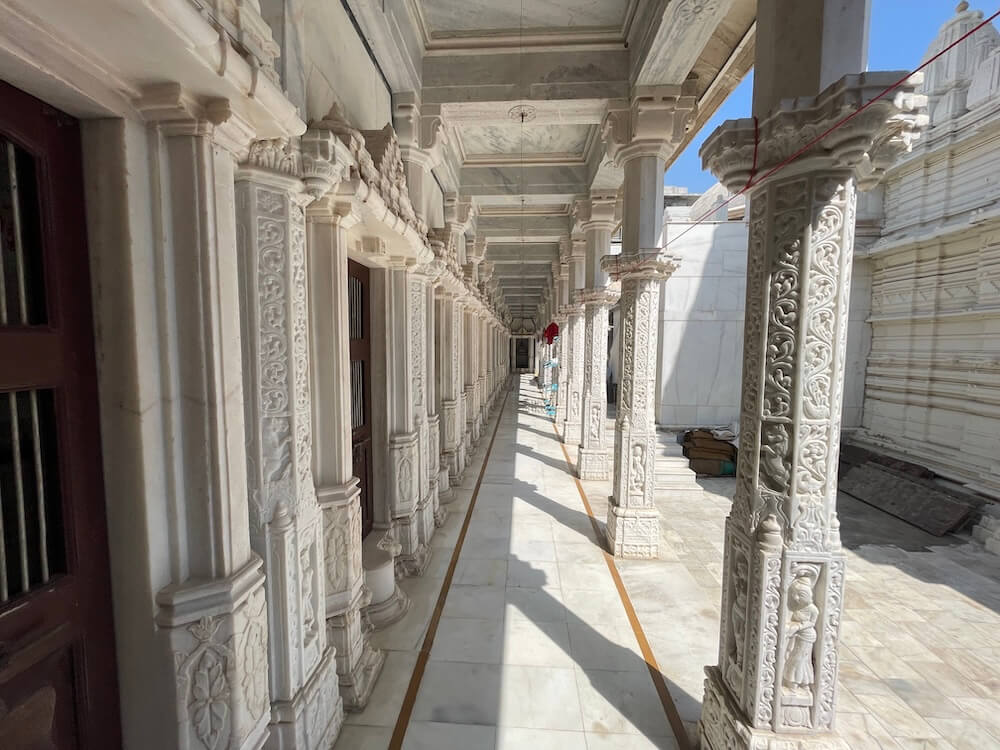
Standing prominently on the main road in central Matar, the Jain temple is an architectural marvel. Upon entering the portals, one is greeted by exquisite carvings on numerous marble pillars.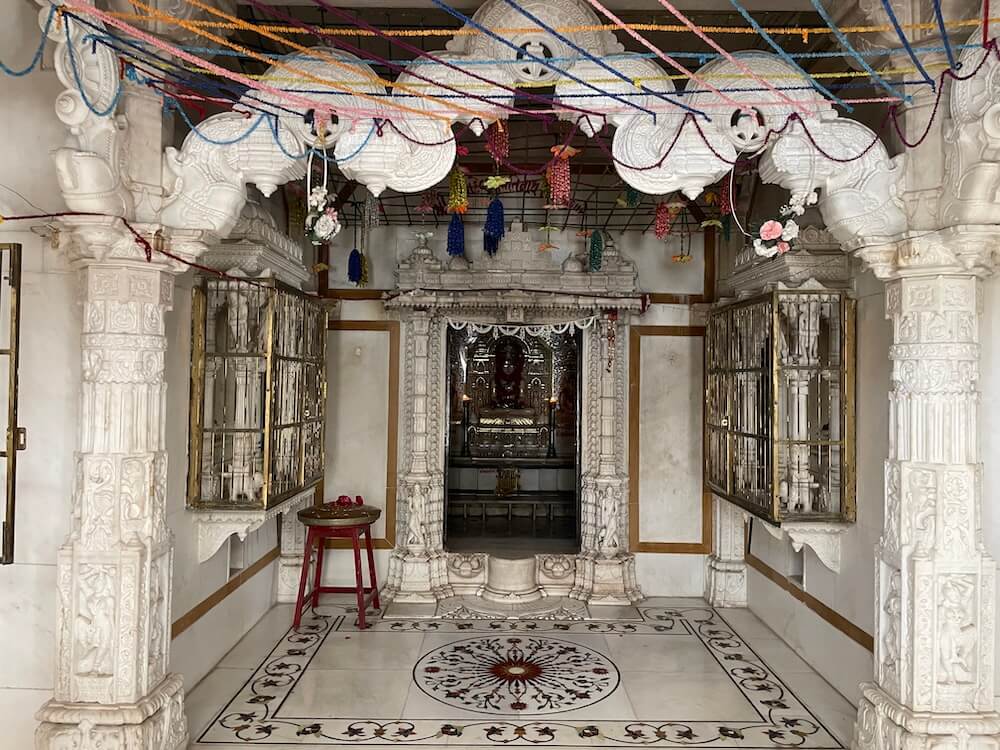 In the heart of the courtyard stands a Manastambha (column of pride) featuring four images facing the cardinal directions. The principal temple is encircled by fifty-two smaller Deris. The hall-mark of this marble edifice is its proportionate and distinctive craftsmanship in the Solanki architectural style, with intricate designs spanning from the base to the spires.
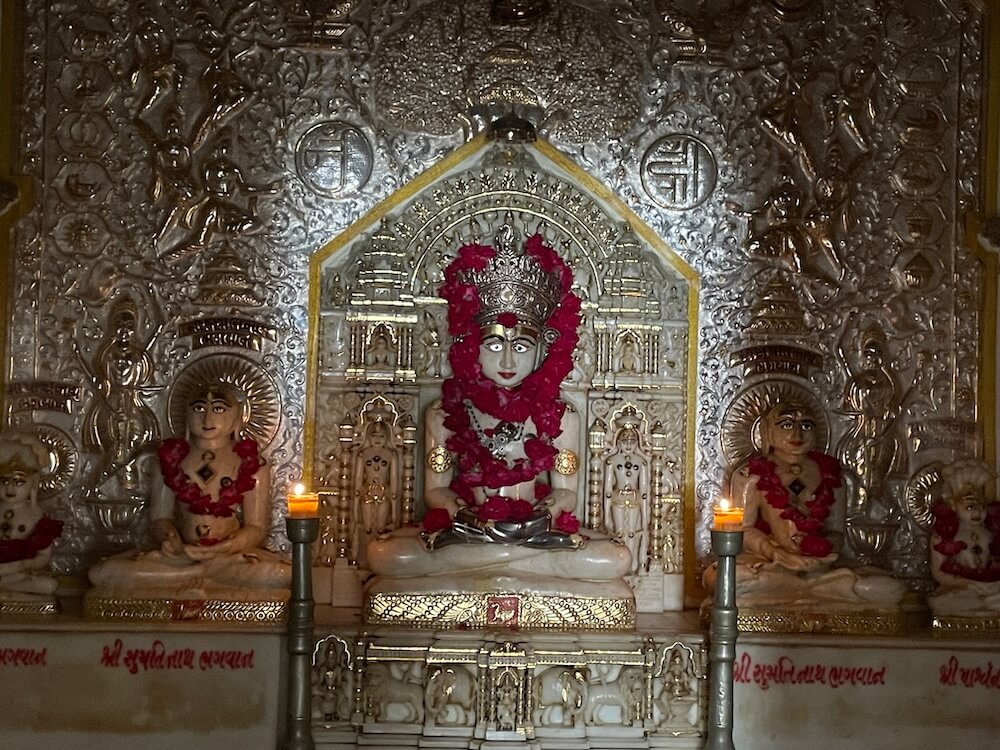
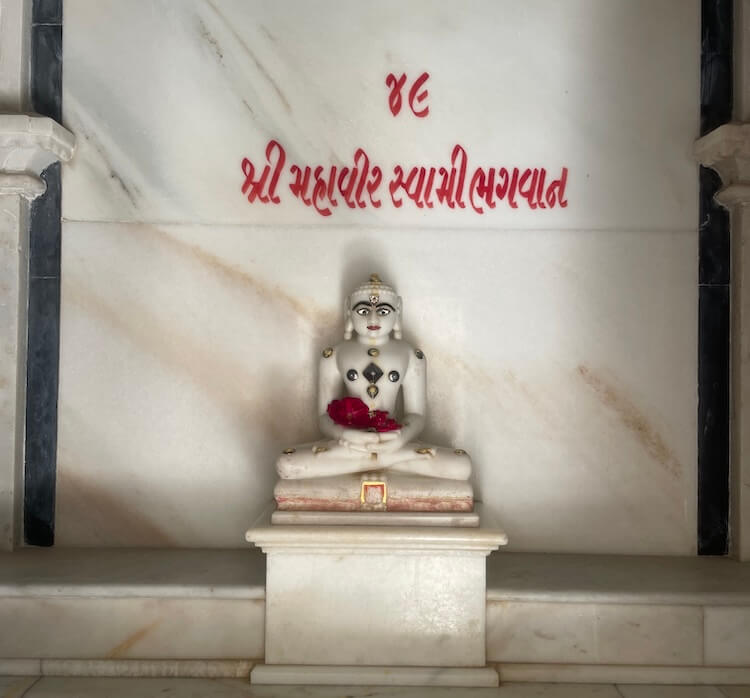
Within the sanctum sanctorum resides the primary 76-centimetre-tall white image of Bhagwan Sumatinath in the Padmasana posture. The idol is adorned with a golden Tilak (Angi) on the forehead, with silver encrustations on the feet and abdomen. Diverse forms of decorative coatings (Angi) grace the chest and shoulders. A silver crown adorns the head, surrounded by delicate carvings of elephants, Mother Marudevi and the Shasanadevas. 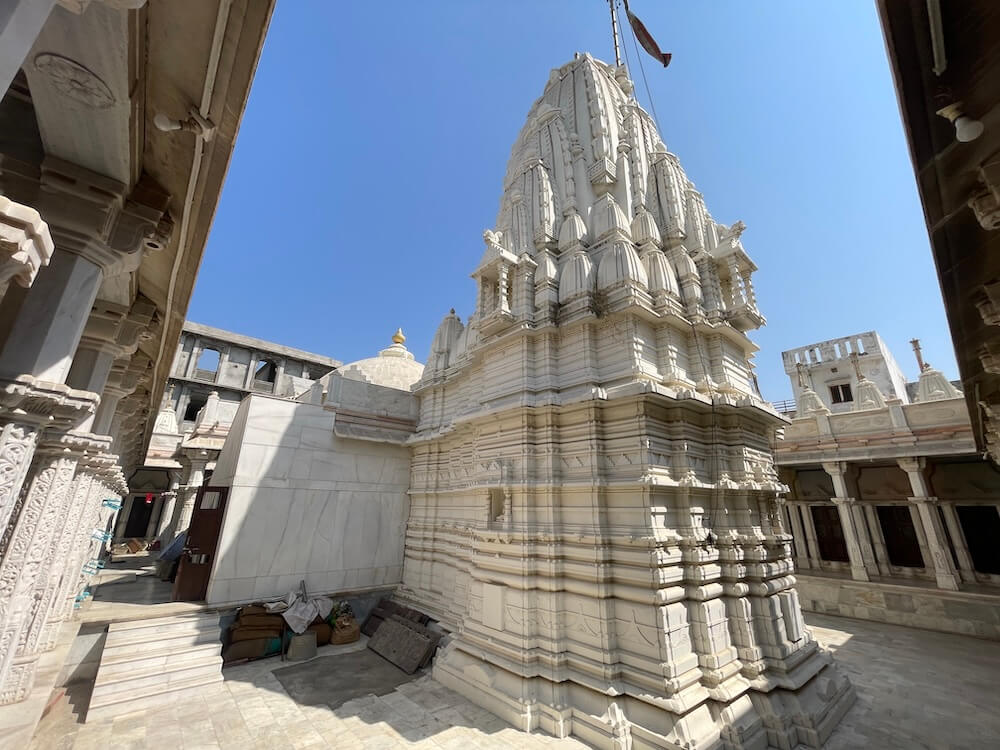 Flanking the principal deity are two smaller images in the lotus posture and carved Yakshinis.
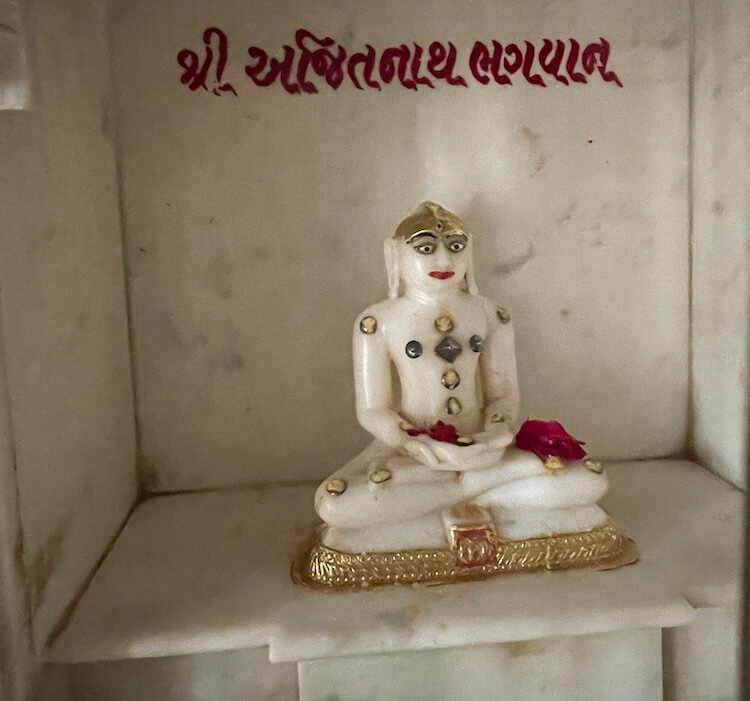
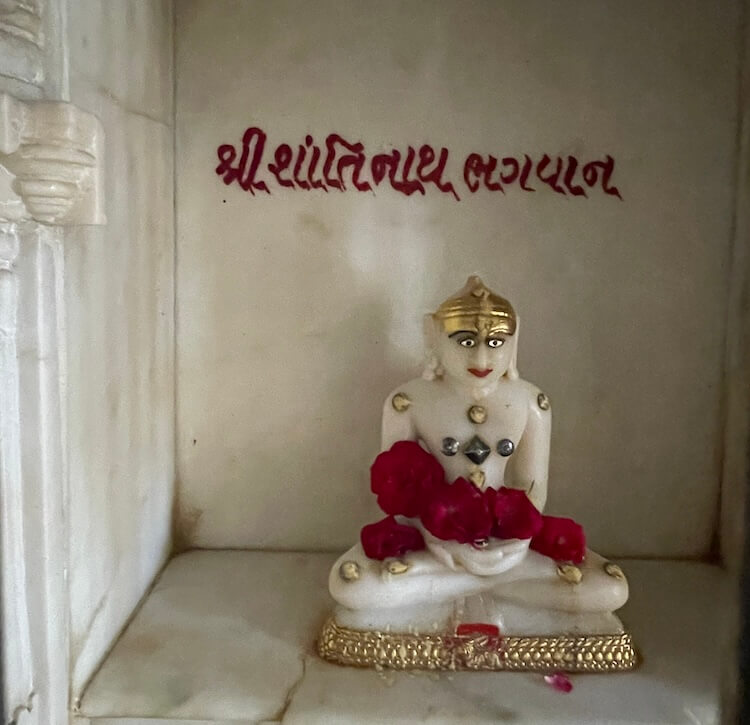
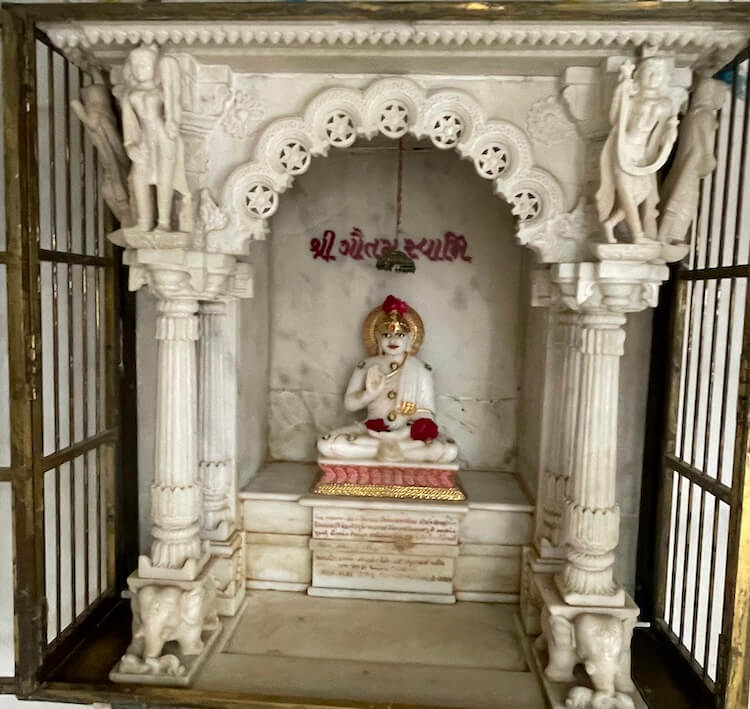
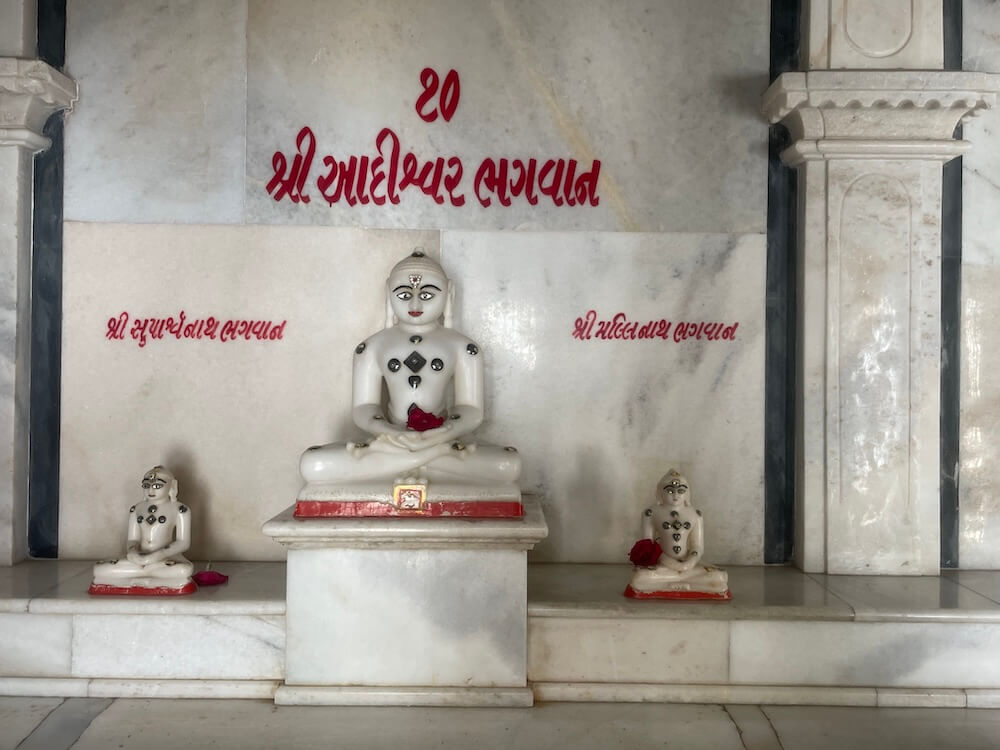
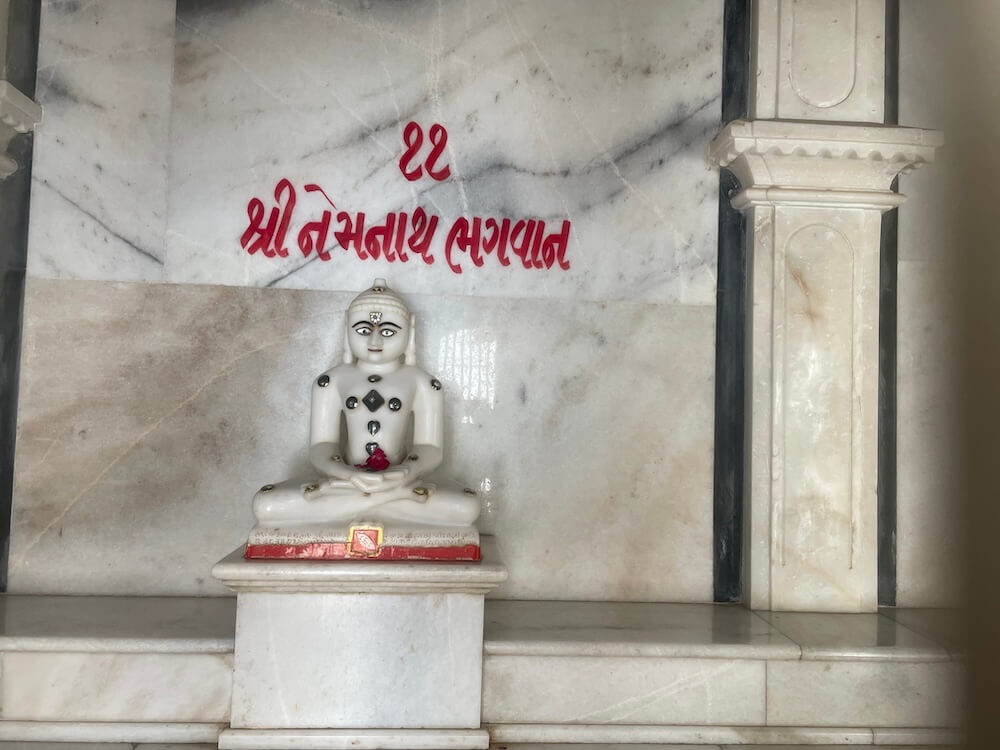
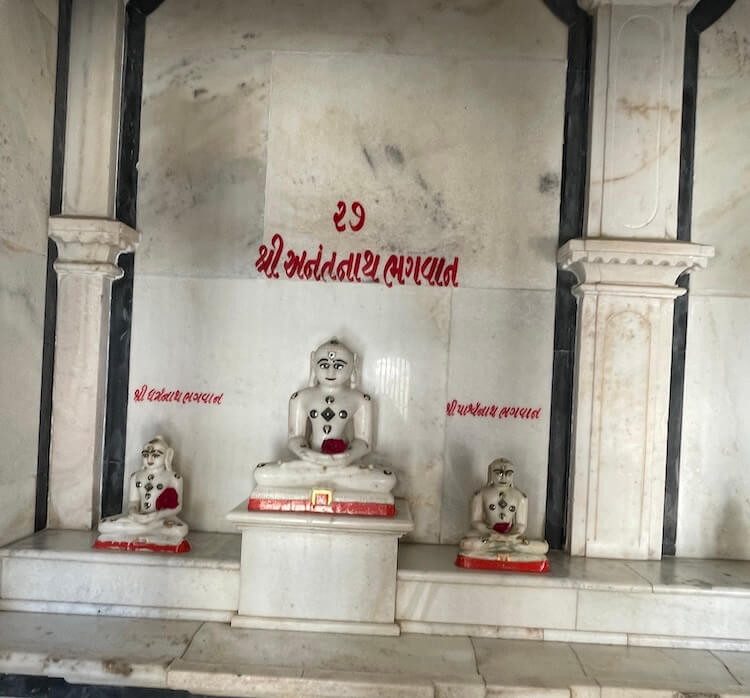
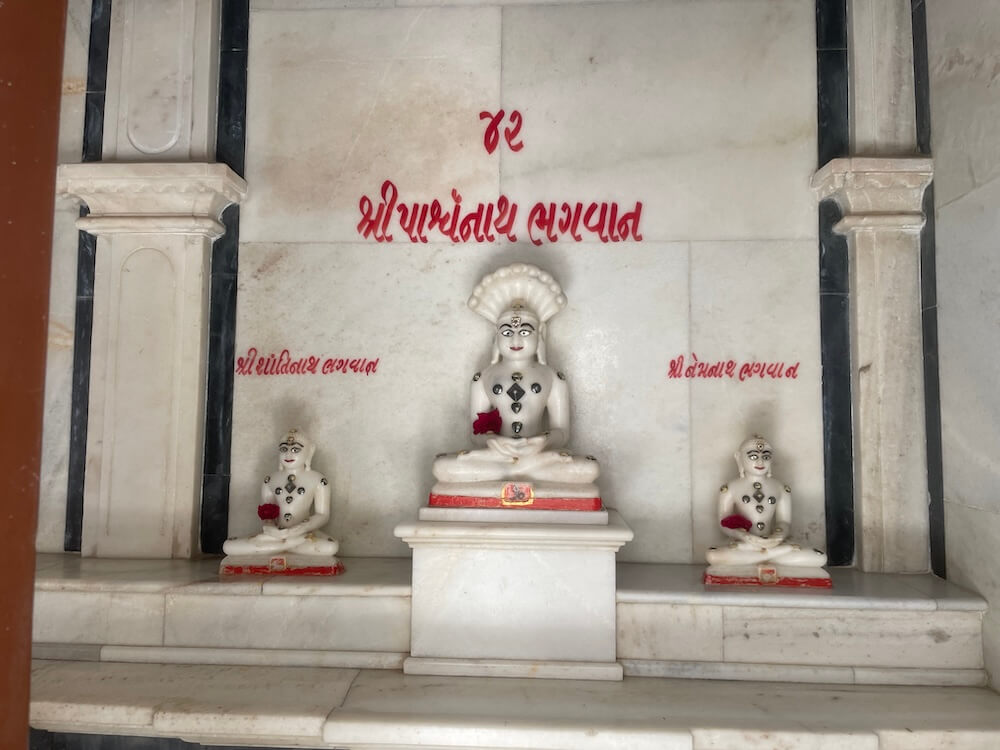
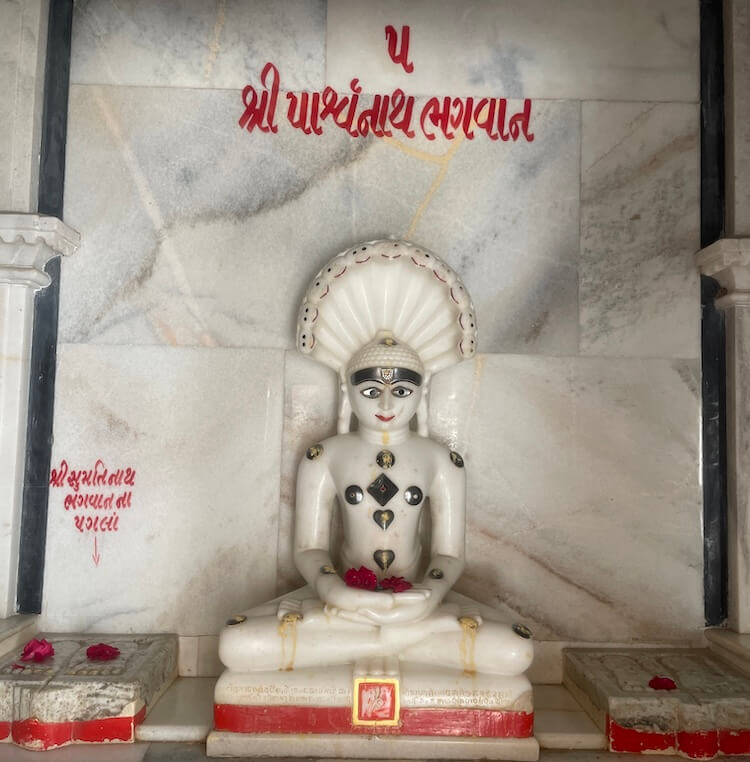
The temple also houses independent shrines for Bhagwan Shantinath, Munisuvratswami, Sanchitnath and Gautam Swami. Within the fifty-two peripheral shrines, various Jain Tirthankaras are consecrated, notably an image of Parshvanath featuring a magnificent carved serpent hood. The roof is graced by several smaller spires surrounding a grand central Shikhara adorned with miniature divine figures.
The ‘Shri Matar Saccha Dev Karkhana Pedhi’, responsible for the daily and annual administration of the Teertha, organises various religious festivals with great fervour.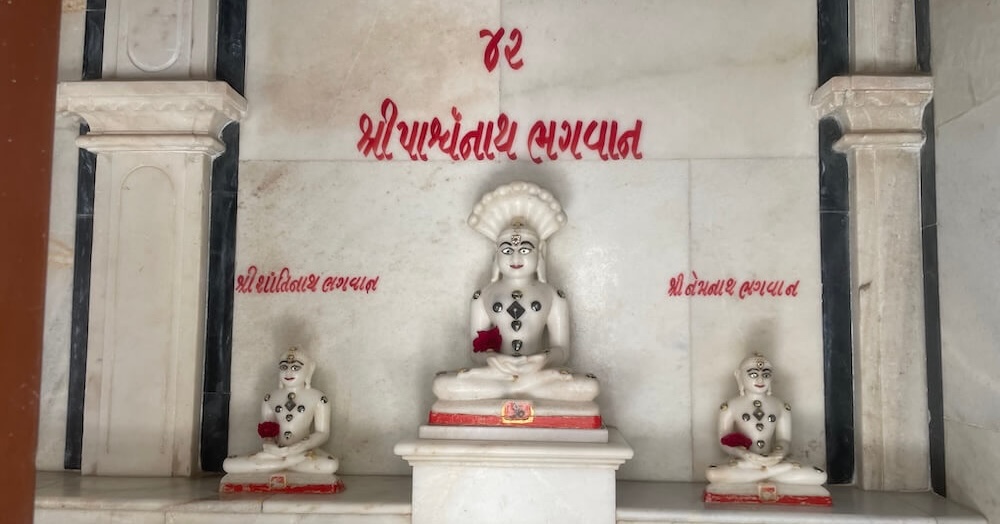 On the full moon of every month, the temple is thronged by devotees. On the second day of the bright fortnight of Kartik, the entire Sangha of Kheda village arrives in large numbers. On the full moon of Kartik, the ‘Navvad Prakari Puja’ is performed with deep devotion near the Padukas (sacred footprints) of Shri Adishwarji on the village outskirts. On the auspicious occasion of the fifth day of the bright fortnight of Vaishakh, new flags are hoisted upon the fifty-two shrines and the main spire. The Janma Kalyanaka of Bhagwan Mahavir is celebrated with great solemnity on the thirteenth day of the bright fortnight of Chaitra. The temple is open for devotees from 6 am to 1 pm and from 3 pm to 8:30 pm.
Useful Information
- Located at 6 km from Kheda city.
- State Transport (GSRTC) and private vehicle facilities available from Kheda.
- Private vehicles can reach the temple directly.
- Accommodation and breakfast facilities are available in the vicinity.
- Contact – Temple Office, Telephone: 02694 285530.
सचदेव सुमतिनाथ भगवान मंदिर
मटर, ताल. मटर, जिला. खेड़ा
मंदिरे
Temples
मंदिर
-
भूमपुरा हनुमान मंदिर भूमापुरा, मोडज, ता. महेमदावाद, जि. खेडा
अधिक माहितीBhumapura Hanuman Temple Bhumapura, Modaj, Tal. Mahemdavad, Dist. Kheda
View Detailsभूमापुरा हनुमान मंदिर भूमापुरा, मोडाज, ताल. महेमदावाद, जिला. खेड़ा
विवरण देखें -
भाथीजी महाराज मंदिर फागवेल, ता. कापडवंज, जि. खेडा
अधिक माहितीBhathiji Maharaj Temple Phagvel, Tal. Kapadvanj, Dist. Kheda
View Detailsभथीजी महाराज मंदिर फागवेल, ताल. कपडवंज, जिला. खेड़ा
विवरण देखें -
केदारेश्वर महादेव मंदिर महादेवपुरा, ता. कठालाल, जि. खेडा
अधिक माहितीKedareswar Mahadev Temple Mahadevpura, Tal. Kathlal, Dist. Kheda
View Detailsकेदारेश्वर महादेव मंदिर महादेवपुरा, ताल. कठलाल, जिला. खेड़ा
विवरण देखें