
मनकामेश्वर पारडेश्वर मंदिर
वळतेवा, ता. नडियाद, जि. खेडा
Mankameshwar Pardeshwar Temple
Valetva, Tal. Nadiad, Dist. Kheda
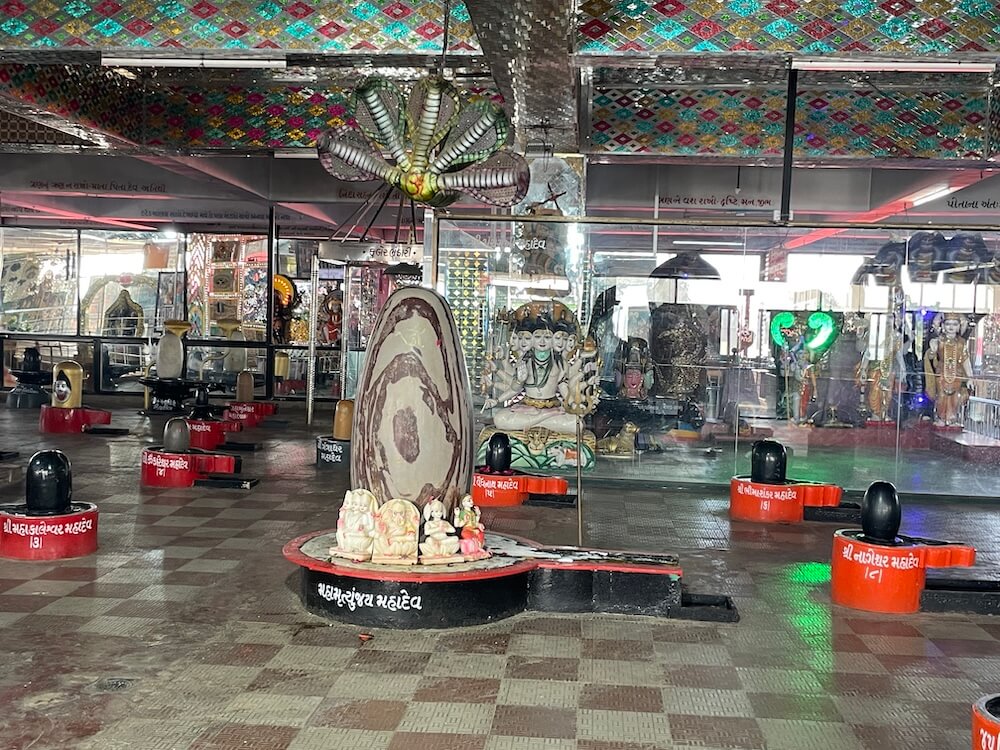 The Mankameshwar Pardeshwar Shiva Temple, erected in the village of Valetva, is revered as a vibrant centre of spiritual energy for devotees. Enshrined at this site is a rare ‘Parad Shivalinga’, meticulously fashioned from a blend of pure mercury and silver. It is the firm conviction of the faithful that the mere sight and worship of this Shivpind (symbolic form of Shiva) bestows the spiritual merit equivalent to a pilgrimage of the twelve Jyotirlingas. For the pilgrims visiting the shrine, a unique facility has been provided to perform Abhishek (ritual bathing) upon the Parad Shivalinga using Teertha (sacred water) that contains the essence of holy waters from thousands of pilgrimage sites, including the Bagmati River of Nepal.
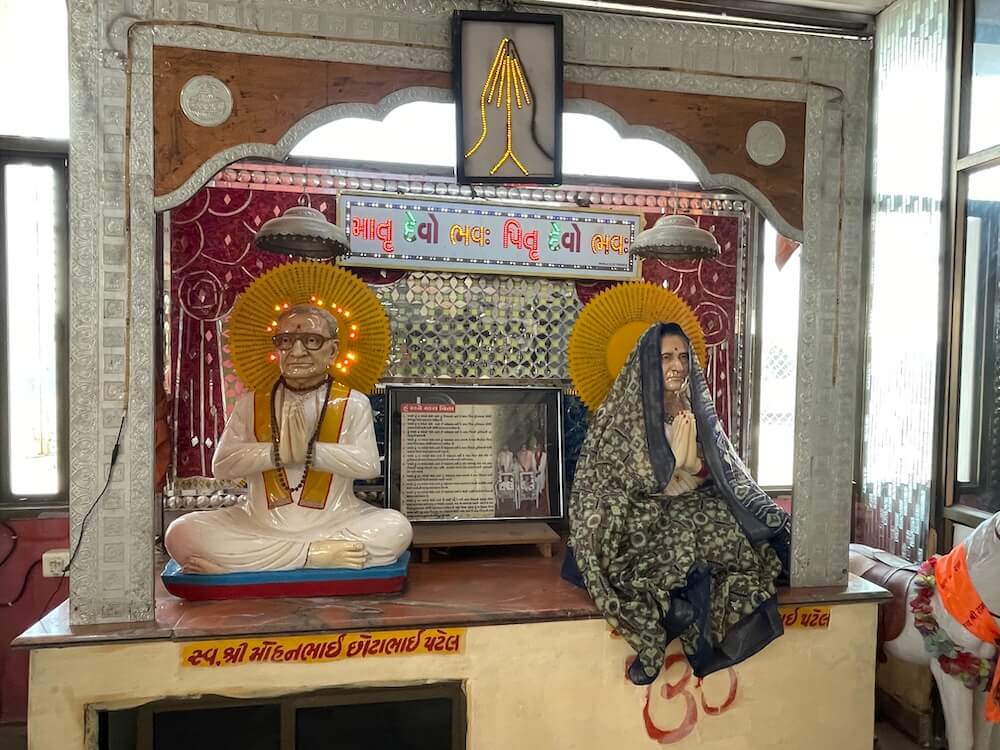
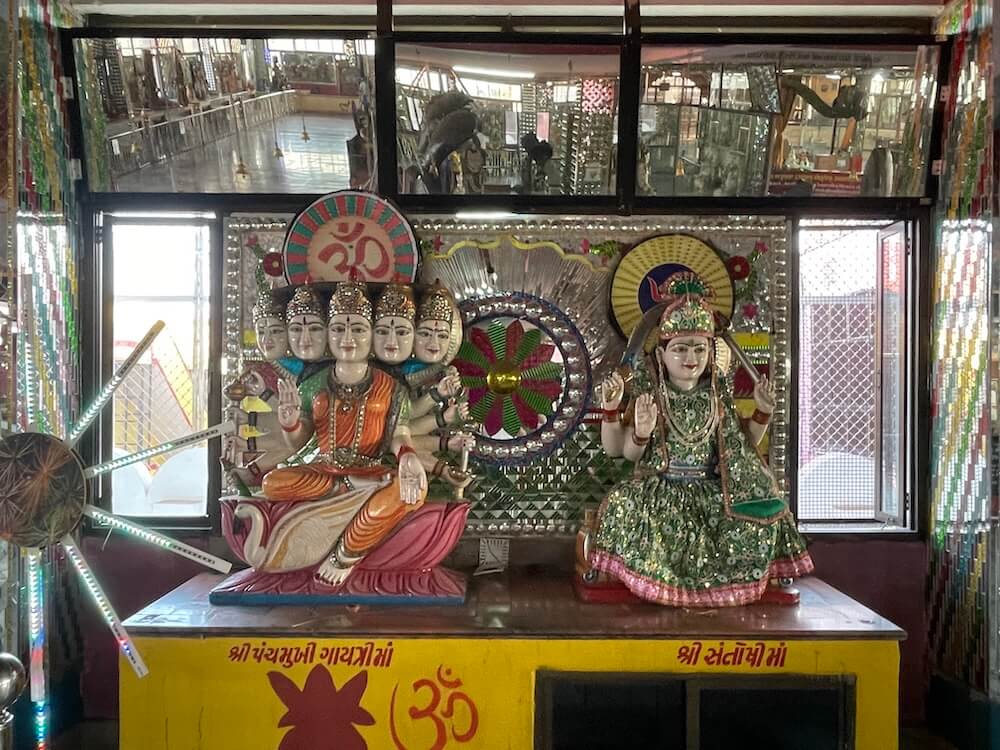
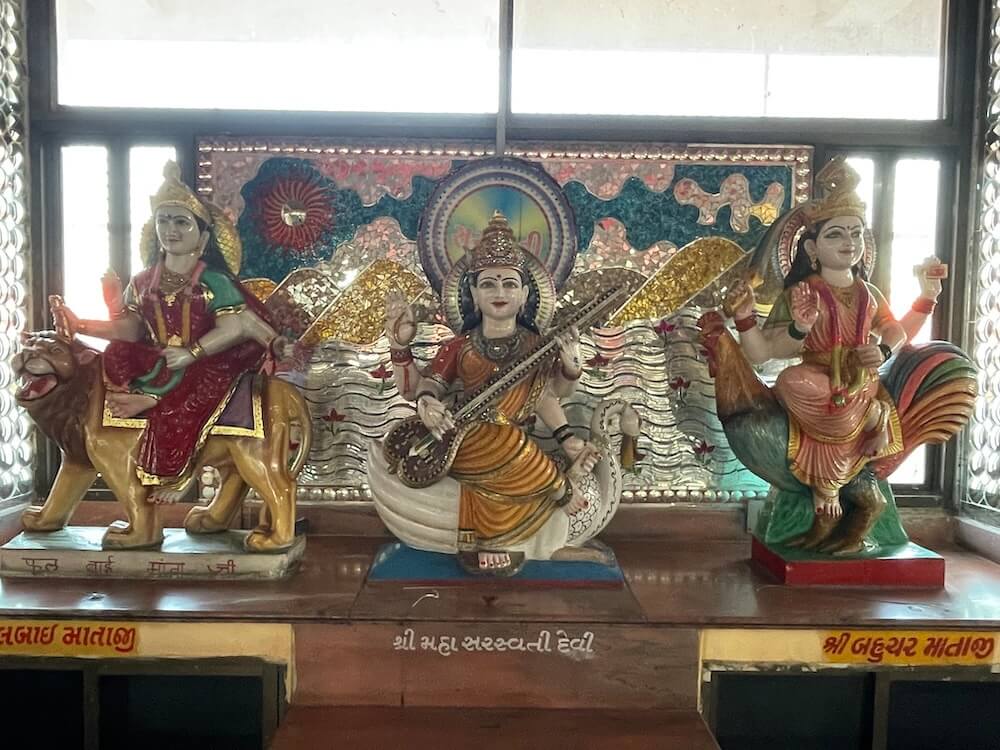 The history of this temple is not of great antiquity, having been opened to devotees in the year 2010. It was commissioned by Shri Prafulbhai Patel and his wife Kabitaben Patel, in pious memory of the late Mohanbhai Patel and the late Maniben Patel. Established within this edifice is a magnificent Parad Shivalinga weighing 151 kilograms, serving as a reminder of the noble Vedic values of ‘Pitru Devo Bhavah’ (treat thy father as God) and ‘Matru Devo Bhavah’ (treat thy mother as God). This modern-day temple also houses the consecration of as many as 125 diverse idols of deities.
According to mythological legend, after Lord Mahadev revealed the secrets of alchemy to the sages, they performed special processes on mercury to create the Parad Shivalinga as a form of Gurudakshina (offering to a preceptor).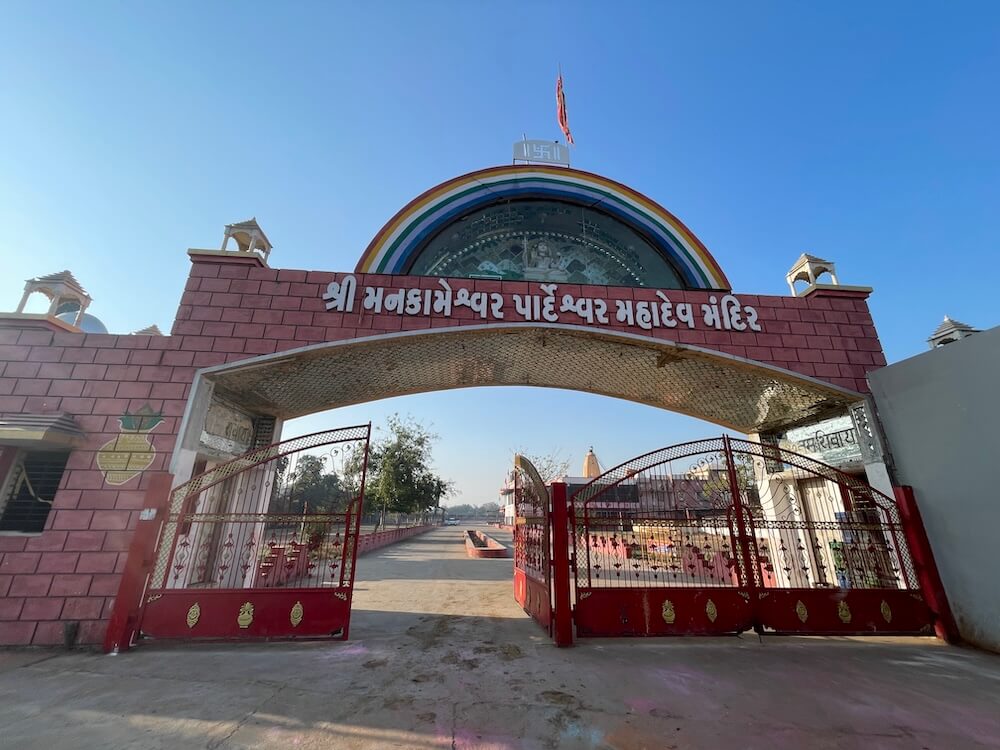 It is believed that Lord Mahadev personally resides where a Parad Shivalinga is established and worship of this Pinda is said to dissolve the sins of many lifetimes. The tradition holds that offering Bel (wood-apple) leaves and performing Aarti with camphor opens the path to prosperity and ultimate Moksha (liberation) for the worshipper.
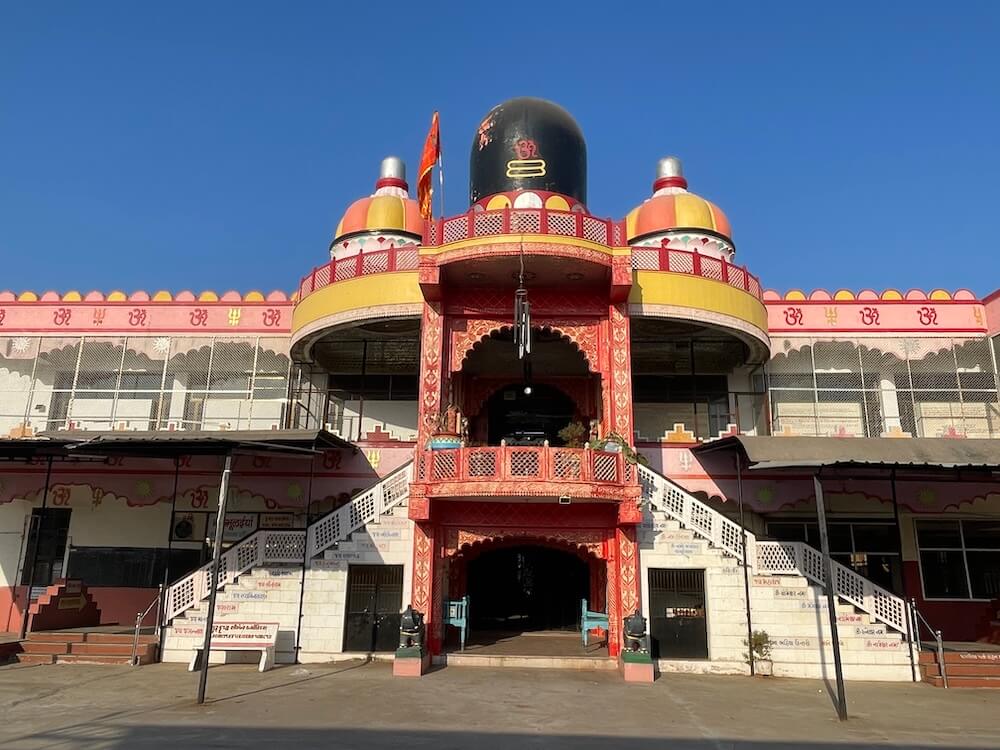
The temple is situated along the main road connecting the villages of Nadiad and Changa. A robust fortification encircles the entire complex and one enters the expansive courtyard through a gateway flanked by guard chambers. The spacious grounds are planted with various species of trees and include a designated parking area. Adjacent to the frontal part of the temple building stands an independent Yajnashala (hall for fire rituals). 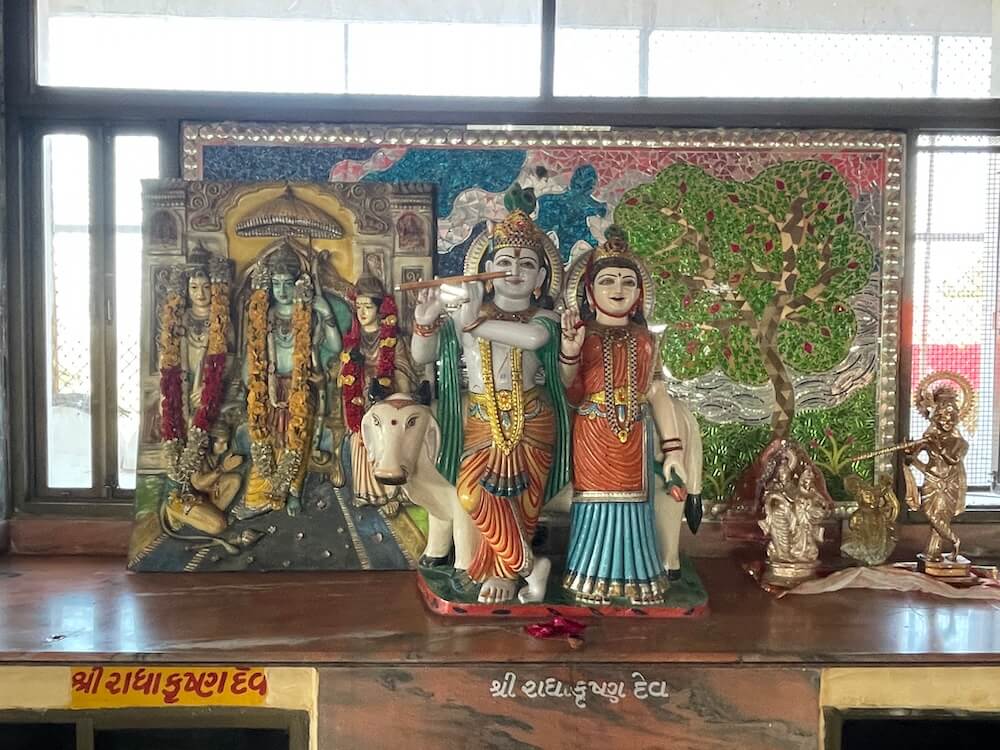 On the ground floor of the main temple, a faithful replica of Mansarovar and the Amarnath Cave has been created. Accessible for a nominal fee, this cave features beautiful sculptures of various animals, birds and deities. Also located here is a distinctive idol of Lord Shri Krishna lifting the Govardhan Mountain upon his little finger. Furthermore, the ground floor houses a ‘Bhulbhulaiya’ (labyrinth) chamber adorned with glass minakari (enamel work), where narrow alleys have been created by internal walls. The walls of this chamber depict the ‘Krishna-Leela’ (divine plays of Krishna) with exquisite detail using multicoloured glass pieces, while some sections feature sculptures and idols illustrating the same divine episodes.
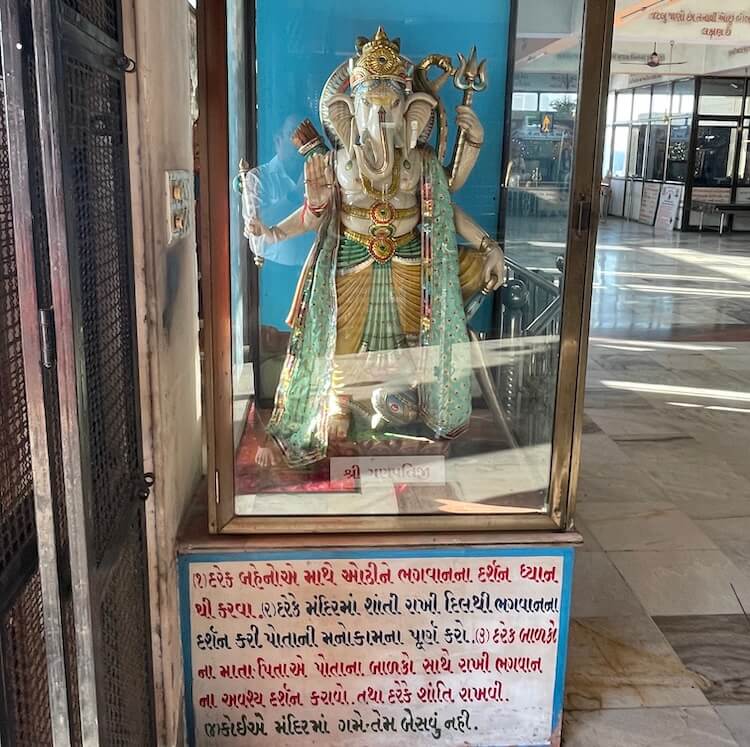
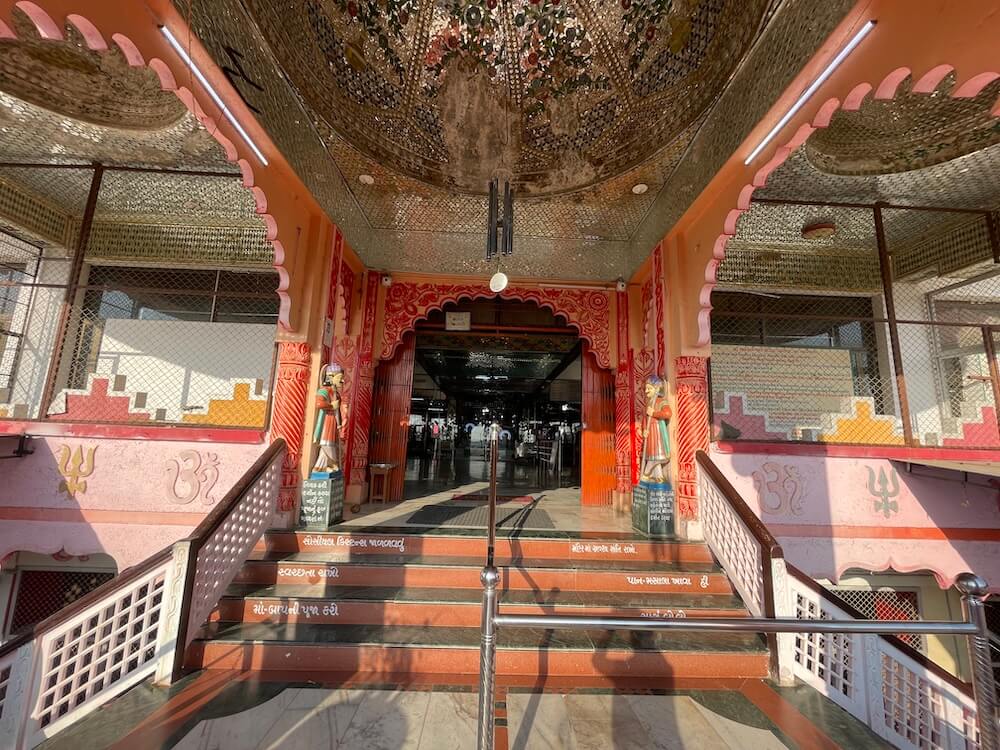
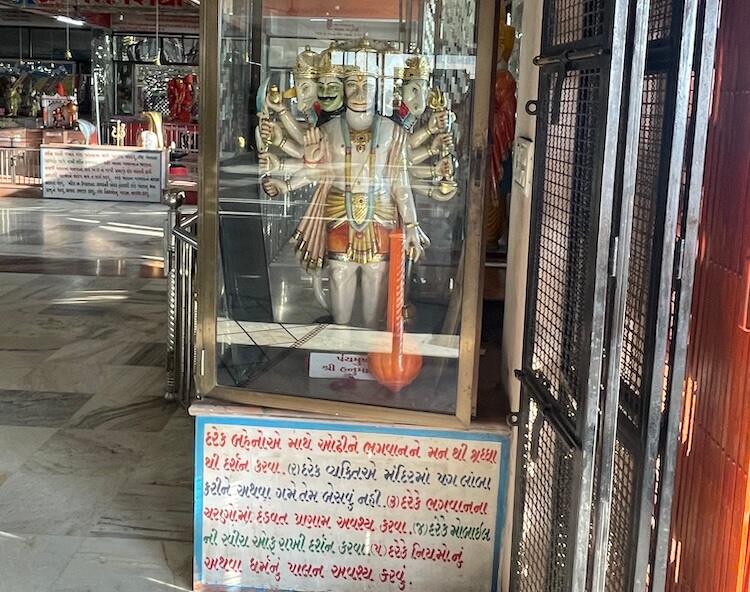
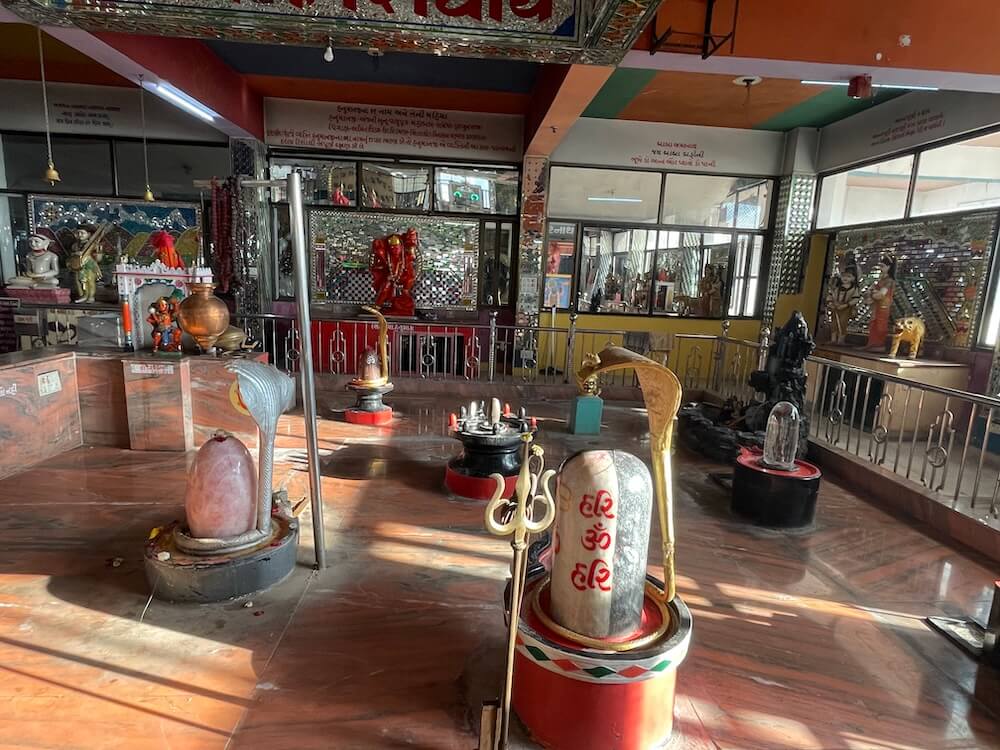
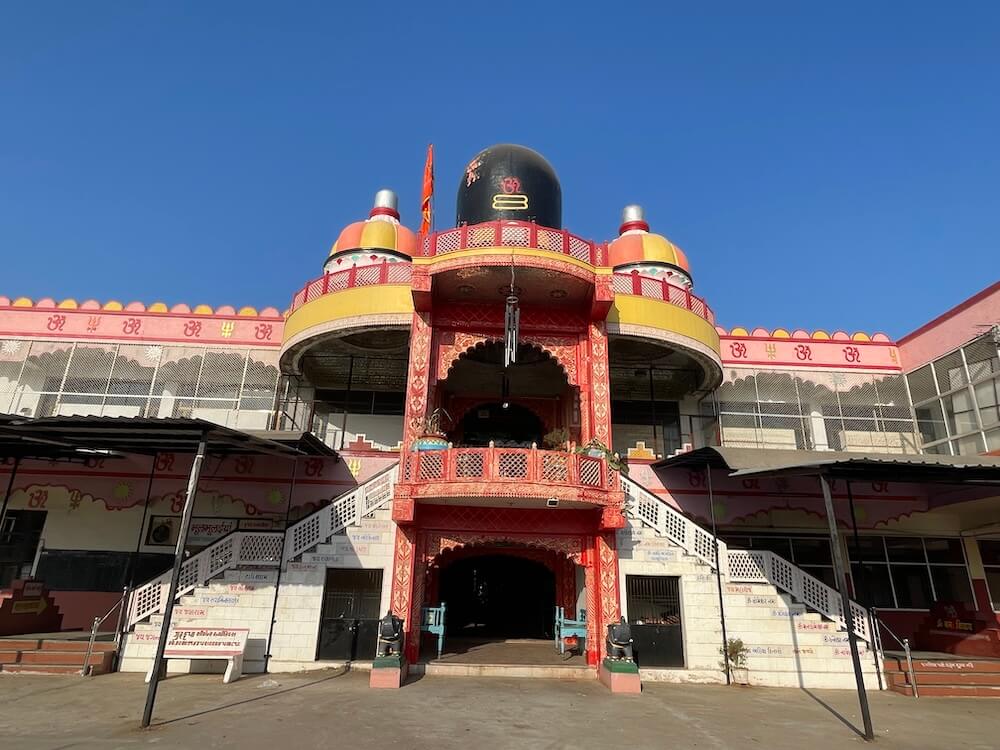 Upon the crescent-shaped pediment of the temple entrance, a beautiful high-relief sculpture of Lord Mahadev is carved. The main temple of this two-storey structure is situated on the first floor, accessible via independent staircases on the left and right sides. The architectural composition consists of a Mukhamandap (entrance porch), a Sabhamandap(assembly hall) and a semi-open Garbhagriha (sanctum sanctorum) at the centre. The grand pillars and the ‘vitana’ (ceiling) of the porch and assembly hall are adorned with attractive carvings, with all pillars of the porch interconnected by arches. Near the entrance of the assembly hall, idols of Lord Ganesha and Lord Hanuman are enshrined within glass-enclosed niches upon Vajrapithas (stone pedestals). A total of 108 bells hang from the ceiling, supported by beams resting on the square pillars of the hall.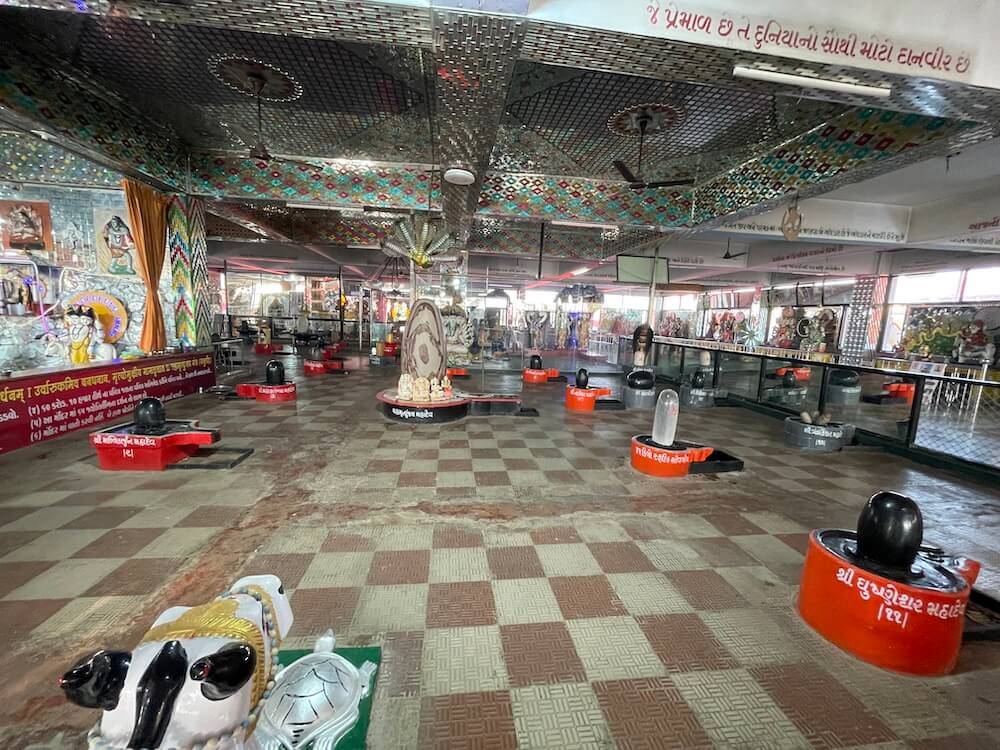
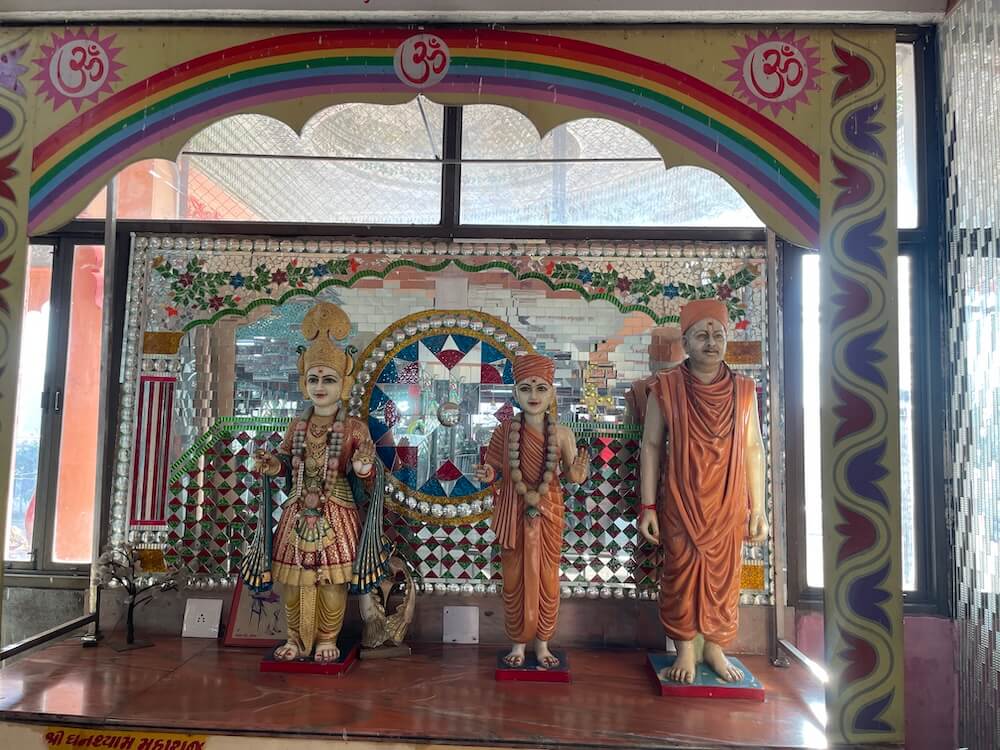
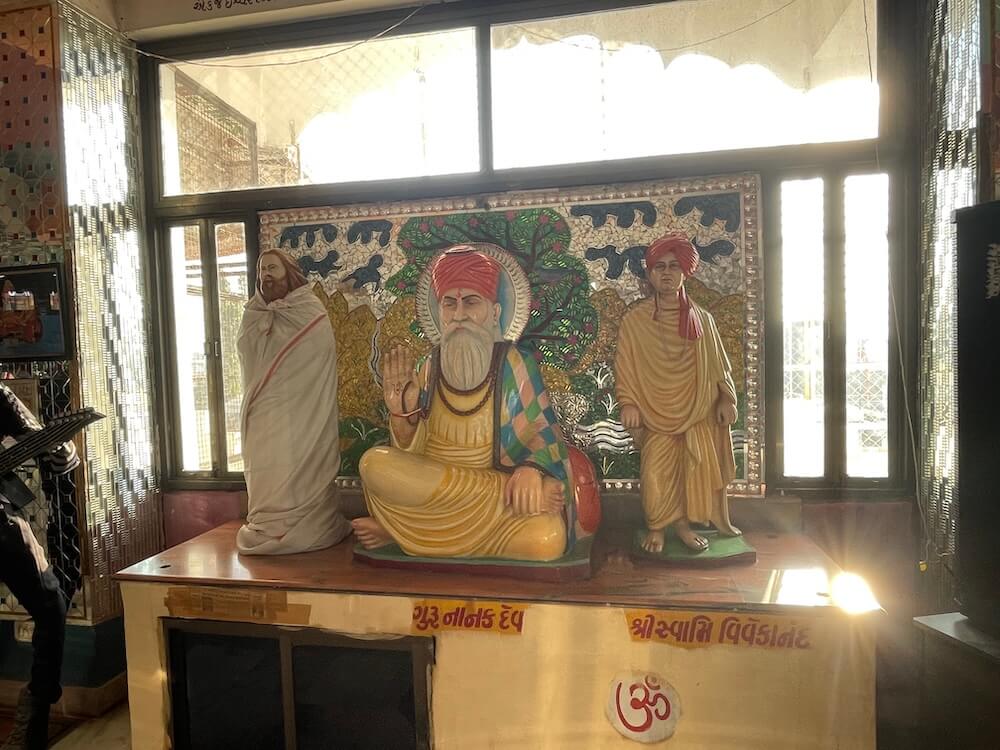
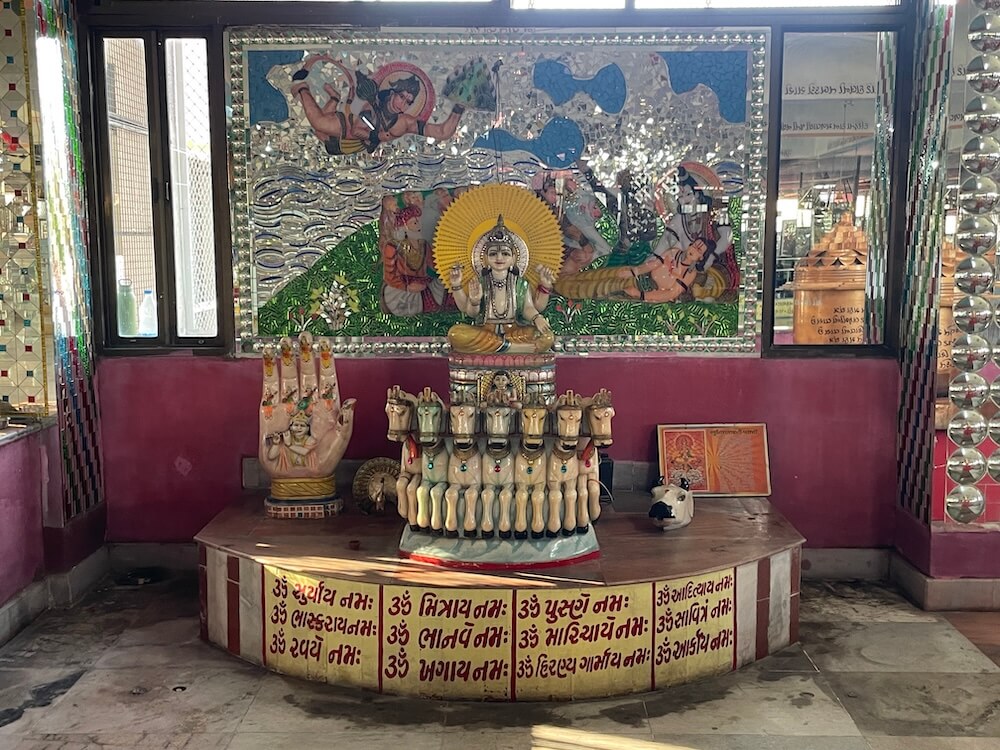
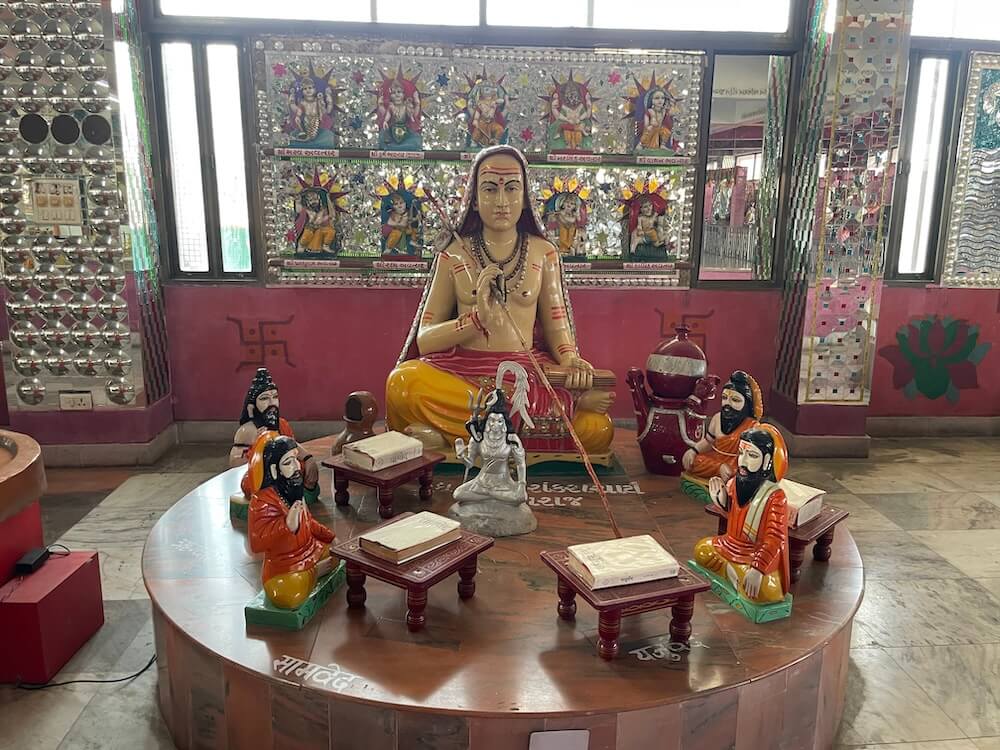
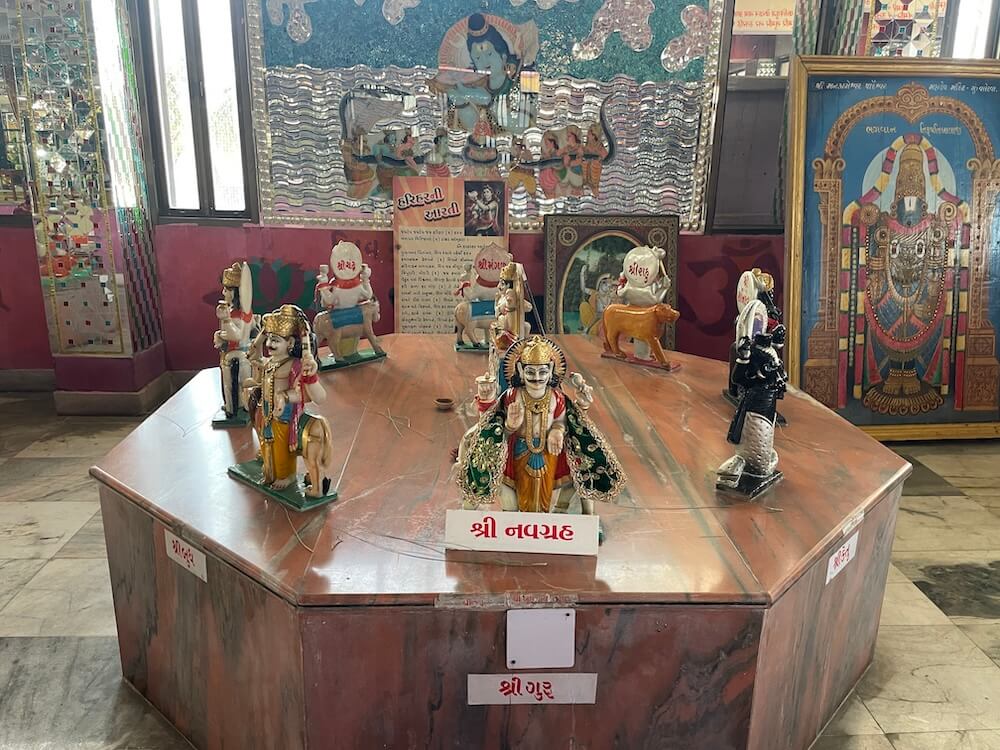
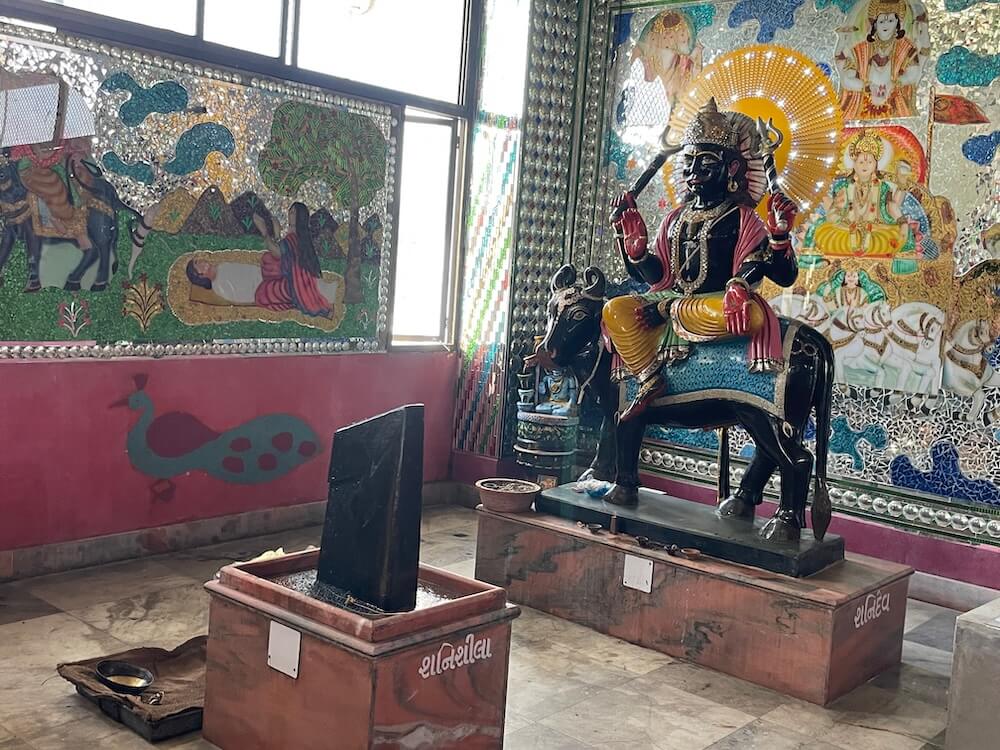
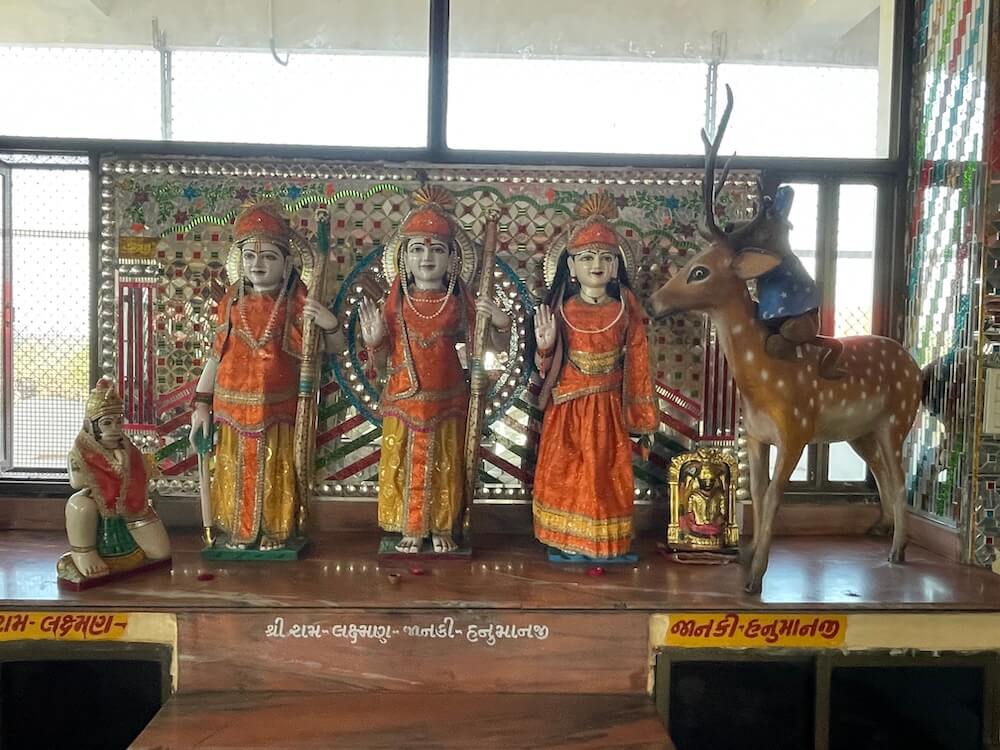
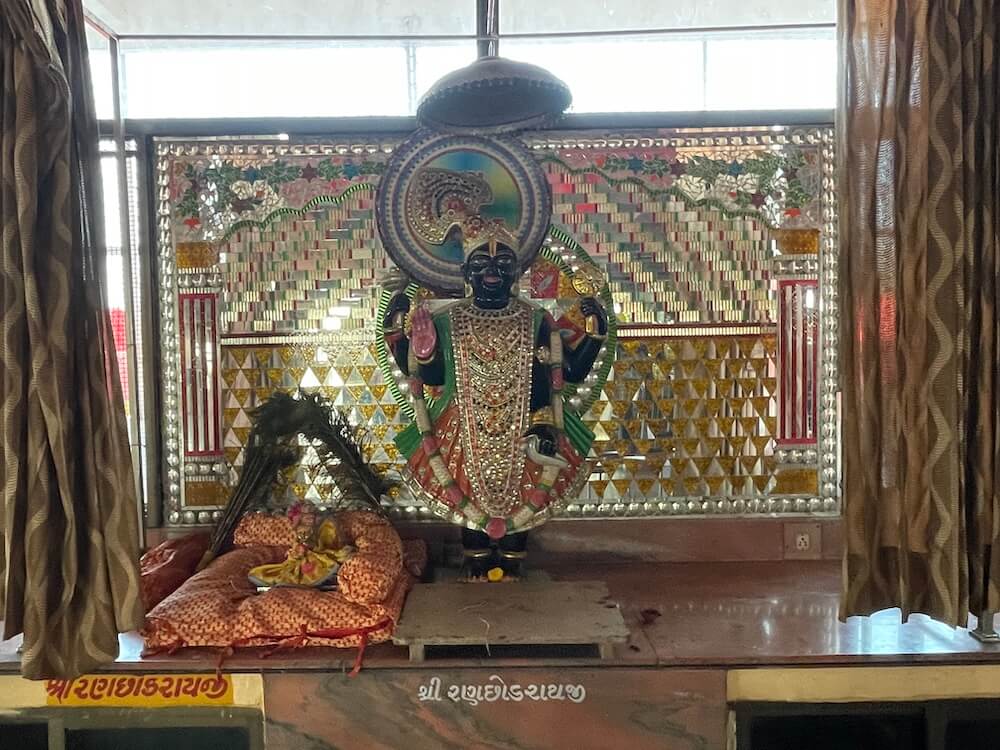
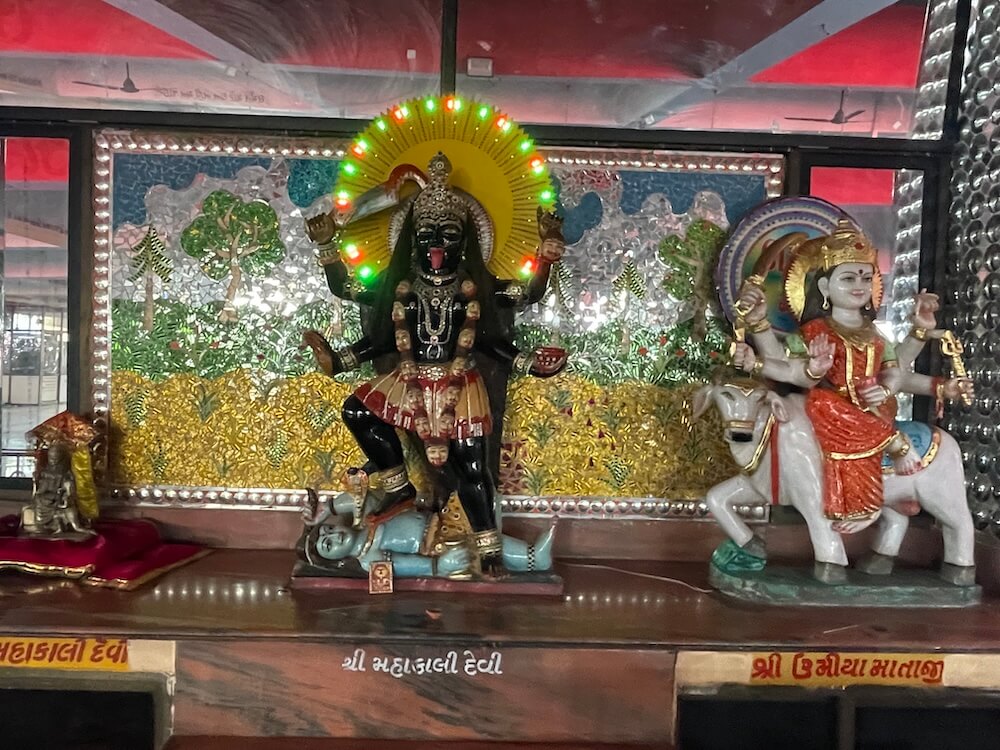
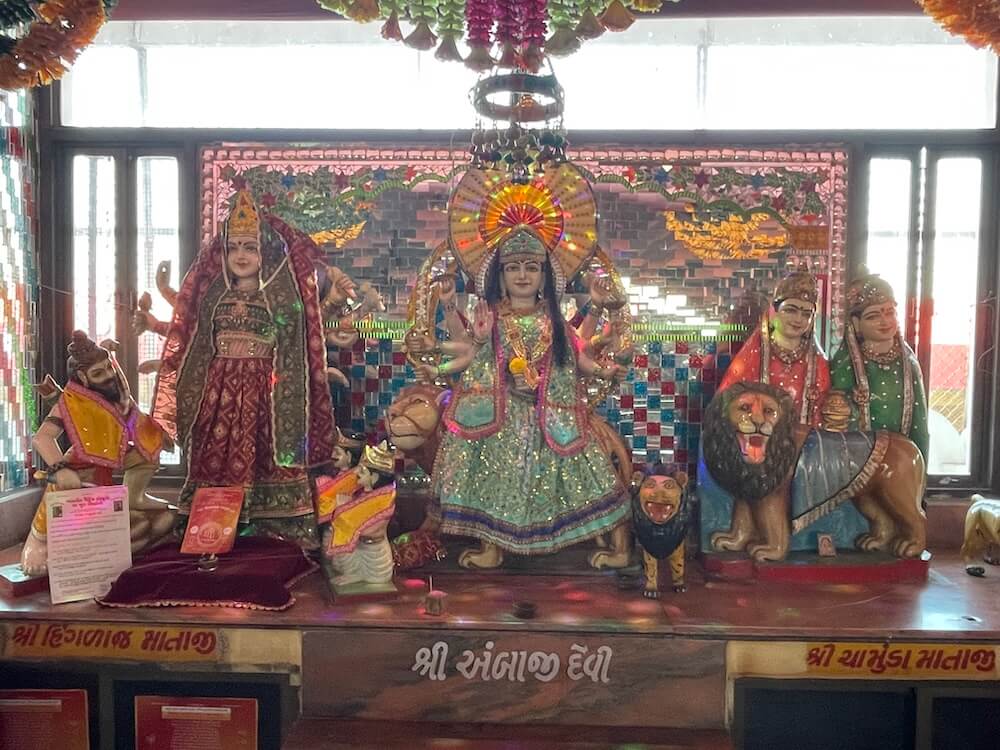
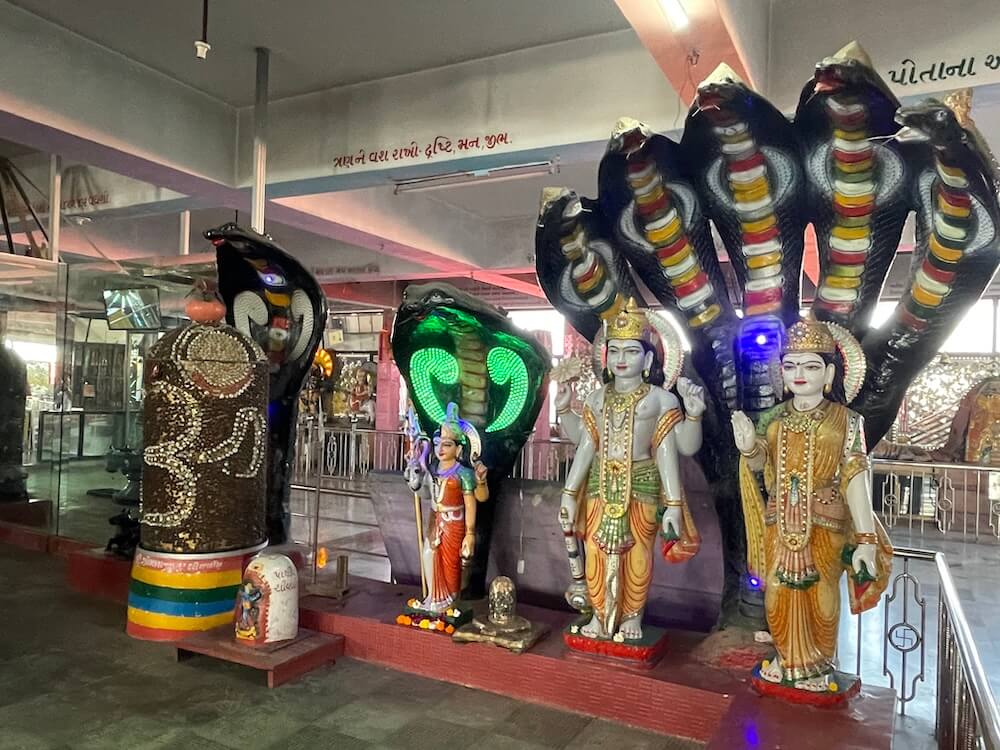
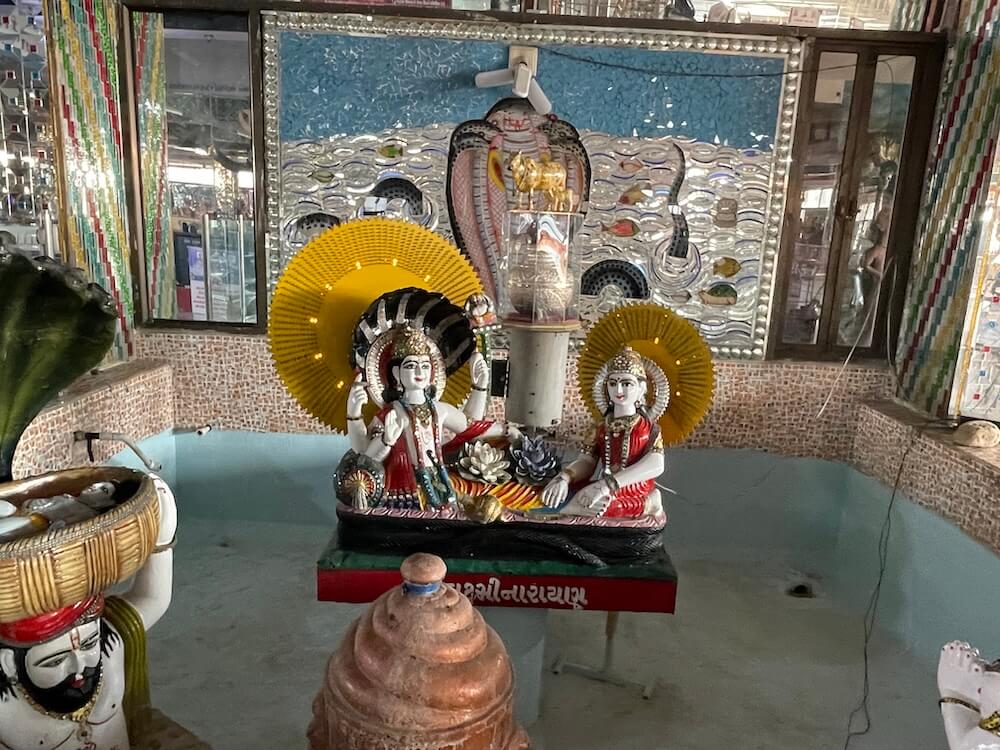
Arranged in rows upon numerous Vajrapithas within the Sabhamandap are 125 idols of deities, including Tirupati Balaji, Shri Ram-Lakshman-Janki, Hanuman, Radha-Krishna, Guru Gobind Singh, Ranchhoddas, Jesus Christ, Swaminarayan, Ambe Mata, Shani Dev, Mahavir Swami, Sai Baba, Jalaram Bappa, Bharat Mata, Surya Dev, Shankaracharya, various Rishi-Munis, several saints and the Navagrahas (nine planetary deities). This hall also features sculptures of the twelve Jyotirlingas adorned with serpent motifs, alongside other Shivpindis and a sculpture of Kamdhenu (the celestial cow).
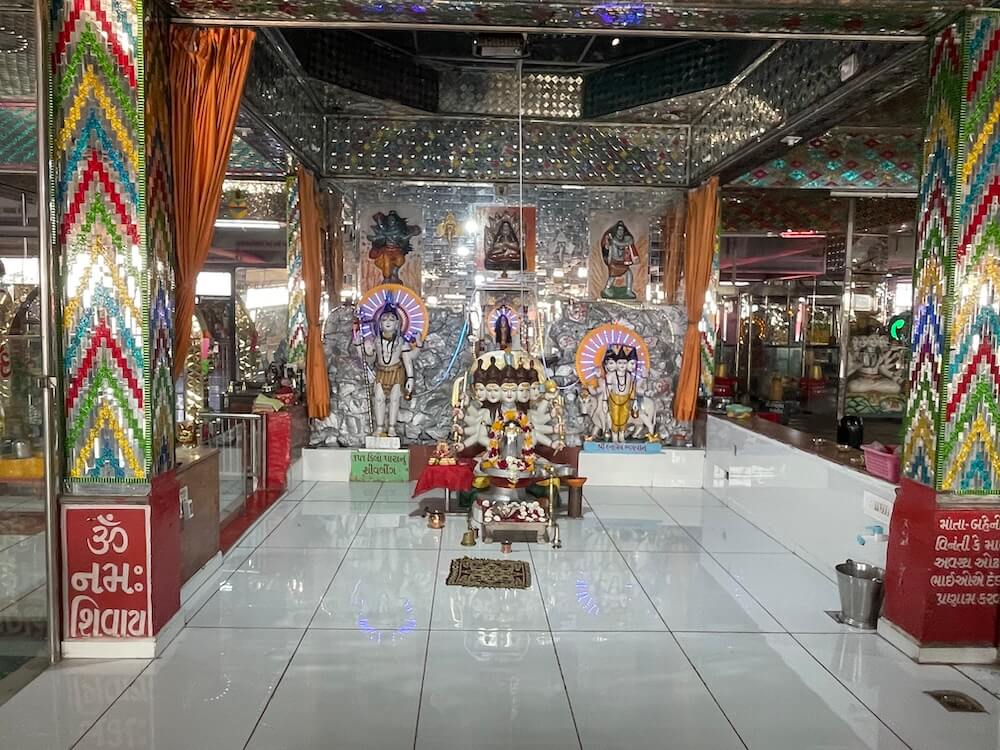
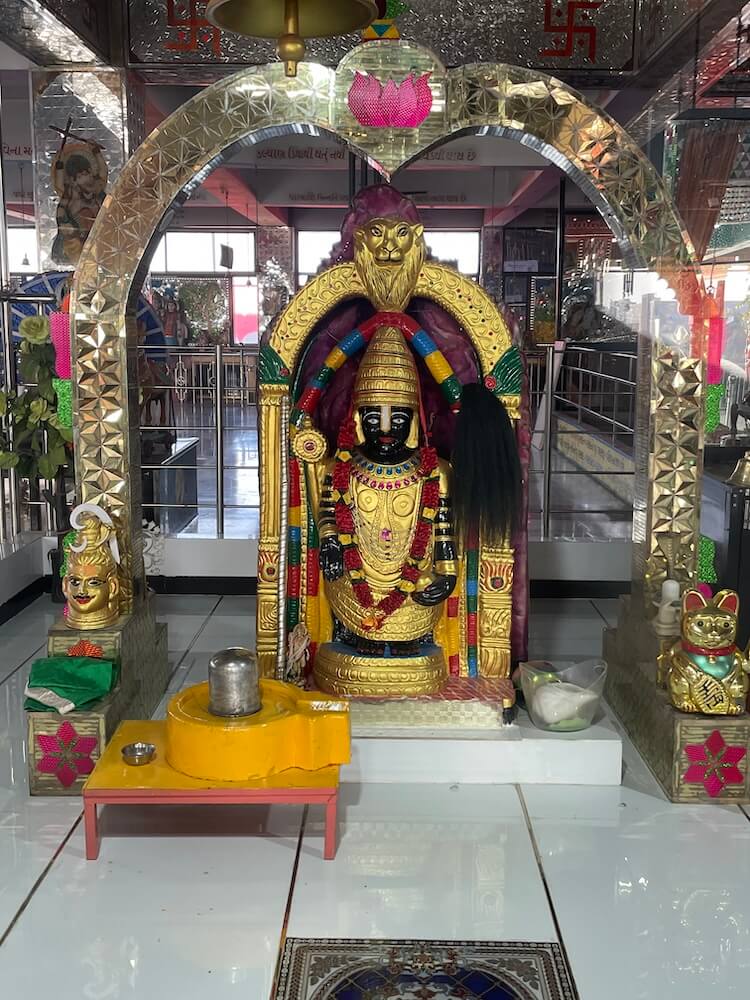
In the centre of the semi-open sanctum beyond the assembly hall, the primary 151-kilogram Parad Shivalinga is established upon the floor. 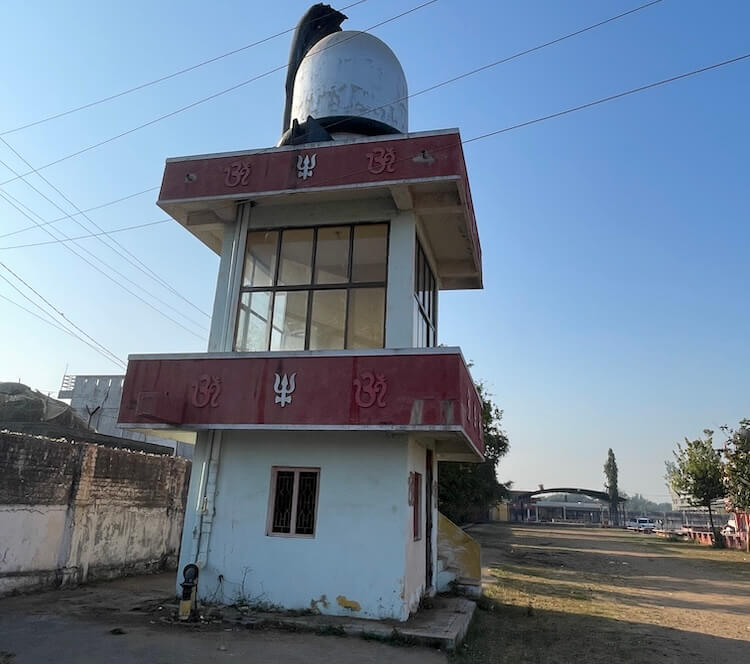 Facing the Pinda upon a pedestal is an idol of Nandi, while beautiful idols of Lord Mahadev and Dattatreya rest against the rear wall. Tall spires shaped like Shivpind rise above the roofs of the porch and the assembly hall. The central square spire over the sanctum features Angashikhara (subsidiary spire) compositions on all four sides, topped with a beautiful sculpture of a serpent shielding the Shivalinga with its hood.
On Mahashivratri and the Mondays of the month of Shravan, hundreds of local devotees gather here for Darshan. The birth of Shri Krishna and other significant festivals of various deities are also celebrated with great enthusiasm. The temple regularly organises programmes of Bhajan, Kirtan and scriptural readings. Particular spiritual importance is attached to performing a personal Abhishek upon the mercury Shivalinga. The sacred water specially provided for this ritual contains traces of water from holy sites such as the Bagmati River in Kathmandu, Nepal; the Shipra in Ujjain; the Triveni Sangam in Prayagraj; and the Gangasagar in Kolkata. Temple is open for devotees daily from 7am to 1 pm and from 2 pm to 8 pm.
Useful Information
- Located at 12 km from Nadiad and 31 km from Kheda.
- State Transport (GSRTC) bus facilities available from Vadtal.
- Private vehicles can reach the temple parking lot.
- Numerous options for accommodation and breakfast are available in the vicinity.
- Contact – Temple Office, Mob. 08347816692.
मनकामेश्वर पारदेश्वर मंदिर
वैलेटवा, ताल। नडियाद, जिला. खेड़ा
मंदिरे
Temples
मंदिर
-
भूमपुरा हनुमान मंदिर भूमापुरा, मोडज, ता. महेमदावाद, जि. खेडा
अधिक माहितीBhumapura Hanuman Temple Bhumapura, Modaj, Tal. Mahemdavad, Dist. Kheda
View Detailsभूमापुरा हनुमान मंदिर भूमापुरा, मोडाज, ताल. महेमदावाद, जिला. खेड़ा
विवरण देखें -
भाथीजी महाराज मंदिर फागवेल, ता. कापडवंज, जि. खेडा
अधिक माहितीBhathiji Maharaj Temple Phagvel, Tal. Kapadvanj, Dist. Kheda
View Detailsभथीजी महाराज मंदिर फागवेल, ताल. कपडवंज, जिला. खेड़ा
विवरण देखें -
केदारेश्वर महादेव मंदिर महादेवपुरा, ता. कठालाल, जि. खेडा
अधिक माहितीKedareswar Mahadev Temple Mahadevpura, Tal. Kathlal, Dist. Kheda
View Detailsकेदारेश्वर महादेव मंदिर महादेवपुरा, ताल. कठलाल, जिला. खेड़ा
विवरण देखें