
माई मंदिर / माई अधिपीठ ठिकाण
नडियाद, ता. नडियाद, जि. खेडा
Mai Mandir / Maism Adhyapith Sthan
Nadiad, Tal. Nadiad, Dist. Kheda
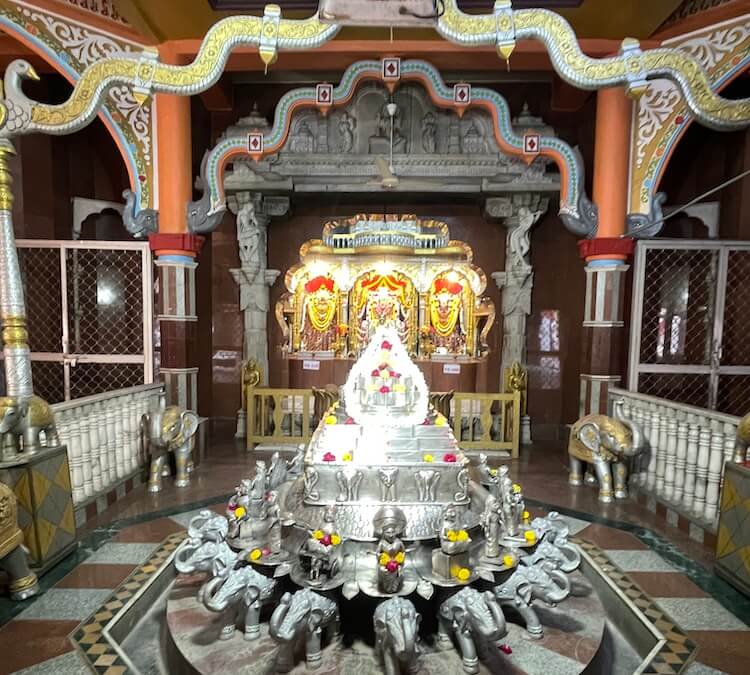 The city of Nadiad, a cradle for numerous novelists, poets and lyricists and the birthplace of illustrious freedom fighters such as the ‘Iron Man of India’ Vallabhbhai Patel and his brother Vitthalbhai Patel, is distinguished by its sobriquet, ‘Sakshar-bhumi’ (the Land of the Literate). According to historical chronicles, this settlement was established by the Nat community and consequently, throughout the extensive epoch spanning 746 to 1297 AD, it was known as ‘Natpur’ or ‘Natpadra’. Even today, the ancient vestiges dating back to 858 AD, discovered near the local Bhairav temple, bear witness to the city’s venerable history. In the very heart of this city stands the ‘Mai-Dharma Adhyapitha Sthan’ or ‘Shri Mai Mandir’. This is a sanctuary where Motherhood is venerated as the supreme divine form and ‘Mai’ (the Universal Mother) is worshipped with profound devotion. Renowned as the Shri Keshav Bhavani Mandir, this temple imparts the noble teachings of equality and fraternity, transcending all distinctions of caste, creed, or religion.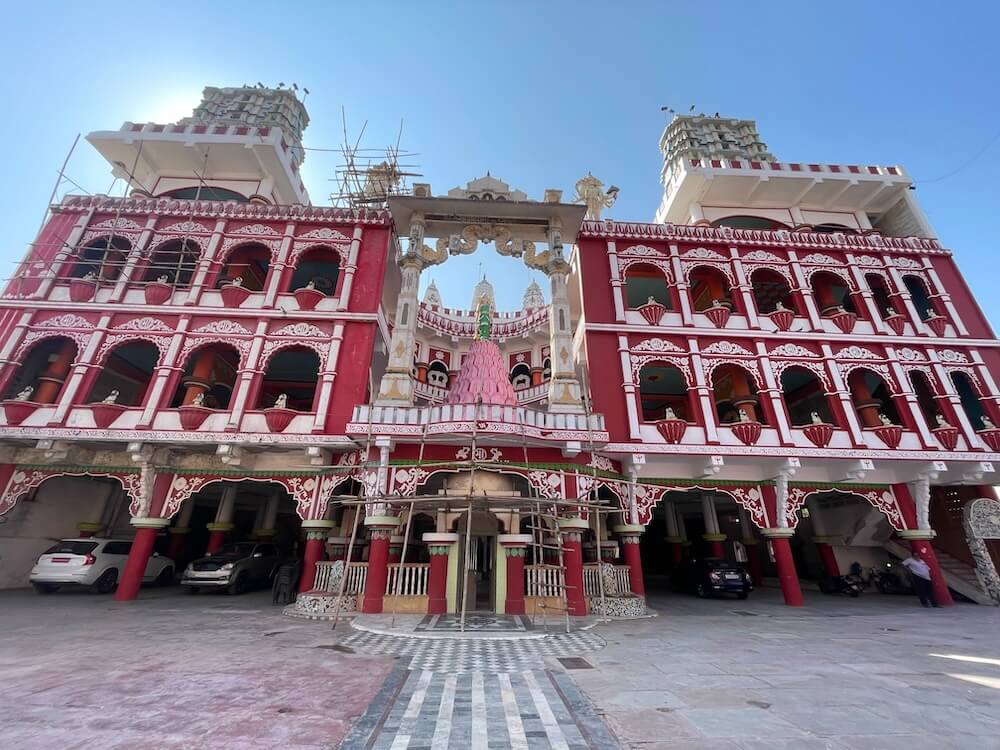
During the era of British rule, while this city progressed by embracing English education, it simultaneously preserved its Vedic ‘Arya’ culture. This middle-class town of Gujarat has produced many great literary luminaries. Govardhanram Tripathi, world-renowned for his epic novel ‘Saraswatichandra’, hailed from Nadiad. Likewise, Manasukhram Tripathi, Zaverilal Umiyashankar Yagnik, Dolatram Kriparam Pandya, Balashankar Ullasram Kanthariya, Manilal Nabhubhai Dwivedi, Chhaganlal Harilal Pandya, Ambalal Bulakhiram Jani, Champshankar Narmadashankar Pandya and Mulshankar Maneklal Yagnik earned great fame as the ‘Nav-Ratna’ – nine literates of Nadiad. 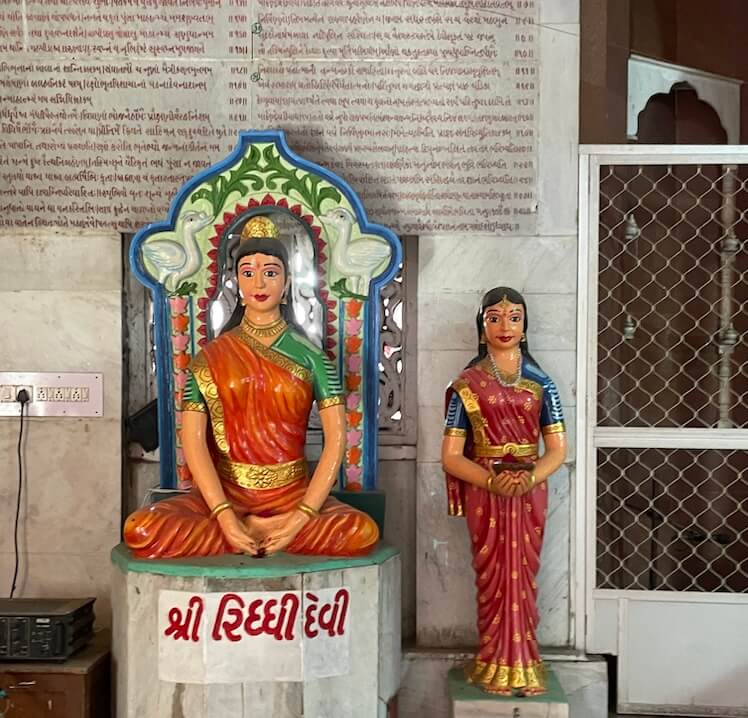 The popular song from the cinematic masterpiece ‘Mughal-e-Azam’, ‘Mohe Panghat Pe Nandlal’, was penned by Raghunath Brahmabhatt, a poet of Nadiad. Furthermore, Nadiad is the birthplace of Vitthalbhai Patel, the lyricist of the song ‘Jhoot Bole Kauva Kaate’ from Raj Kapoor’s famous creation ‘Bobby’. This land of literature and culture also possesses a significant religious heritage, of which Mai Mandir stands as a pre-eminent example.
The pre-eminent founder of the universal faith known as ‘Mai-ism’ was the spiritual luminary Shri Mai Swarup Mai Markand (Maiji). Born as Markand Ratanlal Dholakia on 23rd December 1885 in the village of Petlad, Kheda district, he hailed from a Nagar Brahmin family. Prior to embarking upon his spiritual odyssey, he served the British Administration as an Executive Engineer. To the adherents of Maism, his birthplace remains hallowed ground. Possessed of a spiritual inclination from childhood, he emphasised the adoration of the Divine as the ‘Universal Mother’. On 2nd September 1932, he established ‘Mai-ism’ in Pune, Maharashtra.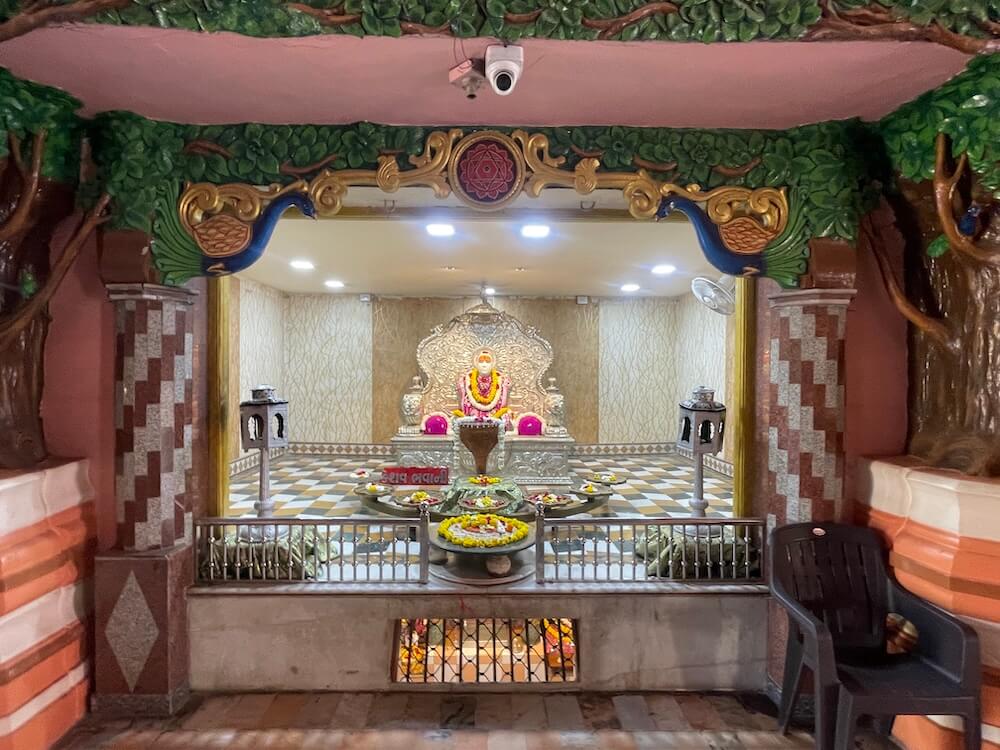
This faith is not confined to any single caste or cult. Any individual may embrace its tenets without renouncing their original religion or lineage. The cardinal teachings of ‘Mai-ism’ encompass universal love, selfless social service, devotion and absolute surrender unto the Divine. The primary ‘Mahamantra’ (great chant) of the faith is ‘Om Mai’. Shri Mai Swarup dedicated his existence to the service of the downtrodden and the pursuit of global peace. In 1950, he authored a 575-page English compendium titled ‘Mai-ism’, which articulates the faith’s philosophy with great lucidity. Furthermore, he penned works such as ‘Mother’s Message’. He spent his twilight years at ‘Mai Niwas’ in Santa Cruz, Mumbai, from where he disseminated the message of love across the globe until his passing on 21st December 1966. Today, his followers worldwide continue to tread the path he illuminated.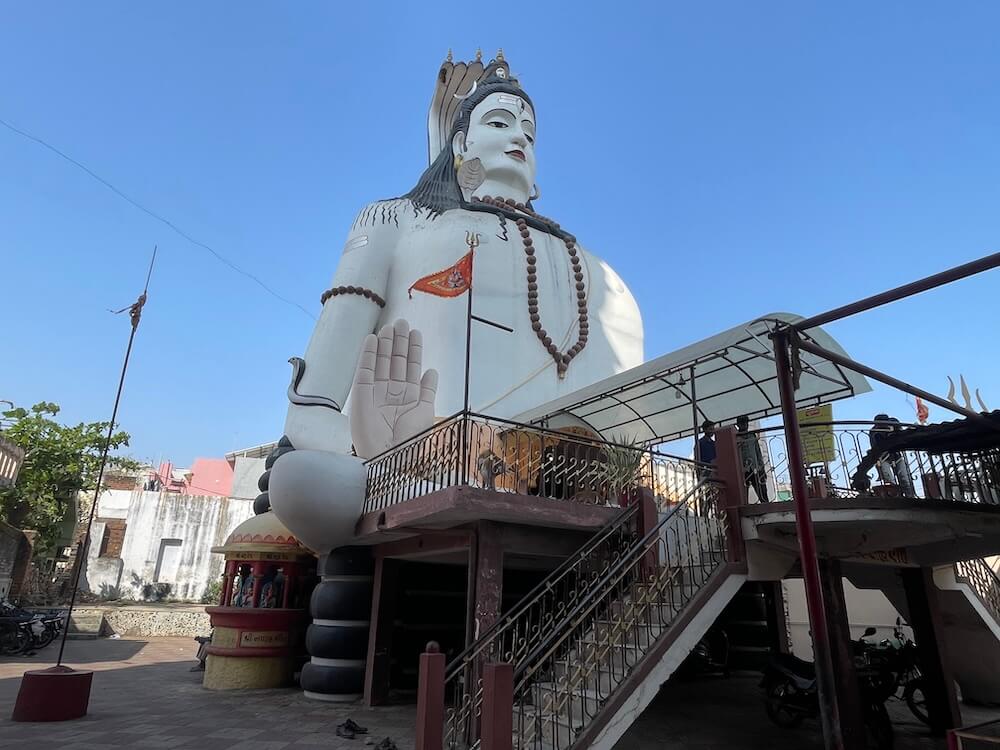
The noble task of translating the ideals of love and brotherhood into tangible action was undertaken by Shri Kanishtha Keshav Maharaj of Nadiad. While Maiji presented the philosophy to the world, Kanishtha Keshav Maharaj gave these thoughts an architectural form by establishing the ‘Maism Adhyapith’ in Nadiad. A poignant event in his life drew him towards this ideology. In 1931, the wife of a friend lay on her deathbed in Pune, suffering from septicaemia. Kanishtha Keshav Maharaj offered fervent prayers to Mother Mai and the lady’s life was miraculously spared. Notably, it was during this very period in 1932 that Shri Mai Swarup officially founded ‘Mai-ism’ in the same city.
 Following this divine intervention, the devotion of Kanishtha Keshav Maharaj deepened. Initially, he worshipped the primordial deity of Maism in Ahmedabad. However, the Mother Goddess granted him a ‘Drishtant’ (divine vision). He was commanded to erect a temple dedicated to the ‘Trigunatmika’ (possessing the three primordial qualities) Mother at a site distinguished by seven mango trees. After an extensive search, he discovered such a spot in Nadiad. There, with the assistance of the townsfolk, he first consecrated an idol of ‘Shri Trigunatmika Mai’ in a modest shrine. Subsequently, between 1941 and 1943, Kanishtha Keshav Maharaj formally established the ‘Maism Adhyapith Sthan’. He championed the principles of ‘loving all without distinction of caste’ and ‘selfless service’ as espoused by Maiji. By allowing unfettered access to people of all faiths and castes, he breathed life into the true essence of ‘Mai-ism’.
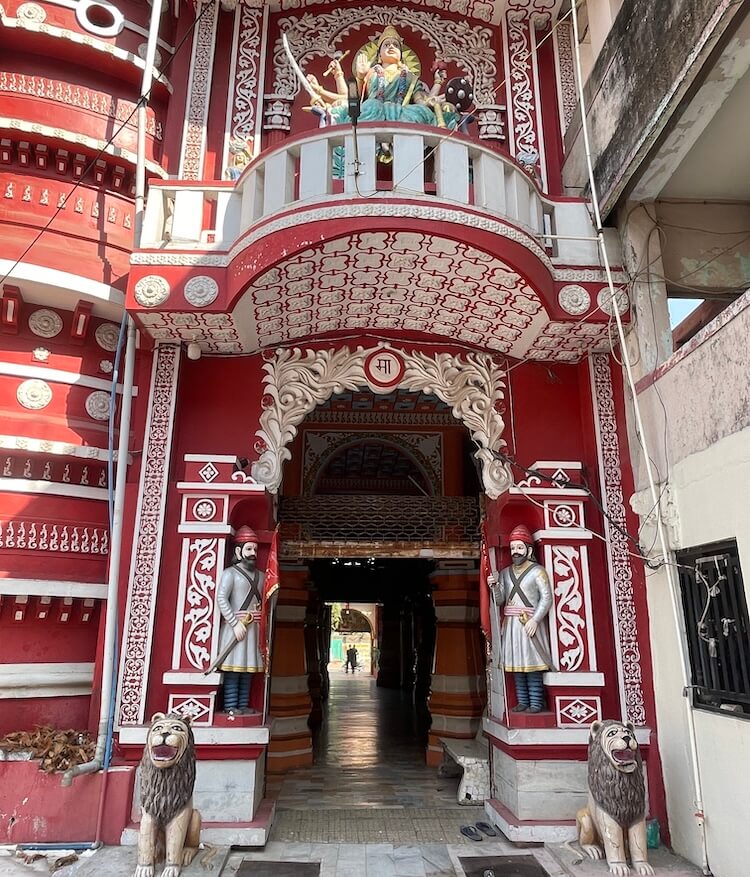
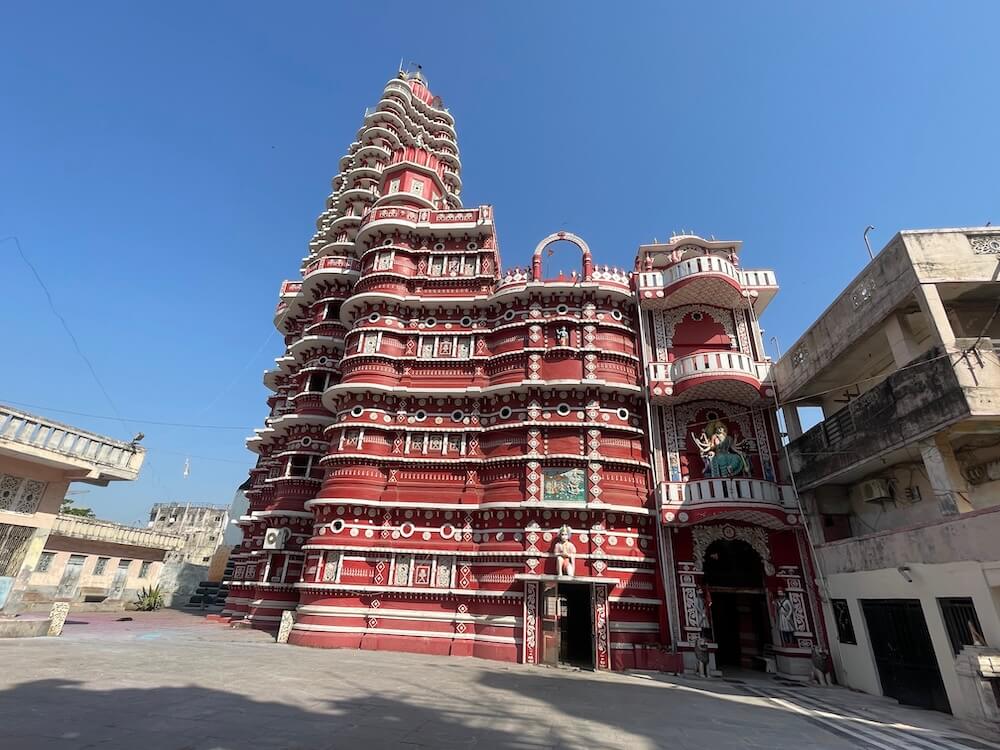
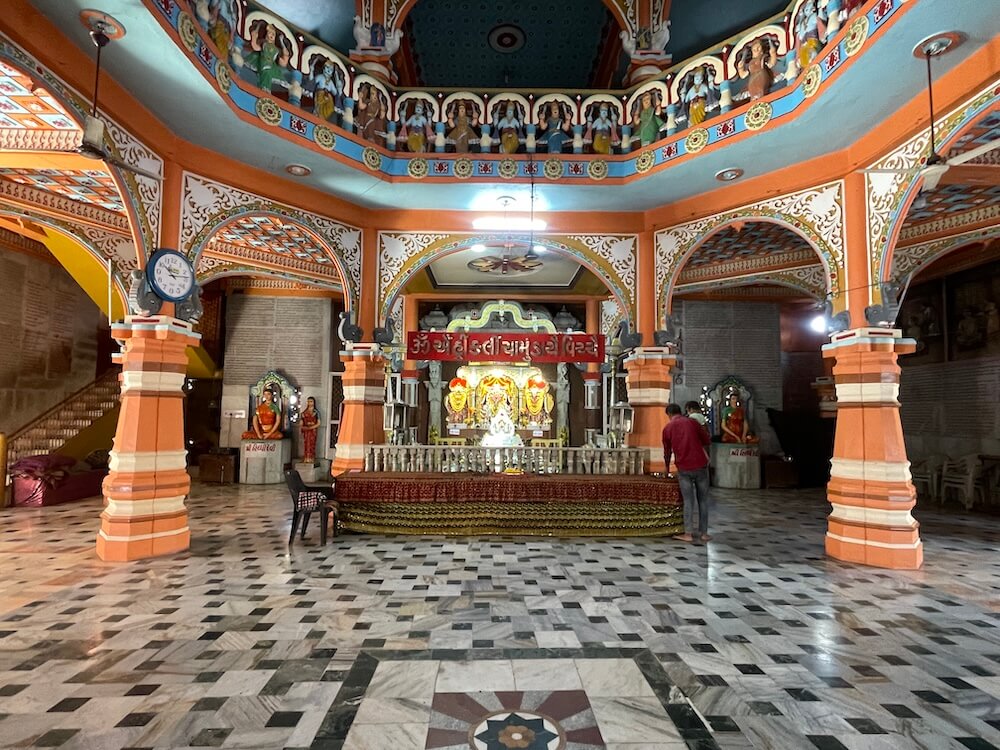
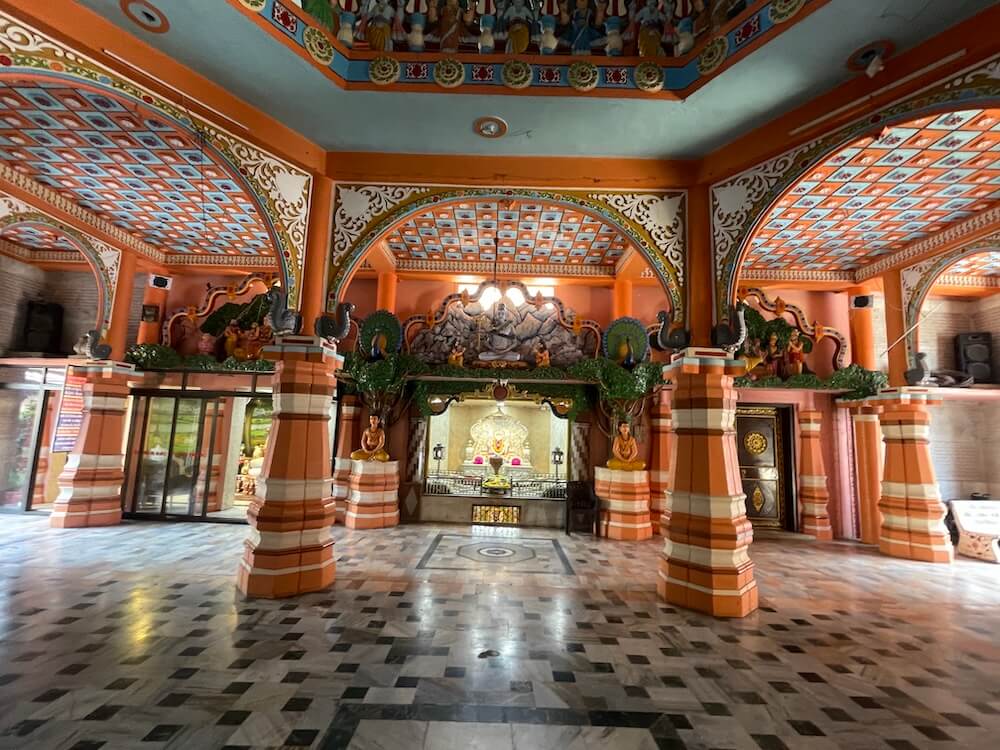
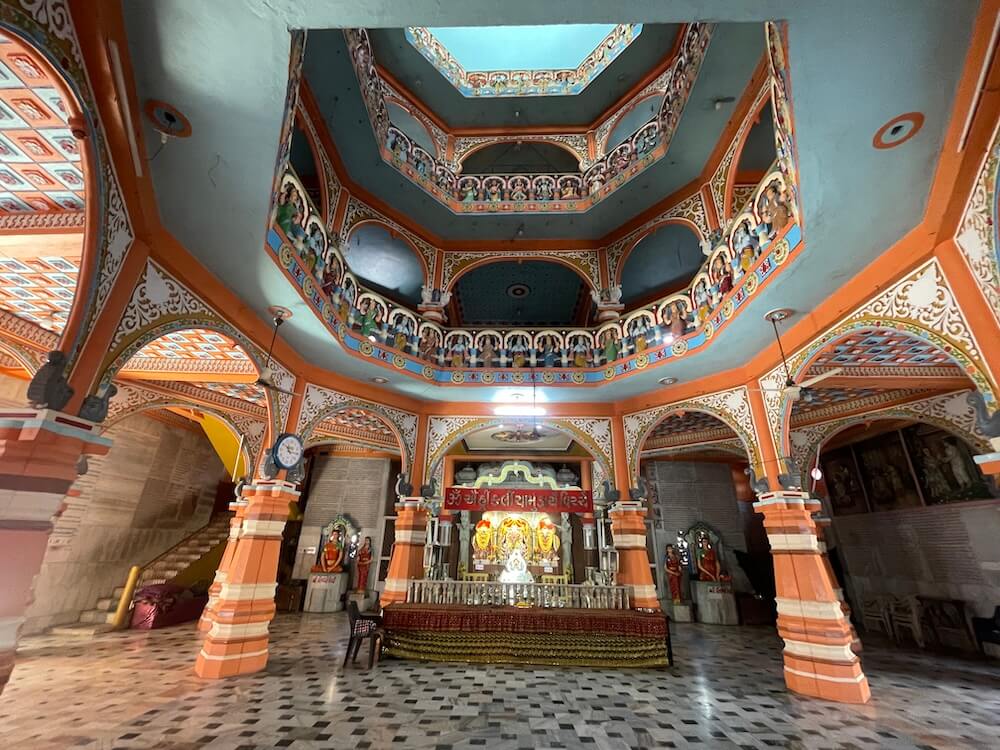
Situated on a primary thoroughfare of Nadiad, the area surrounding the temple is now eponymous with the shrine, known as ‘Mai Mandir Road’. The temple’s architecture is a sublime fusion of traditional Gujarati craftsmanship and modern design. Pink sandstone from Bansi Pahadpur and pristine white marble have been utilised in its construction. 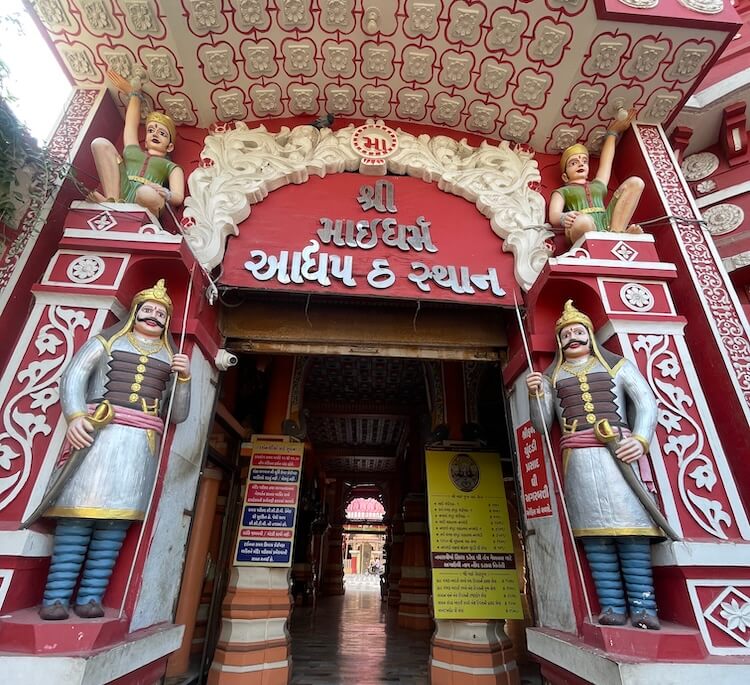 One enters the precinct through the main gateway, titled ‘Keshav Ashram’, which is flanked by two Gajarajas (elephant kings) and sculptures of Dwarapalas (gatekeepers). The upper portion of the gate depicts a pastoral scene of trees and birds. Beyond this lies a second portal inscribed with ‘Maism Adhyapith Sthan’. Its ornate pillars are adorned with sculptures of guardians and armed sentries, while the facade features intricate carvings of various deities, flora, fauna and geometric patterns. From the Darshan Mandap (viewing hall), one proceeds into the Sabhamandap (assembly hall). The marble walls of this hall are inscribed with verses from the ‘Shri Chandipath’ and depict various mythological episodes. Here, a marble idol of Kanishtha Keshav Maharaj is enshrined upon a silver pedestal. The temple offers a collective experience of the Shakta sect and Shakti (divine power) worship. Here, under a single roof, devotees may seek the blessings of 51 deities, the 51 Shaktipithas (major shrines of the Goddess) and the 64 Yoginis.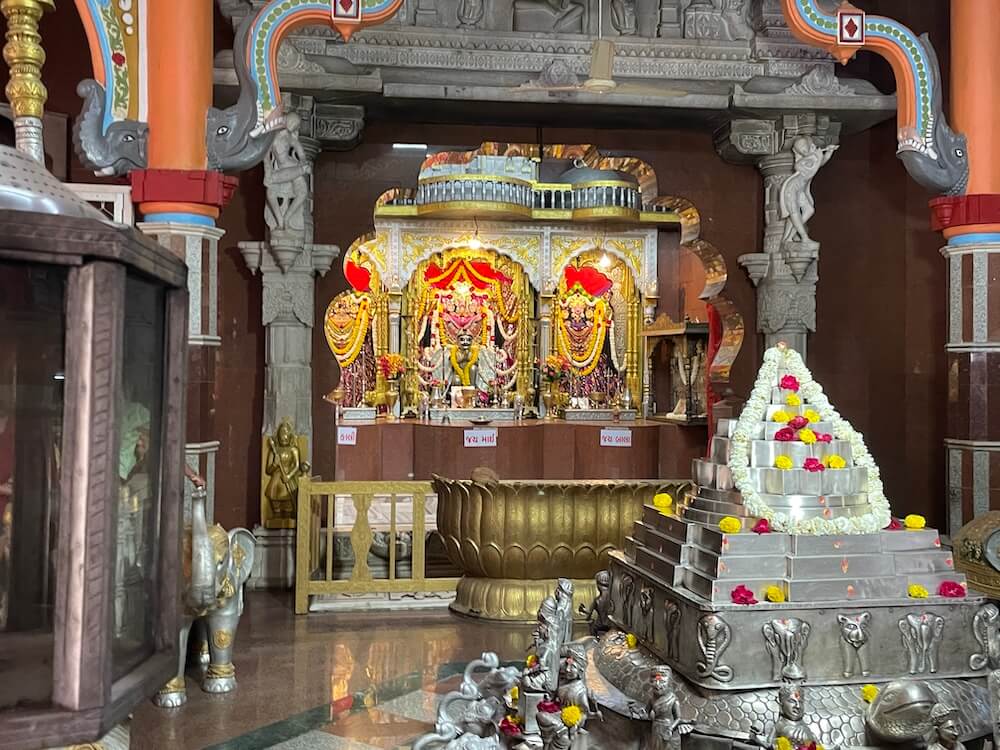
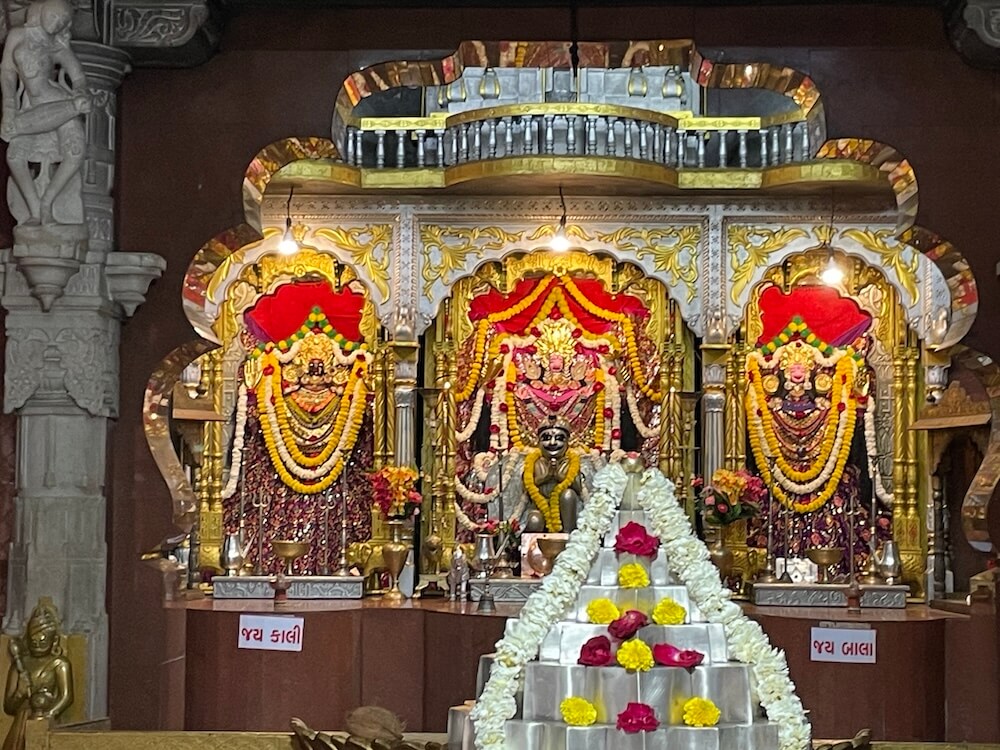
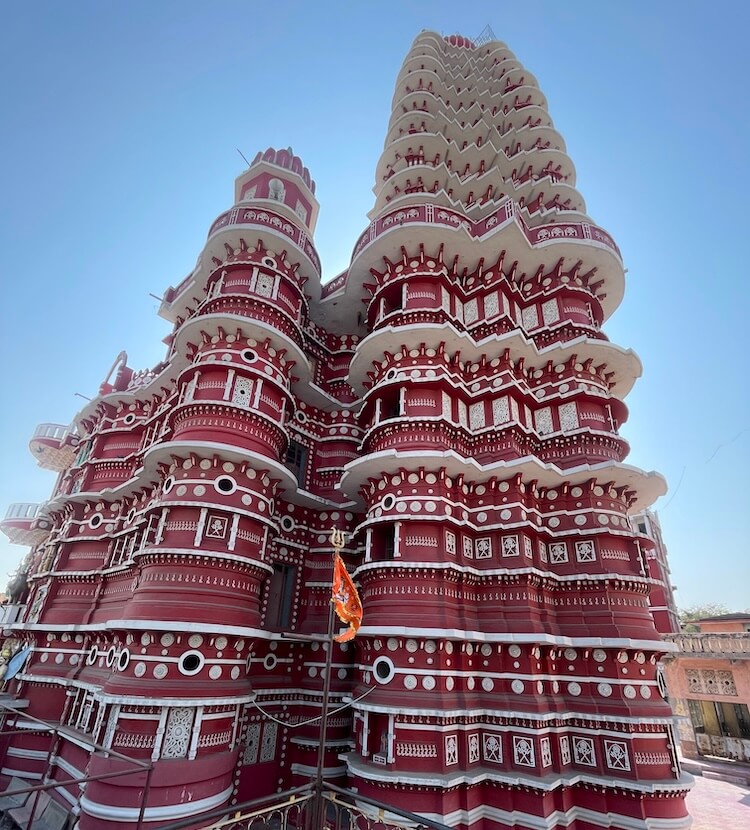
At the heart of the Garbhagriha (sanctum sanctorum) lies the ‘Maha Shriyantra’, fashioned from a blend of pure silver and gold. Standing over four feet tall and weighing 275 kilograms, this Shriyantra (a sacred geometric representation of the Goddess) is reputed to be the largest of its kind in the world. It is surrounded by elephant sculptures and images of goddesses. Directly facing the Yantra, upon a silver pedestal, are the idols of Amba Mata, Mahakalika Mata and the Trigunatmika Mai Bahuchara Mata. The temple also features a depiction of Chhatrapati Shivaji Maharaj worshipping Mother Bhavani. The sanctum and its Shikhara (spire) reach a height of 135 feet, with the temple complex as a whole being adorned by 108 Kalashas (sacred finials) installed according to scriptural rites.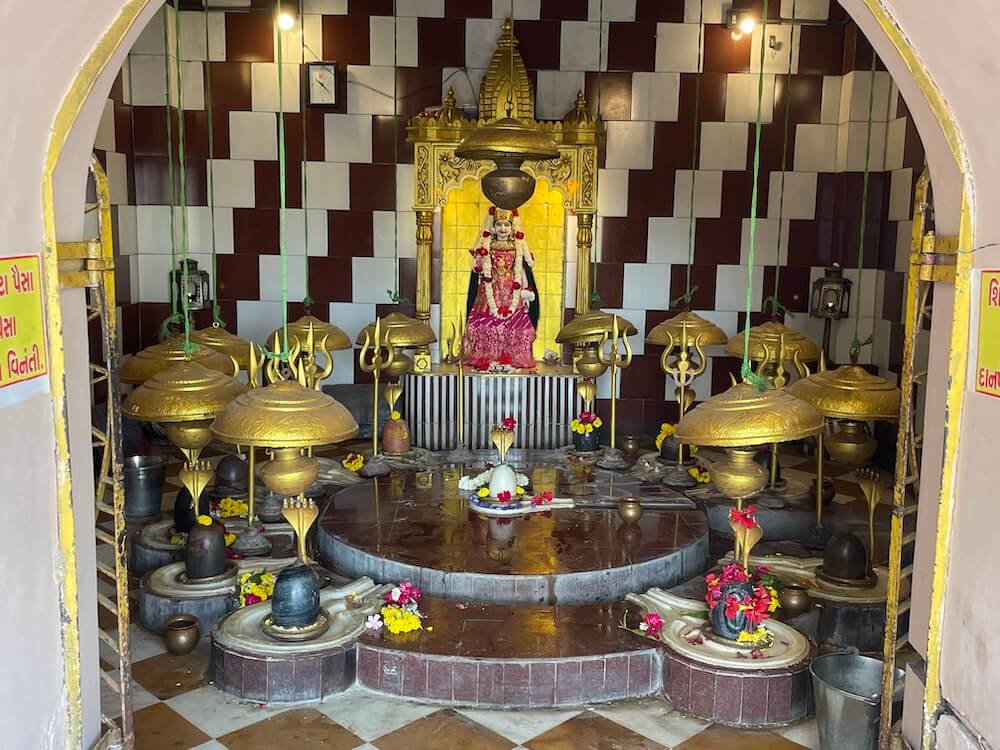
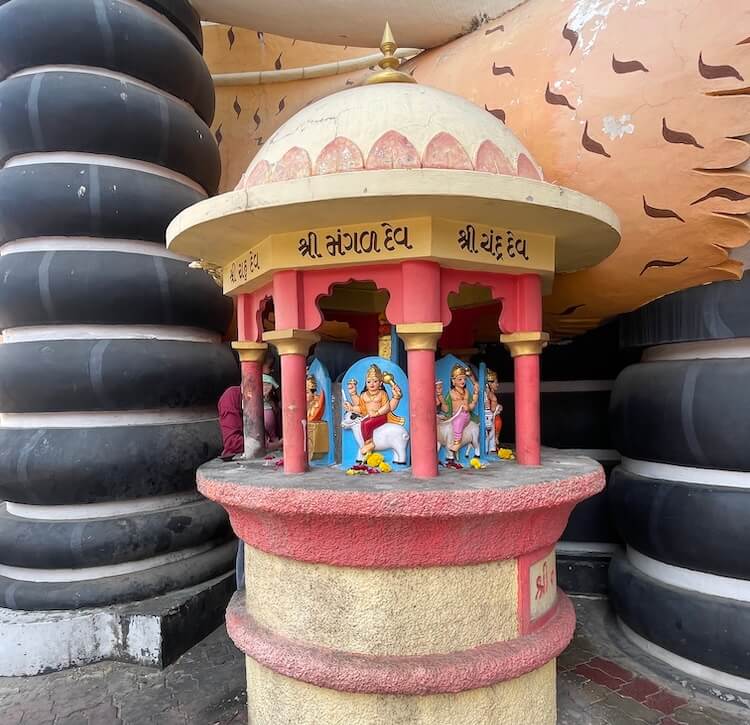
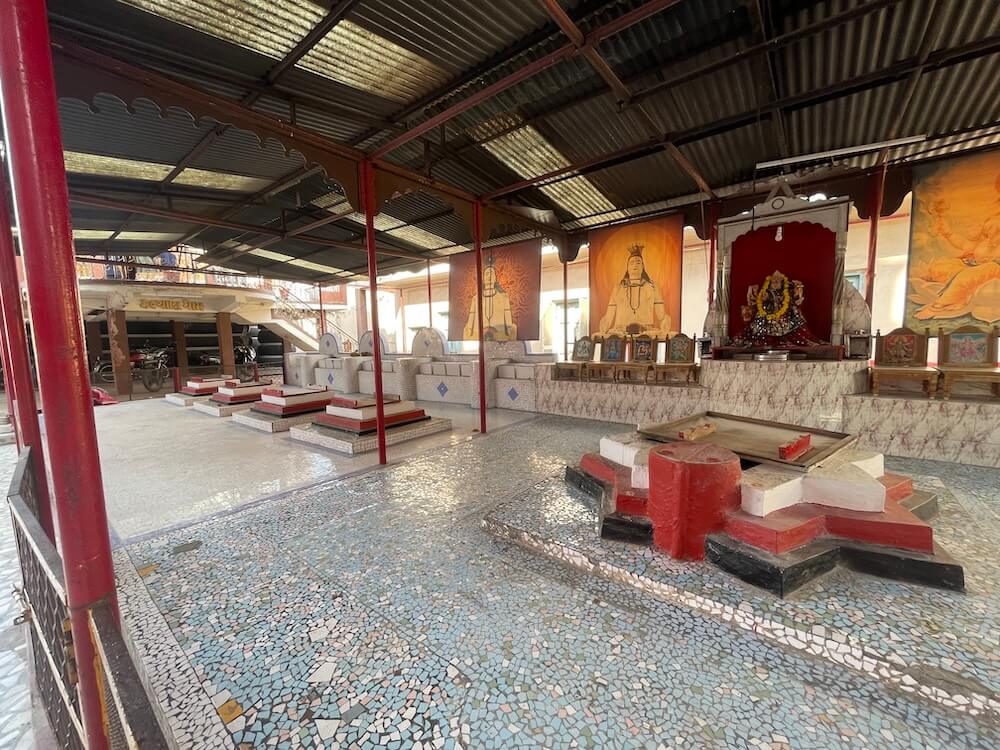
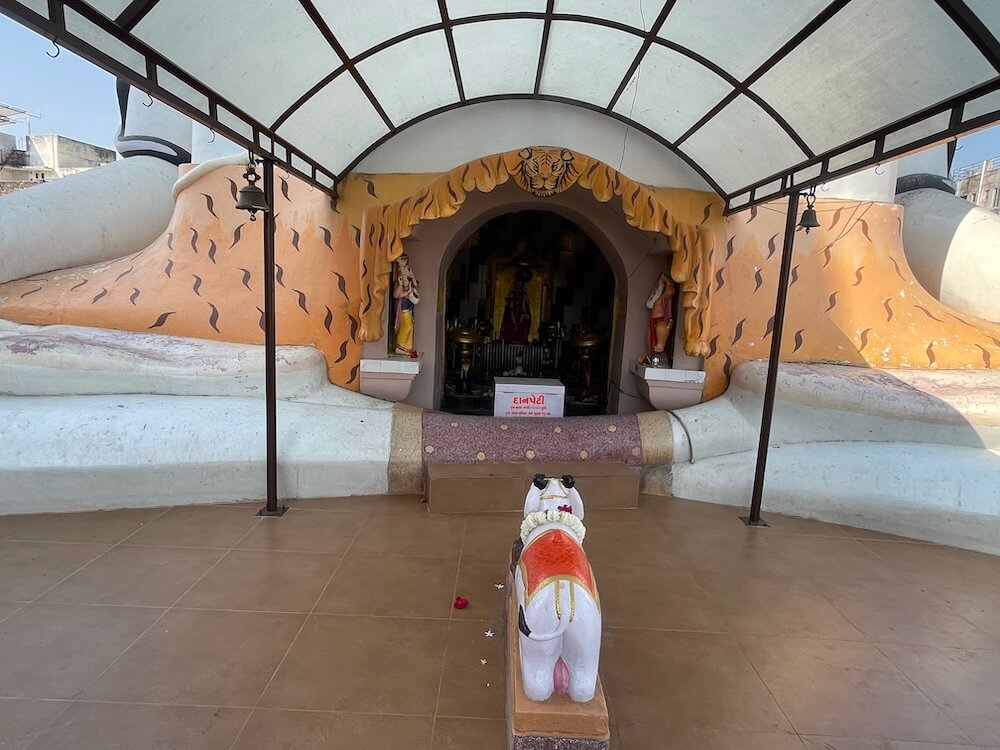
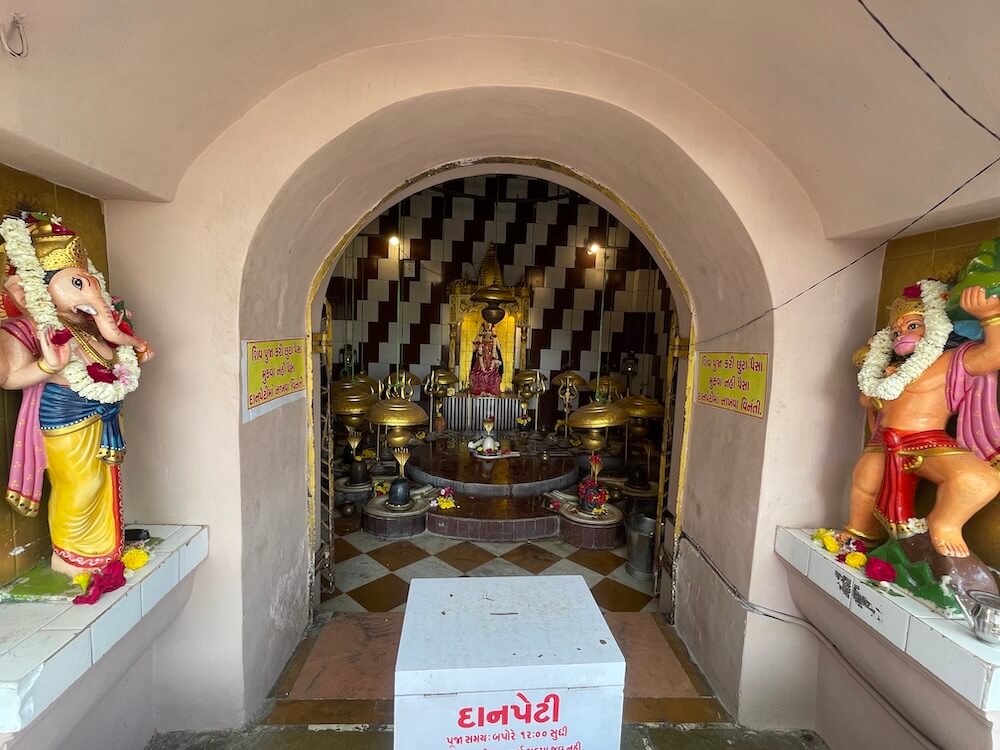
Within the courtyard stands a separate 73-foot-tall structure named ‘Shri Kalyandham’, designed upon the concept of a Nandimandap (hall of the bull) and Shivalaya (abode of Shiva). It houses an idol of Lord Shiva exceeding twenty feet in height, with the twelve Jyotirlingas (radiant signs of Shiva) depicted at its navel. This structure also contains a dedicated temple for the Navagrahas (nine planetary deities), each sculpted independently. Behind the Mai Mandir lies the two-storey ‘Bhagwatdham’ temple, built in the Maru-Gurjara or Solanki style. The second-floor gallery is inscribed with the 18,000 verses of the Srimad Devi Bhagavatam. This hall also features a reclining idol of Shri Krishna and the Ekadash Rudra (eleven forms of Shiva), alongside a five-faced Shivalinga fashioned after Pashupatinath.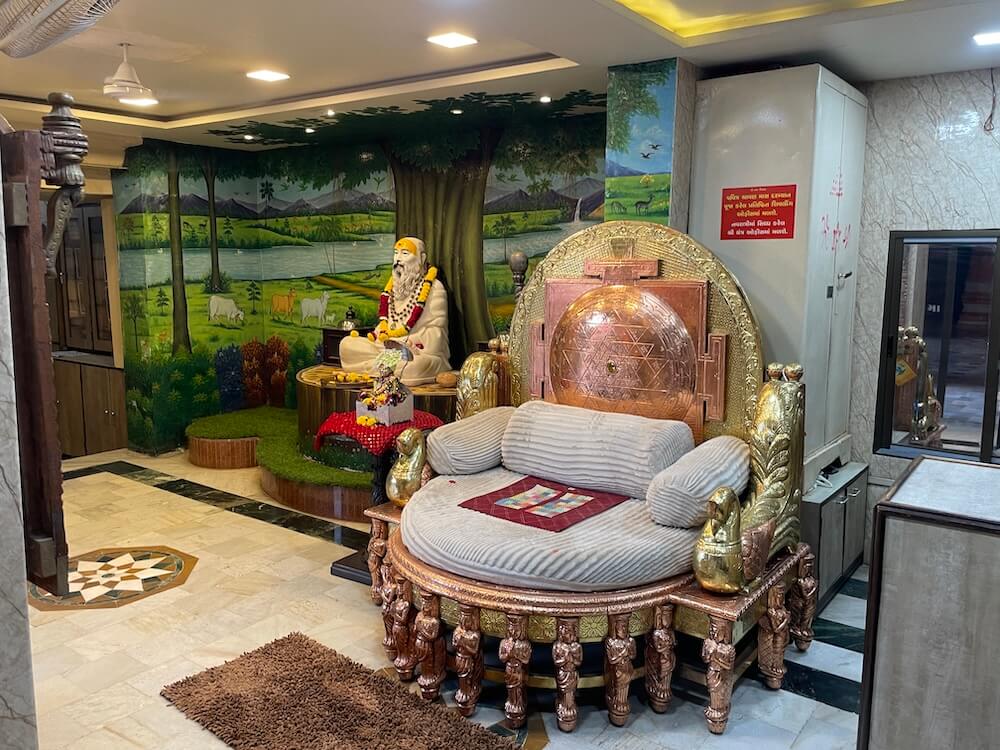 The lower portion of Bhagwatdham contains a hexagonal platform and a circular semi-porch with scalloped arches, housing the marble Samadhi (memorial) of Kanishtha Keshav Maharaj. Directly opposite the main Mai Mandir is the ‘Guru Mandir’, enshrining the idol of Kanishtha Keshav Maharaj, with an ‘Upasana Gruh’ (prayer hall) located beneath for meditation.
This sacred site preserves over 400 million written mantras, known as ‘Charm Writing’ and various Mai circles have completed the writing of over 500 million Mai names. Numerous Yajnas (sacrificial rituals) and prayers are conducted continuously for global peace. During the four annual Navratris, the ‘Ma Navdurga’ eternal lamp is kept burning. In the primary Ashvin Navratri, the Ghatasthapana (traditional pot installation) is performed in the sanctum according to ancient customs. On the night of Lalita Panchami, a ‘Nritya Aarti’ (dance ritual) is held and Kumkumarchan (worship with vermilion) is performed on the Shriyantra. The anniversary of the main Mai Mokshadam temple is celebrated on Ashvin Purnima, while the Kalyandham Shivalaya observes its anniversary on Mahashivratri. To mark the advent of Maism, a festival is held on Margashirsha Vadya Dwitiya, featuring decorations in the shape of a crescent moon. Devotees may avail themselves of Darshan daily from 8 am to 1 pm and from 3:30 pm to 8:30 pm.
Useful Information
- Located at 1 km from Nadiad Bus Station and 22 km from Kheda.
- State Transport (GSRTC) bus facilities available from many cities in the district.
- Private vehicles can reach the temple directly.
- Numerous options for accommodation and breakfast are available in the vicinity.
- Contact – Temple Office, Telephone: 0268 2558081.
माई मंदिर/माई आध्यापीठ स्थान
नडियाद, ताल. नडियाद, जिला. खेड़ा
मंदिरे
Temples
मंदिर
-
भूमपुरा हनुमान मंदिर भूमापुरा, मोडज, ता. महेमदावाद, जि. खेडा
अधिक माहितीBhumapura Hanuman Temple Bhumapura, Modaj, Tal. Mahemdavad, Dist. Kheda
View Detailsभूमापुरा हनुमान मंदिर भूमापुरा, मोडाज, ताल. महेमदावाद, जिला. खेड़ा
विवरण देखें -
भाथीजी महाराज मंदिर फागवेल, ता. कापडवंज, जि. खेडा
अधिक माहितीBhathiji Maharaj Temple Phagvel, Tal. Kapadvanj, Dist. Kheda
View Detailsभथीजी महाराज मंदिर फागवेल, ताल. कपडवंज, जिला. खेड़ा
विवरण देखें -
केदारेश्वर महादेव मंदिर महादेवपुरा, ता. कठालाल, जि. खेडा
अधिक माहितीKedareswar Mahadev Temple Mahadevpura, Tal. Kathlal, Dist. Kheda
View Detailsकेदारेश्वर महादेव मंदिर महादेवपुरा, ताल. कठलाल, जिला. खेड़ा
विवरण देखें