
रांदळ माता मंदिर
गोलवड-सांजण, ता. उमरगाम, जि. वलसाड
Randal Mata Temple
Golvad-Sanjan, Tal. Umargam, Dist. Valsad
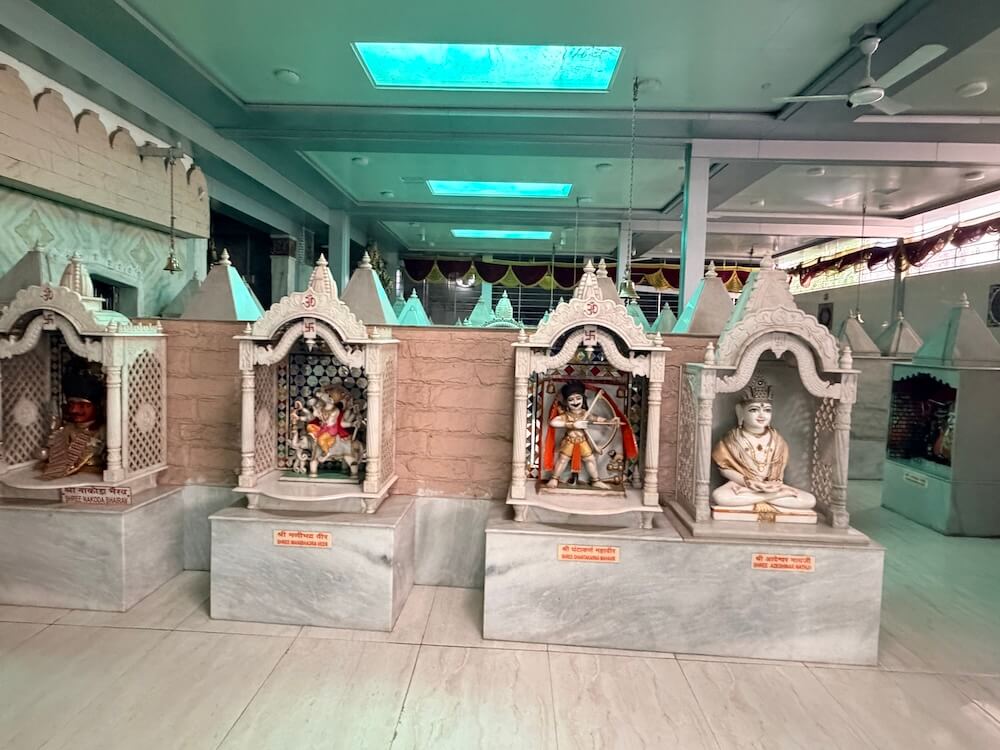
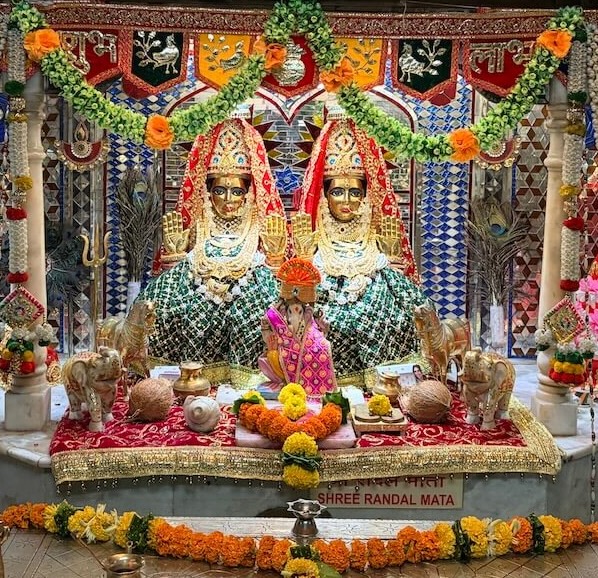 The Randal Mata Temple is situated between the village of Golvad and the town of Sanjan, which holds historical significance as the very first settlement of the Parsi community in India upon their migration from Iran. Dedicated to Mother Randal, who is revered as a manifestation of Goddess Durga, this unique temple is distinguished by the fact that it houses the consecrated idols of 297 deities and various prominent saints. Throughout the year, numerous major festivals and auspicious occasions are celebrated within the extensive precincts of this temple.
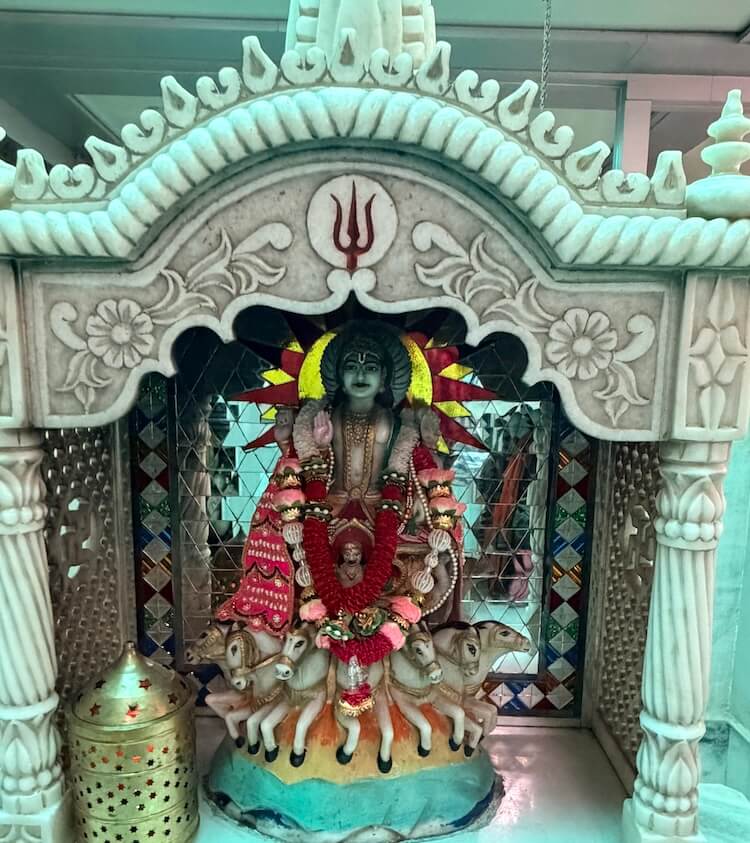
Scriptures such as the ‘Markandeya Purana’, ‘Bhavishya Purana’ and ‘Vishnu Purana’ narrate the mythological legends concerning the origin of Mother Randal. She is none other than Sanjna (Sandnya), the daughter of Lord Vishwakarma and the consort of Surya, the Sun God. According to these sacred texts, Suryanarayana was so captivated by her ethereal beauty that he formally proposed marriage to Vishwakarma.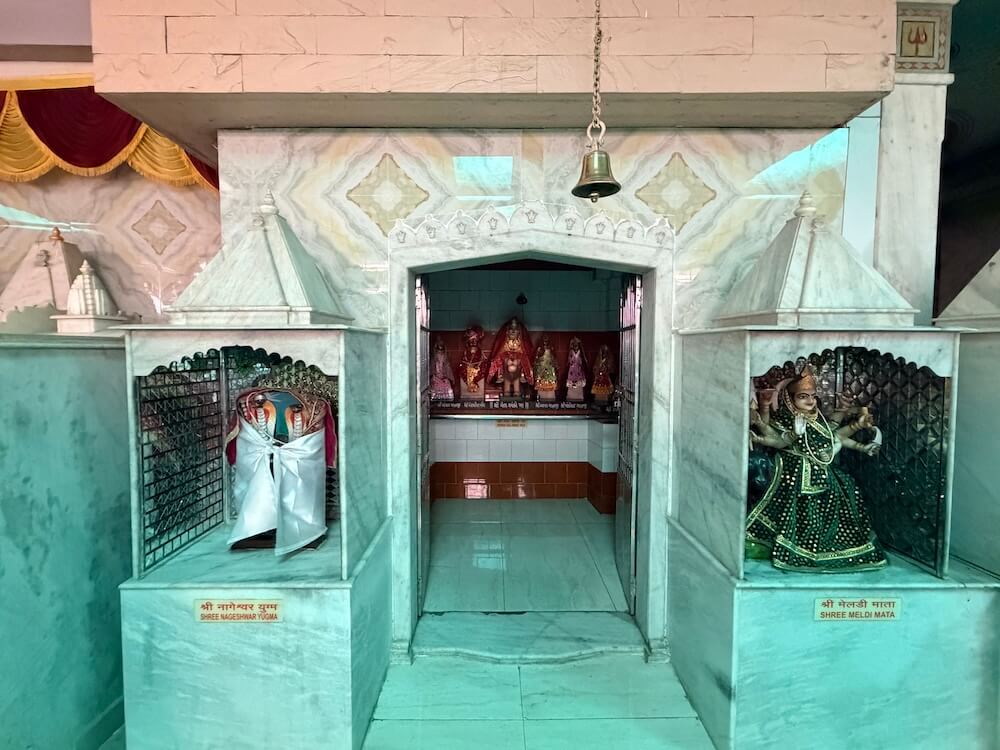 However, Vishwakarma declined the proposal at that time. Subsequently, due to certain cosmic events, Sanjna’s mother once approached the Sun God to borrow a clay griddle. He agreed to lend the utensil on the strict condition that it must not break under any circumstances. Should it break, Vishwakarma would be compelled to marry Sanjna to the Sun God. Sanjna’s mother accepted the stipulation. As she was returning with the utensil, the Sun God deliberately staged a fierce clash between horses along her path, causing the griddle to fracture and thereby fulfilling his plan. Consequently, the marriage of Suryanarayana and Sanjna was solemnised.
In the course of time, they were blessed with two children, namely Yama and Yamuna. However, due to the intensely blinding brilliance of the Sun God, Sanjna found it impossible to look directly at her husband. 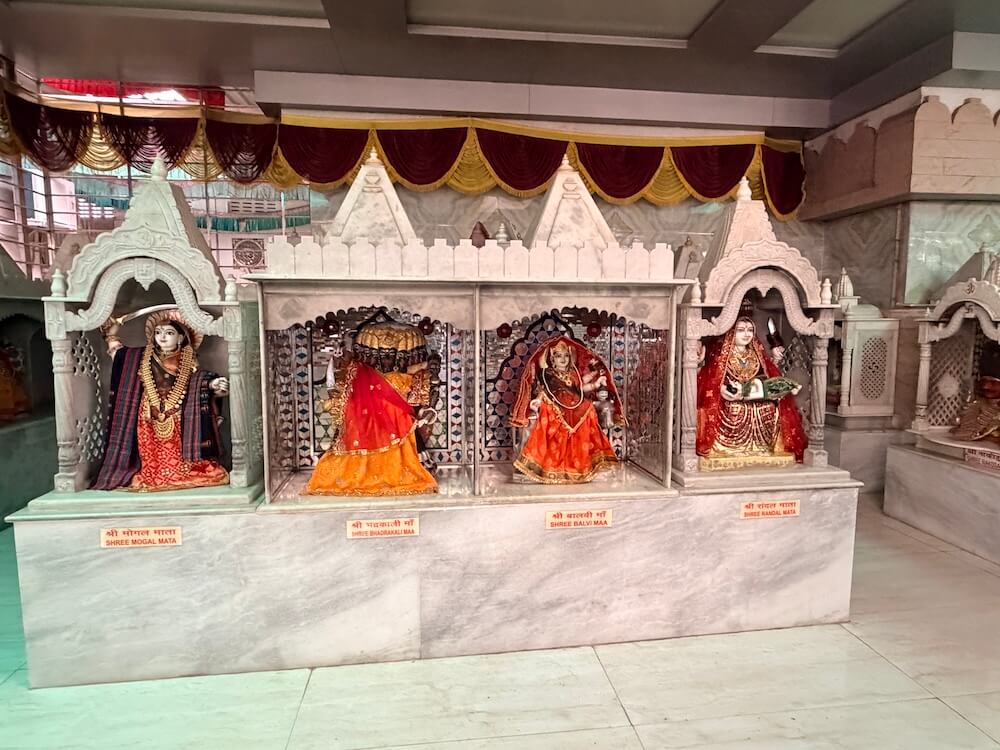 The Sun God misconstrued this physical limitation, assuming she was arrogant about her own beauty and in a fit of rage, cursed her children to wander aimlessly in the wilderness. Heartbroken, Sanjna resolved to retreat to the forest to perform rigorous penance. Nevertheless, to ensure her husband suffered no discomfort in her absence, Sanjna conjured a shadow replica of herself, named Chhaya, from her own body. Entrusting Chhaya with the responsibility of caring for the Sun God, Sanjna departed for the forest.
With the passage of time, Chhaya, residing in the household of the Sun God, gave birth to two children, Shani and the River Tapi. Later, a bitter altercation arose between Sanjna’s son Yama and Chhaya’s son Shani. Overcome with anger, 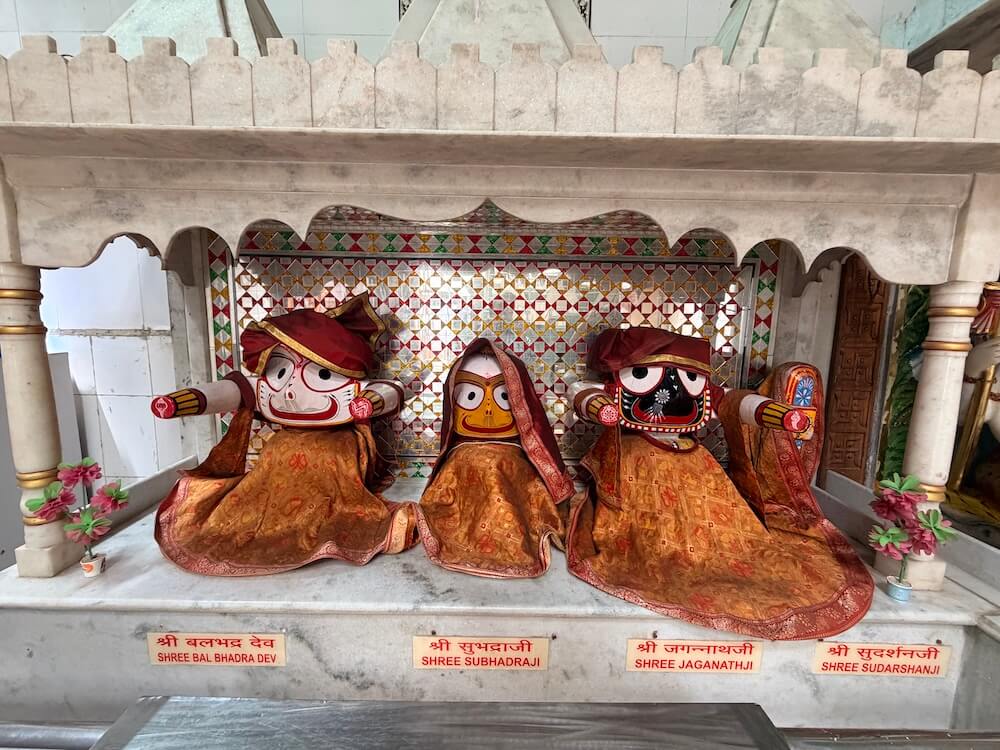 Chhaya pronounced a severe curse upon Yama, decreeing that the moment his feet touched the earth, blood would stream from them. Upon learning of this, the Sun God was struck with profound astonishment. Deeming it entirely impossible and unpardonable for a mother to inflict such a cruel curse upon her own flesh and blood, he commanded Chhaya to reveal the absolute truth. Threatened with being reduced to ashes if she concealed the truth any longer, Chhaya confessed everything. Upon discovering the truth, the Sun God journeyed to the forest and brought Sanjna back home with due honour. At that moment, Chhaya requested a blessing in return for her dedicated service. Devotees often perform a special ritual called ‘Lota’ upon the fulfilment of their vows; Mother Randal thus granted her a boon that during this sacred ritual, Chhaya would always be worshipped alongside Sanjna (Mother Randal) and the Sun God would be present there in the form of a horse.
  According to the holy text ‘Randal Mata Vrat Katha’, the legend of the Goddess’s earthly incarnation states that the Sun God dispatched Mother Randal to the terrestrial realm to annihilate antisocial elements and guide humanity toward the path of righteousness. While wandering the earth in the guise of an orphaned maiden, she was discovered by a shepherd belonging to the Maldhari community. Out of sheer compassion, the shepherd brought her to his home. Although her divine arrival instantly dispelled all poverty and adversities from the household, the family members failed to recognise her true celestial identity. She miraculously cured the village lepers, the physically infirm and the blind of their afflictions. On one occasion, while the Maldhari clan was camped along the banks of the Vasavadi River,
  the soldiers of the King of Dhutarpur beheld this adolescent maiden. The soldiers described her peerless beauty to the monarch, who subsequently demanded that the shepherd surrender the girl to him. The Maldhari people could not comprehend why a king would make such a demand for a young girl. When the shepherd refused, the enraged king ordered his army to slaughter the Maldhari community. Faced with this imminent catastrophe, the Goddess was compelled to manifest her primordial form. She placed her hand upon a cow, which instantly transformed into a ferocious lion. The Goddess mounted the lion and, assuming the form of Mother Durga, unleashed her wrath upon the soldiers. Beholding her supreme power, the King bowed down in absolute submission. Upon calming down, t
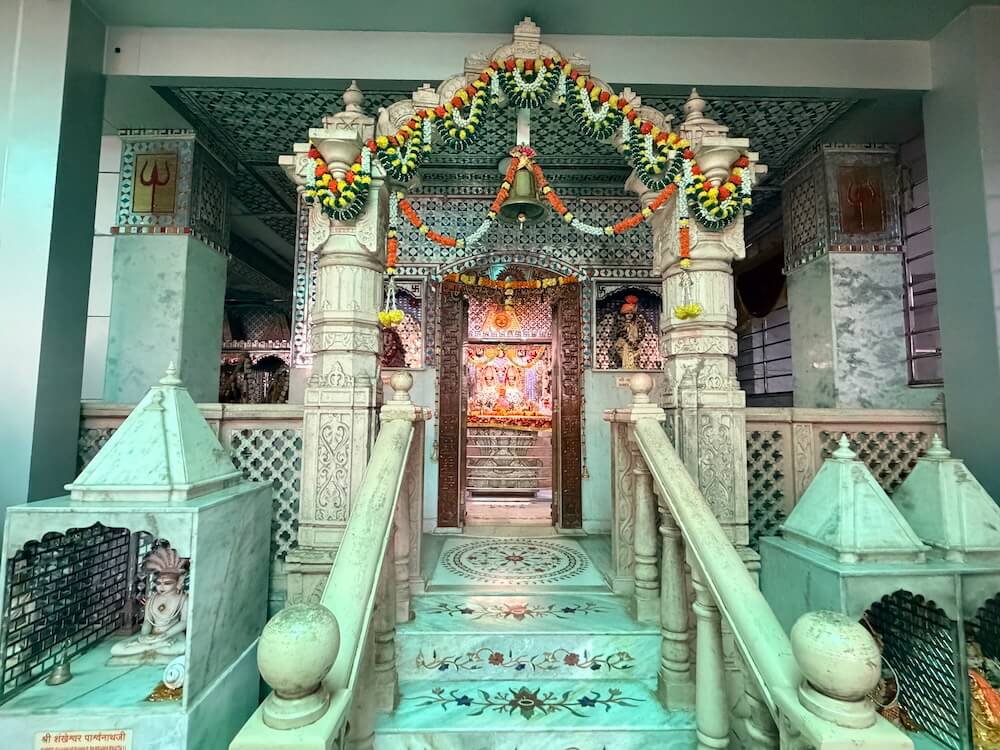
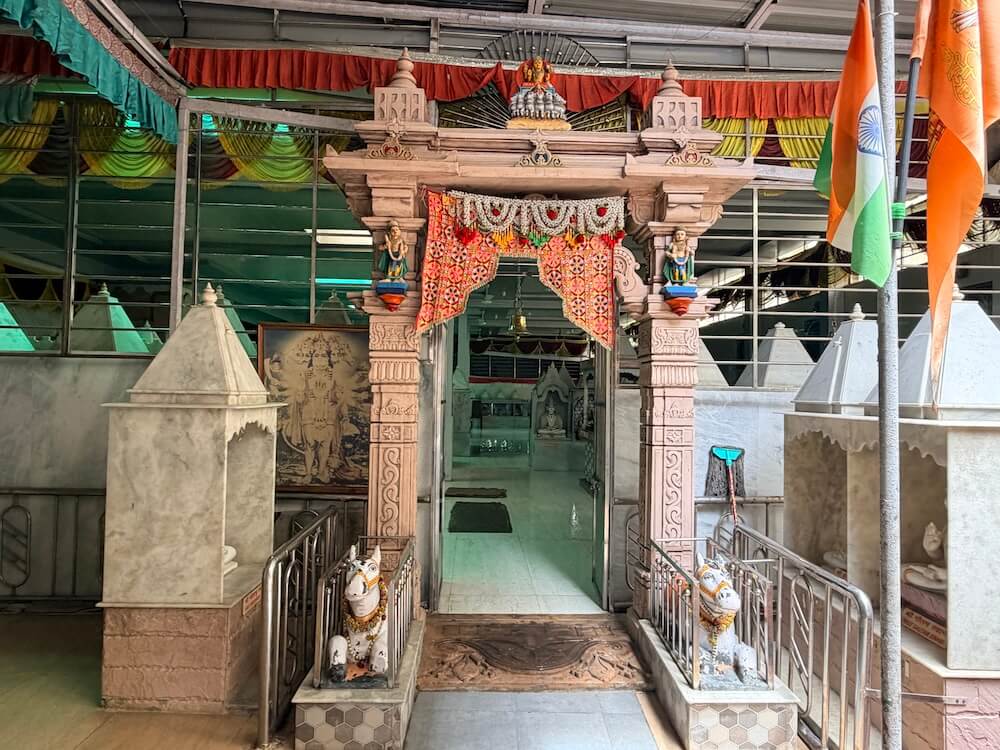
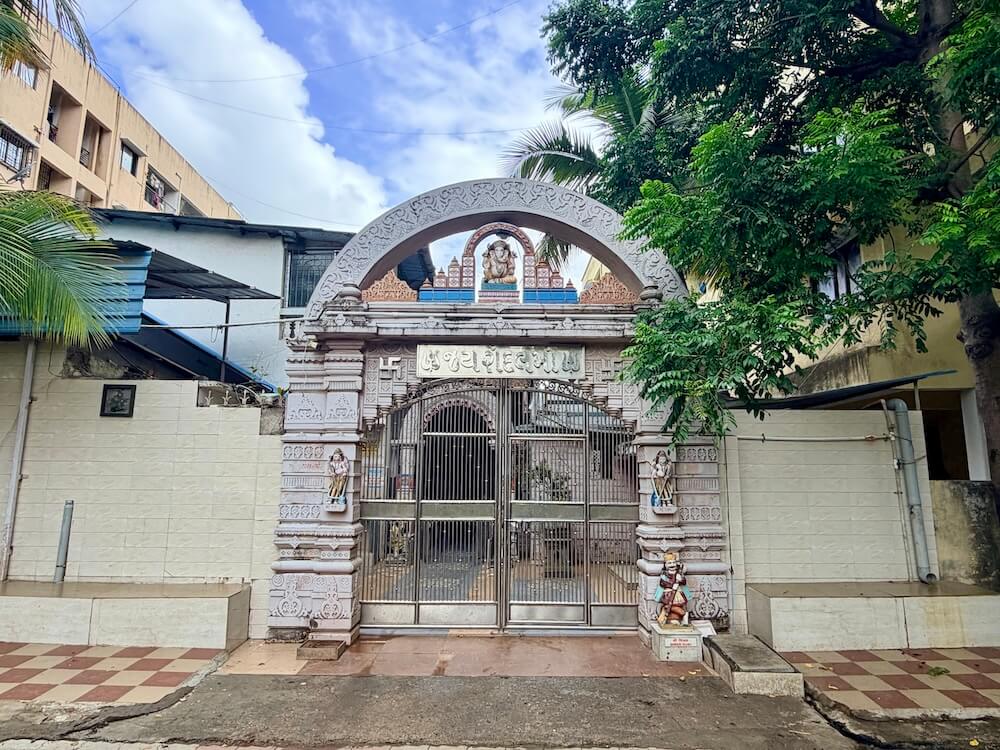 he benevolent Goddess restored the dead soldiers to life, granted the shepherd an exalted place in heaven and extracted a solemn vow from the King never to repeat such a transgression. According to local folklore, this miraculous event transpired in the Darva region of Gujarat. Since then, the tradition of constructing temples and offering worship to Mother Randal commenced in this region. This temple has been brought to fruition through the dedicated initiative of Vinodbhai, a resident of Sanjan. Here, various deities from across the nation can be witnessed together under a single roof. The pillars on either side of the primary entrance to the temple are inscribed with the auspicious symbols of ‘Shubh’ and ‘Labh’ at their centre. The lower sections of these columns feature beautifully sculpted images of celestial gatekeepers.
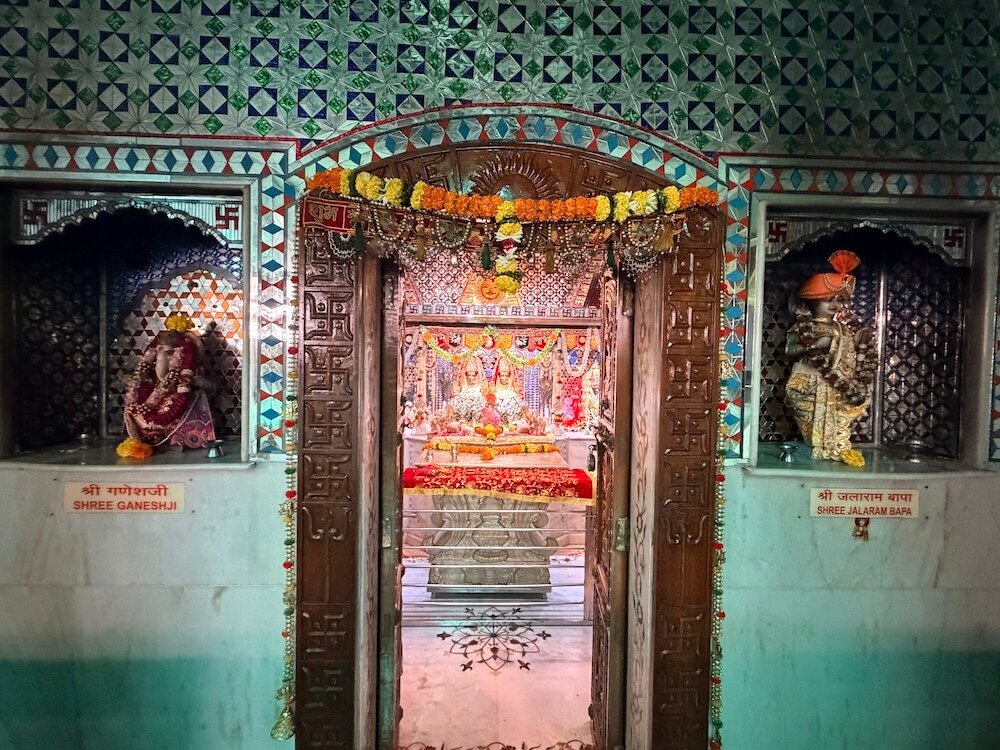
 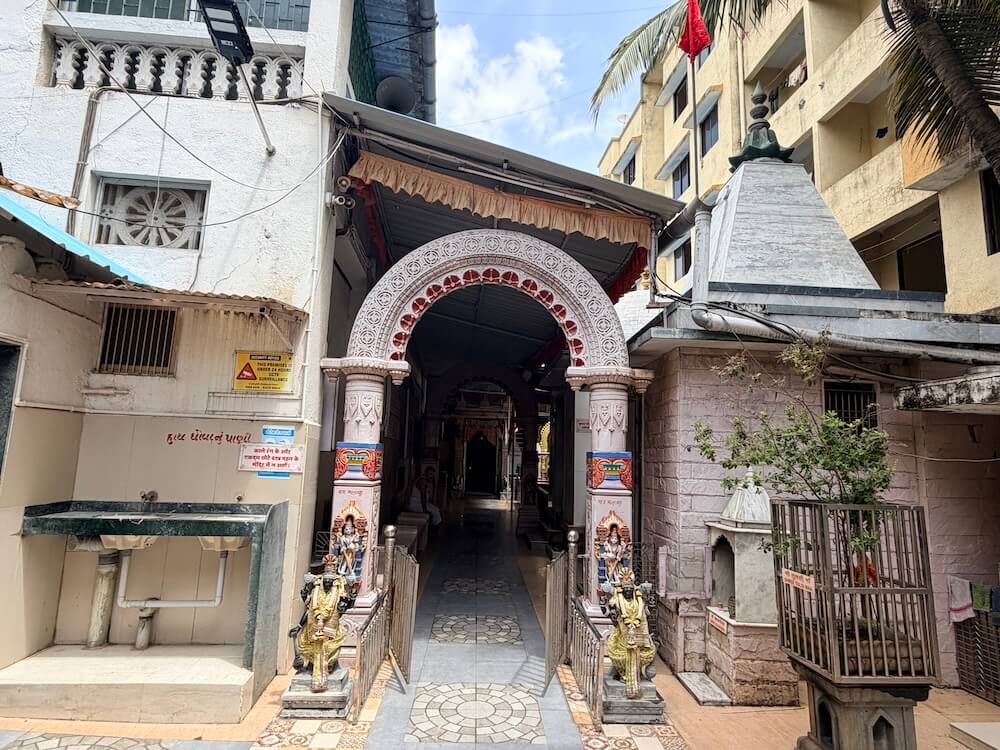 Enshrined upon the arch above the gateway is an idol of Lord Ganesha. Proceeding through this entrance leads to a second, intricately carved doorway, flanked by female guardian deities on both sides. Within this area lies a sacred Tulsi altar (‘Tulsi Vrindavan’), near which the idols of Chandra Bhagavan, Swami Samarth and the saint Bajrang Sitaram Bapa are installed within elegant marble niches.
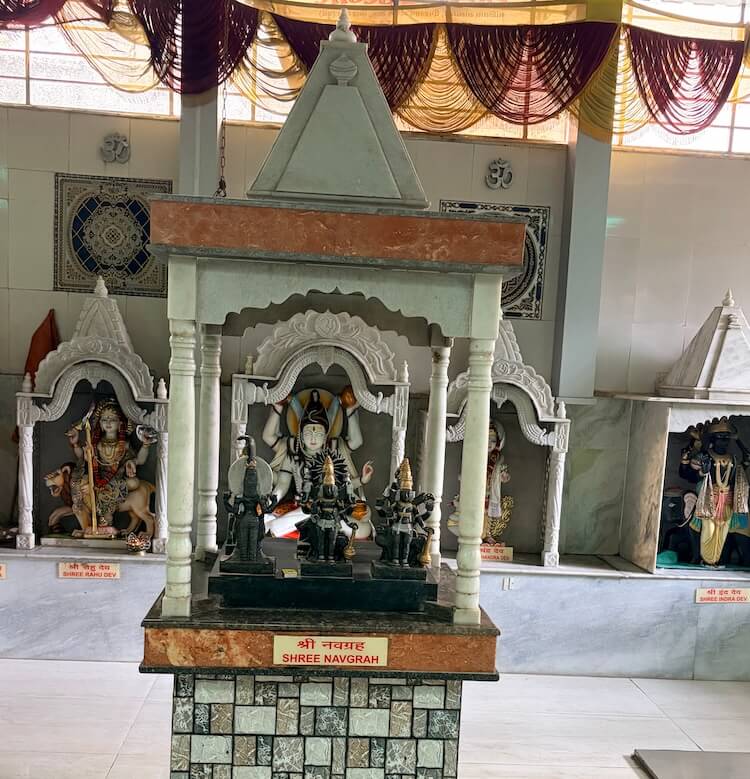
The temple’s forward section features a grand idol of Lord Ganesha, along with individual representations of the Ashtavinayaka. This central idol is flanked by images of Riddhi and Siddhi on both sides. The adjacent marble niches house sculpted idols of Ganesha and Kartikeya. Beyond this lies the shrine dedicated to Mother Ashta Varahi. Within this shrine, Mother Varahi is consecrated upon a principal pedestal, flanked by four images of the deity on either side, 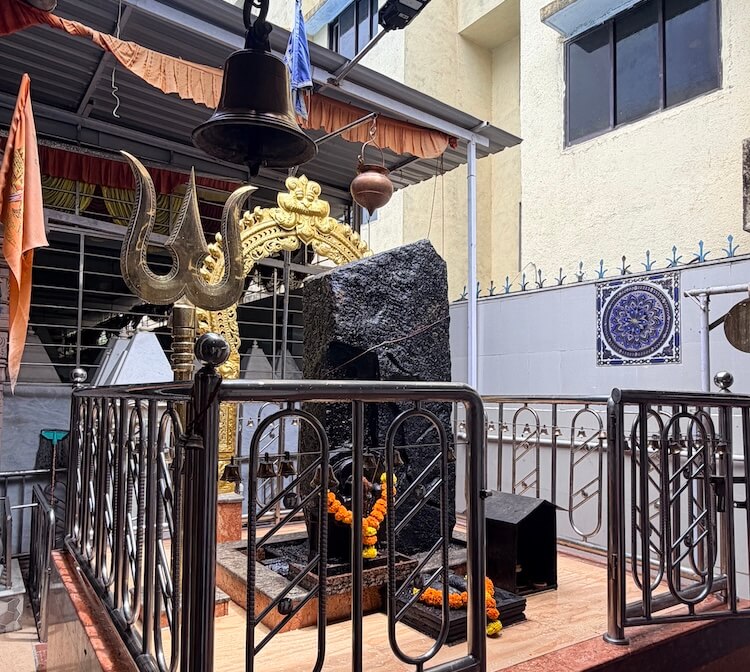 for a total of eight divine representations. Upon entering the gateway, the idols of Odhavram Bapa and Zarathustra are visible on the right side. The section beyond this is the sacred seat of Lord Shani. Positioned behind this seat is an arched pedestal crafted from five holy metals (‘Panchadhatu’). Enshrined here are an idol of Lord Shani sculpted in black stone, a tall square stone monolith and sacred stone footprints (‘Paduka’). In the same vicinity, the black metal idols of the Navagrahas (nine planets) are collectively installed within an independent niche. Throughout this expansive complex, the idols of Saint Dnyaneshwar, Saint Tukaram, Jotiba and Gorakhnath are also placed for the spiritual darshan of the devotees.
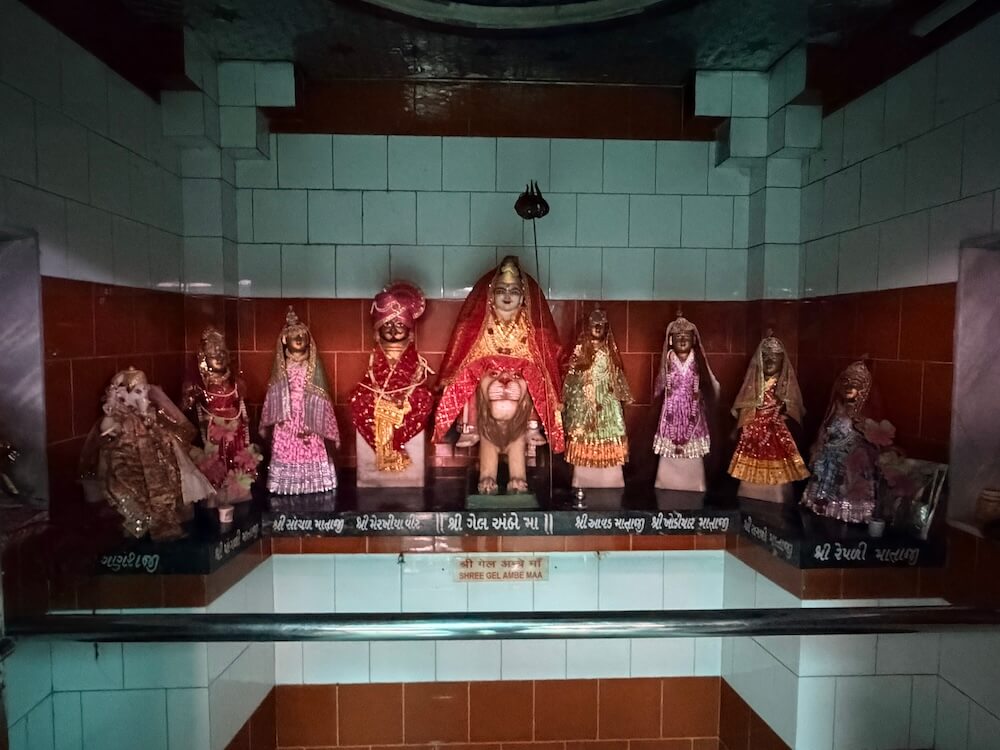
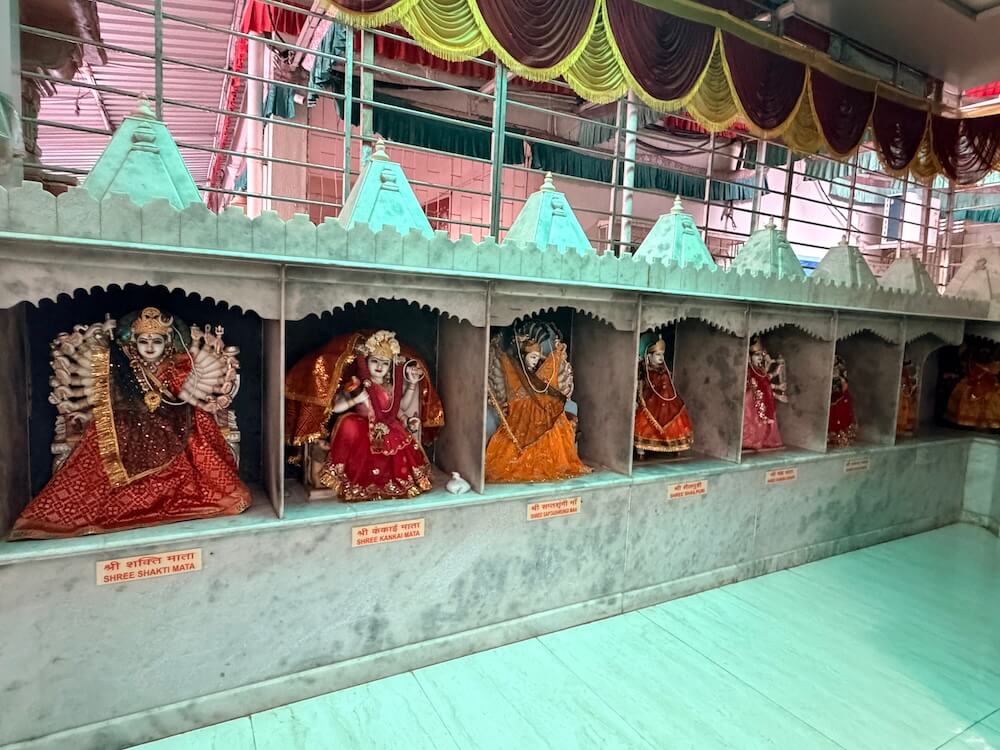
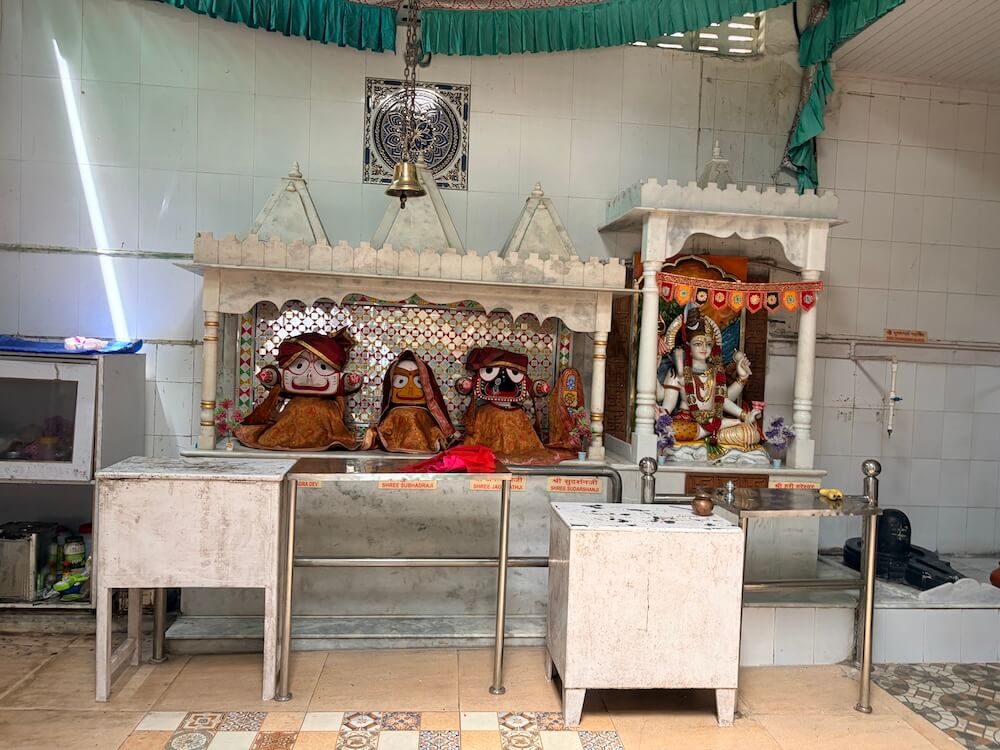
Along the pathway leading to a subsidiary shrine that features two sculpted Nandis, one encounters the idols of Chandraprabhaswami, Kunthunathji and Gautamswami.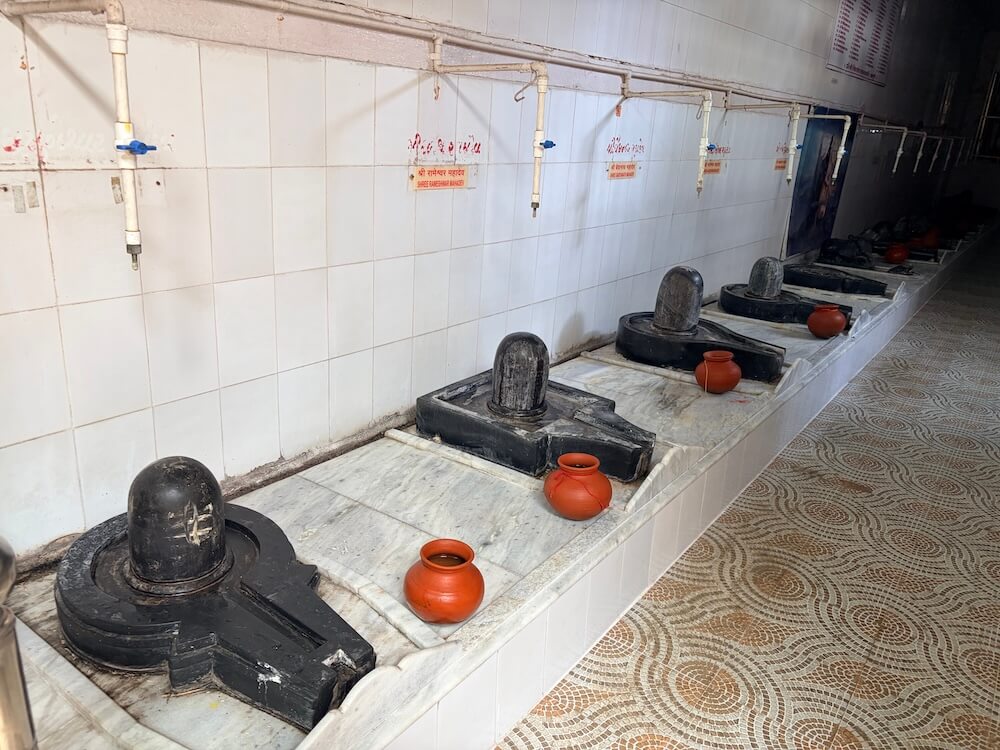 The interior section of this shrine showcases the diverse manifestations of Adimaya Mother Durga. Among these, the varied idols of deities such as Kankali Mata, Skandamata, Shaktimata, Shailaputri, Saptashrängimata and Chandraghanta are beautifully adorned in fine vestments and traditional ornaments. This area also houses a dedicated space for Vaishno Devi and a shrine for Lord Shiva. Independent Shiva Lingams representing the twelve Jyotirlingas of India have been meticulously fashioned at this spot. Furthermore, the complex serves as a sacred site for numerous local and regional deities, including Sagari Mata, Kamakshi Mata, Varahi Mata, Ravechi Mata and Meldi Mata. A separate shrine dedicated to Kashi Vishwanath has been established here, alongside the idols of Brahma, Vishnu, Mahesh and Satyanarayan, consecrated in their respective incarnations.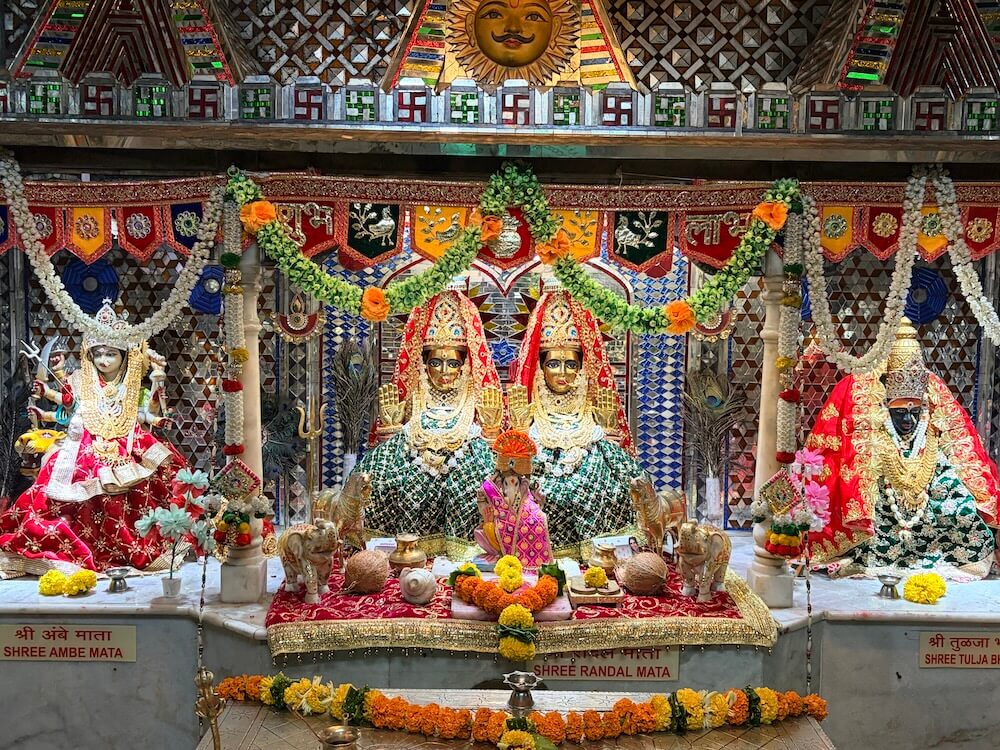
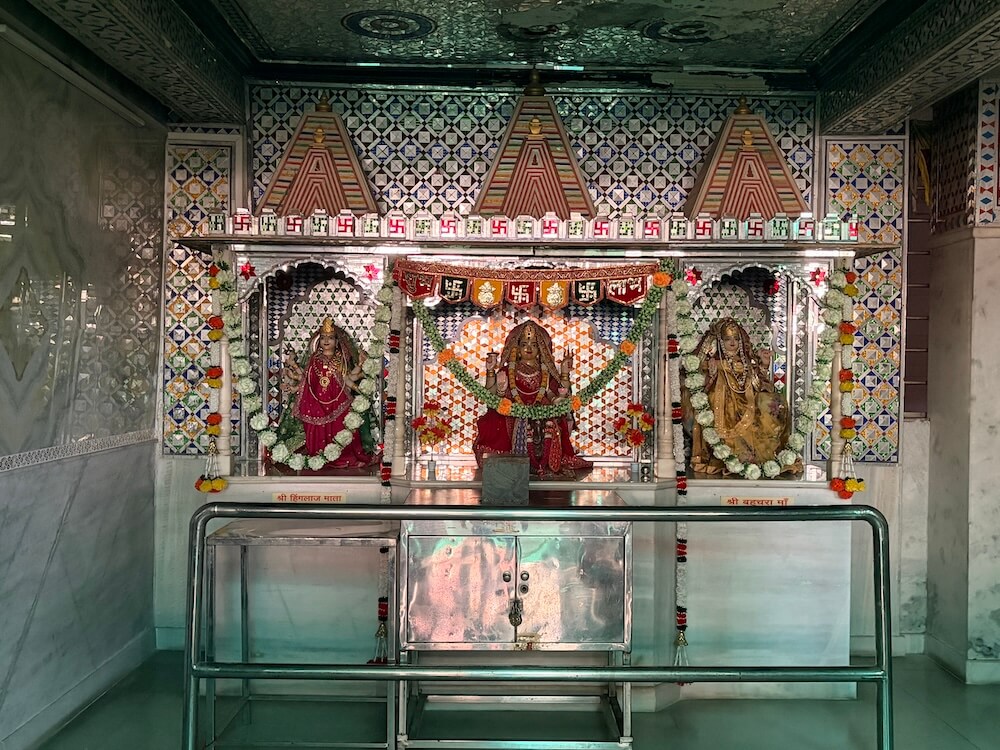
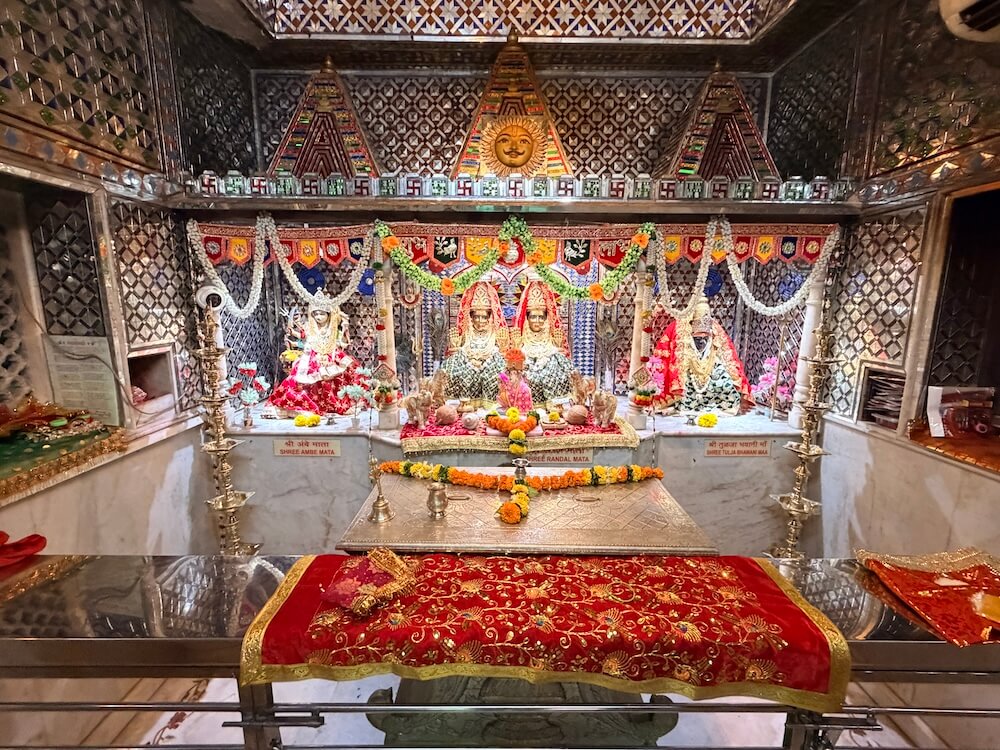
The sanctum sanctorum of the main temple houses a magnificent pedestal adorned with white marble and intricate glass inlay. Enshrined upon this principal seat are two sacred masks of Mother Randal. According to legend, these masks represent Mother Randal and her shadow replica, Chhaya. The crowns gracing the deities’ heads are exquisitely carved, their foreheads are adorned with a traditional bindi and their necks are draped with varied traditional jewellery. Both hands of the idols are fashioned in the Abhayamudra, the gesture of blessing. Nested directly between these two masks is a small idol of Lord Ganesha, with miniature elephant replicas on either side. The upper portion of the canopy features brilliant glass ornamentation, 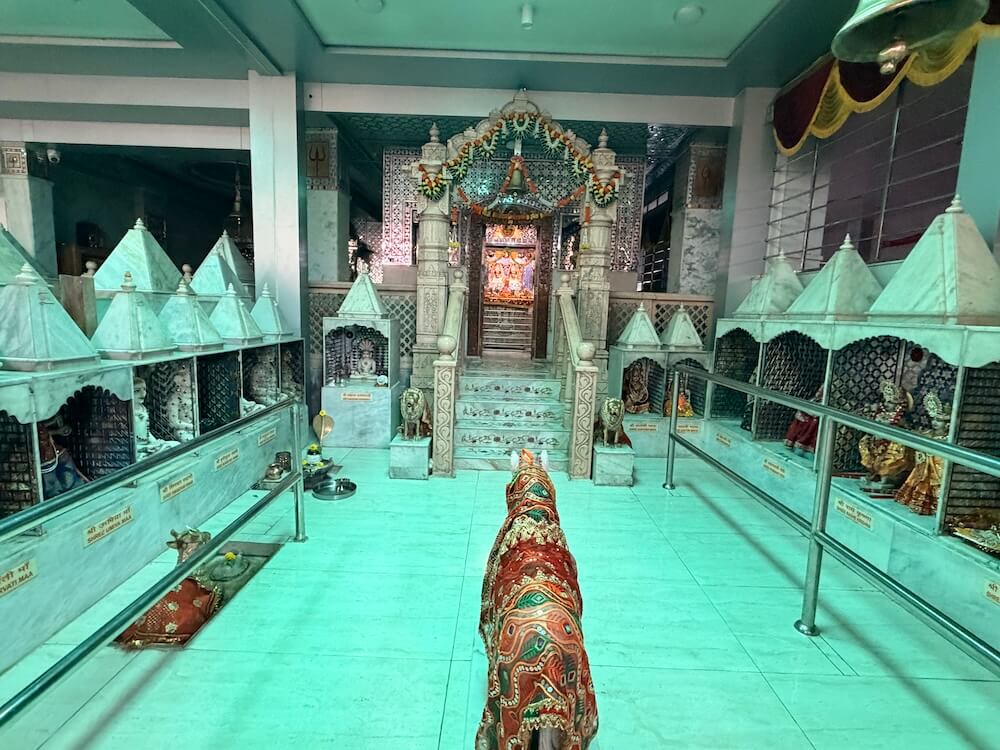 at the centre of which a metallic image of the Sun God is installed. The independent shrines of Amba Mata on the left and Tulja Bhavani Mata on the right flank Mother Randal.
Here, the idol of Amba Mata stands upright, while the idol of Tulja Bhavani Mata is depicted in a seated posture. Both these idols are adorned with fine vestments and diverse ornaments.
An independent shrine dedicated to Bharat Mata (Mother India) is also established within this temple complex. Every year, national festivals are organised here on Independence Day, 15th August and Republic Day, 26th January.
In addition, numerous festivals and religious events are celebrated here throughout the year. The temple remains open for devotees to obtain darshan daily from 6:00 am in the morning until 8:00 pm at night.
Useful Information :
- Situated at a distance of 5 km from Umargam
- Situated at a distance of 60 km from Valsad city
- State Transport (ST) buses and private vehicle facilities are available from Umargam.
- Private vehicles can drive directly up to the temple premises.
- Accommodation and breakfast facilities are available in the surrounding vicinity.
रैंडल माता मंदिर
गोलवड-संजान, ताल. उमरगाम, जिला. वलसाड
मंदिरे
Temples
मंदिर
-
साईबाबा मंदिर तिथळ, ता./जि. वलसाड
अधिक माहितीSai Baba Temple Tithal, Tal./Dist. Valsad
View Detailsसाईं बाबा मंदिर तीथल, ताल./जिला. वलसाड
विवरण देखें -
भाव-भावेश्वर महादेव मंदिर बारुमाळ, ता. धरमपूर, जि. वलसाड
अधिक माहितीBhav-Bhaveshwar Mahadev Temple Barumal, Tal. Dharampur, Dist. Valsad
View Detailsभाव-भावेश्वर महादेव मंदिर बारुमल, ताल. धरमपुर, जिला. वलसाड
विवरण देखें -
दत्त मंदिर पाथरी, ता./जि. वलसाड
अधिक माहितीDatt Temple Pathri, Tal./Dist. Valsad
View Detailsदत्त मंदिर पाथरी, ताल./जिला. वलसाड
विवरण देखें