
रामपुरम श्री रामास्वामी मंदिर
रामापुरम, जि. कोट्टायम.
Ramapuram Sree Ramaswamy Temple
Ramapuram, Dist. Kottayam.
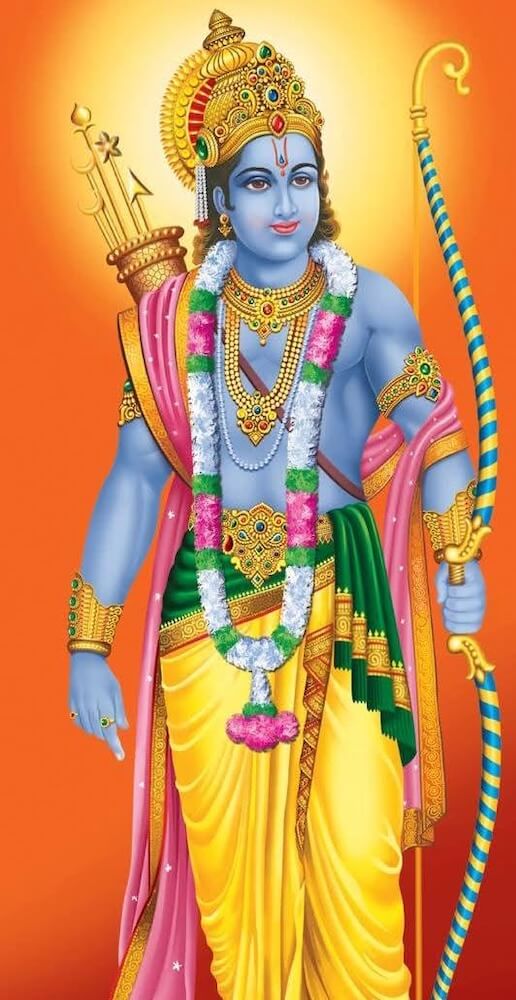 Ramapuram Sree Rama Swamy Temple is a famous Hindu temple located at Ramapuram in the Meenachil Taluk of Kottayam district, Kerala. The main deity is Lord Rama, worshipped in the rare four-armed (Chaturbahu) form of Mahavishnu. The temple is one of Kerala’s most well-known Nalambalams and attracts thousands of devotees, especially during Karkidakam, the Malayalam month dedicated to the recitation of the Ramayana. The village of Ramapuram is believed to have derived its name from this temple. The other three temples of the Nalambalam pilgrimage are located nearby: Amanakara Bharatha Swamy Temple, about 3 km to the north, Koodappulam Lakshmana Swamy Temple, about 3 km to the west and Methiri Shatrughna Swamy Temple, about 3 km to the north-east. Every year during Karkidakam, thousands of devotees undertake the Nalambalam pilgrimage by visiting these four temples in a traditional order. As the temples are situated close to one another, the pilgrimage can be completed within a short time. The temple is managed under the traditional Oorazhma system and remains an important centre of the region’s spiritual and cultural heritage.
According to historians and available archaeological records, Ramapuram Sree Rama Swamy Temple is about 1,000 to 1,200 years old. It was built between the 8th and 10th centuries AD, during a period when Vaishnavism and temple culture flourished in Kerala. The temple is not administered by the Travancore Devaswom Board. Instead, it is managed under the traditional Oorazhma system by the Ramapuram Devaswom Trust, a body formed by three Namboothiri families from Amanakara, Manakunnoor and Manakaranattu Mana. The temple once owned large areas of land, but much of this was lost following the land reforms. Even so, the temple’s daily rituals and annual festivals continue to be conducted with the active support of the local community. 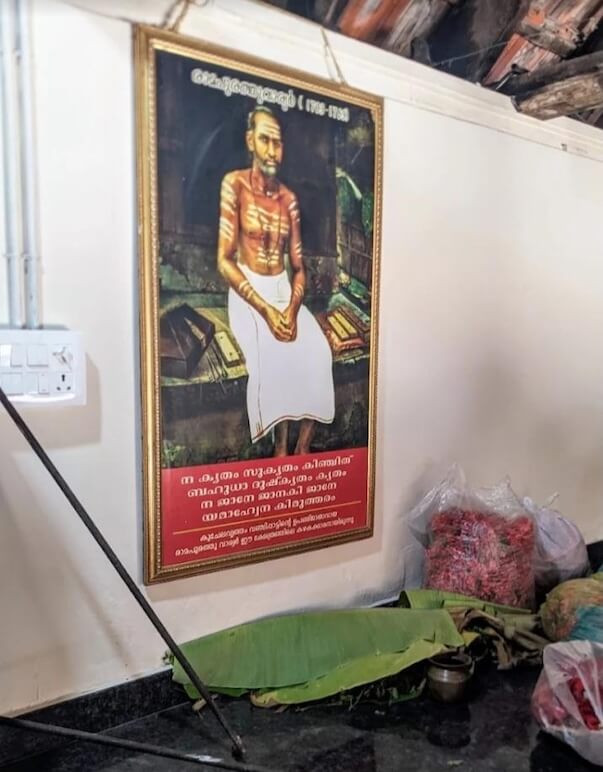 The renowned poet Ramapurathu Warrier, who is regarded as the pioneer of Vanchippattu and was a contemporary of Kunchan Nambiar, belonged to this village. He served at the temple in the traditional role of Kazhakam and shared a close connection with its cultural heritage.
The main legend associated with Ramapuram Sree Rama Swamy Temple is closely connected with the life of Lord Rama. According to tradition, after the passing of Sita Devi, Lord Rama left Ayodhya and travelled once again along the route he had taken during his search for Sita. He eventually reached the present-day Ramapuram. Surrounded by forests and hills, with a river to the east and paddy fields to the west, the peaceful beauty of the place attracted him. It is believed that he rested beneath a banyan tree and later chose to remain here in divine presence. The village is said to have derived the name “Ramapuram” from this event. When Lakshmana, Bharatha and Shatrughna could not find their elder brother, they searched for him and finally reached Ramapuram. At Lord Rama’s request, Lakshmana settled at Koodappulam, Bharatha at Amanakara and Shatrughna at Methiri. In time, temples were established at all four places. Even today, thousands of devotees undertake the Nalambalam pilgrimage during the Malayalam month of Karkidakam by visiting these four temples.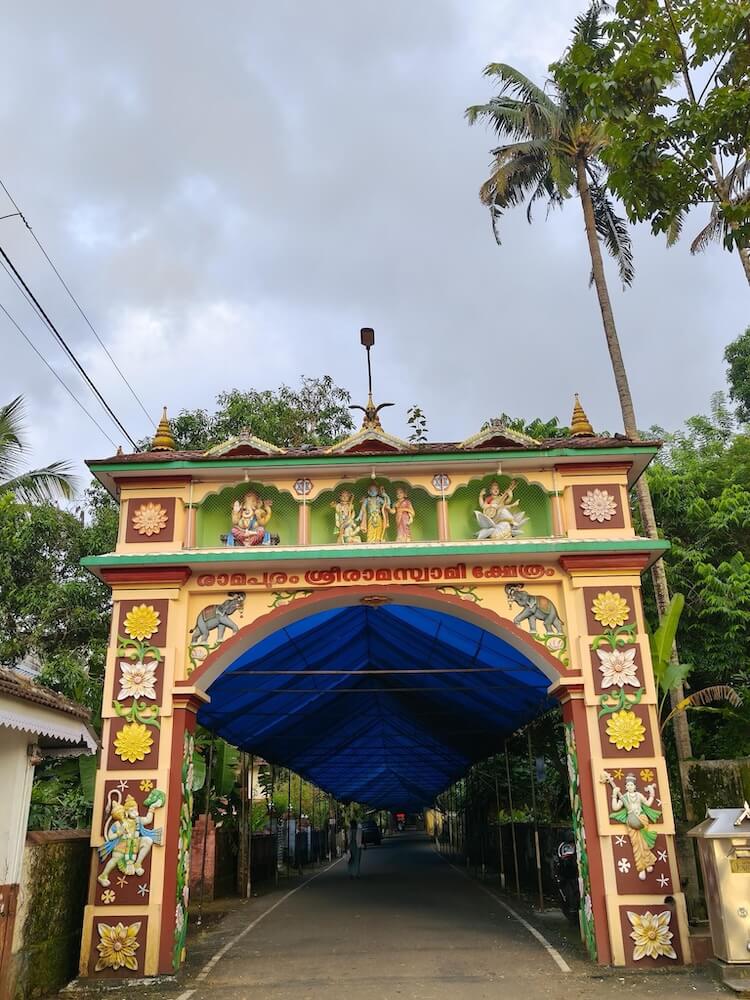 One of the temple’s most important offerings is the Chakram Samarppanam (offering of the sacred disc). According to the legend, when Hanuman informed Lord Rama that he had found Sita in Lanka, Lord Rama, filled with joy, presented Hanuman with the ring bearing the mark of the Sudarshana Chakra that he wore on his finger. In memory of this event, devotees offer a symbolic Sudarshana Chakra to the deity. It is believed that this offering helps remove obstacles in one’s career and brings prosperity and success.
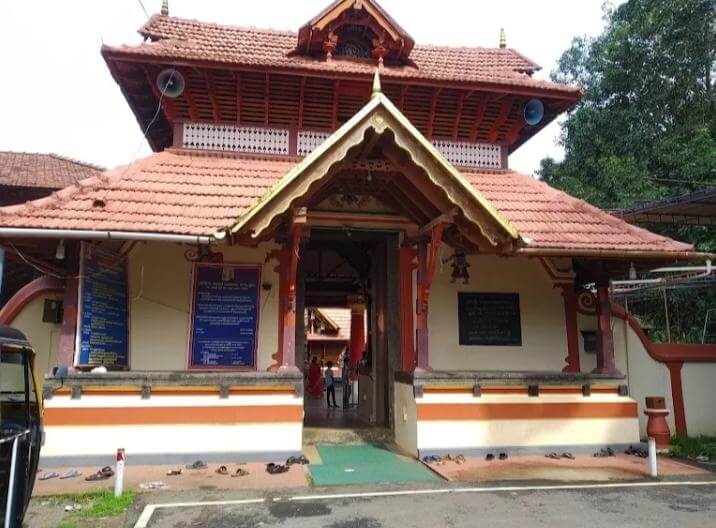
Located almost at the centre of Ramapuram village and facing east, the temple welcomes visitors through an entrance gateway decorated with sculptures of Lord Ganesha, the Pattabhishekam (coronation) of Lord Rama and Goddess Saraswati, along with figures of Lord Hanuman and Sage Narada on either side. Beyond the gateway stands a beautiful traditional entrance porch with a two-tiered sloping tiled roof. A large temple pond lies on the northern side, shaded by a magnificent banyan tree along its bank. Entering through the eastern gopuram, visitors first come to the elephant shelter, followed by the golden flagstaff crowned with Garuda, the divine vehicle of Lord Vishnu. Nearby is the Balikkalpura, adorned with finely carved images of Brahma and the Ashta Dikpalakas (Guardians of the Eight Directions). The temple stands within a walled complex covering about three and a half acres,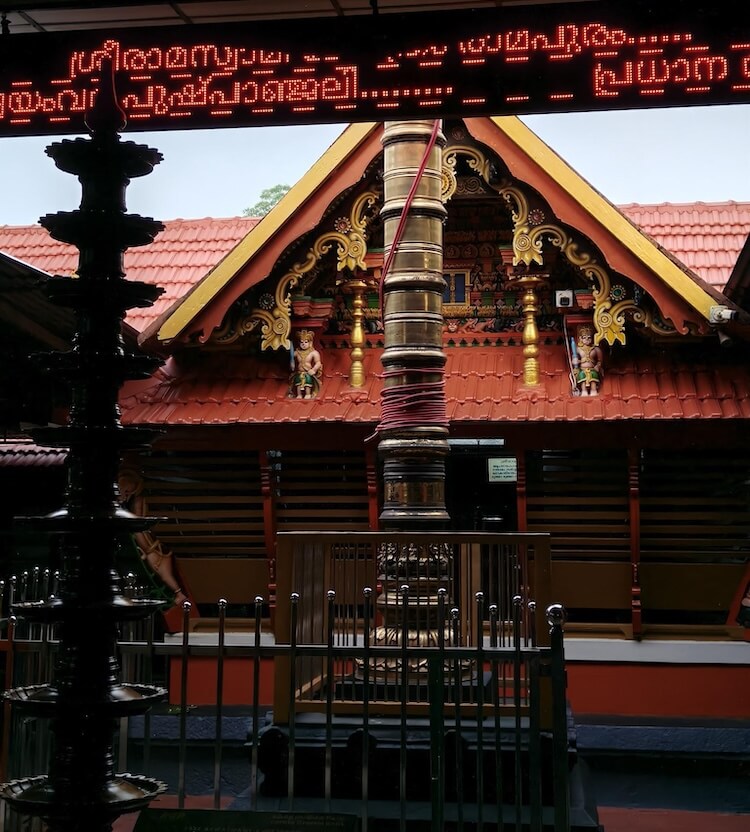 with a traditional wooden lamp gallery surrounding the Nalambalam. A shrine dedicated to Goddess Bhadrakali is situated in the south-west corner, while serpent deities are worshipped beneath a banyan tree nearby. A shrine of Lord Ganesha and the western gopuram are located in the north-west corner. On the northern side is the temple’s Oottupura, where free meals are served daily. In the north-east corner stands a small shrine dedicated to Lord Hanuman, the devoted disciple of Lord Rama, with shrines for Brahmarakshas and Yakshi located nearby.
The Sreekovil is the most remarkable architectural feature of the temple. This circular Sreekovil, built of granite, has a copper-covered roof crowned by a golden finial. It is richly decorated with beautiful wooden carvings depicting scenes from the Ramayana, along with images of Vamana, Ashtabhuja Ganesha, Goddess Durga, episodes from the life of Lord Krishna and stories of Lord Shiva. Inside the sanctum, Lord Rama is enshrined facing east in the rare four-armed form of Mahavishnu. The six-foot-tall idol represents Lord Rama after his Pattabhishekam (coronation).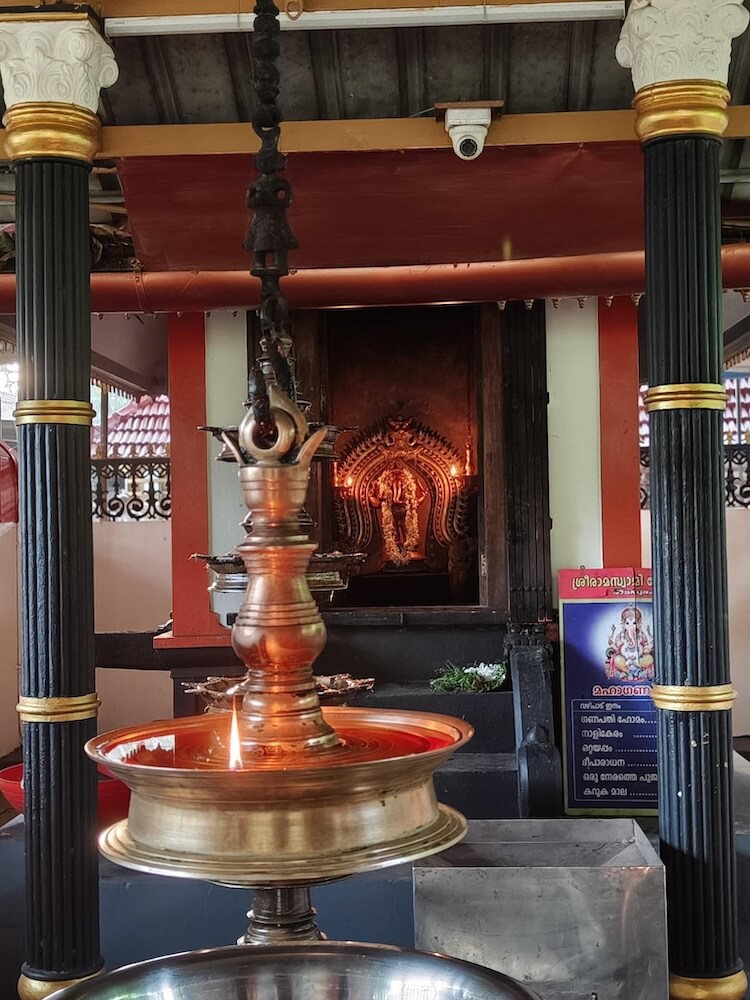 The upper right hand holds the Sudarshana Chakra, the upper left hand holds the Panchajanya conch, the lower left hand holds the Kaumodaki mace and the lower right hand holds a lotus, reflecting the complete form of Mahavishnu. Another unique feature is the small shrine on the southern side of the Sreekovil, where Lord Shiva, Goddess Parvati, Lord Ganesha, Lord Subrahmanya and Lord Ayyappa are worshipped together. On the northern side is the sacred presence of Goddess Lakshmi, worshipped here in the form of Sita Devi, adding to the temple’s unique character.
The annual festival of the temple is celebrated for eight days during the Malayalam month of Meenam, beginning with the flag hoisting ceremony on the Chothi asterism. The festival concludes with the Arattu ceremony on the Thiruvonam asterism, which is held at the temple pond of Amanakara Bharatha Swamy Temple. One of the main rituals during the festival is the Utsavabali. The most important annual observance at the temple, however, is the Nalambalam pilgrimage during the Malayalam month of Karkidakam. Thousands of devotees visit the four Nalambalam temples during this period, beginning their pilgrimage with a visit to this temple before proceeding to the other three temples in the traditional order. Sree Rama Navami, marking the birth of Lord Rama, is also celebrated with special pujas, prasadam distribution and cultural programmes.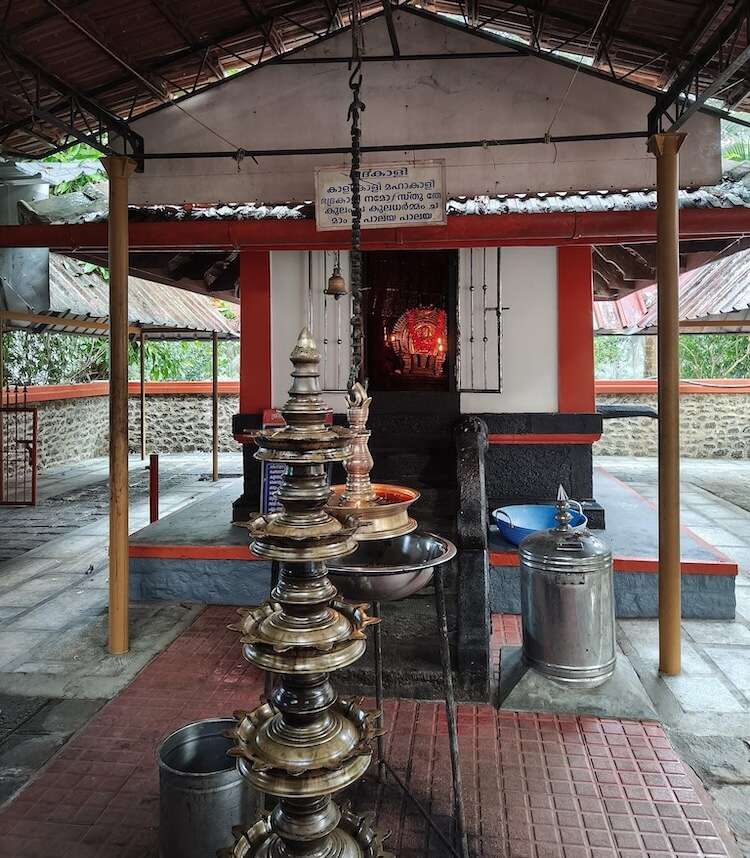 Maha Shivaratri is observed with special pujas and all-night bhajans in honour of the Shiva shrine within the temple. Another notable ritual is the Aanayoottu (feeding of elephants) and Gajapuja, performed to seek the blessings of Lord Ganesha.
The most important offering at the temple is the ceremonial offering of a bow and arrow. In this ritual, devotees offer miniature representations of Lord Rama’s divine weapons and pray for relief from difficulties, protection from enemies and the successful fulfilment of their wishes. The offering of the Chakra (sacred disc) is also of special significance, as the presiding deity is worshipped in the four-armed form of Mahavishnu. Devotees perform this offering seeking protection, prosperity and peace of mind. Other important offerings include Palpayasam (sweet milk pudding), butter offering, Tulasi Mala Samarppanam (offering of a garland of holy basil leaves) and Vishnu Sahasranama Archana. These are offered for blessings such as progeny, family well-being, success in endeavours, mental peace, fulfilment of wishes and good health. For Lord Hanuman, the devoted follower of Lord Rama, the main offerings are Vadamala and Aval Nivedyam (flattened rice offering).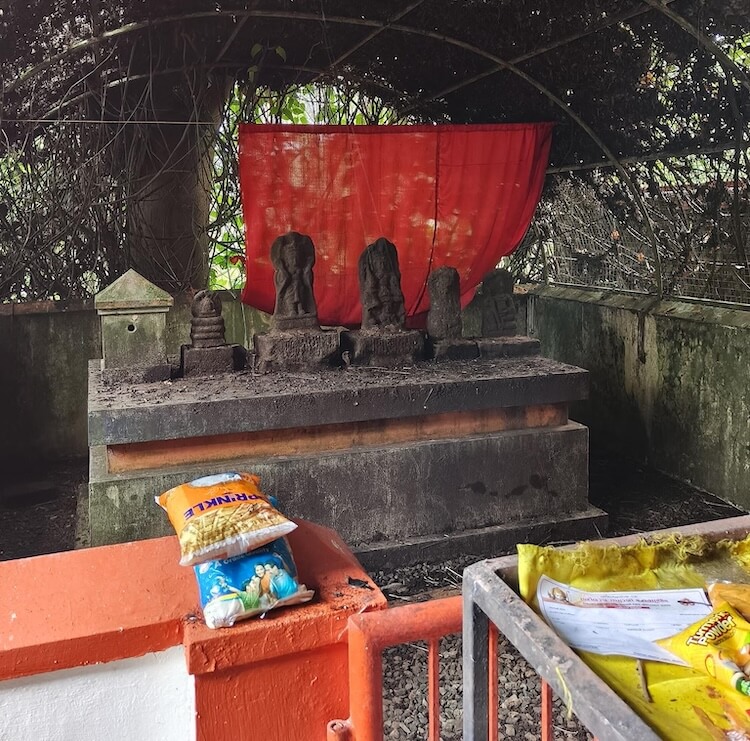 Raktha Pushpanjali and Kadumpayasam are offered to Goddess Bhadrakali, while Ganapathi Homam and Appam Nivedyam are offered to Lord Ganesha. For the Naga deities, Noorum Palum and the offering of turmeric powder are performed on Ayilyam days.
The temple opens daily at 05:00 AM with Nirmalya Darshanam, Abhishekam and Malar Nivedyam. This is followed by Usha Puja at 05:45 AM, Ethirettu Puja and Ganapathi Homam at 06:30 AM, the morning Seeveli at 06:45 AM, Pantheeradi Puja at 07:15 AM and Ucha Puja at 09:30 AM. The temple closes for the morning after the Ucha Seeveli at 10:00 AM. It reopens at 05:00 PM, followed by Deeparadhana at 06:30 PM and Athazha Puja at 07:30 PM. The temple closes for the day after the Athazha Seeveli at 08:00 PM. During the Nalambalam pilgrimage season in the Malayalam month of Karkidakam, visiting hours are extended from 05:00 AM to 12:00 PM in the morning and from 05:00 PM to 07:30 PM in the evening to accommodate the large number of devotees. On festival days and other special occasions, the closing time may vary depending on the duration of the rituals.
Key highlight :-
- Located 12 km from Pala and 35 km from Kottayam.
- The nearest railway station is Kottayam Railway Station, about 35 km away.
- KSRTC and local buses are available to the temple from Pala and Kottayam.
- Private vehicles can be parked in the temple’s parking area.
- Accommodation and food facilities are available in the nearby towns.
- Contact number + 91 9495231738
रामपुरम श्री रामास्वामी मंदिर
रामपुरम, जिला. कोट्टायम.
मंदिरे
Temples
मंदिर
-
तिरुवायमकुडी महादेव मंदिर अयमकुडी, कडूथुरुथी, जि. कोट्टायम.
अधिक माहितीThiruvayamkudy Mahadeva Temple Ayamkudy, Kaduthuruthy, Dist. Kottayam.
View Detailsतिरुवायमकुडी महादेव मंदिर अयमकुडी, कडुथुरुथी, जिला। कोट्टायम.
विवरण देखें -
उदयनपुरम श्री सुब्रह्मण्य स्वामी मंदिर उदयनापुरम, वैकोम, जि. कोट्टायम.
अधिक माहितीUdayanapuram Sree Subrahmanya Swamy Temple Udayanapuram, Vaikom, Dist. Kottayam.
View Detailsउदयनपुरम श्री सुब्रह्मण्य स्वामी मंदिर उदयनपुरम, वैकोम, जिला। कोट्टायम.
विवरण देखें -
मेथिरी श्री शत्रुघ्न स्वामी मंदिर मेथिरी, रामापुरम, जि. कोट्टायम.
अधिक माहितीMethiri Sree Sathrughna Swamy Temple Methiri, Ramapuram, Dist. Kottayam.
View Detailsमेथिरी श्री शत्रुघ्न स्वामी मंदिर मेथिरी, रामपुरम, जिला। कोट्टायम.
विवरण देखें