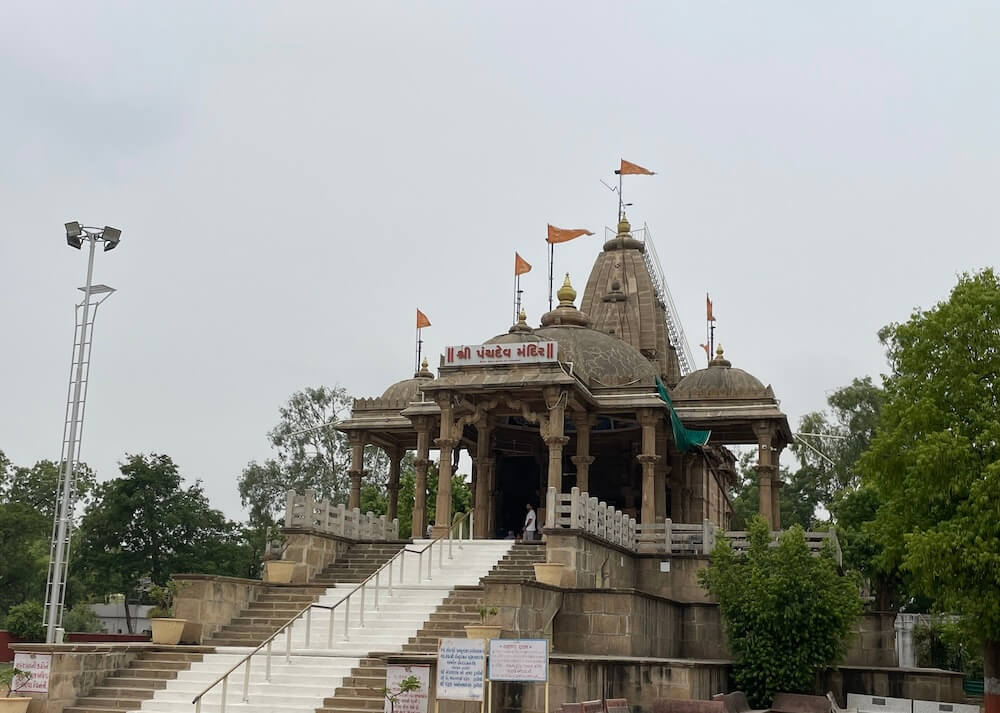
 The Panchdev Mahadev Temple holds the distinction of being the first temple in Gandhinagar to be constructed in the Nagara style of architecture. Because of this, it is also referred to as Nagardeo Panchdev Mandir. The temple is dedicated to the five great elements – earth, water, fire, air and ether – making it a deeply revered spiritual hub for thousands of devotees. Among the locals, it is also affectionately known as Jagdish Mandir. Each year, on the second day of the bright fortnight of the month of Ashadha (Ashadh Beej), the grand Rath Yatra of Lord Jagannath is taken out from this temple, drawing thousands of participants and devotees.
The city of Gandhinagar, named in memory of Mahatma Gandhi, was founded in the 1970s. In 1960, after the bifurcation of the Bombay State, the new states of Maharashtra and Gujarat came into being. Initially, Ahmedabad served as Gujarat’s capital. Following the reorganization, Maharashtra claimed Mumbai as its capital. It was then that Gujarat’s first Chief Minister, Jivraj Mehta, envisioned building a new, planned capital city, 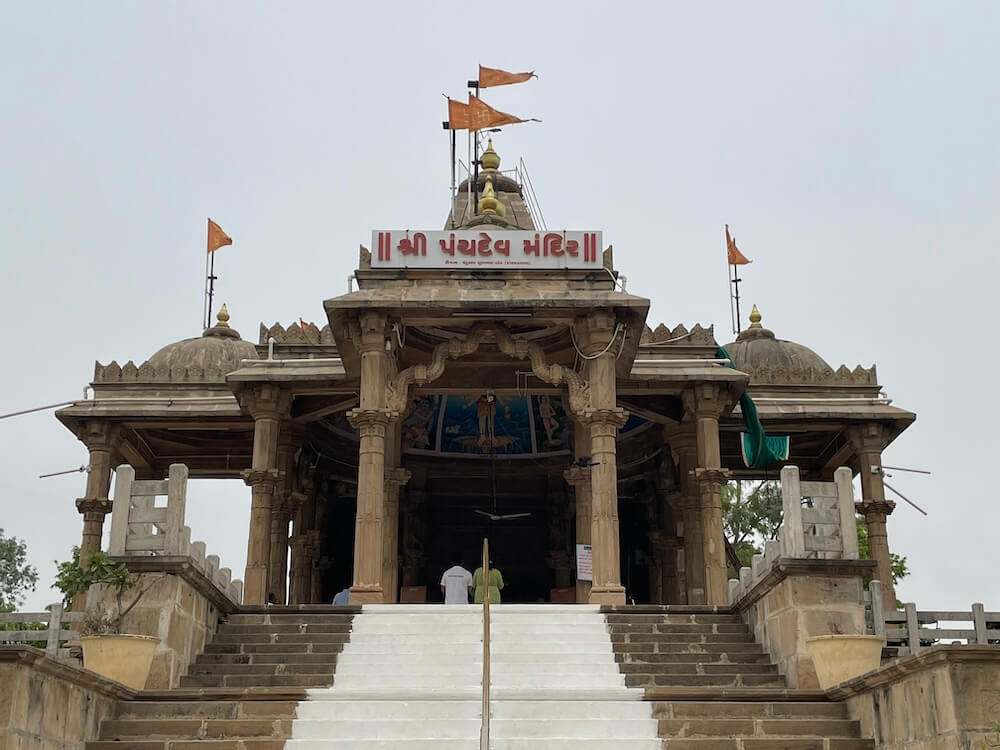 akin to Chandigarh in Punjab or Secunderabad in Andhra Pradesh. After a thorough evaluation of various sites, the present location of Gandhinagar was chosen. Construction of the capital began in 1960 but was temporarily halted when oil reserves were discovered in the area. Work resumed in 1965 after clearance from the Oil and Natural Gas Corporation. Surveying and planning recommenced in 1963 and construction began in earnest by 1967. The Gujarat Secretariat was inaugurated in June 1970. Gandhinagar emerged as India’s second planned city after Chandigarh, with 54% of its land covered in greenery, earning it the name Harit Nagar (Green City). By 1971, the city had officially become the state capital, but it had no temple. In 1972, industrialist Amritlal Hargovinddas Seth took the initiative to construct a temple in Sector 22. On June 2, 1972, the deities were ceremoniously installed.
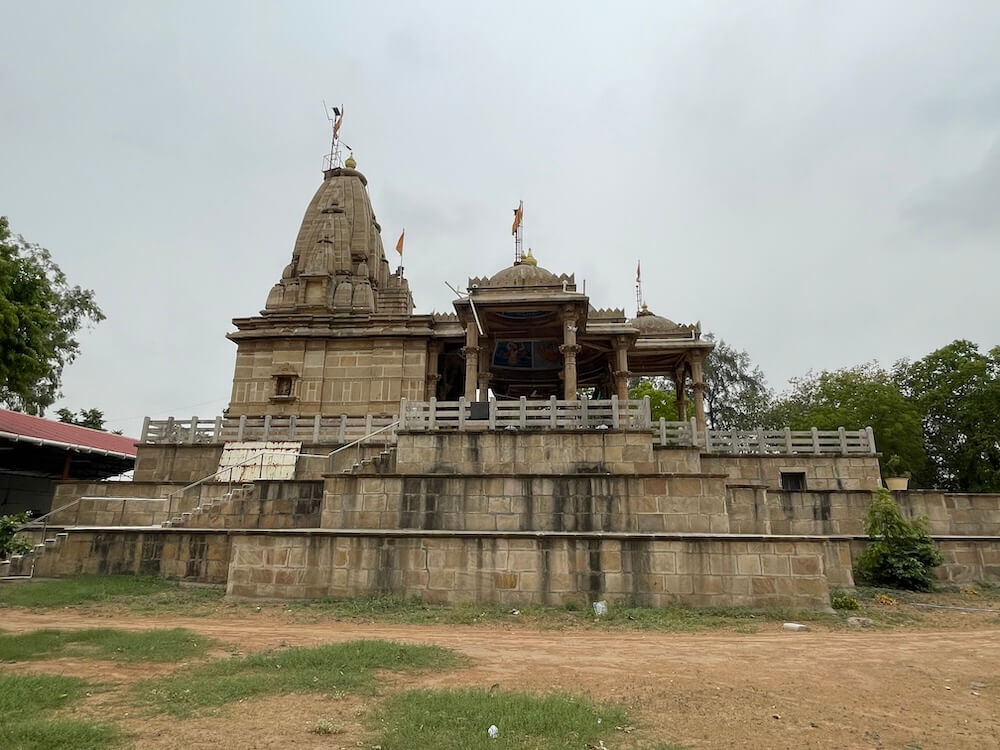
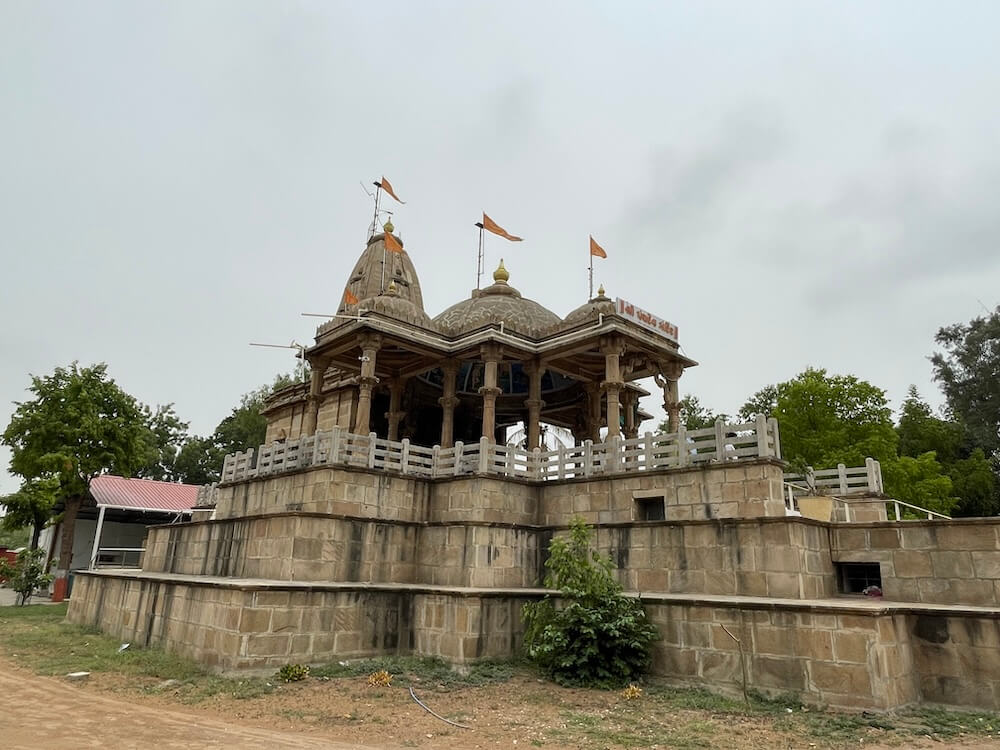
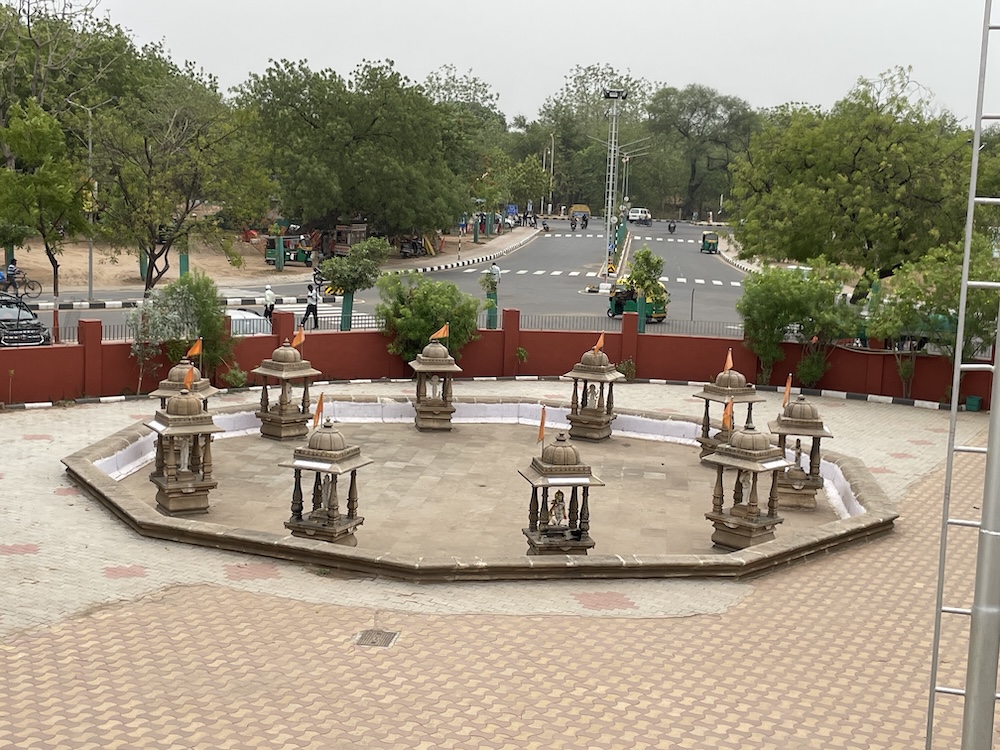 Situated at a key intersection of the city’s main roadways, the temple is surrounded by a walled compound with a spacious courtyard. Upon entering, one first encounters a ten-sided tank adorned with sculptures of Vishnu’s ten avatars within miniature shrines. The main stone temple, built on a high platform, stands straight ahead. Flanking the main structure are two more circular tanks, each housing various deities in ornate niches. One must ascend approximately 27 steps to reach the main platform. The temple structure includes an open assembly hall, viewing galleries on three sides, a vestibule and the sanctum. Each of the galleries and the assembly hall is topped with domed spires, while the sanctum bears a towering spire in the traditional urushringa style, complete with a double-layered amalaka and a high finial.
 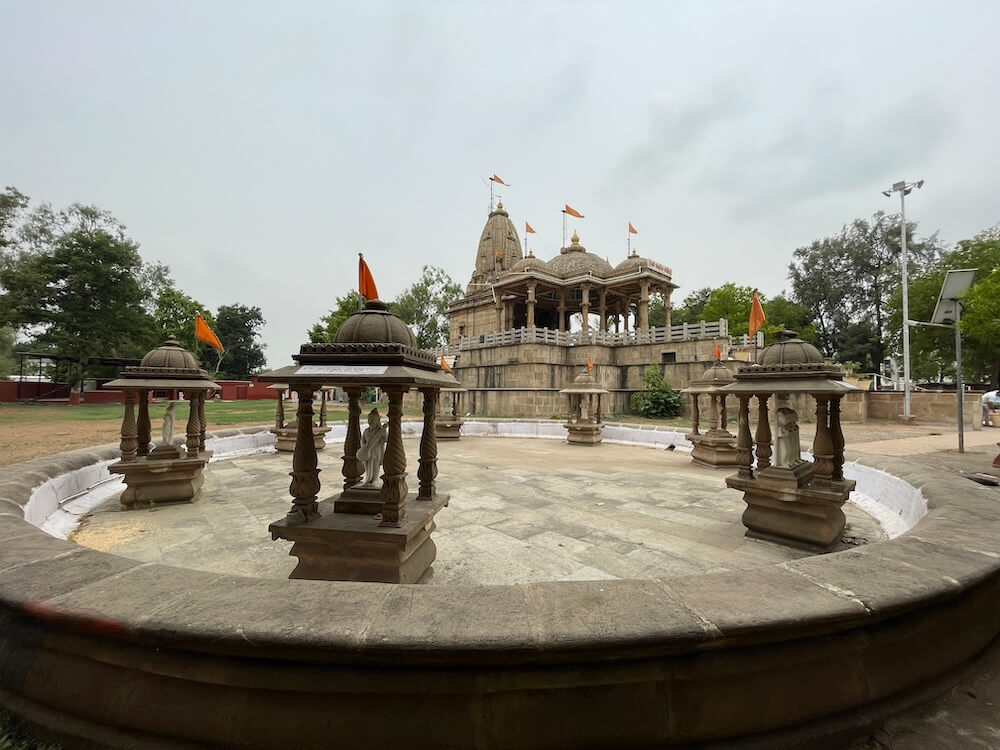 The outer walls feature carved niches housing deities such as Yamadev, Varunadev and Kuber Bhandari. Below the rear wall of the sanctum, sacred water from ritual ablutions exits through a gomukh spout.
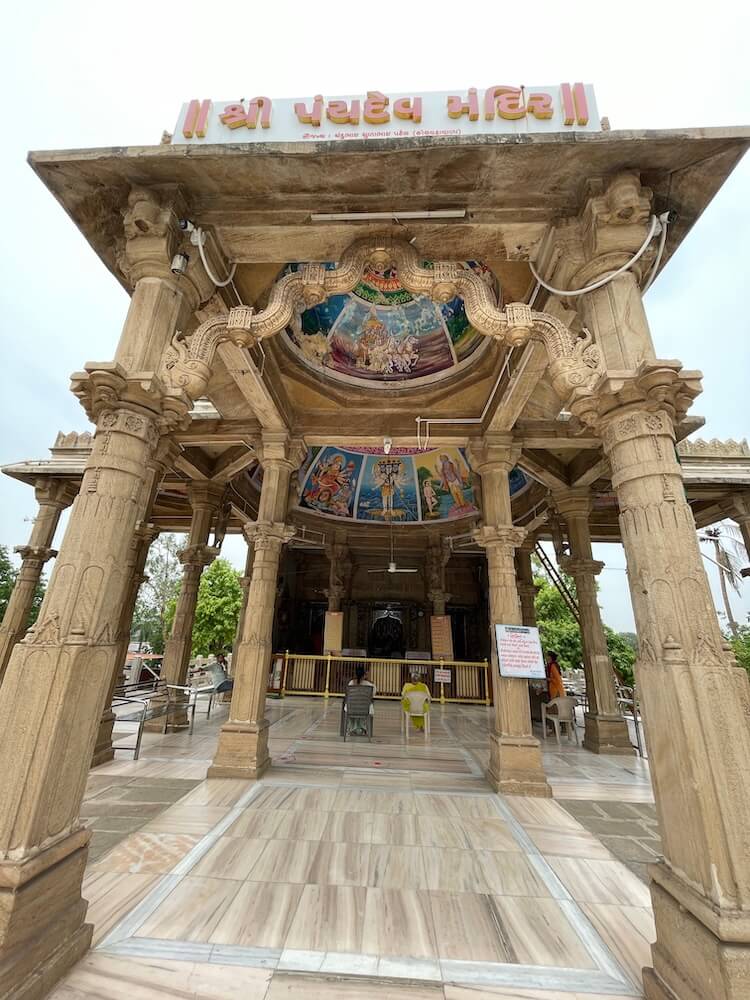
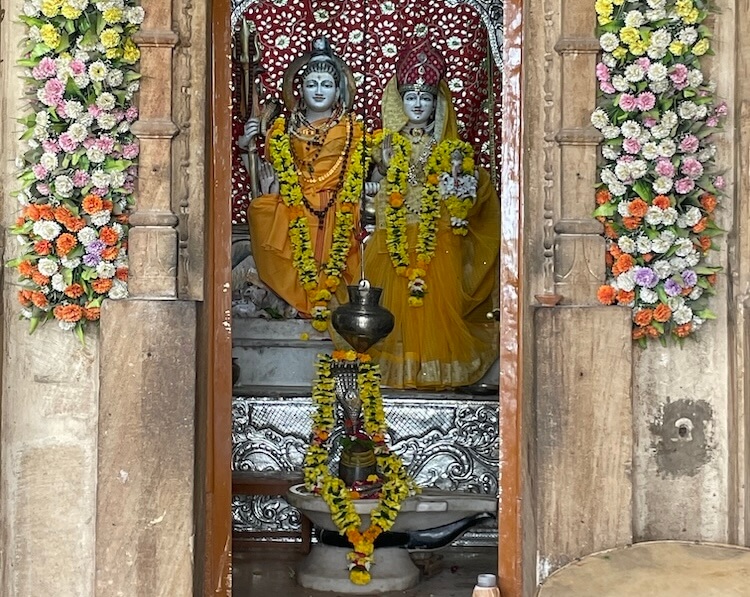
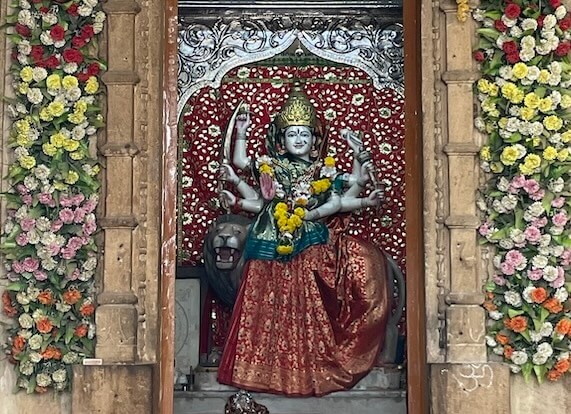
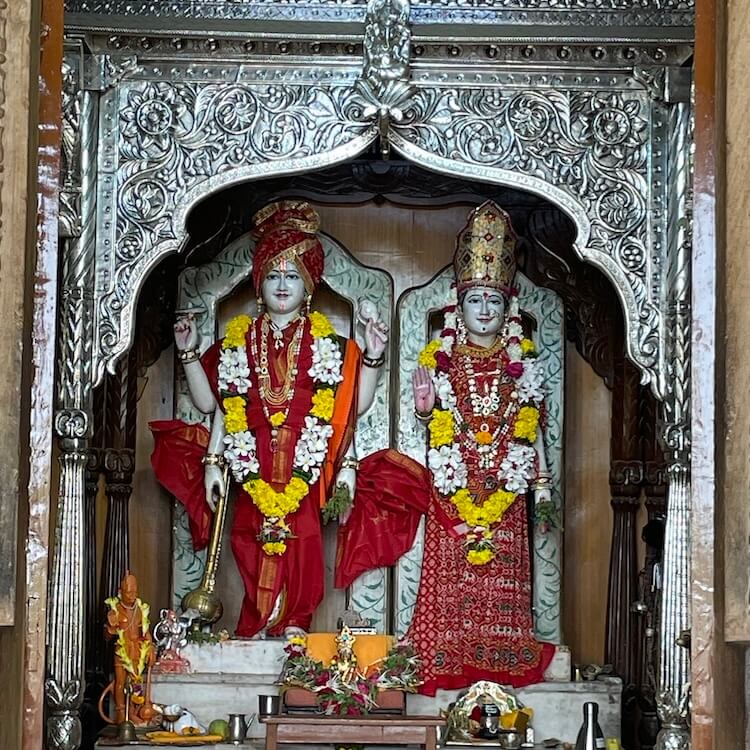
The columns of the porch, prayer hall and vestibule are adorned with sculptures of celestial maidens. The central dome of the prayer hall features a vivid painting of Krishna dancing the raas with the gopis. Beside it, along with paintings of various gods and goddesses, there is a painting of Chhatrapati Shivaji Maharaj taking the oath of Swarajya before the Shivalinga of Ghrushneshwar, as well as a painting of Maharana Pratap. In the vestibule, a niche on the right houses a statue of Surya Narayan, while one on the left contains Lord Ganesha. The temple has three sanctums. 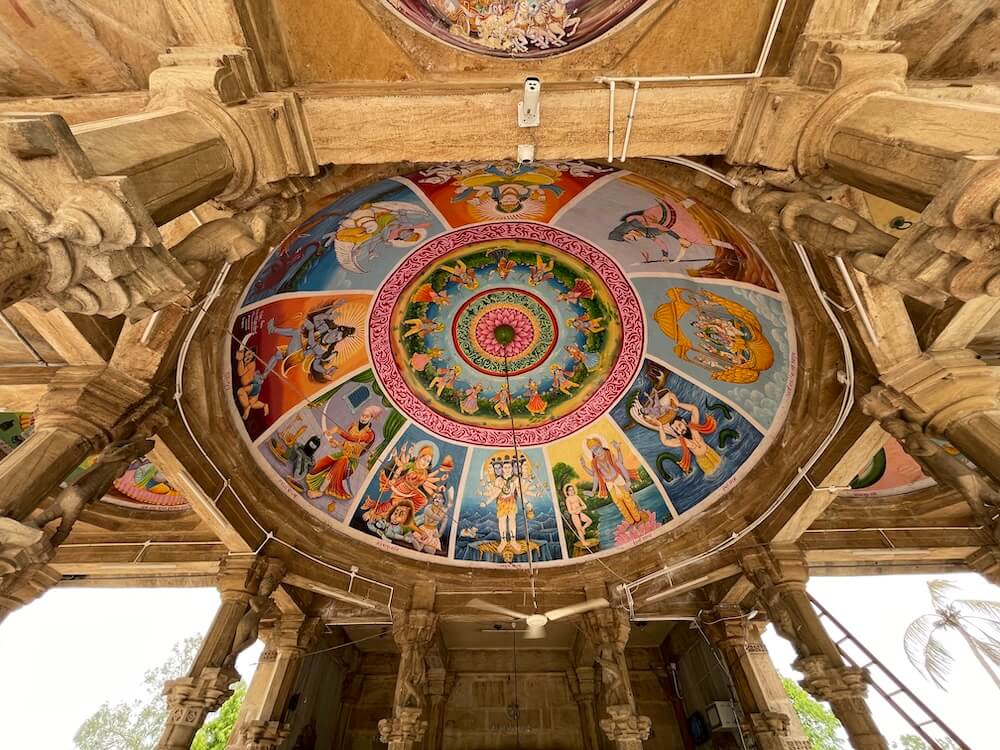 The central sanctum features a silver-framed idol of Lakshmi-Narayan, with a small standing idol of Hanuman placed before them. To the right is a shrine to Goddess Amba and to the left are Shiva-Parvati. Beneath their idol lies a Shiva lingam encased in marble and adorned with a silver serpent canopy. Since the lingam was brought from the Narmada riverbed, it is revered as Narmadeshwar Mahadev. To the left of the temple is a small Hanuman shrine. On the right side of the main temple lies a garden area, including a satsang ground and a nearby kitchen used for preparing maha prasad during festivals.
The temple is open to devotees from 6 AM to 8:30 PM daily. It remains bustling throughout the day, attracting both common devotees and political leaders. A variety of religious programs take place year-round and the temple is beautifully illuminated during festive occasions. On Mahashivratri, devotees queue up from early morning for darshan. Janmashtami is celebrated with great joy. Every Monday during the month of Shravan, hundreds of devotees offer bel leaves and flowers to the lingam and perform ritual bathing. On the final Monday of Shravan, a special Bhasma Aarti is conducted. During Gujarati New Year, the temple welcomes a wave of traditionally dressed devotees.
One of the major highlights is the Rath Yatra of Lord Jagannath held on Ashadh Beej. Covering a 32-kilometer route from the temple to the Jalaram Mandir in the city, the procession features devotees in traditional dress, devotional music troupes and drum bands. Idols of Lord Jagannath, Balram and Subhadra ride in three separate chariots. Elephants and horses also join the grand spectacle. Along the route, devotees perform aartis and the procession concludes near the temple around 7:30 PM with evening Aarti and distribution of Mahaprasad.