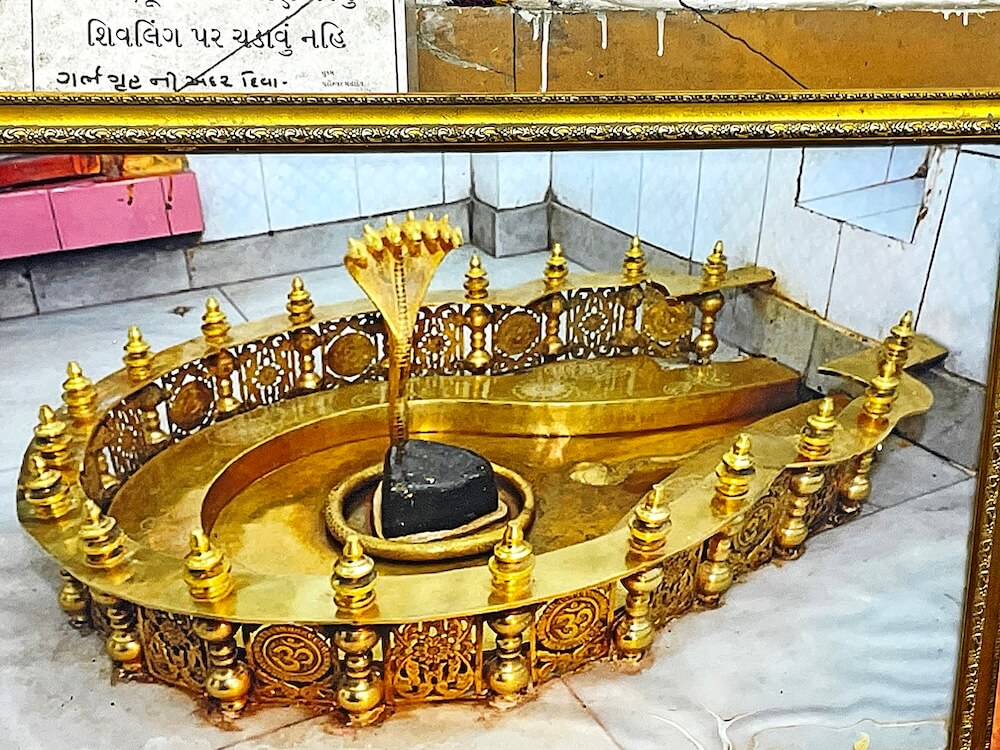
 Among the ancient Shiva temples in Vadodara, Om Pareshwar Mahadev Temple is situated on the banks of Gotri Lake. Unlike the common elliptical-shaped Shivlingas found in other temples, the Swayambhu (self-manifested) Shivalinga here is triangular in shape. It is believed that it embodies the presence of Brahma, Vishnu and Mahesh (Shiva). Devotees believe that this Shivalinga shifts a few millimeters towards the north every year, although no scientific explanation has yet been found. It is also believed that sincere worship of this Shivalinga fulfills all desires.
There are various legends associated with this temple. According to one such tale, the Shivalinga descended from the sky at this spot, after which a temple was built. An earthquake many years ago destroyed the temple. 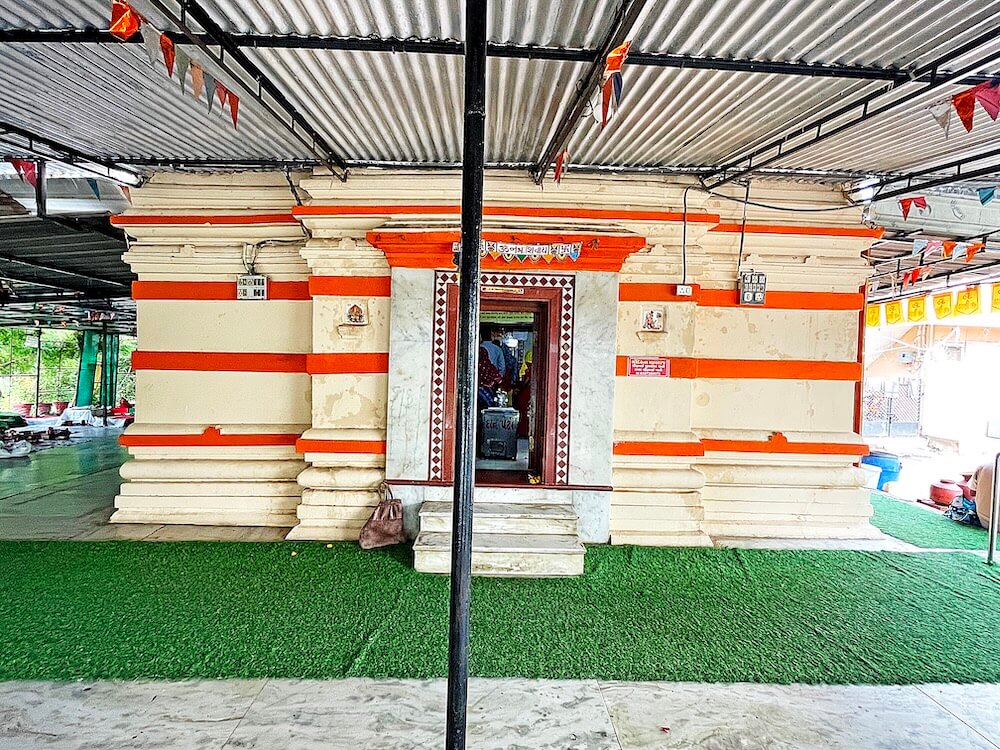 Later, during the reign of Sayajirao Gaekwad of Vadodara, when excavation was underway for the lake, this Swayambhu Shivalinga was rediscovered. Subsequently, Govindbhai Shah constructed the temple structure.
Another popular legend says that on every Mahashivratri, the Shivalinga shifts approximately the width of a thread towards the north. However, the position of other deities and Nandi (Shiva’s bull) in the temple remains unchanged. Some devotees claim that not only the Shivalinga but also the temple structure and trees around it shift slightly every year.
It is believed that if the Shivalinga ever touches the inner sanctum wall, it could bring disaster upon the Earth.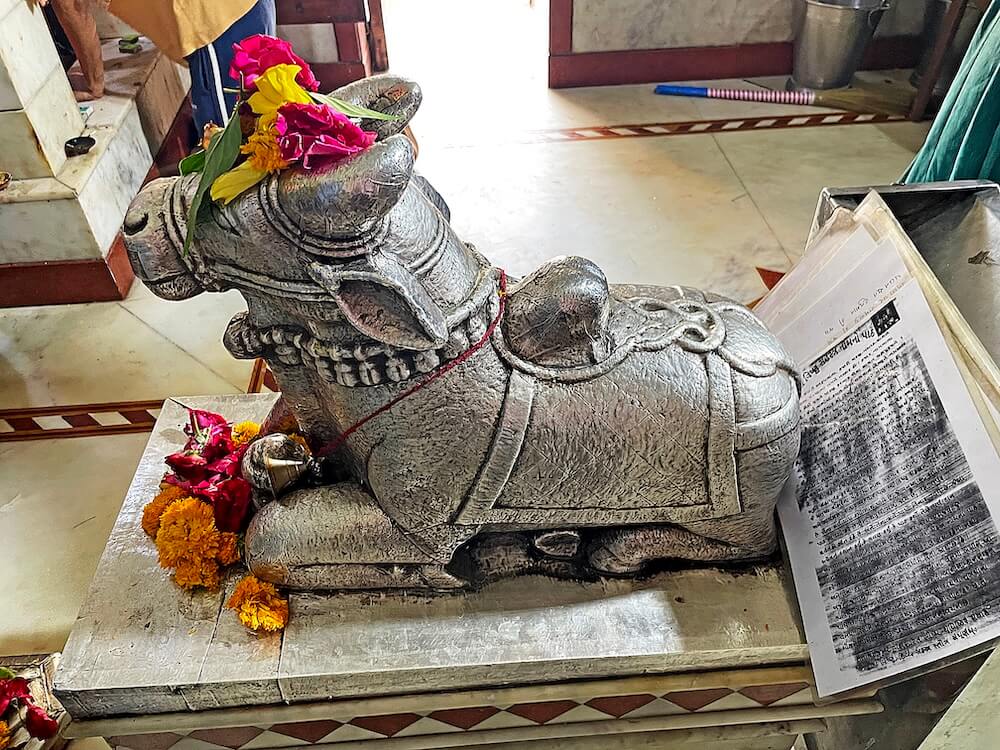 Because of the Shivalinga’s northward movement, the temple wall has reportedly had to be demolished and rebuilt multiple times. One more tale tells of two failed attempts by devotees in ancient times to return the shifted Shivalinga to its original position. The first time, it shifted again. The second time, a cobra appeared on the Shivalinga and instructing them not to touch it.
Located on the banks of the Vishwamitri River, the city of Vadodara (formerly known as Baroda) holds rich historical and cultural significance. During King Chandan’s reign, the city was known as Chandravati. The abundance of banyan trees in the city led to the names Vatpatra, which eventually became Vadodara.
 Until 1297, Vadodara was ruled by Hindu kings, later followed by Mughals. Around 1719, Maratha general Pilajirao Gaekwad captured Sonagad Fort from tribal rulers and established the Gaekwad dynasty in Baroda. The city flourished during the reign of Damajirao and reached its golden era under Sayajirao Gaekwad III in 1875. Vadodara is home to many ancient and significant temples such as Navnath Mahadev, Siddhnath Ganpati, Trimandir, Bhidbhanjan Hanuman and the Pareshwar Mahadev Temple.
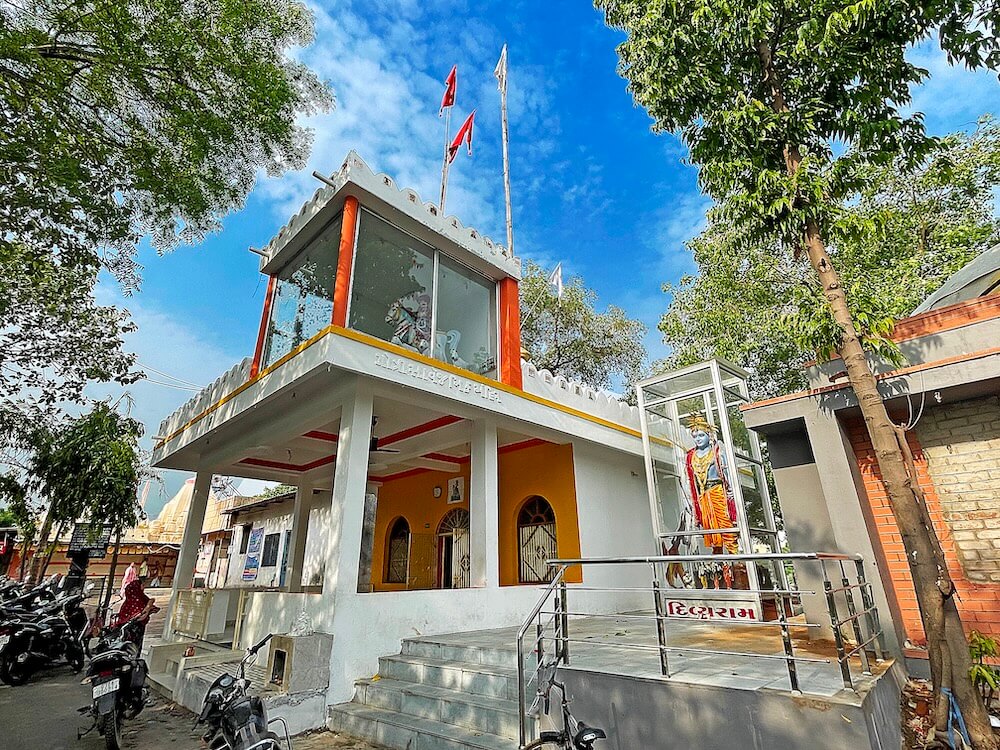
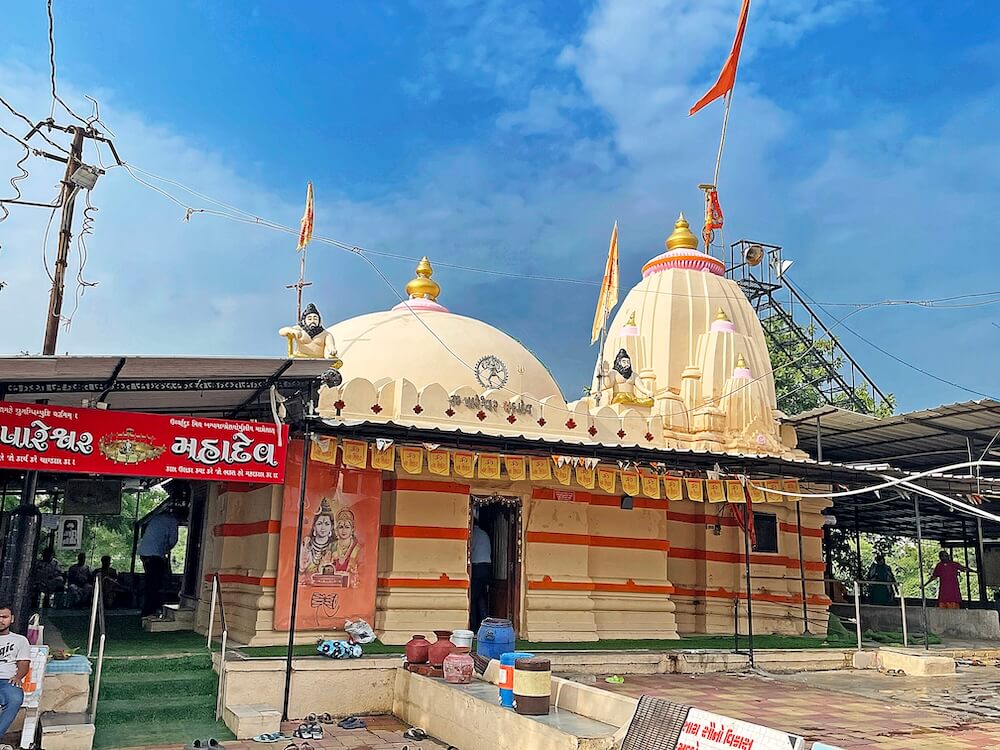
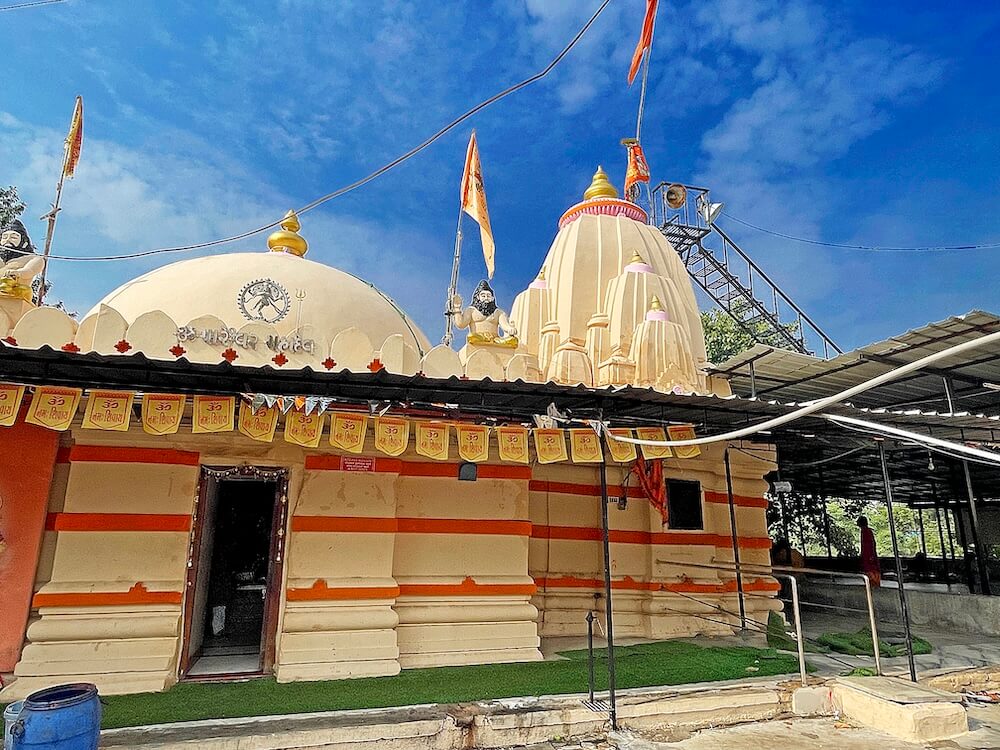
Located a short distance from the main road, the Om Pareshwar Mahadev temple sits by the lake in a spacious courtyard. In front is a large tin-roofed shed with benches for devotees. 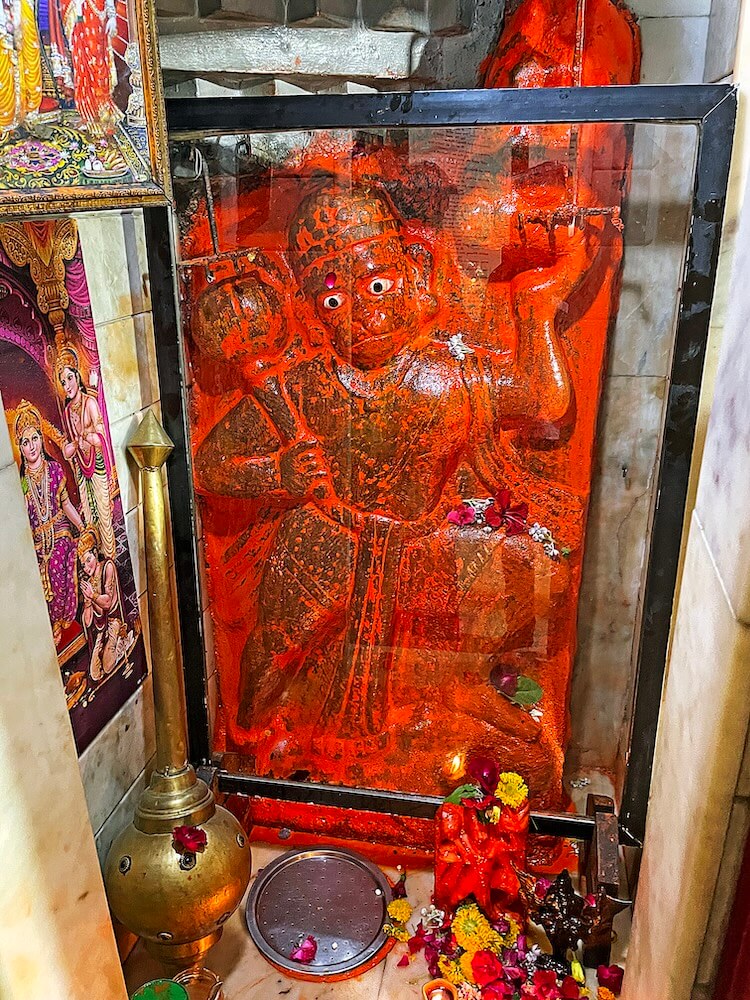 The temple consists of a Sabhamandap (assembly hall), Antaral (vestibule) and Garbhagriha (sanctum). The Sabhamandap is enclosed and has three doors. Its roof features a dome-shaped shikhara (tower) with an amalak and kalasha on top. The Garbhagriha’s shikhara follows the Urushringa architectural style. Carved statues of meditating rishis (sages) adorn the railings on the ceiling.
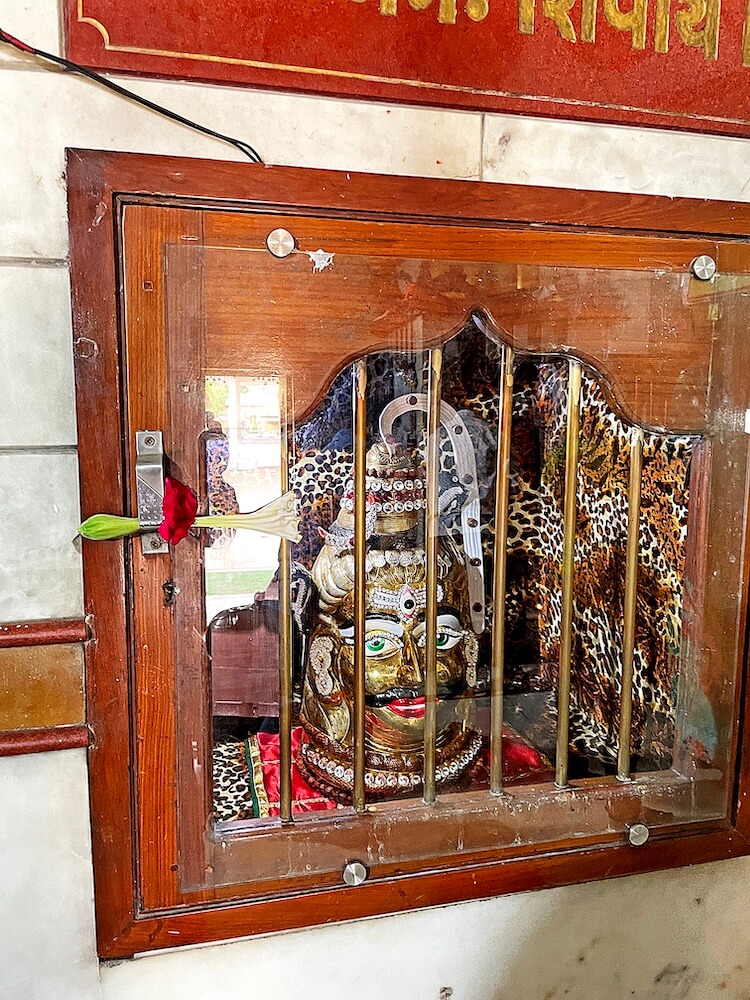
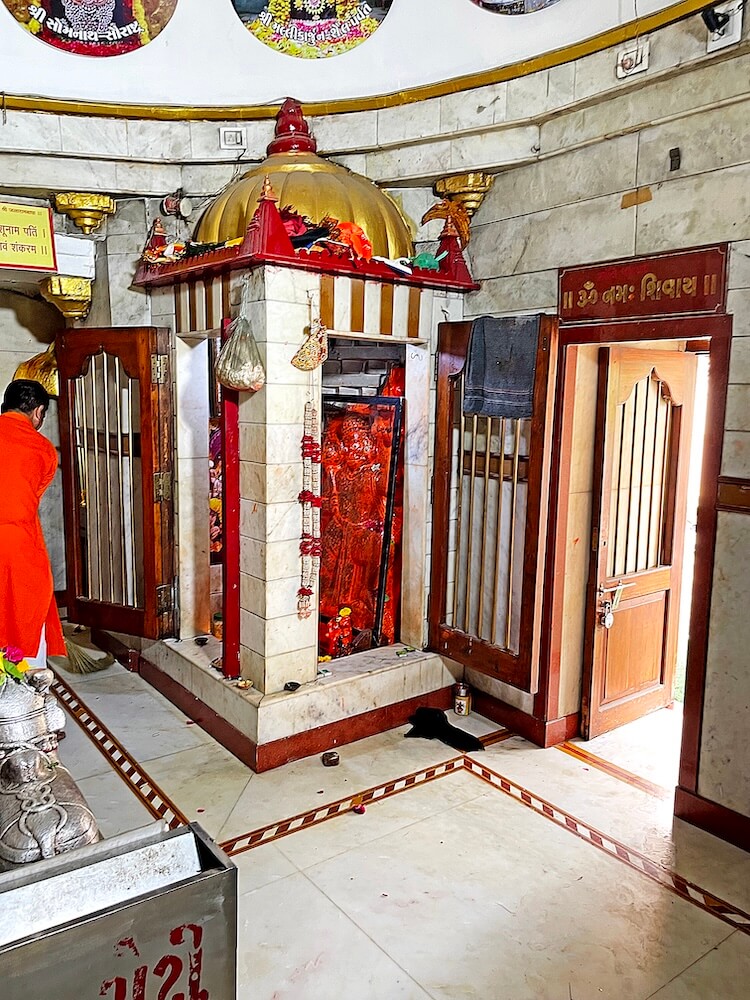
Inside the Sabhamandap, a beautifully carved stone idol of Nandi sits on a platform. In the vestibule, there is a brass mask of Lord Shiva and a stone idol of Hanuman smeared with vermilion. In the sanctum lies a triangular Shivalinga inside a large Panchdhatu (five-metal) base, with carved symbols of auspiciousness and cobra motifs. A cobra is seen holding a canopy over the Shivalinga. Behind it, in a shrine on the rear wall, sits Goddess Parvati.
The idols of Nandi and Parvati are aligned in a straight line with the Shivalinga. Above Parvati’s shrine is a large glass panel, allowing devotees in the Sabhamandap to have a clear view of the Shivalinga from a distance.
This temple is open from 5:30 AM to 7:00 PM. Aarti is performed both in the morning and evening. Various types of religious rituals are conducted here. A large number of devotees visit every Monday. On the occasion of Mahashivratri and on every Monday during the month of Shravan, the temple premises become crowded with devotees.