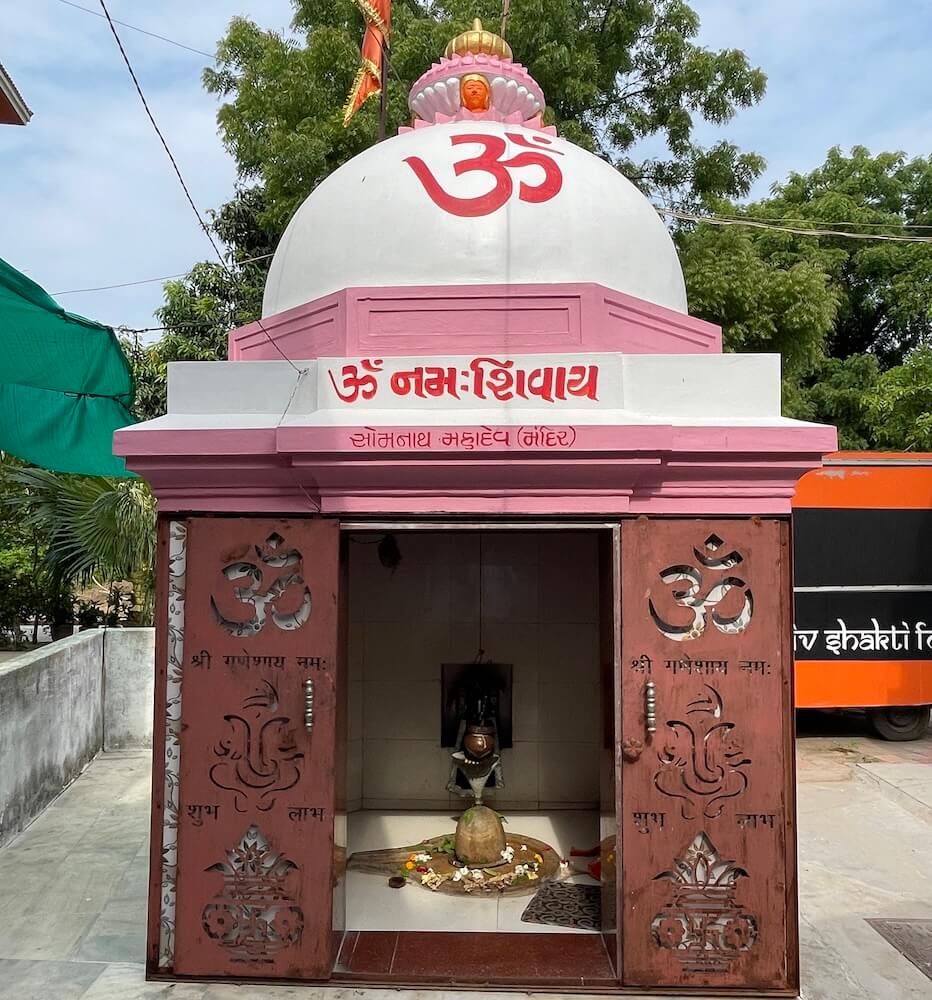
 Among the many ancient Shiva temples that have earned Vadodara the title of Shivnagari, the Mangalnath Mahadev Temple in Manjalpur holds a special place. With a history spanning over three centuries, the sacred Shiva linga here is believed to be divinely awakened. According to local tradition, the temple derives its name from a Nath sect ascetic who once resided in the area. Over time, the Mahadev of this place came to be known as Mangalnath. During the Gaekwad era of Baroda state, a larger temple was established here and devotees have since believed that performing abhishek with heartfelt devotion at this temple can alleviate the malefic effects of the planet Mars (Mangal) in one’s astrological chart.
In Hindu religious texts, Mangal is regarded as the god of war, celibate by nature and symbolically represented in red. For this reason, he is also called Angarak. In iconography, Mangal is depicted with four arms carrying a trident, mace, spear and lotus and riding a ram. According to astrology, an inauspicious position of Mars in a horoscope can bring difficulties, particularly in married life. To neutralize these effects, various remedies are suggested, such as wearing coral gemstones, offering alms or worshiping Hanuman. Mythologically, Mangal is considered a devotee of Shiva and thus, in the form of Mangalnath, he is worshipped here as Mahadev himself.
 In a research article titled ‘A History of Important Ancient Towns and Cities in Gujarat and Kathiawad’ (Indian Antiquary, August 1924 issue), renowned archaeologist and historian Anant Sadashiv Altekar traces the evolution of the Vadodara region. He states that Vadodara, once called Vatpadra or Vatpadrakpur, remained a small village until the 9th century, gradually developing into a settlement referred to as Pur. In ancient texts, the city was sometimes called Chandanavati and later Varavati, though no written evidence supports this conclusively. Till 1297, this region was ruled by Hindu dynasties including the Guptas, Chalukyas, Solanki Rajputs and even the Mughals. It is believed that the Shiva linga at this temple was established in the early 18th century, during the waning of Mughal rule in Vadodara and surrounding areas.
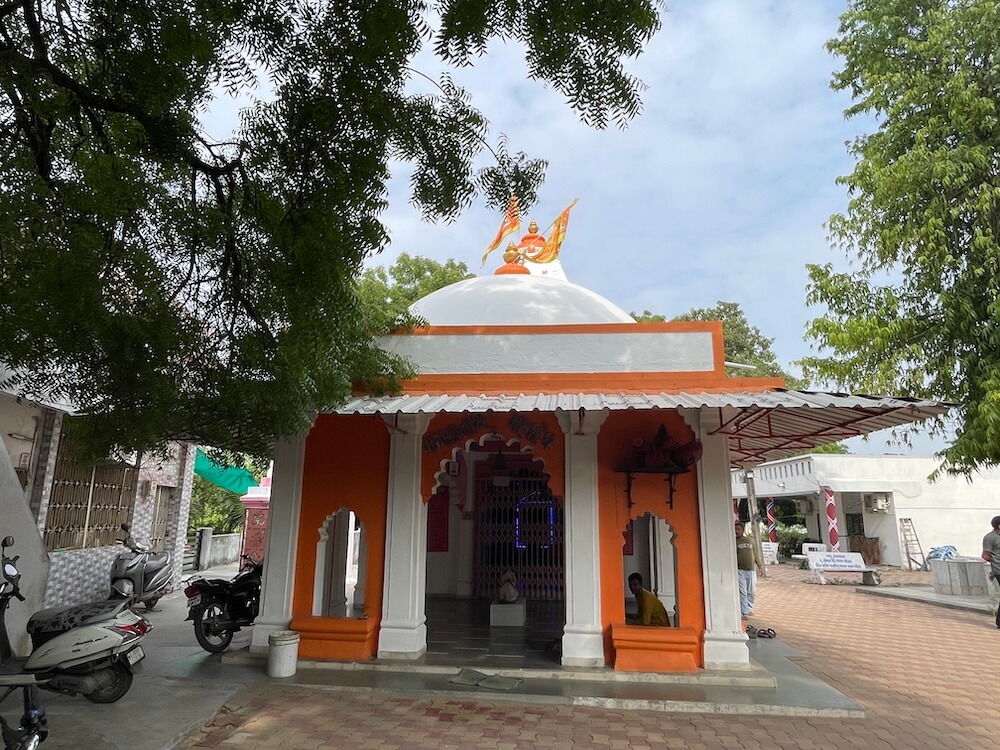 A compelling legend associated with this temple recounts the arrival of a Nath sect ascetic named Mangalnath Bapu around 300 years ago, who settled on the banks of the Vishwamitri River, which flows nearby. At that time, the area was a dense forest. Mangalnath Bapu is said to have meditated beneath a sacred bael tree (Aegle marmelos), offering spiritual solace and healing to the locals through his yogic powers. He cured ailments with ashes from his sacred fire (dhuni) and helped people overcome their suffering. As per Nath tradition, he established a line of spiritual successors (gurugadi) here, a tradition that continues to this day. Mangalnath Bapu took jeevant samadhi (live burial meditation) at this very site and it is believed that his ninth generation now serves at the temple. After a major renovation in 2008, the temple received its current form.
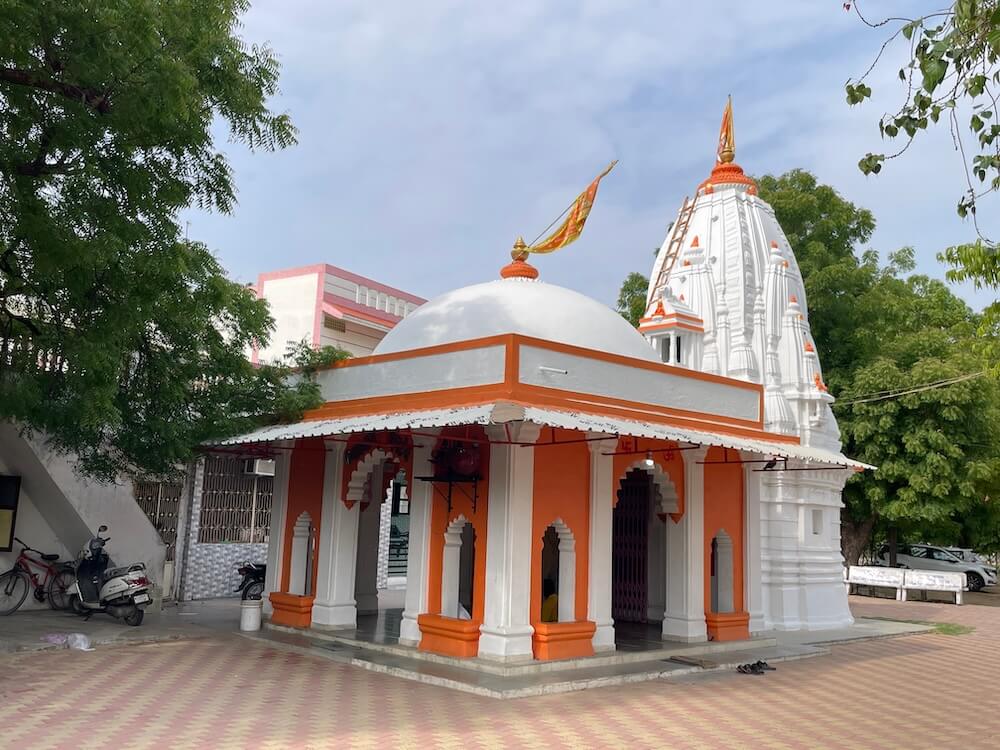
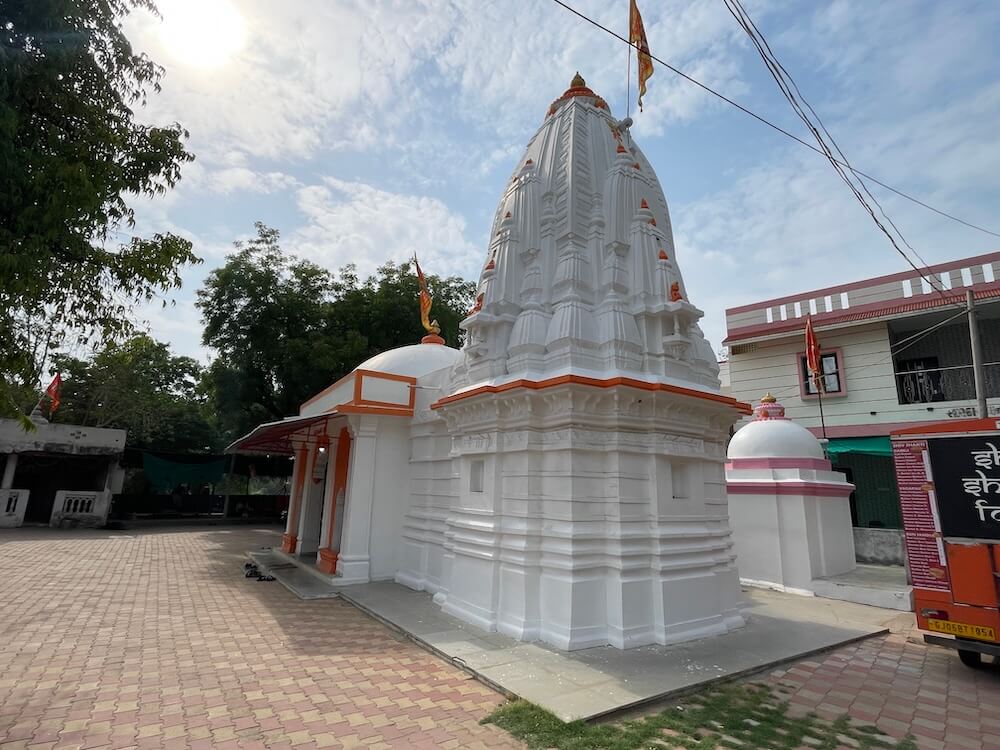
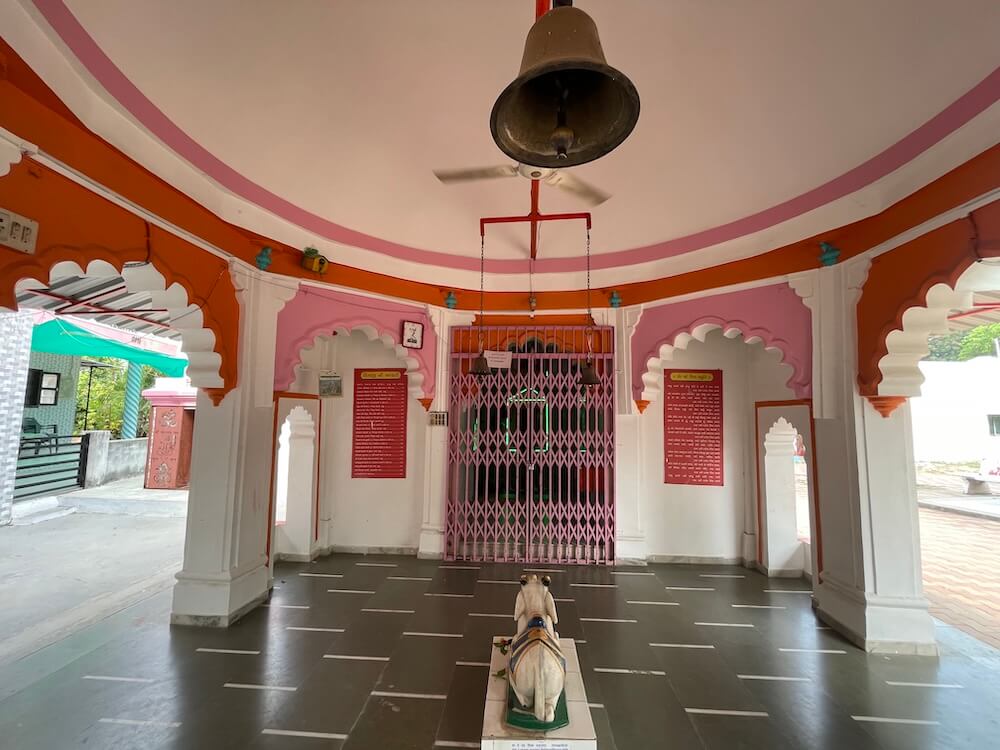 The temple complex is paved with interlocking paver blocks and houses a serene courtyard with a sacred peepal tree that is over 200 years old. Stone benches have been installed around the premises for devotees to sit and meditate. Architecturally, the temple is built in the traditional Nagar style, with a semi-open assembly hall (sabhamandap), an antechamber (antaral) and a sanctum (garbhagriha). The dome atop the sabhamandap is surmounted by a small amalaka and finial (kalasha), while the sanctum has a towering urushringa-style spire. The sabhamandap features wide rectangular pillars supporting arches (mahirpi kaman). A small pedestal in the hall holds a stone statue of Nandi, Shiva’s loyal bull, with a carved tortoise platform in front. The antechamber, lined with marble tiles, houses a stone idol of Hanuman in the right shrine and a white marble idol of Ganesha in the left.
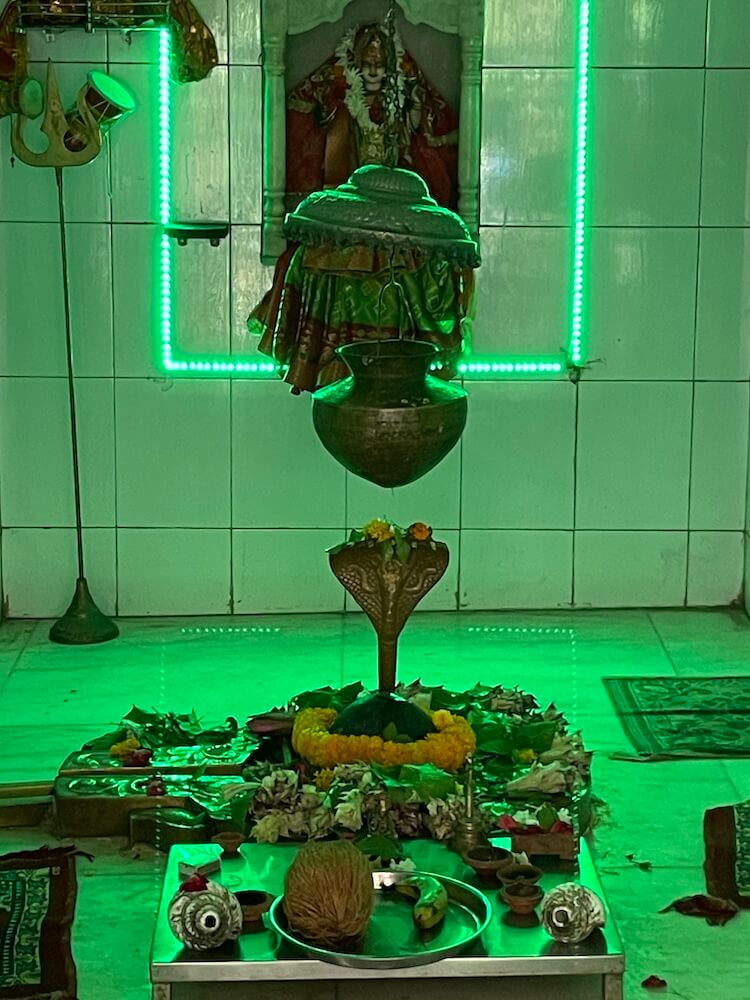
 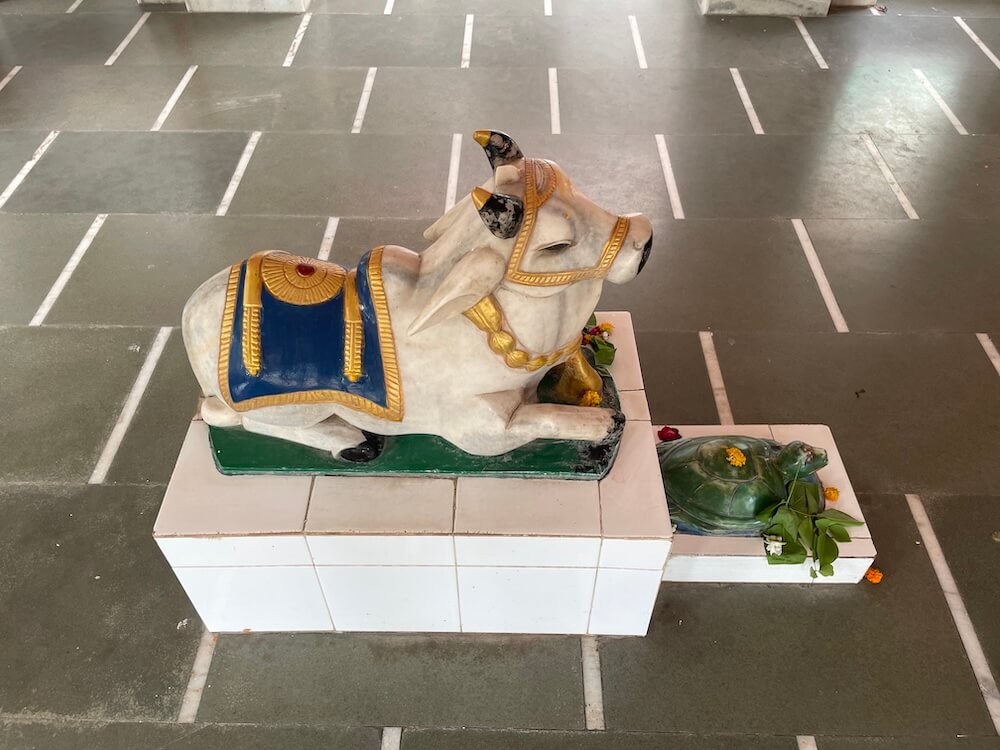 Above the sanctum’s entrance is a sculptural panel depicting Shiva, Parvati and Ganesha. Inside the sanctum, the Shivalinga rests within a large shalunka (base), shaded by a brass serpent hood and topped with a silver parasol. Behind the linga is a niche dedicated to Goddess Parvati.
Directly in front of the temple is the samadhi of Mangalnath Bapu, marked by his sacred footprints (padukas). Adjacent to the eternal fire (dhuni) is the gurugadi, the ceremonial seat passed down through the Nath lineage. During festivals and special events, the seventh spiritual successor from Mangalnath Bapu’s tradition sits upon this throne. The temple is managed by the Mangalnath Mahadev Trust. Devotees come here regularly, drawn by the temple’s reputation for spiritual potency and the belief that rituals performed here can reduce the negative influence of Mars in their horoscopes.
On the occasion of Mahashivratri, the temple hosts a grand celebration featuring devotional music, kirtans and spiritual gatherings. A mahaprasad is also distributed to devotees. Throughout the month of Shravan, on every Monday, thousands visit to offer bael leaves (bilva patra) and flowers and perform jalabhishek and dugdhabhishek to the sacred Shiva linga.