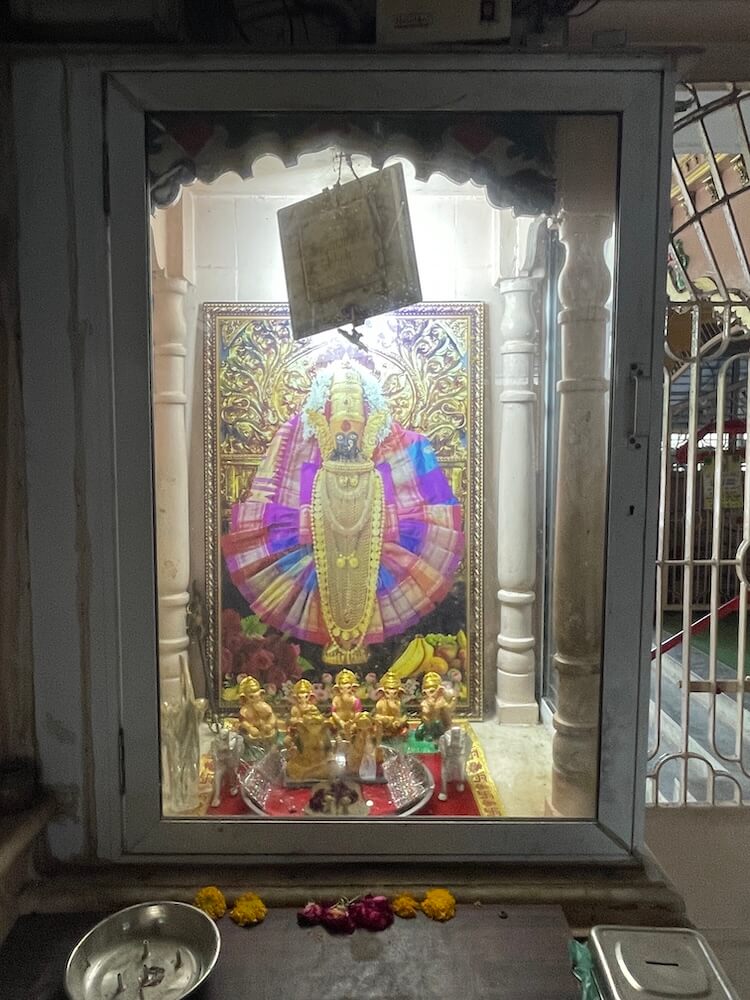
महालक्ष्मी मंदिर / लक्ष्मी गणेश मंदिर गाजरवाडी, वडोदरा, ता. वडोदरा, जि. वडोदरा
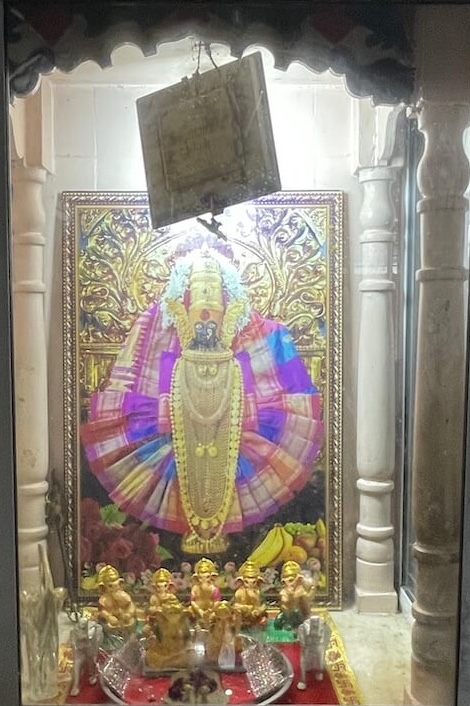 Mahalakshmi, regarded as the primal force and divine mother Adimaya Bhagwati, is also revered in the form of Ambabai. The famous temple dedicated to her in Kolhapur, dating back to the Chalukya period, is counted among the three and a half Shakti Peethas and holds the status of a complete Peetha. One ancient temple dedicated to this very goddess stands in Vadodara, believed to be around 165 years old. The idol housed in this temple is a replica of the Mahalakshmi idol from Kolhapur. Just like the Karveeravasini Ambabai of Kolhapur, the goddess here is believed to be ever-present and responsive to devotees. During Navratri, grand celebrations and rituals are held in her honor.
The history of this temple traces back to the Harshe family of Vadodara, who are believed to have constructed it in the latter half of the 18th century. Originally bearing the surname ‘Saigaonkar’, the family hailed from Saigaon in Satara district, Maharashtra and were traditional priests at the Kolhapur Mahalakshmi temple. During the Mughal attacks on Kolhapur, members of this family safeguarded the idol of the goddess. In recognition of this service, the rulers of Kolhapur bestowed upon them the surname ‘Harshe’. In the early 18th century, a branch of this family settled in the princely state of Baroda. Raghunath Moreshwar Harshe, a devout worshiper of Mahalakshmi, was distressed by his inability to offer daily worship to the goddess. One day, he received a divine vision in a dream. In the dream, Mahalakshmi instructed him to install her idol at a suitable location in Vadodara. 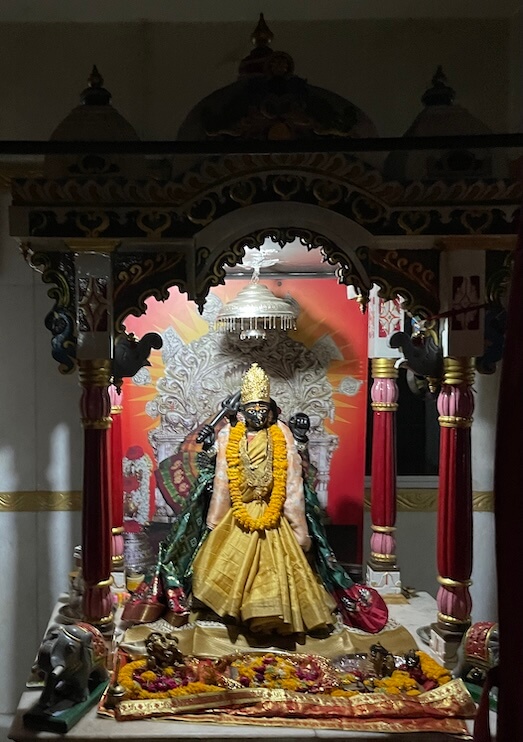 After surveying several areas, Raghunath found Gajarawadi to be the right place. In 1860, he established the temple at that site. In 2004, heavy rains caused significant damage to the structure and the idol too was fractured. The broken idol was respectfully immersed in the Narmada River and on 15 October 2004, a new idol was installed with proper rituals.
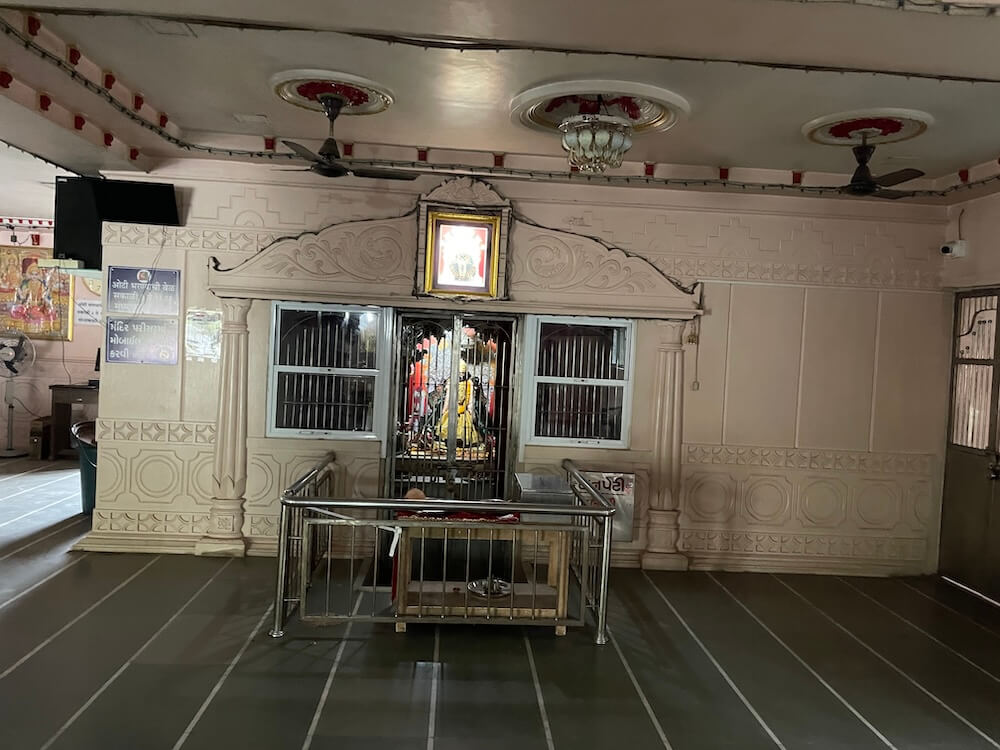
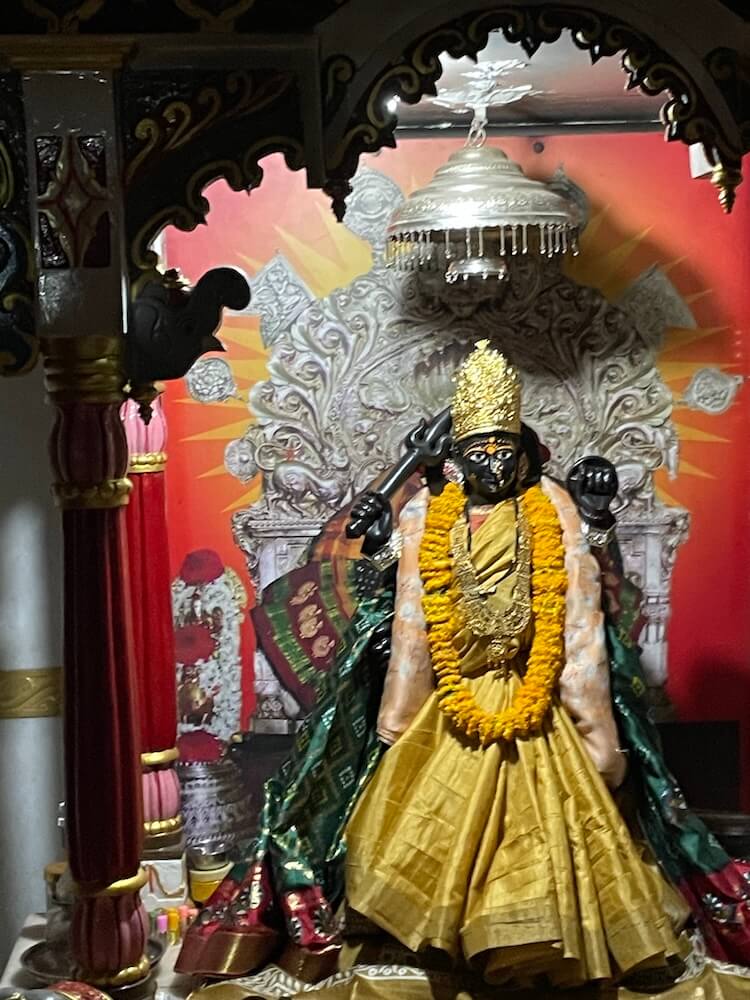
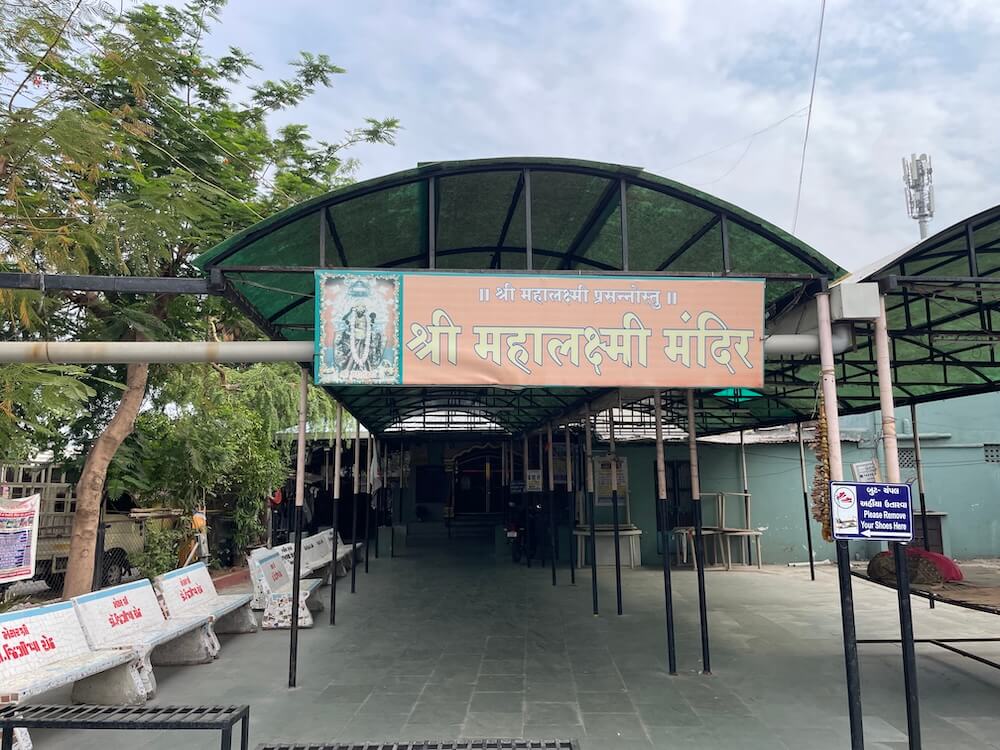
The temple occupies a spacious compound with stone benches for devotees to sit and a covered walkway leading to the temple. Its structure includes a large assembly hall (sabhamandap) and a sanctum sanctorum (garbhagriha). In one corner of the assembly hall, the replica idol of Mahalakshmi sits adorned in a marble makhar, accompanied by idols of Lord Ganesha and other deities. The walls of the hall are decorated with images of various gods and goddesses. Above the entrance to the sanctum, a carved image of Mahalakshmi is placed. Within, the sanctum houses the main idol – a finely carved black marble image of the goddess in regal attire, seated in a stone shrine atop a high marble pedestal. Sculpted by renowned artisans from Jaipur, this idol closely resembles the Kolhapur Mahalakshmi idol, though it is slightly shorter at 30 inches, compared to Kolhapur’s 33 inches. The goddess, with four arms, holds a trident and mace in her right hands and a shield and water vessel in her left. She is seated on a lotus with lions on either side and flanked by elephants at the sides of the makhar. A crown adorns her head and a delicate nose ring graces her face. An ornamental umbrella (chhatra) is placed above the idol and the background features beautifully carved decorations.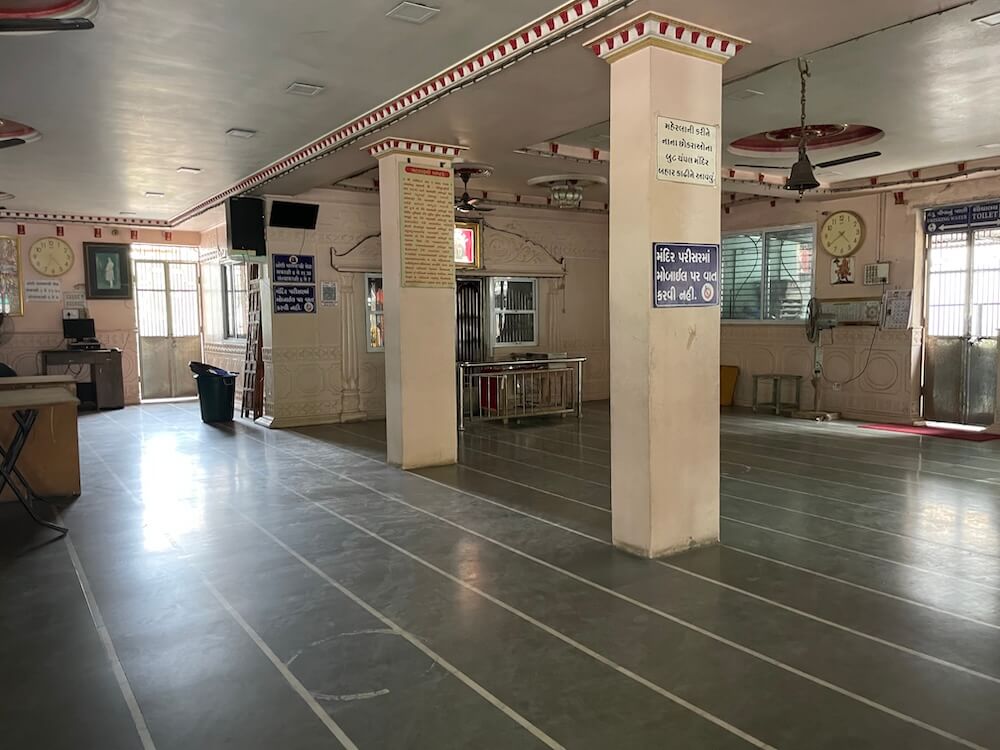
The temple is managed by the Shri Mahalakshmi Devi Trust. Devotees can visit the temple from Wednesday to Monday between 7:30 AM and 12 PM and 5 PM to 8 PM. On Tuesdays and Ganesh Chaturthi, the timings extend from 7 AM to 12 PM and 4 PM to 9 PM. Each evening at 7 PM, an aarti is followed by collective recitation of the Mahalakshmi Ashtak. Many devotees, especially women, perform abhishek and offer coconut and supari during the auspicious Oti offering ceremony. The Oti can be offered daily from 8 to 11:30 AM and again from 6 to 7 PM.
Both Chaitra and Sharadiya Navratri festivals are celebrated with great devotion. The goddess is adorned with beautiful decorations each day and a series of spiritual programs such as ghatasthapana, patotsav, 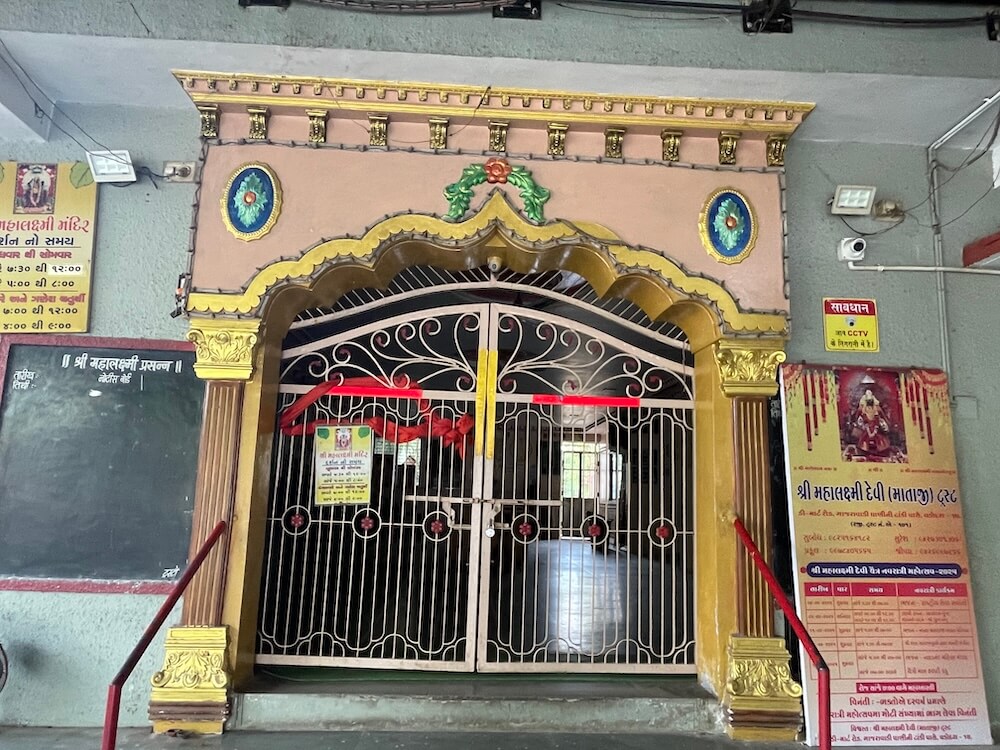 bhajans, kirtans, Shree Sukt Pathan, Mahalakshmi Havan and Shehnai vadan are organized throughout the celebrations.
A unique tradition at this temple is the ritual of ‘Gondhal’, performed by a family from Gujarat’s Shantaram Alekar lineage. This is the only family in the state known to perform this sacred ritual for the goddess and they are also invited to perform Gondhal at the royal Gaekwad palace in Vadodara.
A fascinating historical anecdote associated with this temple tells of the 1857 Indian rebellion. Following the failed uprising, many rebel soldiers were pursued by British forces. Some found refuge within this temple and the temple authorities are said to have extended help and shelter during that time.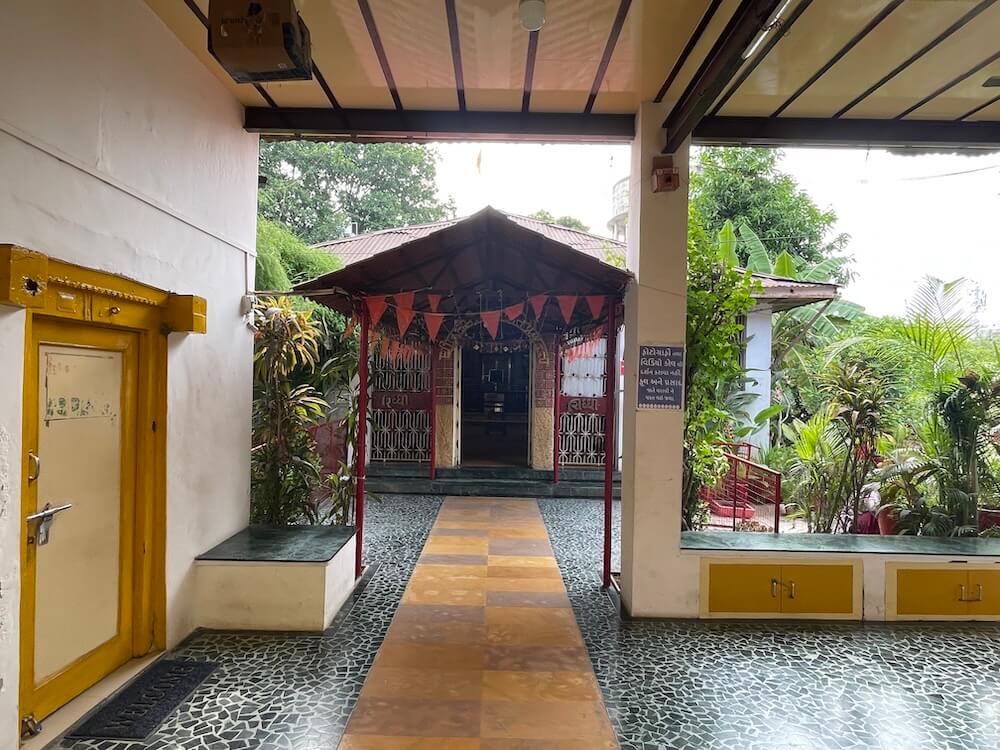
Lakshmi Ganesh Temple
In the bustling area of Gajarawadi in historical Vadodara stands a unique temple housing the only idol of Lord Ganesha with a right-turned trunk. Known as the Lakshmi Ganesh Temple, this shrine is special because the ten-armed Ganesha here holds a child form of Goddess Mahalakshmi in one of his hands. Devotees believe that this awakened deity grants all wishes, especially resolving issues related to marriage, including love marriages. The wooden idol of Ganesha, worshipped with deep devotion, draws crowds of worshipers daily.
Believed to be over 300 years old, the temple has a rich legacy. 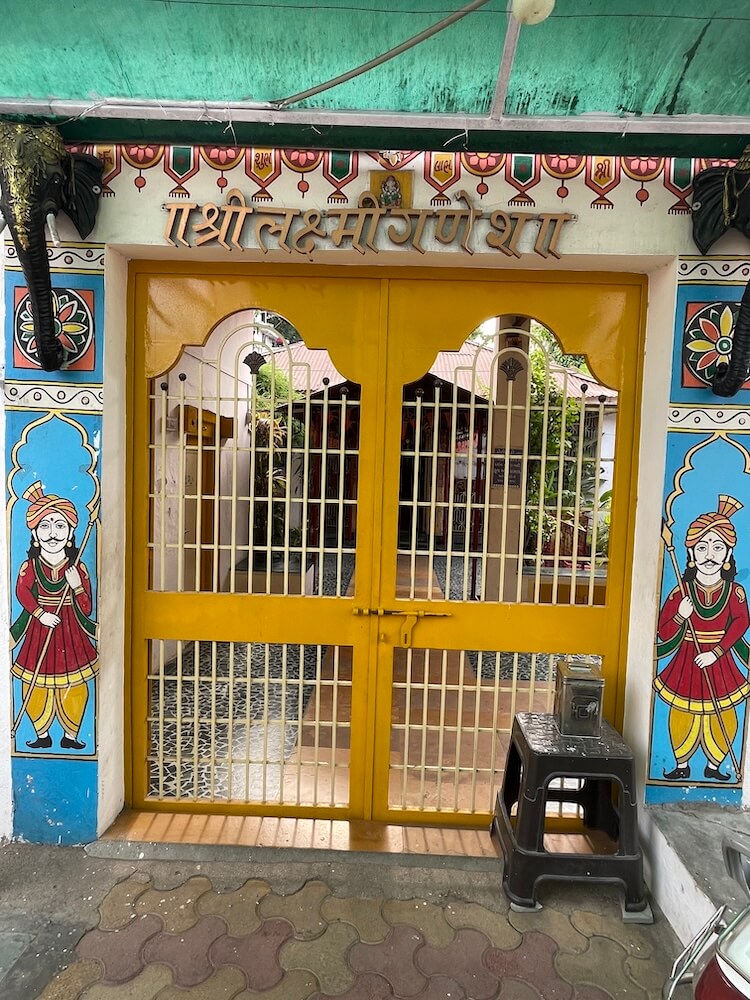 As per legend, a Mandar tree once stood where the Lakshmi Ganesh Temple now stands. From the roots of this tree, the idol of Ganesha is said to have naturally manifested. Devotees later built a small shrine around it. Over the years, the temple underwent several restorations and now stands in its present form following recent renovations.
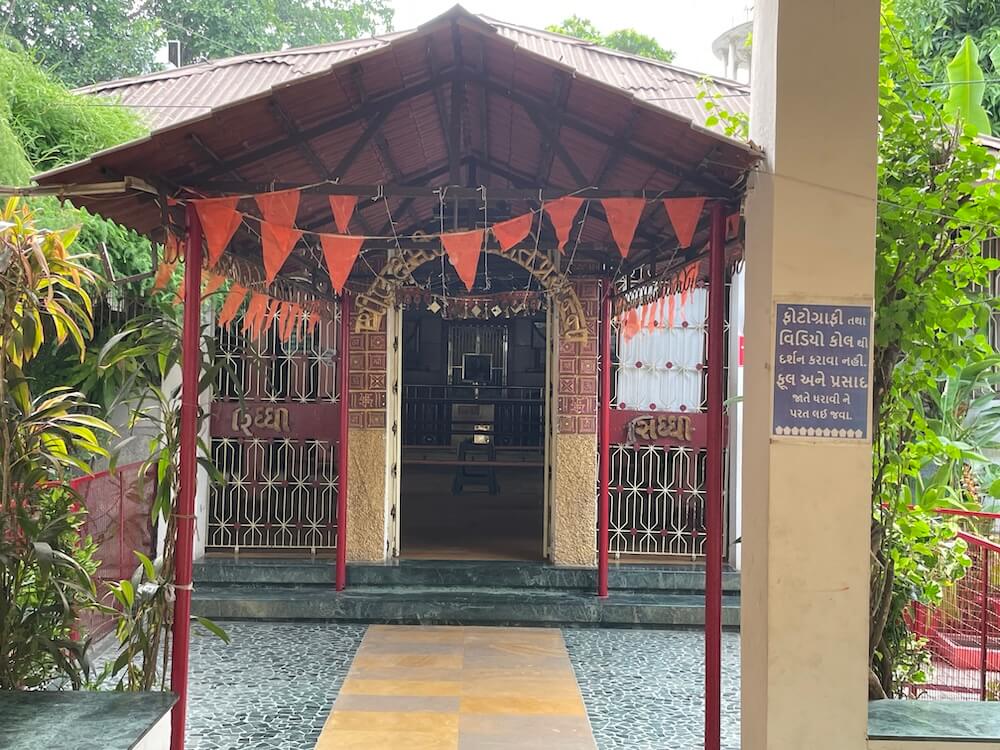
Located adjacent to a busy street, the temple is housed in a compact courtyard with guardian figures painted on both sides of the entrance. A sculpture of Ganesha graces the central point of the entrance. The temple comprises a hall and sanctum. Most of the structure, including the supporting pillars in the hall, is made of wood. Inside the sanctum are images of Gajanan Maharaj, other deities and revered saints. The hall also features a large framed painting of Radha and Krishna.
At the heart of the sanctum sits the self-manifested idol of Ganesha on a raised platform. Originally made of wood and now painted red using a natural process, the idol has ten arms. One of the hands holds a child form of Mahalakshmi and on either side are Riddhi and Siddhi. The idol, wearing a crown and decorated in fine clothing, is topped by a canopy. To the left of the idol is a small silver mouse – Ganesha’s vehicle – and nearby sits a silver modak. Above the idol, a framed image of Mumbai’s famous Lalbaugcha Raja Ganesha is placed.
Darshan is available from 7 AM to 12:30 PM and 7 PM to 8:15 PM daily. On Tuesdays and during Chaturthi, the timings extend till 9 PM. On Tuesdays, many devotees offer durva grass and flowers to the deity. The temple celebrates Ganeshotsav in the month of Bhadrapad with grandeur, featuring ten days of devotional programs and festivities.
महालक्ष्मी मंदिर / लक्ष्मी गणेश मंदिर
गजरवाड़ी, वडोदरा, ताल। वडोदरा, जिला. वडोदरा