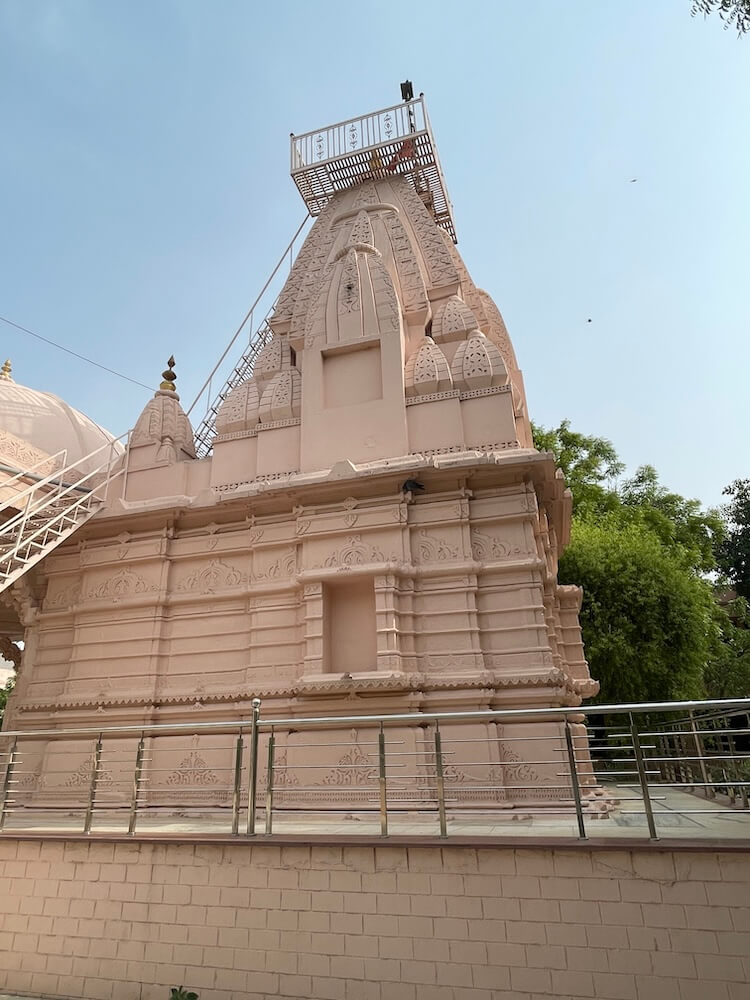
 The ancient temple of the goddess known as Limbaj Mata, named so because she is believed to have manifested from a neem tree (kadulimb), is located in the peaceful village of Raysan. The original seat of the goddess is said to be in Delmal, a village in Chanasma Taluka of Patan district. Worshipped as the kuldevi of the Jethimal sub-caste of Modh Brahmins in Gujarat, she is also known as Limboi Mata. The temple at Raysan, situated on the banks of the Sabarmati River, is nearly 900 years old.
Delmal, where the goddess originally manifested, was once a significant pilgrimage center. It was formerly known as Kanakbumba and also referred to as Devnagari. The Limbaj Mata temple there was built during the 11th century by the Solanki kings. According to legend, once while journeying to Dwarka, Lord Krishna and Balaram passed through the Delmal region. To humble Balaram’s pride, Krishna orchestrated a wrestling match between Balaram and a Brahmin named Someshwar, who was passing by. Though Someshwar initially declined, saying he didn’t know the art, Krishna taught him the techniques of wrestling. Equipped with this divine knowledge, Someshwar defeated Balaram and subdued his pride.
 Impressed, Krishna gifted him the village of Devnagari, declaring that none would ever defeat Someshwar in wrestling again. However, Someshwar asked who would watch over the village once Krishna left. In response, Krishna manifested a goddess from a nearby neem tree on the auspicious day of Shravana Shuddha Chaturdashi. The goddess thus born was named Limbaj Mata.
Centuries ago, a few Gopalak families from Delmal migrated to Raysan, a village along the Sabarmati River. There, they built a modest shrine to their kuldevi, Limbaj Mata. Over the years, the temple underwent several restorations, the most recent and significant of which occurred in 2001, giving the temple its present form.
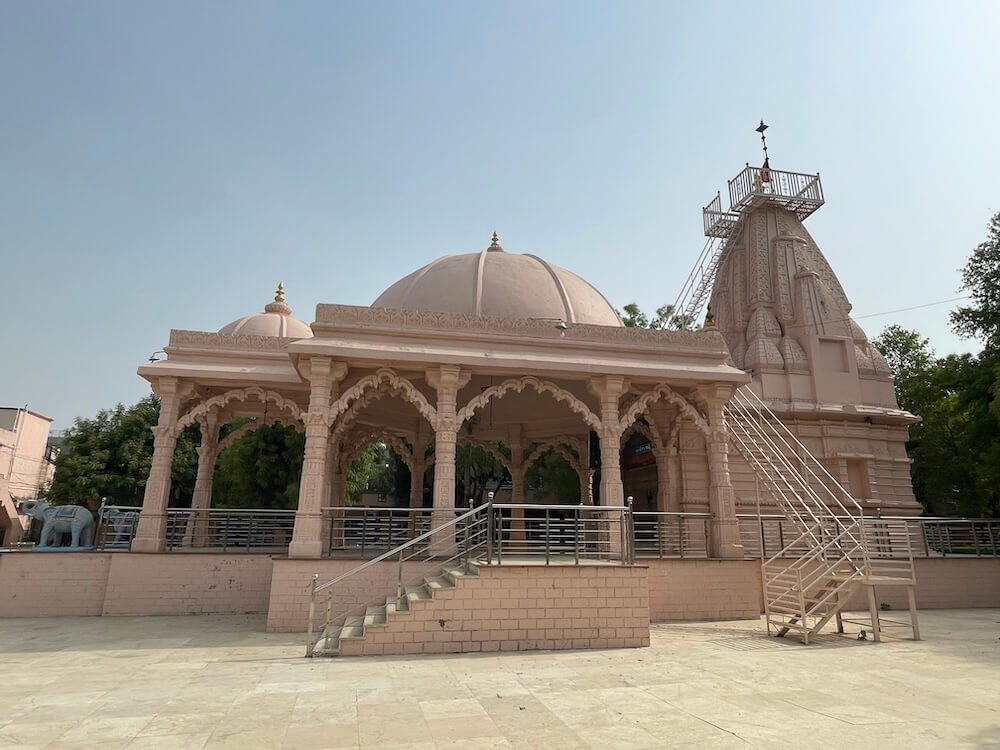
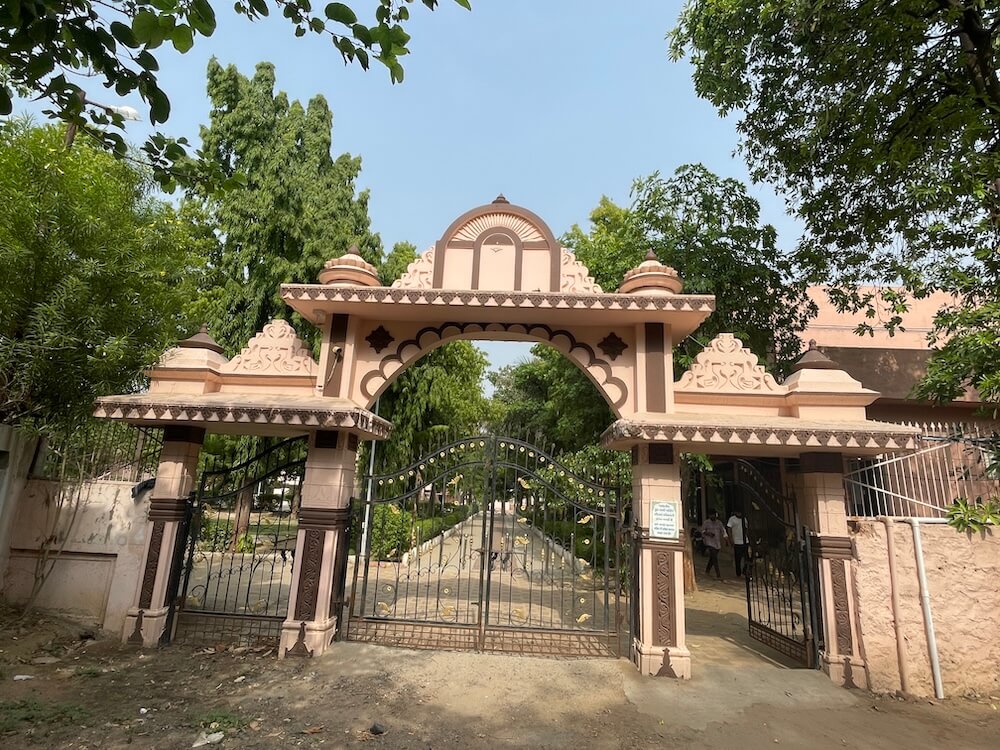
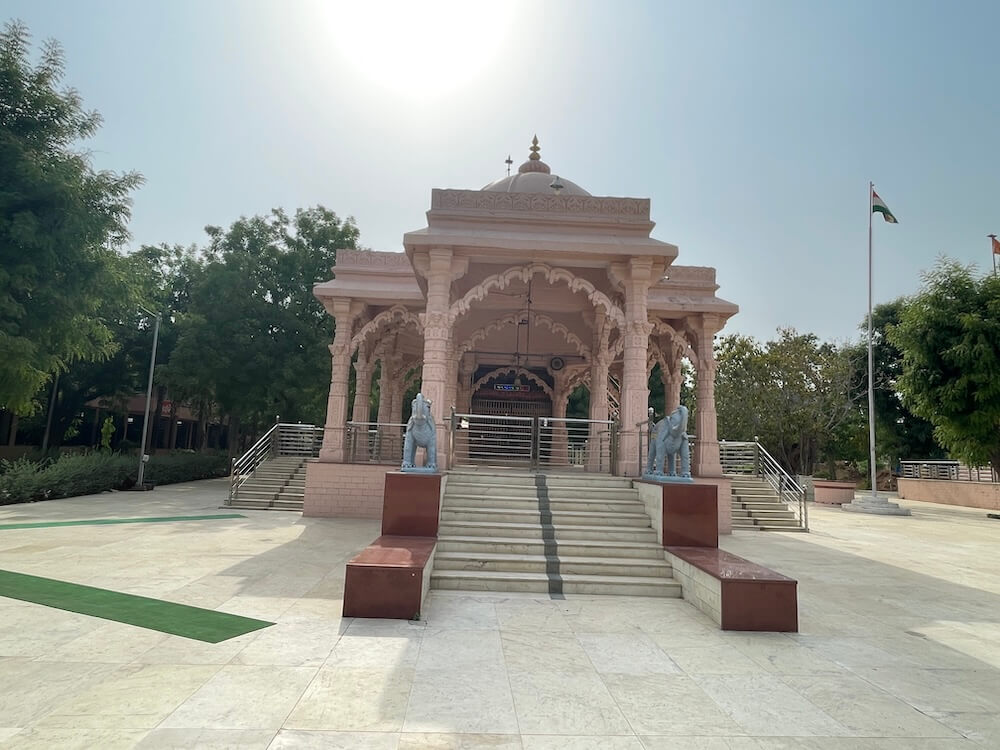 Set in a tranquil corner of Raysan village, the temple complex features lush gardens, trees and fountains. Constructed in the Nagara style using pink sandstone, the temple comprises a mukhmandap, an open sabhamandap, an antaral and the garbhagriha. Both the mukhmandap and the sabhamandap are adorned with dome-shaped spires, while the garbhagriha rises with an elegant tall urushringa-style shikhara topped by a two-tiered amalaka and a prominent kalasha. Intricate carvings decorate the columns, ceiling railings and arches throughout. Entry into the temple is possible from all three sides, each with eight steps. Stone elephants flank the railings on both sides of the front steps.
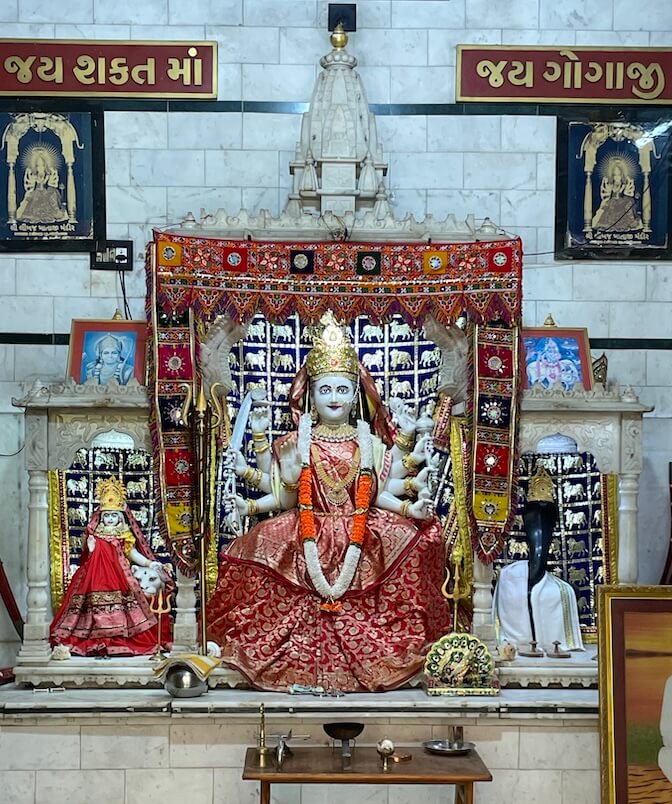
Inside the antaral, a shrine to Ganesha stands on the right and one to Hanuman on the left. 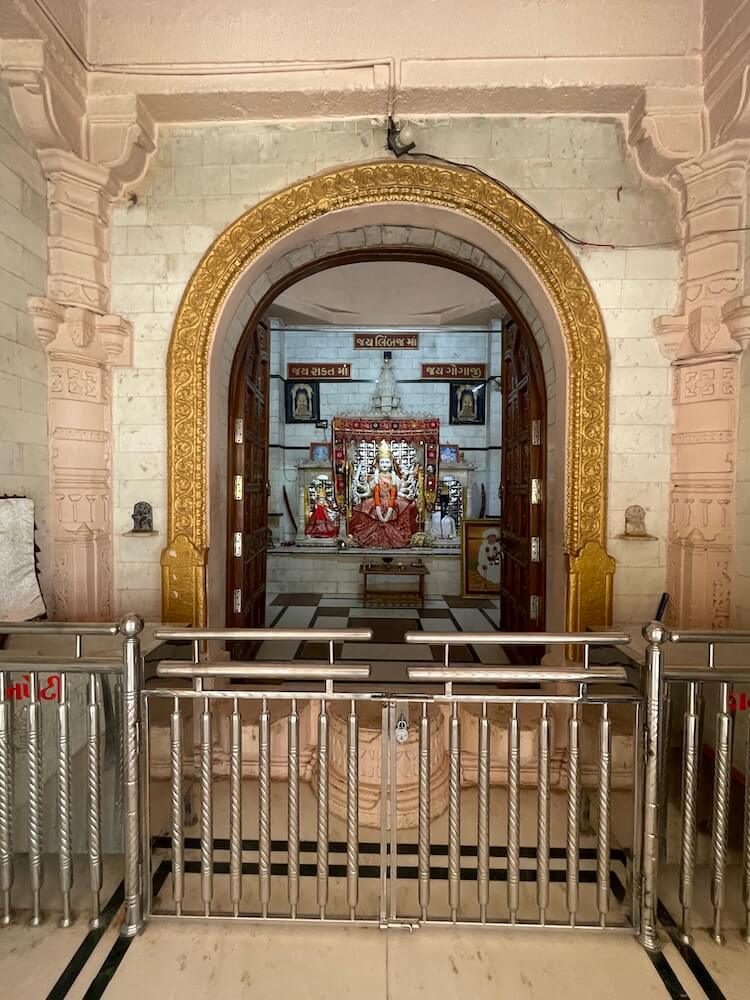 The entrance to the garbhagriha is semi-circular and gilded in golden hues, rich in detailed carvings. Within the sanctum, atop a high marble platform sits the radiant and peaceful marble idol of Limbaj Mata. She is shown smiling, dressed ornately and with eight arms holding divine weapons such as a mace, vajra and conch. A silver crown graces her head and she wears a traditional nath (nose ring). To her left is a marble idol of Shakti riding a lion and to her right is the figure of Goga Maharaj in serpent form.
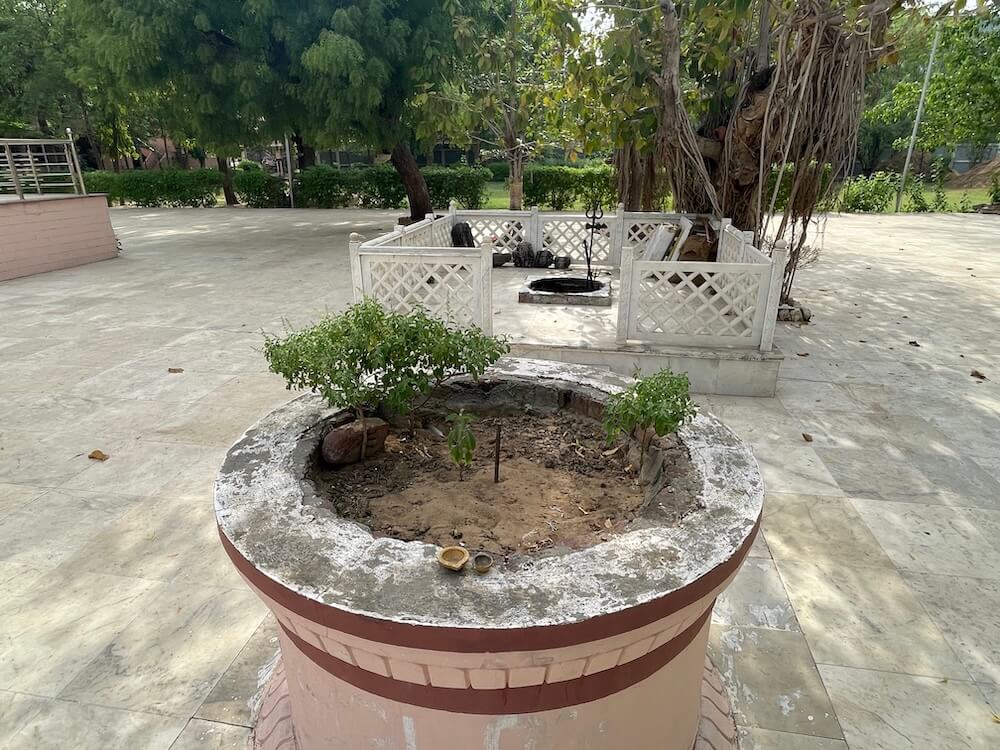
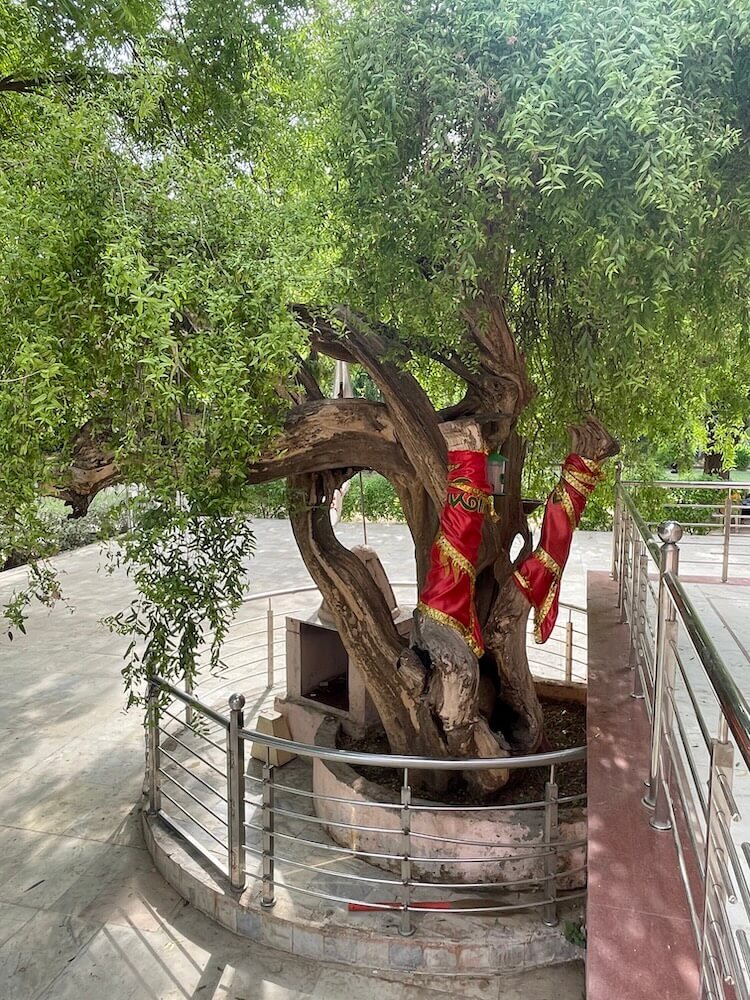
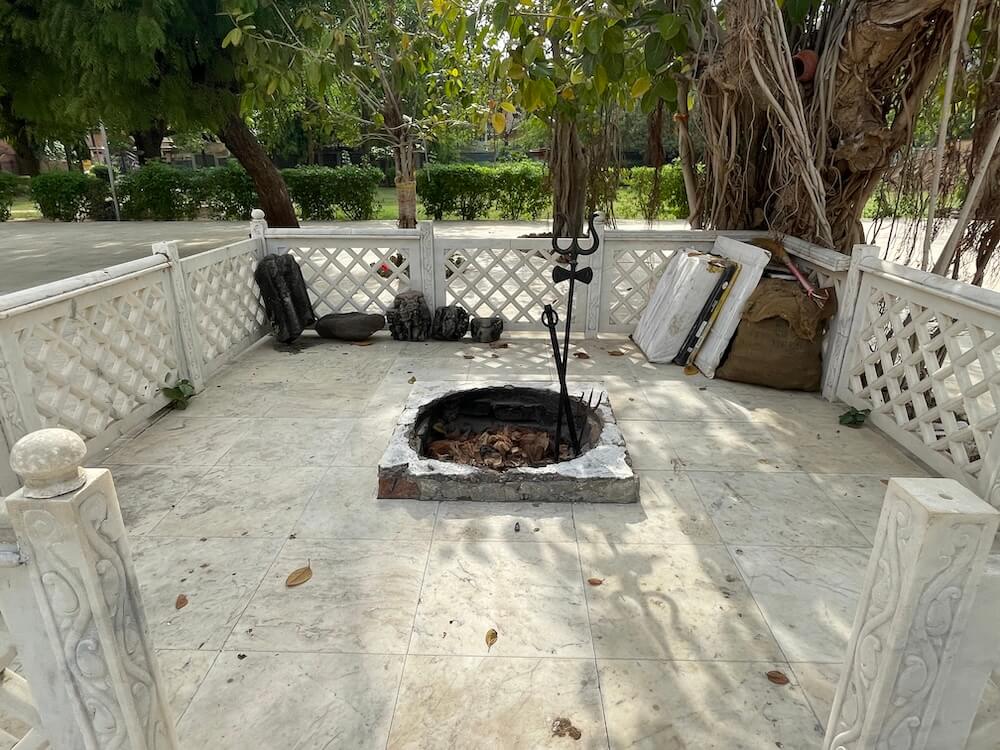
Near the temple, beneath a neem tree, is another shrine to Goga Maharaj. It is said he once appeared here in serpent form. Goga Maharaj, who lived in the 11th century, is also known by names such as Goggaji Chauhan, Gugga and Zahir Pir. Some historians believe he was a disciple of Gorakshanath. He is said to have attained martyrdom while defending the Somnath temple from Mahmud of Ghazni. His followers believe him to be an incarnation of Sheshnag.
Adjacent to the Limbaj Mata temple is the Sabreshwar Mahadev temple, constructed in 2004. Managed by the Shri Limbaj Mataji Seva Trust, the temple hosts daily rituals and aarti. Sacred readings from texts like the Bhagavata Purana and Ramayana take place regularly. Sundays and full moon days attract large crowds and bhandaara (community meals) are offered on Purnima. On the temple’s foundation day, which falls on Ashadha Shuddha Dwitiya, religious and cultural programs are held. 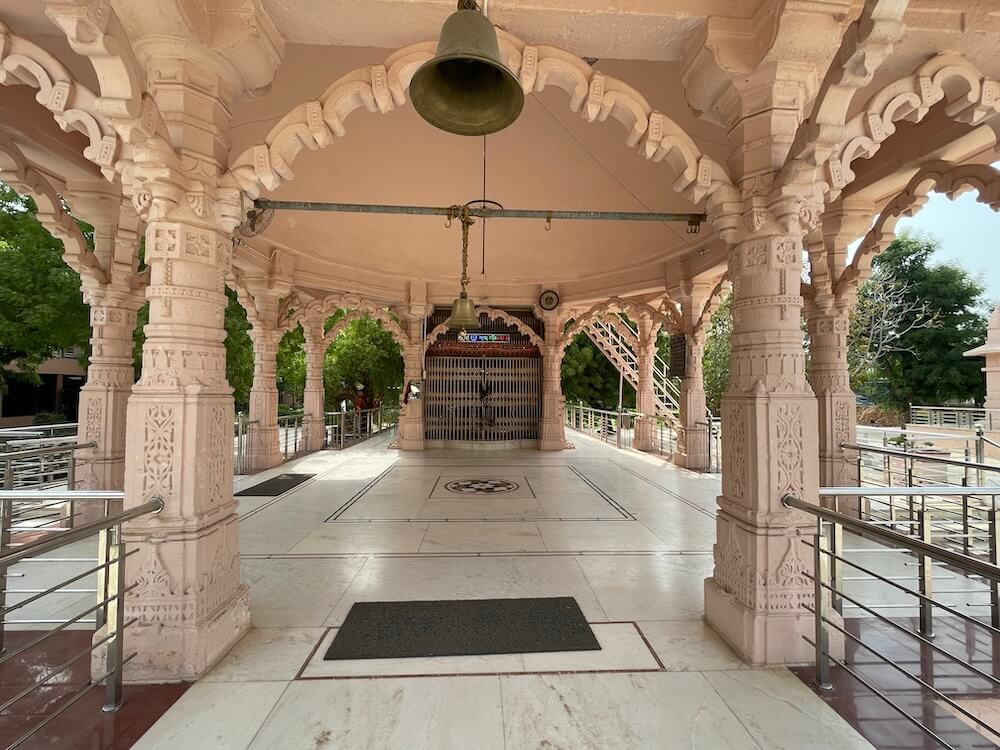 During the Sharad Navratri festival, the temple becomes the center of daily celebrations over nine days.
In the holy month of Shravan, hundreds of devotees visit the Sabreshwar Mahadev temple. The temple campus also features a cowshed (goshala), a spacious dining hall that can seat about 2,500 devotees at once and a dharmashala for pilgrims. Nearby, a large building houses a library and a study room. The Trust also supports students preparing for competitive exams by offering them accommodation, meals and mentorship. Additionally, the Trust organizes felicitations for meritorious students and provides financial aid for the marriage of girls from economically challenged families