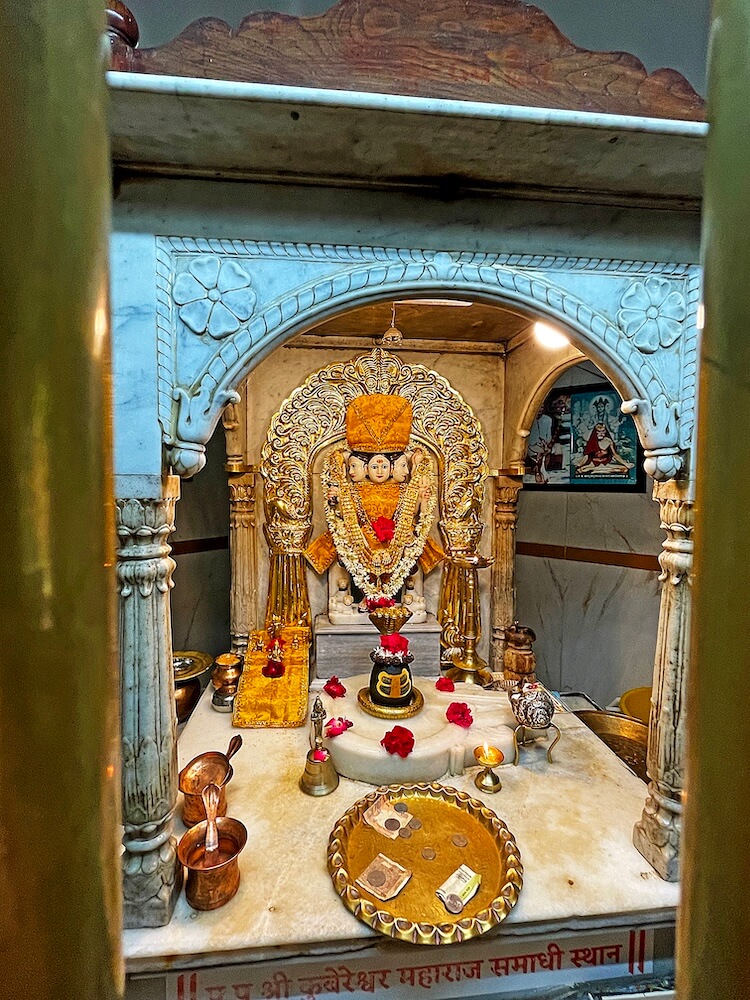
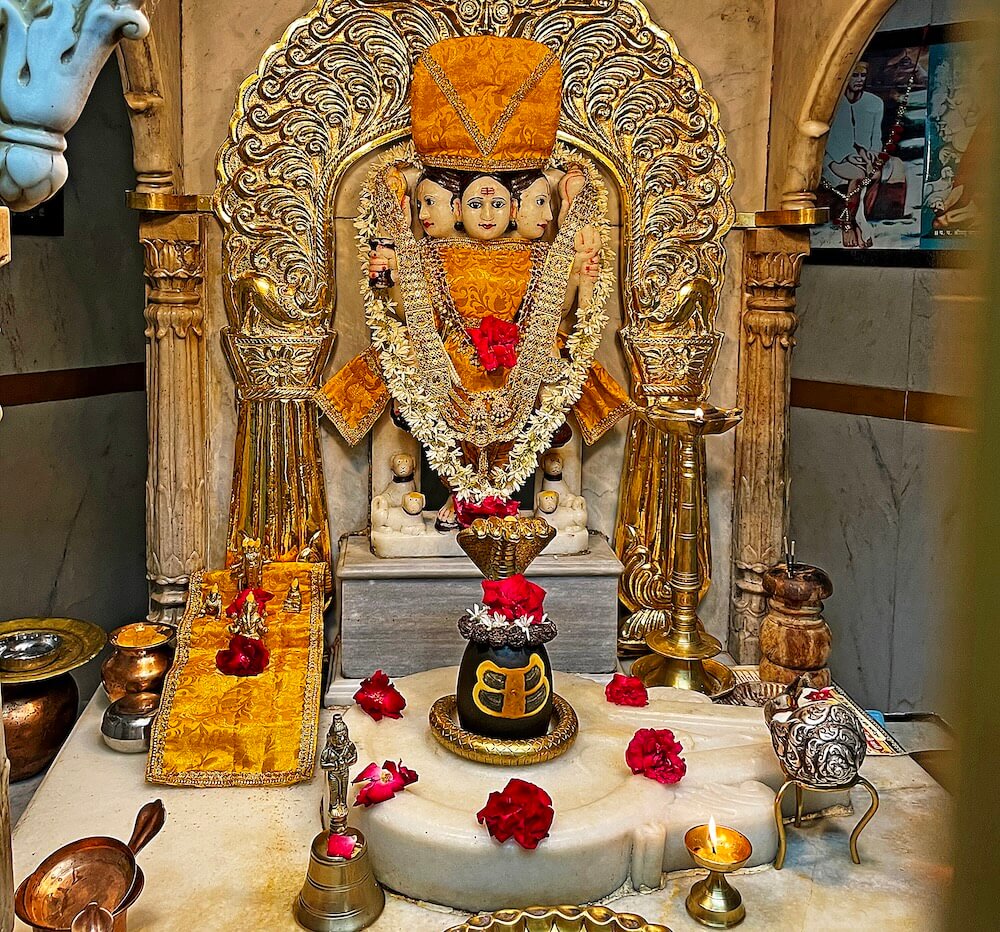
 In the Sayajigunj area of Vadodara stands an ancient and sacred temple dedicated to the Avadhut Yogi Lord Dattatreya, regarded as the combined incarnation of the Trimurti – Brahma, Vishnu and Mahesh. While most Dattatreya idols depict Vishnu as the central face flanked by Brahma and Shiva, the idol here is distinct, with the central face representing Lord Shiva. Hence, worship at this temple often takes a Shaivaite form. Directly in front of the idol lies a Shiva Lingam, symbolically placed on the Samadhi of Kuber, a devout follower of Dattatreya. The temple is part of the grand Kirti Mandir complex, built in honor of the Gaekwad royal ancestors. The idol here is considered awakened and its divine presence deeply revered by devotees.
The origin of the temple dates back to the latter half of the 19th century. At the time, a man named Kuber Maharaj from Uttar Pradesh, a deeply devoted follower of Lord Dattatreya, worked in the Baroda princely state. 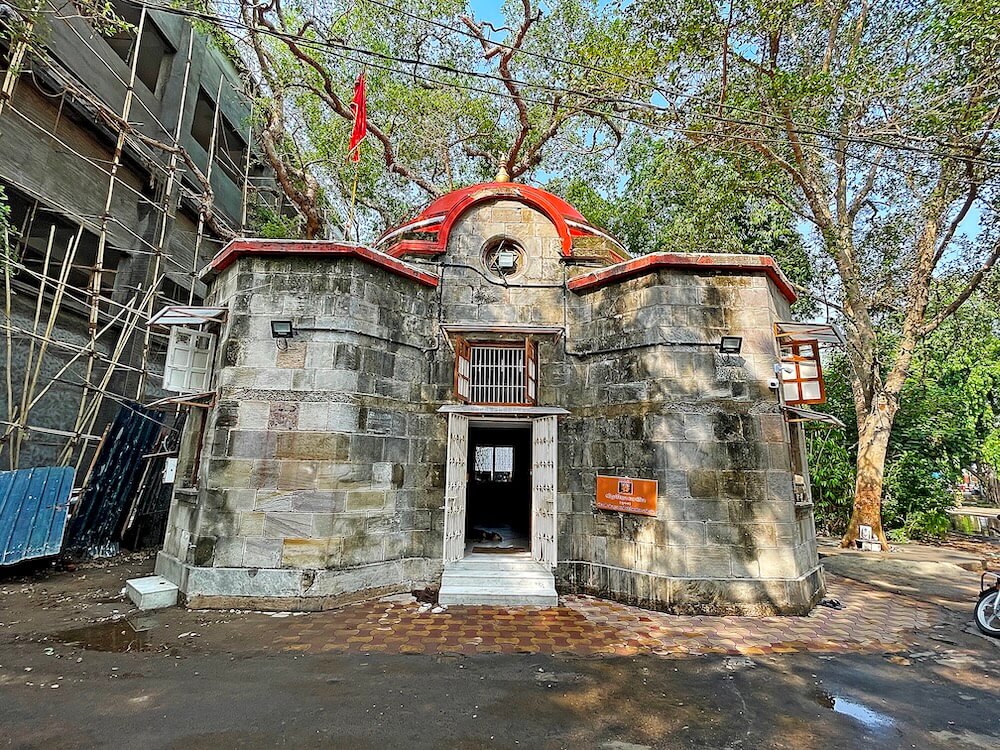 Every morning, he would spend long hours in prayer, often arriving late to work, much to the frustration of his superiors. One day, when again he was late at work, he humbly explained to his superior that he had been busy worshipping. His superior was taken aback and insisted, ‘But you’ve been here all morning. We saw you working.’ Kuber then realized that it was none other than Lord Dattatreya Himself who had taken his form and reported to duty in his place. This divine experience filled his heart with devotion even more intensely.
From that day on, Kuber Maharaj immersed himself completely in chanting Dattatreya’s name. He would often be seen wandering the main road near Mandvi Gate, lost in divine contemplation. People began to call him ‘Crazy Kuber’, unaware of his spiritual depth. 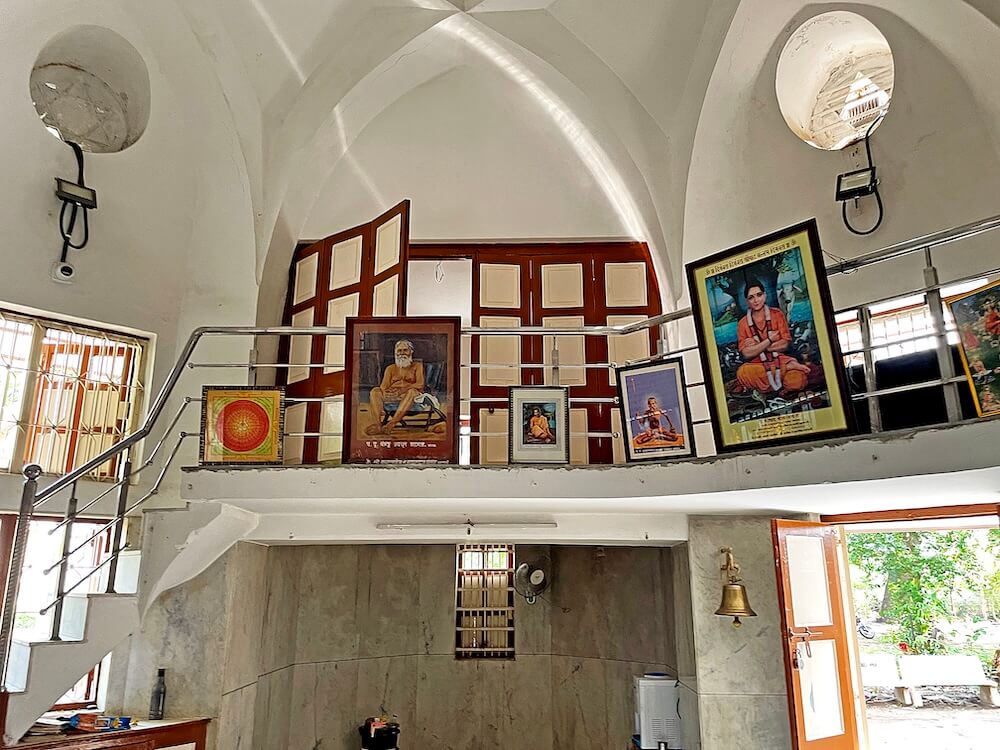 One day, a dramatic event changed everything. As Kuber stood near Mandvi Gate, a wild elephant named Maulabaksh went on a rampage, sending everyone fleeing in panic. Kuber, however, stood his ground, completely still. Despite warnings, he refused to move. The enraged elephant charged straight at him, but the moment it reached Kuber, a miracle occurred. The elephant suddenly calmed down, bowed before him with its trunk and walked away peacefully. It is said that even Khanderao Gaekwad II, a ruler of Baroda, witnessed this. After this incident, people began to regard Kuber as a divine incarnation.
 Kuber Maharaj was held in high esteem by Maharani Jamnabai, wife of Khanderao Maharaj. In 1900, Nagesh Vinayak Bapat documented her biography, describing her as an educated, devout woman well-versed in Sanskrit, Marathi and mathematics, who spent much of her time engaged in religious activities. She revered Kuber as her spiritual teacher. Though Maharaja Khanderao leaned toward Islam, he was generous toward Hindu temples and institutions. He arranged a place for Kuber Maharaj to stay and granted him a pension. After Kuber’s death, in 1890, Maharani Jamnabai had this temple built in his name. Initially west-facing, the temple was later renovated and reoriented to face east in 1936 by Maharaja Sayajirao Gaekwad III, during the construction of the grand Kirti Mandir to honor his ancestors.
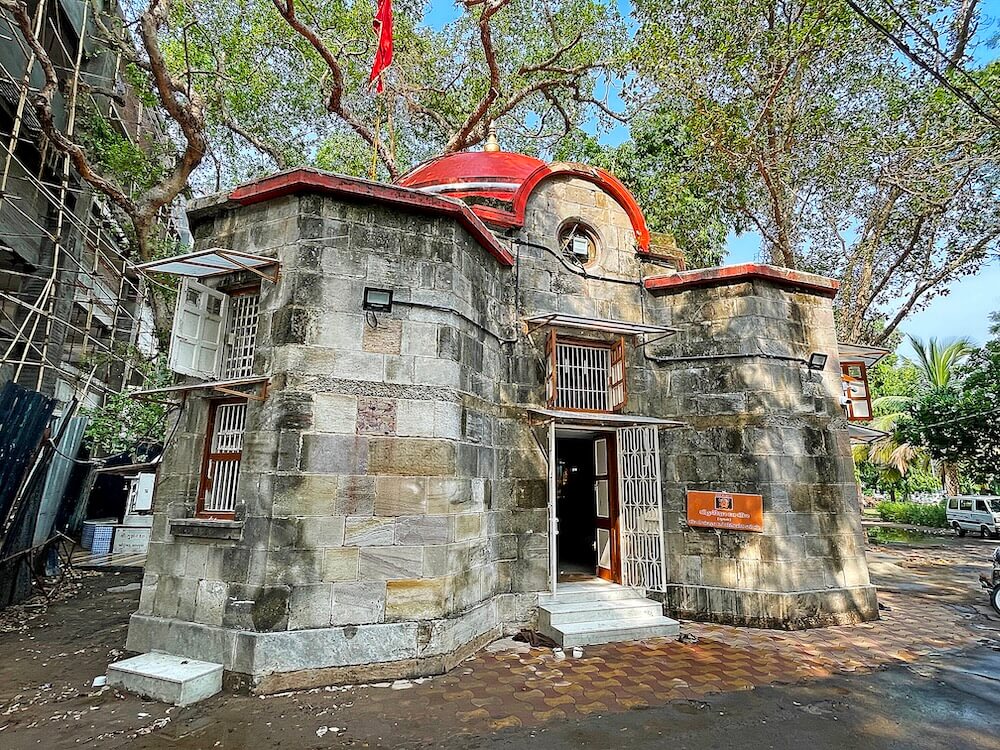
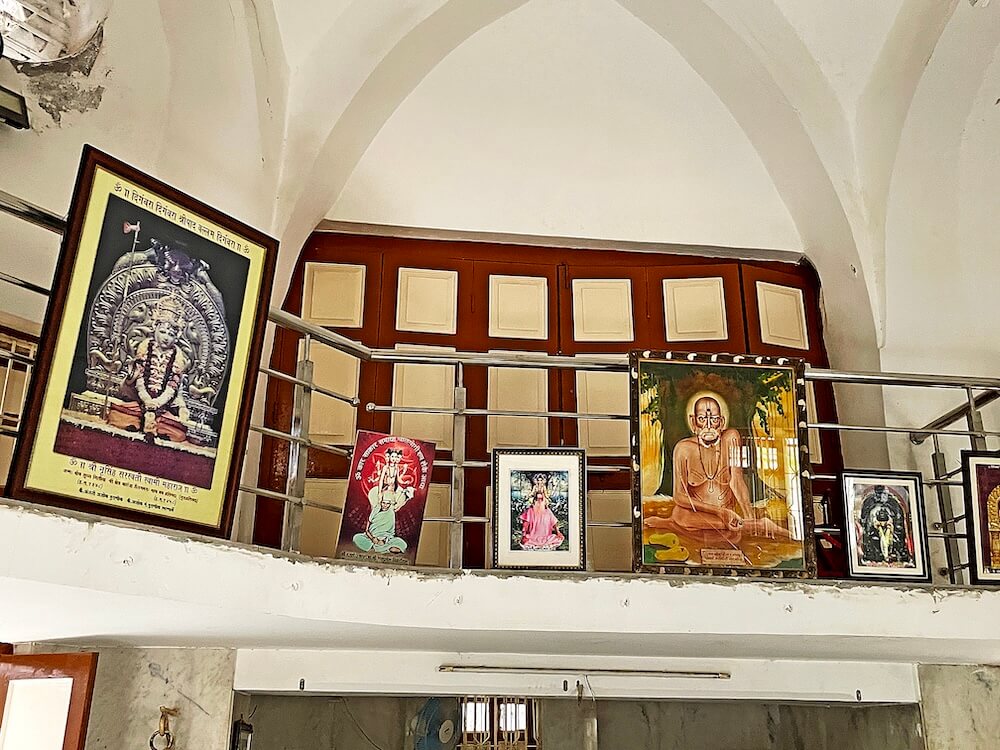
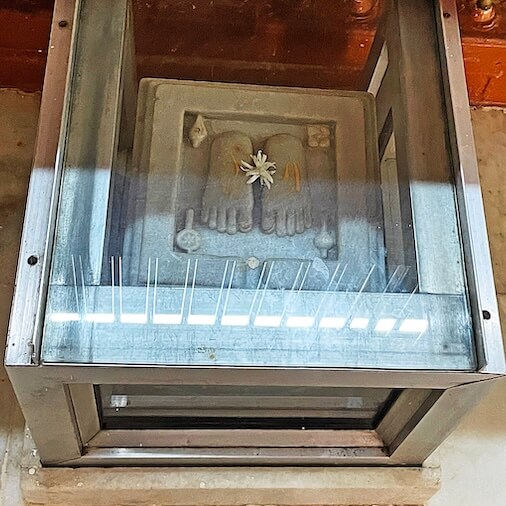
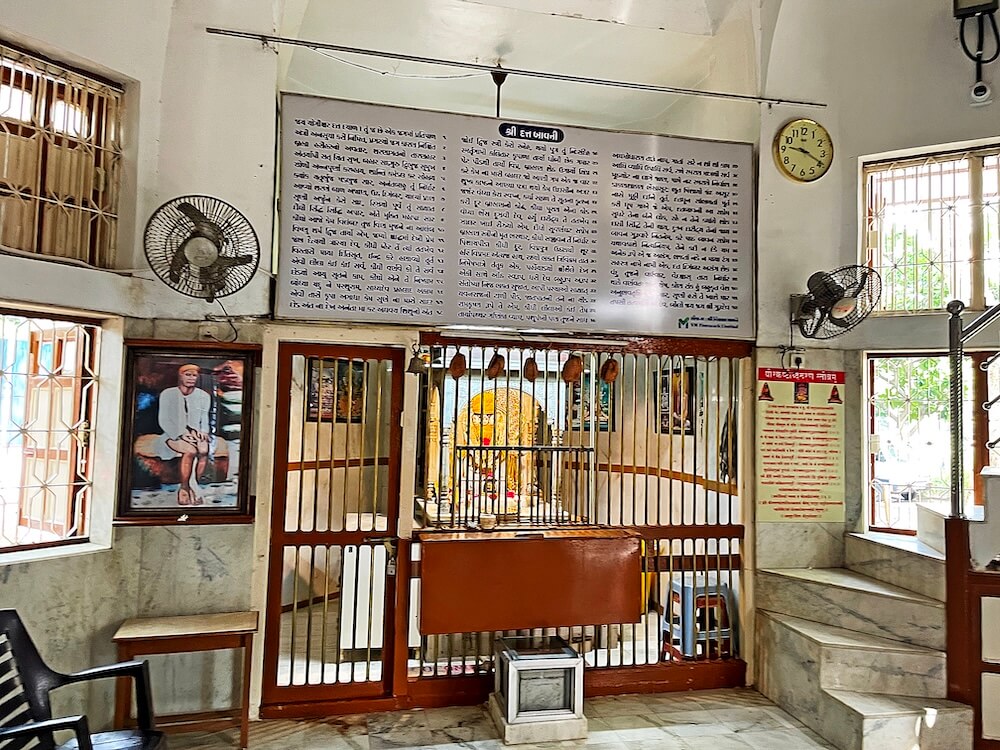
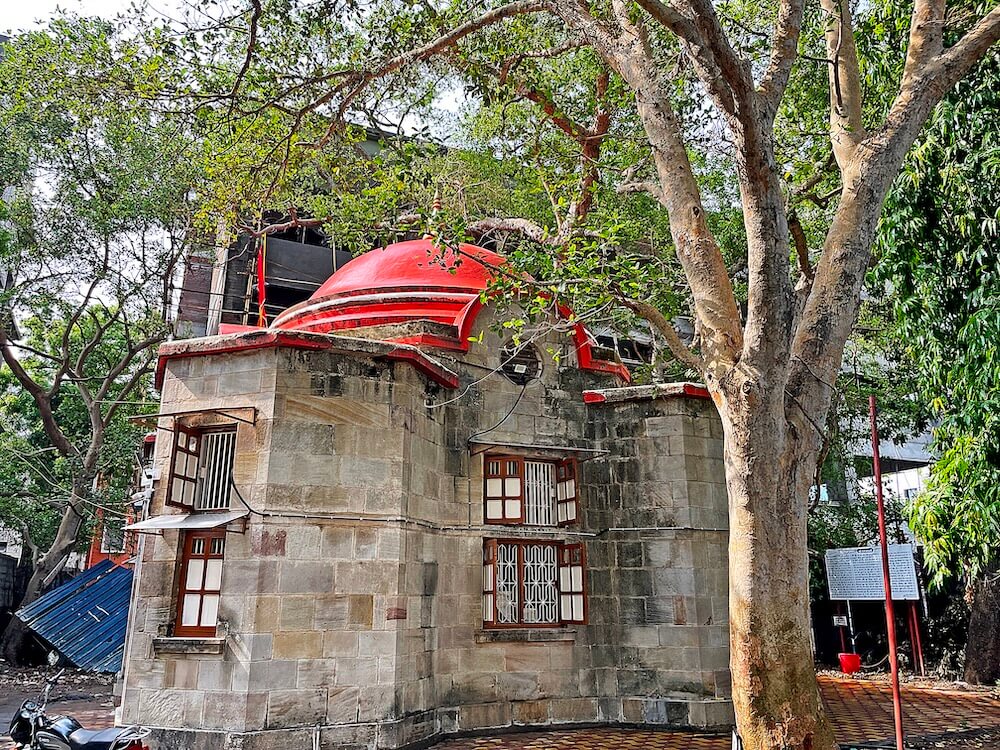 The Kubereswar Datt Mandir stands a little distance to the right of Kirti Mandir. A sacred Audumbar tree graces the vicinity. At its base lies a small shrine housing Dattatreya’s paduka and image. Nearby is a smaller shrine with a modest Dattatreya idol. The main temple, built from yellow sand and square stone slabs, resembles a sturdy, historical two-story mansion. Its domed spire gives it a regal presence. The spacious inner hall (sabhamandap) has a balcony railing lined with images of saints and masters of the Datt tradition, including Shripad Vallabh, Nrisimha Saraswati, Swami Samarth of Akkalkot, Tembe Maharaj and Rang Avadhoot Maharaj. The sanctum is enclosed with a steel grill gate. Inside, a wide pedestal supports a beautiful marble makhar housing the trimukhi (three-faced) Dattatreya idol. The central Shiva face bears the flowing Ganga from its head. The idol holds a kamandalu, shankha, chakra and damaru and stands upon sculpted paduka. At the base of the idol are four carved dogs, representing the four Vedas. The backdrop features intricate carvings of dogs and peacocks. In front of this idol is a symbolic Shiva Lingam inside a marble base, signifying the Samadhi of Kuber. It is adorned with a serpent holding a canopy over it. Nearby are small idols of Ganesh and Dattatreya in panchdhatu.
Every morning, devotees flock to the temple for darshan. On Thursdays, the temple resonates with recitations of Datt Bavani. Scriptures and verses related to the Datta tradition are also read aloud. Devotees strongly believe that circumambulating the Audumbar tree in the temple premises fulfills all wishes and brings relief from Guru doshas.
The temple celebrates various events such as Datta Jayanti, Guru Purnima and both the birth and death anniversaries of Kuber Maharaj (on Kartik Shuddha Dwadashi). On Datta Jayanti, the temple is beautifully decorated. Rituals such as foot-washing of the idol, ornamentation and Aarti take place in the morning. This is followed by Shehnai performances, devotional singing and a grand celebration in the evening, with illuminated decorations and vibrant rangoli gracing the temple courtyard.